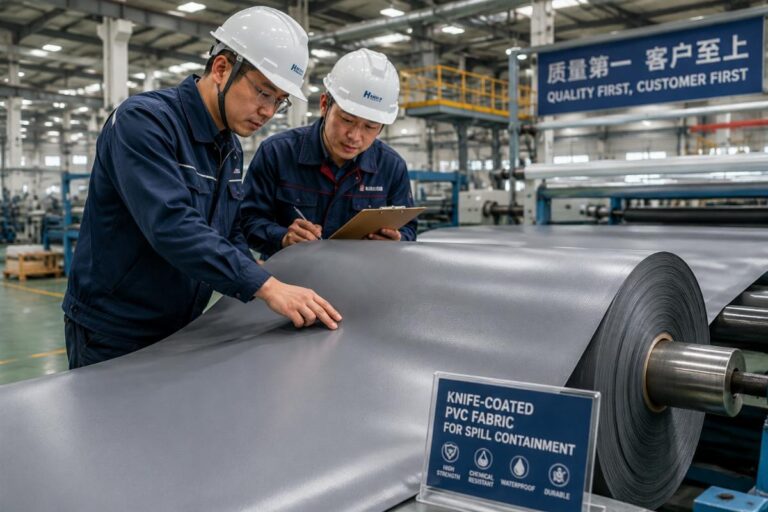
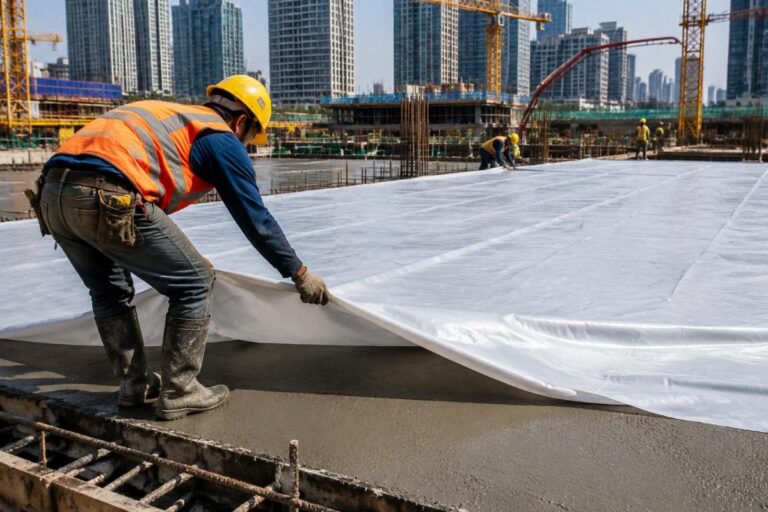
How to Calculate PVC Tarpaulin Requirements for Construction Projects: A Guide for Global Buyers
Most construction teams assume larger tarpaulin rolls always cut overall procurement costs, but mismatched roll sizes actually trigger 12-18% higher cutting loss that fully offsets unit price discounts. This common miscalculation, paired with skipped reserve for seam overlap and edge fixation, leads to either 10%+ excess material waste or unexpected on-site supply gaps that delay project timelines by an average of 3 days for mid-sized infrastructure builds.
Accurate PVC tarpaulin quantity calculation for construction sites requires integrating three core variables: actual scenario coverage area, standardized reserve coefficients for installation allowance, and alignment with supplier standard roll specifications, not just raw flat site measurement.
As a procurement consultant supporting EMEA and APAC construction project teams for 8 years, I have seen hundreds of contractors waste 5-15% of their material budget on avoidable over-purchase or emergency rush orders for under-calculated stock. [NEED_CITE: Ignoring 5-10% reserved quantity for edge fixation and seam overlap during PVC tarpaulin estimation causes 62% of on-site material supply shortages for construction projects]
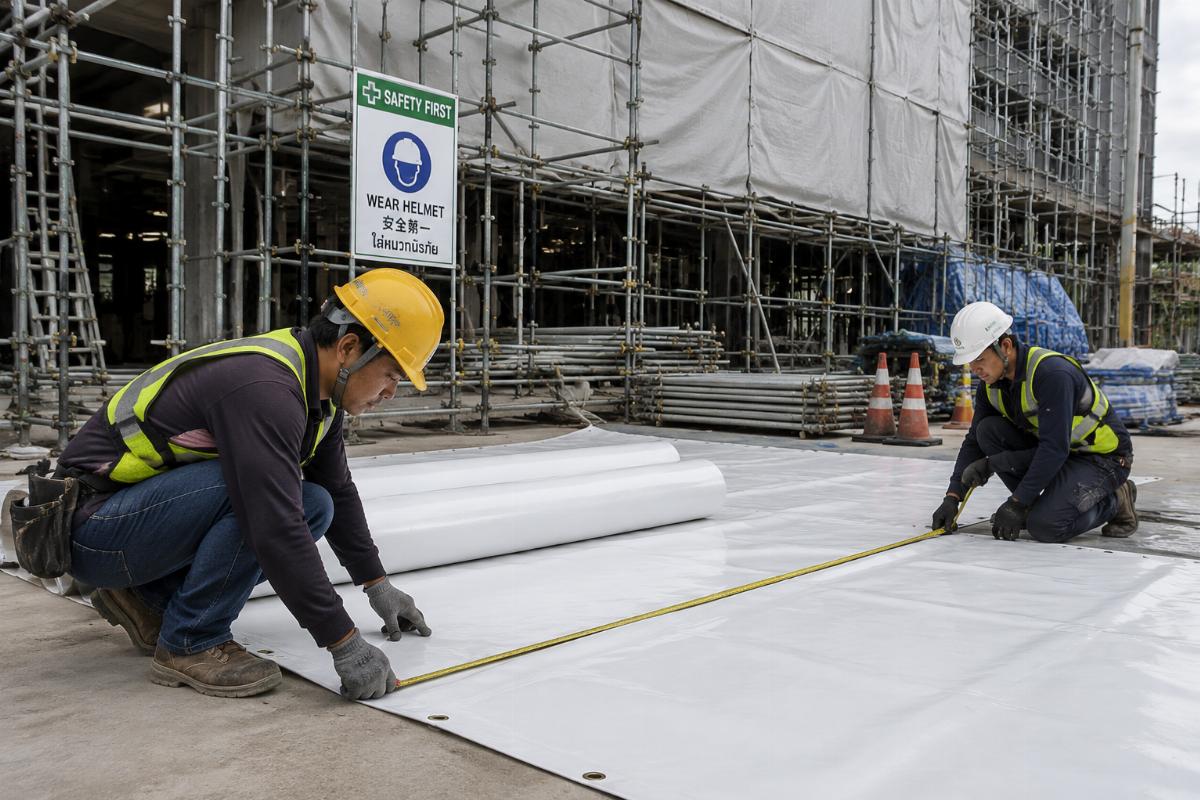
The following guide breaks down actionable calculation rules, scenario-specific adjustments, and common pitfalls to avoid for your next material procurement.
What core factors do you need to include when calculating construction PVC tarpaulin requirements?
Skipping even one of the three core calculation factors will create gaps between your estimated quantity and actual on-site demand. Many teams only measure the total flat area of the work site, ignoring the installation and specification variables that directly drive material usage efficiency.
| Calculation Factor | Common Inefficient Practice | Recommended Standard Practice |
|---|---|---|
| Work Coverage Measurement | Measure only 2D flat area of the target structure | Measure 3D surface area of all surfaces requiring coverage including corners and irregular edges |
| Installation Reserve | No extra reserve added for seams and edge fixation | Allocate 5-10% reserve based on project type [NEED_CITE: 8% adjustment for overlapping seams and edge fixation reduced client excess material waste by 11% for a 12,000 sqm German road project] |
| Roll Specification Matching | Select rolls based on lowest unit price per square meter | Match roll dimensions to the dimensions of the target coverage area to minimize cutting waste |
A 3-story residential scaffold wrapping project client based in the UAE recently came to us with an initial calculation that used 6m wide bulk rolls to cut per-unit costs, but their projected cutting loss hit 15% of total material. We recommended switching to standardized 2m x 5m rolls that aligned perfectly with the scaffold panel dimensions, bringing their final cutting loss down to just 4% across the entire project.
- Base Area Calculation – Multiply the height and length of every surface requiring coverage to get the raw total coverage area, excluding no irregular edges or overlapping structure sections.
- Reserve Coefficient Application – Apply a standardized reserve percentage based on your work type, with 7% for temporary enclosure, 8% for road infrastructure protection, and 10% for complex scaffold wrapping.
- Roll Dimension Alignment – Cross-reference the adjusted total area against supplier standard roll sizes to select the dimensions that require the least number of cutting operations.
How do different construction scenarios adjust the calculation logic to avoid material waste?
Each common construction application has unique calculation priorities that can reduce overall material loss by more than 10% if tailored correctly. Generic one-size-fits-all calculation methods lead to unnecessary waste no matter how precise your initial measurement is.
| Scenario Type | Common Miscalculation Error | Targeted Adjustment Rule |
|---|---|---|
| Scaffold Wrapping | Use bulk wide rolls to reduce per unit cost | Select rolls matching standard scaffold panel dimensions to minimize offcut waste [NEED_CITE: Standard 2m x 5m PVC tarpaulin rolls reduced cutting loss from 15% to 4% for a 3-story UAE residential scaffold project] |
| Temporary Site Enclosure | Over-reserve extra material to avoid supply gaps | Use 5-7% reserve for straight, continuous enclosure walls with minimal corners |
| Stacked Material Rainproof Cover | Calculate only the top surface area of stacked materials | Add 10% extra reserve for overlapping flaps at stack edges and tie-down points |
A Southeast Asian client running an 8,000 sqm temporary enclosure project initially calculated their required volume with a 12% reserve to avoid delays, which would have added nearly 1,000 sqm of unnecessary material cost. We adjusted their reserve down to 6% to match the straight, low-corner layout of their site, and aligned their final calculated quantity to a 7-day sample delivery window so they could confirm material performance before placing the full bulk order.
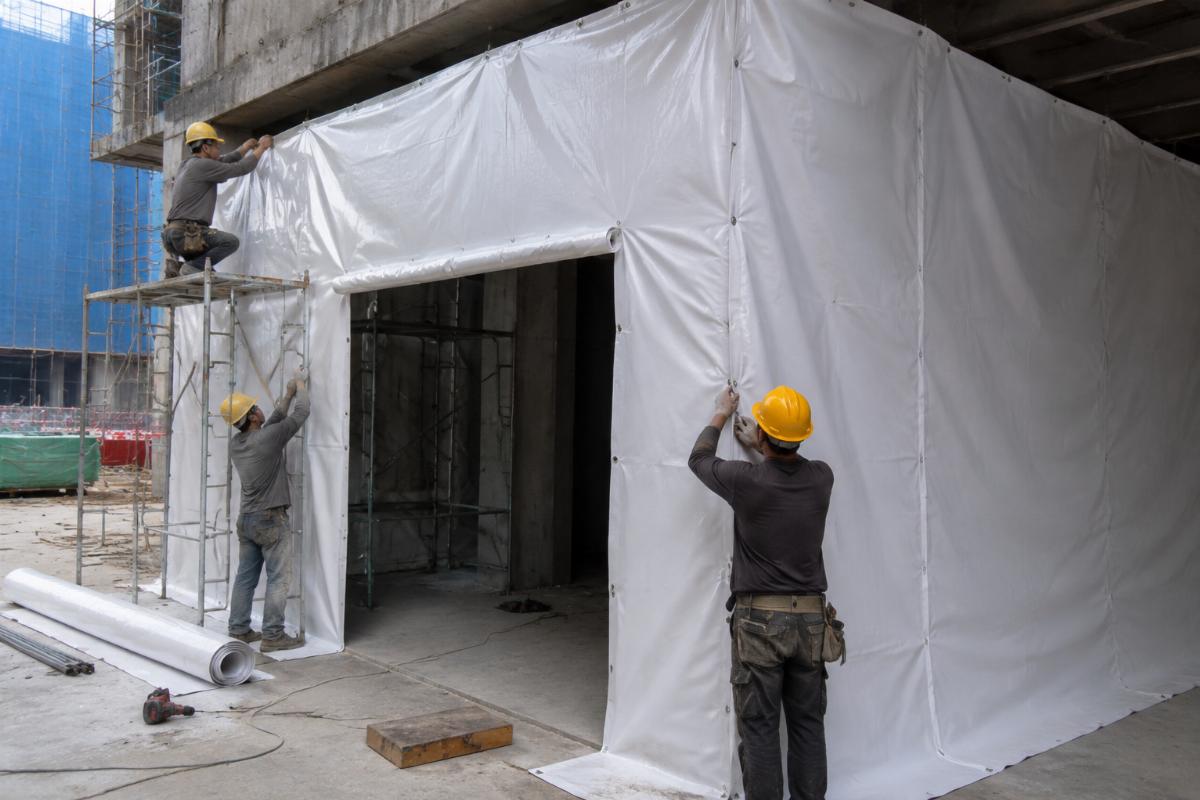
- Scaffold Wrapping Prioritization – Prioritize roll dimension matching over low per-unit price, as cutting waste from misaligned rolls will erase any unit cost savings.
- Temporary Enclosure Prioritization – Prioritize lower reserve percentages for simple layouts, and order extra only for sections with multiple corners or elevation changes.
- Rainproof Cover Prioritization – Prioritize extra reserve for tie-down and overlap, as gaps in these areas will render the cover ineffective even if total area matches.
What common miscalculation errors lead to delayed construction or excess procurement?
The two most frequent mistakes are only calculating flat area and ignoring roll specification matching, and both create measurable negative outcomes for project timelines and budgets. Even teams that have run multiple construction projects fall into these traps due to outdated procurement assumptions.
| Error Type | Typical Outcome | Mitigation Step |
|---|---|---|
| Only Calculating Flat Area | On-site supply gap that delays construction by 2-4 days | Add the standardized 5-10% installation reserve to every initial calculation |
| Prioritizing Larger Rolls for Lower Unit Price | 12-18% extra cutting waste that adds 8-12% to total material cost | Test roll dimensions against your structure layout before finalizing order quantities |
| Skipping Pre-Delivery Validation | Material fails local safety certification requiring full reorder | Request a small sample batch to test performance and certification before bulk production |
We recently supported a European road infrastructure client with a 12,000 sqm project that had initially calculated their required quantity based purely on flat site area, with no reserve for seam overlap or edge fixation. We adjusted their calculation base by 8% to account for those installation needs, which cut their excess material waste by 11% compared to their original self-calculation while eliminating the risk of running out of material mid-installation.

- Flat Area Check – Cross-reference your initial total area against scenario-specific reserve coefficients to confirm you have not skipped the installation allowance step.
- Roll Size Validation – Run a quick test calculation of cutting waste for 2-3 different standard roll sizes before locking in your order.
- Sample Request – Always request a 7-day sample delivery to confirm material performance and certification before placing a full bulk order.
How to align your calculation results with bulk procurement rules from Chinese suppliers?
Aligning your final calculated quantity to supplier operational rules eliminates post-procurement friction and ensures you get the exact material you need on schedule. Many global buyers overlook this alignment step, leading to unexpected lead time extensions or mismatched product specifications.
| Alignment Step | Common Misstep | Recommended Practice |
|---|---|---|
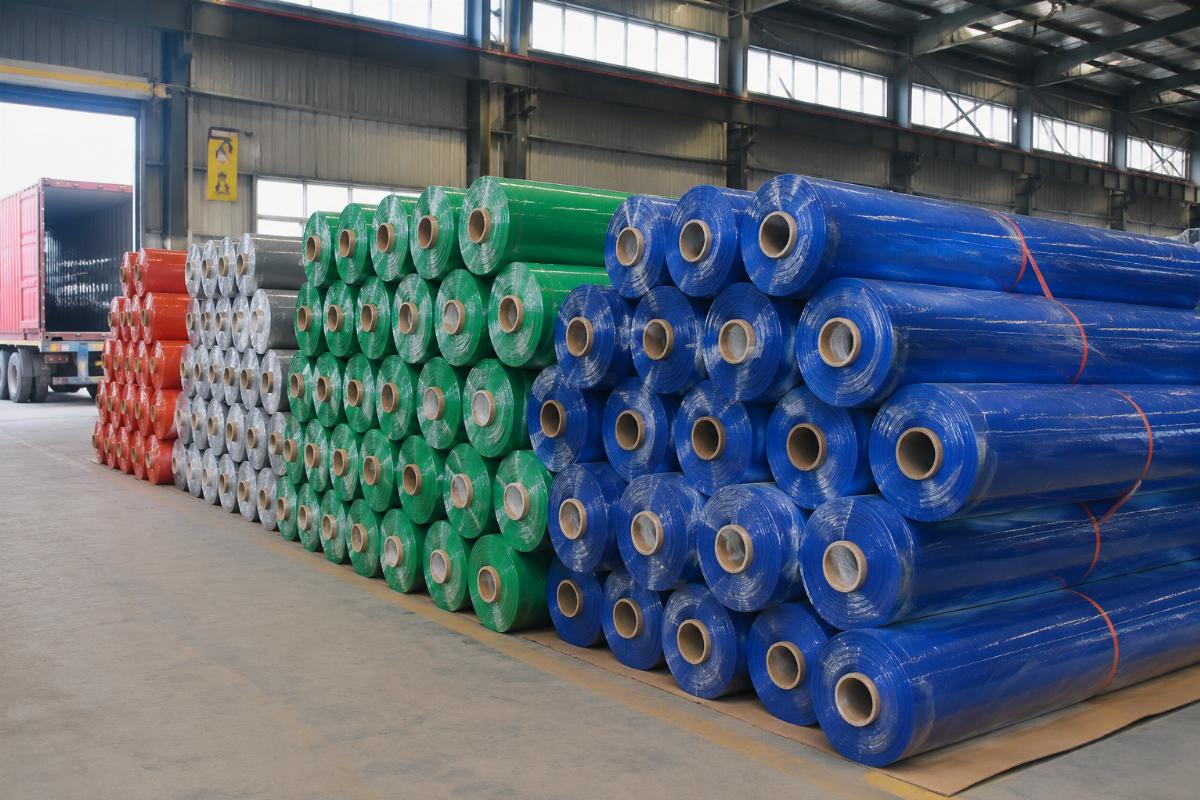
| Standard Roll Range Confirmation | Assume all suppliers carry the same roll dimensions | Confirm the full list of standard roll sizes offered by your supplier before finalizing your calculation |
| MOQ Adaptation | Force your calculated quantity to match arbitrary supplier MOQ | Work with suppliers that offer flexible MOQ tailored to individual project requirements |
| Pre-Delivery Inspection | Skip quality checks before shipment | Require 100% pre-shipment QC inspection to confirm material matches your ordered specifications |
Chinese suppliers with deep construction market experience can adjust their production and delivery terms to match your calculated project needs directly. For example, Shandong Jinxiang Technology supports flexible MOQ for project orders, provides 7-day fast sample delivery, and holds multiple international certification qualifications to match the material performance requirements of construction projects across EMEA and APAC.
- Supplier Standard Roll Confirmation – Ask your