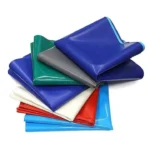
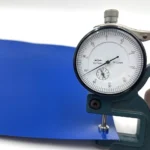
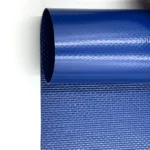
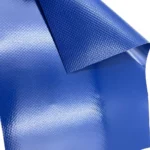
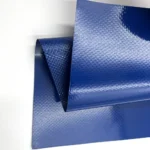
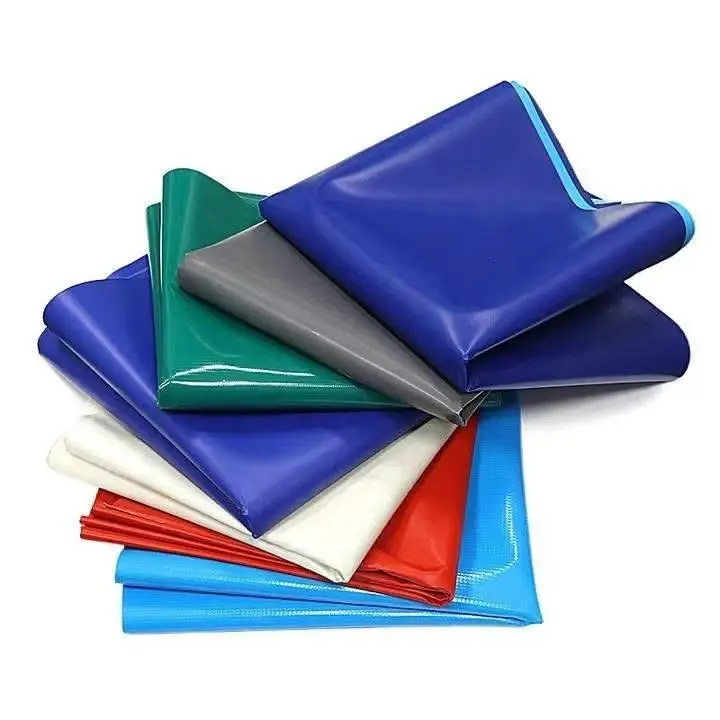
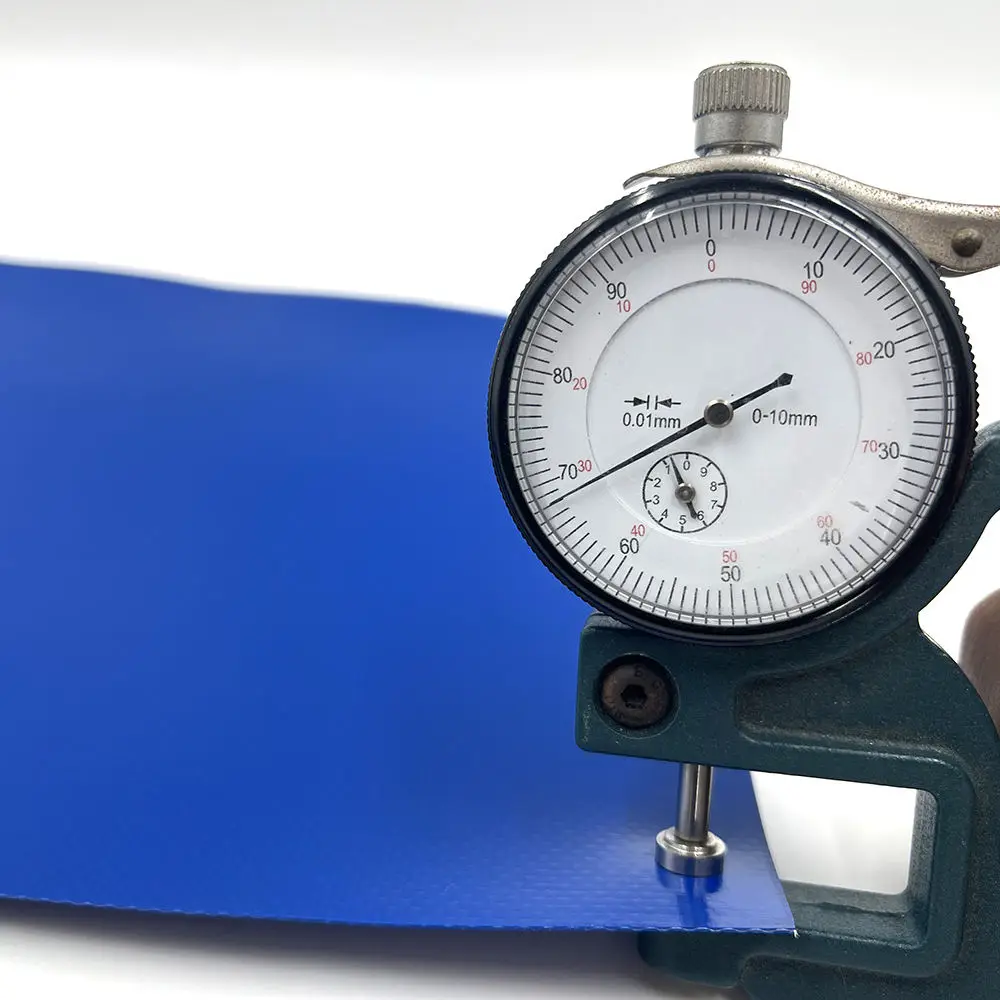
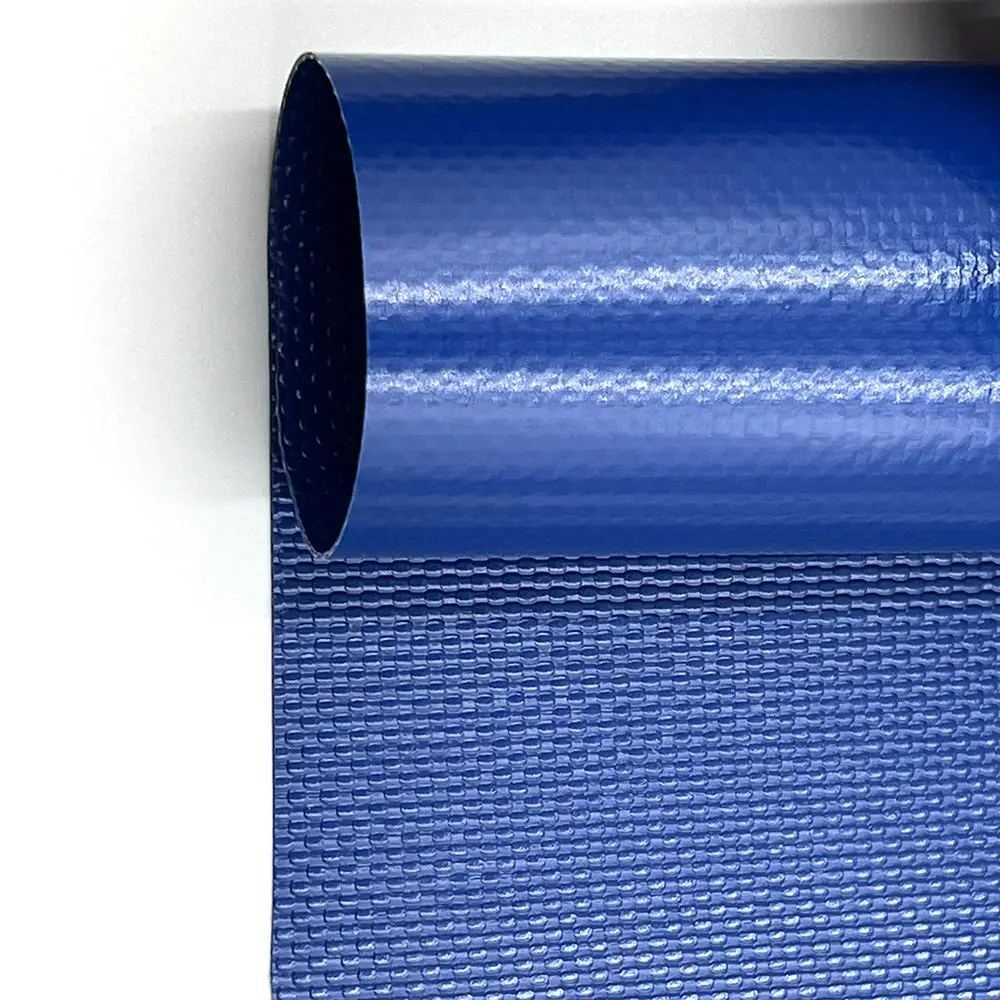
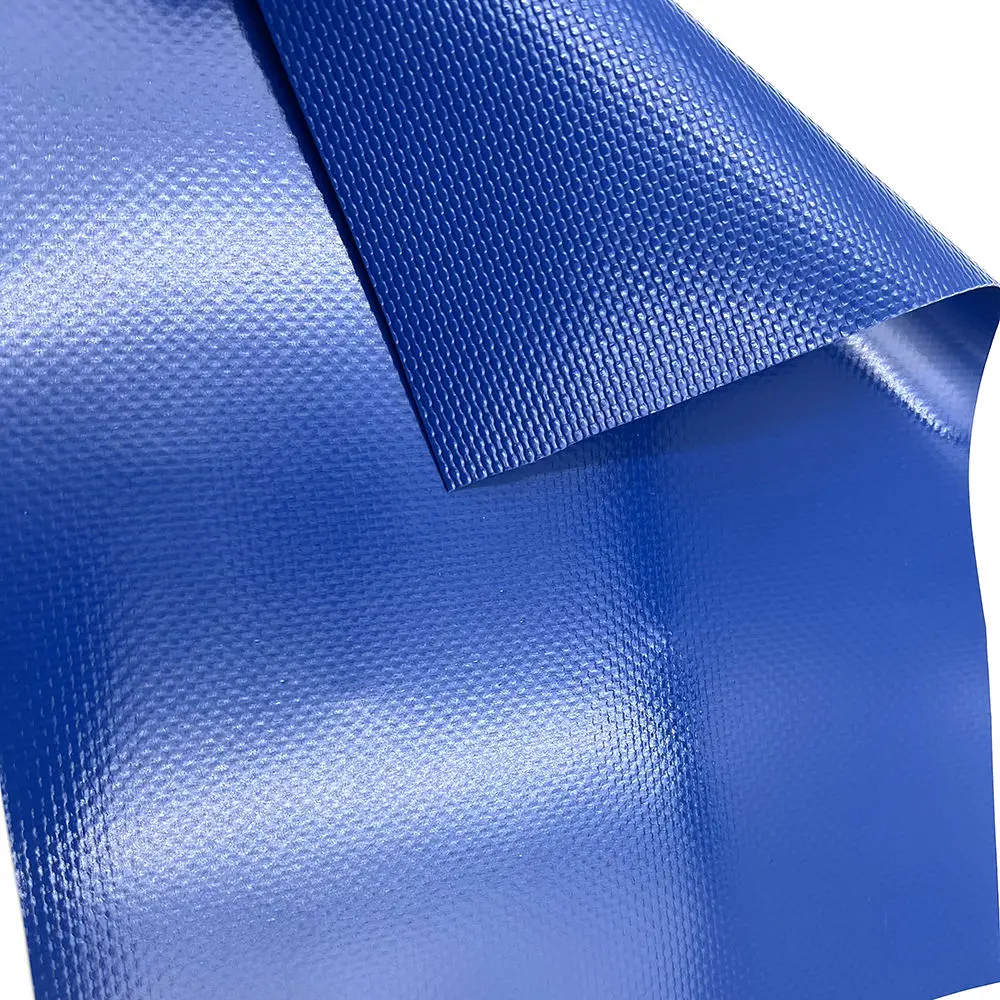
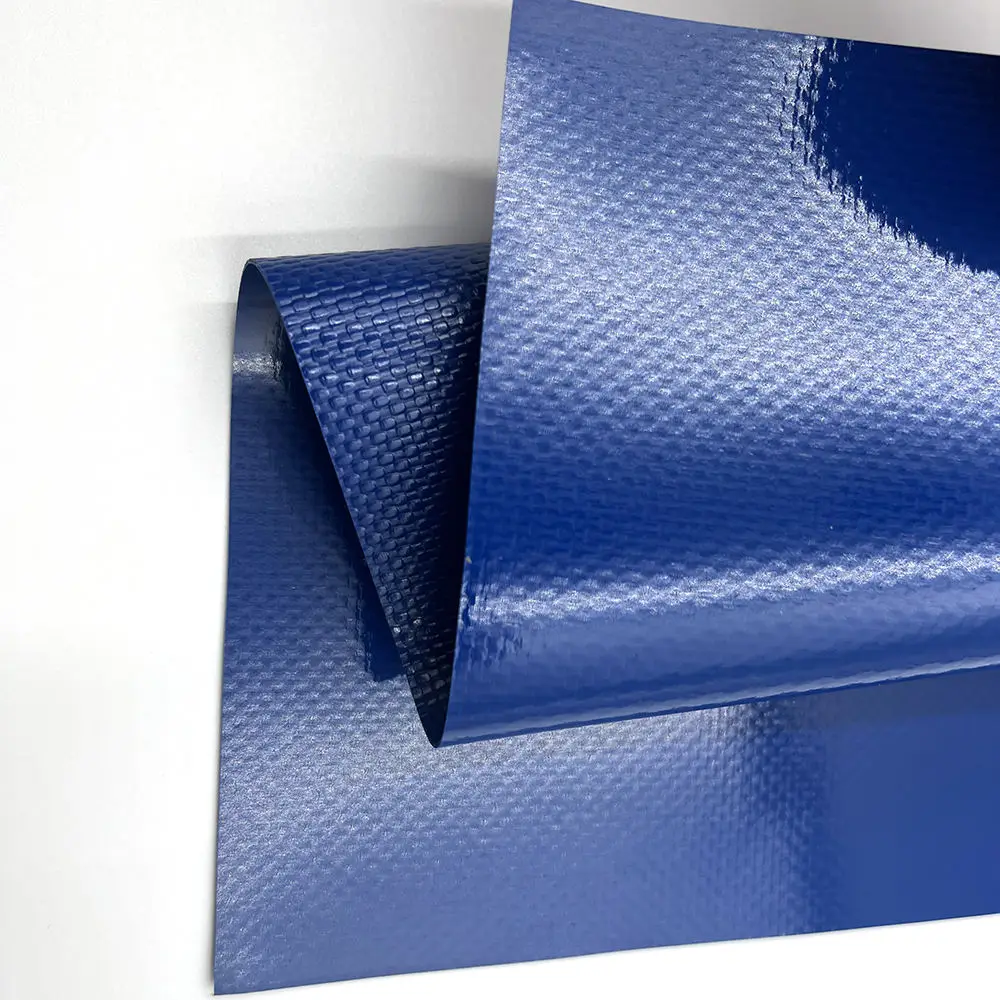
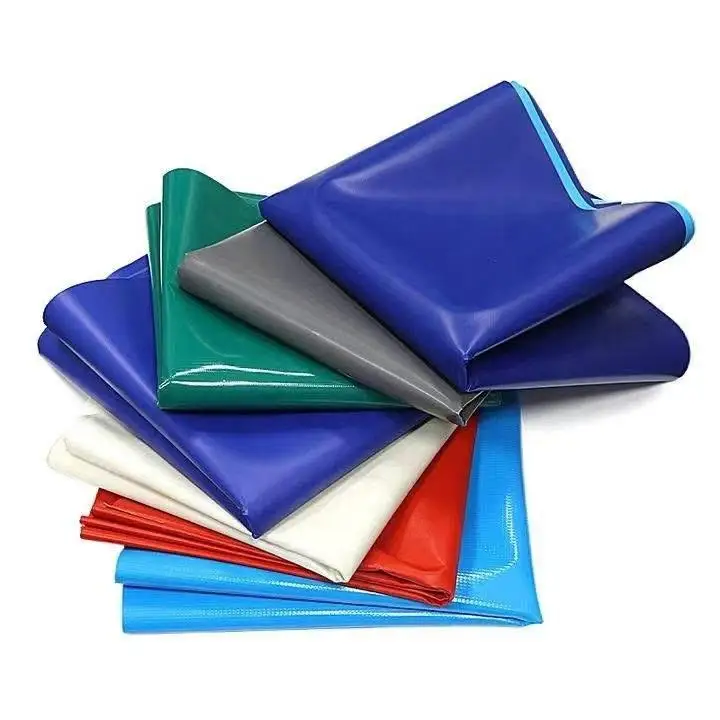
Proven coating control — Nearly 30 years focused on coated fabric with dedicated QA at every coating stage, ensuring batch-to-batch consistency for technical membrane and duct applications.
Technical Specifications
| Parameter | Value |
|---|---|
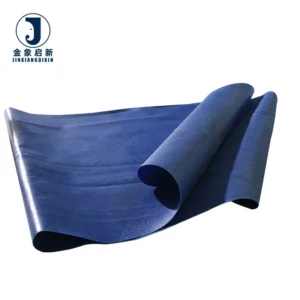
| Product Type | PVC Knife Coated Tarpaulin |
| Base Material | PVC Coated Polyester Fabric |
| Coating Method | Knife Coated |
| Color | Blue |
| Waterproof | Fully waterproof coated construction |
| Fire Retardant | Available in fire retardant grades — confirm the grade required for your market |
| UV Treatment | UV resistant treatment available — test basis to be confirmed at inquiry |
| Anti-Mildew | Antibacterial and mildew proof |
| Oil & Stain Resistance | Yes |
| Acid & Alkali Resistance | Yes |
| Temperature Resistance | High temperature and cold resistant (range to be confirmed per grade) |
| Anti-Oxidation & Weather Resistance | Yes |
| Flexibility | Highly flexible, resistant to cracking |
| Self-Cleaning | Self-cleaning surface treatment |
| Welding Options | HF, Hot Air, Sewing |
| Tensile Strength | Excellent (no standard or value stated in source) |
| Tear Strength | Excellent (no standard or value stated in source) |
| Peel Strength | Excellent (no standard or value stated in source) |
| Standards | ISO, CE |
Application Suitability
| Application | Exposure & Requirement |
|---|---|
| Airport hangar membrane covers | Wind load, UV exposure, certified fire retardant compliance required for aviation facilities |
| Mining and tunnelling ventilation ducts | Continuous airflow, dust accumulation, anti-static and flame retardant compliance mandatory underground |
| Stadium tensile structures | Long-term weather exposure, high tensile loads at anchor points, colour consistency across panels |
| Portable storage structures | Repeated assembly and disassembly, abrasion at frame contact points, waterproof integrity |
| Shade systems and shadings | Direct solar exposure, thermal expansion and contraction, self-cleaning surface demand |
What Happens When Your Ventilation Duct Fabric Fails Its Fire Inspection
A missing test report halts the entire project — the fabric itself is irrelevant if the documentation does not match the site specification.
Contractors working on mining, tunnelling and aviation projects face a recurring documentation gap. The ventilation duct or membrane structure material arrives on site, but the fire retardant or anti-static certification does not match what the site safety officer requires for inspection sign-off. [NEED_CITE: fire classification standards for textile materials in underground and aviation environments] The PVC Knife Coated Tarpaulin fire retardant anti-static certified specification must be confirmed at the inquiry stage, not at the delivery gate. When the grade is assumed rather than specified, rework costs and project delays follow.
Coating Technology for Structural Membrane Loads
Knife coating deposits a controlled PVC layer onto the polyester base fabric, building tensile and peel strength through direct mechanical adhesion rather than adhesive lamination. This process produces a fabric that handles the sustained loads found in tensile architectural structures and large-format membrane roofs. The PVC Knife Coated Tarpaulin fire retardant anti-static certified range supports high frequency, hot air and sewn joining, giving fabricators flexibility when constructing duct sections or membrane panels.
Fire Retardant and Anti-Static Compliance Pathways
Mining and tunnelling ventilation systems require fabric that meets both flame retardant and anti-static thresholds before installation underground. Aviation hangar membrane covers carry their own fire classification demands tied to building material standards. [NEED_CITE: anti-static surface resistance measurement methods for coated textiles] Confirming the target market standard — whether M2, B1, NFPA 701 or DIN 4102 — at the specification stage ensures the test report shipped with the roll matches what the inspector expects. The PVC Knife Coated Tarpaulin fire retardant anti-static certified options are supplied with documentation aligned to the confirmed grade.
How Knife Coating and Base Fabric Determine Real Performance
The relationship between GSM and actual tensile or tear strength depends on the base fabric denier, weave density and coating weight acting together, not on any single figure in isolation. Knife coating forces PVC paste into the weave structure under blade pressure, producing higher peel strength than laminated alternatives — this matters when welded seams carry structural loads in membrane roofs or duct joints. The self-cleaning surface treatment reduces dirt accumulation on shade systems and stadium canopies, maintaining appearance under extended weather exposure. Acid and alkali resistance protects the coating in environments where chemical-laden dust or runoff contacts the fabric surface. Anti-mildew and antibacterial treatment prevents biological degradation in humid or poorly ventilated installations.
The Cost of Specifying Fabric Without Verified Documentation
A ventilation duct installed underground without the correct anti-static test report does not just fail inspection — it triggers a full removal and replacement cycle that delays every downstream trade on the project. [NEED_CITE: consequences of non-compliant ventilation materials in underground construction] Membrane structure panels that show colour variation between rolls become visible the moment they are installed side by side on a stadium canopy, forcing selective replacement. When fire retardant grades are claimed on the quotation but unsupported by a matching test report, the liability falls on the contractor at the point of site audit.
Why Technical Buyers Source This Fabric Here
Three full production lines and 36 sets of professional equipment support the volume requirements of large-scale membrane and duct projects without sacrificing coating consistency. The 10-person R&D team handles material selection and sample development, confirming that the PVC Knife Coated Tarpaulin fire retardant anti-static certified specification matches the project demand before bulk production begins. Dedicated QA at every production stage with 100% pre-shipment inspection catches coating weight deviation and colour drift before rolls leave the facility. Nearly 30 years of coated fabric process control underpins the relationship between stated GSM and actual tensile performance. Samples are developed within days for custom requirements, allowing fabricators to validate welding parameters and colour approval before committing to full order quantities.
Documentation & Verification
- Material specification sheet stating base fabric denier, coating weight and treatment grades per roll
- Fire retardant test report matched to confirmed standard (M2, B1, NFPA 701 or DIN 4102)
- Anti-static surface resistance test report supplied where site regulations require it
- Pre-shipment inspection record with roll-by-roll QC verification before dispatch
- ISO and CE certificates with certificate of origin and customs documentation included
Fabrication, Handling & Storage
- HF and hot air welding both compatible — confirm temperature and dwell time on the knife coated PVC surface before production runs
- Sewn seams require UV-resistant thread matched to the blue PVC coating to prevent stitch line degradation
- Store rolls horizontally on pallets to prevent flat spots and creasing on the coated surface
- Unroll at ambient temperature — cold-stored knife coated fabric resists flexing and may crack if handled below recommended range
- Clean with mild detergent only; solvent-based cleaners may compromise the self-cleaning surface treatment
- Plan panel cutting layout to minimise waste across the roll width and reduce welded seam count
What to Include in Your Inquiry
Provide the specific application — whether ventilation duct, membrane structure or tensile canopy — along with the fire retardant and anti-static standards your site requires. Confirm the roll width, colour consistency expectations and annual volume so the production schedule can be aligned. Specify whether you need rolls only or finished panels with welded seams and edge reinforcement.
Frequently Asked Questions
Q: Which fire retardant standard does my project require, and can you supply the matching test report?
A: The required standard depends on your market and application — common grades include M2, B1, NFPA 701 and DIN 4102. State the target standard at inquiry stage so the PVC Knife Coated Tarpaulin fire retardant anti-static certified material is produced and tested to match. The corresponding test report ships with the documentation package for site inspection compliance.
Q: How is anti-static performance measured, and what surface resistance value is achieved?
A: Anti-static performance is assessed through surface resistance testing per the relevant standard for your installation environment. The achieved value depends on the treatment grade specified. Confirm the required threshold at inquiry so the test report included with your PVC Knife Coated Tarpaulin fire retardant anti-static certified shipment reflects the correct measurement basis.
Q: What welding methods are recommended for joining panels in membrane structures and duct fabrication?
A: High frequency welding, hot air welding and sewing are all compatible with this knife coated PVC fabric. HF welding typically delivers the strongest peel resistance for structural membrane panels, while hot air suits curved duct sections. We recommend running weld parameter trials on supplied samples before full production.
Q: How do you ensure roll-to-roll colour and coating consistency across a bulk order?
A: Dedicated QA at every coating stage monitors colour and coating weight across the production run. Every roll undergoes 100% pre-shipment inspection before dispatch. This process control ensures the blue PVC surface remains consistent when panels from different rolls are installed side by side on large membrane or shade structures.
Q: What certification documentation is included with each shipment for site inspection compliance?
A: Each shipment includes a material specification sheet, fire retardant and anti-static test reports matched to the confirmed grade, pre-shipment inspection record, roll packing list, ISO and CE certificates, and certificate of origin. This documentation package supports site safety audits and regulatory compliance for aviation, mining and construction projects.