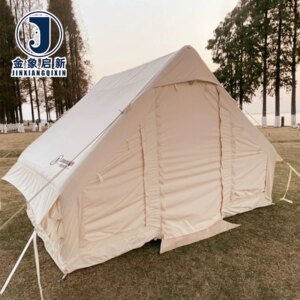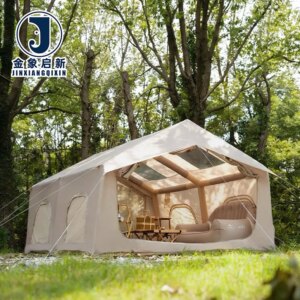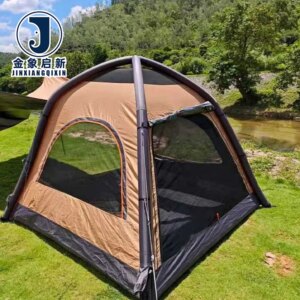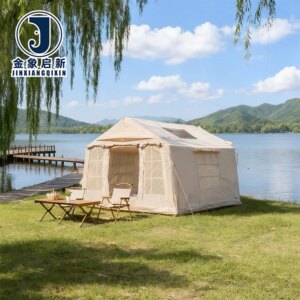
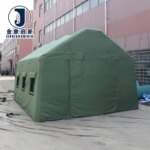
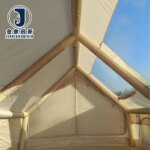
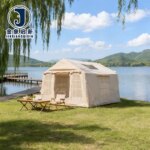
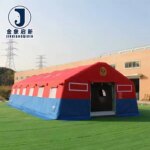
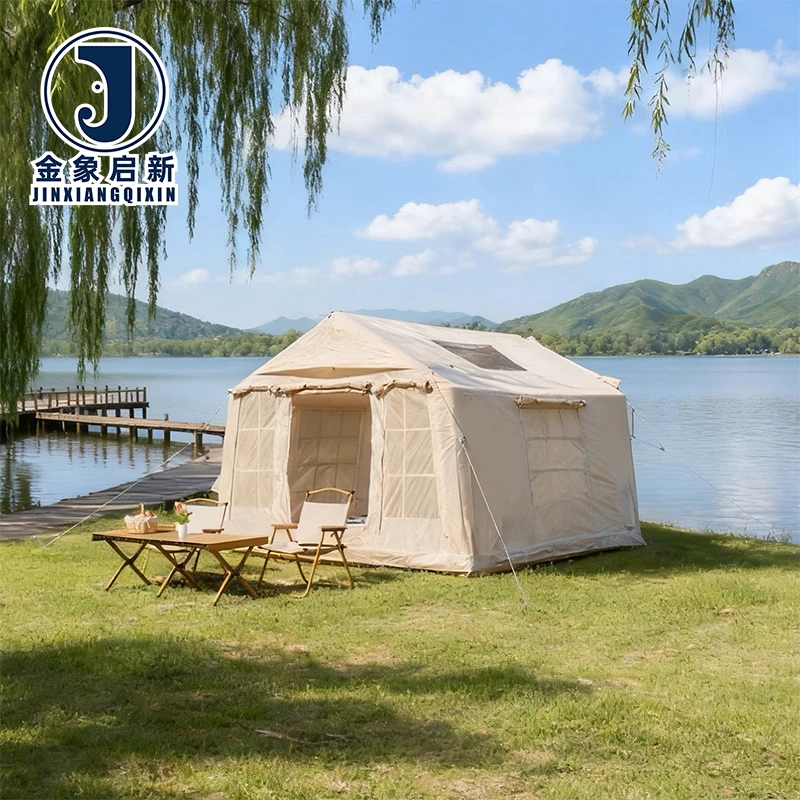
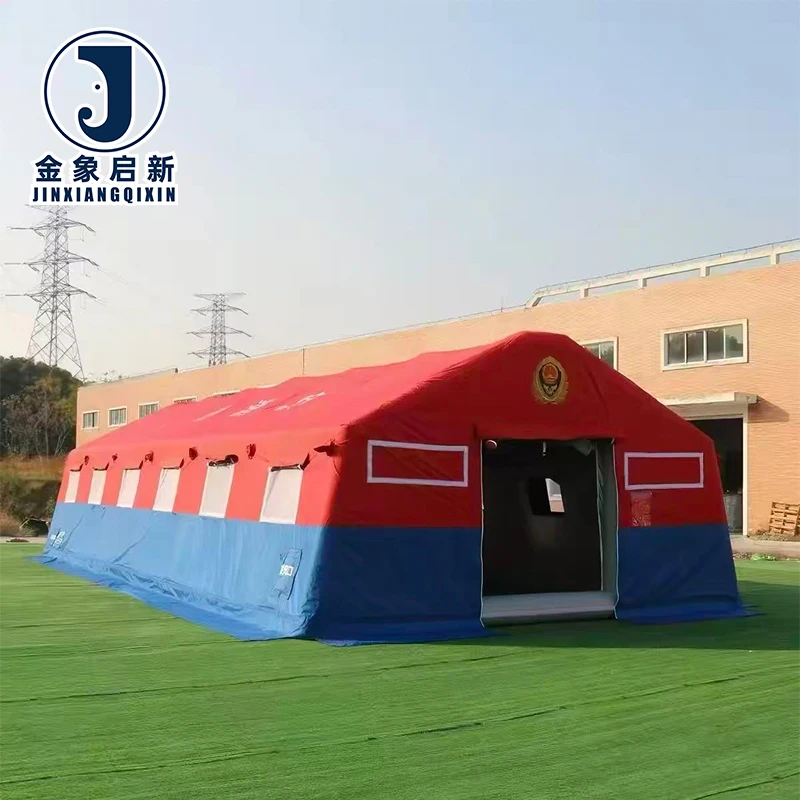
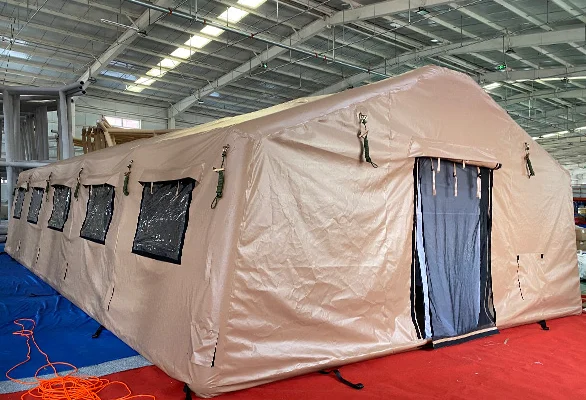
Deep Process Control Over Coated Fabric — Nearly 30 years focused on PVC coated material production ensures every inflatable tent fabric meets the structural demands of rapid deployment and sustained field exposure.
Technical Specifications
| Parameter | Value |
|---|---|
| Product Type | Inflatable Tent |
| Core Material | PVC tarpaulin |
| Key Performance | Waterproof, UV-resistant (test basis not stated), tear-resistant |
| Construction | Single layer |
| Capacity | 2-8 Person |
| Season Rating | 4-Season |
| Opening Mechanism | Quick Automatic Opening (inflatable) |
| Configuration | Extended Type |
| Customization | OEM & ODM, sample customization, pattern printing |
| Standards | ISO9001, ISO14001, ISO45001, CE |
Application Suitability
| Application | Exposure & Requirement |
|---|---|
| Disaster relief command centers | Continuous weather exposure, rapid setup under emergency timelines, multi-day occupancy |
| Temporary equipment storage | Ground moisture contact, UV exposure, wind load on large surface area |
| Site accommodations during infrastructure recovery | Temperature fluctuation, rain ingress prevention, transport and repeated redeployment |
| Industrial emergency preparedness staging | Standby storage without degradation, immediate inflation capability, all-season readiness |
Why Rapid Deployment Tents Fail When Procurement Ignores Material Traceability
An Inflatable Tent manufacturer with certified material traceability eliminates the two most common field failures: fabric degradation under sustained UV exposure and seam separation during inflation cycles.
Emergency response teams frequently deploy shelters rated for consumer camping that disintegrate within weeks of continuous outdoor use. The procurement decision often hinges on capacity ratings and setup speed while the fabric specification remains unverified. In disaster relief operations, this gap between marketing claims and material reality creates a compliance risk that surfaces only after deployment. When the tent fails at the seam during the third inflation cycle or the PVC surface chalks after a single season of UV exposure, replacement logistics compound the original emergency [NEED_CITE: field failure modes for temporary shelter structures in disaster response].
Single-Layer PVC Tarpaulin Balancing Weight and Durability
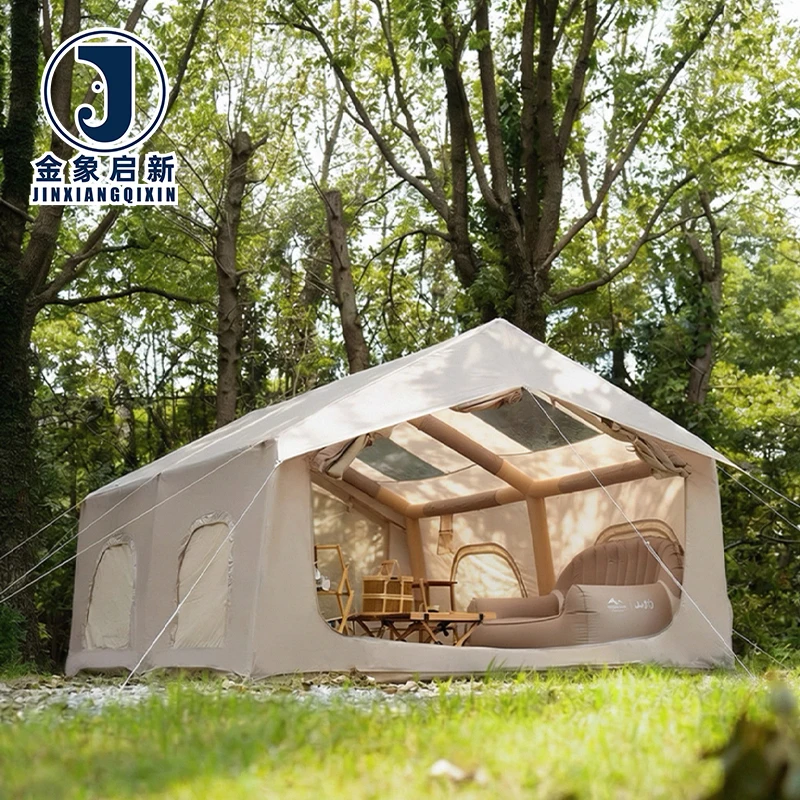
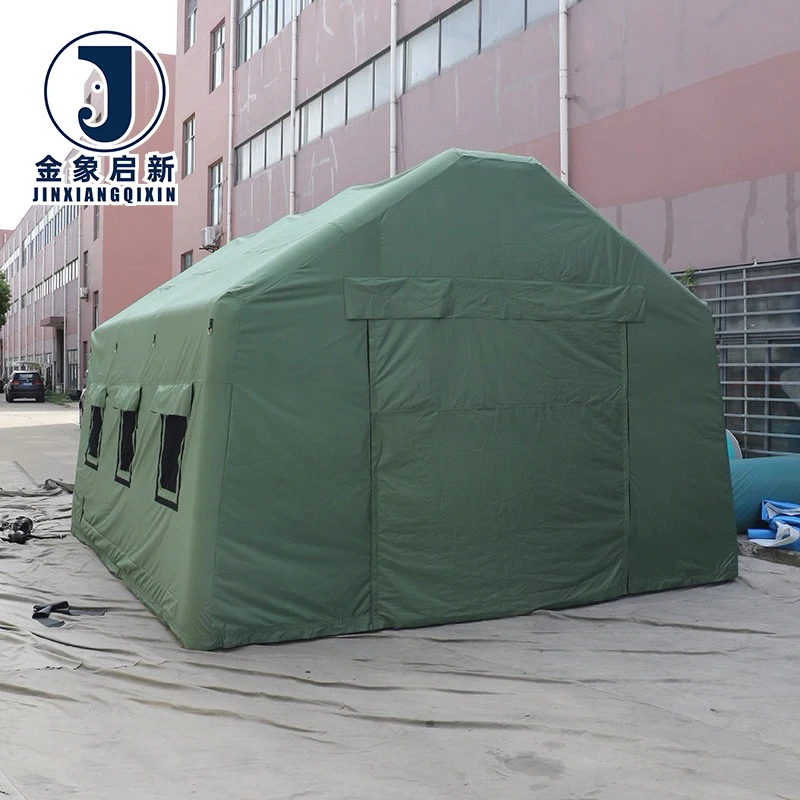
The single-layer PVC tarpaulin construction serves a specific logistical function in emergency response. Every kilogram saved in fabric weight translates to additional units per transport vehicle, directly affecting how many shelters reach the field in the first convoy. An Inflatable Tent manufacturer designing for disaster relief must balance this transport efficiency against the mechanical stress of automatic inflation. The extended type configuration provides the covered volume needed for command operations or equipment staging without requiring a multi-layer assembly that would increase packed dimensions and deployment time.
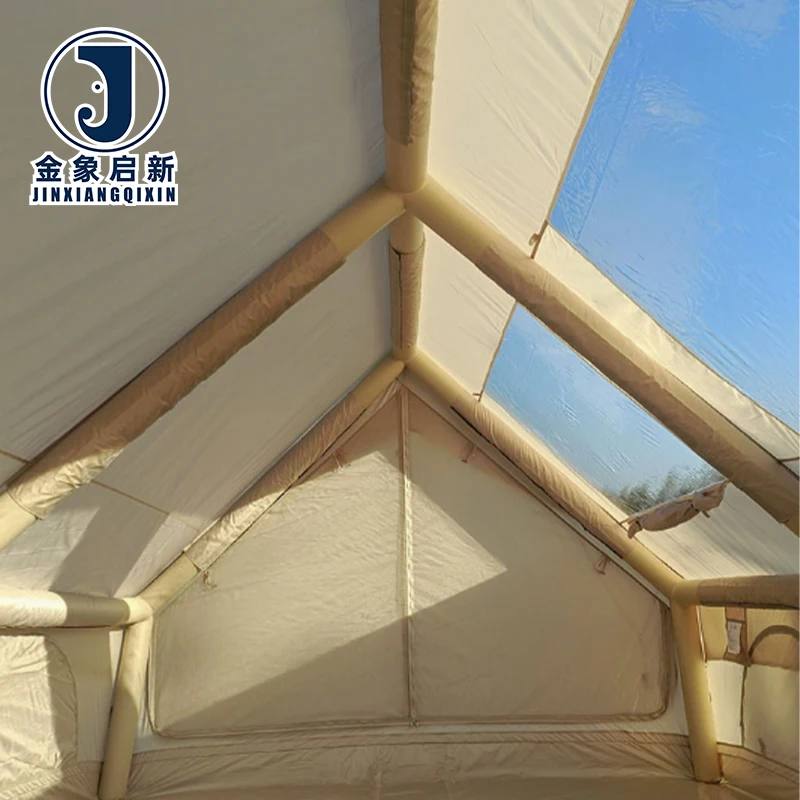
Inflation Cycles and Structural Fatigue at the Seam Line
Each inflation and deflation cycle places cyclical stress on the welded seams and air beam junctions. The PVC tarpaulin must maintain coating adhesion through repeated flex without delaminating from the base fabric. Industrial emergency preparedness operations may deploy and strike these tents dozens of times across a single recovery campaign. The quick automatic opening mechanism depends entirely on the air-holding integrity of the seam construction. Coating weight and adhesion strength, controlled through the manufacturing process, determine whether the tent survives its twentieth deployment cycle or fails at the most stressed weld point [NEED_CITE: coating adhesion test methods for inflatable structures per ISO 2411].
Reading the Specification Sheet Beyond Capacity Ratings
The 4-season rating communicates intended temperature and weather range, but the actual field performance depends on the PVC tarpaulin’s specific coating formulation and base fabric construction. Waterproof performance in a single-layer inflatable structure requires the coating to maintain continuity across every welded seam without pinholes. Tear resistance determines whether a puncture from sharp ground debris propagates into a structural failure or remains a localized repair. UV-resistant treatment, where the grade is confirmed for your target market, affects how long the fabric retains tensile strength and color stability under continuous sun exposure. These properties interact: a heavier coating improves waterproofing but increases packed weight, while a tighter base fabric weave improves tear resistance but raises material cost.
The Hidden Cost of Unverified Fabric Claims in Emergency Procurement
Procurement teams sourcing inflatable shelters for disaster response frequently encounter a gap between quoted specifications and delivered product. Material that arrives lighter than the stated coating weight compromises waterproof integrity and accelerates wear at high-stress inflation points. UV-resistant treatment claimed without supporting test documentation means the tent surface may chalk and embrittle within a single season of field deployment, requiring premature replacement under conditions where supply chains are already strained. Welded seams that fail before the fabric itself reaches its expected service life create a specific pattern of field failure that traces directly back to inadequate process control during manufacturing [NEED_CITE: common failure points in PVC coated inflatable structures].
Why Procurement Teams Source Inflatable Tents Here
A 10-person R&D team develops samples within days, allowing buyers to verify material hand, seam strength, and inflation behavior before committing to production volume. Three full production lines with 36 sets of professional equipment provide the capacity to fulfill large-scale relief orders without fragmenting production across facilities. Dedicated QA and QC staff conduct 100% inspection at every production stage, catching coating inconsistencies and seam defects before they ship. The ISO9001, ISO14001, ISO45001, and CE certification framework provides the documentation trail that government and institutional procurement mandates require. OEM and ODM customization, including pattern printing and sample customization, allows organizations to specify exact branding and configuration requirements for fleet uniformity.
Documentation & Verification
- Material specification sheet stating coating type, base fabric, and performance characteristics per order
- ISO9001, ISO14001, ISO45001, and CE certificates supporting cross-border procurement compliance
- Pre-shipment inspection record with order-traceable batch verification
- Test documentation for UV-resistant and waterproof claims available by market requirement
- Quality inspection report linked to production batch for each inflatable tent shipment
Fabrication, Handling & Storage
- Weld temperature and dwell time must match the PVC tarpaulin coating weight to prevent seam delamination during inflation
- Store inflated or deflated units dry to prevent mildew formation on the single-layer PVC surface
- Avoid prolonged compression of packed tents to prevent permanent crease marks on the coating
- Clean PVC tarpaulin with mild detergent only; solvents may degrade the waterproof coating layer
- Field repair of punctures requires compatible PVC adhesive and patch material matching the base fabric weight
Request a Specification Review
To scope your inflatable tent requirement, provide the intended deployment environment, expected duration of continuous field exposure, and any fire safety or compliance standards your target market mandates. Specify whether you require OEM customization including pattern printing or branding, the quantity range for initial and ongoing orders, and whether sample evaluation is required before production. Our technical team will recommend the PVC tarpaulin specification and configuration that matches your operational profile.
Frequently Asked Questions
Q: What customization options are available for material thickness and pattern printing?
A: OEM and ODM services include material selection, pattern printing, and design adjustments specific to your operational requirements. The R&D team develops custom samples for your approval before mass production, ensuring the PVC tarpaulin weight, color, and printed branding meet your exact specifications for fleet uniformity across disaster response deployments.
Q: What certifications does this inflatable tent carry and how do they support procurement compliance?
A: The product carries ISO9001, ISO14001, ISO45001, and CE certifications. Documentation packages include the relevant certificates alongside material specification sheets and inspection records. This certification framework satisfies the compliance documentation requirements typical of government tenders and institutional procurement for emergency preparedness equipment.
Q: How do you verify waterproof and UV-resistant performance claims with test data?
A: Performance verification depends on the specific test standards required by your target market. Request the applicable test documentation during the specification review stage. We provide supporting test results where available and can arrange additional testing to the standards your procurement compliance framework demands before shipment.
Q: What is the sample approval process before mass production begins?
A: Sample development occurs within days of specification confirmation. You evaluate the sample for material hand, seam construction, inflation behavior, and any custom printing or branding. Production proceeds only after your written approval, eliminating the risk of bulk orders that do not match your operational requirements.
Q: How do you ensure batch-to-batch consistency across multiple orders?
A: A 100% pre-shipment inspection process with dedicated QA and QC staff verifies every production batch against the approved specification. Quality inspection reports and product specification sheets are traceable by order number, providing the documentation continuity that disaster response organizations require when restocking inventory across multiple procurement cycles.