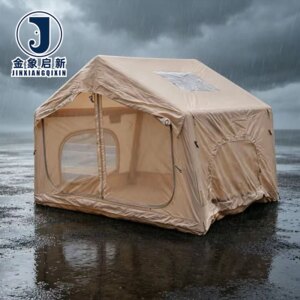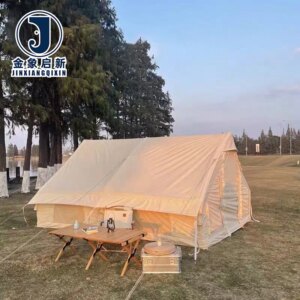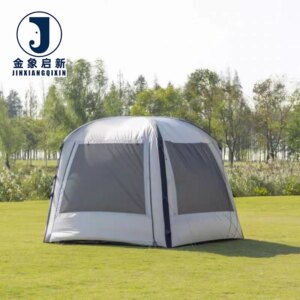



Process-Controlled Coating Expertise — Nearly 30 years of PVC coated fabric production with dedicated QA at every stage ensures batch-to-batch compliance for inflatable tent fabric fire retardant anti-static certified applications.
Technical Specifications
| Parameter | Value |
|---|---|
| Product Type | Inflatable Tent |
| Core Material | PVC tarpaulin |
| Key Performance | Waterproof, UV-resistant (test basis not stated in source), tear-resistant, fire-retardant (grade not stated in source), anti-static (standard not stated in source) |
| Product Forms | Inflatable structure with automatic opening mechanism |
| Construction | Single layer |
| Capacity | 1–12 Person |
| Customization Service | OEM & ODM (sample customization, pattern printing) |
| Certifications | ISO9001, ISO14001, ISO45001, CE |
Application Suitability
| Application | Exposure & Requirement |
|---|---|
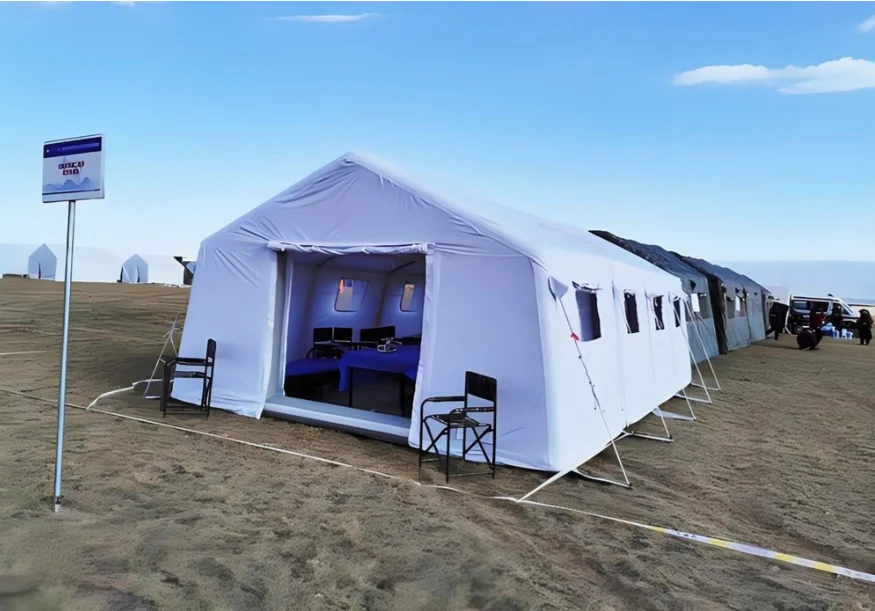
| Mining exploration camps | Remote terrain, high wind load, fire safety compliance for temporary shelters |
| Aviation maintenance hangars | Fuel-adjacent zones, rapid deployment cycles, anti-static fabric demand |
| Construction project sites | Weather exposure, equipment storage, scalable weather protection |
| Emergency response infrastructure | Disaster zones, immediate deployment needs, certified fire-retardant enclosures |
| Tunnelling contractor shelters | Confined site conditions, ventilation integration, underground fire code enforcement |
What "Certified Fire-Retardant" Actually Means on a Remote Mine Site
A fire-retardant certificate only matters if it cites the standard your site auditor recognises.
When inflatable tent fabric fire retardant anti-static certified is specified for a mining camp or aviation ground operation, the procurement team often receives a generic test report that names a standard without matching the destination market’s regulatory requirement. Site safety officers in Western Australia reject materials tested only to M2 when their permit demands AS/NZS 1530. Tunnelling contractors in Scandinavia require DIN 4102 B1 documentation, not a supplier declaration. The gap between "we tested it" and "your auditor accepts it" has shut down more temporary facilities than anyone tracks [NEED_CITE: fire classification standards accepted in mining and tunnelling jurisdictions].
Ventilation Compliance and Inflatable Structure Integration
Inflatable shelters on mine sites frequently share airspace with forced ventilation ducts. The fabric must therefore carry both fire-retardant and anti-static properties — combustible dust or flammable vapours can ignite from a static discharge as readily as from an open flame. Inflatable tent fabric fire retardant anti-static certified for these environments must arrive with surface resistance measurement documentation that the site electrical officer can file alongside the ventilation plan. Without that paper trail, the structure cannot be energised.
Single-Layer Construction for Rapid Deployment
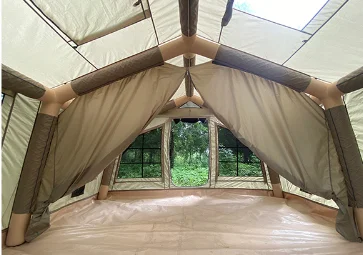
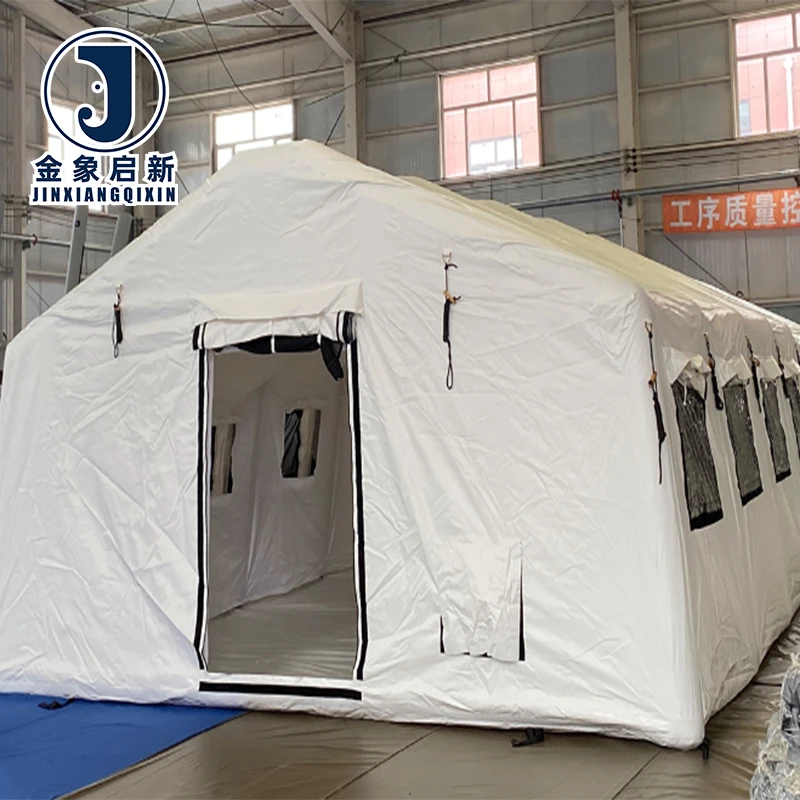
A single-layer PVC inflatable structure eliminates the inter-layer moisture trapping that complicates multi-wall tents in humid or marine climates. The air beam provides structural rigidity while the single membrane handles weather and fire code simultaneously. This simplifies both the inflation system and the post-deployment inspection — there are fewer seams, fewer hidden cavities for mould or dust accumulation, and fewer points where fire-retardant treatment could degrade between layers [NEED_CITE: single-layer inflatable structure behaviour under thermal stress].
Reading the Specification Sheet Beyond the Headline Grade
Fire-retardant ratings operate on fundamentally different test philosophies. DIN 4102 B1 measures residual flame length and afterglow on a vertically suspended specimen, while NFPA 701 evaluates flame propagation on a textile specimen ignited at the bottom edge. A fabric that passes one may not pass the other, and neither test addresses anti-static surface resistance — that requires a separate measurement, typically expressed in ohms per square. Buyers sourcing inflatable tent fabric fire retardant anti-static certified must confirm which standard their jurisdiction enforces before the coating formulation is locked in, because flame-retardant additives and anti-static agents can interact during the PVC compounding stage.
When the Wrong Grade Reaches the Site
Procurement teams that accept a generic "flame retardant" claim without verifying the test standard face consequences that surface only at the compliance audit. Mining regulators shut down camps. Aviation ground operations suspend temporary hangar use. The entire inflatable structure inventory sits idle while replacement fabric is sourced, tested and shipped — a delay measured in weeks, not days [NEED_CITE: cost of compliance failure on remote industrial sites]. Anti-static performance is equally binary: either the surface resistance falls within the acceptable range for the classified zone, or it does not.
Why Industrial Buyers Source This Fabric Here
Three full production lines and 36 sets of professional processing equipment allow parallel runs of fire-retardant and standard-grade PVC without cross-contamination of coating formulations. The 10-person R&D team develops sample panels within days, letting buyers verify colour, hand feel and weld behaviour before committing to a container order. Dedicated QA and QC staff inspect every roll before shipment, recording GSM, coating adhesion and flame-test batch references. ISO9001, ISO14001, ISO45001 and CE documentation ships with every order — not as a PDF link buried on a website, but as physical paperwork matched to the packing list. OEM and ODM customisation covers dimensions, pattern printing and air-beam configuration, all confirmed through pre-production samples.
Documentation & Verification
- Material specification sheet stating PVC base fabric, coating weight and fire-retardant grade per roll
- Test report citing the specific fire-retardant standard and grade applicable to the shipment batch
- Anti-static surface resistance measurement recorded under controlled humidity conditions
- ISO9001, ISO14001, ISO45001 and CE certificates included in the dispatch document set
- Pre-shipment inspection record with roll-by-roll quality data and batch traceability
- Certificate of origin and customs documentation matched to destination country requirements
Fabrication, Handling & Storage
- Heat-weld seams using temperature and dwell settings validated on the specific PVC formulation batch
- Reinforce air-beam attachment points with additional PVC patches bonded to the single-layer membrane
- Store rolls vertically on pallets to prevent flat-spot deformation of the coated surface
- Avoid deploying inflatable structures below the PVC cold-flex threshold to prevent coating micro-cracking
- Clean with mild detergent only — solvents can dissolve fire-retardant additives from the coating surface
- Repair field punctures with PVC patches cut from the same batch to maintain fire-retardant continuity
Before You Request a Quote
Confirm the fire-retardant standard your destination market or site regulator enforces, along with any anti-static surface resistance requirement for classified zones. Specify the inflatable structure dimensions, air-beam configuration and whether you need roll stock or finished panels with pattern printing. Provide annual volume estimates so production scheduling can accommodate batch-consistent coating runs.
Frequently Asked Questions
Q: What fire-retardant grade does the inflatable tent fabric carry, and which test standard applies?
A: The fabric is available in fire-retardant grades aligned with standards such as DIN 4102, NFPA 701 or M2 — confirm the grade required for your market before sampling. The test report citing the specific standard and grade ships with every batch, so your site auditor receives documentation matched to the rolls delivered.
Q: How is anti-static performance verified — is a surface resistance report provided?
A: Anti-static treatment is applied during the PVC compounding stage, and surface resistance is measured under controlled conditions before dispatch. The measurement report accompanies the shipment documentation, giving site electrical officers the data they need to approve the structure for use in classified zones.
Q: Can the fabric be supplied with certification documentation accepted in mining and tunnelling audits?
A: Yes. ISO9001, ISO14001, ISO45001 and CE certificates are included with every shipment, alongside batch-specific fire-retardant and anti-static test reports. Confirm your jurisdiction’s accepted standards during the inquiry stage so the correct formulation and documentation package is prepared before production begins.
Q: What OEM and ODM customisation options are available for inflatable structure dimensions and printing?
A: Customisation covers structure dimensions, air-beam layout, pattern printing and branding. The 10-person R&D team develops pre-production samples within days, allowing buyers to verify fit, weld behaviour and print quality before full production is scheduled across the three dedicated coating lines.
Q: How does batch-to-batch consistency of coated fabric performance get assured before shipment?
A: Every roll undergoes inspection by dedicated QA and QC staff before dispatch, with GSM, coating adhesion and fire-retardant batch references recorded on the pre-shipment inspection report. This roll-by-roll traceability ensures that replacement orders match the original batch in both physical properties and compliance documentation.