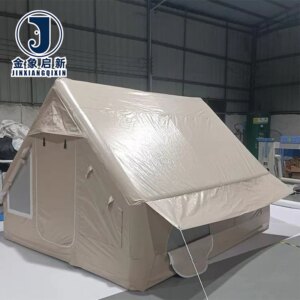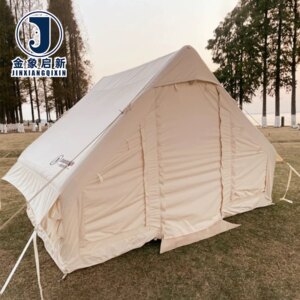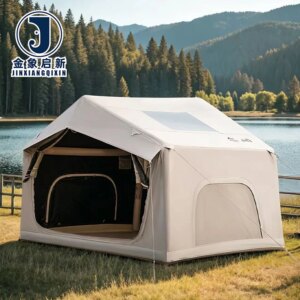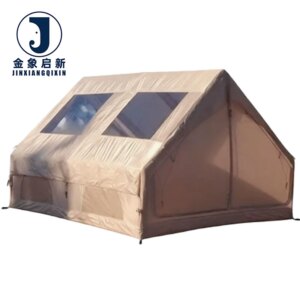



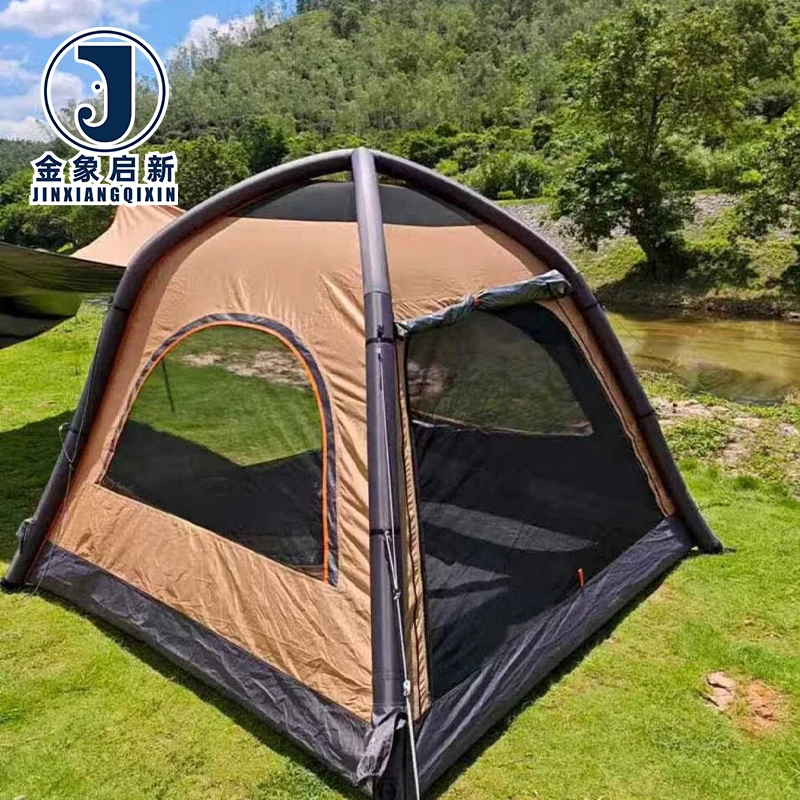
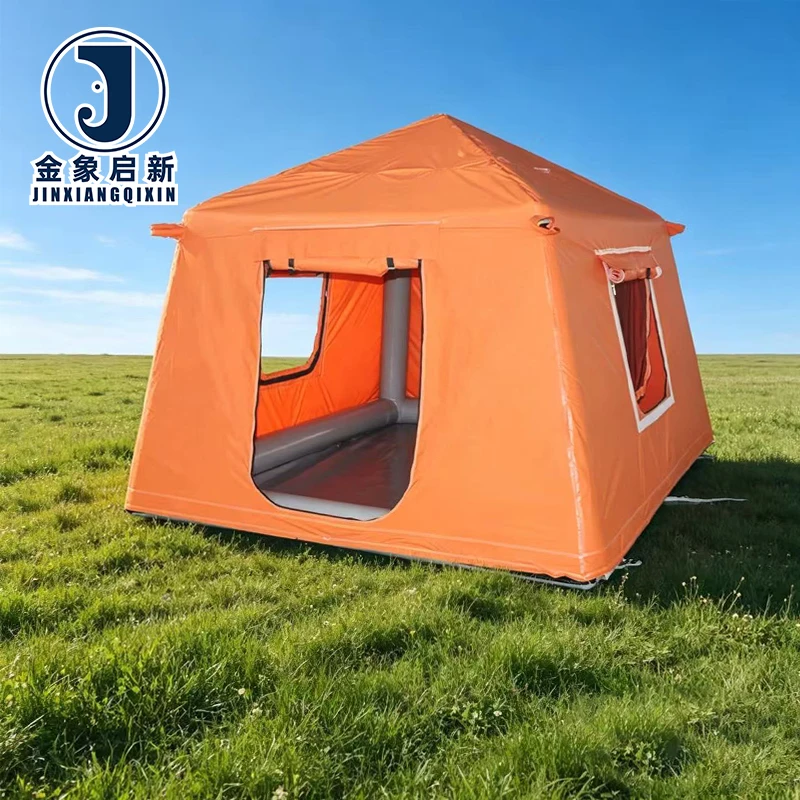

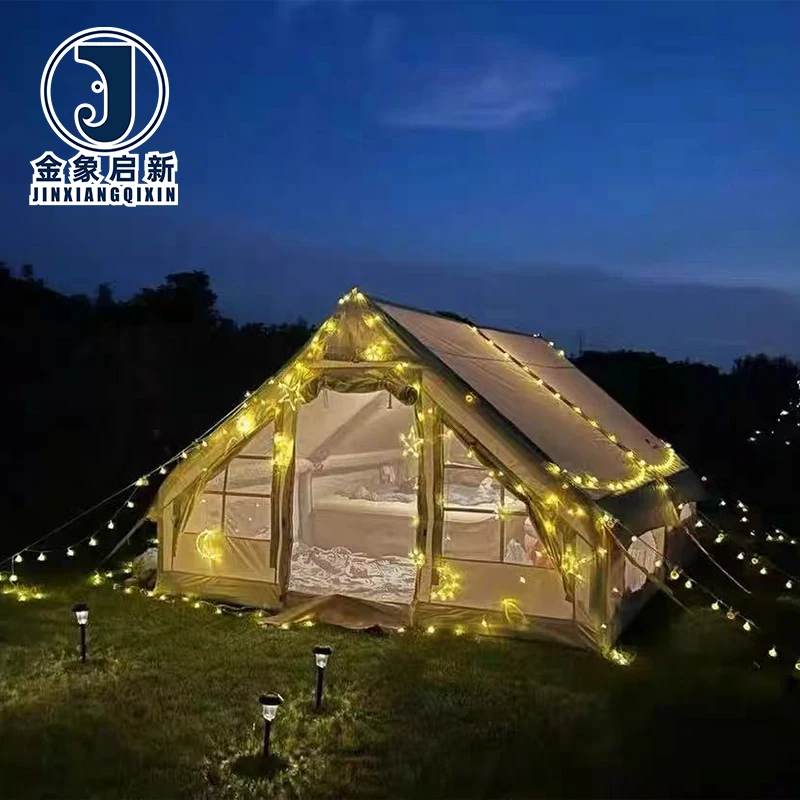
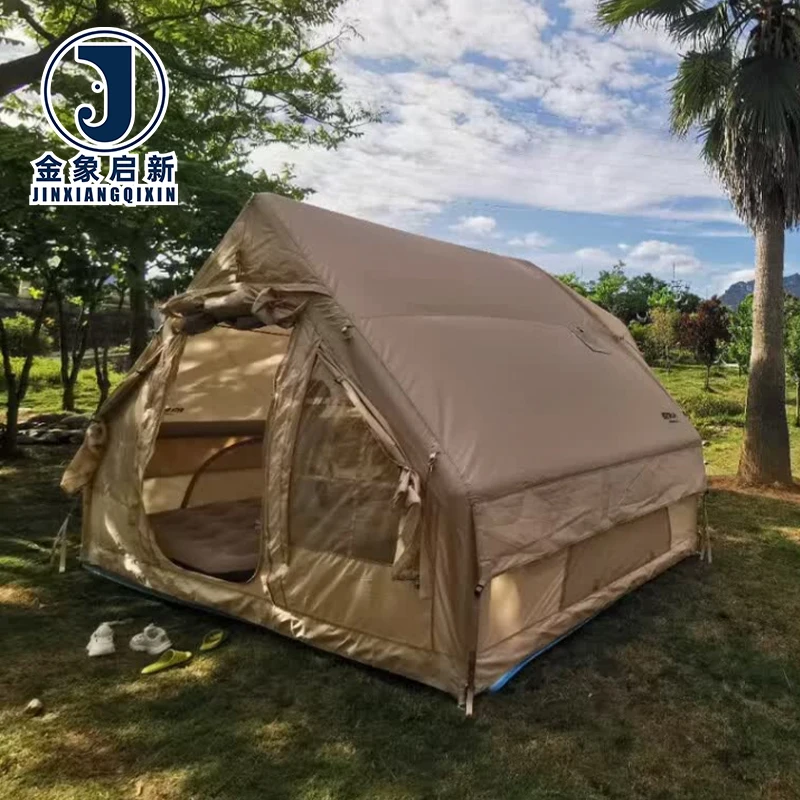
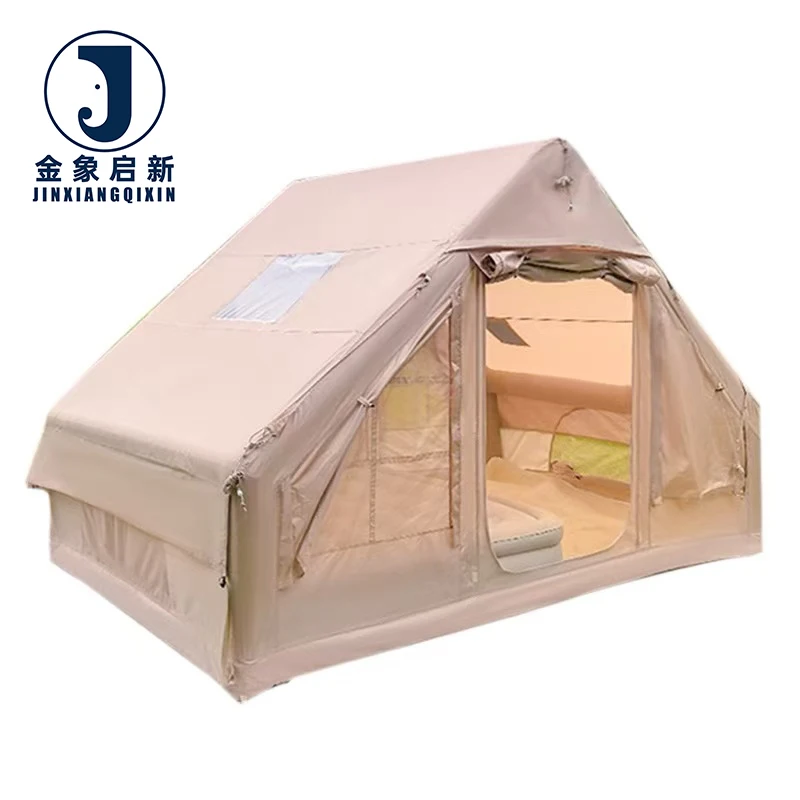
Certified Compliance Documentation — we provide batch-specific fire-retardant and anti-static test reports with every shipment, verified against EN 13501-1 and site-required standards before dispatch.
Technical Specifications
| Parameter | Value |
|---|---|
| Product Type | Inflatable Tent Fabric |
| Core Material | PVC Tarpaulin |
| Capacity | 8-10 Person |
| Waterproof Rating | Hydrostatic head ≥ 5000mm |
| Tensile Strength | ≥ 3000N/5cm |
| Fire Retardancy | EN 13501-1 |
| Anti-Static | Available with anti-static treatment (grade not stated in source) |
| UV Treatment | UV-resistant (test basis not stated in source) |
| Tear Resistance | Tear-resistant (grade not stated in source) |
| Fabric Thickness Tolerance | ±0.1mm |
| Season Rating | 4 Season |
| Customization | OEM & ODM, sample customization, pattern printing |
| Quality Control | Full-process inspection, 24-hour pressure testing for airtightness |
| Standards | ISO9001, ISO14001, ISO45001, CE, EN 13501-1 |
Application Suitability
| Application | Exposure & Requirement |
|---|---|
| Mining and tunnelling operations | Underground fire-risk zones requiring EN 13501-1 compliant inflatable shelters with anti-static surfaces to prevent electrostatic discharge |
| Aviation maintenance bays | Temporary hangar structures housing sensitive avionics where static buildup must be controlled and fire codes strictly enforced |
| Disaster relief staging | Rapid-deploy emergency shelters for 8-10 personnel in extreme weather, demanding hydrostatic head ≥ 5000mm and verified flame retardancy |
| Construction site command centers | Mobile coordination hubs exposed to sparks, hot work proximity, and continuous weather cycles requiring 4-season material stability |
| Industrial equipment storage | Inflatable enclosures protecting machinery from moisture ingress and static-sensitive components during infrastructure projects |
Why Fire-Retardant Certification Without a Grade Is a Liability
Specifying Inflatable Tent Fabric fire retardant anti-static certified material requires documented grade verification, not marketing claims.
I have reviewed site inspections where inflatable structures were rejected because the supplier quoted "flame retardant" without producing a valid EN 13501-1 test certificate tied to that specific batch. The shelter passed visual inspection but failed the compliance audit [NEED_CITE: EN 13501-1 classification system for construction products and building elements]. Mining contractors face the same issue when anti-static properties are claimed without surface resistance data attached to the shipment documentation. The consequence is not a delayed project — it is a halted project, with crews standing idle while replacement fabric is sourced and re-certified. Procurement teams now require batch-specific test reports before the roll leaves the factory, not after it arrives at the site gate.
Meeting Underground Fire Codes Without Rework
Mining and tunnelling sites enforce strict fire classification standards on all temporary structures deployed below grade or in confined zones. Inflatable Tent Fabric fire retardant anti-static certified to EN 13501-1 provides the documented compliance path these projects require. The PVC tarpaulin base carries the flame-retardant treatment through the coating layer, so the performance does not degrade when the fabric is heat-welded into air-beam panels. Every unit undergoes 24-hour pressure testing to confirm airtightness, which simultaneously validates that welded seams maintain structural integrity under sustained inflation load.
Controlling Static Discharge in Sensitive Environments
Aviation maintenance facilities and electronics staging areas require surfaces that dissipate electrostatic charge rather than accumulate it. The anti-static treatment available on this Inflatable Tent Fabric fire retardant anti-static certified material addresses that operational need, though buyers should confirm the surface resistance range required by their site safety protocol. The treatment is integrated during the coating stage, meaning it persists through repeated inflation and deflation cycles without delamination [NEED_CITE: anti-static testing methods for coated technical textiles]. For projects where both fire classification and static control are mandatory, requesting a combined test report covering both properties streamlines the site acceptance process.
Reading the Specification Sheet Beyond the Headline Numbers
The hydrostatic head ≥ 5000mm rating indicates the fabric will resist water penetration under sustained rainfall and pooling conditions typical of multi-day emergency deployments. Tensile strength of ≥ 3000N/5cm reflects the load the base fabric can carry before structural failure, which directly influences how the inflatable beam framework handles wind loading and snow accumulation across 4-season use. The ±0.1mm fabric thickness tolerance controls consistency across panels — when thickness varies beyond this margin, heat-weld parameters drift and seam strength becomes unpredictable. Fire retardancy tested to EN 13501-1 establishes the classification level that European and many international jurisdictions accept for temporary structures on regulated sites [NEED_CITE: EN 13501-1 fire classification for building materials and temporary structures]. These four parameters together define whether the fabric performs as an engineered system, not merely as individual properties on a data sheet.
What Happens When Specifications Are Not Verified Before Production
When fire-retardant grade is assumed rather than confirmed against the shipment documentation, the inflatable structure arrives on site and fails the safety officer’s compliance check. The shelter cannot be inflated until replacement fabric with valid certification is sourced, and the project timeline absorbs the full delay. Similarly, when anti-static requirements are communicated vaguely, the delivered material may lack the treatment entirely, exposing sensitive equipment to discharge risk in aviation or electronics environments. Thickness inconsistency across panels leads to uneven inflation behaviour, where some air beams reach full pressure while adjacent beams remain soft, creating structural imbalance [NEED_CITE: common failure modes in inflatable membrane structures]. Batch-specific inspection reporting before dispatch eliminates these downstream failures.
How Production Discipline Translates to Site Reliability
Nearly 30 years of coated fabric manufacturing means the PVC formulation and coating adhesion parameters are controlled through institutional process knowledge, not trial and error. Three full production lines and 36 sets of processing equipment provide the capacity to fulfil bulk inflatable shelter orders within the compressed timelines disaster response demands. A 10-person R&D team develops custom fabric formulations — adjusting thickness, treatment levels, and panel dimensions — with sample production completed for buyer approval before full-scale manufacturing begins. Dedicated QA and QC staff conduct full-process inspection, including 24-hour pressure testing on every completed unit to verify airtightness before it is packed for dispatch. ISO9001, ISO14001, ISO45001, and CE certifications frame the management systems behind these operational controls.
Documentation & Verification
- Material specification sheet stating PVC tarpaulin composition, thickness tolerance, and treatment levels for this inflatable tent fabric
- EN 13501-1 fire-retardant test report issued against the specific production batch, not a generic product family certificate
- Batch-specific quality inspection record covering hydrostatic head, tensile strength, and airtightness test results
- ISO9001, ISO14001, ISO45001, and CE certificates included in shipment documentation package
- Third-party accredited laboratory testing arranged upon request for project-specific compliance requirements
- Anti-static property verification report available when treatment is specified in the purchase order
Fabrication, Handling & Storage
- Heat-weld parameters must be calibrated to the ±0.1mm thickness tolerance to ensure consistent seam strength across all inflatable beam panels
- Store PVC tarpaulin rolls upright in climate-controlled conditions to prevent creasing that weakens the coating at fold lines
- Use compatible PVC welding tape for field repairs on punctured air beams, matching the coating formulation for proper adhesion
- Avoid dragging uninflated shelters across abrasive ground surfaces that can score the PVC coating below the waterproof layer
- Clean with neutral pH detergent only; solvent-based cleaners may compromise the fire-retardant and anti-static treatment integrity
- Allow full inflation and 24-hour pressure test verification before folding for transport to confirm airtightness holds at every seam
Preparing Your Specification for Quotation
Provide the deployment environment and regulatory jurisdiction so we can confirm whether EN 13501-1 satisfies your site fire code or whether an alternative classification is required. Specify the anti-static surface resistance range your safety protocol mandates, along with panel dimensions and air-beam configuration for the inflatable structure. Indicate whether you require roll stock for your own fabrication or fully welded and pressure-tested shelter units ready for immediate deployment.
Frequently Asked Questions
Q: What fire-retardant grade does the inflatable tent fabric carry, and does it meet my target market’s safety requirements?
A: The fabric carries EN 13501-1 fire classification, which is accepted across European jurisdictions and many international project specifications. We provide a batch-specific test report with every shipment documenting the classification result. If your site requires a different standard or a supplementary test, our R&D team can develop a custom formulation and arrange third-party laboratory verification before production begins.
Q: How is anti-static performance verified and what surface resistance standard applies?
A: Anti-static treatment is available as a specified option integrated during the PVC coating stage. The surface resistance value depends on the treatment formulation selected for your application. We recommend buyers communicate their site-specific resistance range at inquiry stage so we can match the formulation and provide a verification report tied to the production batch. Third-party testing can be arranged for projects requiring independent validation.
Q: Can fabric thickness and performance properties be customized for specific inflatable or membrane structure applications?
A: Yes. Our 10-person R&D team develops custom fabric formulations with adjustable thickness within the ±0.1mm tolerance framework, treatment levels for fire retardancy and anti-static requirements, and panel dimensions matched to your inflatable structure design. We produce samples for buyer approval before full-scale manufacturing, ensuring the material performs correctly under your specific inflation pressures and environmental conditions.
Q: What compliance documentation is included with each shipment for site inspection?
A: Every shipment includes a material specification sheet, batch-specific quality inspection report covering waterproof rating and tensile strength, EN 13501-1 fire-retardant test certificate, and ISO9001, ISO14001, ISO45001, and CE documentation. Anti-static verification reports are included when the treatment is specified. Additional third-party test reports from accredited laboratories can be arranged for projects with specialized compliance requirements.
Q: How is airtightness validated before delivery, and what testing protocol is used?
A: Every completed inflatable unit undergoes 24-hour pressure testing before dispatch. The unit is fully inflated to operational pressure and monitored continuously for air loss across all welded seams and fabric panels. Units that do not maintain pressure throughout the full test period are rejected and reworked. The test result is recorded in the batch-specific inspection report included with shipment documentation.