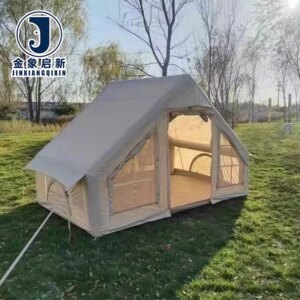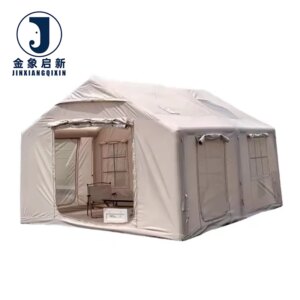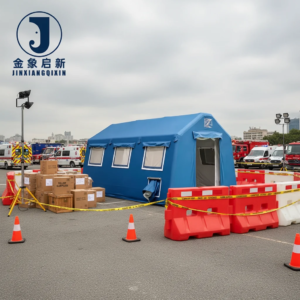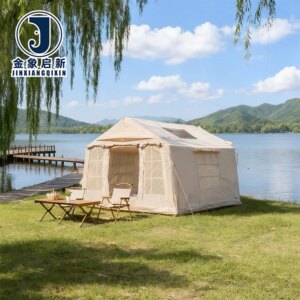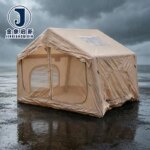
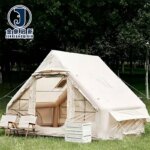
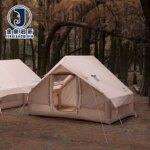
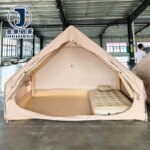
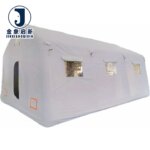
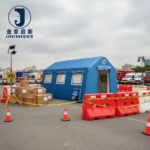
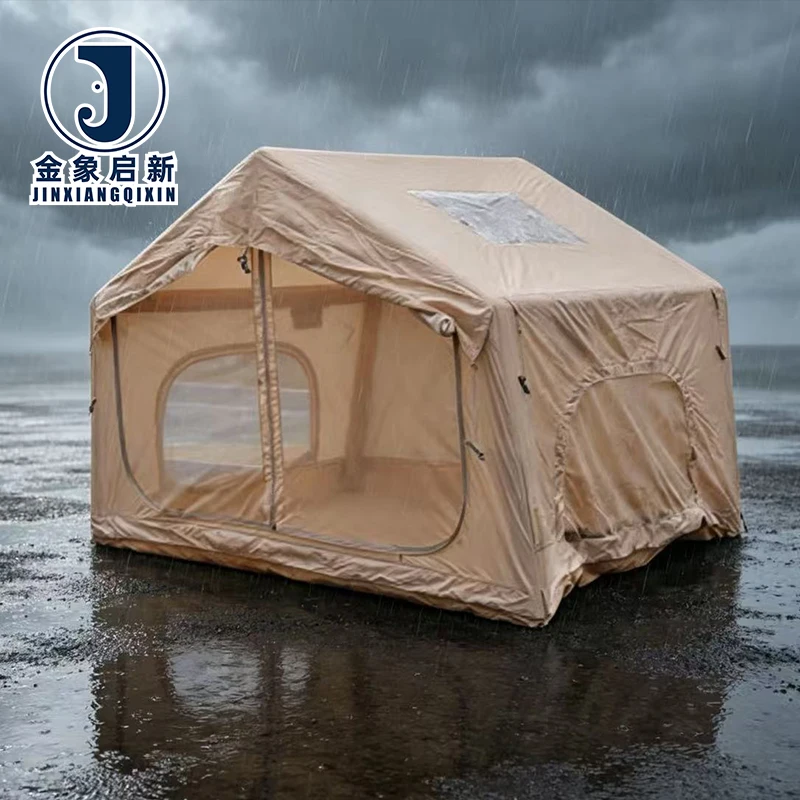
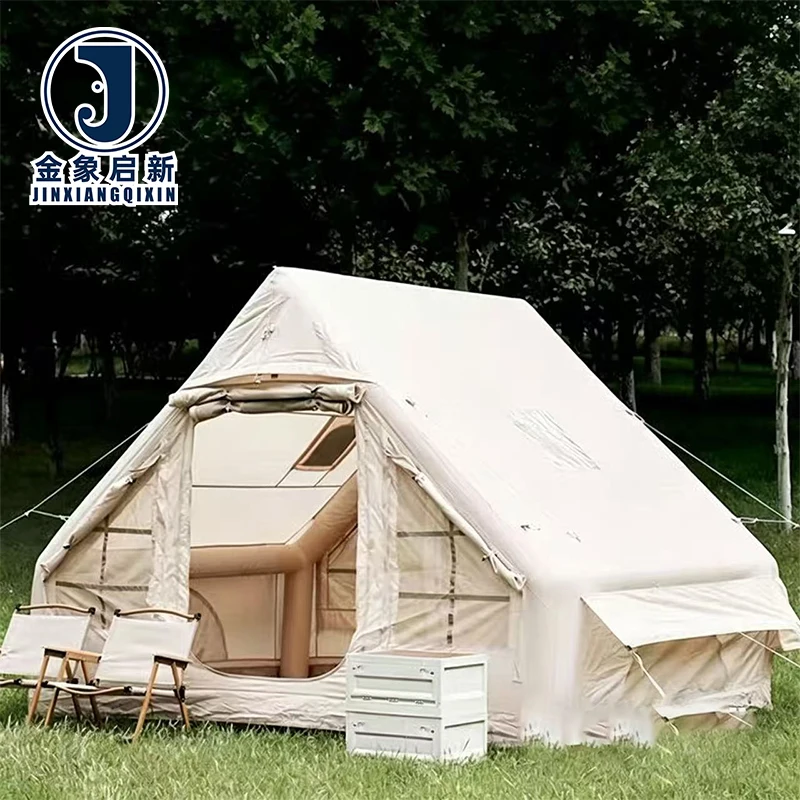
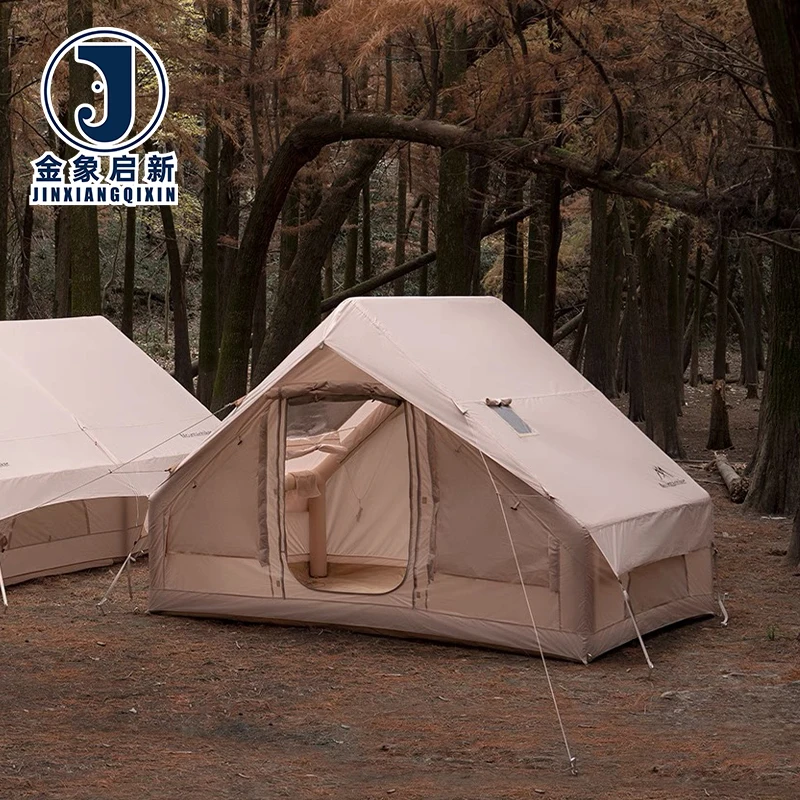
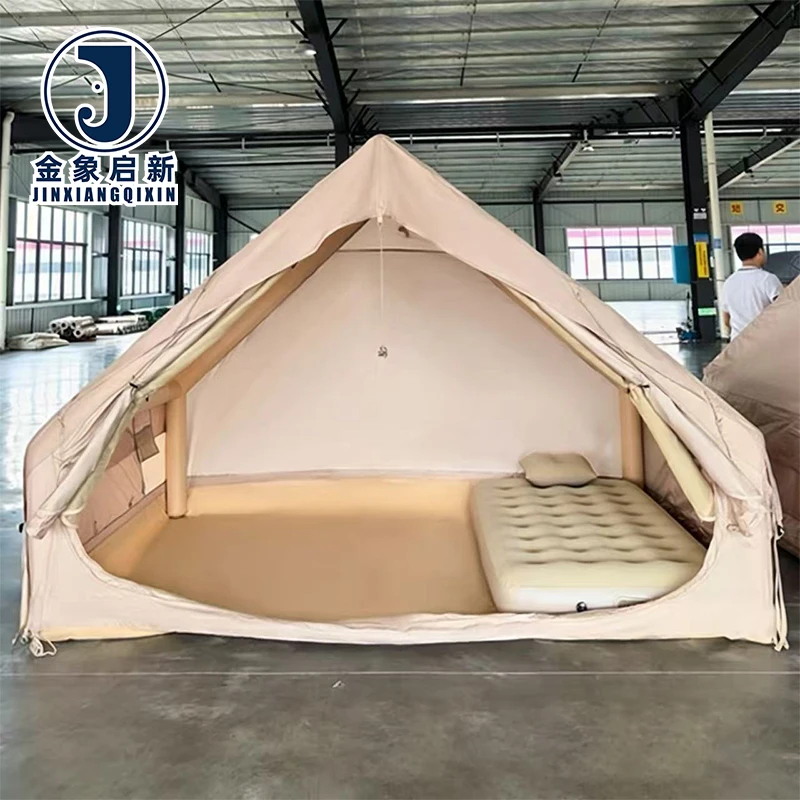
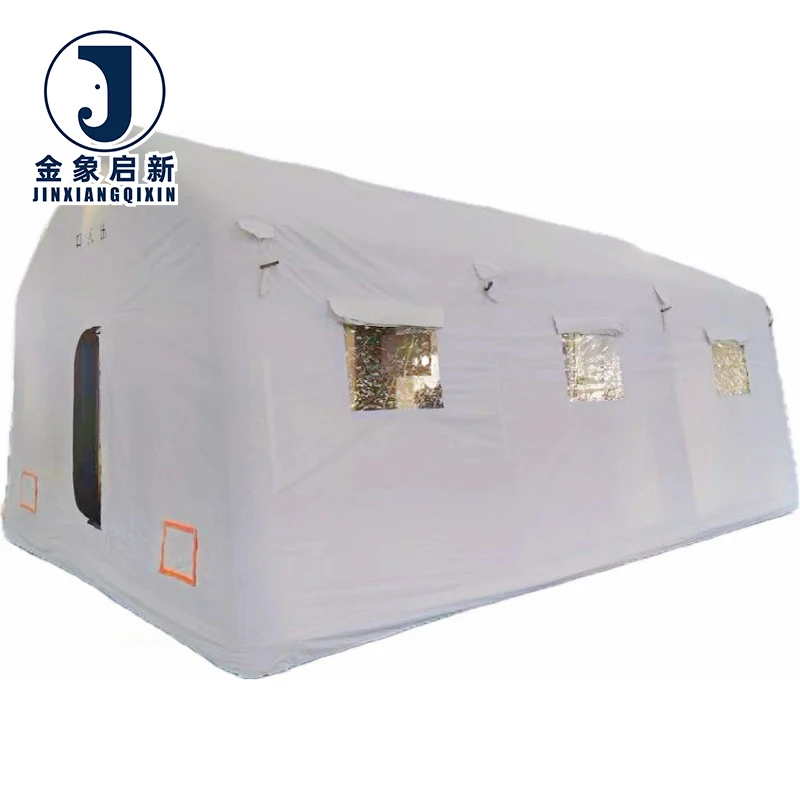
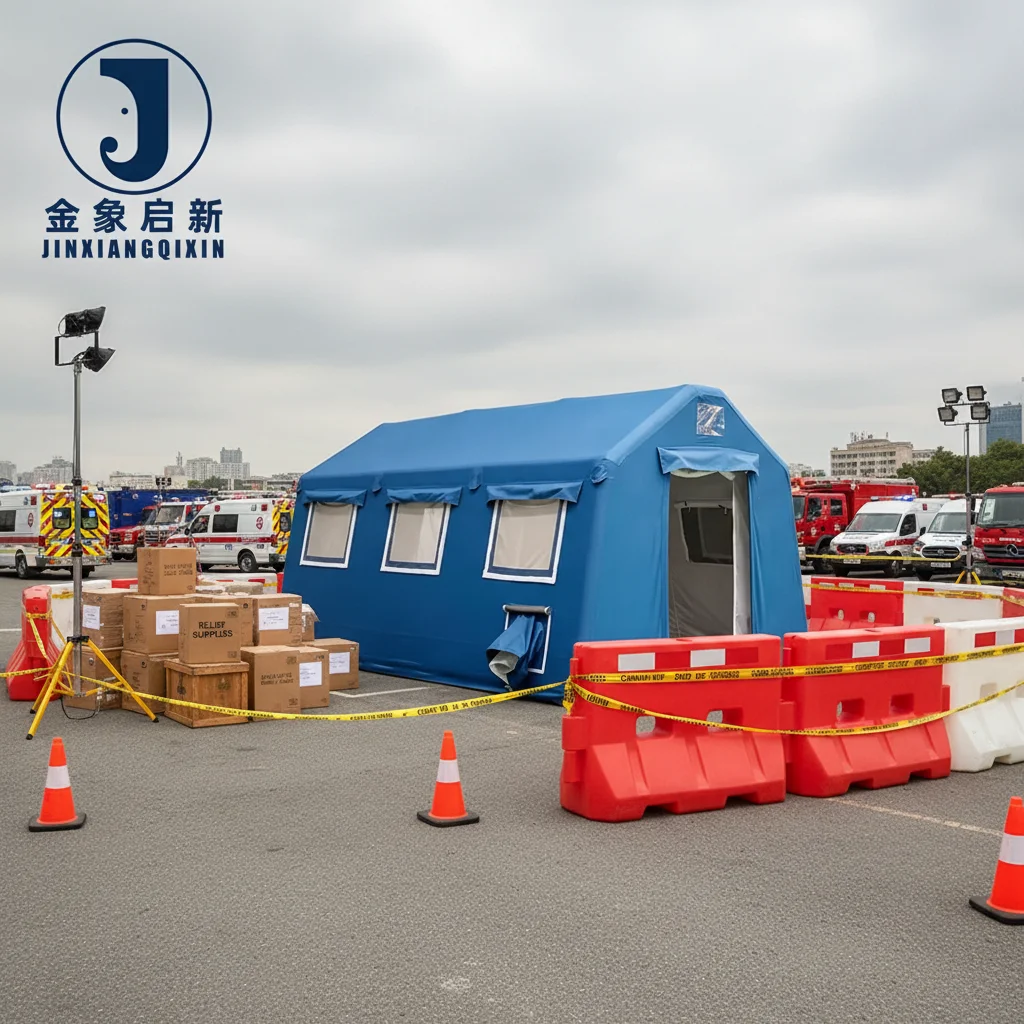
Specialist Fabrication Support — every custom inflatable shelter is developed by a 10-person R&D team handling material selection, structural adaptation, and sample approval before full production.
Technical Specifications
| Parameter | Value |
|---|---|
| Product Type | Inflatable Tent |
| Core Material | UV-Resistant PVC |
| Waterproof Rating | Hydrostatic head exceeding 5000mm |
| UV Resistance | Maintains tensile strength after extended outdoor exposure (test basis not stated) |
| Deployment Mechanism | Rapid auto-opening, deploys in under 60 seconds |
| Temperature Tolerance | -30°C to 70°C (validated via temperature cycling) |
| Construction | Single-layer |
| Quality Control | 12 inspection points, 24-hour pressure retention testing, ultrasonic seam integrity checks |
| Customization | OEM & ODM — size adjustments, color customization, logo printing, structural design modification |
| Standards | ISO 9001, ISO 14001, ISO 45001, CE |
Application Suitability
| Application | Exposure & Requirement |
|---|---|
| Construction site temporary storage | Wind-driven rain, UV exposure, repeated inflation and deflation cycles, abrasion from equipment loading |
| Logistics mobile equipment enclosures | Constant transport vibration, road dust ingress, rapid deployment at multiple locations per week |
| Outdoor event weather-protected workspaces | Sudden weather changes, public access wear, compliance documentation for venue permits |
| Emergency relief deployment | Sub-zero to high-temperature storage, rapid inflation without specialized tools, long shelf storage |
Why Compliance Documentation Matters More Than Stated Ratings for Inflatable Shelters
A rated material without a verifiable test report is an unverified claim on your site.
Procurement teams ordering custom inflatable shelter units for industrial operations often receive specification sheets listing waterproof or UV-resistant properties without any reference to test methodology. Site inspectors and safety auditors do not accept supplier declarations alone. When compliance documentation is absent or incomplete, entire deployments face rejection at the point of installation [NEED_CITE: industrial site safety audit requirements for temporary structures]. The cost of replacing non-compliant shelters mid-operation far exceeds the initial sourcing effort required to verify material certifications before purchase.
Material Engineering for Rapid Deployment Structures
Inflatable tent fabric must balance two competing demands: sufficient structural rigidity to maintain shape under inflation pressure, and enough flexibility to fold, store, and redeploy without crease damage. The UV-resistant PVC compound used here is formulated to withstand prolonged solar exposure while retaining the pliability needed for repeated packing cycles. Each custom inflatable shelter produced goes through a 12-point inspection protocol, including ultrasonic seam integrity checks that detect bond weaknesses invisible to visual inspection.
Pressure Retention and Structural Reliability
A shelter that loses inflation pressure overnight creates operational downtime and potential safety hazards for occupants and stored equipment. The 24-hour pressure retention testing applied to every production batch identifies seam leaks and valve-seat failures before the units leave the factory. Temperature cycling validation from -30°C to 70°C confirms that the PVC compound and bonded seams do not become brittle in cold storage or soften excessively under direct summer sun [NEED_CITE: thermal cycling test methodology for coated fabric structures]. This testing discipline separates field-ready shelters from units that fail during their first seasonal temperature swing.
Reading the Specifications That Actually Determine Field Performance
Hydrostatic head ratings above 5000mm indicate the PVC coating can resist water penetration under sustained rainfall and wind-driven conditions, but the practical waterproof performance also depends on seam construction and valve integration quality. The single-layer construction reduces overall weight and packed volume, which matters for emergency relief scenarios where transport capacity is limited. Temperature tolerance spanning -30°C to 70°C defines the operational envelope: below this range the PVC risks micro-cracking at fold lines, while above it the material may soften enough to lose inflation rigidity. The auto-opening mechanism eliminates the need for external air compressors or manual pump systems, making the custom inflatable shelter viable for remote deployments where power supply is unreliable.
The Hidden Cost of Overlooking Seam and Valve Specifications
Buyers who focus exclusively on fabric rating often discover that failures originate at bonded seams and valve attachment points rather than the field of the material itself. When ultrasonic weld parameters are not calibrated to the specific PVC formulation, seam peel strength drops and pressure loss begins within days of inflation [NEED_CITE: coated fabric seam failure analysis per ISO 1421 testing framework]. Shelters deployed in construction and logistics environments experience frequent repositioning, which concentrates stress at the same seam junctions. Without batch-level pressure retention records and ultrasonic inspection data, buyers cannot distinguish between production runs that will hold pressure through a full operational season and those that will require field repairs within weeks of deployment.
Why Industrial Buyers Source Inflatable Structures Through This Facility
The R&D team handles structural design modification, meaning a buyer requesting a non-standard bay width or reinforced equipment access opening receives engineering input, not just a dimension adjustment. Three full production lines and 36 sets of professional equipment provide capacity to fulfill container-volume orders without subcontracting critical coating or bonding stages. Every shipment is supported by pre-shipment inspection records documenting pressure retention results and seam integrity data for the specific batch received. ISO 9001, ISO 14001, ISO 45001, and CE standards govern the manufacturing environment, providing the compliance framework that site auditors in construction and mining sectors require. Samples are developed within days of specification approval, allowing buyers to validate inflation behavior and material feel before committing to full production volumes.
Documentation & Verification
- Material specification sheet detailing PVC formulation, coating weight, and base fabric composition for each inflatable shelter batch
- UV and waterproofing test reports with stated hydrostatic head exceeding 5000mm and tensile retention data
- Batch inspection records confirming 12-point checks, 24-hour pressure retention, and ultrasonic seam results
- ISO 9001, ISO 14001, ISO 45001, and CE compliance documentation included with every shipment
- Product data sheet stating inflation pressure requirements, temperature tolerance range, and fabric construction details
Fabrication, Handling & Storage
- Heat-seal seams using temperature and dwell-time settings matched to the UV-resistant PVC coating weight
- Store folded shelters in climate-controlled environments within the -30°C to 70°C validated range to prevent crease-set damage
- Inspect valve seat bonding integrity before each redeployment cycle to maintain pressure retention performance
- Clean PVC surfaces with non-solvent detergents to preserve coating adhesion and surface finish
- Avoid compression stacking beyond manufacturer-recommended layer counts to prevent permanent deformation of the single-layer construction
- Conduct field pressure checks after transport to detect any seam stress that occurred during transit vibration
Requesting a Specification-Matched Quotation
Submit your deployment environment details including expected temperature extremes, wind exposure levels, and the specific compliance standards your site requires. Specify whether the inflatable shelter needs custom dimensions, logo printing, or structural modifications such as reinforced equipment access panels. Indicate your target order volume and whether you require a functional prototype for inflation testing before the full production run is approved.
Frequently Asked Questions
Q: What customization options are available for size, color, and structural design?
A: The R&D team supports full OEM and ODM modifications including non-standard dimensions, custom color matching, logo printing, and structural changes such as reinforced openings or modified inflation chamber layouts. Each custom inflatable shelter request goes through sample development and buyer approval before bulk production begins.
Q: Which international certifications does the inflatable shelter carry?
A: Manufacturing operates under ISO 9001, ISO 14001, ISO 45001, and CE standards. Compliance documentation is included with every shipment and covers quality management, environmental management, occupational safety, and product conformity. Additional third-party laboratory test reports are available for specialized project requirements.
Q: Can functional prototypes be produced before placing a bulk order?
A: Yes, sample units are developed within days of specification confirmation. Buyers can test inflation behavior, material handling characteristics, and dimensional accuracy on a prototype before authorizing full production. This step is particularly important for custom structural modifications that deviate from standard configurations.
Q: How is batch-to-batch performance consistency ensured across shipments?
A: Every production batch undergoes 12-point inspection including 24-hour pressure retention testing and ultrasonic seam integrity verification. Inspection records specific to the buyer’s order are provided at dispatch, confirming that the custom inflatable shelter units received match the performance standards validated during sample approval.