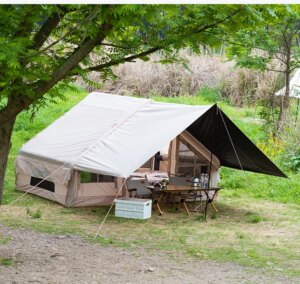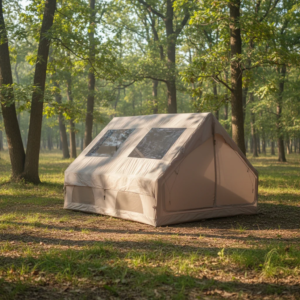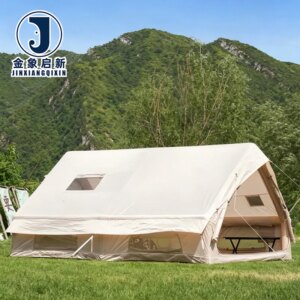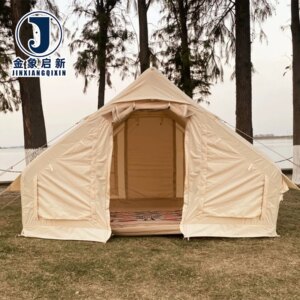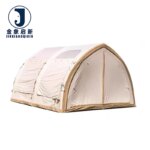
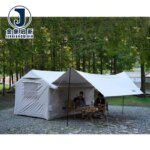
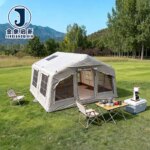
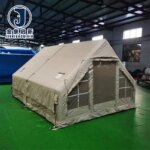

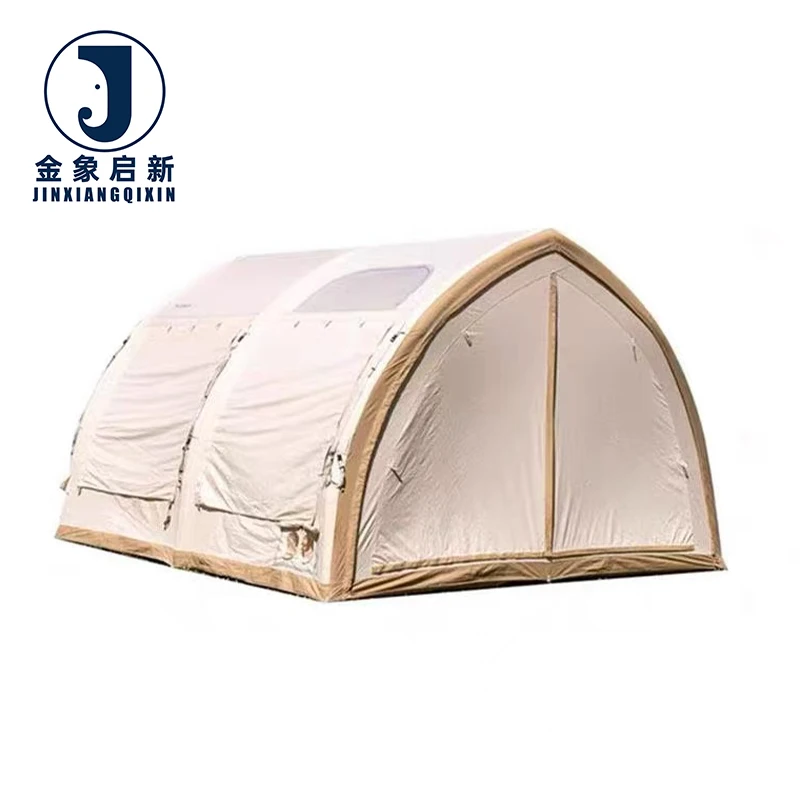
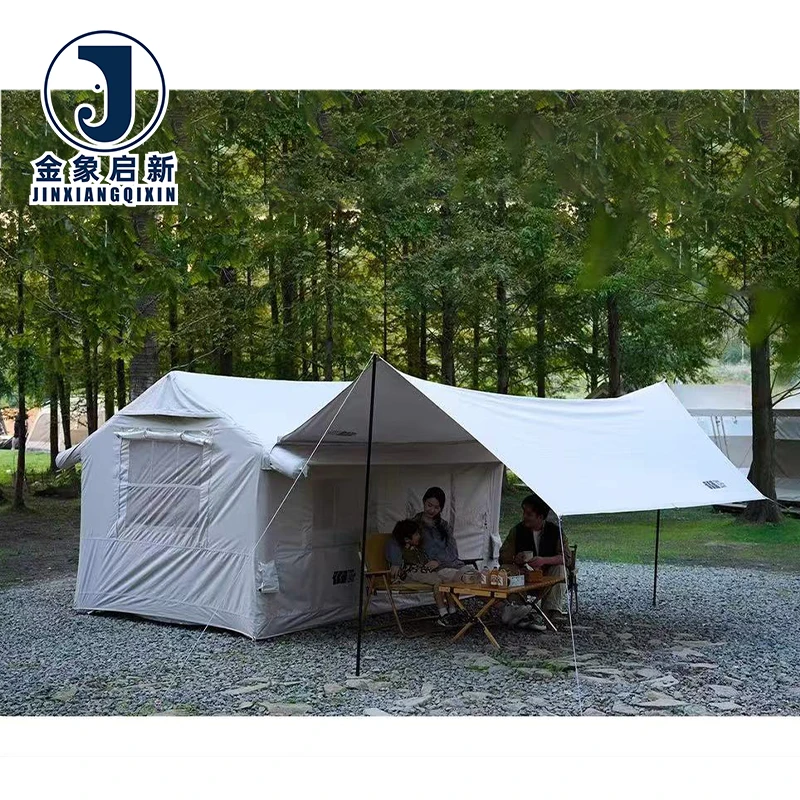
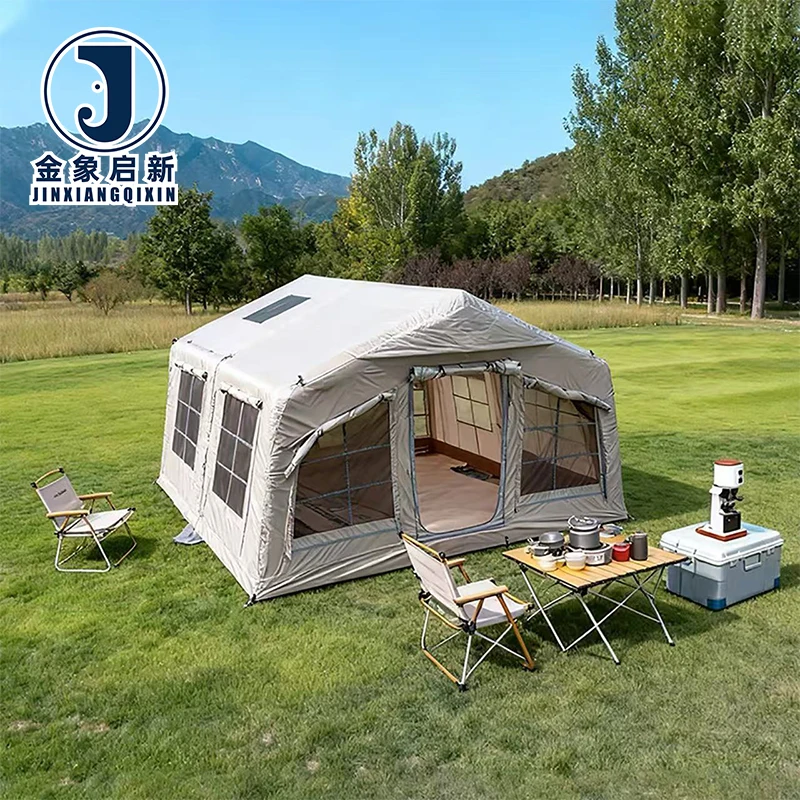
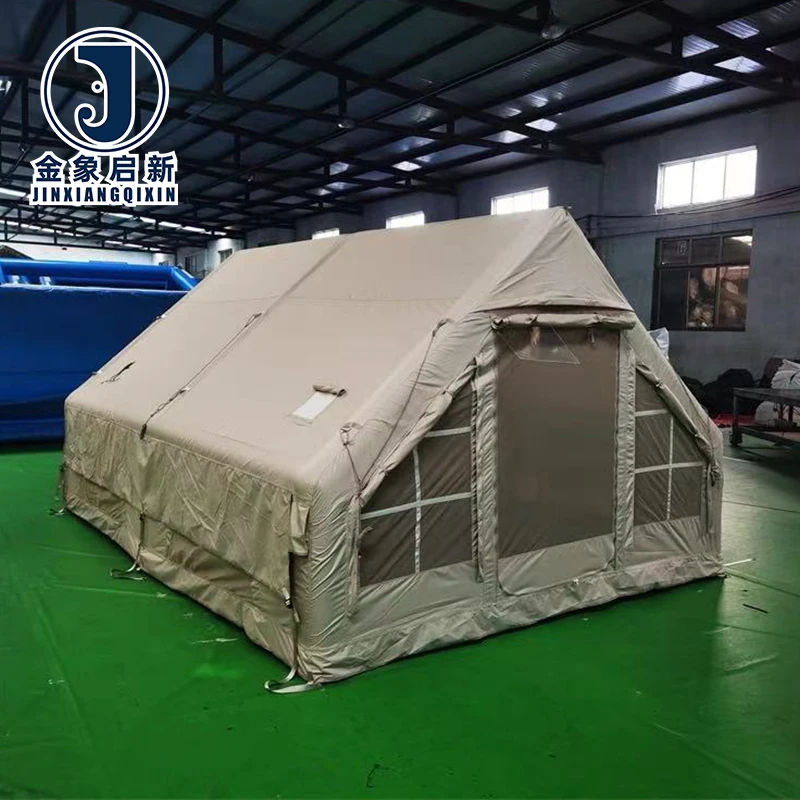
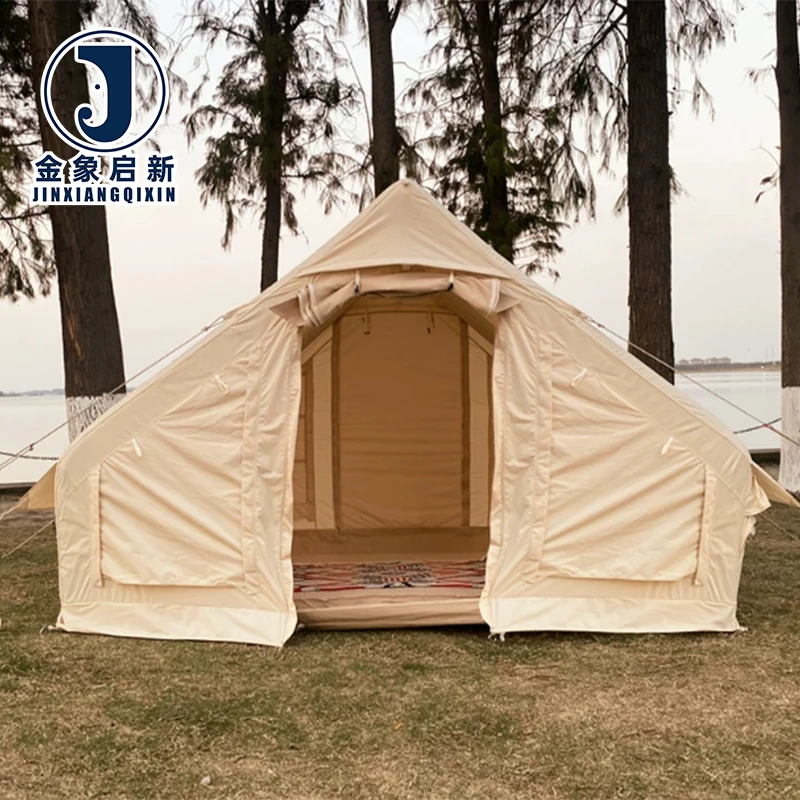
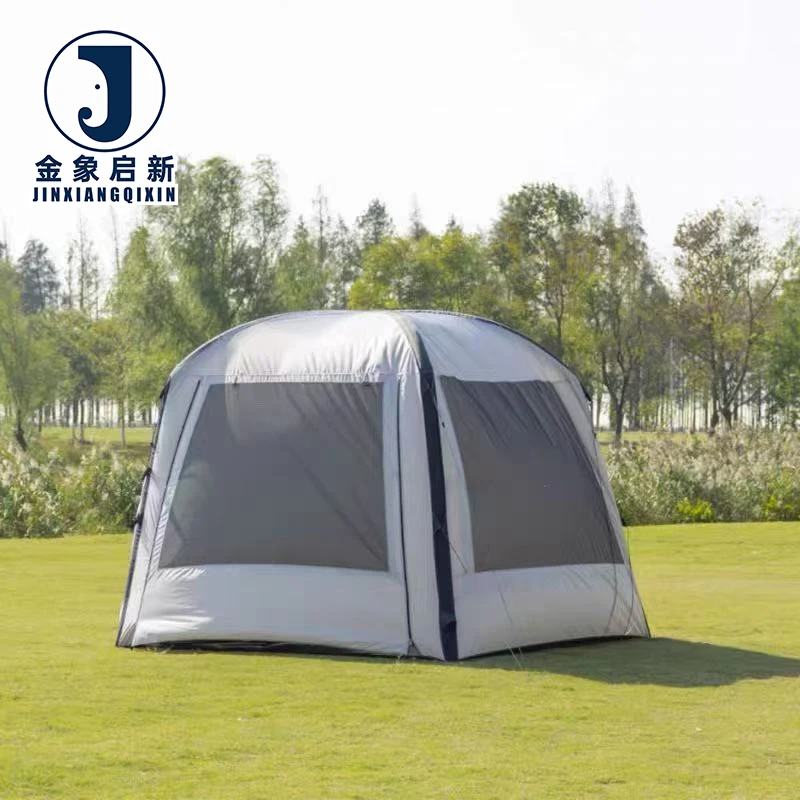
Deep Process Control Over Coating Weight — every batch of PVC inflatable tent fabric is verified for coating adhesion and GSM consistency before leaving our 9,180 m² facility, ensuring fire-retardant and anti-static treatments meet the compliance standards your site demands.
Technical Specifications
| Parameter | Value |
|---|---|
| Product Type | Inflatable Tent |
| Core Material | PVC Tarpaulin |
| Key Features | Waterproof, UV-resistant, Tear-resistant, Fire-retardant, Anti-static |
| Product Forms | Single Layer Construction, Extended Type |
| Customization Service | OEM & ODM (sample customization, pattern printing) |
| Fire-retardant Grade | Available in flame retardant grades — confirm the grade required for your market |
| Anti-static Standard | Available with anti-static treatment — confirm the standard applicable to your operation |
| UV Resistance | UV-resistant treatment applied (test basis available upon request) |
| Standards & Certifications | ISO 9001, ISO 14001, ISO 45001, CE |
Application Suitability
| Application | Exposure & Requirement |
|---|---|
| Emergency Disaster Relief Shelters | Rapid deployment, wind load stress, continuous weather exposure, compliance with relief agency specifications |
| Mining & Tunnelling Temporary Structures | Confined environment fire safety, anti-static compliance, abrasive particulate exposure, regulatory audit documentation |
| Construction Site Temporary Shelters | Heavy equipment proximity, UV degradation risk, repeated inflation-deflation cycles, site safety inspection requirements |
| Outdoor Industrial Event Workspaces | Public occupancy fire codes, branding and visibility requirements, multi-day weather exposure, crowd safety compliance |
Why "Certified" Inflatable Tent Fabric Often Fails the Site Audit
A certificate on the wall is not the same as a batch-specific test report in your documentation package.
Many procurement teams specify fire-retardant inflatable tent fabric for mining or disaster relief projects, only to discover at site inspection that the documentation does not trace back to the actual rolls delivered. The gap between a manufacturer’s general certification and the batch-level evidence an auditor requires can halt deployment entirely. [NEED_CITE: fire safety documentation requirements for temporary industrial structures] We have seen projects delayed because the anti-static or flame-retardant test report referenced a different production run, leaving the site safety officer with no choice but to reject the material.
Compliance-Driven Material Selection for Inflatable Structures
Choosing the right inflatable tent fabric for industrial and emergency applications starts with understanding which fire-retardant and anti-static standards your jurisdiction or site operator enforces. A mining operation in one region may demand surface resistivity values that differ substantially from a construction site requirement elsewhere. Our technical team works with you to identify the applicable test standard before production begins, ensuring the PVC inflatable tent fabric you receive matches the compliance framework your project operates under.
Coating Integrity and Inflation Cycle Durability
Inflatable structures place unique demands on coated fabric. Each inflation and deflation cycle creates flex stress at seam lines and curvature points, where coating adhesion determines whether the material holds or delaminates. The single layer construction used in this PVC inflatable tent fabric balances portability with the structural integrity needed to withstand repeated pressurization. [NEED_CITE: coating adhesion test methods for inflatable fabric structures] Fire-retardant and anti-static additives are integrated into the PVC coating matrix, meaning these properties persist through flex cycles rather than degrading as a surface treatment would.
Understanding the Base Fabric and Coating Relationship
The performance of inflatable tent fabric depends on how the base fabric denier, weave density, and coating weight interact as a system. Tensile strength comes primarily from the polyester base fabric, while the PVC coating provides waterproofing, UV resistance, and the chemical platform for fire-retardant and anti-static functionality. A heavier coating does not automatically mean a stronger fabric — if the base fabric weave is loose or the denier is low, the material may tear easily despite a thick coating layer. Our specification sheets break out base fabric construction and coating weight separately so you can evaluate the complete system rather than relying on GSM alone. Coating method also affects thermal welding behaviour, which is critical when fabricating the airtight chambers that inflatable structures require. [NEED_CITE: ISO 1421 tensile and tear test methods for coated fabrics]
The Cost of Specifying Without Verification
When inflatable tent fabric arrives on site without batch-linked test documentation, the consequences extend beyond a single rejected shipment. Project timelines slip as replacement material is sourced, safety audits flag non-compliance, and the procurement team faces scrutiny over supplier qualification. [NEED_CITE: financial impact of material non-compliance in industrial construction projects] We have observed situations where fabric with an unverified anti-static claim was installed in a tunnel ventilation environment, only for the site safety manager to order a complete tear-down once the missing documentation came to light. Fire-retardant grades that do not match the local fire code can result in occupancy permits being withheld for temporary structures used in public-facing events.
Why Procurement Teams Source Inflatable Tent Fabric Here
Our 10-technician R&D team develops custom samples for inflatable tent projects, adjusting dimensions, coating formulation, and pattern printing to match your deployment requirements before mass production begins. Three full production lines equipped with 36 sets of professional processing equipment allow us to handle volume orders while maintaining the batch-to-batch consistency that compliance-sensitive applications demand. Every roll undergoes 100% inspection by dedicated QA and QC staff before shipment, with fire-retardant and anti-static properties verified against the test standard specified in your purchase order. We provide the documentation package — material specification sheet, batch test reports, ISO and CE certificates, and pre-shipment inspection records — that your site auditor or customs authority requires. Sample development cycles are measured in days, not weeks, allowing your project timeline to move forward without waiting for material validation.
Documentation & Verification
- Material specification sheet stating coating type, base fabric denier, and applicable fire-retardant or anti-static test standards for your inflatable tent project
- Batch-specific quality inspection reports linked to your order number, covering GSM, coating weight, and treatment verification
- ISO 9001, ISO 14001, ISO 45001, and CE certificates included for site audit and customs compliance documentation
- Pre-shipment inspection record confirming visual quality, dimensional accuracy, and functional performance of every roll
- Certificate of origin and customs support documentation for international inflatable tent fabric shipments
Fabrication, Handling & Storage
- Thermal welding parameters should be adjusted to the specific PVC coating formulation used on your inflatable tent fabric batch for optimal seam strength
- Store rolls upright in a dry environment to prevent permanent creasing that can compromise the airtight chamber integrity of single layer inflatable structures
- Use compatible PVC adhesive for field repairs, ensuring the fire-retardant and anti-static properties of the coating are not degraded by solvent-based alternatives
- Allow cold-transported rolls to reach ambient temperature before unrolling to avoid cracking the PVC coating at flex points
- Pattern printing should be confirmed through a pre-production sample to ensure ink adhesion matches the surface treatment of your specified inflatable tent fabric
What We Need to Prepare Your Quotation
To provide an accurate specification and lead time for your inflatable tent fabric order, we need to understand the deployment environment and the compliance framework your project operates within. Share the fire-retardant grade or anti-static standard your site requires, the target dimensions and inflation chamber design, and any pattern printing or colour specifications. If you are sourcing for multiple projects, indicate the expected volume and delivery schedule so we can plan production capacity accordingly. Let us know whether you need rolls for your own fabrication line or finished cut-and-welded panels ready for assembly.
Frequently Asked Questions
Q: Which fire-retardant test standards can this inflatable tent fabric be certified to?
A: Our PVC inflatable tent fabric is available in multiple fire-retardant grades. The applicable test standard depends on your market and end-use environment — mining, construction, and public event applications each have different requirements. Confirm the standard your site or jurisdiction mandates, and we will provide the corresponding batch-level test report with your shipment documentation.
Q: How do you verify anti-static compliance for mining and tunnelling applications?
A: Anti-static treatment is integrated into the PVC coating formulation during production. We conduct surface resistance testing per the standard applicable to your operation and include the batch-specific test result in your documentation package. Share your site’s required surface resistivity range during the inquiry stage so we can align the formulation before production.
Q: What is the sample development process for custom inflatable tent fabric orders?
A: Our 10-technician R&D team produces pre-production samples incorporating your specified dimensions, coating formulation, and any pattern printing requirements. Sample turnaround is measured in days. Once you approve the sample for material properties, colour, and print quality, we proceed to mass production with the confirmed parameters locked in.
Q: What documentation is included with each inflatable tent fabric shipment?
A: Every shipment includes a material specification sheet, batch-specific quality inspection report linked to your order number, ISO 9001, ISO 14001, ISO 45001, and CE certificates, a pre-shipment inspection record, and a roll packing list. Certificate of origin and customs support documents are provided for international orders.
Q: How is colour and material consistency maintained across large-volume orders?
A: All rolls in a single order are produced under the same coating formulation batch with 100% inspection by our dedicated QA and QC staff. Coating weight, colour reference, and treatment parameters are verified per roll before dispatch, and the results are recorded in your batch-specific inspection report for traceability.