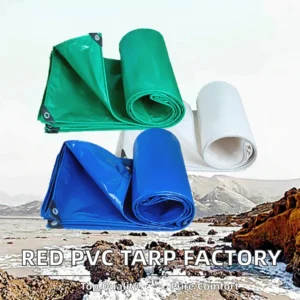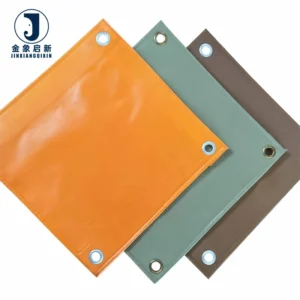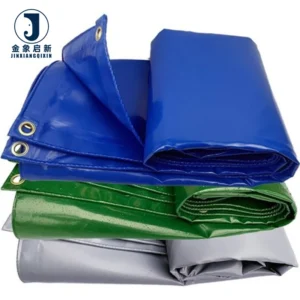
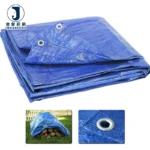
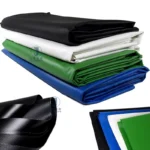
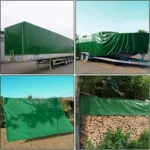
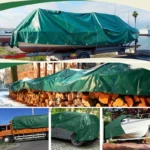
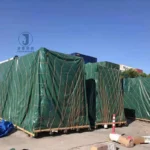
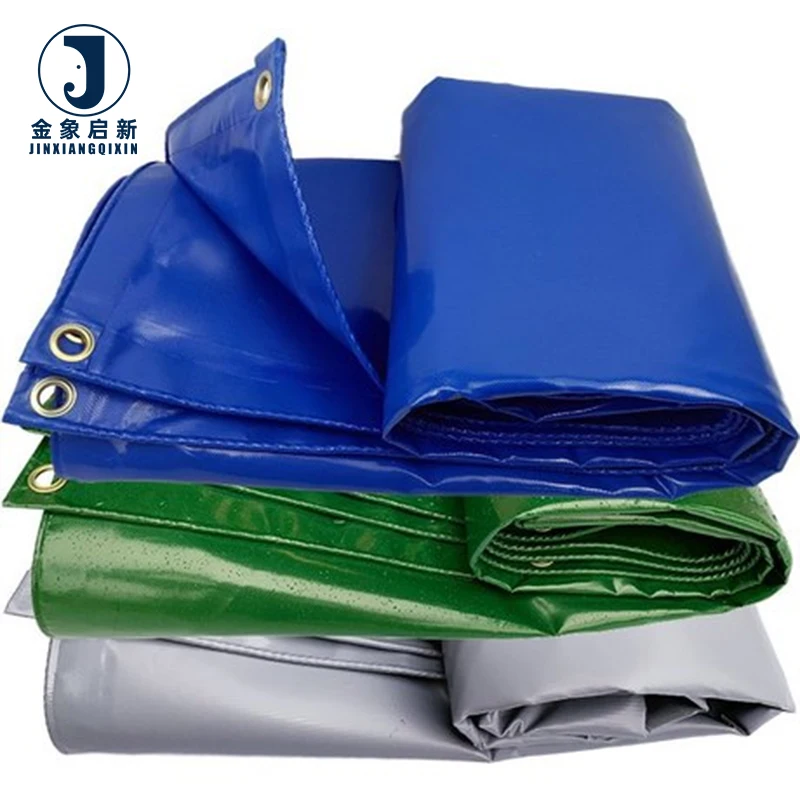
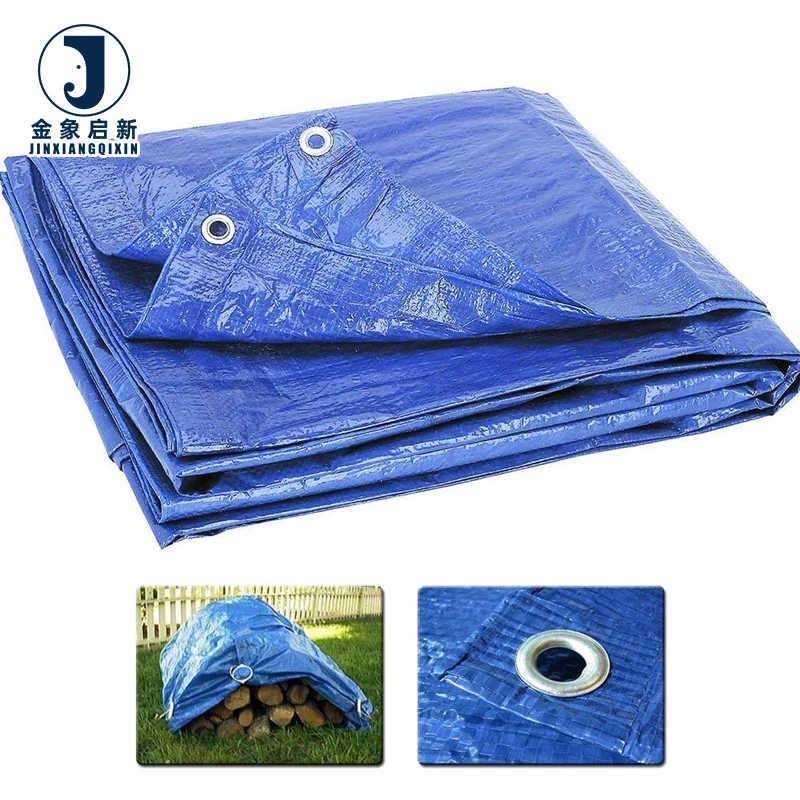
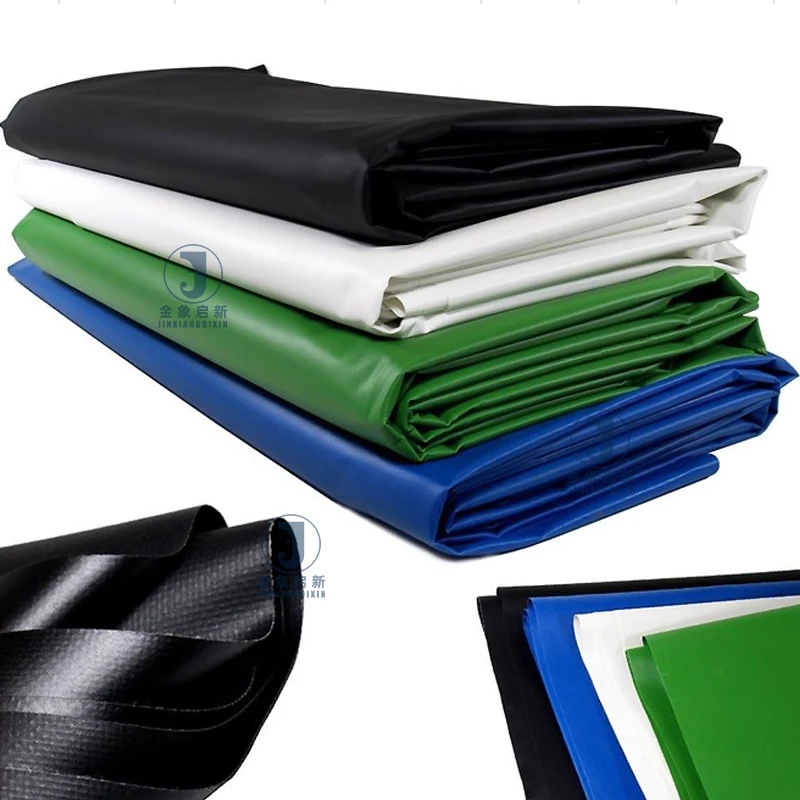
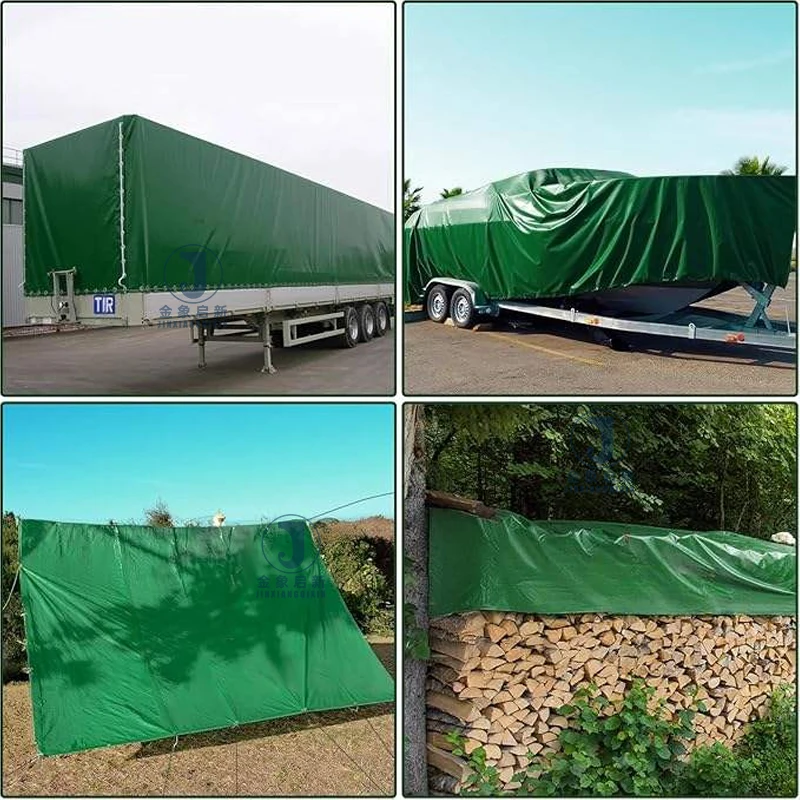
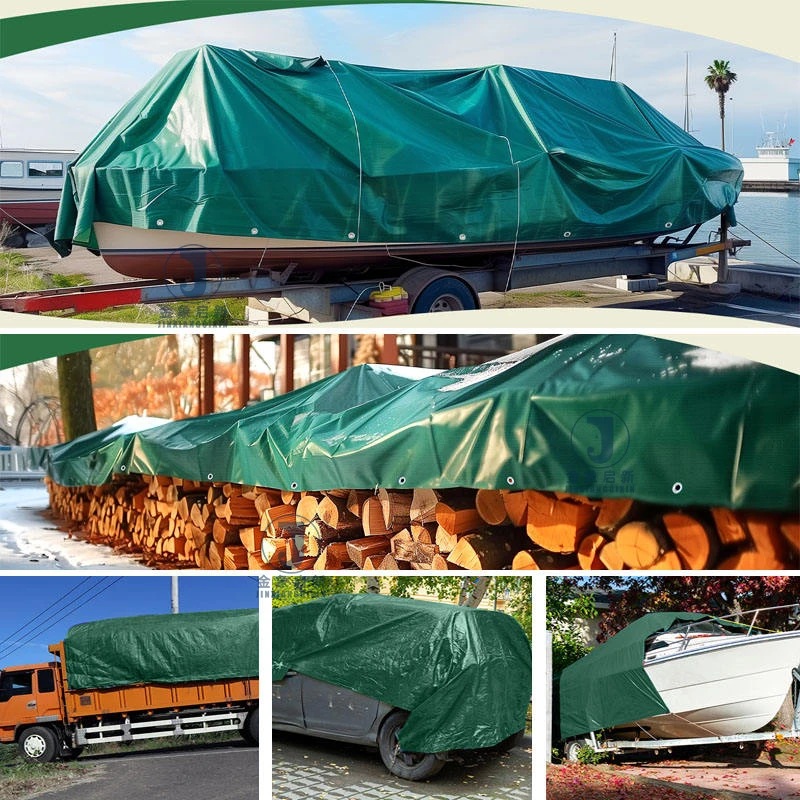
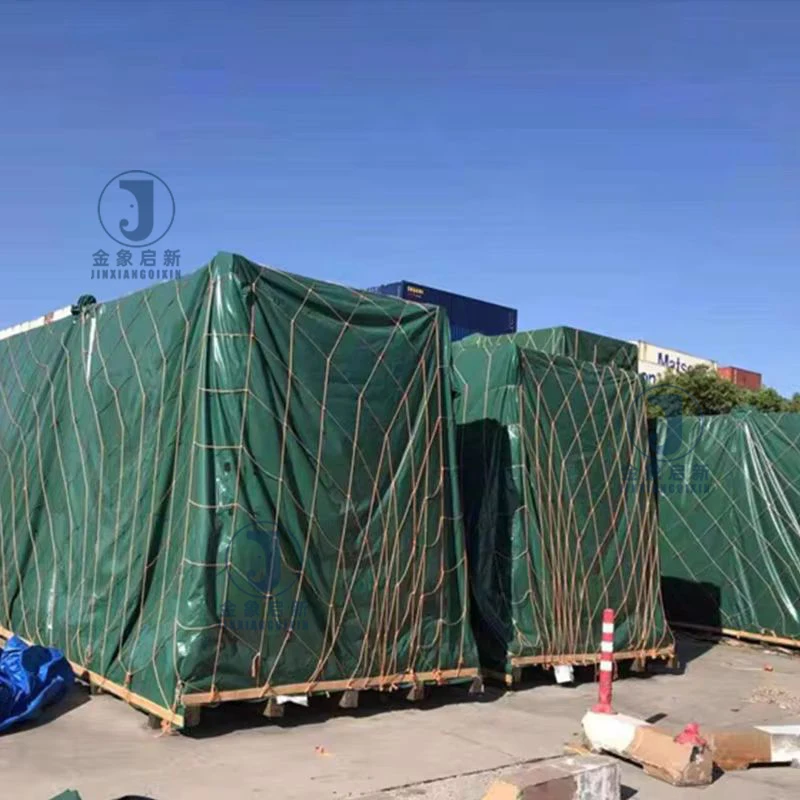
Process-Controlled Coating — three production lines and 36 sets of equipment manage coating weight and adhesion for every roll of PVC coated fabric leaving the facility.
Technical Specifications
| Parameter | Value |
|---|---|
| Product Type | PVC Coated Tarpaulin |
| Base Fabric Material | Polyester |
| Yarn Count | 500D×500D |
| Coating Material | PVC (double-sided) |
| Weight Range | 450–900 g/m² |
| Surface Characteristics | Smooth, leather-like texture |
| Flame Retardant | Available in flame retardant grades — confirm the grade required for your market |
| UV Treatment | Anti-UV treatment available — request test basis and expected service life data |
| Waterproof | Yes |
| Abrasion Resistance | Very strong |
| Repairability | Hot air weldable |
| Service Life | Suited to extended outdoor exposure |
| Standards | ISO, CE |
Application Suitability
| Application | Exposure & Requirement |
|---|---|
| Mining & tunnelling ventilation ducts | Continuous airflow, subsurface humidity, mandatory fire-retardant and anti-static compliance |
| Aviation ground support ducting | Fuel-proximate environments, rapid deployment, documented flame-retardant grade |
| Membrane & inflatable structures | Wind load flexing, UV exposure, weld seam integrity under tension |
| Truck & trailer covers (fire-risk zones) | Road abrasion, load flex, fire safety requirements at loading facilities |
| Temporary site enclosures | Weather exposure, repeated install and strike, handling abrasion |
What "Fire Retardant" Means When No Grade Is Stated on Your Quote
A flame-retardant claim without a named standard is a liability, not a specification.
Ventilation duct fabric arrives on a mining site with no test certificate attached. The inspector asks for DIN 4102 or NFPA 701 documentation. The supplier’s quotation said "flame retardant" — nothing more. The duct fails inspection, work stops, and the contractor absorbs the delay. This scenario repeats across aviation hangars and tunnelling projects where fire-retardant PVC tarpaulin must carry a verifiable grade [NEED_CITE: fire classification standards for coated fabrics in underground and aviation environments]. Specifying the exact standard before production begins — and requiring the matching test report with shipment — is the only way to close this gap.
Duct and Membrane Fabric Under Continuous Stress
Industrial air ducts flex with every pressure cycle. Membrane structures shift under wind load. In both cases, the PVC coated fabric must resist peel at the coating-to-yarn interface and maintain dimensional stability across the panel. The 500D×500D polyester base provides the tensile grid; the double-sided PVC coating locks the weave and seals against moisture ingress. Hot air welded seams transfer load across joins without the stitch holes that compromise waterproof integrity in sewn assemblies.
Compliance Documentation as a Project Deliverable
For mining, tunnelling and aviation contractors, the fabric roll is only part of the delivery. The test report confirming flame-retardant grade, the anti-static certificate where required, and the certificate of origin travel with the shipment. Without this paperwork, the material cannot pass site induction. Our documentation process treats compliance records as production outputs — generated, checked and packed alongside the rolls they describe [NEED_CITE: ISO and CE documentation requirements for technical textiles in regulated environments].
Reading the Specification Sheet Against Real Performance
Weight, measured in g/m², combines base fabric density and coating mass. A 450 g/m² roll and a 900 g/m² roll from the same yarn count differ primarily in coating thickness, which influences abrasion life and flex fatigue resistance rather than tensile strength alone. Tensile and tear performance depend on the 500D×500D polyester grid and its weave density — parameters that the GSM figure does not reveal. Specifiers selecting fire retardant PVC tarpaulin for duct or structural use should request both the GSM breakdown and the base fabric test data per ISO 1421 [NEED_CITE: tensile and tear test methods for coated fabrics per ISO 1421]. The double-sided PVC coating adds waterproof sealing and contributes to weld seam strength, because hot air welding melts coating material from both faces into a continuous bond. Surface texture — the smooth, leather-like finish noted here — affects how dust and particulate adhere in duct interiors and how easily membrane panels clean after site exposure.
The Cost of Specifying on Claim Alone
A duct contractor orders flame-retardant fabric and receives rolls with no accompanying test report. The material may perform adequately, but without a grade referenced to DIN 4102, NFPA 701 or the local equivalent, site safety officers cannot sign off. Rework means removing installed duct, sourcing compliant material and absorbing schedule delay. Similarly, anti-static treatment claimed without a test basis leaves mining operations exposed to electrostatic discharge risk in combustible atmospheres. These failures originate at the quotation stage, where "flame retardant" and "anti-UV" appear as line items but lack the standard references that make them enforceable [NEED_CITE: consequences of non-certified fire retardant fabric in underground ventilation]. Colour inconsistency across rolls in the same order compounds the problem on visible membrane installations, where panels installed side by side reveal batch variation only after full deployment.
Why Technical Buyers Source This Fabric Here
Three full production lines and 36 sets of professional equipment handle bulk duct and membrane orders with consistent coating application across long runs. A 10-person R&D team manages material selection, custom width slitting and sample development for project-specific requirements. Dedicated QA/QC runs at every production stage, with 100 percent inspection before dispatch — each roll checked for coating adhesion, weight consistency and surface integrity. Samples are developed within days when a project demands a specific flame-retardant grade or colour confirmation before full commitment. Nearly three decades of coated fabric production inform the process controls that govern coating weight, cure temperature and roll winding tension.
Documentation & Verification
- Material specification sheet stating GSM, base fabric denier and coating type for each roll
- Fire-retardant test report referencing the grade and standard agreed at order confirmation
- Anti-UV test basis documentation with exposure reference data
- Pre-shipment inspection record covering weight, coating adhesion and surface quality
- Certificate of origin included with customs documentation package
Fabrication, Handling & Storage
- Hot air weld the 450–900 g/m² PVC coating at temperatures matching coating thickness for full seam fusion
- Store rolls upright on pallets to prevent flat-spot deformation of the polyester base fabric
- Allow cold-transported rolls to reach ambient temperature before unrolling to avoid coating crack
- Use PVC-compatible cleaners only — solvent-based products attack the plasticiser in the coating layer
- Repair field damage by hot air welding a patch of matching PVC coated fabric over the affected area
- Plan panel cuts around the available roll width to minimise transverse welds in membrane assemblies
What We Need to Quote Your Project
Provide the application — duct, membrane, inflatable or cover — along with the fire-retardant or anti-static standard your site requires. Confirm the target GSM or the coating weight range you have specified for similar projects. Note any colour requirements and whether you need rolls, slit widths or finished panels with welded hems. If your project demands a pre-production sample for approval or third-party testing, state this at inquiry stage so lead time reflects the confirmation cycle.
Frequently Asked Questions
Q: Which fire-retardant standard does your PVC tarpaulin meet for my market?
A: Flame-retardant grades are available for different markets, but the specific standard — DIN 4102, NFPA 701, M2 or another — must be confirmed at inquiry stage. We supply the matching test report with your shipment once the required grade is agreed and produced. Provide your local code reference so we can align the formulation to your compliance requirement.
Q: How is GSM verified on delivery to match the quoted specification?
A: Every roll undergoes weight verification against the stated GSM during pre-shipment inspection. The inspection record travels with your documentation package. On arrival, you can cross-check by cutting a measured sample from the roll end and weighing it. Any discrepancy outside the agreed tolerance should be flagged before the roll enters production.
Q: Can the fabric be hot air welded without seam failure at flex points?
A: The double-sided PVC coating on this 500D×500D polyester base is designed for hot air welding. Weld temperature and speed must match the coating thickness within the 450–900 g/m² range. Properly executed welds produce a continuous bond that matches the fabric body in peel strength, which is critical for duct and membrane seams under cyclic flex.
Q: What documentation is supplied for site compliance?
A: Each shipment includes a material specification sheet, fire-retardant or anti-static test report matching the agreed grade, pre-shipment inspection record, certificate of origin and packing list. ISO and CE certificates are available for the manufacturing facility. Additional documentation can be arranged if your project specification calls for third-party witness or specific customs forms.
Q: What is the minimum order for custom width, colour or flame-retardant grade?
A: Minimum order quantities vary by the level of customisation — standard widths and colours carry lower thresholds, while bespoke flame-retardant formulations or non-stock colours require longer production runs. State your requirements at inquiry and the quotation will confirm the applicable minimum alongside lead time for sample development and bulk production.