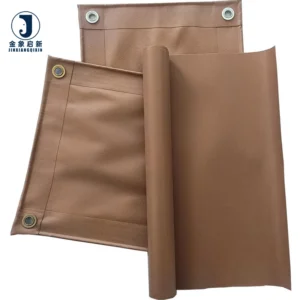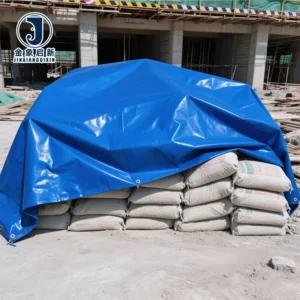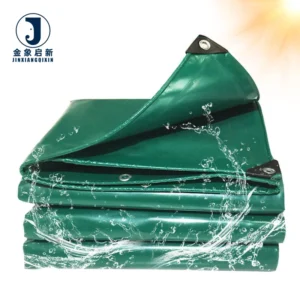
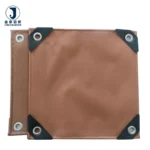
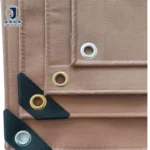
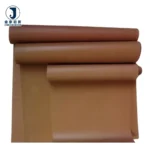
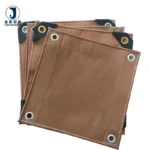

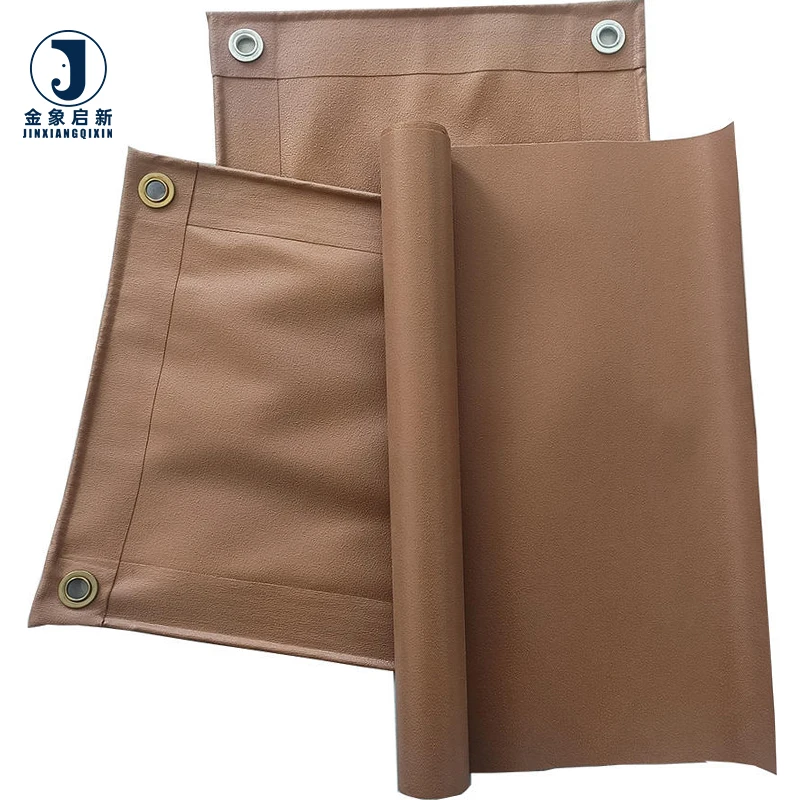
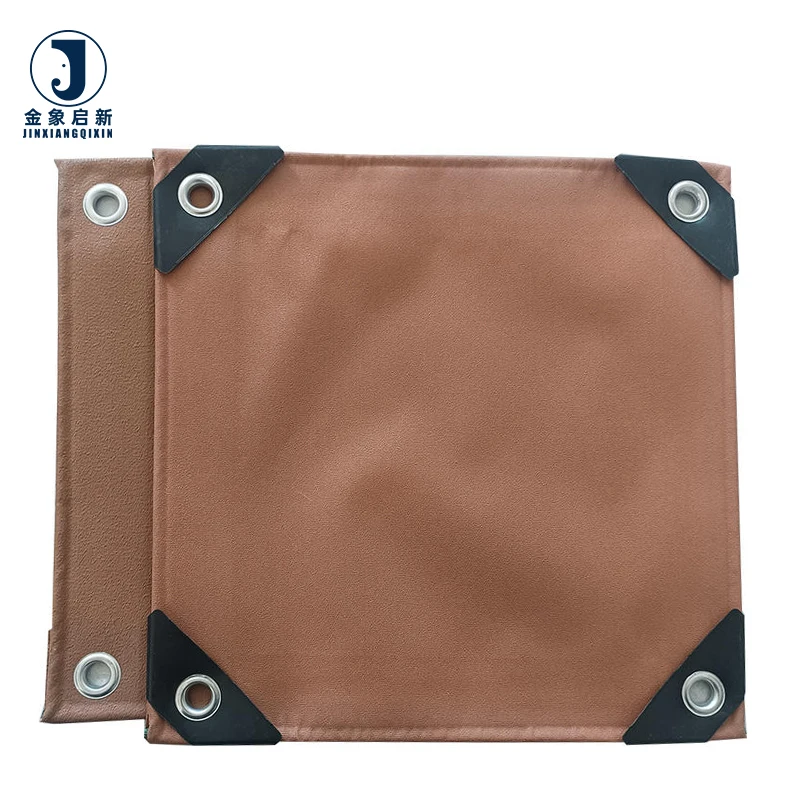
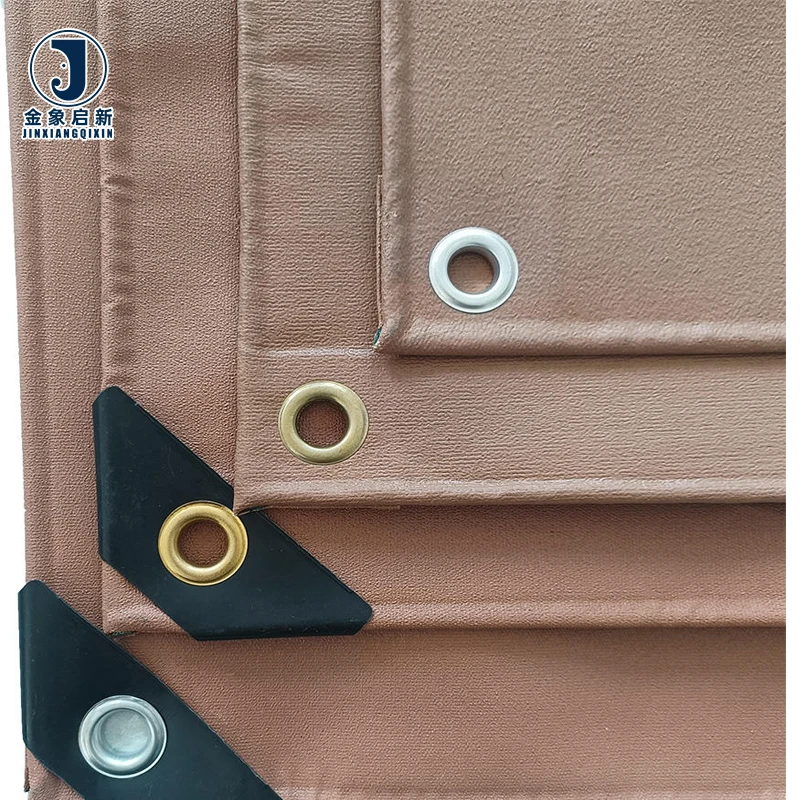
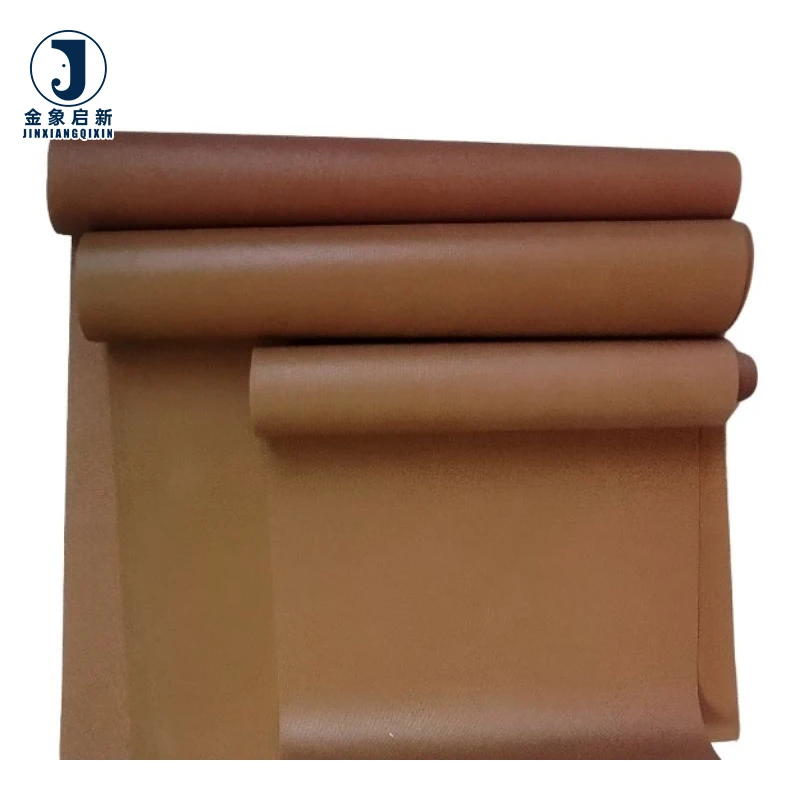

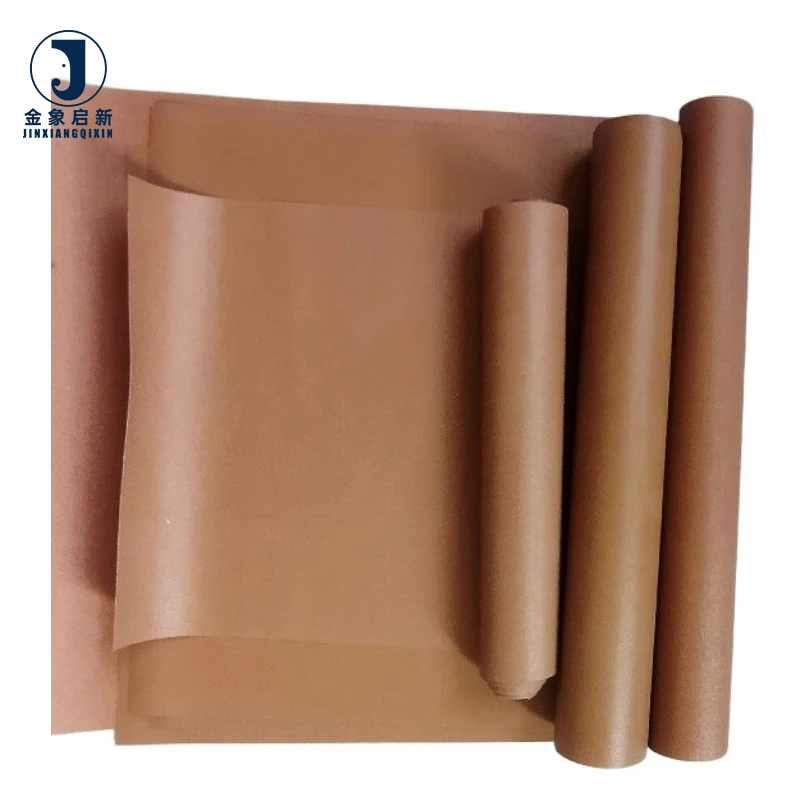
Proven Coating Control — Deep process knowledge over coating weight and adhesion ensures the PVC layer bonds consistently to the 1000D base fabric across every production run.
Technical Specifications
| Parameter | Value |
|---|---|
| Product Type | PVC Coated Tarpaulin |
| Base Fabric Denier | 1000D |
| Weight Options | 550GSM / 900GSM |
| Coating Material | PVC |
| Surface Treatment | Self Clean |
| Flame Retardant | Available (grade not stated — confirm required standard at inquiry) |
| Anti-Static | Available (standard not stated — confirm required value at inquiry) |
| Anti-Mildew | Available |
| Anti-Cold | Available |
| Finish Options | Glossy / Matte |
| Customization | Custom size available |
Application Suitability
| Application | Exposure & Requirement |
|---|---|
| Mine and tunnelling ventilation duct | Continuous airflow, high humidity, strict fire-retardant and anti-static compliance underground |
| Aviation ground support ducting | Jet blast proximity, fuel vapour environments, flame retardant specifications mandatory |
| Inflatable and membrane structures | Sustained air pressure, UV exposure, wind loading, welded seam integrity critical |
| Truck cover | Road abrasion, load flex at tie-down points, weather exposure during transit |
| Flood barrier | Prolonged water contact, debris impact, rapid deployment and fold-out requirements |
What "Certified" Means When the Test Report Is Missing
A flame retardant or anti-static claim without a matching test report is a compliance gap, not a material specification.
Ventilation duct and membrane structure fabric frequently arrives on site lacking the documentation that the safety plan demands. The fabric may carry a treatment, but without a report referencing M2, B1, NFPA 701, or DIN 4102, the site inspector cannot sign off. This PVC Coated Tarpaulin fire retardant anti-static certified product line is offered with selectable treatment grades — the critical step is confirming which standard your project requires before production begins. [NEED_CITE: fire classification standards for technical textiles in underground and aviation environments]
Matching Treatment Grade to Site Compliance
Selecting the correct PVC Coated Tarpaulin fire retardant anti-static certified grade starts with the site safety plan, not the fabric data sheet. Underground mining operations typically demand both flame retardant and anti-static properties verified to the standard enforced by the local mining authority. Aviation ground support ducting follows a different compliance path, often referencing flame retardant grades specific to airside operations. The treatment is applied during coating — it cannot be added after fabrication — so the required grade must be locked in at the inquiry stage.
Anti-Static Performance and Surface Resistance
Anti-static treatment in PVC coated fabric is measured by surface resistance, and the acceptable value depends on the application environment. Mining ventilation ducts require static dissipation to prevent ignition in gassy atmospheres, while electronics-adjacent installations target a different resistance band. When specifying this PVC Coated Tarpaulin fire retardant anti-static certified fabric, request the surface resistance test report and verify it against the threshold stated in your project specification. [NEED_CITE: surface resistance measurement methods for anti-static coated fabrics]
Understanding 1000D Base Fabric and Coating Weight Interaction
The 1000D base fabric denier provides the structural skeleton — high-denier yarns resist tear propagation when a puncture initiates under load or wind pressure. However, denier alone does not determine final strength; the weave density and the PVC coating weight together govern tensile performance and seam holding ability. The 550GSM grade suits applications where weight and pack size matter, such as deployable flood barriers and temporary ducting. The 900GSM grade adds coating mass for higher abrasion resistance and greater stiffness, suited to permanent membrane structures and heavy-duty ventilation duct that must hold shape under sustained negative pressure. Self-clean surface treatment reduces particulate adhesion, which matters in dusty mining environments where fabric maintenance access is limited.
The Cost of Specifying on GSM Without Checking the Test Report
A common procurement failure is approving a quotation based on a stated GSM and assuming tensile and tear values follow. Two fabrics at 550GSM can differ substantially in strength depending on base fabric weave density and coating adhesion quality. A lighter base fabric over-coated to reach the target weight will show acceptable GSM on a scale test but fail prematurely at welded seams where load flex concentrates stress. Similarly, flame retardant treatment claimed without a test report leads to failed site inspections, project delays, and full material replacement at the contractor’s expense. [NEED_CITE: tensile and tear test methods for coated fabrics per ISO 1421]
Why Technical Buyers Source This Fabric Here
Three full production lines and 36 sets of professional equipment support bulk rolls and custom-cut panels with consistent coating weight across the order. The 10-person R&D team handles material selection, treatment grade matching, and sample development — samples for custom requirements are typically developed within days. Dedicated QA/QC runs at every production stage with 100% inspection before shipment, catching GSM deviation and coating defects before dispatch. ISO and CE certified production provides a documented quality framework for projects requiring traceable compliance. The facility’s focus on coated fabric means ventilation duct and membrane structure specifications are handled as core work, not as a sideline product.
Documentation & Verification
- Material specification sheet stating 1000D base fabric, exact GSM grade, and coating composition
- Flame retardant test report referencing the specific standard grade confirmed at inquiry
- Anti-static surface resistance test report matched to your site compliance threshold
- Pre-shipment inspection record confirming weight verification per roll before dispatch
- Certificate of origin and customs documentation for international project logistics
Fabrication, Handling & Storage
- Heat welding parameters must be matched to the selected GSM grade to ensure seam strength equals fabric strength
- Store rolls vertically on end caps to prevent permanent creasing across the 1000D base fabric weave
- Anti-cold treated grades remain flexible in low-temperature transit — avoid folding at sharp angles in sub-zero conditions
- Self-clean surface tolerates mild detergent cleaning; avoid solvent-based cleaners that degrade the PVC coating layer
- Allow welded seams to cool fully under pressure before handling to preserve bond integrity at flex points
Preparing Your Inquiry
Technical buyers should specify the target application, the fire-retardant or anti-static standard required by the project safety plan, and the preferred GSM grade. Include the required roll width or finished panel dimensions, colour reference, and whether glossy or matte finish is needed. Confirming these details at inquiry stage ensures the sample and production run match your compliance and fabrication requirements.
Frequently Asked Questions
Q: Which flame retardant standard does this fabric meet — M2, B1, NFPA 701 or DIN 4102?
A: The fabric is available with flame retardant treatment, and the specific grade must be confirmed at inquiry based on your project’s regulatory requirement. Different markets and applications mandate different standards — M2 for certain European building applications, NFPA 701 for North American temporary structures, or DIN 4102 B1 for German-specified projects. Request the test report matching your required standard before approving production.
Q: How is anti-static performance measured and what surface resistance value is achieved?
A: Anti-static performance is measured by surface resistance testing, and the acceptable value depends on your application environment. Mining ventilation ducts typically require a specific resistance band to prevent static discharge in gassy atmospheres. Confirm the threshold stated in your project specification, and request the corresponding test report with your material documentation package.
Q: Can this fabric be fabricated into ventilation ducts with welded seams that retain flame retardancy?
A: Heat-welded seams on PVC coated fabric can maintain flame retardant properties if the welding temperature and pressure are correctly matched to the coating formulation. The seam zone must be fully fused without degrading the treatment. Specify both the flame retardant grade and the duct fabrication method at inquiry so the production parameters are aligned.
Q: What is the difference between 550GSM and 900GSM for duct and membrane applications?
A: The 550GSM grade offers lower weight and greater pack-down flexibility, suited to temporary ducting and deployable barriers. The 900GSM grade provides higher coating mass for improved abrasion resistance and structural stiffness, better suited to permanent membrane installations and heavy-duty ventilation duct operating under sustained air pressure. Select based on your installation’s mechanical and handling requirements.
Q: Is anti-cold treatment suitable for sub-zero mining or high-altitude tunnelling environments?
A: Anti-cold treatment is available and modifies the PVC formulation to maintain flexibility at reduced temperatures, preventing the coating from cracking when the fabric is handled or flexed in cold conditions. Confirm the lowest operating temperature for your site so the treatment grade can be matched appropriately during production.