


Proven Coating Expertise — Nearly 30 years focused on coated fabric technology with dedicated production lines engineered for aviation-grade ventilation ducts, ensuring every Aircraft PCA Hose meets the fire-retardant and anti-static documentation requirements airport operators demand.
Technical Specifications
| Parameter | Value |
|---|---|
| Product Type | Aircraft PCA Hose (Pre-Conditioned Air Duct) |
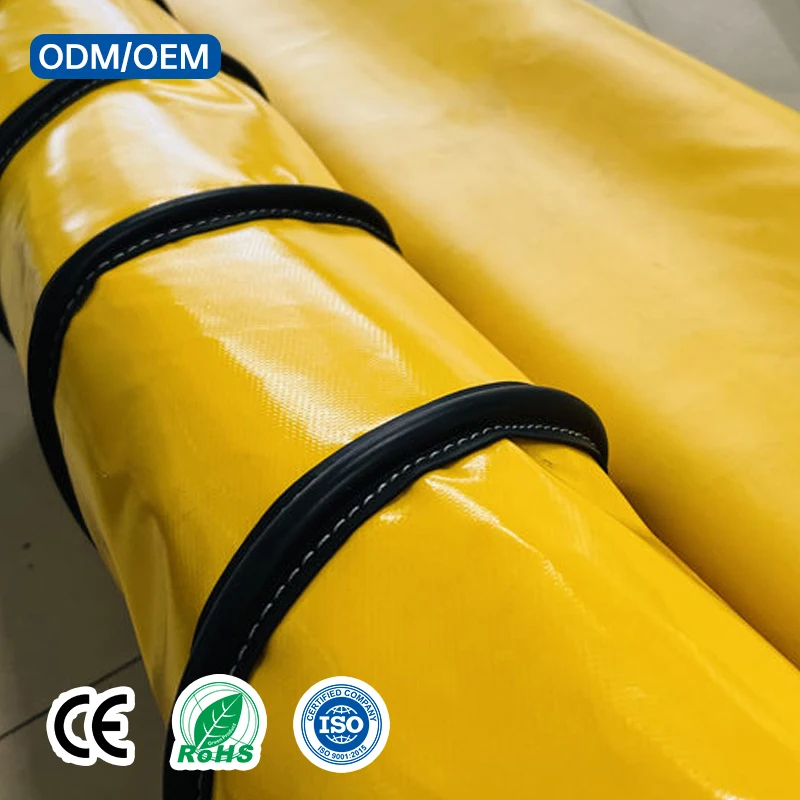
| Coating Material | PVC coated cloth with fabric-reinforced layer and aluminum foil insulation |
| Insulation Layer | Built-in aluminum foil bubble film |
| Temperature Range | -30°C to 150°C |
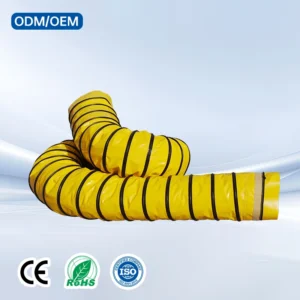
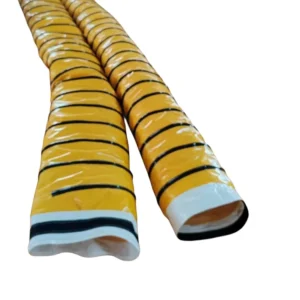
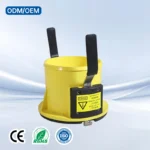
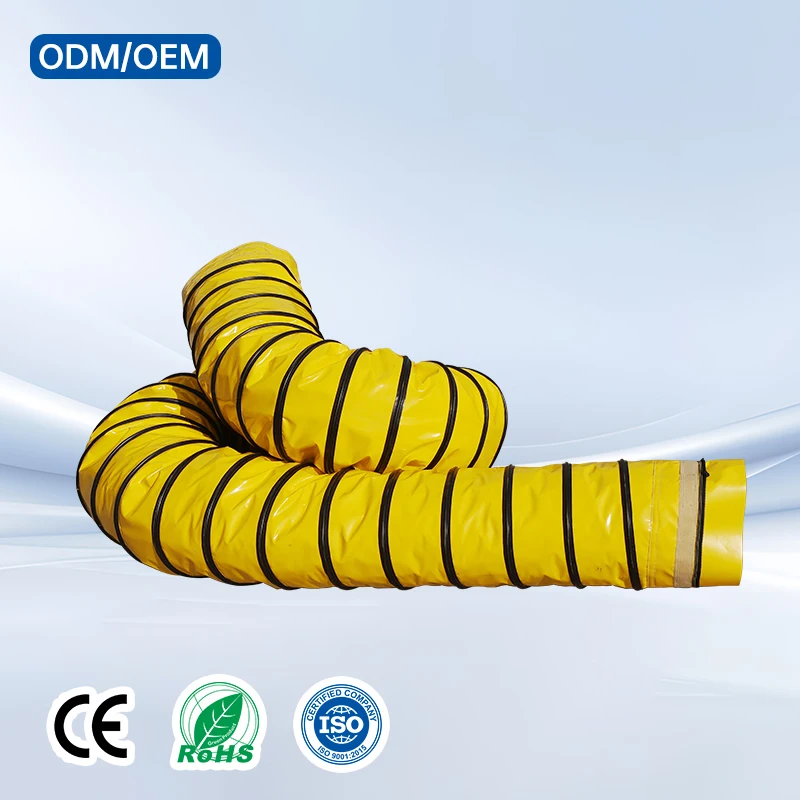
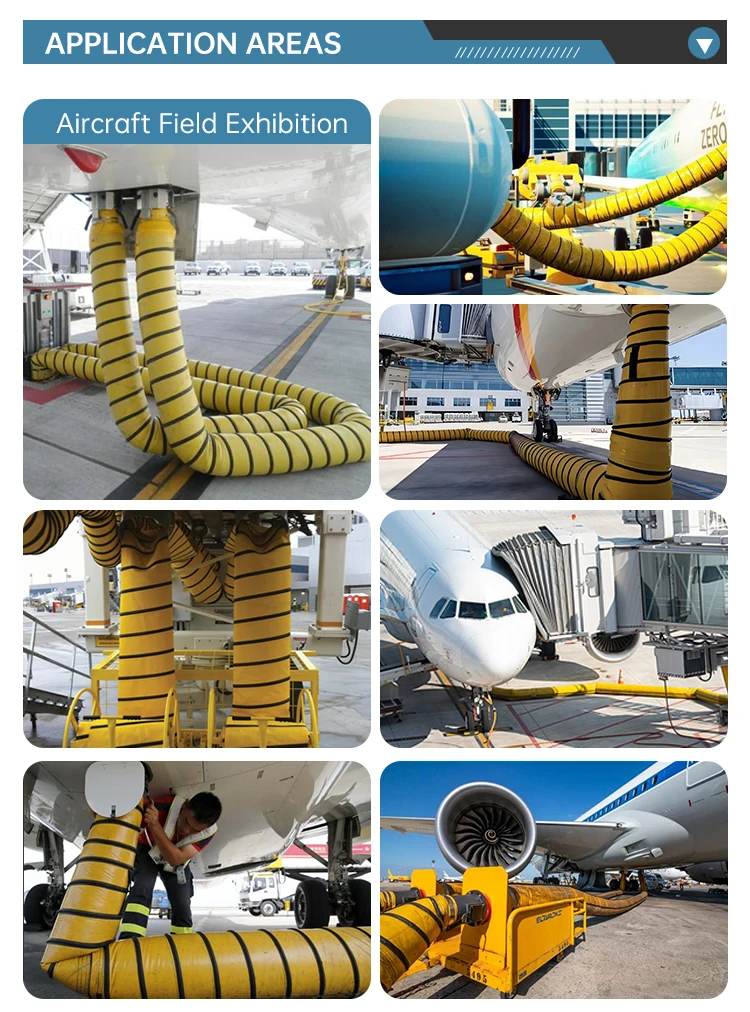
| Outer Layer | Yellow-black alternating protective coloring (high visibility) |
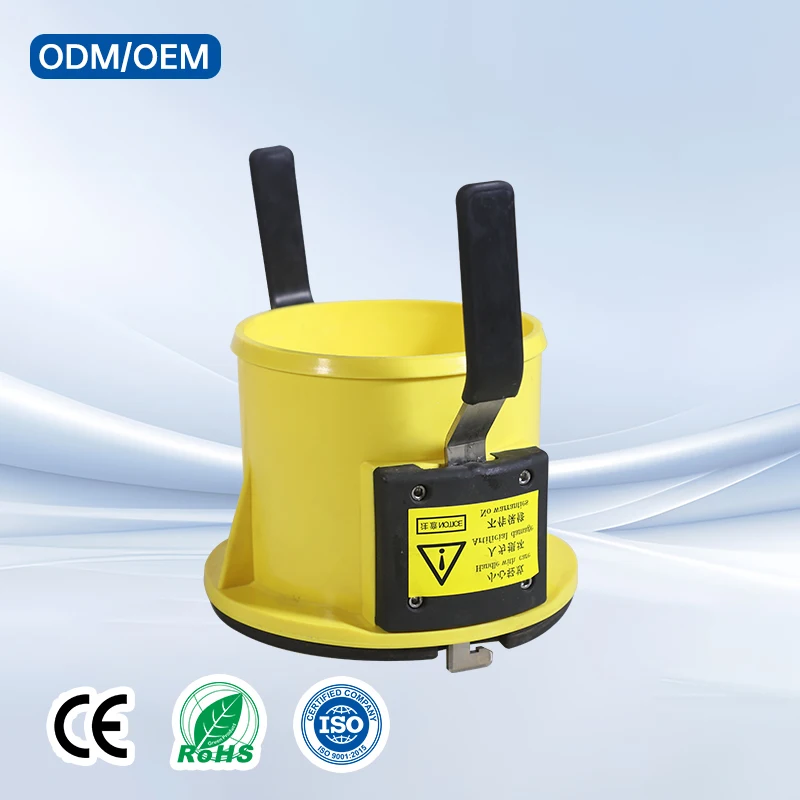
| Connection Method | Zipper and Velcro link for disassembly |
| Mildew & Water Resistance | Yes |
| Flame Retardant | Available in fire-retardant grades — confirm the grade required for your aviation market |
| Anti-Static | Available in anti-static grades — confirm the standard required for your site compliance |
| Customization | Logo, pattern, color, and outer packaging (MOQ 100) |
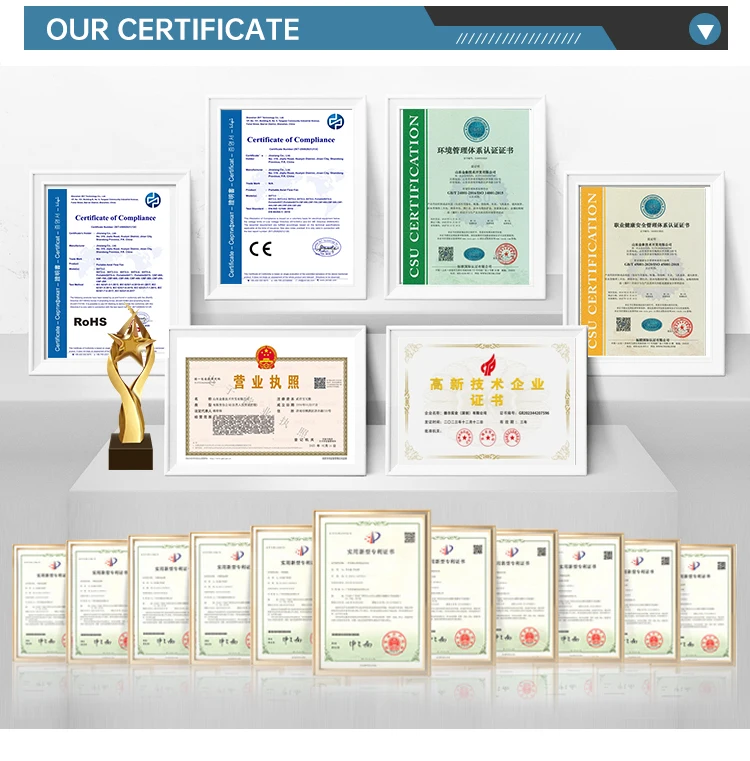
| Standards | ISO, CE |
Application Suitability
| Application | Exposure & Requirement |
|---|---|
| Airport apron ground air supply | Continuous outdoor exposure, jet blast proximity, fuel spill contact, high-visibility safety identification |
| PCA unit to aircraft cabin interface | Repeated connection and disconnection cycles, thermal shock from pre-conditioned air, flex fatigue at coupling points |
| Aircraft hangar climate control | Extended static deployment, dust accumulation, forklift and equipment traffic abrasion |
| Aviation maintenance contractor fleet replacement | Cross-model fitment, dimensional matching to existing PCA units, rapid field installation without specialized tooling |
Why "Certified" Means Nothing Without Batch-Traceable Test Reports
Every Aircraft PCA Hose ships with fire-retardant and anti-static test documentation matched to the specific production batch, not a generic certificate from a different product run.
Ground support equipment procurement teams regularly receive ventilation ducts accompanied by certification paperwork that references a different material grade, a different production date, or a different manufacturer altogether [NEED_CITE: aviation ground equipment compliance documentation standards]. When an airport safety auditor pulls a duct section from service and requests the test report, a mismatched certificate halts operations until the correct documentation surfaces. The Aircraft PCA Air Duct certified documentation package we provide traces each roll to its production batch, with test parameters reflecting the actual insulation layer composition and PVC coating weight used in your order.
Ventilation duct supplied without the fire-retardant or anti-static certification the site requires remains one of the most frequent complaints from airport ground support buyers. Our QA protocol treats documentation as a deliverable equal in importance to the physical duct — no shipment clears pre-shipment inspection without the corresponding test reports, material specification sheets, and compliance records assembled and verified against the packing list.
Insulation Architecture for Extreme Thermal Cycling
The built-in aluminum foil bubble film insulation layer serves a specific engineering function within the Aircraft PCA Hose assembly. Pre-conditioned air units deliver air at temperatures that can differ sharply from ambient apron conditions, particularly during summer ground operations or cold-weather departures. The aluminum foil barrier reflects radiant heat transfer while the bubble film structure traps still air, creating a composite thermal resistance that maintains airflow temperature across the duct length. This insulation sustains rated performance across the -30°C to 150°C operating envelope, preventing condensation buildup on the outer surface during cold-air delivery in humid conditions.
Apron Visibility and Rapid Deployment Design
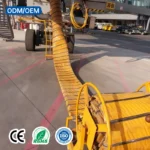
Ground crew safety on active aprons demands immediate visual identification of all equipment and hoses in the aircraft movement area. The yellow-black alternating outer coloring on this Aircraft PCA Hose provides high-visibility contrast against concrete, asphalt, and ground support vehicle paint schemes [NEED_CITE: ICAO apron safety marking and visibility requirements]. The zipper and Velcro connection system eliminates the need for clamps, bolts, or specialized coupling tools during duct installation and removal. Maintenance crews can disconnect a worn section, slide the replacement into position, and secure the link within a single aircraft turnaround window, reducing ground support equipment downtime between gate assignments.
Reading the Specification Sheet Beyond Temperature Ratings
The -30°C to 150°C temperature range defines the operational boundaries where the PVC coating maintains flexibility and the aluminum foil insulation layer retains structural integrity. Below the lower limit, PVC compounds approach their glass transition point, becoming brittle and susceptible to cracking under flex loads — a failure mode that exposes the insulation layer to moisture ingress. Above the upper limit, the plasticizers within the PVC matrix migrate toward the surface, leaving the coating stiff and reducing its resistance to puncture and abrasion. The fabric-reinforced layer between the PVC coating and the aluminum foil insulation provides the tensile backbone that prevents the duct from collapsing under negative pressure during high-volume airflow delivery. Coating weight and fabric denier together determine how the duct handles repeated handling, dragging across apron surfaces, and contact with aircraft landing gear components.
What Happens When Documentation Gaps Reach the Apron
An airport operations manager who cannot produce the fire-retardant test report for a specific PCA duct batch faces an immediate compliance gap during regulatory inspection. The duct may perform identically to a certified batch, but without traceable documentation, the entire ground air supply system falls under audit scrutiny [NEED_CITE: airport ground support equipment audit and compliance traceability]. Batch-to-batch inconsistency in outer coloring creates a secondary problem — replacement sections that appear visibly different from adjacent duct segments signal poor procurement control to safety auditors and airline ground operations staff. When connector dimensions drift outside tolerance, zipper and Velcro links fail to seal properly, allowing conditioned air to escape at the joint and reducing cooling efficiency at the aircraft cabin interface.
Why Ground Support Procurement Teams Source Here
Three full production lines with 36 sets of professional equipment support the volume requirements of airport ground support fleet standardization programs across multiple gate positions. The 10-person R&D team handles custom diameter, length, and connector configuration requests, developing samples within days for fleet-specific fitment verification. Dedicated QA and QC inspection at every production stage — from coating weight verification through insulation layer lamination to final zipper and Velcro attachment — ensures dimensional accuracy and connector integrity before dispatch. The material specification sheet accompanying each order details PVC coating weight, aluminum foil insulation composition, and temperature rating, providing the technical basis for aviation compliance documentation. Pre-shipment inspection records confirm every duct in the order against dimensional tolerances, connection system function, and high-visibility coloring consistency.
Documentation & Verification
- Material specification sheet stating PVC coating weight, aluminum foil insulation layer composition, and temperature rating
- Fire-retardant and anti-static test reports matched to the specific Aircraft PCA Hose production batch
- Pre-shipment inspection record confirming dimensional accuracy, zipper and Velcro connector integrity, and color consistency
- Certificate of origin and customs documentation structured for international airport project delivery requirements
- Roll and unit packing list with weight and dimension data aligned to the shipping manifest
Fabrication, Handling & Storage
- Heat-seal zipper connection points at manufacturer-recommended temperature to avoid PVC coating delamination at the joint
- Store coiled duct sections flat or on wide-diameter cores to prevent permanent creasing of the aluminum foil insulation layer
- Clean the PVC outer surface with mild detergent only — solvent-based cleaners degrade the coating and reduce mildew resistance
- Inspect Velcro hook-and-loop surfaces for debris accumulation after each apron deployment cycle to maintain connection strength
- Avoid dragging the yellow-black outer layer across untreated concrete to prevent abrasion damage to the high-visibility coloring
What We Need to Quote Your PCA Duct Requirement
Provide the aircraft types and PCA unit models in your fleet so we can confirm diameter, length, and connector compatibility for each duct section. Specify the fire-retardant grade and anti-static standard your airport authority or ground handling contract requires, along with any site-specific compliance documentation your procurement terms mandate. Indicate your annual consumption volume and preferred delivery schedule to support batch consistency planning and inventory alignment across your ground support equipment fleet.
Frequently Asked Questions
Q: What fire-retardant and anti-static certifications does the PCA duct carry for aviation compliance?
A: We supply fire-retardant and anti-static test reports matched to the specific production batch of your Aircraft PCA Hose order. The exact grade and standard depend on your airport authority or aviation regulatory requirements. Confirm the specific certification your site mandates — such as the applicable national fire safety classification or anti-static standard — and we provide test documentation traceable to your batch, verified during pre-shipment inspection.
Q: How is the insulation layer constructed and what temperature extremes can it handle?
A: The insulation consists of a built-in aluminum foil bubble film layer positioned between the PVC-coated fabric outer shell and the inner airflow surface. This composite structure sustains rated thermal performance across the -30°C to 150°C operating range. The aluminum foil reflects radiant heat while the bubble film traps insulating air, maintaining delivered air temperature from the PCA unit to the aircraft cabin interface during both cold-air and warm-air supply operations.
Q: What connection and fitting options are available for different PCA unit models?
A: The standard Aircraft PCA Hose uses a zipper and Velcro link system for rapid disassembly and field replacement without specialized tools. Custom connection configurations can be developed to match specific PCA unit outlet dimensions and aircraft cabin air conditioning interface requirements. Provide your existing equipment model details and our R&D team will develop a sample with the correct connector geometry for your fleet.
Q: How do you control batch consistency on color and dimensional tolerances across a multi-unit order?
A: Every production run undergoes in-process QA checks on the yellow-black outer coloring consistency, duct diameter, and connector alignment. The pre-shipment inspection record documents dimensional verification for each unit before dispatch. For fleet standardization programs spanning multiple gate positions, we plan production scheduling to maintain batch continuity across your entire order, reducing visible variation between installed duct sections.
Q: What custom sizing and branding options are available, and what are the minimums?
A: Logo, pattern, color, and outer packaging customization are available with a minimum order of 100 units. Custom duct diameter, length, and connector configurations can be developed based on your PCA unit specifications. Samples are produced within days for fitment and performance verification before full production commitment. Confirm your sizing requirements and branding specifications during the inquiry stage for accurate lead time and documentation planning.