

Proven Process Control — 600gsm polyester-cotton base fabric with PVC lamination engineered for heavy-duty transport and construction cover applications, backed by dedicated QA at every production stage.
Technical Specifications
| Parameter | Value |
|---|---|
| Product Type | PVC Laminated Tarpaulin |
| Base Fabric | Polyester cotton industrial textile, 8–12 strands fine cotton yarn |
| Weight | 600 GSM |
| Thickness Options | 0.5mm / 0.6mm / 0.7mm |
| Roll Width | 2m |
| Roll Length | 100m |
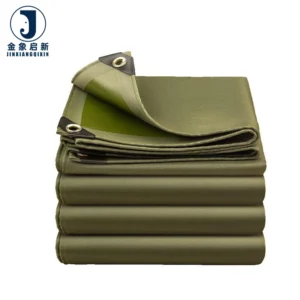
| Color Options | Army Green Camouflage / Custom |
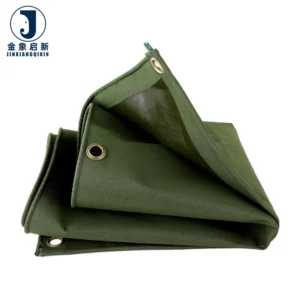
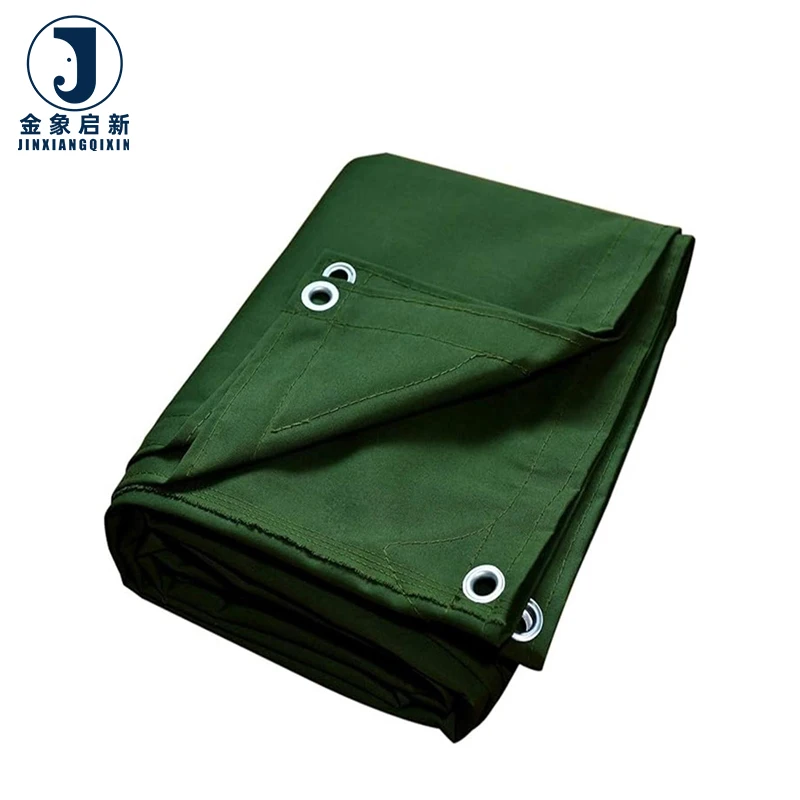
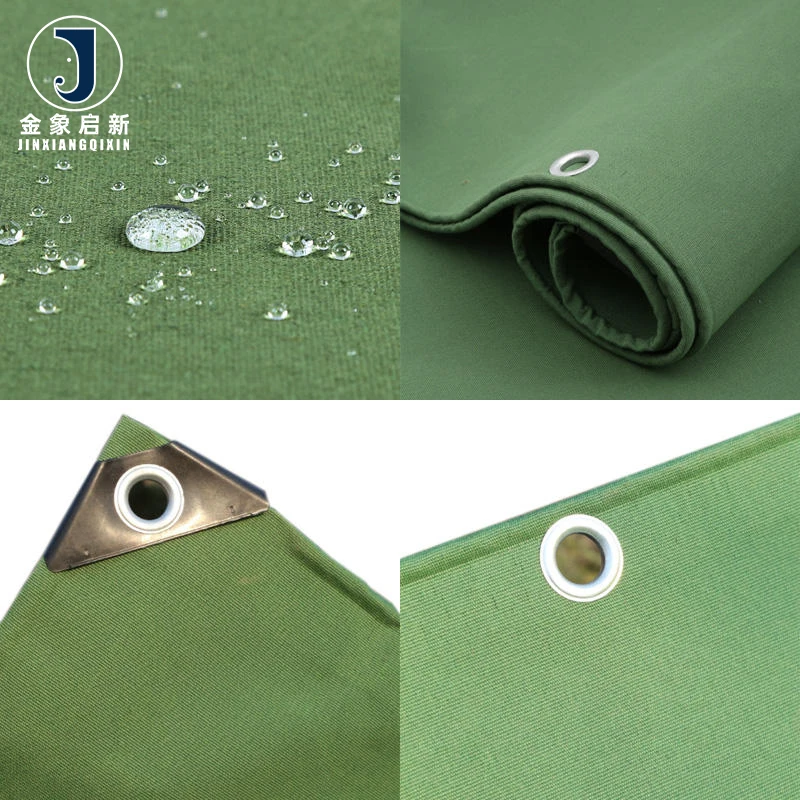
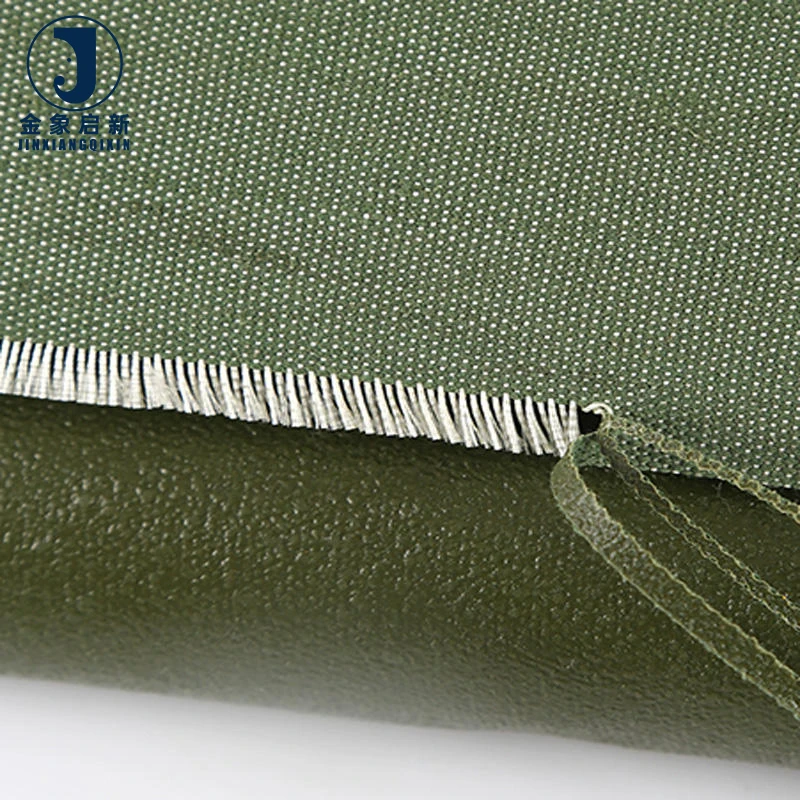
| Edge Reinforcement | Rust-proof aluminum eyelets every 1m at corners and hem; folded seams welded and sewn with poly ropes |
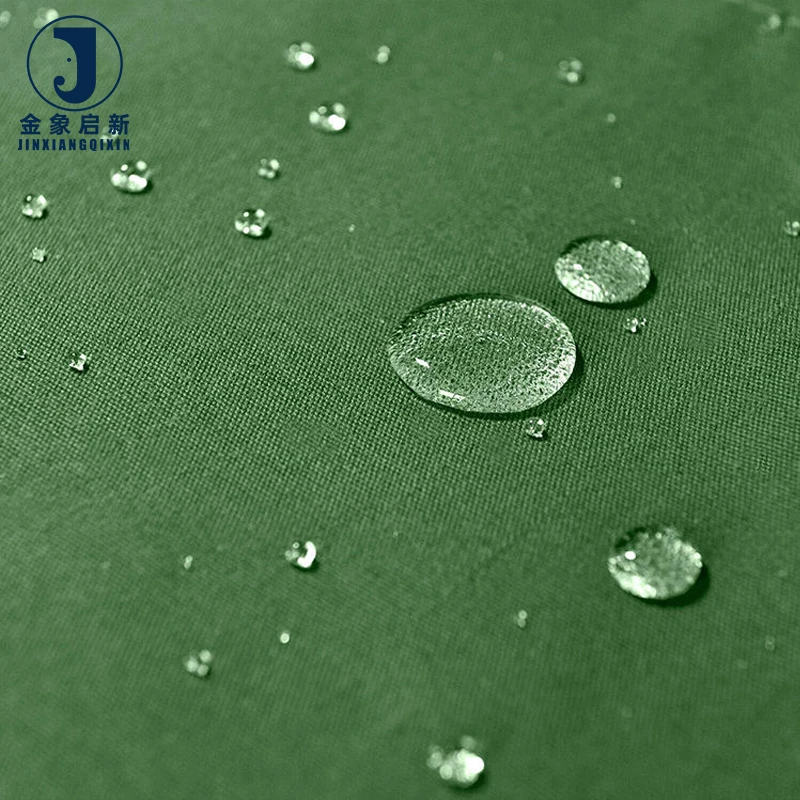
| Key Features | Wear-resistant, corrosion-resistant, tensile-resistant, high- and low-temperature resistant, UV resistant, mold resistant, waterproof |
| Standards | CE, ISO |
Application Suitability
| Application | Exposure & Requirement |
|---|---|
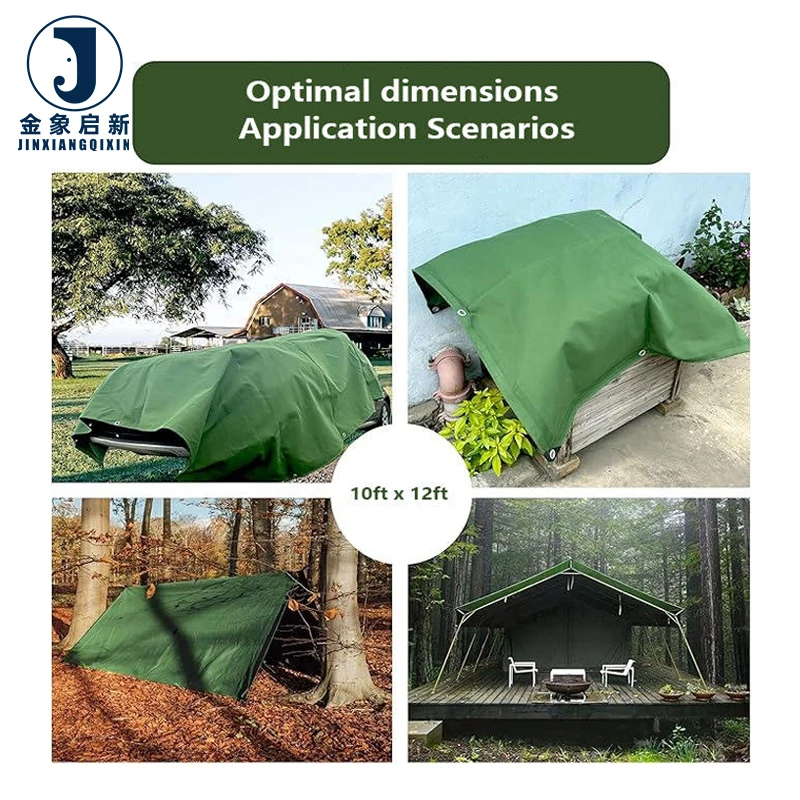
| Truck and trailer load cover | Road abrasion, wind flex at tie-down points, UV and rain exposure, cargo shift stress on welded seams |
| Construction site equipment protection | Open-air weathering, dust and debris impact, ground moisture, forklift and foot traffic abrasion |
| Temporary shelter and tent structures | Sustained wind load, rainfall, repeated assembly and disassembly, structural tension on eyelets |
| Asphalt cover and roof protection | High-temperature surface contact, prolonged solar exposure, chemical residue from bitumen materials |
Why Seam Construction Matters More Than Fabric Weight in Heavy Duty Covers
Welded seams combined with poly-rope sewing deliver load-bearing reinforcement precisely where laminated canvas tarpaulin covers experience peak stress.
A 600gsm laminated canvas tarpaulin performs only as long as its weakest point. In fleet and construction environments, that weak point is almost always the seam or hem — not the centre of the fabric panel. Buyers routinely receive covers where the coating delaminates at the fold line or the eyelet pulls through unreinforced canvas after a single season. The failure rarely happens at the specification weight; it happens at the construction detail. [NEED_CITE: common failure modes in coated fabric seam construction per ISO 1421 tensile testing]
Load-Bearing Seams Engineered for Flex-Point Durability
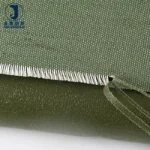
This PVC laminated tarpaulin uses a dual-method seam construction: folds and hems are first welded to fuse the coating layers, then sewn through with poly ropes embedded in the hem channel. The result is a hem that distributes tie-down tension across the rope rather than concentrating it at the eyelet hole. For transport fleets, this means the cover resists the cyclic flapping and load-shift stresses that cause single-layer hems to tear through.
Corrosion-Proof Tie-Down Points for Extended Outdoor Exposure
Rust-proof aluminum eyelets are placed at one-metre intervals along corners and hems. Aluminum avoids the iron-oxide staining that steel grommets leave on light-coloured cargo and painted trailer sides. The spacing is designed to match standard ratchet strap configurations used in flatbed and curtain-side transport, so tension distributes evenly without creating unsupported spans between tie-down points.
Reading the 600 GSM Weight in Context with Base Fabric Density
GSM alone tells you mass per square metre, not how the fabric handles tearing or flexing. On this laminated canvas tarpaulin, the 600gsm figure combines the polyester-cotton woven base with the PVC laminate coating weight. The 8–12 strand cotton yarn in the weave contributes tensile resistance, while the lamination bonding determines whether the coating stays adhered under heat and flex. Choosing between the 0.5mm, 0.6mm, and 0.7mm thickness options lets buyers match coating depth to application severity — thicker laminate for asphalt contact and heavy abrasion, thinner for tent and shelter structures where pack weight matters. [NEED_CITE: relationship between coating weight and base fabric denier in laminated tarpaulin tear performance]
The Hidden Cost of Underspecified Edge Reinforcement
When hems are welded without rope reinforcement, the poly rope omitted, or eyelets spaced too far apart, the first failure in wind is a tear radiating from the grommet hole. Buyers who specify GSM correctly but leave edge construction unverified often find the cover body intact while the hem is shredded. This mismatch drives re-order costs, cargo damage claims, and site downtime. The consequence is not a gradual wear pattern — it is a sudden, catastrophic split under load. [NEED_CITE: hem failure analysis in heavy-duty tarpaulin field performance reports]
Why Source This Laminated Canvas Tarpaulin Here
Coating weight and lamination adhesion are controlled through dedicated in-process QC, ensuring the stated 600gsm arrives as specified on every roll.
Three full production lines and 36 sets of professional equipment support bulk roll output with consistent delivery scheduling across repeat orders.
A 10-person R&D team handles custom sizing, army green camouflage matching, and sample development so buyers confirm material and construction before committing to volume.
Every roll undergoes 100% pre-shipment inspection against the material specification sheet, catching GSM deviation and coating defects before dispatch.
Samples for custom width, colour, and eyelet configuration are developed within days, reducing the gap between inquiry and production approval.
Documentation & Verification
- Material specification sheet stating base fabric composition, lamination method, and confirmed 600 GSM
- Pre-shipment inspection record with measured weight per roll against quotation
- UV and mold resistance test reports available where treatment grades are specified
- Roll packing list with lot traceability for batch consistency verification
- ISO and CE certification documentation supplied with each shipment
Fabrication, Handling & Storage
- Welding temperature must suit PVC lamination on polyester-cotton base to avoid coating delamination at seams
- Poly ropes in 600gsm hems distribute load; verify rope gauge matches eyelet diameter before sewing
- Store 2m rolls vertically on pallets to prevent permanent crease marks in the laminate surface
- Allow cold-stored rolls to reach ambient temperature before unrolling to prevent coating crack at fold lines
- Clean PVC laminated surface with neutral detergent only; solvents degrade the coating bond over time
- Field repair patches should match the 0.5–0.7mm thickness range to maintain flex uniformity at the repair site
What to Include in Your Laminated Tarpaulin Inquiry
Provide the specific application and environmental exposure — whether the cover faces road weather, construction site abrasion, or sustained sun and rain on a static structure. State whether you require roll stock in the standard 2m × 100m format or custom-cut finished sizes with confirmed eyelet placement. If your market mandates a specific fire classification or anti-static grade, specify the standard so the correct treatment formulation can be quoted.
Frequently Asked Questions
Q: How do I verify the 600gsm weight when the rolls arrive?
A: Use a calibrated scale to cut a measured sample from the roll end and calculate mass per square metre. Compare the result against the pre-shipment inspection record supplied with your documentation. The 100% inspection process means each roll has already been measured before dispatch, so you are confirming consistency rather than conducting first-time validation.
Q: What is the difference between welded and sewn seams for transport covers?
A: Welding fuses the PVC laminate layers into a continuous bond, eliminating needle holes where water can penetrate. Sewing with poly ropes adds mechanical reinforcement that distributes tie-down tension across the hem. This laminated canvas tarpaulin combines both methods, so the weld seals against weather while the rope-and-stitch construction handles flex and load stress.
Q: Can I order custom cut sizes or only roll stock?
A: Both formats are available. Custom cut sizes are produced with confirmed eyelet spacing, hem reinforcement, and welded seams per your drawing. Roll stock in the standard 2m × 100m format suits distributors and fabricators who cut and finish locally. Sample approval is recommended before bulk production to confirm dimensions and construction details.
Q: How is UV and weather resistance validated for outdoor use?
A: UV-resistant treatment is applied during the lamination stage. Where a specific test standard is required for your market, confirm the grade needed so the correct formulation and corresponding test report can be supplied. Expected outdoor service life depends on installation angle, local solar intensity, and mechanical wear — all factors that vary by application.
Q: How is colour consistency controlled across multiple rolls?
A: Each production run uses matched pigment batches for the specified colour, whether army green camouflage or a custom reference. Pre-shipment inspection includes visual comparison of roll surfaces under standard lighting. For large orders, requesting a production sample from the first roll before the full run completes allows early confirmation of colour uniformity.