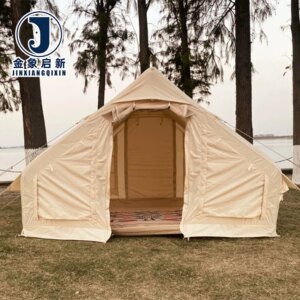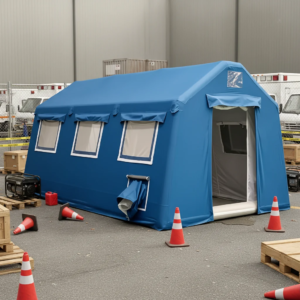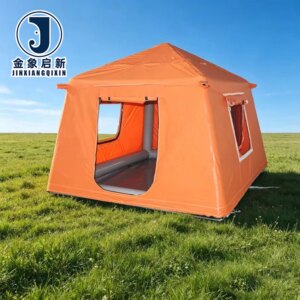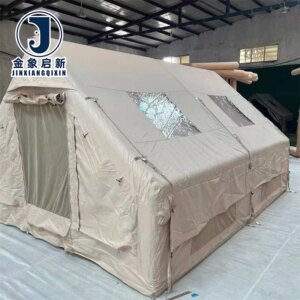
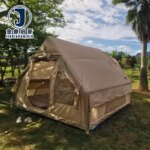
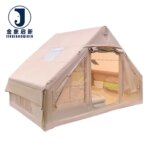
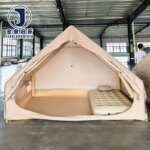
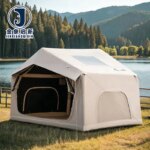
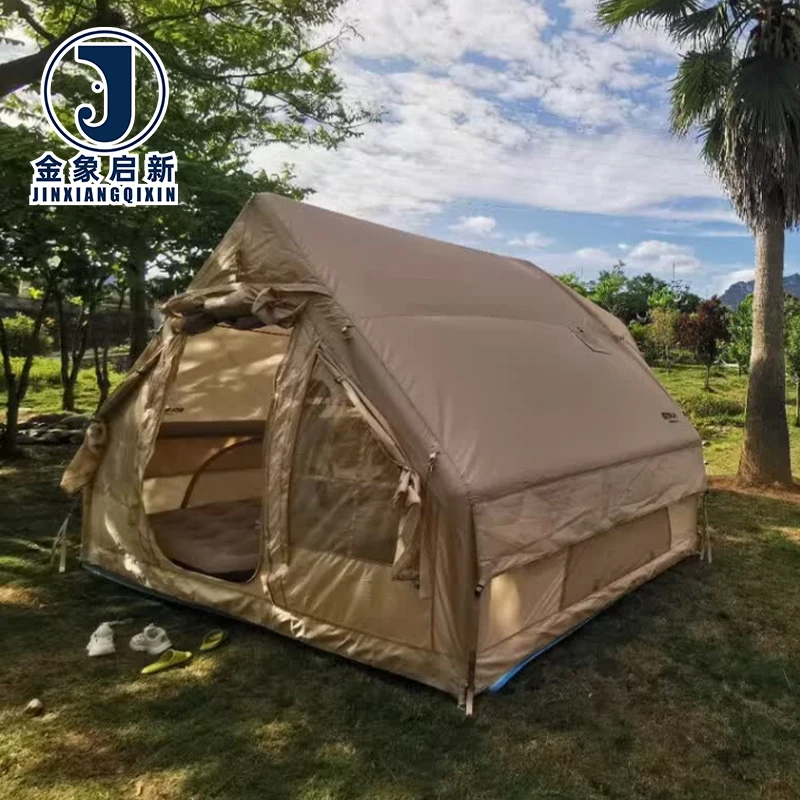
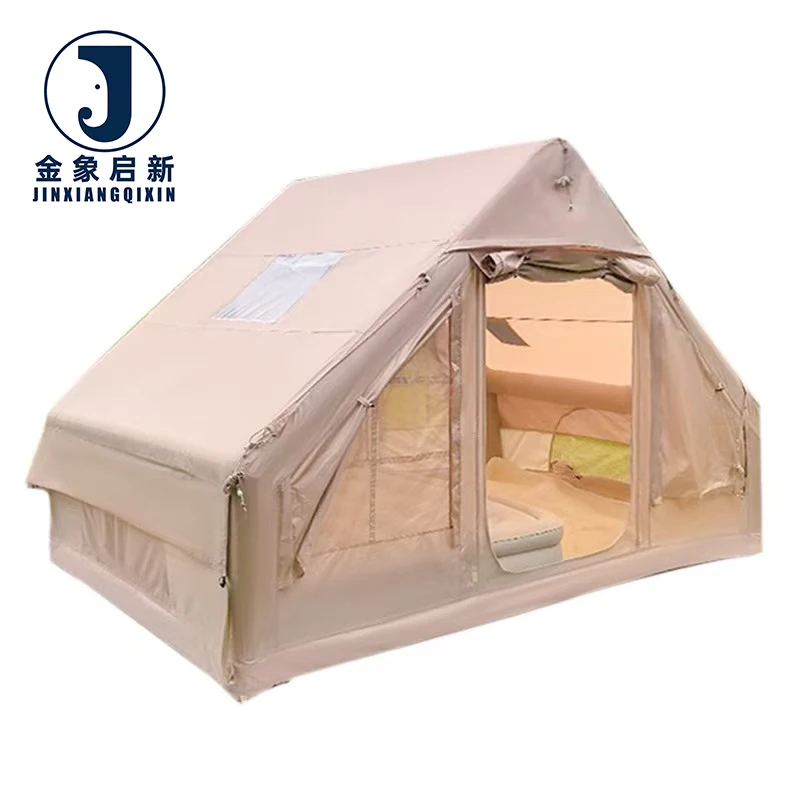
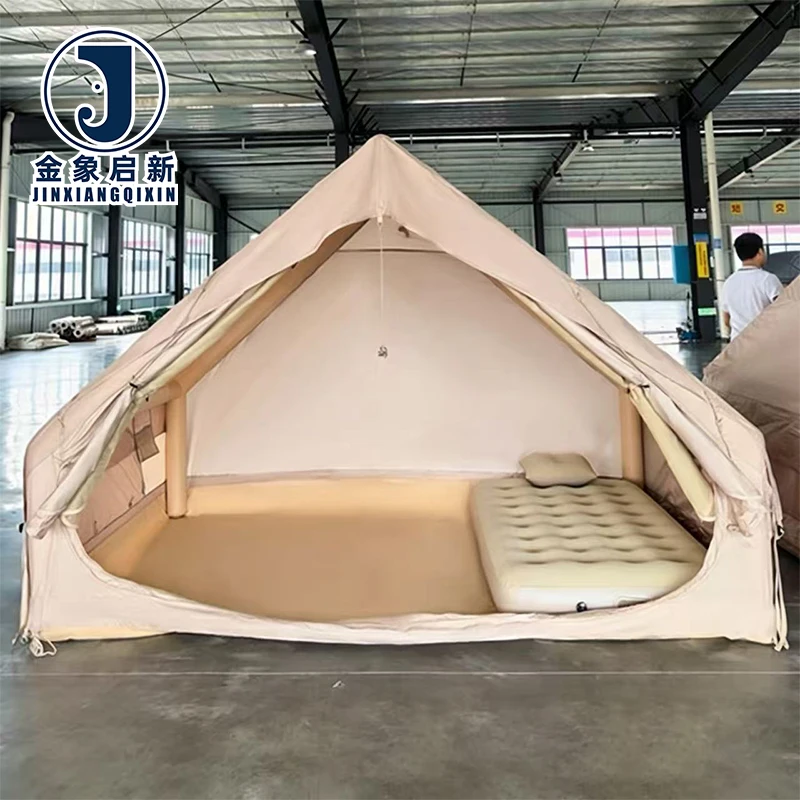
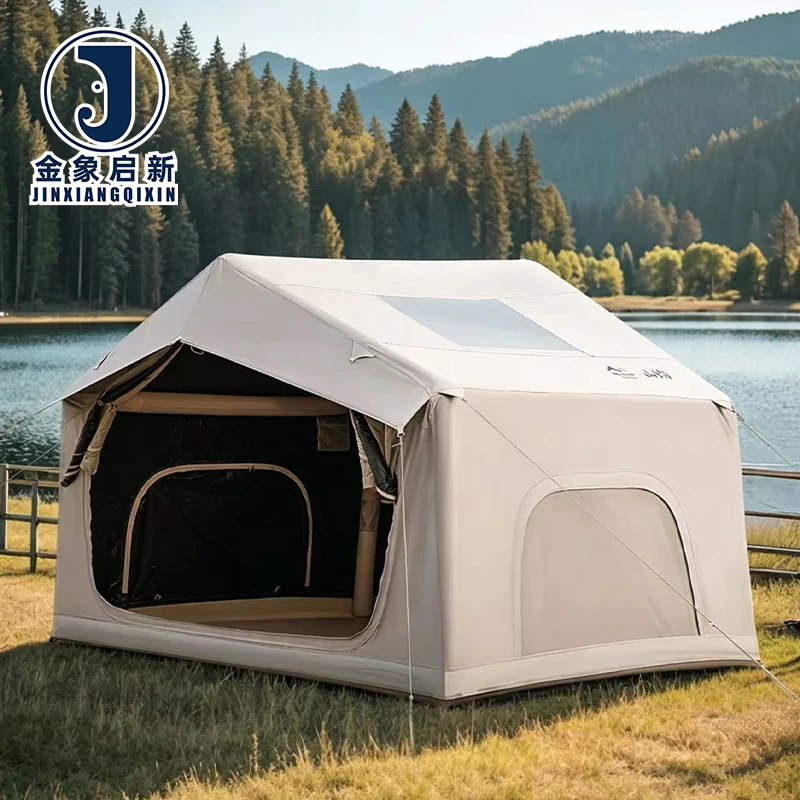
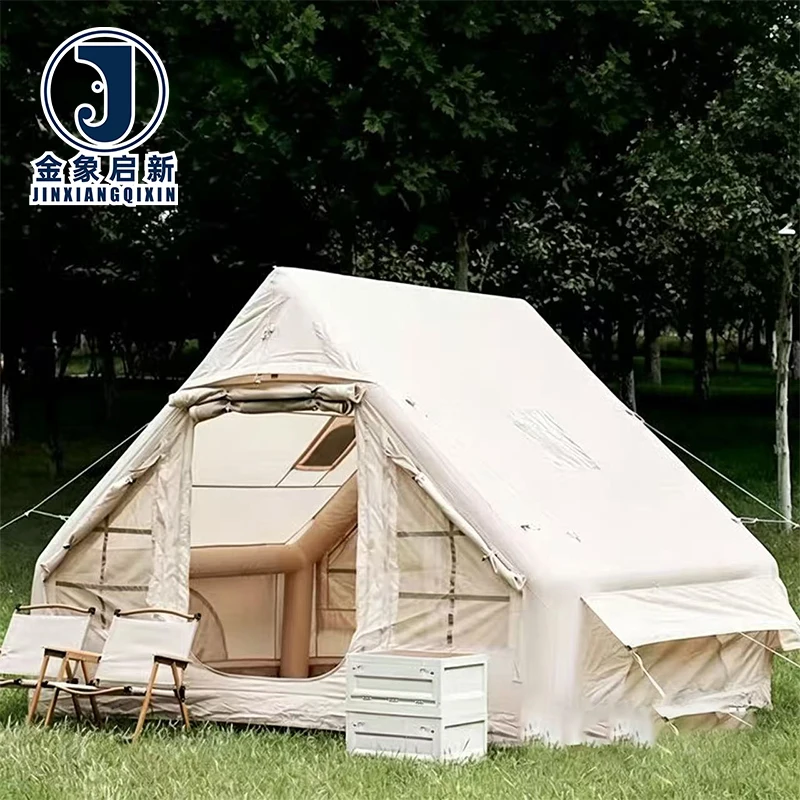
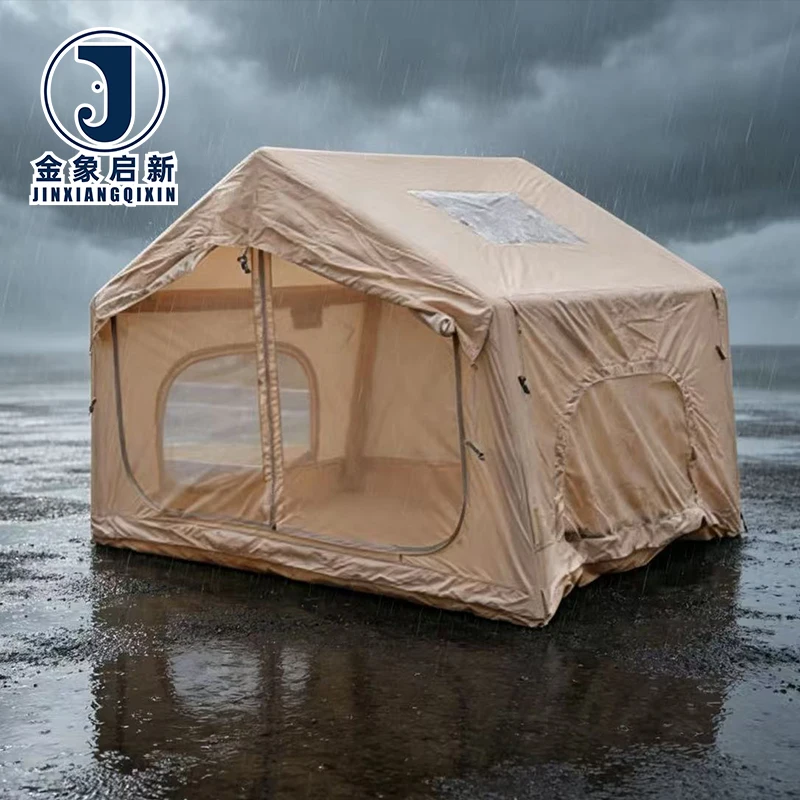
Coating Control Precision — Nearly 30 years of dedicated PVC coating process expertise ensures every batch of inflatable tent fabric meets the specified GSM and adhesion targets before it leaves the line.
Technical Specifications
| Parameter | Value |
|---|---|
| Product Type | Inflatable Tent Fabric |
| Core Material | PVC tarpaulin |
| Coating Material | PVC |
| Layer Construction | Single layer |
| Waterproof Rating | ≥2000mm water column (source value — verify against manufacturer catalog) |
| Tear Resistance | ≥300N (test standard not stated in source) |
| UV Stability | 500 hours exposure (test standard not stated in source) |
| Fire-Retardant Grade | Available in fire-retardant grades — confirm the grade required for your market |
| Anti-Static Property | Available with anti-static treatment — confirm the standard required for your application |
| Season Rating | 4 season |
| Capacity Reference | 8-10 person inflatable structure |
| Customization | OEM & ODM, sample customization, pattern printing, material selection, product design |
| Certifications | ISO9001, ISO14001, ISO45001, CE |
Application Suitability
| Application | Exposure & Requirement |
|---|---|
| Commercial inflatable camping tent shells | Continuous internal air pressure on beam structures, repeated inflation-deflation cycles, field abrasion from ground contact |
| Specialist membrane and inflatable event structures | Public assembly fire code compliance, wind loading on large spans, UV degradation over extended outdoor deployment |
| Professional outdoor equipment OEM product lines | Batch-to-batch material consistency for automated cutting and welding, documented traceability for regulated market export |
| Mining and aviation inflatable shelters | Anti-static surface requirements in combustible atmospheres, fire-retardant certification for confined-site operations |
What "Fire-Retardant" Means When the Grade Is Missing From the Datasheet
A fire-retardant claim without a named standard is a procurement risk, not a material property.
Manufacturers of inflatable camping structures and membrane shelters face increasing scrutiny from regulators in North America and Europe. A fabric labelled simply "fire-retardant" may pass one test protocol yet fail the specific code enforced at the installation site. We have seen inflatable tent fabric shipments held at customs because the accompanying test report referenced a standard that the destination authority did not recognise [NEED_CITE: fire classification standards for temporary structures vary by jurisdiction]. Procurement teams specifying Inflatable Tent Fabric fire retardant / anti-static / certified materials need the exact grade — B1 per DIN 4102, M2, NFPA 701, or the local equivalent — documented on the batch test report, not just on the marketing sheet.
Airtightness and Beam Integrity in Inflatable Structures
Inflatable tent beams rely on the fabric holding constant internal pressure without leakage through the coating or at welded seams. The single-layer PVC construction used here is engineered to balance airtightness with the flexibility required for repeated inflation cycles. When the coating weight or adhesion is inconsistent, micro-channels develop at the weld line and the beam loses pressure under load, compromising structural stability before the fabric itself shows any visible damage.
Coating Adhesion Under Cyclic Stress
Every inflation and deflation cycle flexes the PVC coating against the base fabric. Over extended use, poor adhesion leads to delamination at stress concentration points — typically where the beam meets the ground sheet or where guy-line attachment patches are welded. The 36 sets of professional processing equipment in our facility allow controlled coating application and thermal management during production, reducing the variance that causes premature delamination [NEED_CITE: peel strength test methods for coated fabrics per ISO 2411].
Reading the Specification Sheet Beyond the GSM Number
GSM tells you the total mass per square metre but does not distinguish between base fabric weight and coating weight. Two inflatable tent fabrics can carry the same GSM yet perform very differently: a heavier base fabric with lighter coating will show better tear resistance but potentially lower weld strength, while a heavier coating with lighter base fabric may seal well but tear more easily under point load. The denier of the yarn and the weave density of the base fabric determine how a tear propagates once initiated. Buyers evaluating Inflatable Tent Fabric fire retardant / anti-static / certified options should request the base fabric specification alongside the total GSM to understand the mechanical behaviour of the composite material.
The Cost of Specifying on Price Per Kilogram Instead of Performance
When procurement focuses on the lowest cost per kilogram, suppliers compensate by reducing coating weight or switching to a lighter base fabric while maintaining the quoted GSM through filler loading. The result arrives looking correct on the scale but underperforms in tear resistance and weld peel strength. For inflatable tent manufacturers, this translates into beam failures during product testing, rejected production batches, and warranty claims from end users who experience deflation in the field [NEED_CITE: common failure modes in inflatable structure fabric at welded seams]. The rework cost of a failed production run far exceeds the material saving on a single container order.
Why Procurement Teams Source Inflatable Tent Fabric Here
Direct process control over coating application across 3 full production lines means the GSM and coating adhesion specified at sampling are replicated in bulk production, not downgraded between the sample roll and the container load.
A 10-person R&D team handles material selection, pattern printing, and custom sizing, developing samples within 7-10 business days so that OEM design teams can validate weld parameters and cutting patterns before committing to full production.
Dedicated QA/QC inspection at every production stage with 100% pre-shipment checking catches coating defects, colour variance, and dimensional drift before the fabric is packed — not after the buyer discovers them on the cutting table.
ISO9001, ISO14001, ISO45001 and CE certifications are maintained as active management systems, providing the documented compliance framework that regulated markets in North America and Europe require for commercial outdoor equipment imports.
Documentation & Verification
- Material specification sheet stating PVC base fabric, coating weight, fire-retardant grade and anti-static surface resistance with applicable test standards
- Batch-specific quality inspection report covering waterproof performance, tear resistance and UV stability results per production run
- ISO9001, ISO14001, ISO45001 and CE certificate copies provided as part of standard shipment documentation
- Pre-shipment airtightness and structural integrity inspection findings documented per batch for inflatable structure fabric orders
- Certificate of origin and customs support documentation for export clearance in destination markets
Fabrication, Handling & Storage
- Hot-air welding temperature and speed must be matched to the PVC coating thickness to achieve full peel strength at beam seams
- Store rolls upright on end-caps to prevent permanent creasing that weakens the coating at fold lines
- Allow cold-stored rolls to reach workshop temperature before unrolling to avoid coating micro-cracking
- Use PVC-compatible cleaners only — solvent-based products can dissolve the coating surface and compromise weld integrity
- Plan cutting layouts to minimise off-cuts from single-layer PVC construction and reduce waste at beam junction patterns
- Repair field damage with compatible PVC patches heat-welded at matching temperature settings to the original fabrication parameters
Requesting a Specification Recommendation
To specify the correct Inflatable Tent Fabric fire retardant / anti-static / certified material for your product line, share the target market and the fire or anti-static standard your end product must satisfy. Include the required fabric width, estimated annual volume, and whether you need roll stock or finished cut panels. If custom pattern printing or colour matching to your brand palette is required, provide reference samples or Pantone codes so the R&D team can develop a production-matched prototype.
Frequently Asked Questions
Q: Which fire-retardant grades are available and how do we confirm the right one for our market?
A: Fire-retardant grades are produced to match specific market requirements such as DIN 4102 B1, NFPA 701, M2 or equivalent standards. We need to know the destination country and applicable building or temporary structure code to select the correct grade. The chosen grade is documented on the batch test report shipped with your order.
Q: What anti-static surface resistance values can be achieved for mining or aviation applications?
A: Anti-static treatment is applied based on the compliance standard required at your installation site. Surface resistance values and the applicable test standard are confirmed during the sampling stage. We need your site safety specification to match the treatment to the correct threshold for combustible atmosphere compliance.
Q: How is batch-to-batch waterproofing consistency verified before shipment?
A: Each production batch undergoes waterproof performance testing alongside tear resistance and UV stability checks. Results are recorded on a batch-specific inspection report that accompanies the shipment. The 100% pre-shipment inspection covers visual coating quality and dimensional accuracy across every roll in the order.
Q: Can custom thickness, pattern printing and dimensions be produced for specific inflatable beam designs?
A: OEM and ODM customisation covers material thickness adjustments, custom pattern printing, and cut-to-pattern dimensions for inflatable beam integration. The R&D team develops samples within 7-10 business days for design validation before bulk production proceeds on the 15-20 day standard timeline.
Q: What documentation is provided for regulatory compliance in different export markets?
A: Shipment documentation includes the material specification sheet, batch test reports for fire-retardant and anti-static properties where applicable, ISO and CE certificates, certificate of origin, and packing list. Additional market-specific compliance documents are prepared based on the destination country requirements confirmed at the order stage.