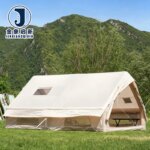
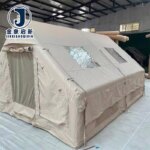
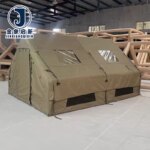
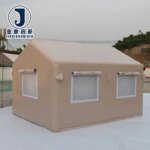
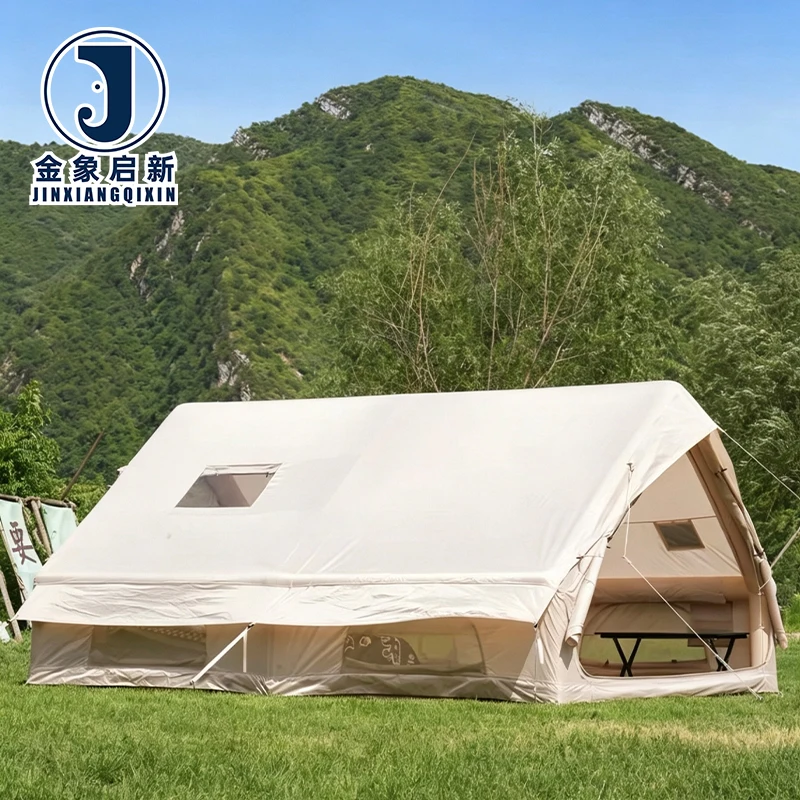
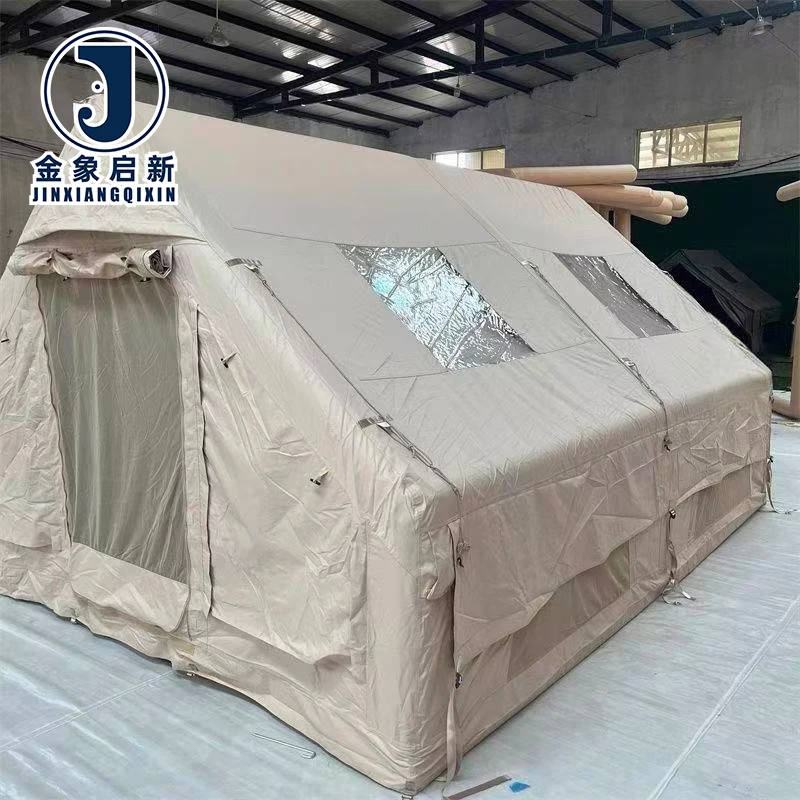
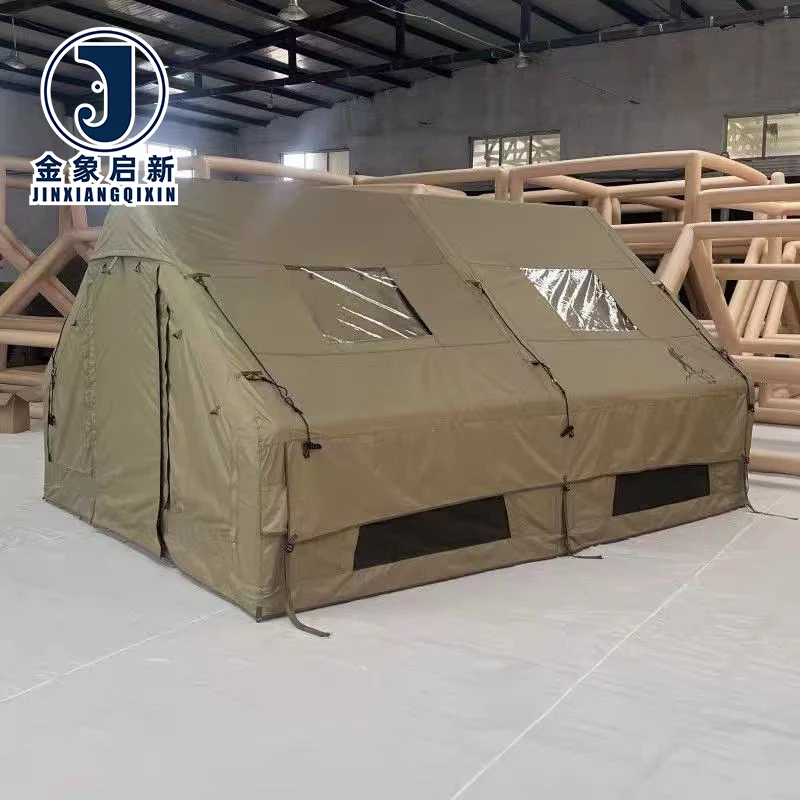
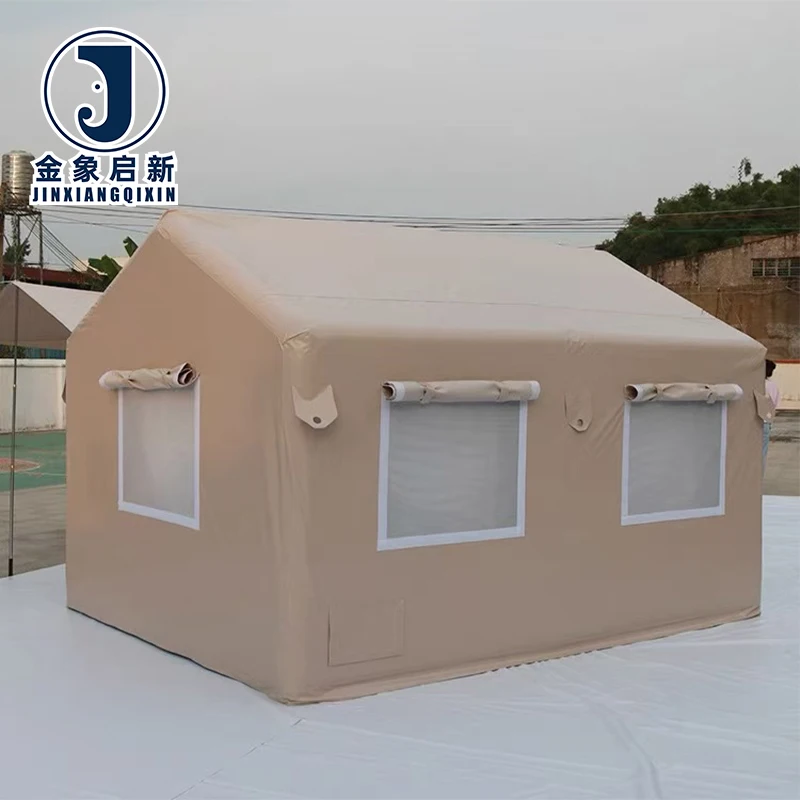
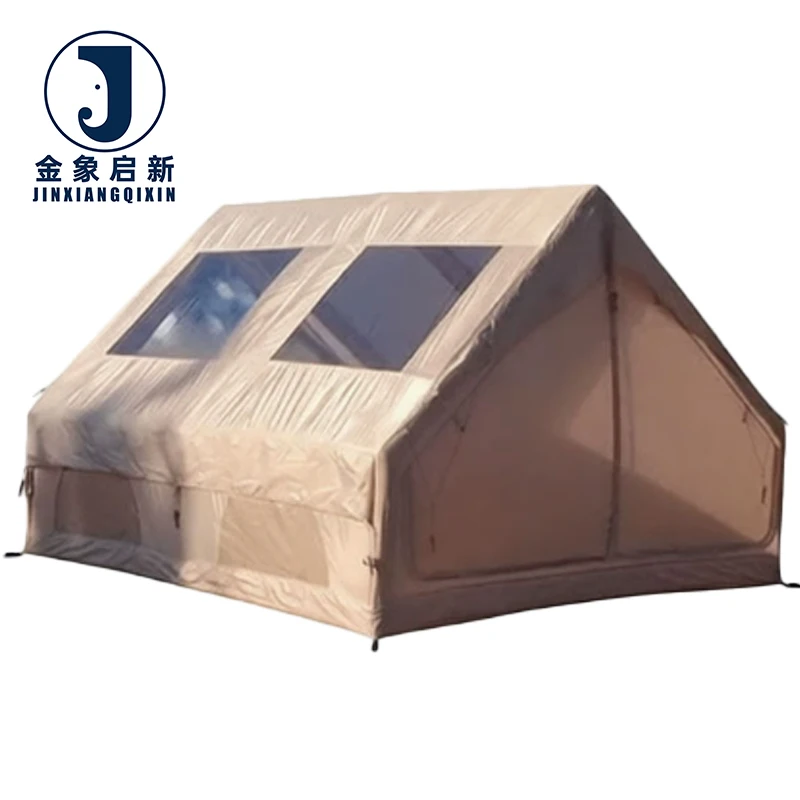
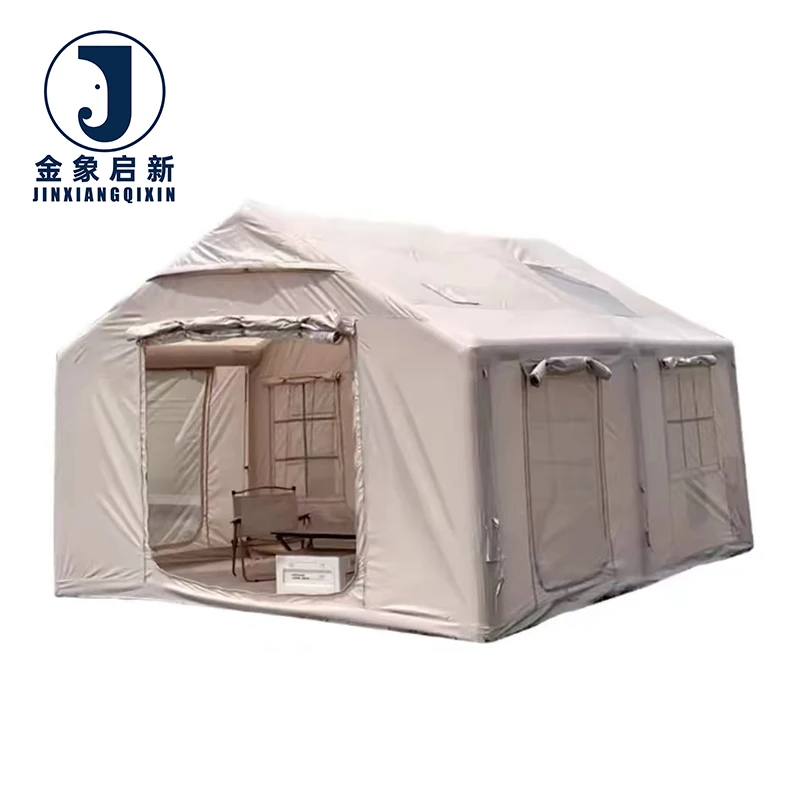
Process Control — 3 full production lines and 36 sets of professional equipment supporting batch-to-batch consistency for inflatable tent fabric fire retardant certified orders requiring documented compliance.
Technical Specifications
| Parameter | Value |
|---|---|
| Product Type | Inflatable Tent |
| Core Material | PVC Tarpaulin |
| Capacity | 8-10 Person |
| Deployment Method | Quick Automatic Opening (Inflatable) |
| Season Rating | Four-Season |
| Waterproof Rating | 3000mm water column |
| Key Features | Waterproof, UV-resistant, Tear-resistant, Fire-retardant, Anti-static |
| Fire-retardant Standard | EN 13501-1 |
| Thickness Tolerance | ±2% |
| Customization | OEM & ODM (size adjustments, Pantone color matching, logo printing, custom door/window configurations) |
| Quality Testing | 24-hour inflation testing for airtightness and structural stability |
| Raw Material Standard | GB/T 5761-2006 (virgin PVC resin) |
| Production Facility Area | 9180 square meters |
| Production Lines | 3 full production lines |
| Processing Equipment | 36 sets of professional equipment |
| R&D Team Scale | 10 technicians |
Application Suitability
| Application | Exposure & Requirement |
|---|---|
| Temporary workforce housing at remote mining sites | Wind load, dust ingress, fire safety compliance, rapid deployment |
| Field research stations in extreme climates | Thermal cycling, precipitation, structural stability under inflation pressure |
| Inflatable membrane structures for aviation events | Electrostatic discharge prevention, fire-retardant certification, UV exposure |
| Commercial adventure tourism base camps | Repeated inflation/deflation cycles, abrasion at ground contact points |
| Equipment storage and team coordination areas | Waterproofing, tear resistance under wind load, site inspector documentation |
Why Certification Gaps Halt Your Inflatable Structure Project On Site
Fire-retardant and anti-static inflatable tent fabric fire retardant certified material must arrive with test reports that match the batch — otherwise the site inspector shuts down installation.
Inflatable structures used in mining, tunnelling or aviation environments face immediate compliance audits upon delivery. The fabric arrives, but the fire-retardant test report references a different production batch or a standard the local authority does not recognise. Work stops. Contractors lose days waiting for corrected documentation while the structure sits uninstalled. I have seen membrane structure projects delayed because the anti-static certification did not align with the site’s safety protocol [NEED_CITE: electrostatic discharge ignition risks in confined mining environments]. The cost is not just the delay — it is the reputational damage when the client questions whether the supplier understood the specification in the first place.
Fire-Retardant Compliance and EN 13501-1 Documentation
Inflatable tent fabric fire retardant certified to EN 13501-1 provides a recognised classification that many European and international building authorities accept for temporary structures. The standard evaluates reaction to fire across multiple parameters, including flame spread, heat release and smoke production. For specialist structure contractors working on aviation or mining projects, having this classification documented per batch means the fabric passes the compliance checkpoint without supplementary testing. The 10-person R&D team can adjust the formulation to meet specific market requirements, with sample validation before bulk production confirms the grade matches the project specification.
Anti-Static Treatment for Sensitive Environments
Anti-static PVC inflatable tent fabric addresses environments where electrostatic discharge poses ignition risks near fuel handling, chemical storage or sensitive electronic equipment. The treatment reduces surface resistivity to prevent charge accumulation during inflation, deflation and wind-induced flexing. For mining and tunnelling applications, anti-static properties are often mandated alongside fire-retardant certification as part of the site safety package. Each batch undergoes full-process quality inspection by dedicated QA and QC staff, and the 24-hour inflation test verifies that the anti-static treatment does not compromise seam integrity or airtightness [NEED_CITE: anti-static coated fabric standards for underground mining ventilation].
Specification Parameters That Determine Structural Behaviour
The 3000mm water column waterproof rating ensures reliable moisture protection across prolonged exposure to rain and ground contact, which is critical for base camps and temporary housing deployed in wet climates. Thickness tolerance of ±2% across the production batch means welders can maintain consistent heat-sealing parameters without adjusting for material variation from roll to roll — a common cause of seam failure in inflatable structures where cyclic pressure loading concentrates stress at the joints. Virgin PVC resin conforming to GB/T 5761-2006 provides predictable coating adhesion and tensile behaviour, reducing the risk of delamination under repeated inflation cycles. The combination of these parameters directly affects how the structure performs under wind load and thermal cycling, not just the raw material cost.
What Happens When Batch Colour Drifts Across a Multi-Unit Installation
Colour inconsistency between rolls becomes visible the moment two panels are installed side by side on a membrane structure. For event structures or commercial installations where appearance matters, this triggers rework — pulling down panels, re-cutting from matching rolls, and absorbing the waste. I have seen orders where the client rejected an entire shipment because the shade difference was obvious under daylight conditions. Batch-to-batch colour control requires disciplined pigment dosing and process consistency across production runs [NEED_CITE: colour measurement methods for coated fabric quality control]. Pantone colour matching during customization and pre-production sample approval reduce this risk, but the buyer must verify that the supplier’s QA process catches drift before dispatch rather than after arrival.
Why Specialist Structure Contractors Source From Here
Three full production lines running dedicated coating schedules allow simultaneous processing of fire-retardant and anti-static grades without cross-contamination between formulations. The 36 sets of professional equipment include welding and testing stations that support the 24-hour inflation test protocol — verifying airtightness and seam stability before any roll ships. Custom width and length configurations are validated through sample development by the 10-person R&D team, ensuring the material performs under the specific inflation pressure and structural geometry of the project. ISO 9001, ISO 14001, ISO 45001 and CE certifications are maintained as active management systems, not static certificates, supporting regulatory approval across multiple jurisdictions. Full-process quality inspection with dedicated QA and QC staff at every production stage catches thickness deviation and coating defects before they reach the packing list.
Documentation & Verification
- Fire-retardant test report per EN 13501-1 matched to the specific production batch shipped
- Anti-static property verification included in batch quality inspection records
- Thickness tolerance verification at ±2% documented per roll before dispatch
- ISO 9001, ISO 14001, ISO 45001 and CE certificates available for regulatory submission
- Pre-shipment inspection record confirming GSM, coating weight and colour consistency
- Pantone colour matching confirmation for custom colour orders before bulk production
Fabrication, Handling & Storage
- Heat-seal parameters must account for ±2% thickness tolerance to maintain consistent weld strength across seams
- Inflate test all welded panels before final assembly to confirm airtightness at operating pressure
- Store rolls upright on pallets to prevent creasing that weakens the PVC coating at fold lines
- Use compatible PVC adhesive for field repairs on punctures to maintain fire-retardant continuity
- Clean with mild detergent only — solvents may degrade the anti-static surface treatment
- Allow cold-stored rolls to reach ambient temperature before unrolling to prevent coating cracking
How to Specify Your Requirement
Provide the target market and applicable fire safety regulations so we can confirm whether EN 13501-1 satisfies your local authority or whether an alternative grade is needed. Specify the required width, colour reference (Pantone code if applicable) and whether you need rolls or pre-cut panels with custom door and window configurations. Share the inflation pressure and structural geometry so the R&D team can recommend the appropriate material weight and coating formulation for your application. Request a sample for weld testing and performance validation before committing to bulk production.
Frequently Asked Questions
Q: What fire-retardant and anti-static certifications are supplied with the fabric?
A: Each shipment includes a fire-retardant test report referencing EN 13501-1 and anti-static property verification, both matched to the specific production batch. ISO 9001, ISO 14001, ISO 45001 and CE certificates are also provided for regulatory approval. If your local authority requires a different standard, our R&D team can evaluate the formulation and provide sample testing before production.
Q: How is colour consistency maintained across multiple rolls in the same order?
A: Pantone colour matching is used for all custom colour orders, with pigment dosing controlled across the production run. Full-process quality inspection checks colour uniformity between rolls before dispatch. We recommend ordering the full project quantity in a single batch to minimise variation, and pre-production samples are available for visual approval.
Q: What information do I need to provide for a custom inflatable tent fabric order?
A: Share the application environment, required fire-retardant or anti-static standards, target colour, width, and whether you need rolls or finished panels with custom door and window configurations. If the structure operates under specific inflation pressure, provide that value so we can match the material specification. Samples are developed for your weld testing and validation before bulk commitment.
Q: How does the 24-hour inflation test verify product quality?
A: Every batch undergoes a 24-hour inflation test that checks airtightness and structural stability under sustained pressure. This identifies seam leaks, coating pinholes or weld weaknesses that shorter tests might miss. The test results are documented and included in the pre-shipment inspection record, giving you confidence that the material performs before it arrives at your site.