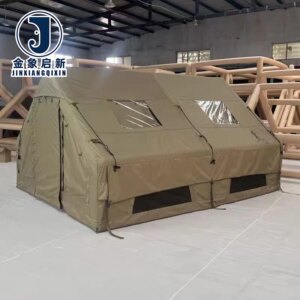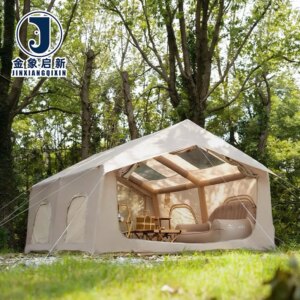

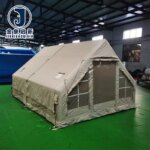

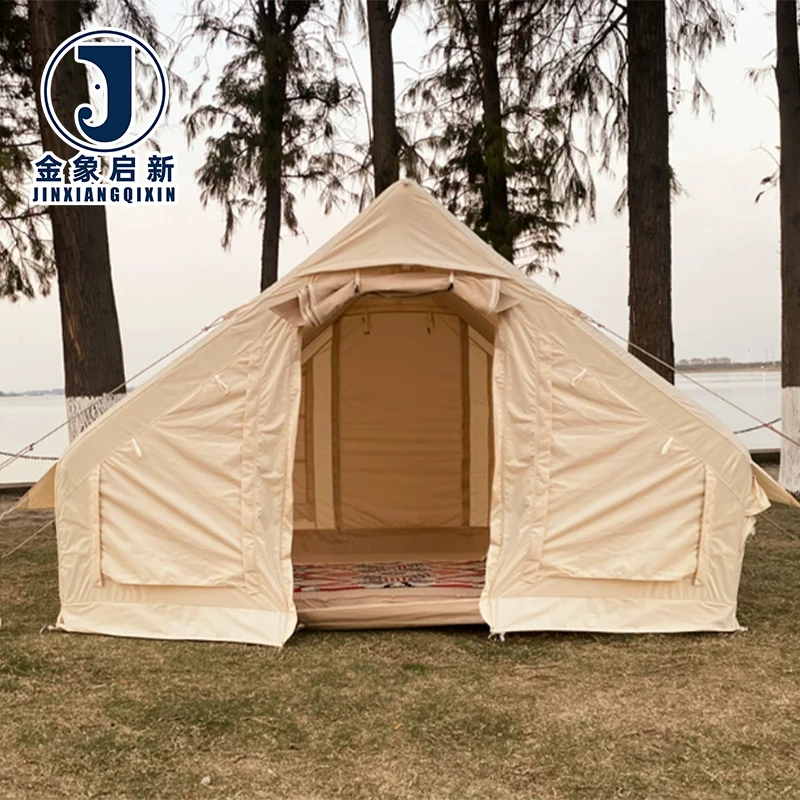
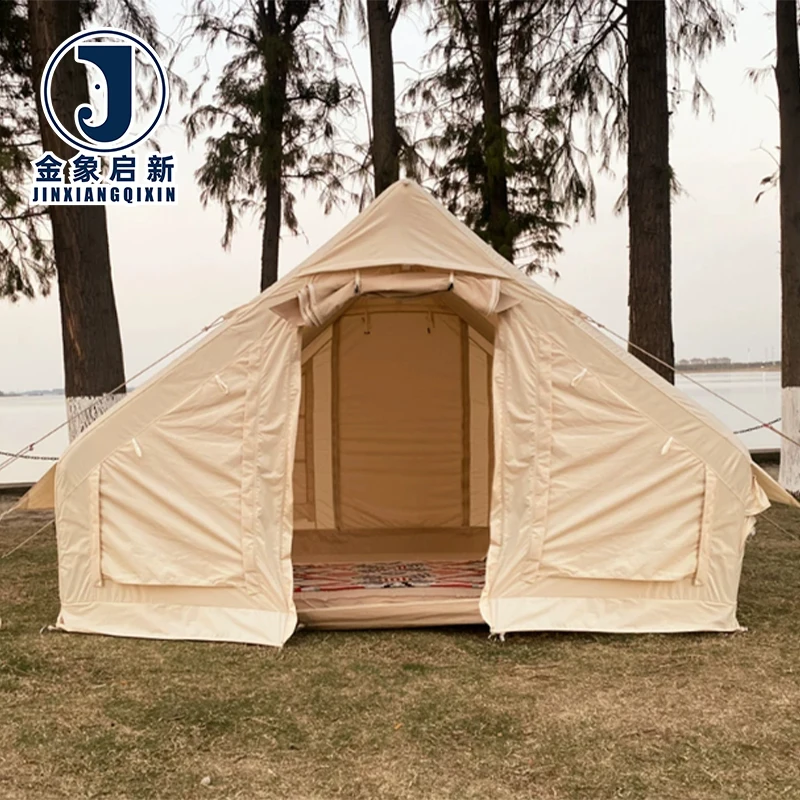
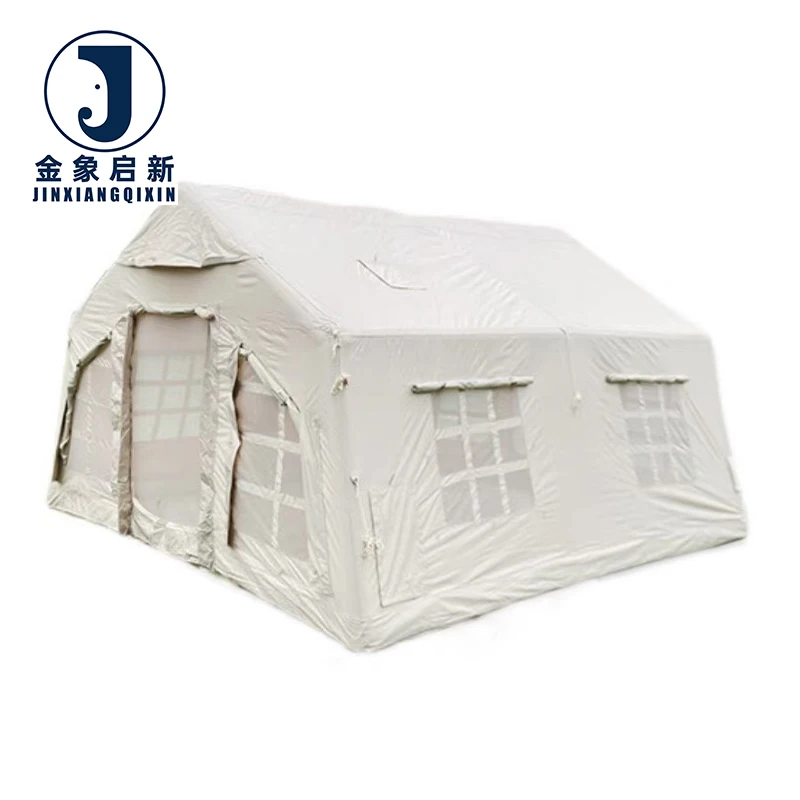
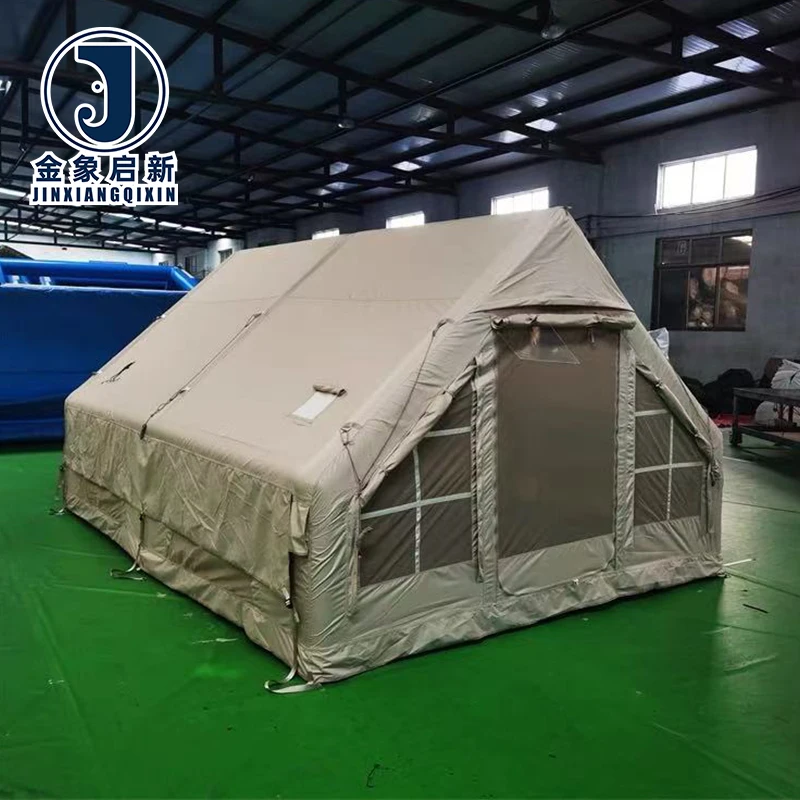
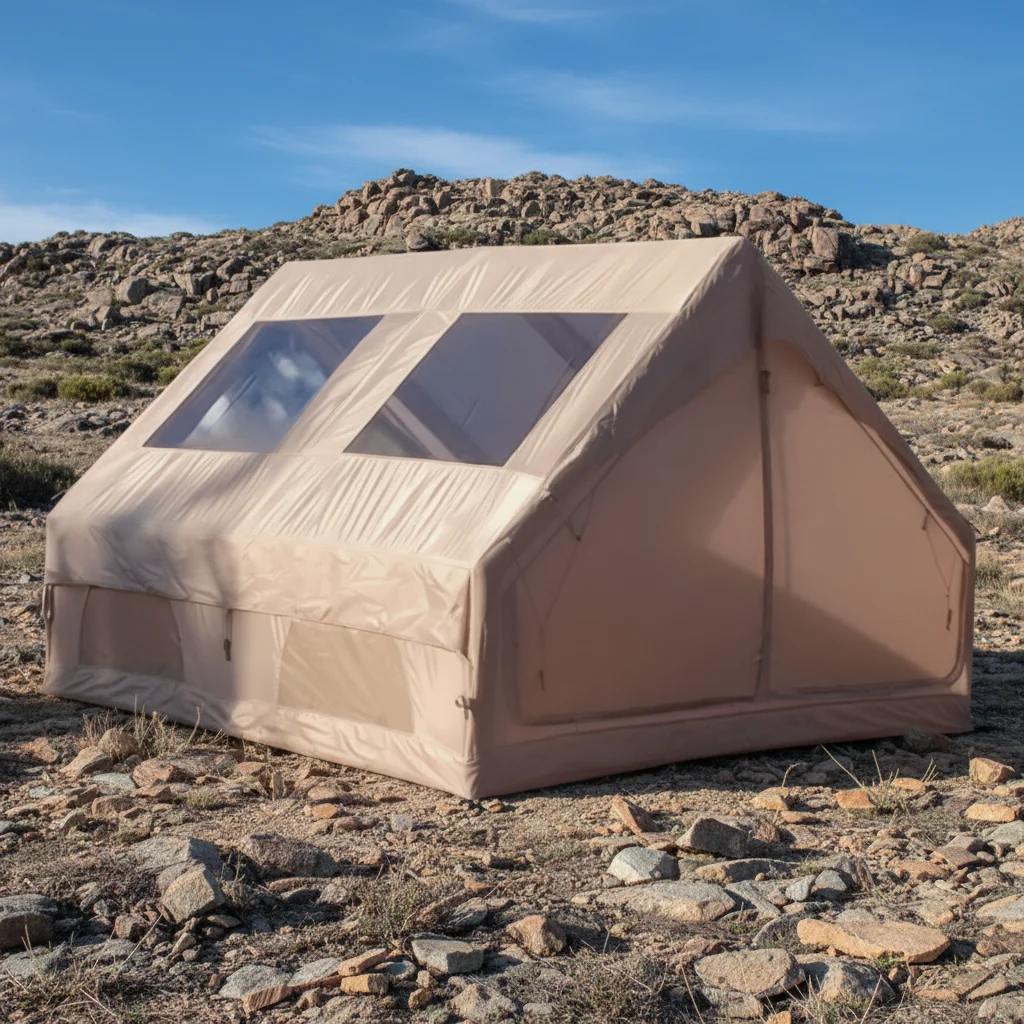

Coated Fabric Process Control — Three dedicated production lines and nearly three decades of coating formulation experience underpin every roll of inflatable structure fabric we ship, ensuring fire-retardant and anti-static treatments are applied consistently across each batch.
Technical Specifications
| Parameter | Value |
|---|---|
| Product Type | Inflatable Tent |
| Core Material | PVC Tarpaulin |
| Key Performance | Waterproof, Tear-resistant |
| Fire-Retardant Treatment | Available in fire-retardant grades — confirm the grade required for your market |
| UV Resistance | UV-resistant treatment available (test basis not stated in source — request report for your climate zone) |
| Anti-Static Treatment | Anti-static treatment available (standard and surface resistance value to be confirmed per order) |
| Product Forms | Inflatable structure with automatic opening mechanism |
| Season Rating | 4-Season |
| Customization | OEM & ODM — sample customization, pattern printing, material selection, product design |
| Quality System | ISO9001, ISO14001, ISO45001, CE |
| Production Facility | 9,180 m² with 3 full production lines and 36 sets of professional equipment |
| R&D Support | 10-person technical team for material selection and design validation |
Application Suitability
| Application | Exposure & Requirement |
|---|---|
| Mining and tunnelling inflatable shelters | Constant abrasion from rock dust, underground moisture, mandatory fire-retardant compliance for confined spaces |
| Aviation field maintenance enclosures | Fuel vapour exposure requiring anti-static dissipation, rapid deployment for unscheduled aircraft servicing |
| Construction site temporary accommodations | Wind loading on large-span inflatable roofs, repeated inflation-deflation cycles, UV exposure on open sites |
| Specialist membrane structure fabrication | Weld seam integrity under positive internal pressure, batch colour consistency across multiple membrane panels |
| Remote industrial camp deployments | Extreme temperature swings demanding 4-season material stability, transport abrasion during overland logistics |
What "Certified" Means When Inflatable Structures Enter Regulated Sites
Every batch of our inflatable tent fabric ships with fire-retardant and anti-static test reports matched to the order number — not a generic datasheet.
Procurement teams sourcing material for mining ventilation shelters or aviation maintenance enclosures regularly discover that the inflatable tent fabric fire retardant anti-static certified claim on a quotation does not survive a site safety audit. The supplier provides a certificate that covers their factory system, not the specific roll that arrived on site. In regulated environments where a fire incident or static discharge event carries legal liability, documentation traceability matters more than marketing language. [NEED_CITE: fire classification standards for temporary structures in mining and construction]
Fire-Retardant Grading Aligned to Site Compliance Requirements
Fire-retardant PVC coating for inflatable structures must match the classification standard enforced at the installation site. Different jurisdictions reference different test methods — some require self-extinguishing behaviour within a defined time window, others measure flame spread rate across the membrane surface. Our R&D team works with buyers to confirm the specific grade before production begins, then issues a batch-level test report against that standard. This eliminates the gap between what was quoted and what the safety officer accepts at gate inspection.
Anti-Static Treatment for Hazardous Atmosphere Deployment
Inflatable shelters positioned near fuel handling areas, grain silos, or chemical processing zones require fabric that dissipates static charge rather than accumulating it. The anti-static treatment applied during coating must achieve a surface resistance value within the range specified by the site operator’s risk assessment. We confirm the applicable standard with each buyer and record the measured value on the pre-shipment inspection document. [NEED_CITE: surface resistance test methods for anti-static coated fabrics]
Understanding the Relationship Between Coating Weight and Structural Integrity
The base fabric denier, weave density, and PVC coating weight interact to determine how an inflatable membrane behaves under internal pressure. A higher coating weight improves abrasion resistance and waterproofing but adds mass that the air beam must support — in high-wind deployments, this extra load transfers stress to the welded seams. The weave density of the polyester base fabric controls tear propagation: a tight warp-and-weft construction stops a puncture from unzipping across a panel, which matters when inflatable structures face debris impact on construction or mining sites. Coating adhesion to the base fabric governs weld strength; if the PVC layer delaminates under heat-seam pressure, the joint fails before the fabric itself reaches its tensile limit.
The Cost of Undocumented Fire and Static Performance
When an inflatable shelter arrives at a mining site without batch-specific fire-retardant test documentation, the structure sits un-deployed while the safety team escalates the issue — delaying operations and exposing the procurement team to audit findings. Similarly, anti-static fabric that lacks a measured surface resistance value forces the site operator to commission independent testing, adding cost and lead time to a project that was already behind schedule. These delays trace back to a single sourcing decision: accepting a quotation without demanding the test reports up front. [NEED_CITE: compliance documentation requirements for temporary structures in extractive industries]
Why Specialist Contractors Source Inflatable Fabric Here
Our 10-person R&D team develops customised samples within days, allowing structure designers to validate weld parameters and seam geometry before committing to a production run. Dedicated QA and QC staff inspect every roll at each production stage — coating weight, colour consistency, fire-retardant additive distribution — rather than relying on end-of-line sampling. Three full production lines running 36 sets of professional equipment give us the capacity to fulfil large-volume membrane orders without compressing curing times or skipping treatment baths. ISO9001, ISO14001, and ISO45001 certification means our quality, environmental, and occupational safety systems are audited against recognised international standards. Buyers receive documentation that supports their own compliance submissions, not just our internal records.
Documentation & Verification
- Material specification sheet stating PVC base fabric denier, coating formulation, and treatment type for each roll
- Fire-retardant test report issued per batch, referencing the specific standard and grade confirmed at order stage
- Anti-static surface resistance measurement recorded on pre-shipment inspection record by order number
- ISO9001, ISO14001, ISO45001, and CE certificates available for site compliance file compilation
- Roll packing list with individual roll weights and dimensions for container load planning
Fabrication, Handling & Storage
- Heat-weld seams using temperature and dwell time settings validated on the sample swatch provided before production
- Store PVC inflatable fabric rolls upright on pallets to prevent permanent creasing across the coating layer
- Avoid dragging cut membrane panels across abrasive ground during site deployment to protect the PVC surface
- Clean deployed inflatable structures with mild detergent compatible with PVC coating chemistry to preserve fire-retardant additives
- Repair field punctures using PVC-compatible adhesive patches that match the coating formulation of the original membrane
Preparing Your Inquiry for Accurate Quotation
To specify inflatable tent fabric correctly, share the deployment environment, the fire-retardant or anti-static standard your site enforces, and the membrane dimensions your structure design requires. Let us know whether you need rolls for your own fabrication line or finished cut-and-welded panels, and whether colour matching or pattern printing is part of the project brief. We will recommend a coating formulation and provide a sample roll for your weld parameter validation before confirming the production schedule.
Frequently Asked Questions
Q: What fire-retardant grade is available and does it meet my site’s compliance requirement?
A: We formulate PVC inflatable structure fabric to multiple fire-retardant grades depending on the test standard enforced at your installation site. Confirm the standard with your safety officer before ordering, and we will match the coating formulation, then issue a batch-level test report referencing that standard with every shipment.
Q: What anti-static test standard is applied and what is the surface resistance value?
A: Anti-static treatment is applied during the PVC coating process and measured against the standard specified in your purchase order. The surface resistance value for each production batch is recorded on the pre-shipment inspection document, giving you traceable data for site safety audits and regulatory submissions.
Q: How do you ensure batch-to-batch consistency in material performance?
A: Every roll passes through dedicated QA and QC inspection at each production stage — coating weight, colour uniformity, and treatment additive distribution are checked before dispatch. Our ISO9001-certified quality system documents these checks per batch, so repeat orders match the performance of your initial approved sample.
Q: What OEM and ODM customization is supported for inflatable structure design?
A: Our 10-person R&D team handles material selection, pattern printing, custom sizing, and full product design for inflatable structures. We develop customised samples within days so you can validate weld parameters, seam geometry, and inflation behaviour before authorising mass production on our three dedicated lines.
Q: What documentation accompanies shipment for site safety audits and regulatory inspection?
A: Each shipment includes a material specification sheet, batch-specific fire-retardant and anti-static test reports, ISO and CE certificates, a pre-shipment inspection record, and a detailed roll packing list — compiled to support your compliance file without requiring follow-up requests after delivery.