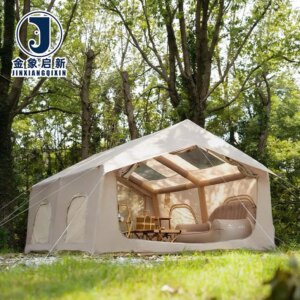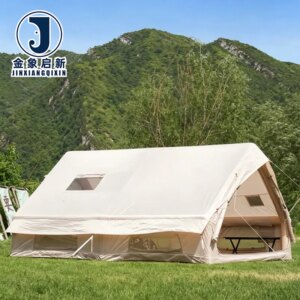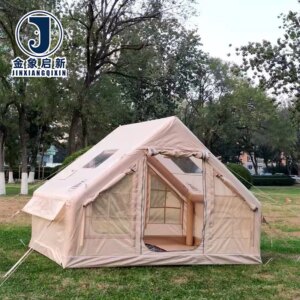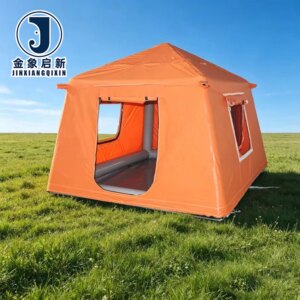
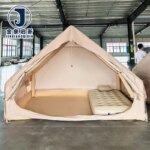
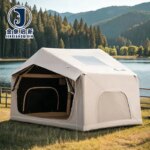
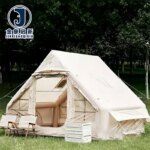
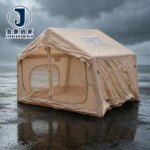
Process Control Depth — Nearly 30 years of coated fabric production informs how inflatable structure fabric is formulated, tested and shipped, with every batch backed by documentation tied to your order number.
Technical Specifications
| Parameter | Value |
|---|---|
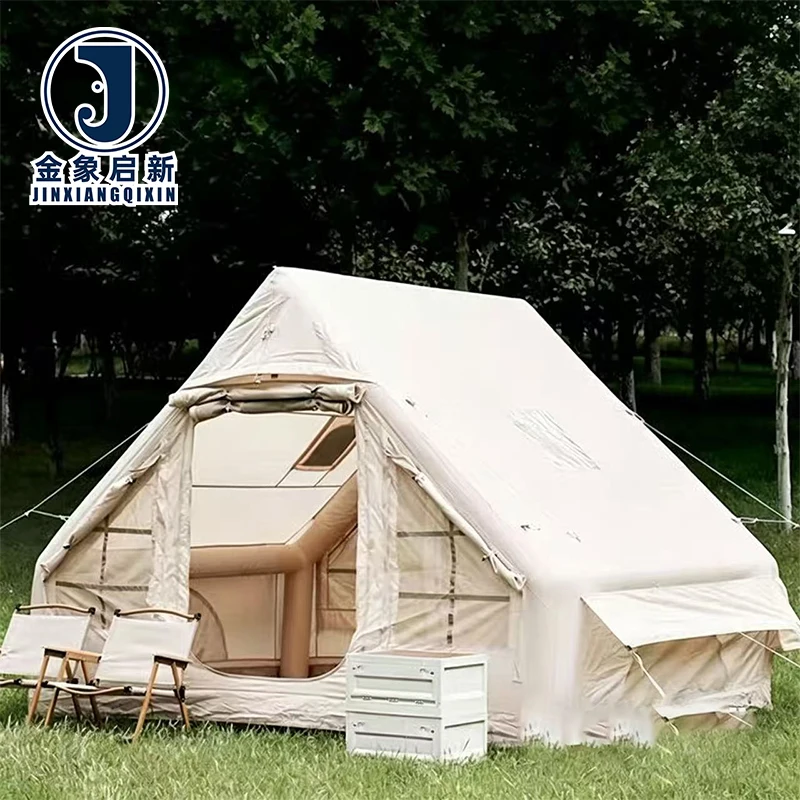
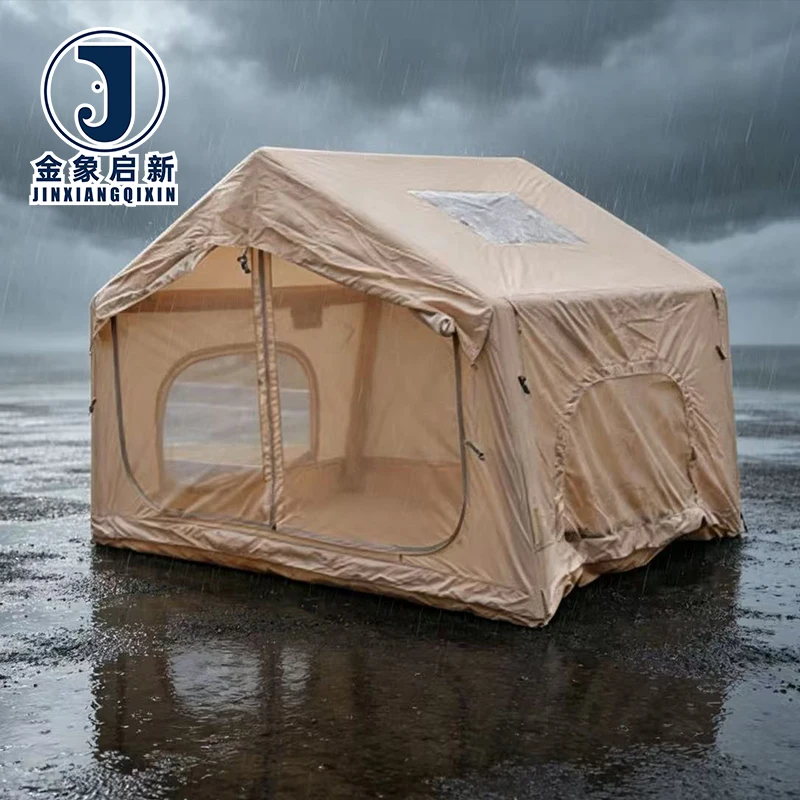
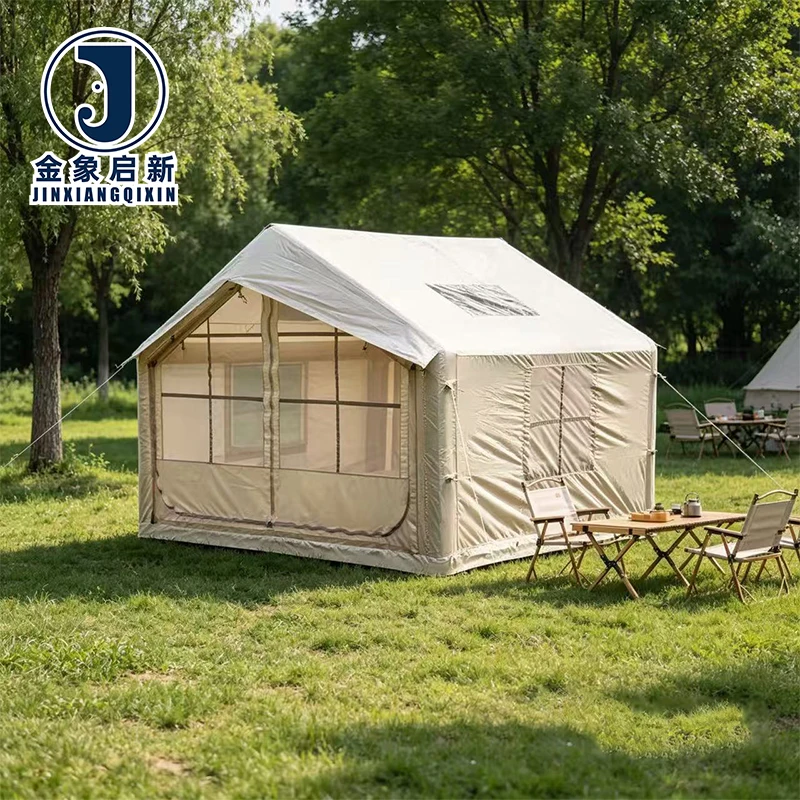
| Product Type | Inflatable Tent |
| Core Material | PVC Tarpaulin |
| Key Performance | Waterproof, UV-resistant (test basis not stated in source), Tear-resistant |
| Capacity | 4-6 Person |
| Opening Mechanism | Quick Automatic Opening |
| Layer Design | Single layer |
| Customization | OEM & ODM — sample customization, pattern printing |
| Production Facility | 9,180 m² |
| Production Lines | 3 full production lines |
| Processing Equipment | 36 sets of professional equipment |
| R&D Team | 10 technicians |
| Quality System | Full-process QA/QC with dedicated inspection staff |
| Certifications | ISO 9001, ISO 14001, ISO 45001, CE |
Application Suitability
| Application | Exposure & Requirement |
|---|---|
| Mining and tunnelling ventilation structures | Underground particulate, moisture, mandatory fire-retardant and anti-static compliance |
| Aviation ground support enclosures | Fuel-rich environment, rapid deployment, fire-retardant certification required |
| Specialist membrane and inflatable structures | Wind load, UV exposure, certified fabric with batch traceability |
| Disaster relief mobile facilities | Rapid inflation, waterproof performance, multi-climate deployment |
| Outdoor events temporary workspaces | Prolonged sun exposure, foot traffic abrasion, repeated pack-and-redeploy cycles |
Inflatable Tent Fabric Fire Retardant Without a Grade Is Just a Claim
A fire-retardant label means nothing on site until the test standard, grade and batch number are documented and verifiable.
When an inflatable structure arrives at a mining camp or aviation facility, the site safety officer does not inspect marketing copy — they inspect paperwork. [NEED_CITE: fire classification requirements for temporary structures in mining and aviation environments] Fabric marketed as inflatable tent fabric fire retardant without a referenced standard such as DIN 4102, NFPA 701 or a local equivalent leaves contractors exposed to rejection at inspection. Anti-static performance faces the same scrutiny; surface resistivity must be measured and recorded per the relevant test method, not simply stated in a brochure. This product is available in fire-retardant and anti-static grades — confirm the specific grade required for your market and application before placing a bulk order.
What Certified Inflatable Structure Fabric Actually Delivers
Inflatable tent fabric fire retardant formulations are engineered to meet compliance thresholds demanded by regulated sites. The PVC tarpaulin core provides waterproof integrity and tear-resistant construction, so the structure holds under inflation pressure and wind load. UV-resistant treatment is available — request the test basis that applies to your deployment climate and expected service exposure.
How Batch-Level Documentation Closes the Compliance Gap
Every shipment of inflatable structure fabric from this line carries documentation matched to the production batch. The inflatable tent fabric fire retardant claim is supported by test reports, material specification sheets and certificates that reference your order number. This eliminates the scenario where a safety officer rejects an entire inflatable structure because the supplier could not tie the fire-retardant or anti-static result to the material actually delivered. [NEED_CITE: batch-level QA documentation practices for coated technical textiles per ISO quality management frameworks]
Reading PVC Tarpaulin Specs for Inflatable Applications
The base fabric denier and weave density determine how the material resists tear propagation once an inflatable structure is pressurised and subject to wind gusts. Coating weight and method affect how the fabric behaves at welded seams — the highest stress point on any inflatable. PVC tarpaulin with adequate coating adhesion allows high-frequency or hot-air welding without delamination, which is critical when seams carry inflation pressure continuously. Waterproof performance depends on complete coating coverage across the base fabric, not just the stated coating weight alone. UV-resistant additives, where specified, slow surface degradation during prolonged outdoor deployment — always verify the test basis for your target market. Tear-resistant construction maintains structural integrity during inflation, deflation and packing cycles that repeat across multiple deployments.
The Cost of Specifying Inflatable Fabric Without Compliance Verification
Fabricators who source inflatable tent fabric fire retardant material based on price or unverified claims often face consequences at the site inspection stage. A fire-retardant grade that does not match the local regulatory requirement forces contractors to decommission structures already erected, causing project delays and financial penalties. Anti-static fabric without a documented surface resistivity reading creates liability in fuel-handling or mining environments. Batch-to-batch colour variation becomes visible when multiple inflatable modules are installed side by side at an event or worksite. Welded seams that fail before the fabric does typically trace back to coating adhesion that was not matched to the welding method used. [NEED_CITE: documented causes of seam failure in welded PVC inflatable structures]
Why Technical Buyers Source This Fabric Here
This facility runs three full production lines with 36 sets of professional processing equipment, giving capacity for volume inflatable fabric orders with consistent batch output. The 10-person R&D team handles material selection, sample development and custom pattern printing — so fabricators can validate inflatable tent fabric fire retardant performance on a sample before committing to bulk. Dedicated QA and QC staff inspect at every production stage, not only at final shipment. Material specification sheets, test reports and pre-shipment inspection records ship with every batch, closing the documentation loop that regulated sites demand. ISO 9001, ISO 14001, ISO 45001 and CE certifications are maintained, providing the compliance framework that procurement departments require.
Documentation & Verification
- Material specification sheet stating base fabric, coating type and treatment details per roll
- Test report for fire-retardant grade tied to your specific batch and order number
- Anti-static surface resistivity data where applicable, referenced to the relevant test standard
- ISO 9001, ISO 14001, ISO 45001 and CE certificates included with shipment documentation
- Pre-shipment inspection record covering visual defects, coating consistency and dimensional accuracy
- Certificate of origin and customs documentation prepared for cross-border dispatch
Fabrication, Handling & Storage
- Confirm welding temperature and dwell time against the PVC tarpaulin coating weight before production runs
- Reinforce inflation valve mounting points with additional PVC layers matched to the base fabric weight
- Store rolls upright on pallets in a dry, shaded area to prevent permanent creasing of the coated surface
- Allow cold-stored inflatable fabric to acclimatise before unrolling to avoid coating cracking at low temperatures
- Use PVC-compatible cleaners only — solvent-based products can degrade the waterproof coating layer
- Repair minor punctures with PVC tarpaulin patches heat-welded or adhesive-bonded to the coated surface
Requesting a Specification That Matches Your Project
Provide your target market and the specific fire-retardant or anti-static standard your site demands so we can reference the correct test basis. Confirm whether you require roll stock for your own fabrication or finished inflatable structures with custom dimensions and pattern printing. Share your expected annual volume and preferred colour references so samples can be developed and shipped for your approval before production begins.
Frequently Asked Questions
Q: What fire-retardant grade and test standard does the inflatable fabric meet?
A: The fabric is available in fire-retardant grades suitable for mining, aviation and construction applications. The specific grade depends on your market’s regulatory framework — confirm whether your site requires DIN 4102, NFPA 701, or a local equivalent. Test reports referencing your batch number are provided with shipment to satisfy site inspection requirements.
Q: How is anti-static performance verified and what surface resistance is achieved?
A: Anti-static treatment is applied during the coating process and measured per the applicable test standard for your deployment environment. Surface resistivity data is documented and shipped with your order. Specify the resistivity range your site safety plan requires so the correct formulation can be prepared and tested before bulk production.
Q: Can the fabric be customised in width, colour and printing for specific inflatable structures?
A: Yes. OEM and ODM services cover custom width, colour matching and pattern printing for inflatable tent applications. The 10-person R&D team develops samples based on your drawings and specifications. Once you approve the sample, production proceeds across three full lines with in-process quality checks at every stage.
Q: What compliance documentation ships with each batch for site inspection?
A: Each shipment includes a material specification sheet, fire-retardant and anti-static test reports tied to the batch number, ISO and CE certificates, a pre-shipment inspection record, and a certificate of origin. This documentation package is designed to satisfy site safety officers and procurement auditors without requiring follow-up requests.
Q: How are samples developed and approved before bulk production?
A: Submit your application requirements, target compliance standard and colour or printing specifications. The R&D team produces a sample using the same coating process and base fabric as bulk production. Once you approve the sample in writing, production is scheduled with full in-process QA and 100 percent pre-shipment inspection.