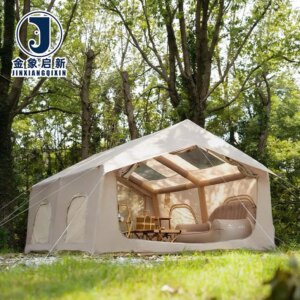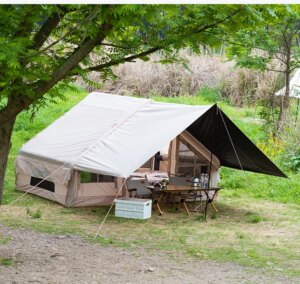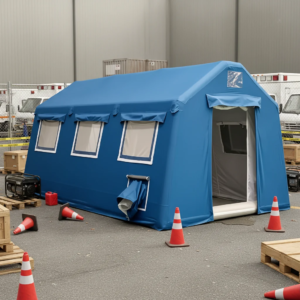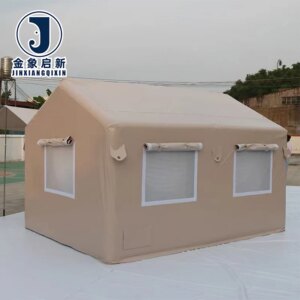
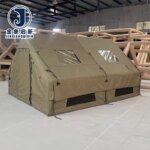
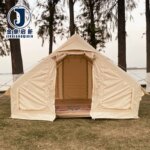
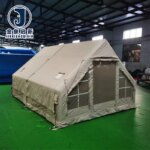
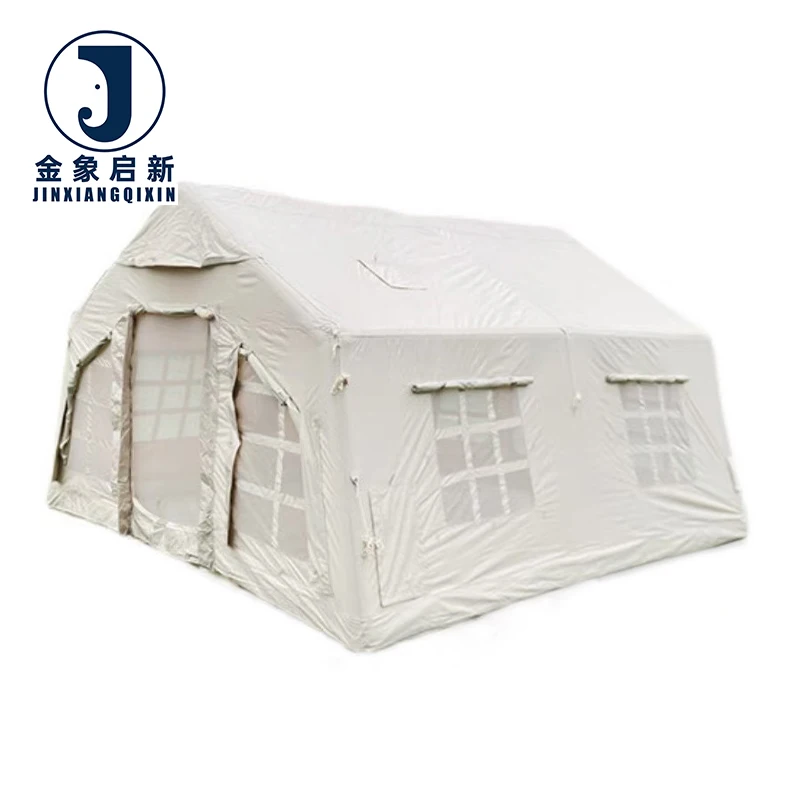
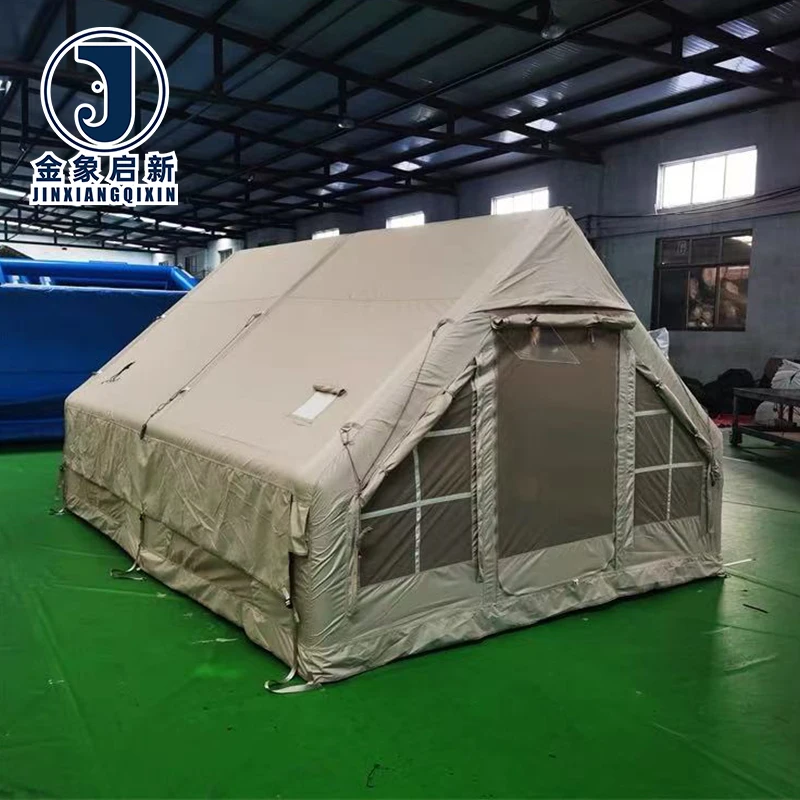
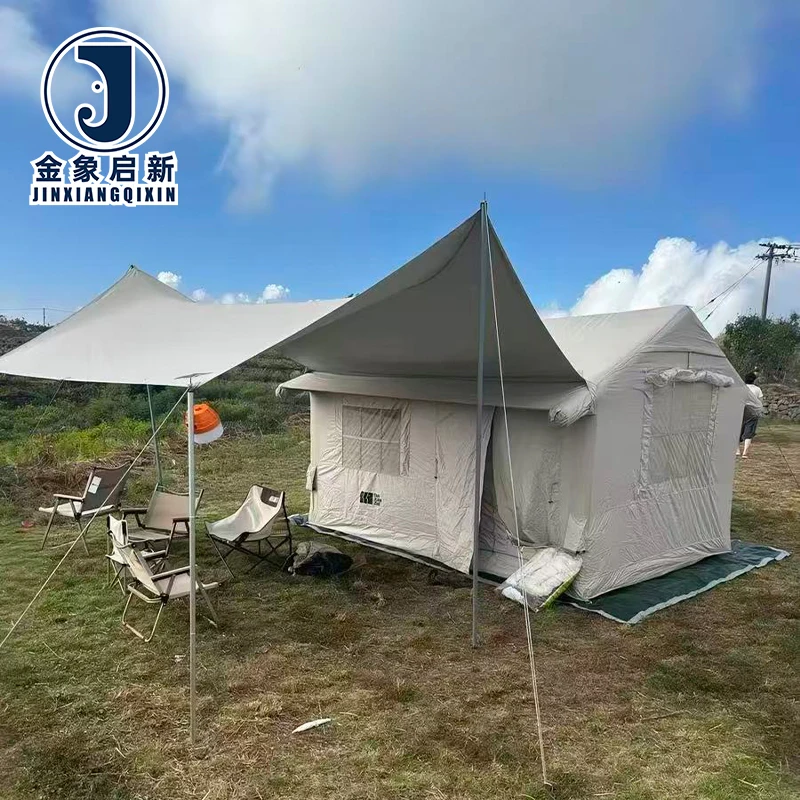
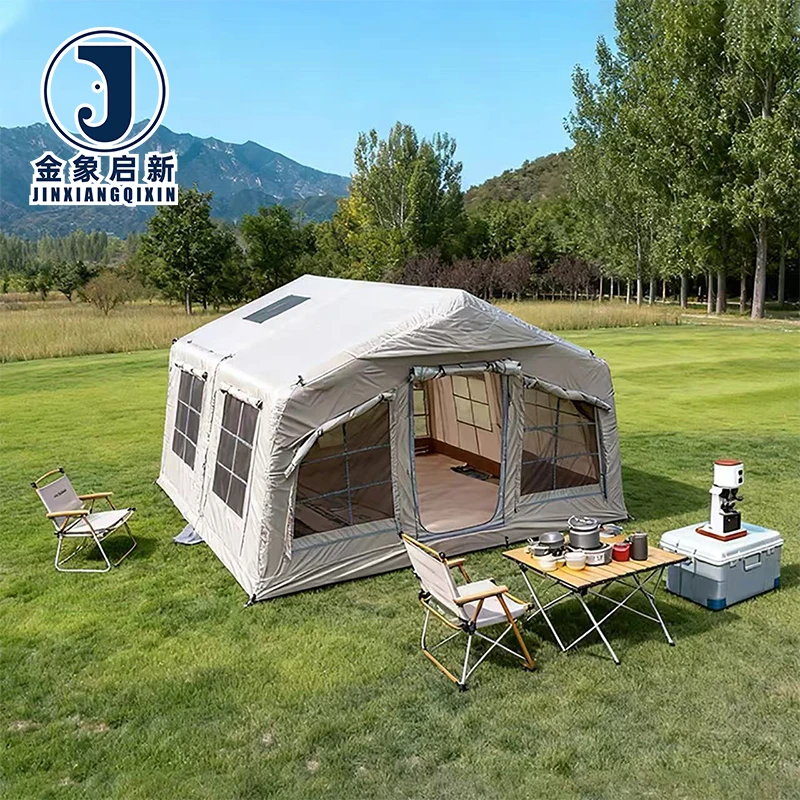
Technical Fabric Consistency — Three full production lines and a dedicated R&D team ensure roll-to-roll GSM, colour, and coating weight uniformity across inflatable structure fabric orders, validated by stage-by-stage QA before dispatch.
Technical Specifications
| Parameter | Value |
|---|---|
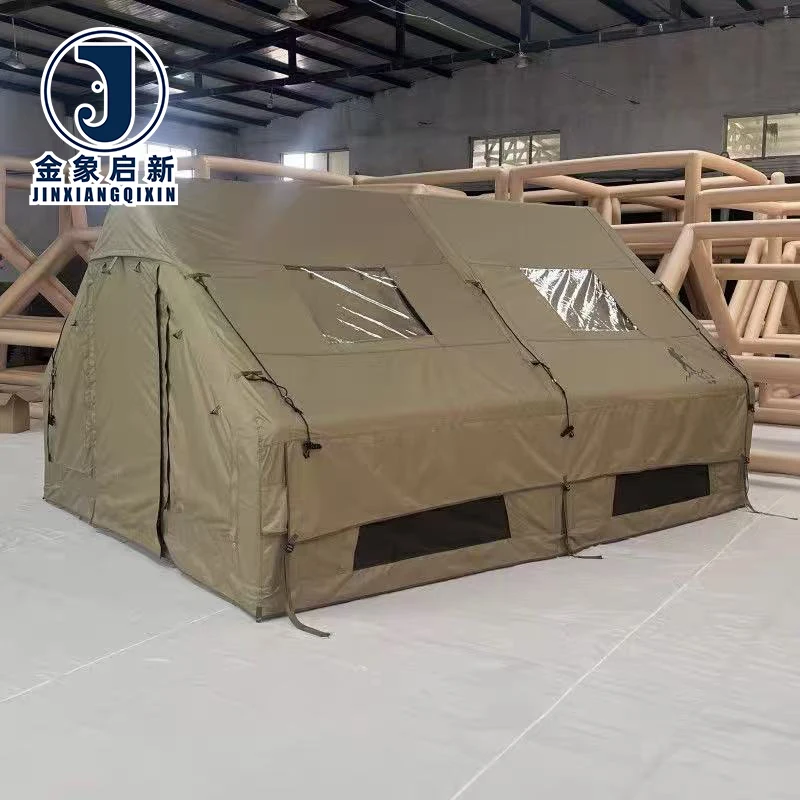
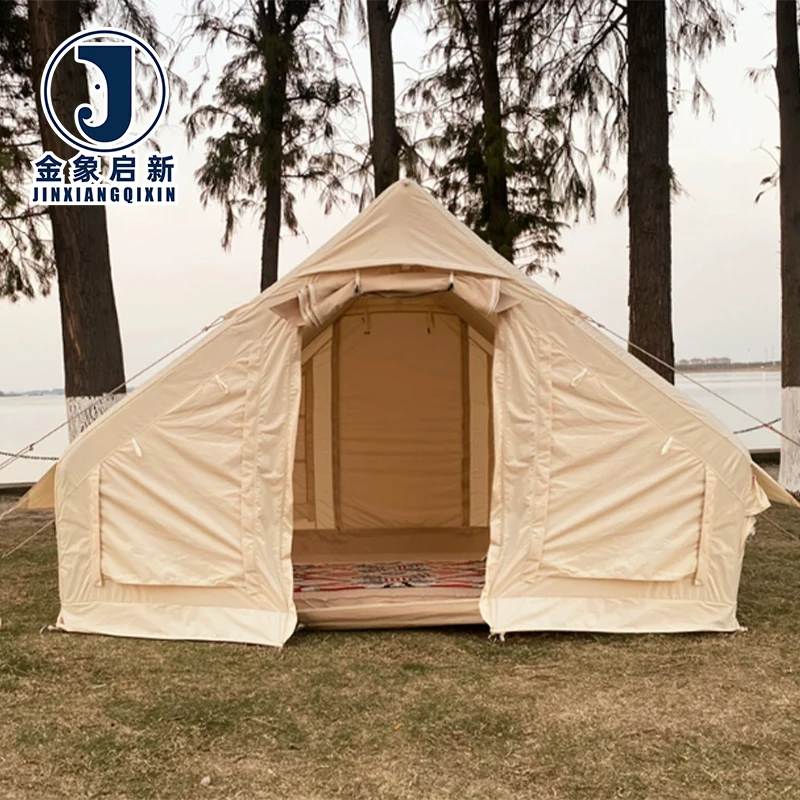
| Product Type | Inflatable Tent |
| Core Material | PVC Tarpaulin |
| Key Performance | Waterproof, UV-resistant (test basis not stated in source), Tear-resistant |
| Capacity | 4-6 Person |
| Opening Mechanism | Quick Automatic Opening |
| Construction | Single Layer |
| Customization | OEM & ODM — sample customization, pattern printing, size adjustment, colour matching |
| Production Facility | 9,180 m² with 3 full production lines |
| Processing Equipment | 36 sets of professional equipment |
| R&D Team | 10 technicians |
| Standards | ISO9001, ISO14001, ISO45001, CE |
Application Suitability
| Application | Exposure & Requirement |
|---|---|
| Commercial inflatable tent manufacturing | Repeated inflation-deflation cycles creating cyclic stress at seam and valve zones; fabric must hold air pressure without creep or delamination |
| Adventure tourism rapid-deployment shelters | Transport abrasion from packing and unpacking; UV exposure in alpine, desert, or coastal environments; quick automatic opening reliability |
| Equipment rental fleet inventory | High-frequency setup and breakdown by non-specialist users; tear resistance at fold lines and tie-off points; colour consistency across replacement panels |
| Industrial event and exhibition structures | Branded exterior surface requiring pattern printing adhesion; single-layer thermal performance under direct sun; welded seam integrity under wind load |
Why GSM Claims Fail When Inflatable Tent Fabric Arrives on Your Floor
A stated GSM means nothing if coating adhesion and base fabric denier are not verified together as a system.
When sourcing inflatable tent fabric for commercial production runs, buyers often specify a target weight and assume mechanical performance follows automatically. In practice, two rolls at the same GSM can behave very differently during heat welding and inflation pressure testing if the base fabric weave density or coating formulation diverges between batches. Inflatable structures place unique demands on coated fabric — the material must resist air permeation under continuous positive pressure while maintaining dimensional stability through hundreds of inflation cycles. [NEED_CITE: tensile and tear test methods for coated fabrics per ISO 1421] Without requesting the base fabric specification sheet alongside the GSM declaration, procurement teams discover at the cutting table that the fabric stretches or distorts in ways that compromise the tent’s structural geometry. This is why material verification must go deeper than a single weight figure.
Coating Adhesion and Air Retention Under Pressure
Inflatable tent structures rely on the coated fabric to maintain internal air pressure continuously during use. The PVC coating must bond to the base fabric with sufficient peel strength to prevent delamination at the valve attachment zones and welded seam junctions where stress concentrates during inflation. As an Inflatable Fabric manufacturer, we control the coating weight and adhesion parameters through dedicated process monitoring at each production stage. The 10-person R&D team adjusts coating formulation when OEM partners require specific air retention thresholds or flex-fatigue resistance for their tent designs. Single-layer construction demands that the coating perform both as the air barrier and the weather shield simultaneously, with no secondary membrane to compensate for coating defects.
Weld Integrity at Structural Stress Points
Inflatable tent tubes and arches are formed by heat-welding fabric panels into sealed air chambers, and these weld lines carry the full inflation load every time the structure is deployed. The welded seam must match or exceed the tear strength of the parent fabric, particularly at junctions where tubes intersect or where guy-line attachment plates are bonded to the tube surface. Our production QA team inspects weld integrity on sample panels before approving batch cutting parameters, ensuring that the heat-seal temperature and dwell time are matched to the specific coating formulation used on that order. [NEED_CITE: heat welding parameters for PVC coated polyester fabrics] Pattern printing on the exterior surface must also be positioned to avoid interference with critical weld zones, a coordination task handled during the sample development phase.
Reading the Specification Sheet Beyond the Weight Number
The GSM value alone tells you how much material is present per square metre, but it does not reveal how that weight is distributed between the base fabric and the coating layers. A heavier base fabric with a thinner coating may offer superior tear resistance but reduced air retention, while a lighter base with a thick coating may seal well but crack at fold lines during cold-weather packing. The denier of the yarn and the weave density — warp and weft thread count — determine how tears propagate once initiated at a cut edge or puncture point. Coating method, whether knife-over-roll, dip, or calender, governs the penetration depth into the base fabric and consequently the peel strength available for heat-welded seams. Surface finish, glossy or matte, affects both the adhesion of printed branding and the ease of field cleaning between rental deployments. Available flame retardant grades should be confirmed against the fire safety classification required in your destination market before committing to bulk production.
The Hidden Cost of Specifying Inflatable Tent Fabric on Price Alone
When fabric is selected primarily on unit cost, the downstream expenses typically emerge during the first production trial. Rolls that arrive lighter than the quoted GSM force the cutting room to recalculate panel dimensions, wasting time and generating offcuts. Colour variation between rolls in the same shipment becomes visible once tent panels are welded side by side, triggering rejection from quality-conscious end clients. Coating formulations that lack adequate UV stabilisers cause surface chalking and embrittlement after a single season of outdoor rental use, leading to warranty claims that far exceed the savings on the original material purchase. [NEED_CITE: UV degradation mechanisms in plasticised PVC coatings] Welded seams that fail before the fabric body does concentrate warranty liability on the tent manufacturer rather than the fabric supplier, because the root cause is difficult to prove after deployment.
Why Production Partners Source Inflatable Structure Fabric Here
Coating weight and adhesion are controlled through nearly 30 years of accumulated process data on PVC-coated fabrics, not through generic line settings that ignore batch-to-batch resin variation.
Three full production lines and 36 sets of processing equipment provide the capacity to fulfil container-volume orders while maintaining the flexibility to run custom widths and colours in smaller batches.
The 10-technician R&D team develops pre-production samples within days, allowing OEM partners to validate weld parameters, print registration, and inflation behaviour before committing to full-run quantities.
Dedicated QA and QC staff monitor every stage from raw material receipt through coating, curing, and winding, with 100 percent pre-shipment inspection documented in the inspection record that accompanies each dispatch.
Pattern printing, colour matching, and size adjustment are handled under one roof, eliminating the coordination failures that arise when printing is outsourced to a separate converter after coating.
Documentation & Verification
- Material specification sheet confirming base fabric denier, coating type, and stated GSM for each roll
- UV and flame retardant test reports provided where treatment grades have been specified and confirmed
- Pre-shipment inspection record covering roll-to-roll colour consistency and dimensional tolerance
- ISO9001, ISO14001, ISO45001, and CE certificates supplied with every order for compliance audits
- Certificate of origin and customs documentation prepared per destination-country import requirements
Fabrication, Handling & Storage
- Heat-weld temperature and dwell time must be calibrated to the specific PVC coating formulation on each batch before production cutting begins
- Fold inflatable tent fabric loosely around a core of adequate diameter to avoid permanent crease marks through the coating layer
- Store rolls upright on pallets in a shaded, ventilated area to prevent plasticiser migration from prolonged heat exposure
- Clean printed surfaces with mild detergent solutions only, avoiding solvent-based cleaners that attack the PVC coating bond
- Repair minor field punctures with compatible PVC adhesive patches matched to the coating formulation of the original fabric
- Plan panel nesting layouts to minimise offcut waste, accounting for the fabric width and the tube circumference of each tent size
What We Need to Move Your Inquiry Forward
Provide the target market and applicable fire classification so we can confirm which flame retardant grades are available for your inflatable tent fabric order. Specify the required fabric width, annual roll volume, and whether you need finished cut panels or full roll stock for your own cutting room. If pattern printing or Pantone colour matching is part of your design, share the artwork files so the R&D team can assess registration feasibility and prepare a sample roll section. Confirm whether you require pre-production sample approval before bulk release, and indicate your preferred shipment documentation package.
Frequently Asked Questions
Q: What GSM and base fabric options are available for inflatable tent applications?
A: We supply PVC tarpaulin in multiple weight grades suited to inflatable tent tube and panel construction. The appropriate GSM depends on your tent diameter, inflation pressure, and expected deployment frequency. Request a material specification sheet with base fabric denier and coating weight breakdown, and our R&D team will recommend the combination that balances air retention, tear resistance, and pack weight for your specific design.
Q: Can you match a specific Pantone or RAL colour across multiple rolls?
A: Yes, our in-house R&D team handles colour matching and pattern printing for inflatable tent fabric orders. We run a lab-dip sample for your approval before mass production, and the 100 percent pre-shipment inspection includes roll-to-roll colour comparison under standardised lighting. Provide your colour reference at inquiry stage so we can confirm feasibility and lead time for custom batches.
Q: What flame-retardant or anti-static certifications apply to tent fabric in my market?
A: Fire classification requirements vary by country and application — building code, temporary structure, or event licensing rules may each demand different test standards. We offer PVC tarpaulin in flame retardant grades and supply the corresponding test documentation. Confirm the specific standard required for your destination market at inquiry stage so we can verify grade availability and include the correct certification in your shipment documentation.
Q: What is the lead time and minimum order for custom width or printed fabric?
A: Custom widths and pattern-printed inflatable tent fabric involve dedicated line setup and sample approval before bulk coating begins. Typical multi-week lead times apply, and minimums depend on the width and colour complexity. Submit your dimensional requirements and print artwork with your inquiry, and we will respond with a confirmed timeline and batch minimum based on current line scheduling and your specification.
Q: How do you handle colour or GSM deviation claims after delivery?
A: Every shipment is accompanied by a pre-shipment inspection record documenting measured GSM and visual colour assessment before dispatch. If you identify a deviation upon receipt, notify us with photographic evidence and the roll identification number from the packing list. We cross-reference your claim against our retained production samples and in-process QA data to determine root cause and agree on resolution, whether replacement, credit, or corrective action on subsequent orders.