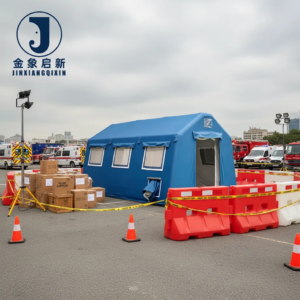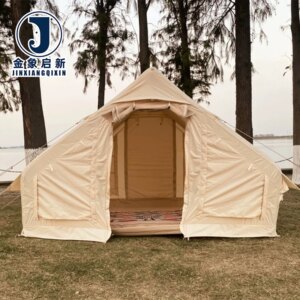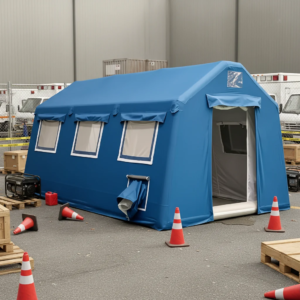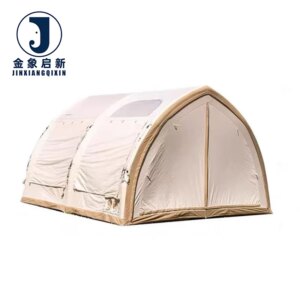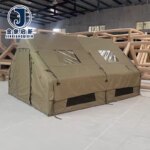
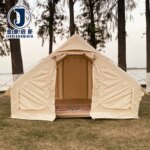
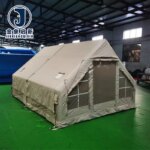
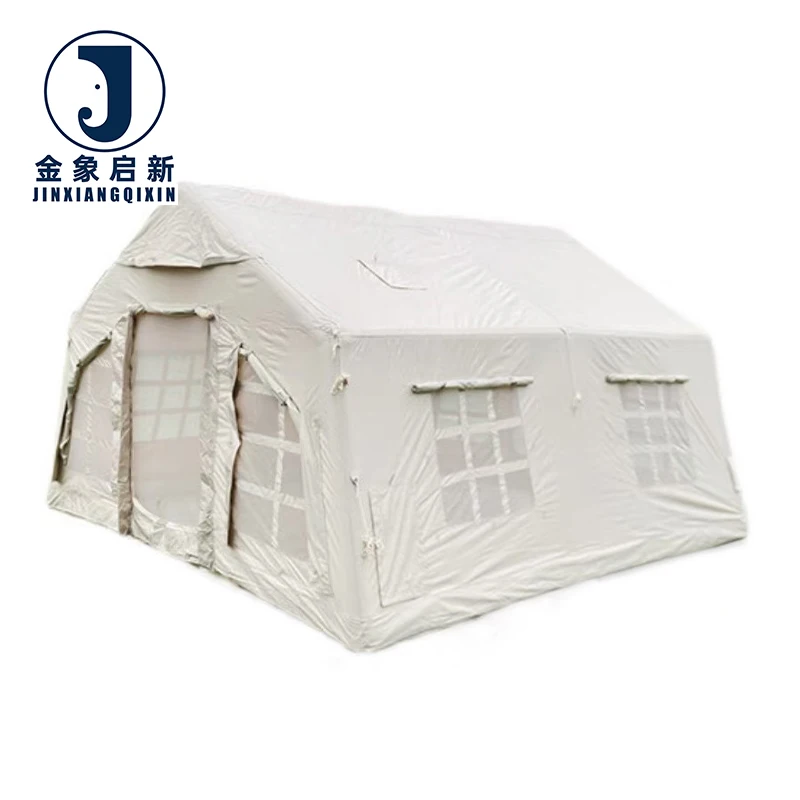
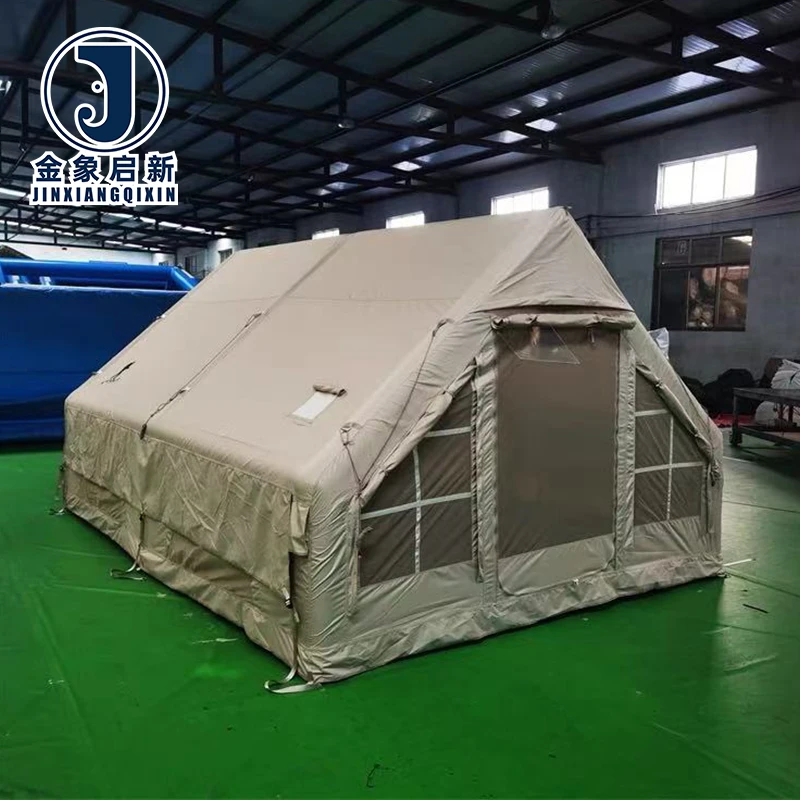
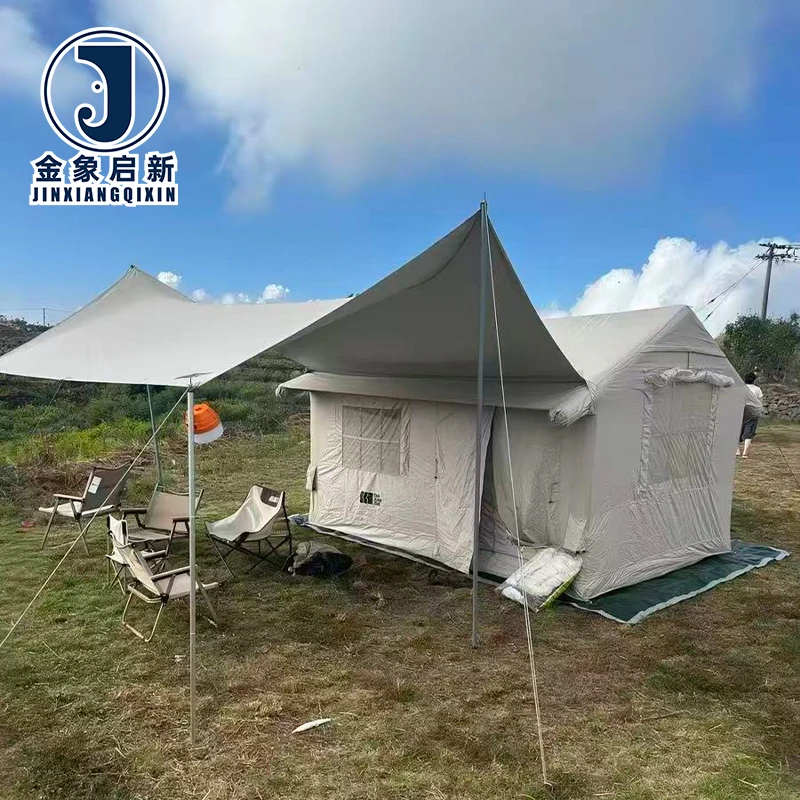
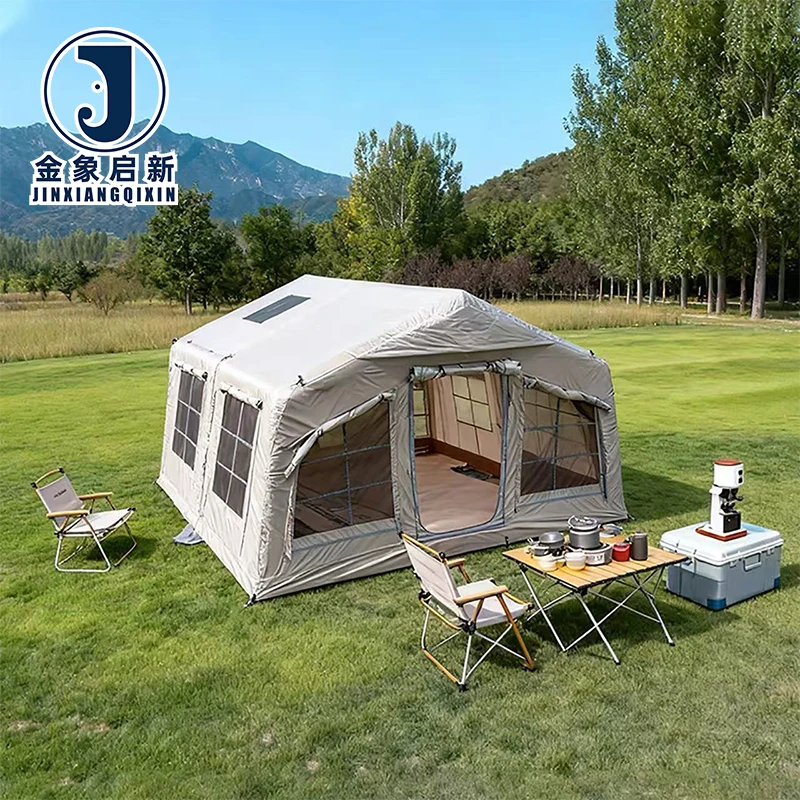
Specialist Coating Expertise — nearly 30 years focused on coated fabric production, delivering verified fire-retardant and anti-static compliance for inflatable structure and membrane applications.
Technical Specifications
| Parameter | Value |
|---|---|
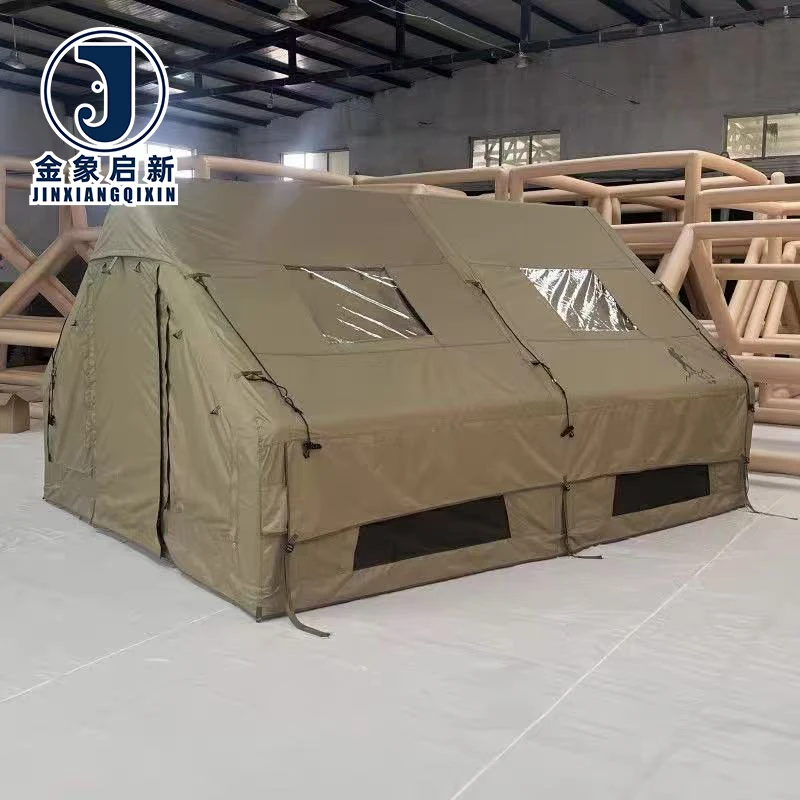
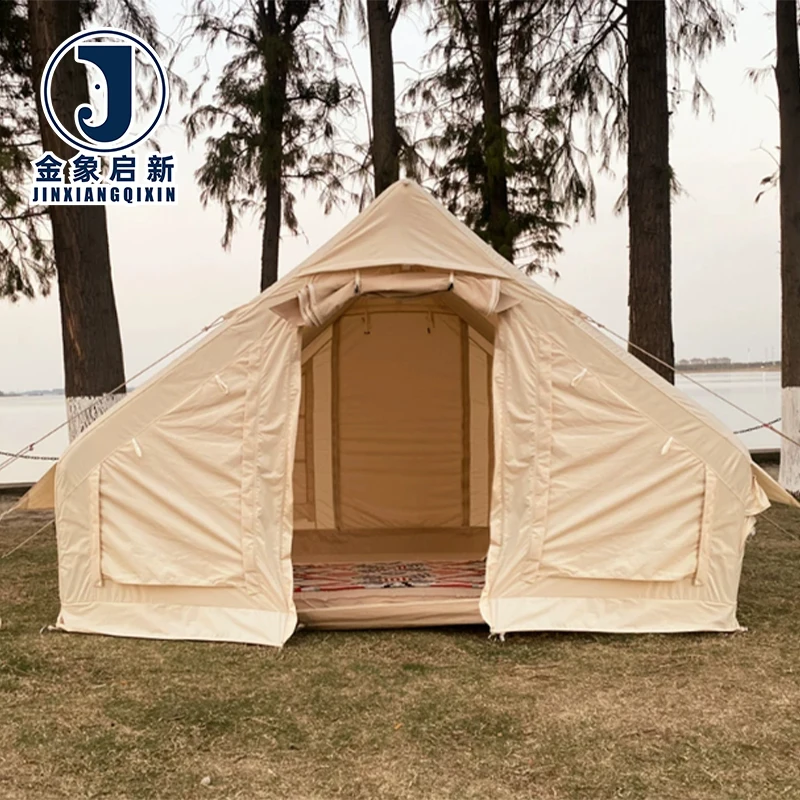
| Product Type | Inflatable Tent Fabric |
| Core Material | PVC Tarpaulin |
| Construction | Single Layer |
| Key Performance | Waterproof, UV-resistant (test basis not stated in source), Tear-resistant (test basis not stated in source) |
| Deployment Mechanism | Quick Automatic Opening |
| Capacity | 4-6 Person |
| Season Suitability | Summer Trip |
| Customization | OEM & ODM, Sample Customization, Pattern Printing |
| Production Lines | 3 full production lines |
| Processing Equipment | 36 sets |
| R&D Team | 10 technicians |
| Standards | ISO 9001, ISO 14001, ISO 45001, CE |
Application Suitability
| Application | Exposure & Requirement |
|---|---|
| Mining and tunnelling inflatable shelters | Continuous underground deployment, mandated fire-retardant and anti-static compliance, high abrasion at ground contact |
| Aviation ground support inflatable hangars | Rapid deployment and teardown cycles, wind load stress on seams, UV exposure during extended outdoor positioning |
| Commercial inflatable event structures | Frequent inflation and deflation, transport handling stress, public safety fire classification requirements |
| Outdoor equipment rental inventory | Repeated setup rotation, storage compression, coating adhesion stress at fold lines |
Why Inflatable Structure Fabric Fails Site Safety Audits Before It Ever Gets Installed
A missing or mismatched fire-retardant test report is the single most common reason inflatable structure fabric gets rejected at site induction.
Mining and tunnelling contractors operate under strict ventilation and fire safety protocols. When Inflatable Tent Fabric arrives on site without the specific grade documentation the safety officer requires — whether M2, B1, NFPA 701, or DIN 4102 — the entire structure is dead on arrival. The fabric may perform perfectly in every other respect, but without paper traceability linking the batch to a recognised standard, it cannot pass compliance review [NEED_CITE: fire classification standards for temporary structures in mining environments]. This is not a theoretical problem. Contractors have reported entire project timelines disrupted because the membrane material delivered did not carry the certification the site safety plan specified. The cost of that delay dwarfs any savings from choosing a cheaper supplier who could not produce batch-specific documentation.
Fire-Retardant and Anti-Static Compliance for Regulated Sites
Inflatable structures deployed in mining, tunnelling, and aviation environments must meet specific fire-retardant grades that align with local regulatory frameworks. Our Inflatable Tent Fabric is available in flame retardant grades — confirm the grade required for your market and site safety plan before placing a bulk order. Anti-static surface treatment is equally critical in environments where combustible dust or flammable vapours are present, and we can supply surface resistance test data upon request [NEED_CITE: anti-static requirements for inflatable structures in hazardous atmospheres].
Seam Integrity Under Repeated Inflation Cycles
Every inflation and deflation cycle places stress on welded seams, particularly at junctions where air beams connect to the main membrane. The PVC tarpaulin core of this Inflatable Tent Fabric is engineered for consistent heat-welding behaviour, allowing fabricators to dial in temperature and dwell time settings that produce seams matching the base material strength. When weld parameters are correctly established, the seam fails at or beyond the fabric’s own tear threshold rather than peeling apart under load. This predictability matters for manufacturers producing rental-grade inventory that will endure hundreds of deployment cycles.
Understanding How Material Choices Affect Structure Performance
The relationship between base fabric denier, weave density, and coating weight determines how an inflatable structure behaves under wind load and internal pressure. A higher denier base fabric with tighter weave spacing provides greater tensile and tear resistance, but only when the coating weight is sufficient to fully encapsulate the yarn structure and prevent moisture ingress at the fibre level. The PVC tarpaulin used in this Inflatable Tent Fabric undergoes controlled coating application across our production lines, ensuring consistent adhesion between the coating layer and the base fabric. Surface finish selection — glossy or matte — affects both cleaning behaviour in field conditions and the adhesion of printed branding or safety markings applied during fabrication. For structures deployed in high-UV environments, treatment options are available, though specific test standards should be confirmed at the inquiry stage to match your market’s exposure classification requirements.
The Hidden Cost of Specifying Without Test Documentation
When fabricators purchase coated fabric based on stated GSM alone, without verifying tensile and tear test data against a recognised standard, they assume performance that may not materialise under real deployment conditions. A lighter-than-specified coating weight can compromise waterproof integrity at seam overlap zones, while an unverified flame-retardant claim leaves the structure manufacturer exposed if a site audit demands batch-specific test certificates [NEED_CITE: coated fabric test methods per ISO 1421 for tensile and tear properties]. We have seen projects where the membrane material passed initial visual inspection but failed fire classification testing when the safety officer requested the original mill certificate. The rework cost — stripping the structure, sourcing compliant replacement material, and rebuilding — is a multiplier of what proper upfront specification would have cost.
Why Fabricators Source Inflatable Structure Fabric From Our Facility
Our 10-person R&D team works directly with inflatable structure manufacturers to develop material specifications that match their deployment requirements, including sample development for weld testing before bulk commitment. Three full production lines with 36 sets of processing equipment give us capacity to fulfil large-volume orders while maintaining batch-to-batch consistency across rolls. Every production run undergoes dedicated QA/QC with 100 percent inspection before shipment, so fabricators receive material that matches the specification sheet they approved at the sample stage. We support OEM and ODM programmes with pattern printing, colour matching, and custom sizing — critical for manufacturers producing branded inflatable structures for event and rental markets. Our ISO 9001, ISO 14001, ISO 45001, and CE certifications provide the compliance framework that regulated industries require for supplier qualification.
Documentation & Verification
- Material specification sheet stating GSM, base fabric denier, and coating weight for every Inflatable Tent Fabric batch
- Fire-retardant grade test report matched to the standard specified at order confirmation
- Anti-static surface resistance data supplied where site safety protocols mandate verification
- Pre-shipment inspection record with batch-specific quality checkpoints
- ISO and CE certificates included in every dispatch documentation package
- Certificate of origin and customs support documentation for international shipments
Fabrication, Handling & Storage
- Heat-weld PVC tarpaulin seams using temperature and dwell settings validated on pre-production samples before bulk fabrication
- Store Inflatable Tent Fabric rolls vertically on padded racks to prevent permanent creasing at the coating layer
- Avoid dragging cut panels across abrasive surfaces during structure assembly to protect the waterproof coating face
- Confirm surface finish compatibility with chosen printing method before applying branding or safety markings
- Repair minor field damage using compatible PVC welding patches that match the base coating chemistry
- Allow stored rolls to acclimatise to workshop temperature before unrolling to prevent coating crack at low-temperature handling
Request a Specification Matched to Your Application
Tell us the fire-retardant grade your site or market requires, the deployment environment, and the volume you need per production cycle. If your inflatable structures demand specific anti-static performance or custom colour matching across multiple rolls, include those requirements so we can prepare samples and test documentation aligned with your compliance framework. We develop samples within days for custom specifications and can advise on material selection based on your fabrication process and end-use conditions.
Frequently Asked Questions
Q: What fire-retardant grades are available for inflatable structure fabric, and how are they verified?
A: Our Inflatable Tent Fabric is available in multiple flame-retardant classifications. Specify the standard your market requires — such as M2, B1, NFPA 701, or DIN 4102 — and we supply a batch-specific test report confirming compliance. Verification documentation is included with every shipment for site audit purposes.
Q: What anti-static surface resistance values can be achieved for inflatable and membrane applications?
A: Anti-static treatment can be applied to Inflatable Tent Fabric for deployment in environments where static discharge poses a risk. Surface resistance test data is available upon request. Confirm your site safety protocol requirements at the inquiry stage so we match the treatment to your compliance threshold.
Q: How are GSM, coating weight, and tensile properties confirmed on each production batch?
A: Every batch of Inflatable Tent Fabric undergoes 100 percent inspection before shipment. A material specification sheet accompanies each order, documenting GSM, base fabric denier, and coating weight. Pre-shipment inspection records are provided so fabricators can verify that received material matches the approved sample specification.
Q: What customisation is available for inflatable structure fabric in terms of sizing and printing?
A: We support OEM and ODM programmes including custom width, colour matching, and pattern printing on Inflatable Tent Fabric. Our 10-person R&D team develops samples within days for approval before bulk production. Specify your structure dimensions and branding requirements to receive a tailored sample for weld and print testing.
Q: What compliance documentation is supplied with each shipment for mining, aviation, or tunnelling audits?
A: Each shipment includes a documentation package containing material specification sheets, fire-retardant and anti-static test reports where applicable, ISO and CE certificates, pre-shipment inspection records, certificate of origin, and packing lists. This package supports supplier qualification and site safety audit requirements across regulated industries.