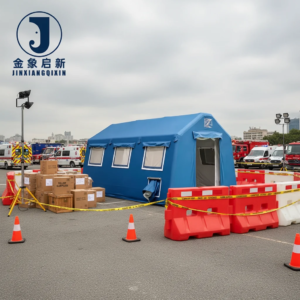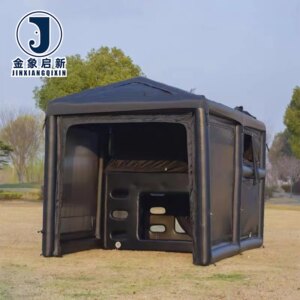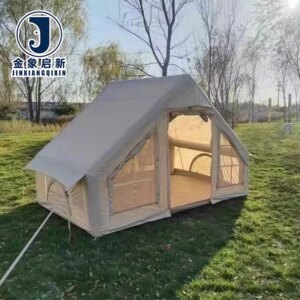


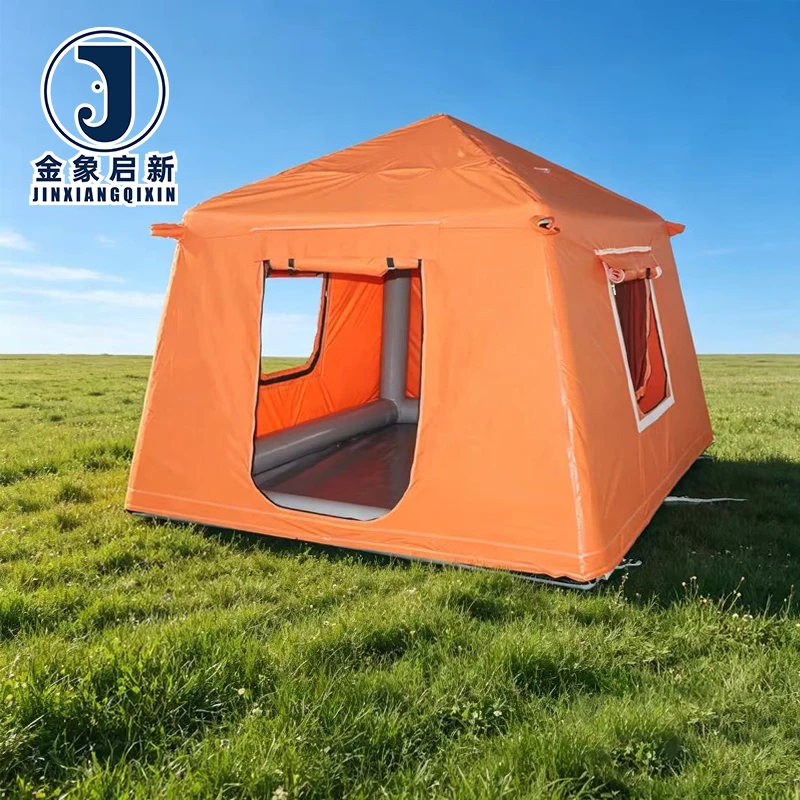


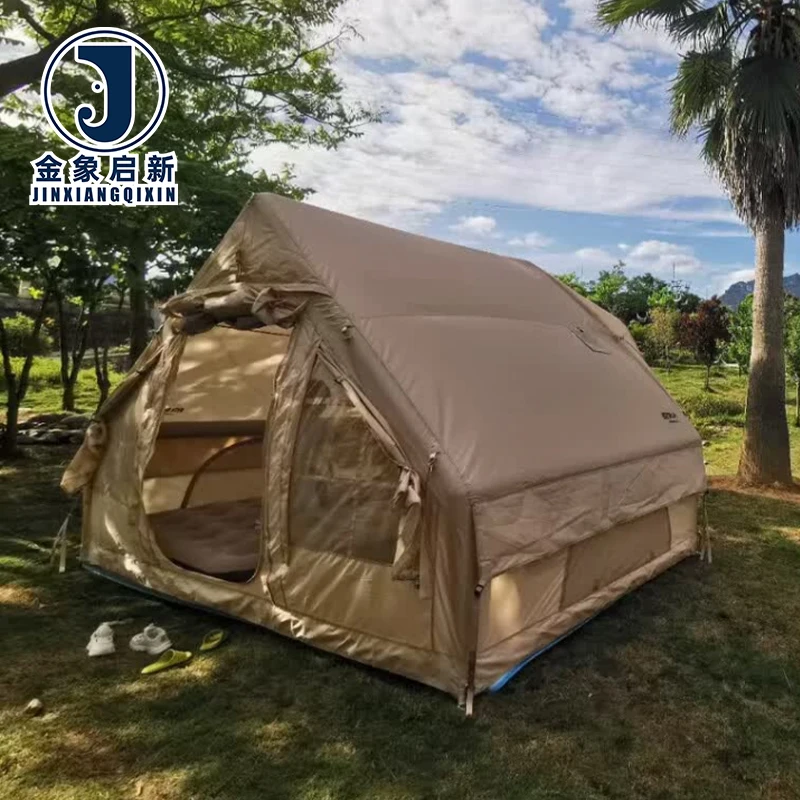
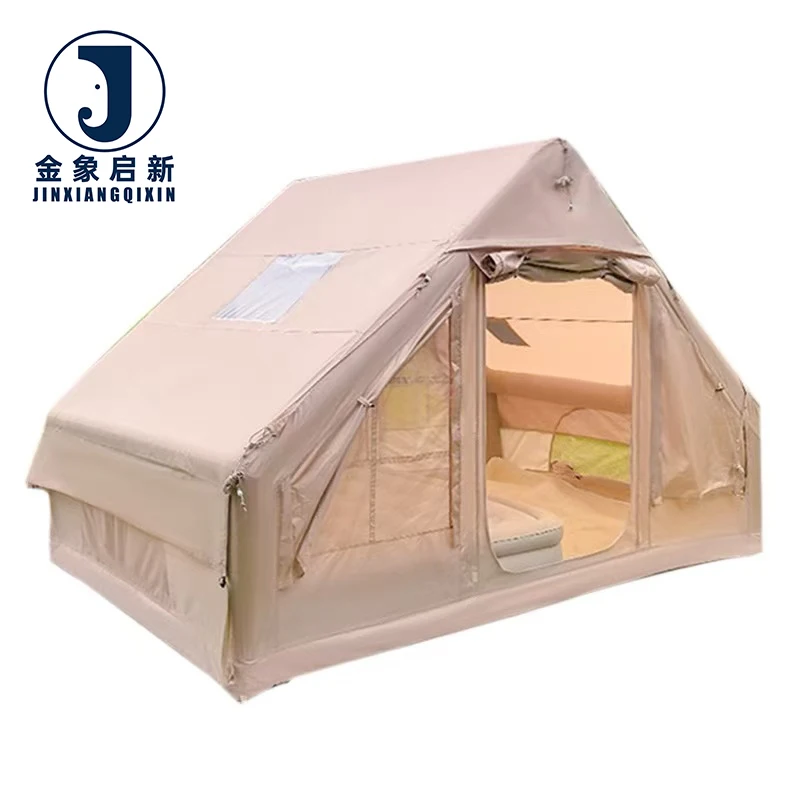
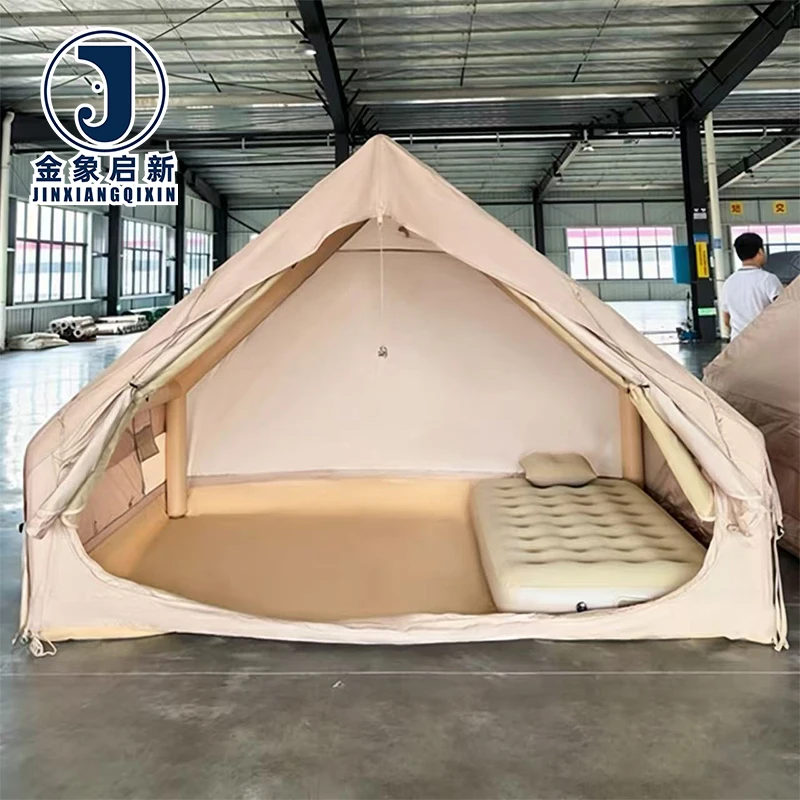
Precision Process Control — Every inflatable tent unit undergoes multi-stage inspection against base fabric tensile, coating adhesion, and structural seam integrity before release.
Technical Specifications
| Parameter | Value |
|---|---|
| Product Type | Inflatable Tent |
| Core Material | 420D Oxford |
| Capacity | 5-8 Person |
| Season Suitability | 4-Season |
| Opening Mechanism | Quick Automatic Opening |
| Construction Type | Single Layer |
| Design Type | Extended Type |
| Customization | OEM & ODM (sample customization, pattern printing) |
| Certifications | ISO 9001, ISO 14001, ISO 45001, CE |
Application Suitability
| Application | Exposure & Requirement |
|---|---|
| Mining and tunnelling site shelters | High dust ingress, confined space deployment, fire-retardant and anti-static compliance for underground and surface operations |
| Aviation ground support facilities | Rapid deployment on tarmac, wind load resistance, equipment clearance, operational visibility requirements |
| Emergency disaster relief bases | Multi-day occupancy in unprepared terrain, weather variability across seasons, fast assembly with minimal labour |
| Specialist membrane and inflatable structures | Custom-engineered geometry, certified fabric documentation for structural sign-off, long-term tension holding |
Compliance Gaps That Shut Down a Site Before the Tent Is Even Inflated
Fabric without verifiable certification is fabric that gets rejected at the gate.
When a mining contractor orders inflatable shelters for underground use, the site safety officer does not accept a verbal assurance of flame retardancy. They ask for the test report, the standard it was measured against, and the batch it applies to. The same applies on aviation aprons where static discharge near fuel handling zones is a non-negotiable risk. An inflatable tent that arrives without documentation traceable to the roll it was cut from creates a compliance gap that halts deployment, triggers a site audit, and exposes the procurement team to liability. [NEED_CITE: fire and anti-static classification standards for inflatable structures in mining and aviation environments]
This is the failure pattern we address at the specification stage, not the shipping stage. Every order for a certified inflatable tent begins with a review of the jurisdictional requirements the end site demands, so the material selected matches the documentation the buyer will be asked to present.
How 420D Oxford Performs Under Industrial Shelter Loads
The denier rating of the base fabric directly governs how the inflatable tent handles puncture and abrasion during repeated inflation cycles and ground contact on unprepared surfaces. A 420D Oxford weave provides a balance between pack weight for transport and tear propagation resistance when the structure is under internal air pressure. For mining and emergency relief deployments where the tent may be dragged across gravel, concrete, or compacted soil, this base fabric choice determines whether the floor and lower wall panels survive multiple setup-and-strike sequences without localized failure.
Single-Layer Extended Construction and Air Pressure Management
A single-layer extended type design reduces the overall mass of the inflatable tent while relying on precise coating adhesion and seam welding to maintain air retention across the full envelope. The extended footprint accommodates equipment staging, medical triage layouts, or ventilation duct routing inside the shelter without requiring secondary partitions. Because the entire structural load is carried by one fabric layer, the coating bond strength and welded seam integrity become the primary determinants of operational reliability in sustained wind or snow load conditions. [NEED_CITE: coating adhesion test methods for inflatable structural fabrics per ISO 2411]
Reading the Material Data Beyond the Base Fabric Label
The 420D designation tells you the yarn thickness, but the weave density — ends and picks per centimetre — is what controls how a tear propagates once initiated. A tighter weave restricts tear spread along the warp and weft, meaning a small puncture from a sharp rock or tool contact stays localized rather than unzipping across a wall panel. The coating applied to this Oxford base must penetrate the weave sufficiently to lock the yarns in place; inadequate penetration leaves the fabric flexible but vulnerable to delamination under the repeated stress of inflation and deflation. The single-layer construction means there is no secondary liner sharing the air-holding responsibility, so the coating uniformity directly governs the structure’s ability to maintain pressure overnight or through a storm cycle. The 4-season suitability rating indicates the fabric retains flexibility at low temperatures without becoming brittle, and does not soften excessively under high solar gain, which would compromise the inflated geometry.
What Happens When the Specification Does Not Match the Site
Procurement teams sourcing inflatable shelters for mining or aviation use sometimes specify the base fabric denier correctly but overlook the compliance documentation that the site safety officer will demand upon arrival. A tent that meets the physical performance requirements but ships without a traceable fire-retardant test report or anti-static surface resistance data will be refused at the gate, leaving the project without shelter while replacement documentation is chased through the supply chain. [NEED_CITE: site compliance audit requirements for temporary inflatable structures in regulated industrial environments]
Similarly, batch-to-batch variation in coating weight or colour across a multi-unit order becomes visible the moment several inflatable tents are erected side by side on a relief site or military staging area. This is not a cosmetic issue; inconsistent coating weight signals inconsistent process control, which raises questions about whether the air retention and structural properties also vary unit to unit. The cost of sending back a non-compliant batch and waiting for replacement far exceeds the effort of specifying documentation requirements at the inquiry stage.
Why This Is Where Technical Buyers Source Inflatable Shelters
Our production process subjects every inflatable tent fabric run to in-process quality checks at coating, weaving, and lamination stages, not just a final visual inspection before packing. The 10-technician R&D team handles material selection and sample development for custom geometries, ensuring that a prototype inflated structure behaves as engineered before bulk fabric is committed. Three full production lines and 36 sets of professional processing equipment support batch volumes large enough to supply an entire project site without splitting the order across multiple production windows, which protects batch consistency. Pre-shipment inspection covers 100 percent of units against the agreed specification, with documented records that travel with the shipment. Sample development within days allows buyers to validate fabric hand, colour, and inflation behaviour before committing to a production run.
Documentation & Verification
- Material specification sheet stating 420D Oxford base, coating composition, and measured performance values
- Fire-retardant and anti-static test reports issued per batch with applicable standard referenced
- ISO 9001, ISO 14001, ISO 45001, and CE certificates covering the production facility
- Pre-shipment inspection record documenting QA and QC checks on every unit before dispatch
- Certificate of origin and customs documentation supporting international procurement and site audits
- Roll packing list matching each unit to its production batch for full traceability
Fabrication, Handling & Storage
- Heat-weld seam parameters must be calibrated to the 420D Oxford coating thickness to avoid burn-through or cold joints at structural stress points
- Store inflated or folded units away from sharp-edged objects that can initiate tears in the single-layer Oxford envelope
- Avoid prolonged compression packing beyond transit duration to prevent permanent crease lines in the coated 420D fabric
- Clean with mild detergent and soft brush only; solvent-based cleaners risk degrading the coating bond on the Oxford weave
- Inflate test every unit before site deployment to confirm air retention and valve function after transit and storage
- Repair minor punctures with compatible Oxford-coated patch material and heat-activated adhesive matching the original coating chemistry
Specifying Your Inflatable Tent Order
To move from inquiry to sample, tell us the site environment and the compliance standards your jurisdiction requires — fire classification, anti-static surface resistance, or both. Confirm the number of units, whether you need standard 5-8 person extended-type sizing or a custom footprint, and any pattern printing or branding requirements for identification on multi-agency sites. Specify whether the order is for a single deployment or a phased project with staggered delivery, so production can be planned to maintain batch consistency across all shipments.
Frequently Asked Questions
Q: What fire-retardant grade and test standard does the inflatable tent fabric meet for my jurisdiction?
A: Fire-retardant grades are available across multiple classification systems. Confirm the standard your site authority requires — such as DIN 4102, NFPA 701, or a local mining regulation — at the inquiry stage. We supply the test report matched to that standard with your batch documentation, so the shelter passes site inspection without delays or additional testing on arrival.
Q: Is anti-static certification available with surface resistance data for mining and tunnelling compliance?
A: Anti-static treatment is available for inflatable tent fabric destined for underground or fuel-adjacent environments. Surface resistance data is measured and reported per batch against the applicable standard. Provide your site’s required resistance range during specification so the correct treatment is applied and documented before shipment.
Q: How is batch-to-batch consistency verified for material properties and coating adhesion?
A: Every production run undergoes in-process QA checks at the coating, weaving, and lamination stages. Coating weight and adhesion are measured against the agreed specification, and results are recorded per batch. Pre-shipment inspection covers all units, with documented records included in the shipment so you can verify consistency across a multi-unit order.
Q: What custom sizing, pattern printing, and OEM/ODM options are supported, and what are the minimums?
A: OEM and ODM services cover sample customization, custom footprints beyond the standard extended type, and pattern printing for site identification or branding. Minimums depend on the complexity of the modification and the fabric run required. Submit your dimensional drawings and print artwork at the inquiry stage for a feasibility review and sample development timeline.
Q: What documentation package accompanies shipment for site safety audits and customs clearance?
A: Each shipment includes a material specification sheet, applicable fire-retardant or anti-static test reports per batch, ISO and CE certificates, a pre-shipment inspection record, roll packing list, certificate of origin, and full customs documentation. This package supports both site compliance audits and import clearance without requiring supplementary paperwork from the buyer.