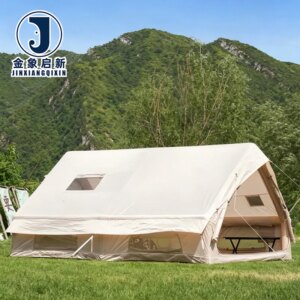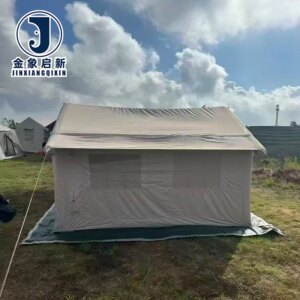

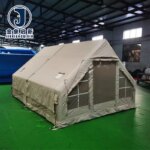
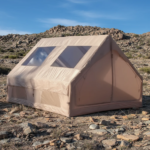

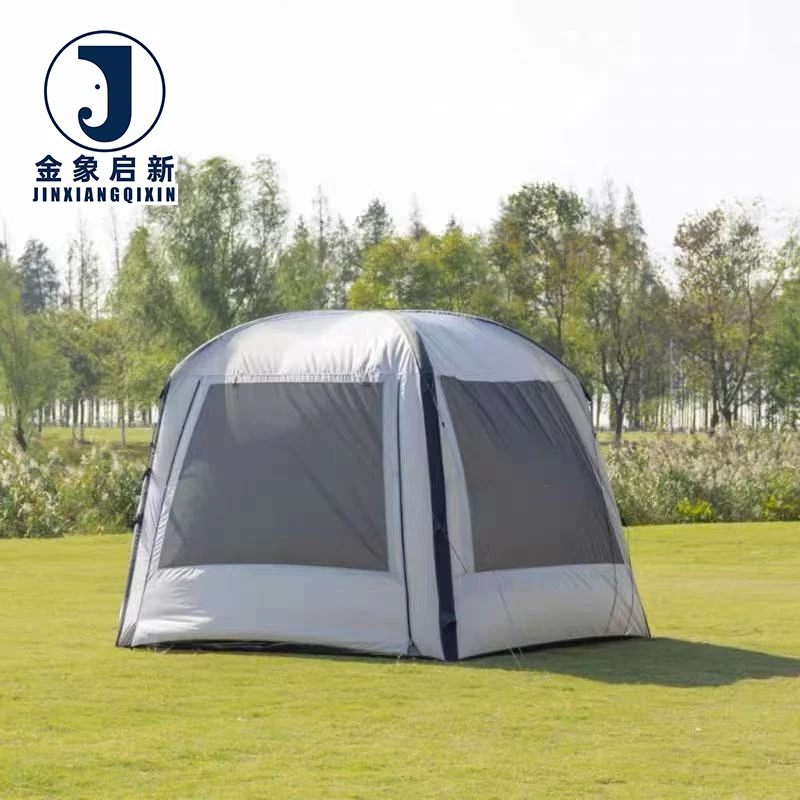
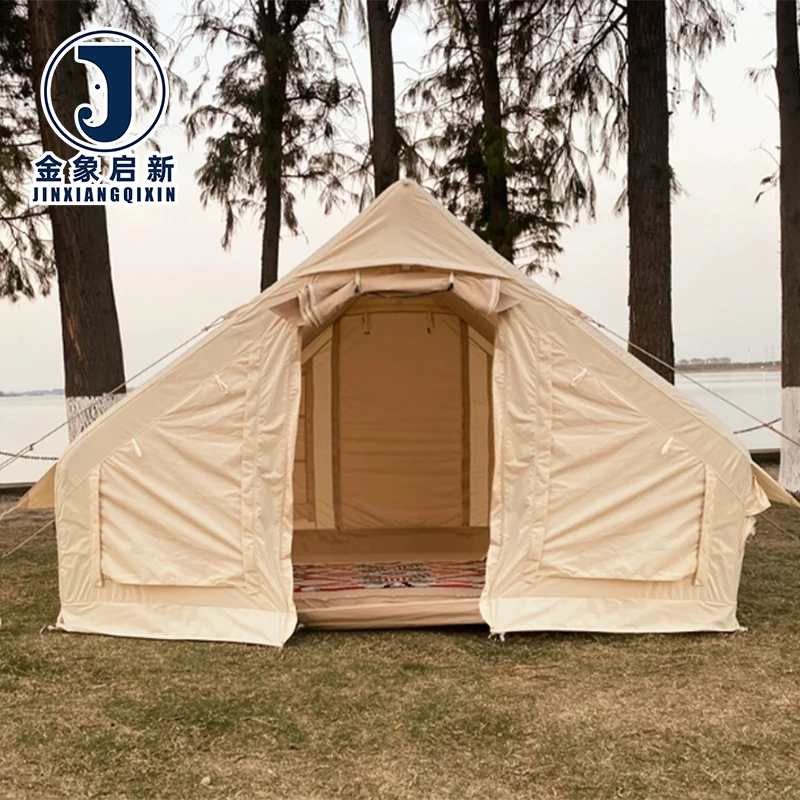
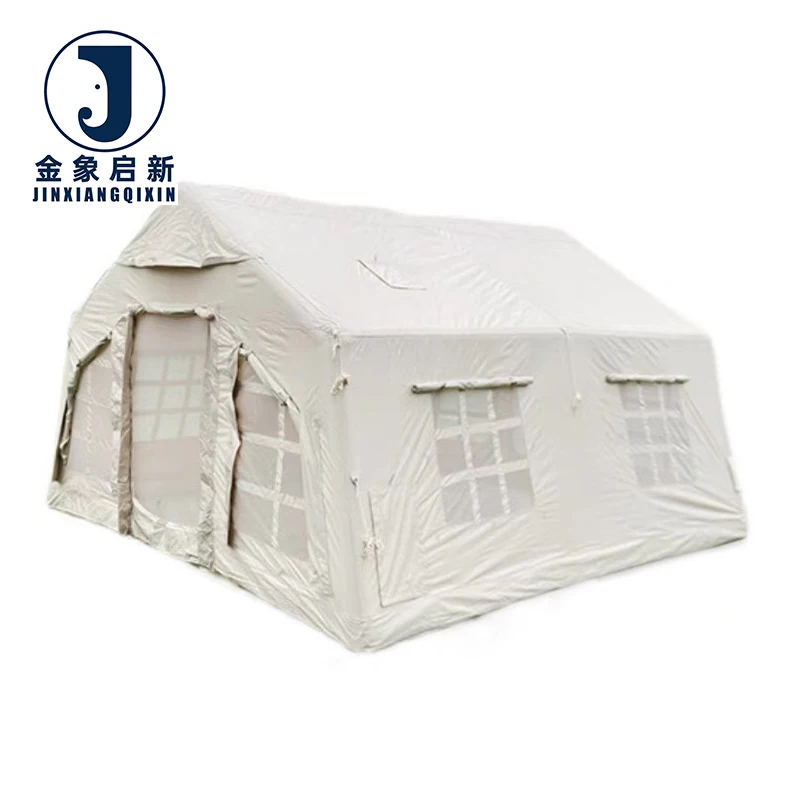
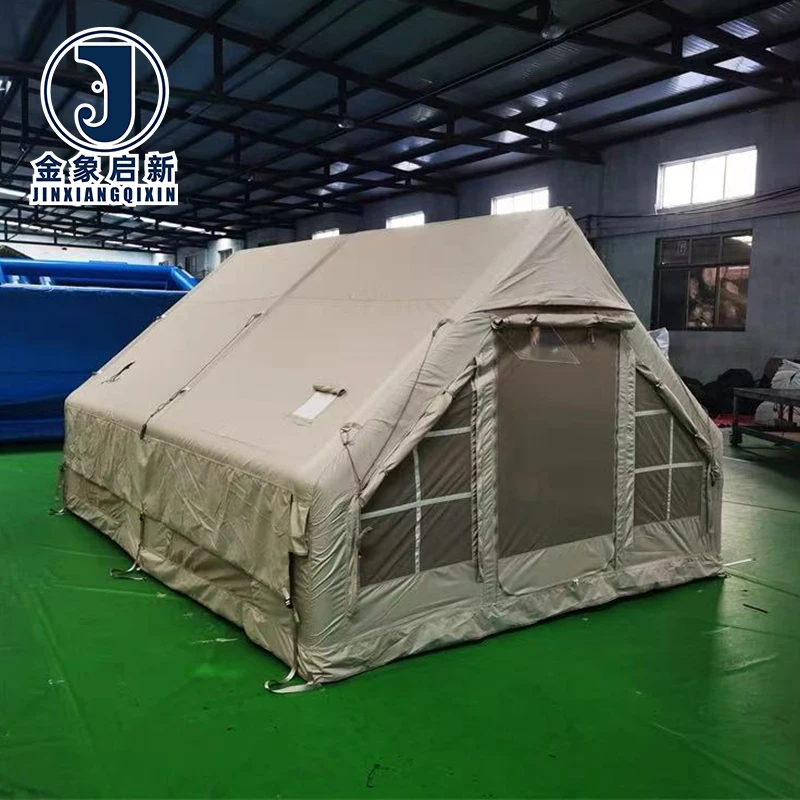
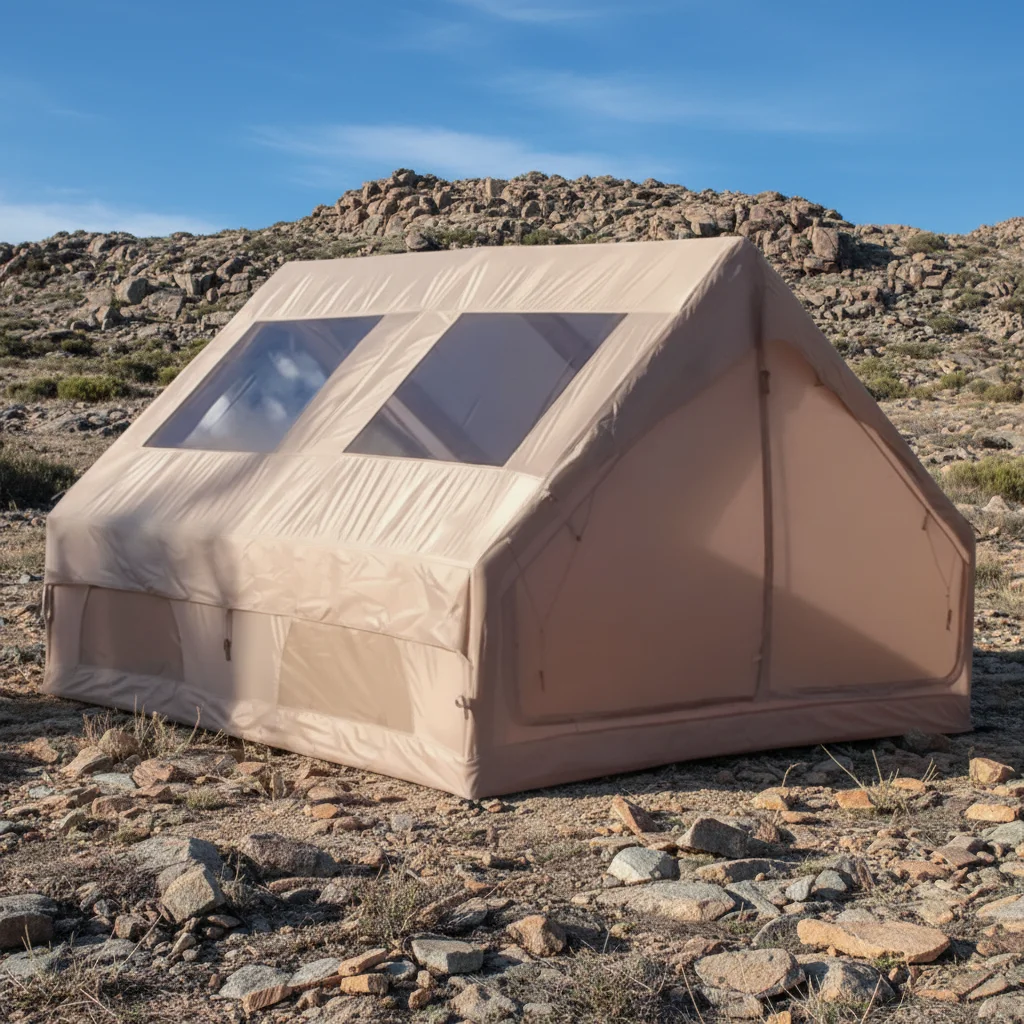

Certified Process Control — ISO9001, ISO14001, and ISO45001 systems govern every stage of PVC inflatable tent fabric production, from raw material batch verification through 24-hour inflation testing before dispatch.
Technical Specifications
| Parameter | Value |
|---|---|
| Product Type | Inflatable Tent |
| Core Material | PVC tarpaulin |
| Capacity | 6-Person |
| Opening Mechanism | Automatic opening |
| Season Rating | Four-season |
| Construction | Single-layer PVC |
| Waterproof | Yes |
| UV Treatment | UV-resistant (test basis not stated — confirm UV stability standard required for your jurisdiction) |
| Flame Retardant Grade | Fire-retardant (grade not stated — available in flame retardant grades, confirm the grade required for your market) |
| Anti-Static | Anti-static (standard not stated — verify surface resistivity requirement with our technical team) |
| Tear Resistance | Tear-resistant (standard not stated — request batch-specific test documentation) |
| Customization | OEM & ODM — sample customization, pattern printing, size adjustments, material thickness modifications |
| Certifications | ISO9001, ISO14001, ISO45001, CE |
Application Suitability
| Application | Exposure & Requirement |
|---|---|
| Commercial glamping site deployment | Continuous outdoor weather exposure, UV radiation, seasonal temperature swings, frequent inflation-deflation cycles |
| Outdoor event and festival infrastructure | Rapid setup and teardown, crowd proximity fire safety codes, wind loading on membrane surfaces |
| Mining and tunnelling temporary shelters | Underground fire safety compliance, dust-laden air requiring anti-static surfaces, repeated relocation |
| Industrial field operation shelters | Abrasive ground contact, chemical exposure from site operations, extended continuous inflation |
| Tourism and outdoor activity base camps | Four-season deployment, guest safety documentation for permit compliance, branding and pattern printing |
Why Inflatable Tent Fabric Fire Retardant Anti-Static Certified Documentation Matters More Than Promises
A certificate that does not match the batch on site is the same as having no certificate at all.
Event permit inspectors and mine site safety officers do not accept generic material claims. They cross-reference the fire-retardant grade on the documentation against the specific roll or unit delivered. When inflatable tent fabric fire retardant anti-static certified specifications are quoted but the accompanying paperwork references a different production batch or an incompatible standard, the structure fails its compliance audit before it is ever inflated. [NEED_CITE: fire classification standards for temporary membrane structures]
I have seen commercial glamping operators lose an entire season’s booking window because the inflatable shelter units arrived with material certificates that did not align with the local fire marshal’s accepted standards. The tents were physically adequate, but the documentation gap meant the site could not open. The cost was not the fabric — it was the weeks of lost revenue and the re-certification process.
Coating Adhesion and Air-Holding Reliability Under Continuous Inflation
The single-layer PVC construction of this inflatable tent depends entirely on the bond between the coating and the base fabric to maintain air pressure over extended deployment periods. Inflatable tent fabric fire retardant anti-static certified performance requires that the coating does not delaminate at the weld lines where panels join, because those seams bear concentrated stress each time the structure inflates and deflates. Poor adhesion between coating layers creates micro-channels that bleed air slowly, forcing the blower to run continuously and shortening its service life.
Weld Seam Integrity Across Repeated Inflation Cycles
Every panel junction on a PVC inflatable tent is a potential failure point. The heat-welding process must fuse the PVC coating layers without scorching the base fabric underneath. When welding temperature or dwell time is not controlled against the specific material thickness, the seam either lifts under internal pressure or becomes brittle and cracks during cold-weather deployment. [NEED_CITE: hot-air welding parameters for PVC coated fabrics] Our production process includes 24-hour inflation testing before shipment, which reveals seam leaks and valve failures that would otherwise surface only after the tent is installed on a commercial site.
Understanding PVC Tarpaulin Weight and Structural Behaviour in Inflatable Applications
Unlike tensioned tarpaulin applications where GSM directly correlates with load-bearing capacity, inflatable tent structures rely on internal air pressure to maintain shape. The PVC tarpaulin weight must balance two competing demands: sufficient mass to resist wind uplift and abrasion at ground contact points, yet light enough that the air beam structure does not sag under its own weight. A heavier fabric does not automatically produce a stronger inflatable — the base fabric denier and weave density determine how the material responds to the cyclical stress of pressurization and deflation. The tear resistance of the base fabric governs how a puncture propagates across the membrane surface, which is why batch-specific tear testing matters more than a general material claim.
Surface finish also plays a functional role. Glossy surfaces shed water and dirt more readily in continuous outdoor deployment, while matte surfaces reduce glare in hospitality settings. If pattern printing or branding is required, the coating surface must be compatible with the ink system to prevent flaking after repeated inflation cycles.
What Happens When Compliance Documentation Does Not Match the Delivered Batch
Specifying an inflatable tent for a mining site or commercial event without verifying that the fire-retardant grade and anti-static standard on the certificate match the actual units delivered creates a liability gap that only surfaces during an audit or incident investigation. Anti-static performance below the threshold required for dust-laden environments allows charge accumulation on the membrane surface, which in confined underground spaces introduces ignition risk. [NEED_CITE: anti-static surface resistivity requirements for underground ventilation structures] Batch colour inconsistency across multiple units installed side by side also triggers rejection at commercial glamping sites where guest-facing aesthetics affect booking reviews and repeat business.
Why Sourcing Inflatable Tent Fabric Through a Certified Manufacturer Changes the Compliance Equation
Production under ISO9001, ISO14001, and ISO45001 certified processes means that material batch records, in-process quality checks, and pre-shipment inspection results are traceable to each unit dispatched. This traceability is what allows compliance auditors to verify that the inflatable tent fabric fire retardant anti-static certified claims on the paperwork correspond to the physical product.
Our 10-person R&D team develops samples with custom dimensions, pattern printing, and material thickness adjustments before mass production begins, so specification mismatches are caught at the sample approval stage rather than on the delivery dock. Three full production lines and 36 sets of professional equipment support batch consistency across multi-unit orders, which matters when a glamping operator deploys twenty identical tents and expects uniform colour and inflation behaviour across all of them. Dedicated QA and QC at every production stage, followed by 100% pre-shipment inflation testing, ensures that seam integrity and air retention are verified before the units leave the facility.
Documentation & Verification
- Material specification sheet listing PVC coating composition, base fabric construction, and treatment parameters per production batch
- Fire-retardant test report referencing the specific grade achieved, supplied with batch traceability to the delivered units
- Anti-static surface resistivity test data available upon request for site compliance audits
- Pre-shipment inflation test record documenting air-pressure retention over the 24-hour test cycle
- ISO9001, ISO14001, ISO45001, and CE certificates included in the dispatch documentation package
- Certificate of origin and customs documentation supporting international shipment clearance
Fabrication, Handling & Storage
- Heat welding parameters must match the specific PVC coating thickness to avoid seam delamination under inflation pressure
- Ground contact edges require abrasion-reinforcement panels welded before first deployment to extend service life
- Store deflated units flat or loosely rolled — tight compression creases the single-layer PVC and weakens coating adhesion at fold lines
- Cold-weather deployment requires gradual inflation to allow the PVC tarpaulin to reach flexibility without cracking at seam junctions
- Clean membrane surfaces with pH-neutral detergent only — solvent-based cleaners degrade the fire-retardant and anti-static treatment layers
- Field puncture repairs use compatible PVC patch material heat-welded to the membrane, not adhesive-only patches that peel under pressure cycling
Requesting a Specification-Matched Quotation
Provide the intended deployment environment — commercial glamping, event infrastructure, mining, or industrial temporary shelter — along with the fire-retardant grade and anti-static standard your jurisdiction or site operator requires. Specify the number of units, any pattern printing or branding requirements, and whether you need sample approval before bulk production. Include your target delivery timeline so we can align production scheduling and documentation preparation with your site opening or event date.
Frequently Asked Questions
Q: What fire-retardant grade does the inflatable tent fabric carry, and does it meet my target market’s fire safety code?
A: The fabric is produced with fire-retardant treatment, but the specific grade depends on the formulation applied to your production batch. We supply the test report referencing the grade achieved. Before placing your order, share the fire safety code your local authority or site operator requires so we can confirm alignment and adjust the formulation if necessary.
Q: How is anti-static performance verified, and what surface resistivity standard applies?
A: Anti-static treatment is applied during the coating process, and surface resistivity is measured on production samples. The applicable standard depends on your deployment environment — underground mining, aviation, and commercial event venues each reference different thresholds. Request the test data sheet and compare it against your site compliance requirements before confirming your order.
Q: Can I order a sample with custom dimensions and pattern printing before committing to bulk production?
A: Yes. Our OEM and ODM process includes sample development covering size adjustments, pattern printing, and material thickness modifications. The sample must be approved before mass production begins, which ensures dimensions, print accuracy, and material behaviour match your specification and prevents mismatches across the full order.
Q: What does the 24-hour inflation test cover before shipment?
A: Each unit is inflated and held under pressure for 24 hours to detect seam leaks, valve failures, and coating delamination that would compromise air retention. Units that lose pressure beyond the acceptable threshold are reworked or rejected. This test validates that the inflatable tent fabric fire retardant anti-static certified construction performs as an integrated air-holding system.
Q: What documentation is included for customs clearance and on-site compliance audits?
A: Each shipment includes the material specification sheet, fire-retardant and anti-static test reports matched to the production batch, ISO and CE certificates, pre-shipment inspection records, certificate of origin, and a roll or unit packing list. These documents support both customs clearance and the compliance documentation package your site auditor or event permit authority will require.