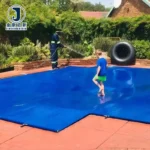
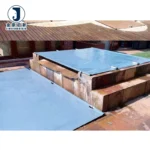
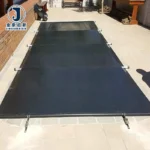
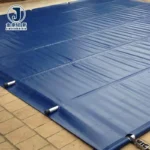
Material Consistency Guaranteed — Dedicated QA/QC at every production stage with 100% roll-by-roll inspection before shipment, ensuring the PVC laminated pool cover tarpaulin you receive matches the GSM and coating weight stated on your order.
Technical Specifications
| Parameter | Value |
|---|---|
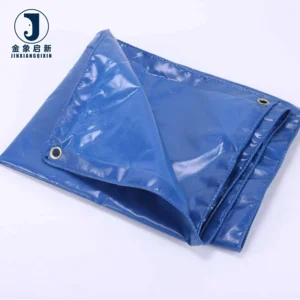
| Product Type | PVC Laminated Swimming Pool Cover Tarpaulin |
| Material | PVC + High-strength polyester mesh fabric |
| Coating Method | Laminated technology & Hot-melt Coating technology |
| Weight (GSM) | 350gsm / 420gsm / 500gsm / 550gsm / 600gsm / 750gsm |
| Total Thickness | 0.32mm / 0.35mm / 0.4mm / 0.45mm / 0.5mm / 0.65mm |
| Roll Width | 2m / 2.1m |
| Roll Length | 75m / 50m |
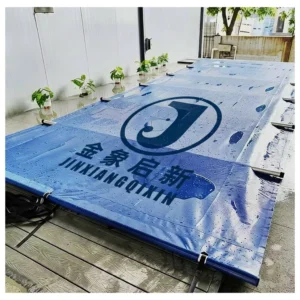
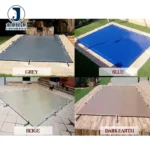
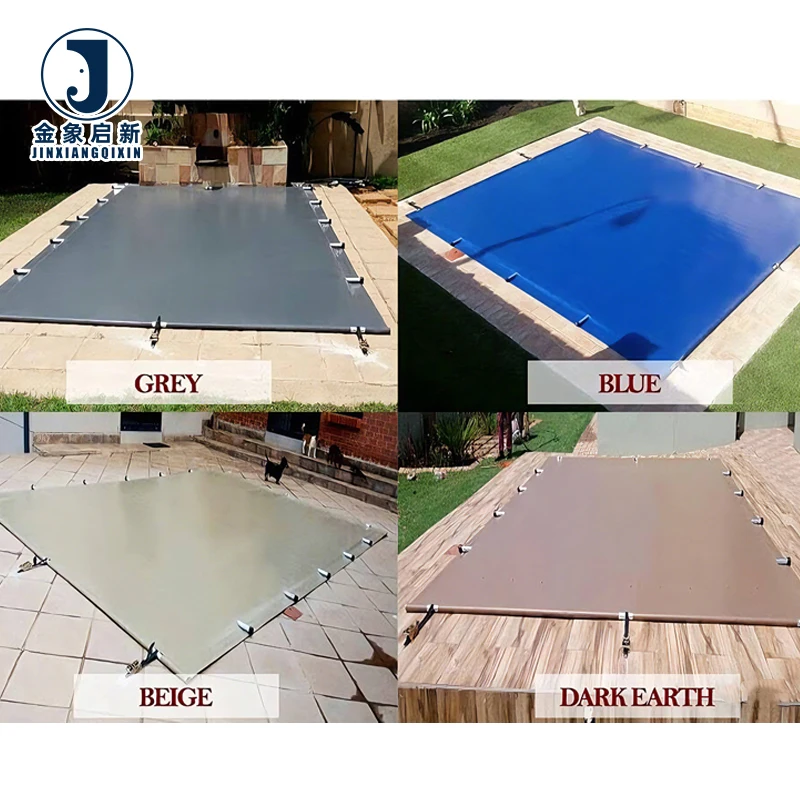
| Available Colors | Blue / Red / Yellow / Light blue / Grey (Customized) |
| UV Treatment | Anti-UV (test basis not stated in source) |
| Anti-Static | Anti-Static treatment (surface resistance not stated in source) |
| Flame Retardant | Available as special treatment (grade not stated in source) |
| Cold Crack Resistance | Yes |
| Anti-Mildew | Yes |
| Waterproof | Yes |
Application Suitability
| Application | Exposure & Requirement |
|---|---|
| Commercial swimming pool covers | Constant UV exposure, chemical splash from pool treatment, fire code compliance for enclosed facilities |
| Aquaculture and fish tank covers | Permanent water contact, anti-static requirements near electronic aeration equipment, anti-mildew in humid environments |
| Resort pool enclosures | Building code approval for flame retardant grades, wind load resistance across large spans, aesthetic colour consistency |
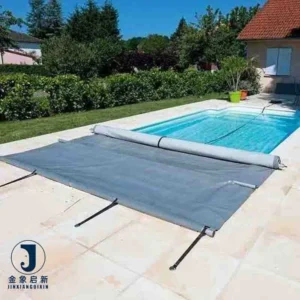
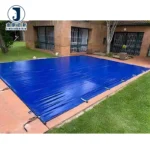
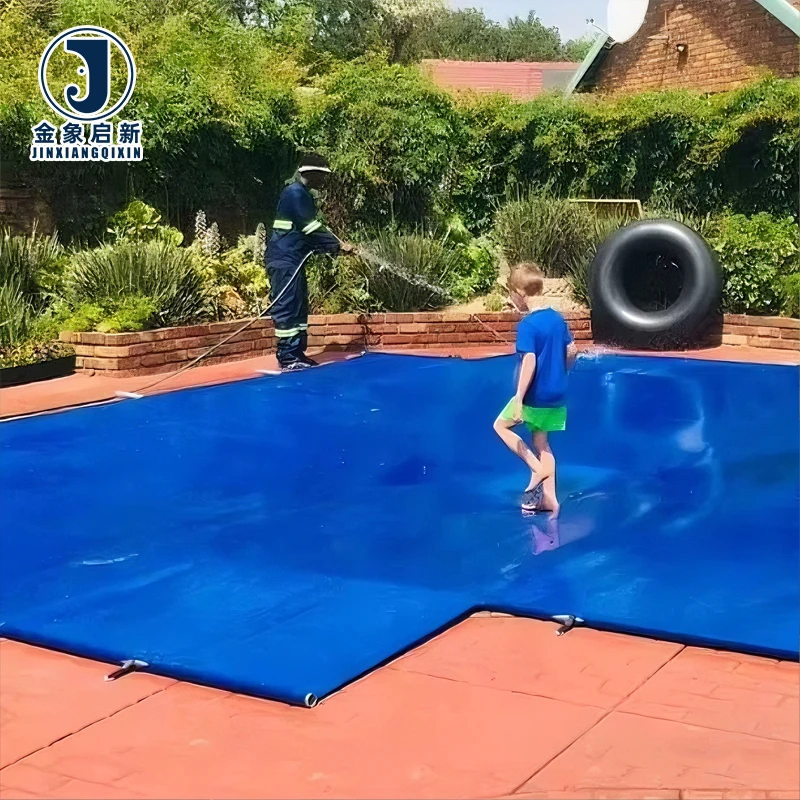
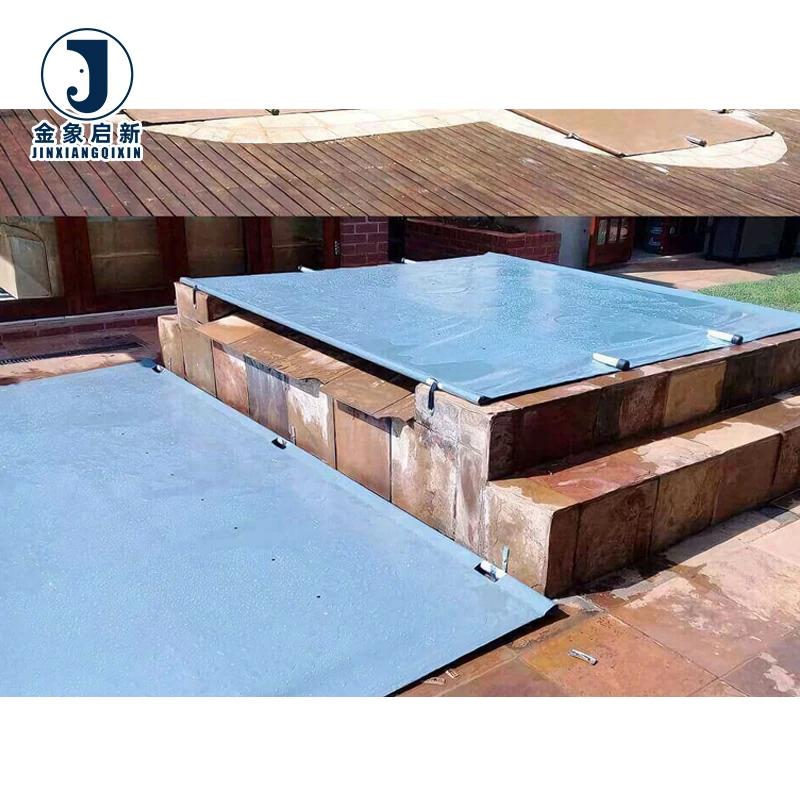
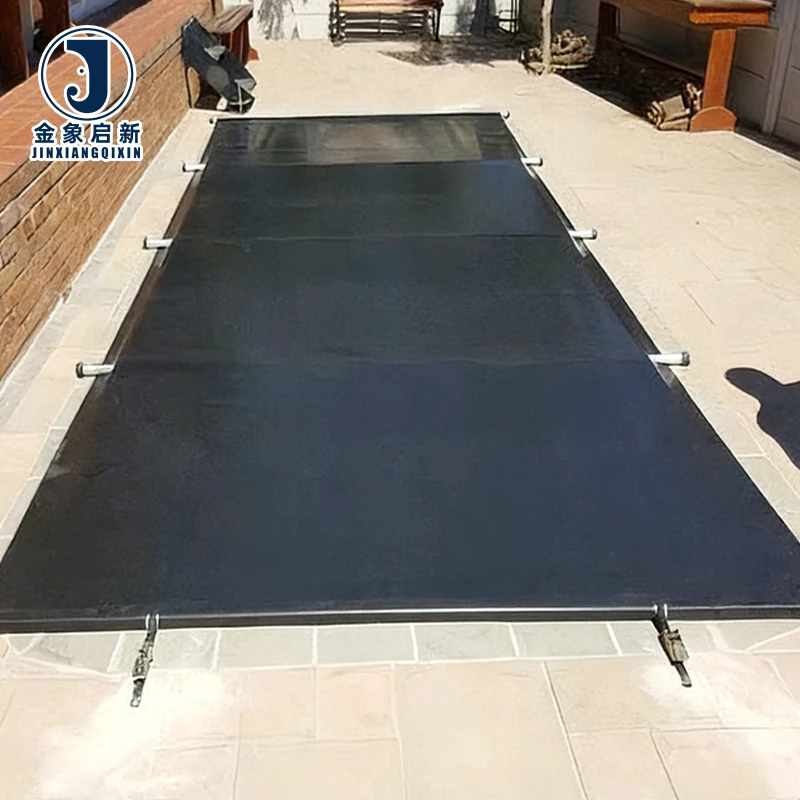
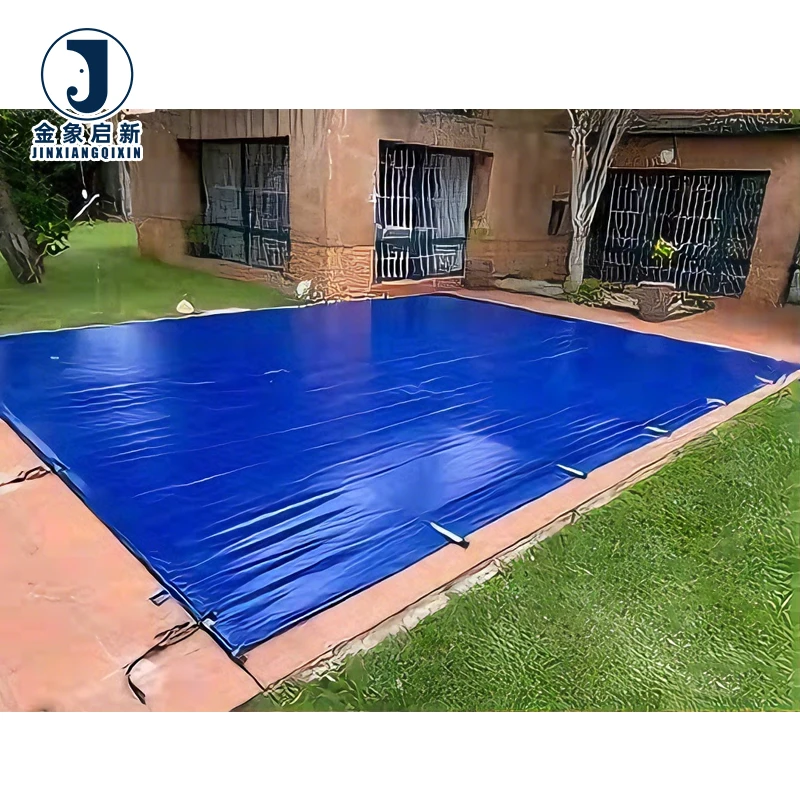
| Residential pool safety covers | Debris containment, water evaporation reduction, custom shaping for freeform pool geometries |
What Certified Compliance Actually Means for Your Pool Cover Project
A PVC pool cover tarpaulin fire retardant or anti-static claim only matters if it comes with a test report matched to your jurisdiction’s safety code.
Facility operators and contractors frequently discover that the material delivered lacks the documentation required for site inspection. [NEED_CITE: fire safety compliance standards for indoor pool enclosures and membrane structures] The gap between a verbal assurance and a verifiable certificate can delay project handover or trigger a full material replacement. When specifying a PVC pool cover tarpaulin for commercial, municipal or hospitality installations, the compliance paperwork is as critical as the fabric itself.
Coating Adhesion and Seam Integrity in Wet Environments
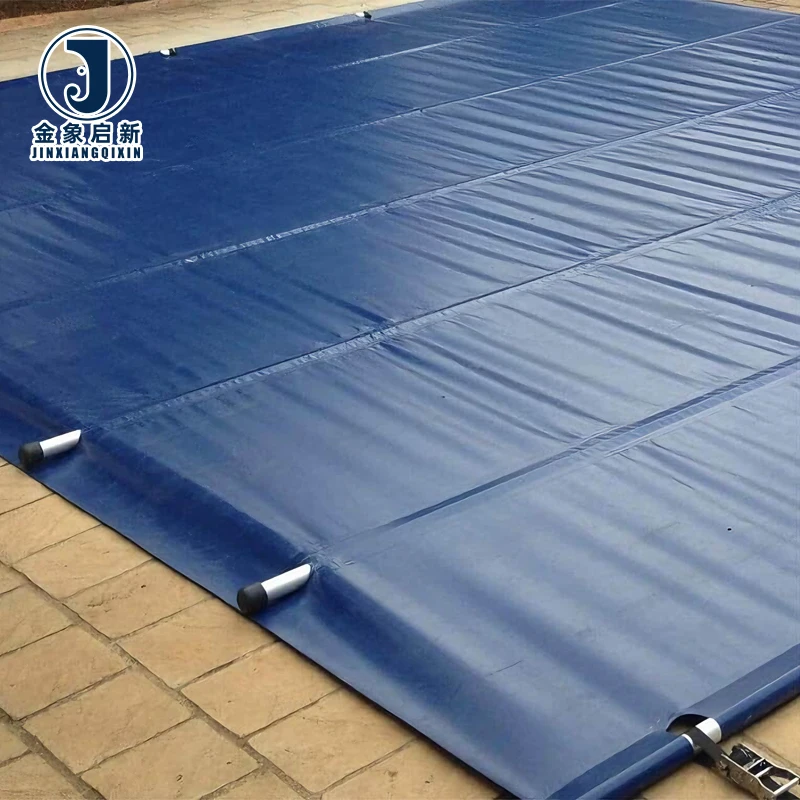
The laminated technology and hot-melt coating process bonds the PVC layers directly to the high-tenacity polyester mesh, creating a unified structure that resists delamination under constant moisture exposure. This matters for PVC pool cover tarpaulin applications where the fabric sits over water for extended periods and experiences repeated tension cycles from wind or installation hardware. Strong adhesion between coating and base fabric directly influences how well welded seams hold under load.
Treatment Options for Safety-Regulated Pool Facilities
Flame retardant grades are available in this PVC pool cover tarpaulin range as a special treatment — confirm the grade required for your market and whether your project demands certification to standards such as DIN 4102, NFPA 701, or local building codes. [NEED_CITE: flame retardant classification systems for textile building materials] Anti-static treatment is also offered for environments where static discharge near electrical equipment must be controlled, though surface resistance values should be verified against your facility’s specification before ordering.
Understanding GSM, Thickness and Base Fabric Interaction
The available weight range from 350gsm to 750gsm corresponds to thickness options from 0.32mm to 0.65mm, but these numbers alone do not determine performance. The high-strength polyester mesh fabric provides the structural backbone — its denier and weave density control tensile and tear resistance, while the PVC coating weight adds waterproofing, abrasion resistance and UV protection. A 500gsm fabric with a dense base weave may outperform a 600gsm fabric with a looser construction in tear propagation resistance. Laminated coating technology typically delivers stronger peel adhesion than simple knife-over-roll methods, which means welded seams on pool covers are less likely to separate at the bond line during long-term tensioning.
The Hidden Cost of Specifying Without Verification
Ordering PVC pool cover fabric based on a quoted GSM without verifying weight on arrival leads to material that flexes, sags or tears earlier than expected under pool cover tension loads. [NEED_CITE: tensile and tear test methods for coated fabrics per ISO 1421] Colour variation between rolls in the same shipment becomes visible once panels are installed side by side on a resort pool deck, triggering aesthetic rejection even when the material is functionally sound. Flame retardant or anti-static treatments claimed at inquiry stage but unsupported by test documentation can halt a commercial pool project at the compliance audit stage, forcing costly re-ordering and programme delays.
Why Source This PVC Pool Cover Fabric Here
Three full production lines and 36 sets of professional equipment provide the capacity to deliver bulk roll orders on schedule without compromising coating consistency. The 10-person R&D team handles material selection and sample development, producing custom-sized pool cover panels within days for project approval. [NEED_CITE: quality control procedures for coated fabric manufacturing] Each roll undergoes dedicated QA/QC inspection at every production stage with 100% verification before shipment, so the GSM, colour and treatment you specified is what arrives on site. ISO and CE certified processes underpin the documentation package that accompanies every dispatch, supporting your compliance requirements from procurement through to installation sign-off.
Documentation & Verification
- Material specification sheet stating exact GSM, base fabric, coating method and thickness per roll
- Test reports for flame retardant and anti-static grades where applicable, matched to project requirements
- Weight verification per roll against the stated GSM before dispatch
- ISO and CE certificates included with full documentation package
- Certificate of origin and customs support documentation for international shipments
- Pre-shipment inspection record with roll-by-roll verification data
Fabrication, Handling & Storage
- Heat-weld seams using parameters matched to the laminated coating thickness — test weld on offcuts of the same GSM grade before production runs
- Store rolls horizontally on pallets in covered areas to prevent creasing that becomes permanent in heavier grades like 750gsm
- Allow cold-stored rolls to reach ambient temperature before unrolling to avoid cracking the PVC coating at low temperatures
- Use compatible PVC-based repair adhesives for field patches, matching the hot-melt coating chemistry for proper bond strength
- Plan panel cutting layouts around the 2m or 2.1m roll width to minimise waste and reduce the number of welded seams across large pool spans
- Clean surfaces with non-solvent detergents to preserve the anti-mildew and anti-static treatment layers
Request a Specification Match
To receive an accurate quotation, provide your pool dimensions or roll quantity requirements, the GSM grade you have specified, and any fire-retardant or anti-static certification your project demands. Indicate whether you need finished custom-sized covers or roll stock for your own fabrication, and confirm the colour reference from our standard range or your custom requirement. Sample panels can be developed for your approval before full production commences.
Frequently Asked Questions
Q: What fire-retardant grades are available for pool cover fabric and which standards do they meet?
A: Flame retardant treatment is available as a special option across the PVC laminated pool cover range. The specific grade and corresponding test standard must be confirmed based on your project’s compliance requirements — whether that is DIN 4102, NFPA 701, or a local building code. Request the applicable test report at inquiry stage so documentation ships with your order.
Q: How is anti-static performance verified and what surface resistance values can be provided?
A: Anti-static treatment is available for pool cover environments near electrical aeration or filtration equipment. Surface resistance values and the test method used for verification should be confirmed against your facility specification before production. Request the test data at quotation stage to ensure compliance with your site’s static discharge control requirements.
Q: How do you confirm GSM on arrival matches the quotation for each roll?
A: Every roll undergoes weight verification against the stated GSM during the pre-shipment inspection process. A roll-by-roll inspection record is included with your shipment documentation, allowing you to cross-reference the delivered material against your original specification without relying on sample-based assumptions.
Q: What certifications and test reports ship with each order for site compliance audits?
A: Each dispatch includes a material specification sheet, ISO and CE certificates, pre-shipment inspection records and, where applicable, test reports for flame retardant or anti-static grades. A certificate of origin and full customs documentation are also provided to support international shipments and site compliance verification.
Q: How are custom-shaped pool covers manufactured and tensioned using aluminium bar or hook systems?
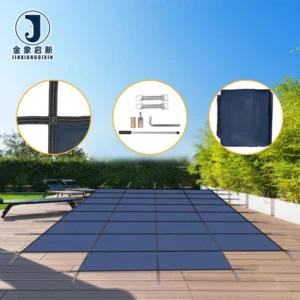
A: Custom covers are fabricated from the PVC laminated pool cover fabric using heat-welded seams matched to the panel geometry. Installation compatibility with aluminium bar and ratchet tensioner systems or hook-based anchoring depends on edge reinforcement specifications — provide your pool dimensions and preferred fixing method so the edge detail can be engineered accordingly.