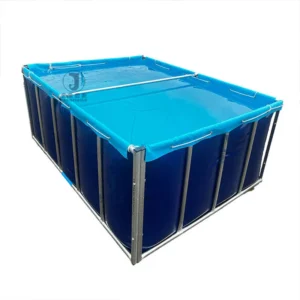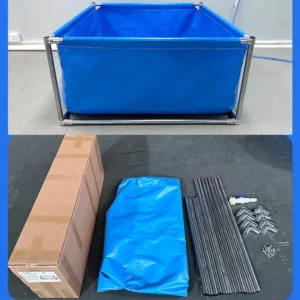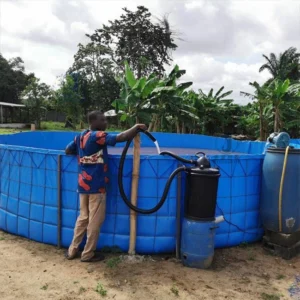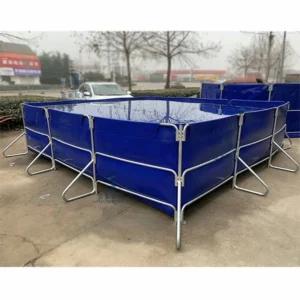


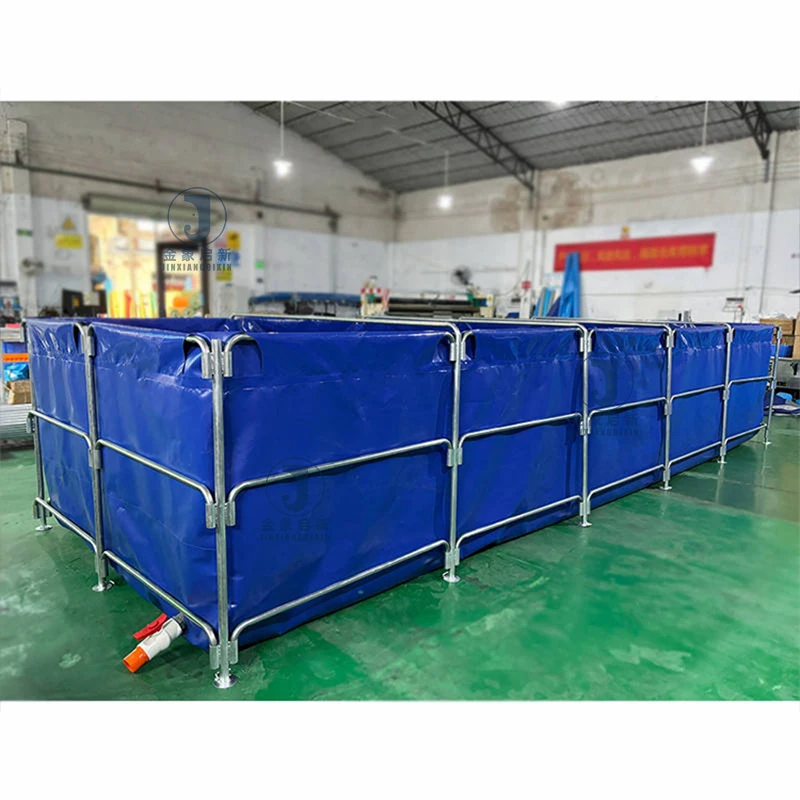
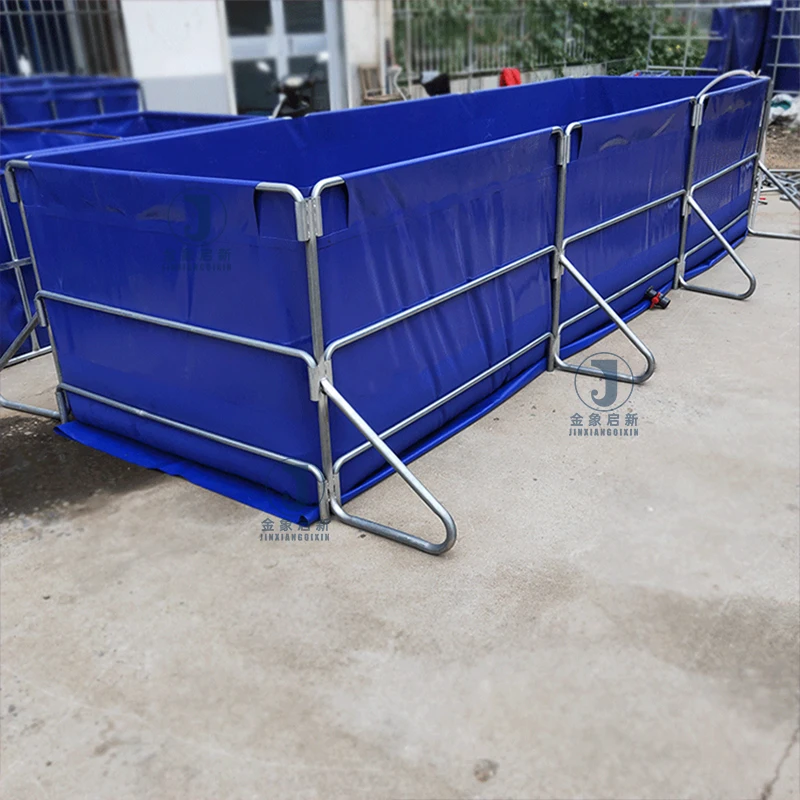
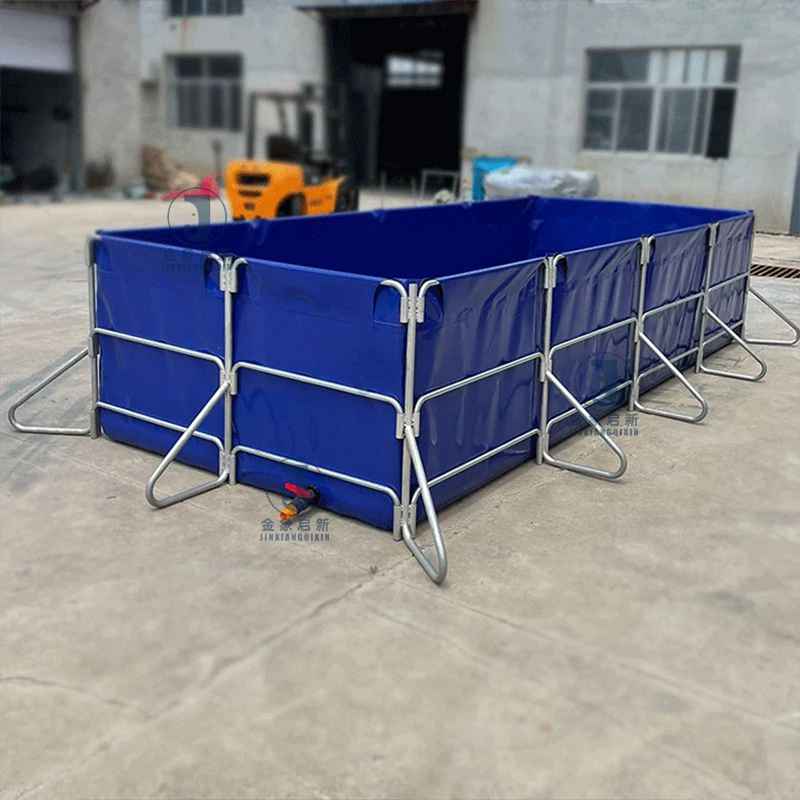
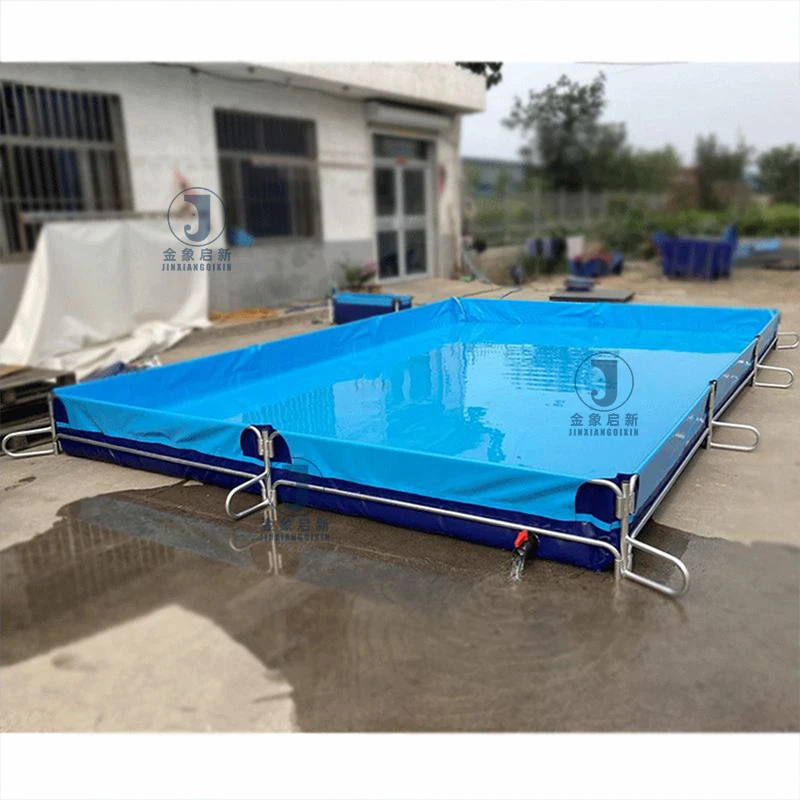
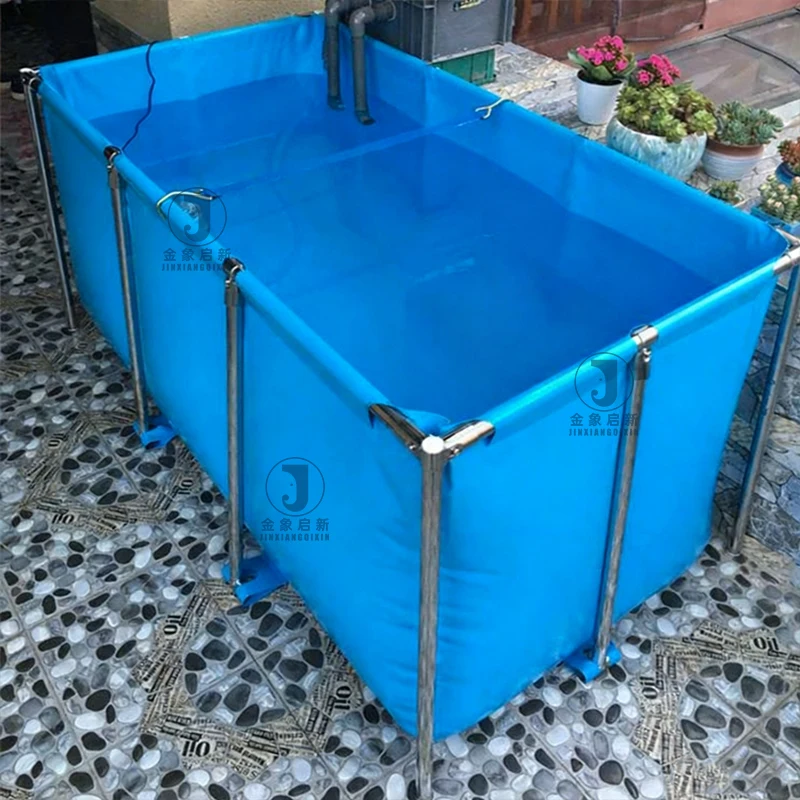
Coated Fabric Control — three full production lines and 36 sets of professional equipment deliver consistent PVC coating adhesion across every roll, so pond liner welds hold where water pressure concentrates most.
Technical Specifications
| Parameter | Value |
|---|---|
| Product Type | PVC Tarpaulin Fish Pond Liner |
| Material | Polyester base fabric with double-sided PVC coating |
| Yarn Count Options | 500D×840D / 500D×1000D / 1000D×1000D / 1000D×1300D / 1300D×1300D / 1000D×2000D |
| Weight (GSM) | 350 / 400 / 420 / 500 / 600 / 650 / 750 / 900 g/m² |
| Thickness | 0.29 mm (400 GSM) / 0.32 mm (420 GSM) / 0.38 mm (500 GSM) / 0.44 mm (600 GSM) / 0.46 mm (650 GSM) / 0.55 mm (750 GSM) / 0.65 mm (900 GSM) |
| Mesh Density | 30×19 (350–500 GSM) / 20×20 (600–750 GSM) / 30×15 (900 GSM) |
| Tensile Strength (Warp) | 1650 N (350 GSM) to 3900 N (900 GSM) |
| Tensile Strength (Weft) | 1600 N (350 GSM) to 3500 N (900 GSM) |
| Key Features | Waterproof, water resistant, anti-UV treatment available — confirm test basis for your market, flame retardant grades available — confirm the grade required for your site |
| Shape Options | Circular, rectangular, foldable |
| Repair Method | Hot air welding |
| Certifications | ISO, CE |
Application Suitability
| Application | Exposure & Requirement |
|---|---|
| Commercial fish farming ponds | Permanent water contact, sustained hydrostatic load, substrate abrasion, outdoor UV exposure |
| Shrimp and tilapia aquaculture tanks | Clean non-toxic PVC surface, frequent draining and refilling cycles, bio-fouling resistance |
| Agricultural water storage reservoirs | Long-term containment, soil chemistry interaction, puncture risk from rocky subgrades |
| Hatchery and nursery tanks | Smooth interior for hygiene, repeated cleaning, moderate water depth |
| Temporary or relocatable pond setups | Foldable construction, rapid deployment, repeated folding and unfolding stress |
Why "Anti-UV" and "Flame Retardant" Mean Nothing Without a Test Report
A PVC pond liner for aquaculture is only as reliable as the documentation that travels with it.
Many buyers specify anti-UV or flame retardant treatment at the inquiry stage, then receive rolls with no test report attached. The coating may look identical, but without a stated standard or exposure duration, there is no way to verify that the additive package was actually applied at the concentration needed for your climate. For outdoor fish ponds exposed to direct sunlight year-round, this gap between quotation and delivery can mean premature surface chalking and loss of tensile integrity. [NEED_CITE: test methods for UV resistance in coated fabrics per ISO 4892]
Coating Adhesion and Weld Integrity in Pond Environments
The PVC tarpaulin fish pond liner relies on double-sided PVC coating bonded to a high-denier polyester base. What separates a liner that lasts from one that leaks at the seams is coating adhesion — the degree to which the PVC layer bonds to the woven scrim and to itself during hot air welding. When adhesion is weak, the weld line becomes the first failure point under hydrostatic pressure, peeling apart before the fabric body shows any sign of stress. Our coating process controls weight and penetration at every pass, so the welded joint carries the same load as the parent material.
Selecting Denier and GSM for Water Load and Substrate
Choosing the right PVC pond liner for aquaculture starts with matching base fabric denier and GSM to pond depth and substrate conditions. A 500D×840D base at 350 GSM suits shallow nursery tanks with minimal ground contact, while a 1000D×2000D base at 900 GSM handles deeper reservoirs where water column pressure and rocky subgrade demand higher tensile and puncture resistance. The mesh density shifts across grades — from 30×19 in lighter weights to 30×15 in the heaviest — balancing yarn thickness with weave tightness to control tear propagation. [NEED_CITE: relationship between denier, mesh count, and tear strength in PVC coated polyester]
Reading the Specification Sheet Beyond GSM
GSM alone does not tell you how a pond liner will behave under sustained water load. The base fabric denier determines individual yarn strength, while mesh density governs how those yarns distribute force across the weave. A 650 GSM liner built on 1000D×1300D yarn at 20×20 mesh will resist tear propagation differently than one built on a lighter yarn at higher density, even at the same weight. The PVC coating method — whether knife-over-roll, dip, or calender — affects peel strength and hot air weld behaviour. Thicker coatings improve puncture resistance but require adjusted welding temperature and speed to achieve full fusion without burning through. Flame retardant grades, where specified, alter the plasticiser balance and can shift the thermal window for welding. Understanding these interactions prevents specification errors that only surface after the pond is filled and under pressure.
The Hidden Cost of Under-Specifying Pond Liner Material
A buyer who selects a PVC pond liner for aquaculture based on price per square metre alone often faces costs that appear only after installation. Lighter-grade material may stretch under water load, pulling welded corners apart at the stress points. Liners supplied without verified UV treatment chalk and embrittle within a single season in high-sunlight regions, requiring full replacement rather than a repairable patch. [NEED_CITE: common failure modes in PVC pond liners under prolonged UV and hydrostatic exposure] When rolls from the same shipment vary in thickness or coating weight, some panels flex more than their neighbours, concentrating load on the stiffer sections and accelerating fatigue at the weld lines.
Why Technical Buyers Source This PVC Pond Liner Here
Nearly 30 years of focused coated fabric production means process parameters for PVC adhesion and coating weight are dialled in, not guessed. Three full production lines and 36 sets of equipment support bulk roll output with consistent GSM from first metre to last. A 10-person R&D team develops samples for custom pond dimensions, shapes, and colour requirements within days, not weeks. Dedicated QA/QC checks coating weight, colour, and thickness at every production stage, with 100% pre-shipment inspection before any roll leaves the facility.
Documentation & Verification
- Material specification sheet stating exact GSM, base fabric denier, mesh density, and coating weight
- Test report for UV resistance and flame retardant grades where applicable, citing the standard used
- Pre-shipment inspection record confirming colour, thickness, and coating consistency roll by roll
- Certificate of origin and customs documentation for international shipment
- Roll packing list matching dispatched quantities to purchase order line items
Fabrication, Handling & Storage
- Hot air welding temperature must match the selected GSM grade — heavier grades need higher heat and slower speed for full fusion
- Store rolls horizontally on pallets to prevent edge creasing that transfers into the installed pond liner surface
- Avoid dragging PVC coated fabric over sharp aggregate during installation to protect the coating layer from puncture
- Field puncture repair uses the same hot air welding method and offcut material from the original roll
- Clean liner surfaces with neutral pH detergent to preserve PVC plasticiser balance and anti-UV treatment integrity
- Unfold liner at ambient temperature above 5 °C to prevent cold-crease cracking in the PVC coating
Specifying Your Pond Liner Requirement
To move from inquiry to quotation, share your pond dimensions, shape preference, and water depth so we can recommend the correct denier and GSM grade. Specify whether your site requires flame retardant or anti-UV documentation and which standard your local authority recognises. Let us know your annual roll volume and whether you need factory-cut panels or full rolls for on-site fabrication.
Frequently Asked Questions
Q: How do I choose the right GSM grade for my pond depth and fish species?
A: Deeper ponds exert higher hydrostatic pressure on the liner, requiring heavier GSM and higher-denier base fabric to resist stretching and tear propagation. Species with sharp claws or aggressive feeding behaviour increase puncture risk. Share your pond depth, substrate type, and species so we can match the grade to your actual load conditions.
Q: Can the liner be custom-cut to fit non-standard pond dimensions?
A: Yes. Circular, rectangular, and foldable configurations are available in custom sizes. We develop a sample within days for your approval before bulk production, confirming fit, weld line placement, and material handling on your specific pond geometry.
Q: What seam welding method is recommended for field installation?
A: Hot air welding is the standard method for joining PVC coated polyester pond liner panels. Welding temperature and travel speed must be adjusted to the selected GSM grade. Offcut pieces from the same roll serve as test samples to dial in machine settings before welding the main seams.
Q: Are UV and flame retardant certifications available with shipment?
A: Anti-UV treatment and flame retardant grades are available — confirm the specific test standard or grade your market requires at the inquiry stage. Where applicable, the test report citing the standard ships with the documentation package alongside the material specification sheet.
Q: How do I repair a puncture or seam failure in the field?
A: Cut a patch from offcut material of the same GSM grade, clean the area, and apply hot air welding to fuse the patch to the liner surface. The double-sided PVC coating bonds the patch at the molecular level, restoring waterproof integrity at the repair point.