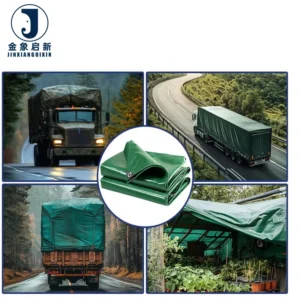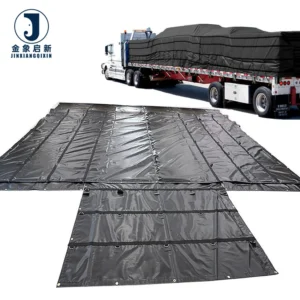
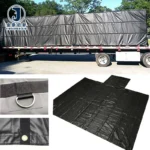
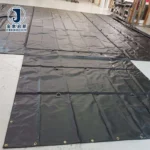
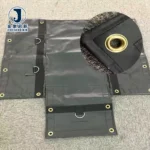
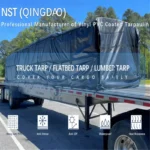
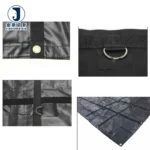
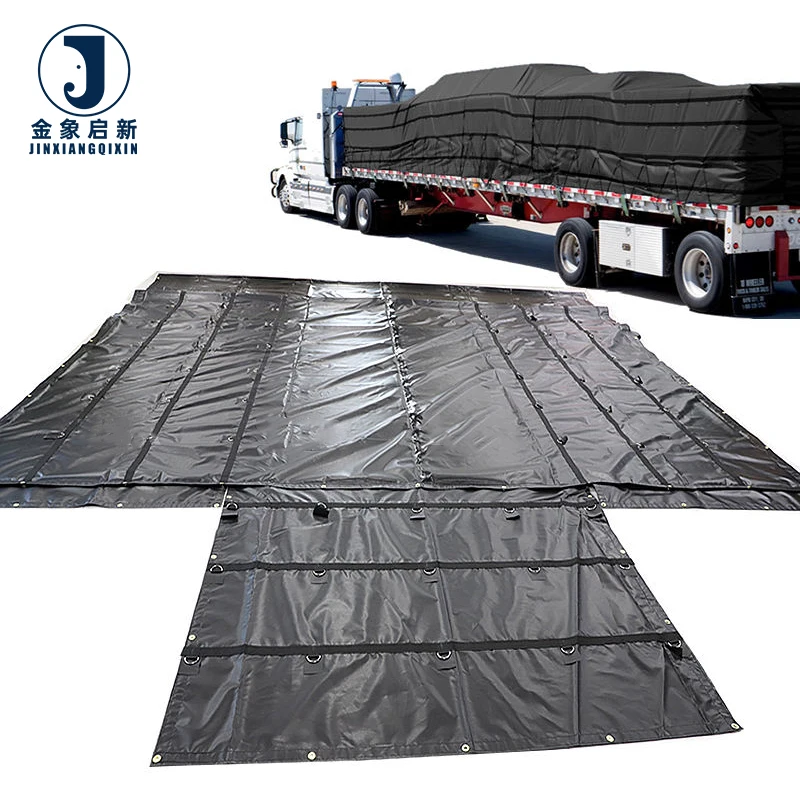
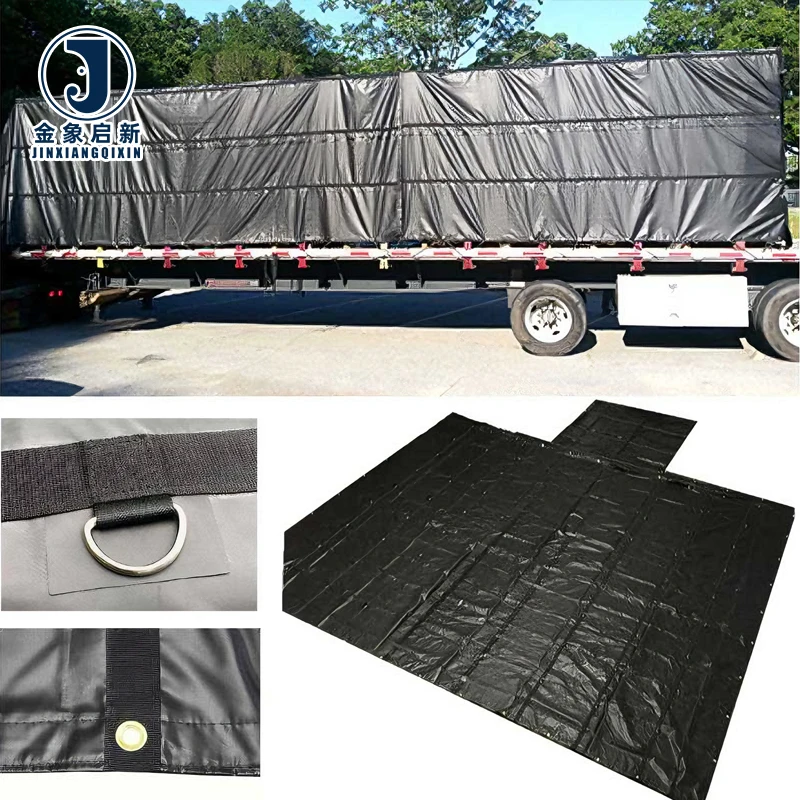
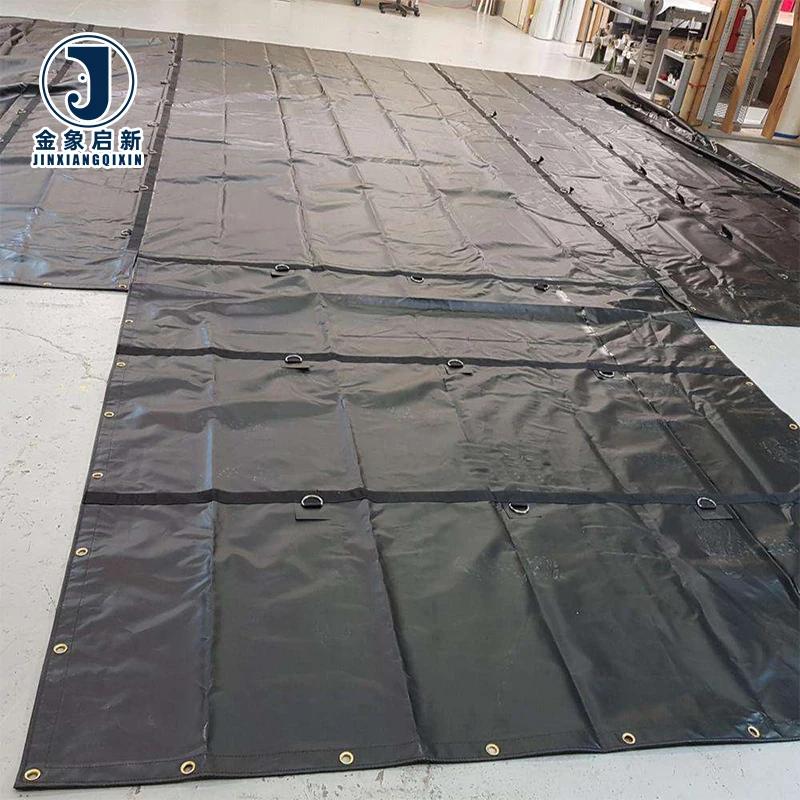
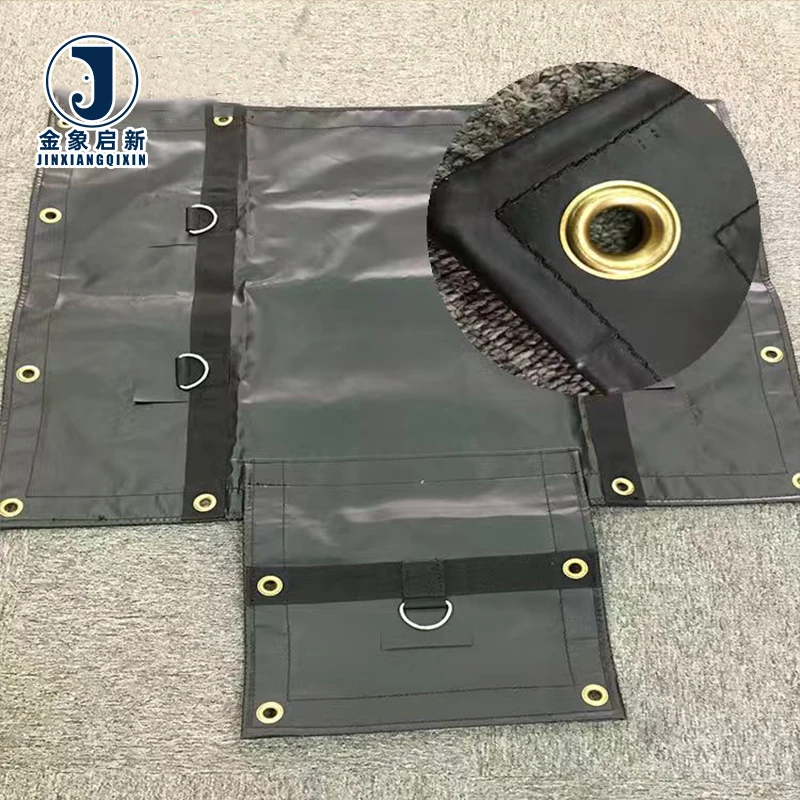

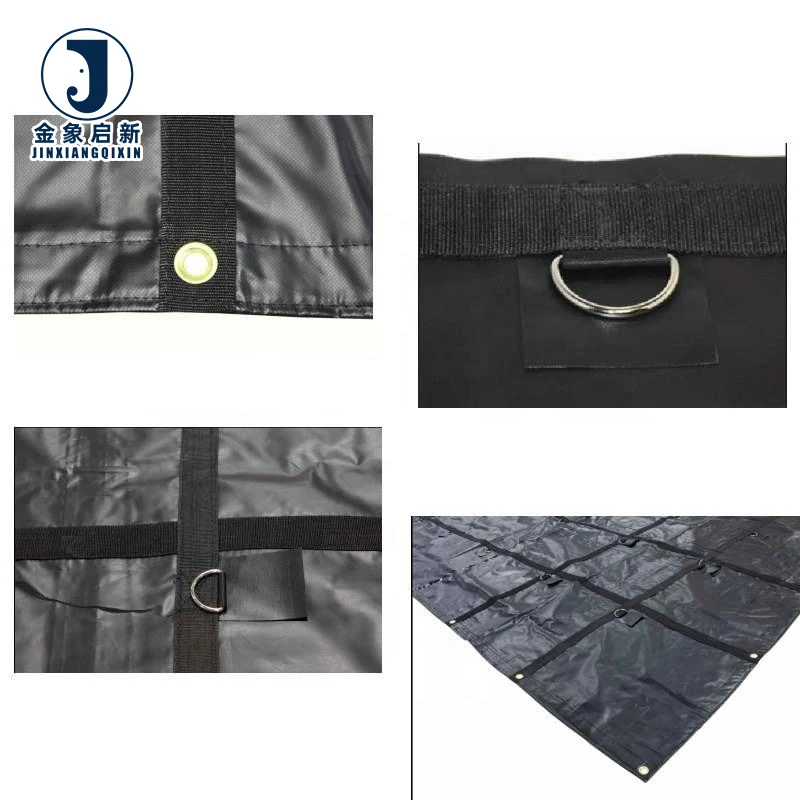
Deep process control — Nearly three decades focused on coated fabric production enables strict control over coating weight and adhesion, directly addressing the gap between quoted specifications and delivered material for flatbed truck tarpaulin applications.
Technical Specifications
| Parameter | Value |
|---|---|
| Product Type | PVC Coated Truck Tarpaulin |
| Weight Options | 12oz / 14oz / 15oz / 18oz |
| Base Fabric | RipSTOP |
| Coating Material | PVC (Vinyl) |
| Drop Length | 8′ |
| Configuration | 1PC / 2PC / 3PC options |
| Waterproof | Stated |
| Abrasion Resistance | Stated (test basis not stated) |
| Anti-Mildew | Stated |
| Anti-Pull Reinforcement | Stated |
| Standards | ISO, CE |
Application Suitability
| Application | Exposure & Requirement |
|---|---|
| Flatbed semi-truck lumber haulage | Continuous road vibration, tie-down strap abrasion, rain and snow exposure requiring waterproof integrity and anti-pull reinforcement at stress points |
| Heavy-duty freight protection | Multi-piece load coverage demanding flexible 1PC/2PC/3PC configurations, resistance to load flex fatigue at welded seams |
| Building material transport | Prolonged outdoor staging, UV exposure, potential mildew from trapped moisture under tarps during extended transit delays |
Why Coated Weight Alone Does Not Guarantee a Strong Flatbed Truck Tarpaulin
Base fabric construction determines how the material behaves when a loaded trailer flexes, regardless of how heavy the coating feels.
Fleet operators frequently specify PVC truck tarpaulin by GSM or ounce weight, assuming a heavier number means a longer service life. In practice, a high-coat-weight vinyl applied over a loosely woven base fabric will crack at the weld line long before the face coating shows wear. The RipSTOP base used in this flatbed lumber tarp introduces a reinforcement grid that arrests tear propagation — a property that GSM measurements taken from a swatch simply do not capture. [NEED_CITE: tear propagation testing methods for coated fabrics]
RipSTOP Weave and Load Flex Fatigue
Flatbed cargo shifts during braking and cornering, placing cyclical stress on the tarpaulin at tie-down zones and where the fabric drapes over sharp lumber edges. The RipSTOP grid interrupts tear paths that would otherwise run unchecked across a standard plain-weave base. This matters most in 1PC configurations covering long timber loads, where a single tear compromise can expose the entire shipment to weather damage during a multi-day haul.
Welded Seam Integrity Under Tension
Where two panels are joined — common in 2PC and 3PC configurations for wider flatbed trailers — the heat-welded seam becomes the critical failure point. The anti-pull reinforcement built into this PVC truck tarpaulin targets exactly those zones. Coating adhesion to the base fabric must exceed the tensile load transferred through the tie-down system; otherwise, the coating delaminates from the weave before the weld itself opens. [NEED_CITE: coating adhesion requirements for heat-welded tarpaulin seams]
What the Ounce Ratings Actually Mean for Your Fleet
The 12oz through 18oz range covers distinct duty levels. Lighter grades suit regional hauls with moderate weather exposure, while 18oz grades address cross-country lumber transport where the tarpaulin faces sustained wind load, gravel strike, and repeated tie-down tension. The vinyl coating weight interacts directly with the RipSTOP denier: a heavier coating on a finer grid gives excellent waterproofing but may sacrifice hand flexibility in cold conditions, affecting how easily drivers deploy and stow the cover. Available in anti-mildew treated grades — confirm the treatment specification required for your operating climate.
The Cost of Underspecifying Your Flatbed Cover
Ordering by price-per-kilogram alone leads to premature replacement cycles. A tarpaulin that is lighter than the quoted weight on arrival may pass an initial visual check but fail within months at the hem and eyelet zones where load flex concentrates. Colour inconsistency between rolls in the same batch signals uneven coating application, which often correlates with variable weld strength across the order. Anti-mildew or abrasion claims unsupported by test documentation leave the buyer carrying the risk when cargo damage is attributed to tarp failure. [NEED_CITE: pre-shipment weight verification practices for coated fabric rolls]
Why Source This PVC Truck Tarpaulin Here
Three full production lines and 36 sets of professional equipment support bulk capacity with reliable on-time delivery for fleet-scale orders. A 10-person R&D team handles pattern layout and custom sizing so that 1PC, 2PC, or 3PC configurations match specific trailer dimensions rather than generic templates. Dedicated QA/QC inspection at every production stage, with 100% pre-shipment check, catches coating weight deviation and seam defects before dispatch. Samples are developed within days for custom drop lengths or reinforcement layouts, letting buyers verify weld integrity and fabric hand before committing to production volume.
Documentation & Verification
- Material specification sheet confirming RipSTOP base fabric type, vinyl coating weight, and 8′ drop dimensions
- Pre-shipment inspection record covering seam integrity and anti-pull reinforcement at tie-down zones
- Anti-mildew and waterproof test reports provided where treatment grades are specified
- Certificate of origin and customs documentation supporting cross-border fleet procurement
- Roll packing list matching batch numbers for traceability across multi-roll orders
Fabrication, Handling & Storage
- Heat-weld parameters must match the specific vinyl coating weight to avoid delamination at seams
- Reinforcement patches at tie-down zones distribute load across the RipSTOP grid effectively
- Store rolls upright on pallets to prevent permanent creasing of the PVC coating surface
- Deploy tarps above freezing temperatures to maintain vinyl flexibility during handling
- Clean with mild detergent only; abrasive solvents degrade the anti-mildew treatment layer
- Repair minor tears with vinyl-compatible adhesive patches matched to the coating weight grade
What to Include in Your Inquiry
Provide your flatbed trailer model, deck dimensions, and preferred 1PC, 2PC, or 3PC configuration so we can recommend the appropriate drop length and reinforcement layout. Specify whether your operating region requires anti-mildew treatment documentation or specific waterproof test standards. Indicate your annual volume and whether you need finished cut-and-welded units or roll stock for in-house fabrication.
Frequently Asked Questions
Q: How is the RipSTOP base fabric verified against tear propagation on arrival?
A: Each production batch undergoes inspection to confirm the reinforcement grid pattern is consistent and correctly aligned. Buyers can request pre-shipment inspection records documenting this verification. On-site, the grid structure is visible when the fabric is held against light, allowing quick visual confirmation that the specified RipSTOP construction has been supplied.
Q: What anti-mildew treatment is applied and is there a test result available?
A: Anti-mildew treatment is applied during the coating stage and is documented on the material specification sheet when specified in the order. Test reports supporting the treatment claim are available for the grade selected. Buyers operating in high-humidity climates should confirm the required treatment level at the inquiry stage.
Q: How do 1PC, 2PC, and 3PC configurations fit specific flatbed trailer models?
A: Configuration choice depends on trailer width, cargo profile, and deployment preference. Single-piece covers suit standard lumber loads, while multi-piece setups allow partial load access without removing the entire tarpaulin. The R&D team maps your trailer dimensions to recommend the configuration that minimizes weld seams at high-stress flex points.
Q: What reinforcement is provided at weld seams and tie-down zones?
A: Anti-pull reinforcement is integrated at welded seams and tie-down contact areas to address the cyclical stress caused by load flex during transit. The reinforcement strategy is matched to the selected vinyl coating weight and RipSTOP base grade, ensuring the reinforced zones outlast the surrounding fabric under normal operating conditions.
Q: What documentation supports fire-retardant or anti-static compliance if required?
A: Fire-retardant and anti-static grades are available within the product range — confirm the specific classification required for your market or job site at the inquiry stage. Where applicable, test reports and compliance certificates are supplied with the shipment documentation to support site audits and regulatory inspections.