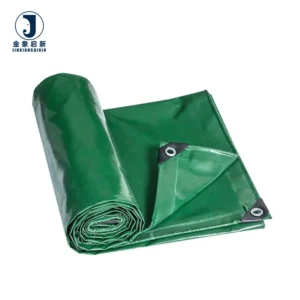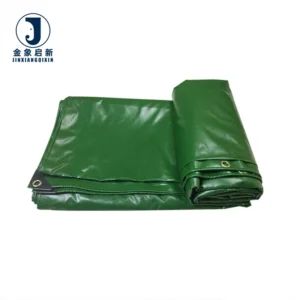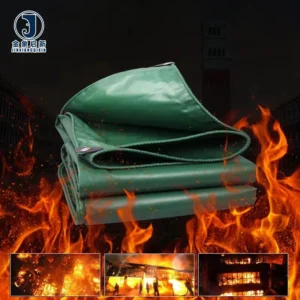
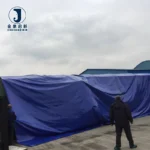

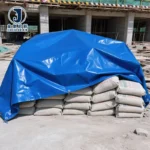

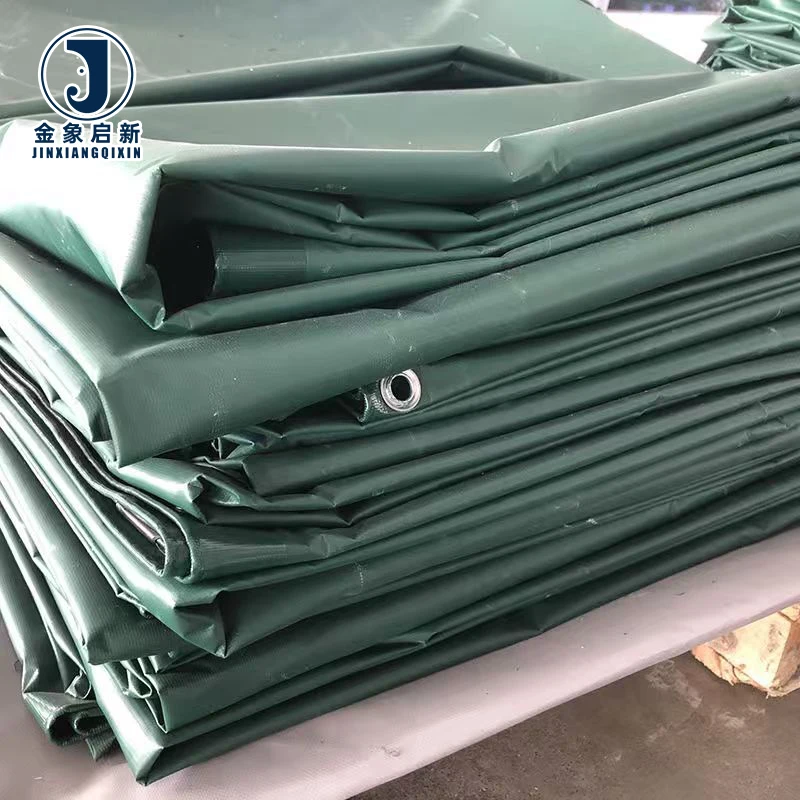
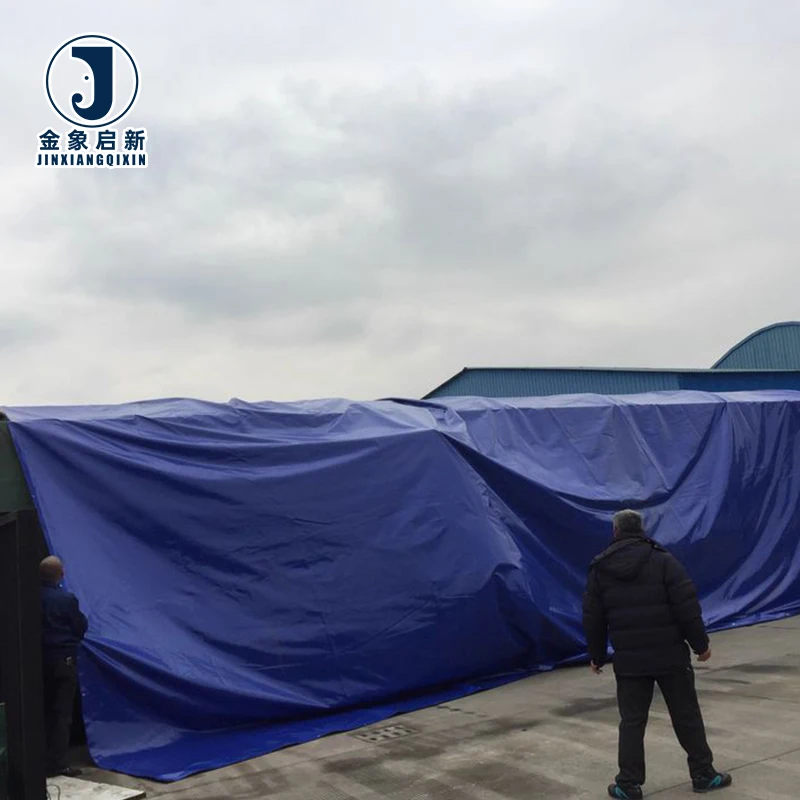
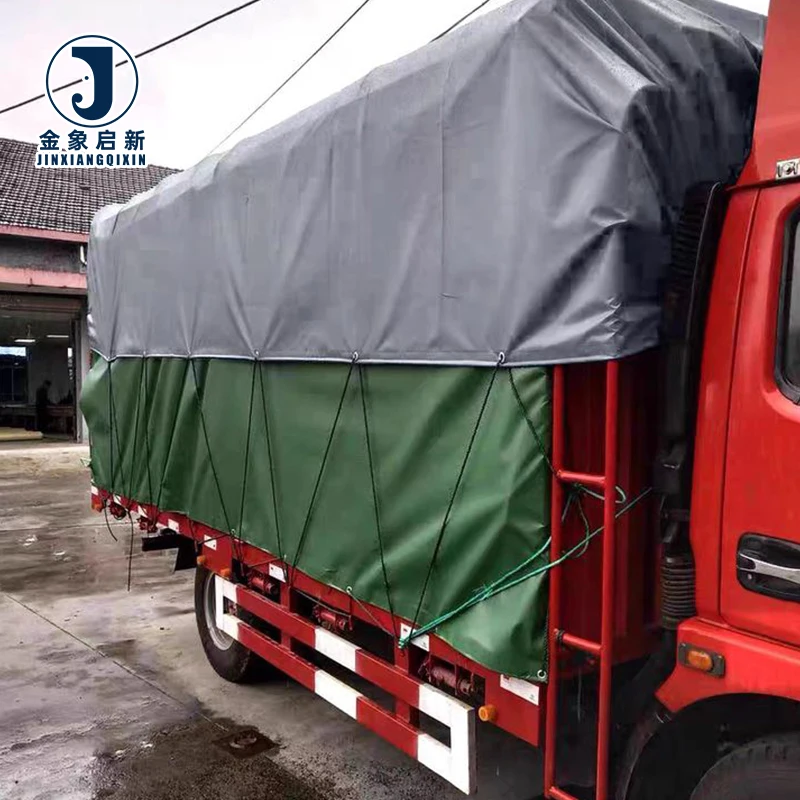
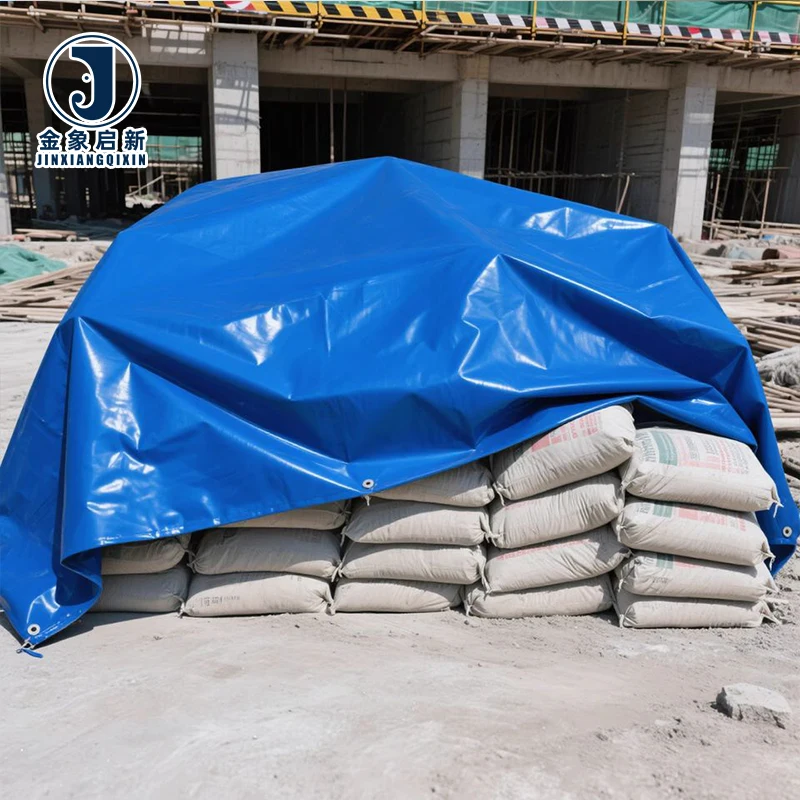

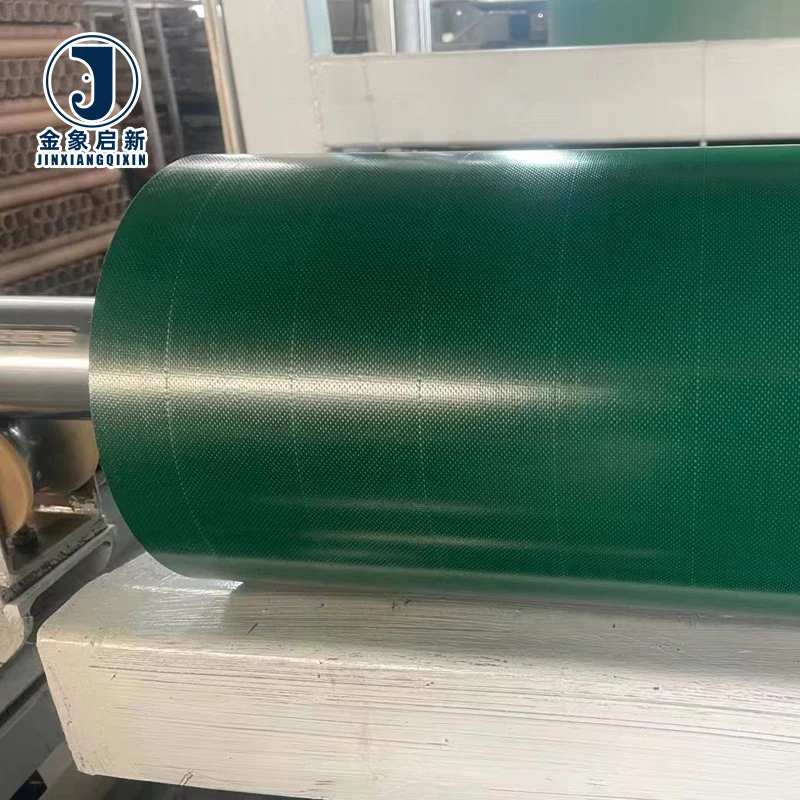
Precision Coating Control — Each roll of PVC coated tarpaulin for ventilation and specialist structures is verified against stated GSM and base fabric denier before dispatch, ensuring compliance with mining, tunnelling and aviation safety specifications.
Technical Specifications
| Parameter | Value |
|---|---|
| Product Type | PVC Coated Tarpaulin |
| Base Fabric | 100% high toughness polyester yarn |
| Coating Material | PVC |
| Coating Method | Lamination technology and hot melt coating technology |
| Base Fabric Denier | 500D (medium) / 1000D (heavy-duty) / 500D–2000D (super heavy) |
| Weight (GSM) | 400–500 (medium) / 700–1000 (heavy-duty) / 1100–1500 (super heavy) |
| Total Thickness | 0.35–0.45 mm (medium) / 0.70–1.0 mm (heavy-duty) / 1.2–1.5 mm (super heavy) |
| Tensile Strength | Longitude 1500–2000 / Latitude 1200–1800 N/5cm (medium) |
| Tensile Strength | Meridian 2000–2500 / Latitude 1800–2200 N/5cm (heavy-duty) |
| Tensile Strength | Warp 2500–3000 / Weft 2200–2800 N/5cm (super heavy) |
| Flame Retardant | Available — confirm the grade required for your market (grade not stated) |
| Anti-Static | Available — confirm surface resistance standard required (standard not stated) |
| UV Treatment | Weather resistance available (test basis not stated) |
| Anti-Mildew | Mold proof treatment available |
| Cold Resistance | Cold resistant cracking formulation available |
| Color Fastness | High color fastness formulation (grade not stated) |
| Welding Tear Strength | High-frequency welding compatible (test basis not stated) |
| Waterproof | Yes |
| Certification | ISO, CE |
Application Suitability
| Application | Exposure & Requirement |
|---|---|
| Mining and tunnelling ventilation ducts | Continuous positive and negative pressure cycling, underground moisture, mandatory fire-retardant and anti-static compliance |
| Aviation ground support ducts | Fuel vapour proximity, static discharge risk, frequent deployment and retraction |
| Temporary industrial ventilation systems | Dust-laden airstreams, mechanical abrasion from flexing, outdoor UV exposure |
| Membrane and inflatable structures | Sustained tension loads, wind uplift, long-term weather exposure |
| Specialist enclosure fabric | Controlled atmosphere environments, repeated inflation cycles, seam integrity under stress |
What Certification Gaps Cost on a Ventilation Project
A ventilation duct that arrives without the fire-retardant or anti-static certificate your site safety officer demands is not just a paperwork problem — it halts the entire installation.
Mining and tunnelling contractors specify coated fabric for air ducts expecting compliance documentation to travel with the roll. When the test report is missing, references a different product grade, or cites a standard that the local regulator does not recognise, the duct stays on the trailer while the crew stands idle. I have reviewed project delays where the fabric itself was technically adequate but the documentation trail was incomplete, forcing re-testing at the contractor’s expense [NEED_CITE: site safety compliance audits for underground ventilation materials].
This PVC coated tarpaulin for ventilation and specialist structures ships with documentation matched to the specific grade ordered, so the compliance conversation happens before production, not after delivery.
Fire-Retardant and Anti-Static Treatments for Regulated Environments
Underground mining, tunnelling, and aviation ground support environments impose specific fire safety and static dissipation requirements on every material introduced below ground or near fuel handling zones. The base polyester fabric in this PVC coated tarpaulin for ventilation and specialist structures can be formulated with flame-retardant and anti-static treatments during the coating stage. The critical step is confirming which grade and which test standard your jurisdiction requires — M2, B1 per DIN 4102, NFPA 701, or a local mining authority specification — before the production run begins. Without this alignment, a roll may pass one standard and fail the one your auditor enforces.
Coating Adhesion and Weld Integrity Under Flex Loads
Ventilation ducts in mining and tunnelling applications undergo continuous pressure cycling that flexes the fabric at every hanging point and coupling joint. The lamination and hot melt coating technology used here is selected to deliver strong adhesive bonding between the PVC layer and the polyester base, so the coating does not delaminate when the duct expands and contracts. High-frequency welding compatibility means the seam can be fused at a molecular level rather than relying solely on adhesive bonding, which is where many duct failures originate [NEED_CITE: weld seam failure analysis in flexible ventilation ducts]. The coating formulation must support consistent weld parameters across the entire roll to avoid weak spots at seam intersections.
How Denier, Coating Weight, and GSM Interact in Duct Fabric
The relationship between base fabric denier and coating weight determines how the material behaves under sustained tension and cyclic flexing. A 1000D polyester base provides higher tensile and tear resistance than a 500D base, but the coating weight must be proportionally matched — too little coating on a heavy base leaves fibre exposed to abrasion, while excessive coating on a light base adds dead weight without structural gain. Hot melt coating technology allows precise control over coating weight distribution, which directly affects the peel strength at welded seams. For membrane and inflatable structures, the total GSM influences both the inflation pressure the fabric can sustain and the handling weight during installation. Specifying denier and GSM together, rather than either in isolation, ensures the duct or structure performs as engineered [NEED_CITE: tensile and tear test methods for coated fabrics per ISO 1421].
When the Wrong Grade Reaches the Job Site
A ventilation duct fabric specified for surface-level temporary ventilation but installed in an underground coal mine faces immediate rejection if the fire-retardant grade does not match the mine’s safety plan. Similarly, anti-static performance that was not verified by a recognised surface resistance test can trigger a stop-work order in aviation fuel handling zones. I have seen contractors absorb the cost of removing installed duct, re-ordering compliant material, and re-hanging the entire run because the initial specification did not distinguish between a general-purpose flame-retardant treatment and the specific grade the regulator required [NEED_CITE: cost of ventilation duct replacement in regulated mining environments]. Batch-to-batch colour variation across rolls can also force rejection when the duct is visible in public-facing infrastructure, even though the mechanical properties are correct.
Production Capability Behind Every Roll
Deep process control over coating weight and adhesion is maintained across three full production lines and 36 sets of professional equipment, allowing consistent output for large-volume duct projects. A 10-person R&D team handles material selection, custom sizing, and sample development for project-specific formulations. Dedicated QA and QC checkpoints at every production stage ensure that GSM, coating adhesion, and treatment levels are verified in-process rather than only at final inspection. One hundred percent pre-shipment inspection with roll-level traceability means each roll can be matched back to its production batch and test record. Samples for custom widths, colours, or treatment grades are developed within days, keeping project timelines on track.
Documentation & Verification
- Material specification sheet stating base fabric denier, coating weight, and confirmed GSM per roll
- Fire-retardant and anti-static test reports matched to the grade and standard specified at order
- Pre-shipment inspection record with roll-level traceability to production batch
- Certificate of origin and customs documentation prepared for international project sites
- ISO and CE certificates included with each shipment for compliance audits
Fabrication, Handling & Storage
- High-frequency welding recommended; calibrate dwell time to the specific GSM and coating thickness of the roll
- Store rolls upright on pallets in a dry environment to prevent permanent creasing of the PVC coating
- Allow cold-stored rolls to reach ambient temperature before unrolling to avoid coating micro-cracking
- Use compatible PVC welding tape for field repairs on duct seams matching the coating formulation
- Cut with rotary or hot knife to seal edges and prevent base fabric fraying on high-denier grades
- Plan roll widths against duct circumference to minimise longitudinal weld seams in continuous runs
Request a Specification Match for Your Project
Provide the ventilation duct diameter, total linear metres required, and the fire-retardant or anti-static standard enforced at your project site. If the application involves membrane or inflatable structures, share the design wind load and expected inflation pressure so the correct denier and GSM can be recommended. Indicate whether you need rolls in stock widths or custom widths to match your fabrication setup, and confirm if third-party witness testing is required before dispatch.
Frequently Asked Questions
Q: What fire-retardant grade is available and does it meet my country’s mining safety standard?
A: Flame-retardant treatments are available in multiple grades. Share the specific standard your regulator enforces — such as M2, B1 per DIN 4102, NFPA 701, or a local mining authority code — and the production team will confirm which formulation matches. Test reports from the matched grade ship with every roll.
Q: How is anti-static performance verified and what surface resistance is achieved?
A: Anti-static treatment is applied during the coating stage. The target surface resistance range depends on your site’s classification for explosive atmospheres or fuel handling zones. Provide the applicable standard, and the QC team will verify performance through testing and include the report with your shipment documentation.
Q: What documentation ships with each roll for site compliance audits?
A: Every roll is accompanied by a material specification sheet, test reports for any specified fire-retardant or anti-static treatments, a pre-shipment inspection record with batch traceability, certificates of origin, and customs documentation. Additional project-specific certificates can be arranged before production.
Q: How do you ensure weld seam strength on duct fabric under flexing loads?
A: The hot melt coating and lamination technology produces strong adhesive bonding between the PVC and polyester base. High-frequency welding fuses the seam at the molecular level. Weld parameters are matched to the specific GSM and coating thickness, and peel tests are conducted during production to verify seam integrity.
Q: Can custom widths and lengths be produced for non-standard duct diameters?
A: Yes. The production lines handle custom widths to match specific duct circumferences, reducing longitudinal seams and fabrication waste. Provide your duct diameter and required roll length, and the team will confirm available widths, lead time, and any minimum order requirements for the custom run.