Certified Technical Fabric Supply — Every batch of this PVC coated tarpaulin ships with the fire-retardant or anti-static test report and compliance documentation your site auditor requires.
Technical Specifications
| Parameter | Value |
|---|---|
| Product Type | PVC Coated Tarpaulin |
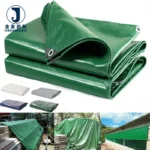
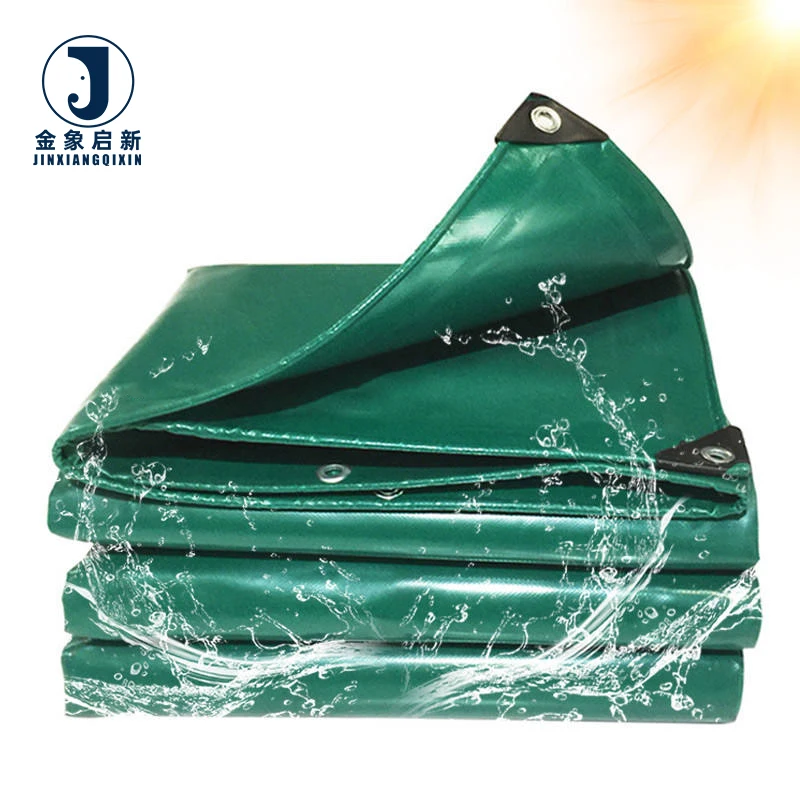
| Material | Polyester Base Fabric + Double-Sided PVC Coating |
| Weight Range | 500gsm – 1000gsm |
| Base Fabric Denier | 500D×840D / 500D×1000D / 1000D×1000D / 1000D×1300D / 1300D×1300D / 1000D×2000D |
| Mesh Count | 30×19 / 20×20 / 30×15 |
| Total Thickness | 0.29mm / 0.32mm / 0.38mm / 0.44mm / 0.46mm / 0.55mm / 0.65mm |
| Tensile Strength (warp) | Up to 3900N (test basis not stated in source) |
| Tensile Strength (weft) | Up to 3500N (test basis not stated in source) |
| Density | 1.15-2.00 g/cm³ |
| Material Tensile Strength | 50-80 MPa |
| Brittle Temperature | ≤ -50~-60°C |
| Softening Temperature | ≥ 80°C |
| Melting Point | 212°C |
| Flame Retardant | Available — confirm the grade required for your market (grade not stated in source) |
| Anti-Static | Available — confirm compliance standard required (grade not stated in source) |
| UV Treatment | Available — confirm test standard for your region (test basis not stated in source) |
| Key Features | Waterproof, Anti-Mildew, Heavy Metal Free, Flexible, Self-Clean |
| Fabrication Compatibility | High frequency hot melt, Hot air, Sewing |
| Printing | Customized |
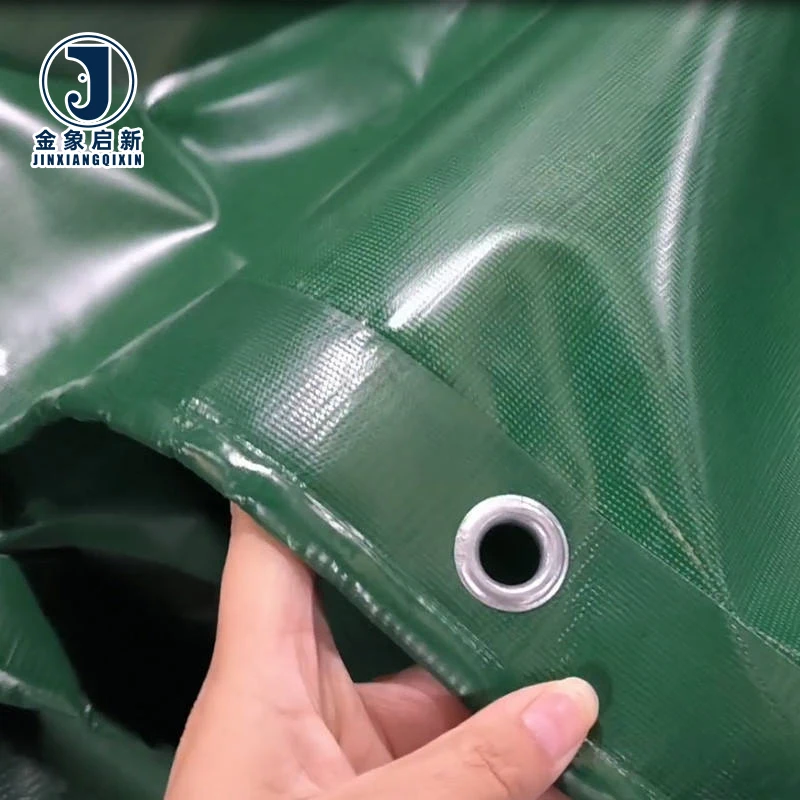
| Edge Construction | 5mm thick rope without splicing, high temperature heat sealed seamless edge wrapping |
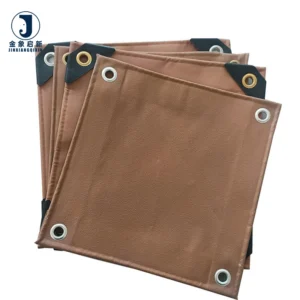
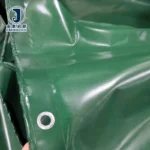
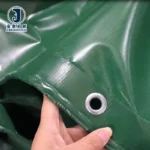
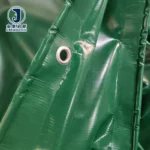
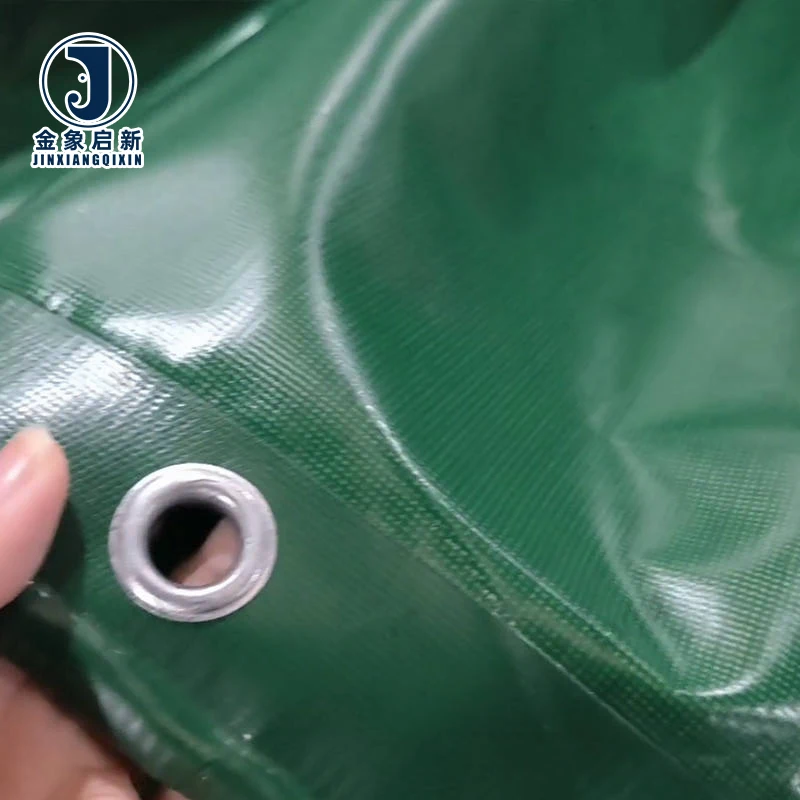
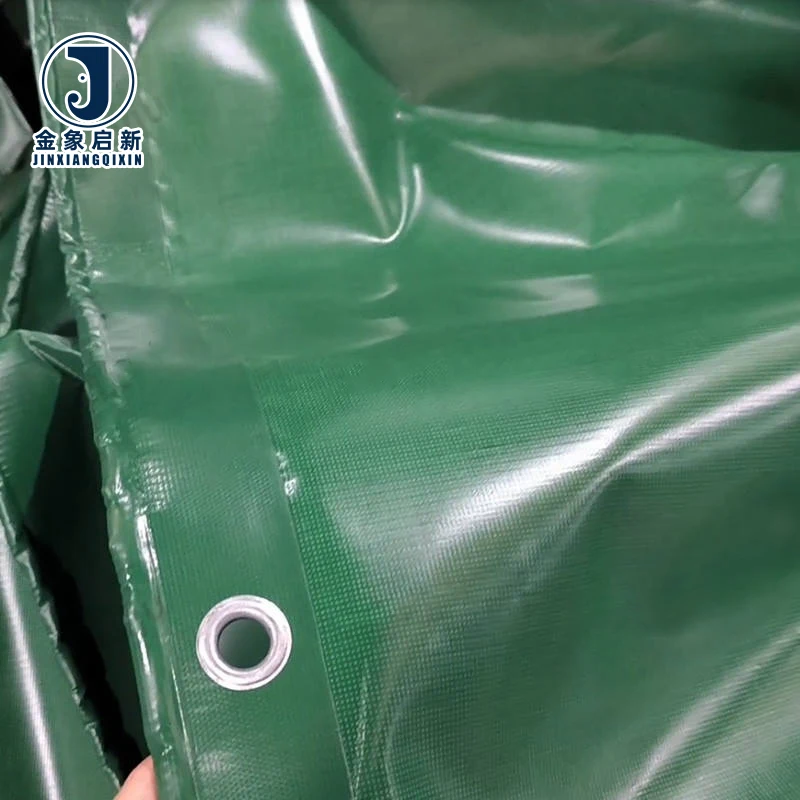
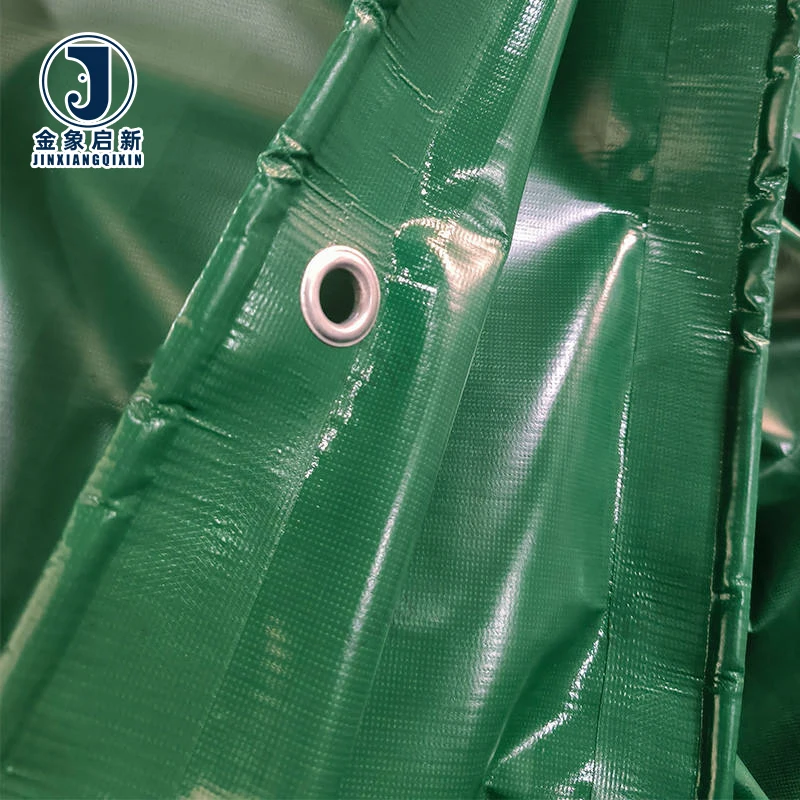
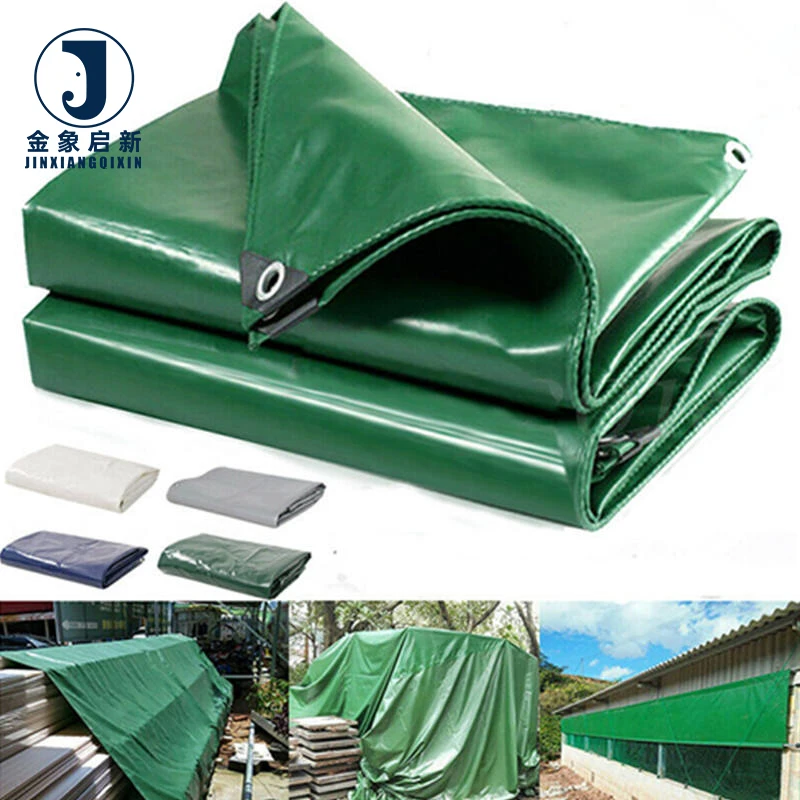
| Eyelets | 3cm enlarged aluminum alloy buttonhole, reinforced corners |
| Standards | ISO and CE certified |
Application Suitability
| Application | Exposure & Requirement |
|---|---|
| Mining ventilation duct | Continuous high-pressure airflow, underground fire hazard zones, mandatory fire-retardant certification for site compliance |
| Tunnelling air duct | Confined space with dust and debris, positive-pressure flex, anti-static requirement where explosive atmospheres exist |
| Aviation ground support duct | Hangar and tarmac UV exposure, fuel-adjacent anti-static compliance, frequent relocation and redeployment |
| Membrane structure fabric | Tension loading under wind uplift, long-term UV and weather exposure, fire code for occupied spaces |
| Inflatable structure fabrication | Repeated inflation cycles, seam integrity under internal pressure, portable and semi-permanent installations |
Why "Fire Retardant" Without a Grade Behind It Is a Liability
A ventilation duct arrives on a mining site and the safety inspector asks for the fire classification certificate. If the fabric supplier wrote "fire retardant" on the quotation but never specified which standard was tested, that shipment fails inspection before it is ever installed. Certified PVC coated tarpaulin means the fabric ships with a test report naming the exact standard — DIN 4102, NFPA 701, M2, or whichever code your destination market enforces. Procurement teams sourcing for underground or enclosed environments repeatedly discover that ungraded flame-retardant claims collapse under audit [NEED_CITE: DIN 4102 fire classification for building materials]. The cost is not just the rejected roll — it is the delay to ventilation commissioning, the contractor penalty for missed milestones, and the loss of credibility with the site operator. When a tunnelling project in one region required anti-static compliance and the duct fabric had no surface resistance data, the entire run was quarantined and replaced at the buyer’s expense.
Airflow Pressure and Duct Seam Integrity Under Load
Industrial ventilation ducts operate under constant positive or negative pressure, meaning the fabric must resist cyclic stress at every welded seam. PVC coated tarpaulin for duct construction requires a base fabric denier and GSM matched to the airflow specification — undersized fabric flexes excessively and accelerates seam fatigue. High frequency hot melt and hot air welding are both compatible with this coated fabric, enabling fabricators to select the method that suits their production line and the airtightness standard required. The double-sided PVC coating provides a uniform welding surface on both sides, which matters when duct sections overlap at junctions and branch points.
Fire-Retardant and Anti-Static Compliance for Regulated Environments
Mining, tunnelling and aviation sectors enforce fire and static safety codes that generic tarpaulin suppliers often cannot document. This PVC coated tarpaulin is available in flame-retardant and anti-static formulations, but the grade must be confirmed against the specific standard your market requires before production begins. For underground mining, the relevant fire classification differs between jurisdictions — some reference DIN 4102 B1, others mandate NFPA 701 or local equivalents [NEED_CITE: fire safety classification standards for underground mining ventilation ducts]. Anti-static surface resistance becomes mandatory wherever explosive dust or gas atmospheres are present. Request the applicable test report during the sampling stage, not after the container arrives.
How Base Fabric and Coating Weight Determine Duct Performance
The tensile and tear performance of a PVC coated tarpaulin depends on the interaction between base fabric denier, mesh count, and coating weight — not GSM alone. A 1000D×1300D base at 30×15 mesh distributes load across fewer but heavier yarns, producing a fabric that resists tear propagation differently than a 500D×840D base at 30×19 mesh with a thicker coating compensating for lighter yarns. The PVC coating method and weight influence weld behaviour directly: insufficient coating thickness can cause the weld zone to delaminate before the body of the fabric fails, particularly at flex points where the duct bends around structural supports. The brittle temperature threshold of ≤ -50~-60°C means the fabric remains flexible in deep mine shafts and winter tunnelling sites, while the softening point at ≥ 80°C defines the upper thermal boundary for environments near heat-generating equipment. [NEED_CITE: tensile and tear test methods for coated fabrics per ISO 1421]
The Hidden Cost of Specifying PVC Coated Tarpaulin Without Test Documentation
When a ventilation duct fabric arrives without the fire-retardant or anti-static certificate the site demands, the buyer faces three compounding losses: the rejected material must be quarantined and shipped back, the replacement order carries emergency lead times, and the contractor absorbs idle labour costs for the installation crew waiting on compliant material. Colour inconsistency between rolls in the same batch creates visible panel mismatches on membrane structures — a problem discovered only after panels are tensioned in place and cannot be re-sorted without dismantling. Welded seams that fail prematurely at flex zones point to a mismatch between the welding parameters and the coating formulation, a defect that emerges weeks after installation under cyclic loading rather than at pre-shipment inspection.
Why Technical Buyers Source This Coated Fabric Here
Dedicated QA/QC inspection at every production stage with 100% pre-shipment verification means each roll is checked against the specification sheet before packing, not sampled from the batch. The 10-person R&D team handles material selection, custom sizing, and sample development, enabling fabricators to validate weld behaviour and seam strength on the exact grade before committing to bulk production. Three full production lines and 36 sets of professional equipment support consistent batch-to-batch output, which is critical when membrane or duct projects span multiple shipments and colour and weight must match across all deliveries. Deep process control over coating weight and adhesion reduces the risk of delamination at welded seams — the failure mode most likely to emerge in pressurised duct applications. Samples for custom fire-retardant or anti-static grades are developed within days, allowing compliance verification to happen before the production run begins rather than after.
Documentation & Verification
- Material specification sheet stating GSM, base fabric denier, coating weight, and colour reference for every roll
- Fire-retardant test report naming the exact standard grade matched to your market requirement
- Anti-static surface resistance test report included where site specification demands compliance
- Pre-shipment inspection record with roll-by-roll QA verification before dispatch
- ISO and CE certificates and certificate of origin included with every shipment
Fabrication, Handling & Storage
- Use high frequency hot melt or hot air welding with overlap width confirmed against coating weight to prevent seam delamination under pressure
- Specify 3cm enlarged aluminum alloy buttonholes at stress points; reinforce corners where tie-down loads concentrate on the PVC coated tarpaulin
- Store rolls upright on pallets to prevent flat-spot creases that distort the coating surface during duct fabrication
- Deploy 5mm unspliced rope in hems and heat-sealed edge wrapping to distribute load evenly across the base fabric
- Allow rolls to acclimatise before unrolling in cold conditions, as the brittle threshold of ≤ -50~-60°C permits cold-weather use but frozen coating can crack if flexed immediately
- Clean with mild detergent; the self-clean surface treatment tolerates standard washing but avoid solvents that attack the PVC coating layer
Requesting a Quotation That Matches Your Compliance Requirements
Provide the fire-retardant or anti-static standard your site auditor enforces, the duct diameter or membrane panel dimensions, and the airflow or tension specification so the correct denier and GSM can be recommended. Specify whether you need rolls for your own fabrication line or finished cut-and-welded panels, and confirm the annual volume to determine the most efficient production scheduling. Colour references, printing requirements, and any third-party test lab preference should be communicated at inquiry stage to avoid re-testing after production.
Frequently Asked Questions
Q: Which fire-retardant standard does this PVC coated tarpaulin meet, and how does it map to my country’s mining or construction safety code?
A: Fire-retardant treatment is available in multiple grades, but the applicable standard depends on your destination market — DIN 4102 B1, NFPA 701, M2, or local equivalents each have different test methodologies. Confirm the required standard with your site safety officer before ordering, and request the corresponding test report during sampling so compliance is verified before bulk production begins.
Q: What anti-static surface resistance is achieved, and is the test report accepted by mine site safety inspectors?
A: Anti-static PVC coated tarpaulin is available for mining and aviation ventilation applications where explosive atmospheres are regulated. Surface resistance values depend on the formulation selected, so provide your site’s specific resistance threshold at inquiry stage. The test report will state the measured value and the test method used, which your safety inspector can cross-reference against local compliance requirements.
Q: How do I verify the GSM on arrival matches the specification sheet, especially for heavy-duty duct grades?
A: Each shipment includes a pre-shipment inspection record documenting the measured weight per roll against the agreed GSM. On arrival, cut a standard test specimen from each roll and weigh it on a calibrated scale — compare the result to the specification sheet value. Any deviation beyond your contract tolerance should trigger a formal claim with photos and test data before fabrication begins.
Q: What welding method is recommended for airtight duct seams, and what overlap width ensures no delamination under positive pressure?
A: High frequency hot melt and hot air welding are both compatible with this PVC coated tarpaulin. The recommended overlap width depends on the coating weight and the positive pressure rating of the duct — heavier coating grades tolerate narrower overlaps while lighter grades need wider seams. Request a weld test sample during the approval stage so your fabrication team can validate seam peel strength before cutting production panels.
Q: What is the minimum order for a custom duct diameter or membrane panel, and how are samples handled before bulk?
A: Custom sizes, fire-retardant grades, and anti-static formulations carry production minimums that vary by specification complexity. Samples are developed within days for custom requirements, allowing your team to test weld behaviour, verify colour consistency, and confirm compliance documentation before authorising the full production run.