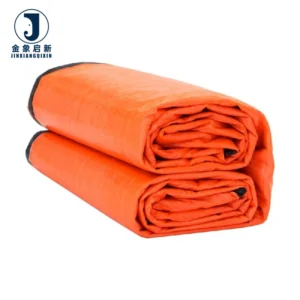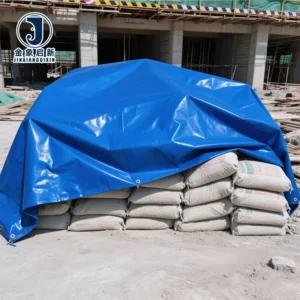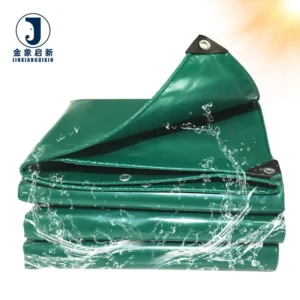
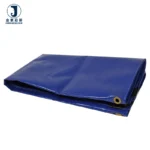
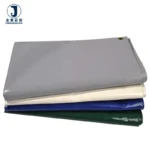
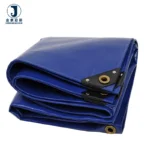
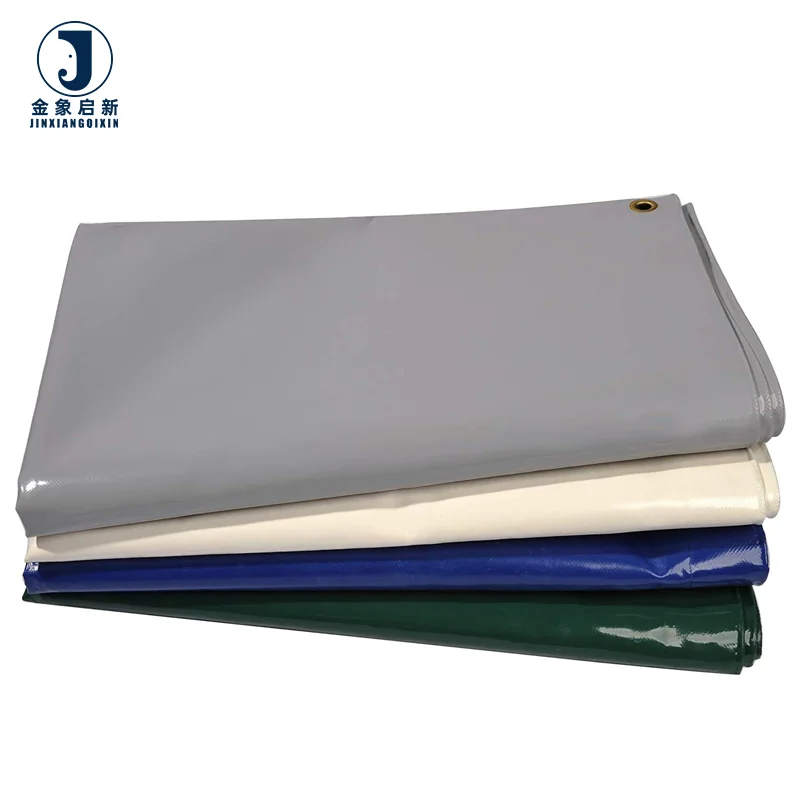
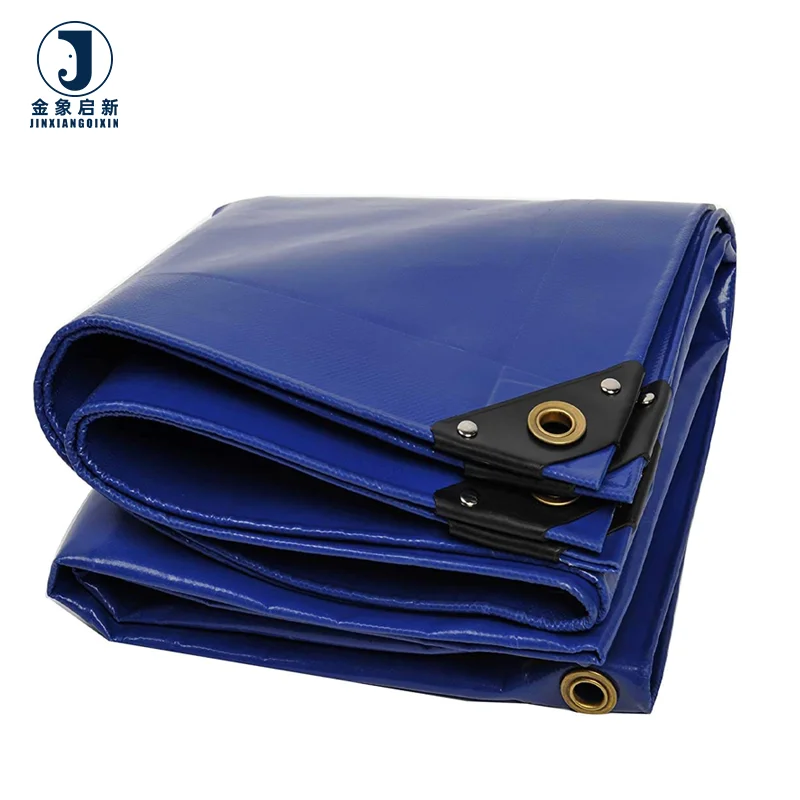
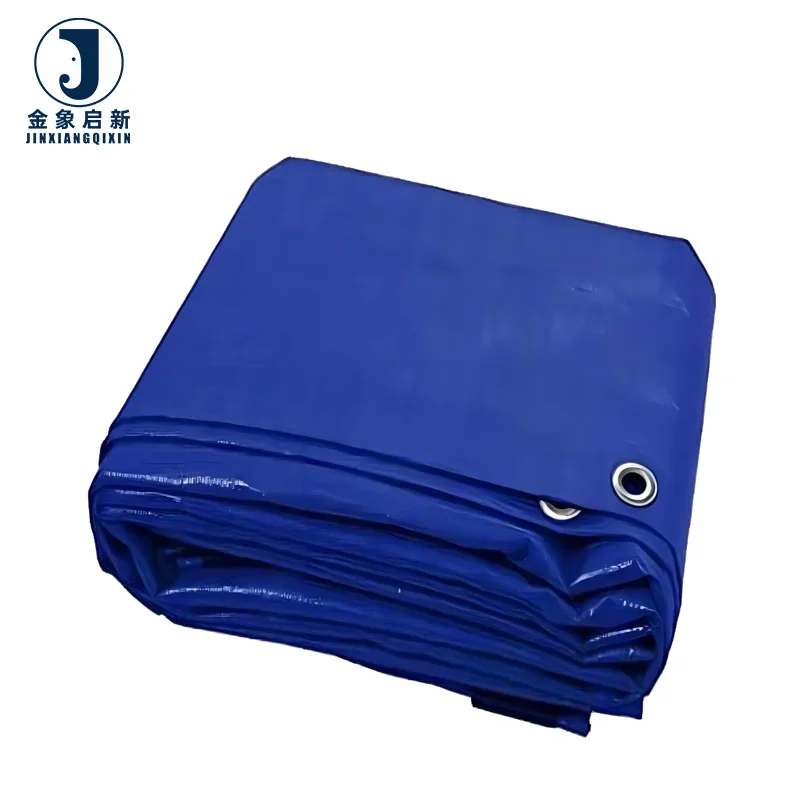
Certified Compliance — Every roll leaves the facility with fire-retardant and anti-static test documentation matched to the batch, addressing the exact compliance gap that causes site rejection.
Technical Specifications
| Parameter | Value |
|---|---|
| Product Type | PVC Coated Tarpaulin |
| Coating Material | PVC (double-sided coating on polyester base fabric) |
| Weight Range | 500 gsm, 600 gsm, 650 gsm, 750 gsm, 900 gsm |
| Base Fabric Denier | 500D×840D / 500D×1000D / 1000D×1000D / 1000D×1300D / 1300D×1300D / 1000D×2000D |
| Total Thickness | 0.29 mm / 0.32 mm / 0.38 mm / 0.44 mm / 0.46 mm / 0.55 mm / 0.65 mm |
| Tensile Strength (warp) | 1650 N – 3900 N (varies by grade, test standard not stated) |
| Tensile Strength (weft) | 1600 N – 3500 N (varies by grade, test standard not stated) |
| Key Features | Waterproof, Fire Retardant (grade not stated), Anti UV (test basis not stated), Heavy Metal Free, Anti Mildew, Self Clean |
| Joining Methods | High frequency hot melt, Hot air welding, Sewing |
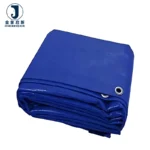
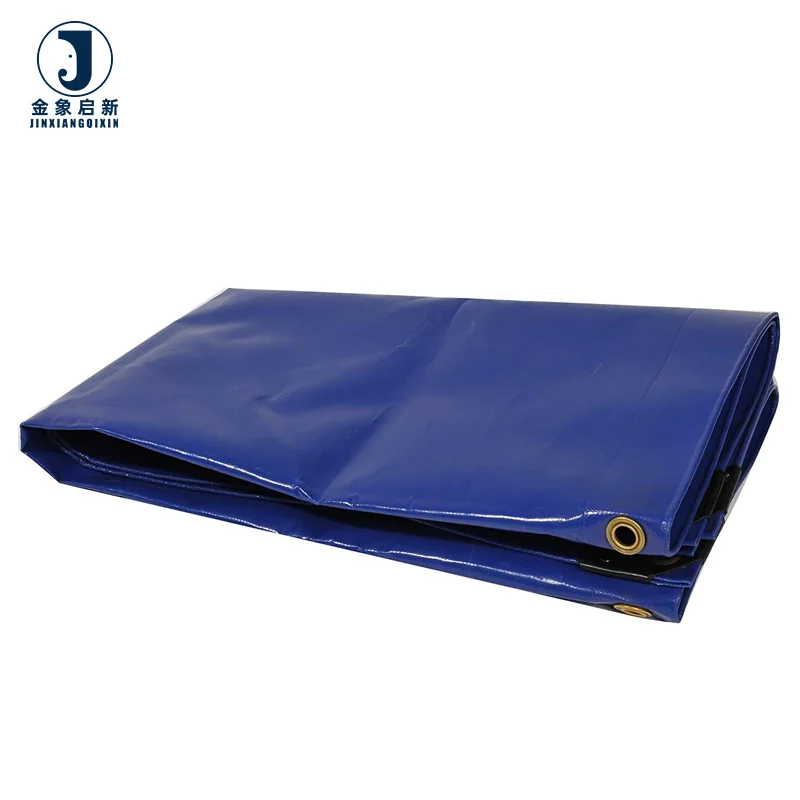
| Edge & Eyelet Construction | 5 mm rope without splicing, heat sealed seamless edge wrapping, 3 cm enlarged aluminum alloy eyelets, reinforced corners |
| Density | 1.15 – 2.00 g/cm³ |
| Brittle Temperature | ≤ -50 °C to -60 °C |
| Softening Temperature | ≥ 80 °C |
| Melting Point | 212 °C |
| Certification | ISO, CE |
Application Suitability
| Application | Exposure & Requirement |
|---|---|
| Mining and tunnelling ventilation duct | Continuous airflow, underground humidity, fire-retardant or anti-static compliance mandated by site safety regulation |
| Membrane and inflatable structure fabric | Wind uplift, UV exposure, thermal cycling, structural load on welded seams |
| Aviation and industrial ventilation systems | Certified material documentation, dimensional stability under positive and negative pressure |
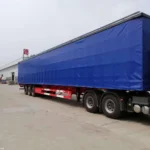
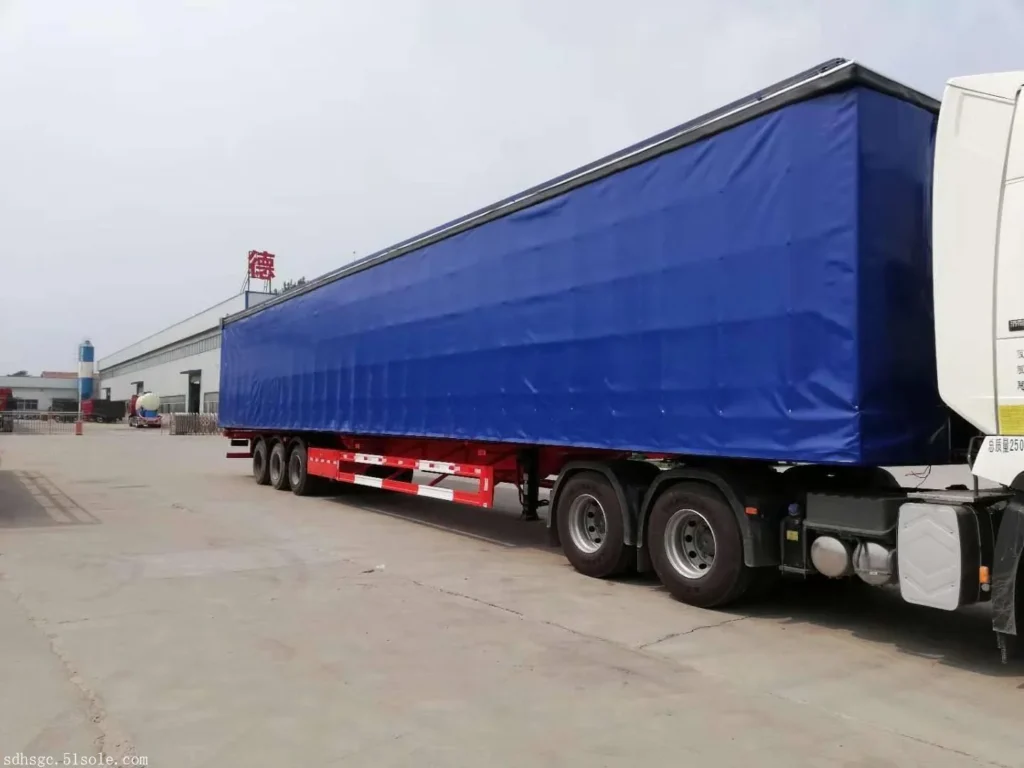
| Heavy-duty truck and trailer cover | Road abrasion, flex fatigue at tie-down points, prolonged weather exposure |
| Outdoor event and military tent | Rapid deployment, blackout requirement, flame-retardant compliance for public assembly |
Why a Fire-Retardant PVC Coated Tarpaulin Without a Grade Is a Compliance Risk
Specifying a PVC coated tarpaulin fire retardant grade without a documented test standard leaves your project exposed to site inspection failure.
Ventilation duct and membrane structure buyers frequently receive fabric described as "flame retardant" with no accompanying test report naming the standard or classification achieved. When the safety officer on a mining or aviation project requests documentation, the gap becomes a project-stopping issue. We have seen contractors forced to remove installed duct sections and resubmit material samples because the supplier could not produce a batch-specific report referencing M2, B1, NFPA 701, or DIN 4102. [NEED_CITE: DIN 4102 fire classification for building materials]
Selecting the Right Grade for Your Compliance Environment
Different markets and industries mandate specific fire classification standards for PVC coated tarpaulin used in ventilation duct and specialist structures. A mining operation may require anti-static surface resistance alongside a flame classification, while a European construction site references DIN 4102 B1. Confirming the applicable standard before production ensures the correct additive package is incorporated into the PVC compound during coating.
Verifying Anti-Static Performance Beyond the Claim
Anti-static treatment for underground and explosive-atmosphere ventilation duct demands a measured surface resistance value, not a generic description. Our technical team works with buyers to confirm the required resistance range and arranges testing against the relevant standard before the order enters production. [NEED_CITE: anti-static test methods for coated fabrics in explosive atmospheres]
How Denier Construction and Coating Weight Interact
The base fabric denier — from 500D×840D through to 1000D×2000D — determines the tensile skeleton that carries mechanical load, while the PVC coating weight fills the weave and provides environmental protection. A heavier coating on a lighter base may produce a high gsm reading that masks lower tear resistance. Evaluating both denier and gsm together gives a reliable picture of how the fabric will perform under the sustained tension and flex cycling typical of ventilation duct and membrane structure applications. [NEED_CITE: tensile and tear test methods for coated fabrics per ISO 1421]
The Hidden Cost of Specification Gaps in Specialist Fabric
A ventilation duct fabric that arrives without the fire-retardant grade documentation your site requires does not just delay installation — it triggers re-inspection fees, replacement logistics, and schedule penalties from the principal contractor. Similarly, welded seams that fail before the fabric body reaches its service limit indicate a mismatch between the joining method and the coating formulation, a problem that surfaces only after the duct has been pressurised and flexed in operation.
Why Specialist Buyers Source This Fabric Here
Three full production lines and 36 sets of professional equipment give us the capacity to run dedicated batches of PVC coated tarpaulin for ventilation duct and membrane structure projects without cross-contamination between grades. A 10-person R&D team handles material selection, sample development, and custom specification within days, not weeks. Every roll undergoes dedicated QA/QC at each production stage with 100% inspection before shipment, so the fabric arriving on your site matches the documented specification exactly.
Documentation & Verification
- Material specification sheet stating base fabric denier, GSM and coating weight for each roll
- Fire-retardant test report referencing applicable grade and standard per batch
- Anti-static surface resistance test documentation where mining compliance is required
- Pre-shipment inspection record with full QC coverage before dispatch
- ISO and CE certificates accompanying every international shipment
Fabrication, Handling & Storage
- Use high-frequency hot melt or hot air welding matched to the specific gsm grade for seam integrity
- Heat sealed edge wrapping prevents fraying at cut edges before eyelet installation
- Store rolls horizontally on pallets to avoid pressure creases across the PVC coating surface
- Allow fabric to acclimatise before unrolling in cold conditions below the brittle temperature threshold
- Clean with mild detergent only; solvents can degrade the double-sided PVC coating layer
- Reinforce corners with additional PVC patches before installing 3 cm aluminum alloy eyelets
What to Include in Your Enquiry
Provide the ventilation duct diameter or membrane structure panel dimensions, the fire-retardant or anti-static standard your site mandates, and the total linear metre requirement. If your project calls for a specific colour or surface finish, include the reference so we can confirm availability or develop a sample. Let us know whether you need finished fabricated panels or roll stock for your own production line.
Frequently Asked Questions
Q: What fire-retardant grades and test standards are available for ventilation duct and specialist structure fabric?
A: We supply PVC coated tarpaulin in fire-retardant grades aligned to standards including M2, B1, NFPA 701 and DIN 4102. Confirm the specific classification your project requires so we can match the additive formulation and arrange batch-level test documentation before production begins.
Q: Can anti-static PVC tarpaulin be supplied with surface resistance test documentation for mining compliance?
A: Yes. Anti-static treatment is available for underground ventilation duct applications. We coordinate surface resistance testing against the standard your site safety plan specifies and include the test report with the shipment documentation package.
Q: How do I confirm the GSM and base fabric denier match the specification on arrival?
A: Each shipment includes a material specification sheet stating the base fabric denier, GSM and coating weight verified during production. Our pre-shipment inspection covers weight verification per roll, so the documentation you receive corresponds to the physical goods delivered.
Q: What joining methods are recommended for ventilation duct construction and what seam strength can be expected?
A: High-frequency hot melt and hot air welding are the primary joining methods for PVC coated tarpaulin in duct applications. The correct method depends on the gsm grade and coating formulation; our technical team advises on parameters to ensure weld strength matches the fabric body performance.
Q: What certification and customs documentation is provided for international specialist project shipments?
A: Every order ships with ISO and CE certificates, a roll packing list, certificate of origin, and customs support documentation. Fire-retardant and anti-static test reports are included where specified in the order requirements.