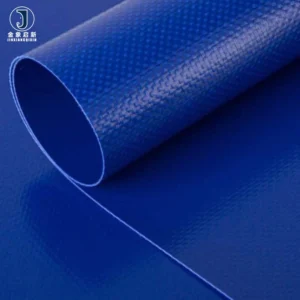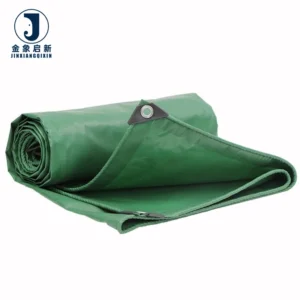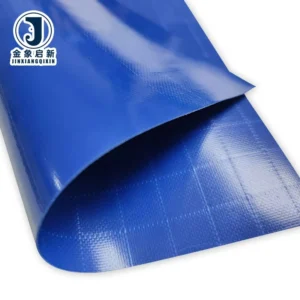

Deep Coating Process Control — hot-melt and laminated coating lines producing PVC coated tarpaulin roll stock with verified adhesion and weld seam integrity for technical fabricators.
Technical Specifications
| Parameter | Value |
|---|---|
| Product Type | PVC Coated Tarpaulin Roll |
| Base Fabric | High-strength polyester mesh |
| Coating Technology | Laminated / Hot-melt Coating |
| Weight Options | 350 gsm / 420 gsm / 500 gsm / 550 gsm / 600 gsm / 750 gsm |
| Thickness Options | 0.32 mm / 0.35 mm / 0.40 mm / 0.45 mm / 0.50 mm / 0.65 mm |
| Roll Width | 2 m / 2.1 m |
| Roll Length | 75 m (at 2 m width) / 50 m (at 2.1 m width) |
| Surface Finish | Glossy or Matte |
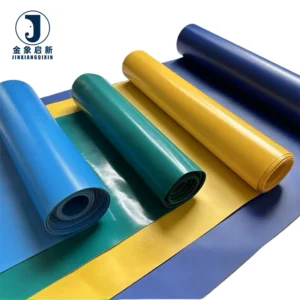
| Color Options | Blue / Red / Yellow / Light Blue / Grey (custom colors available) |
| Waterproof | Double-sided 100% waterproof |
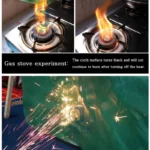
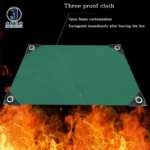
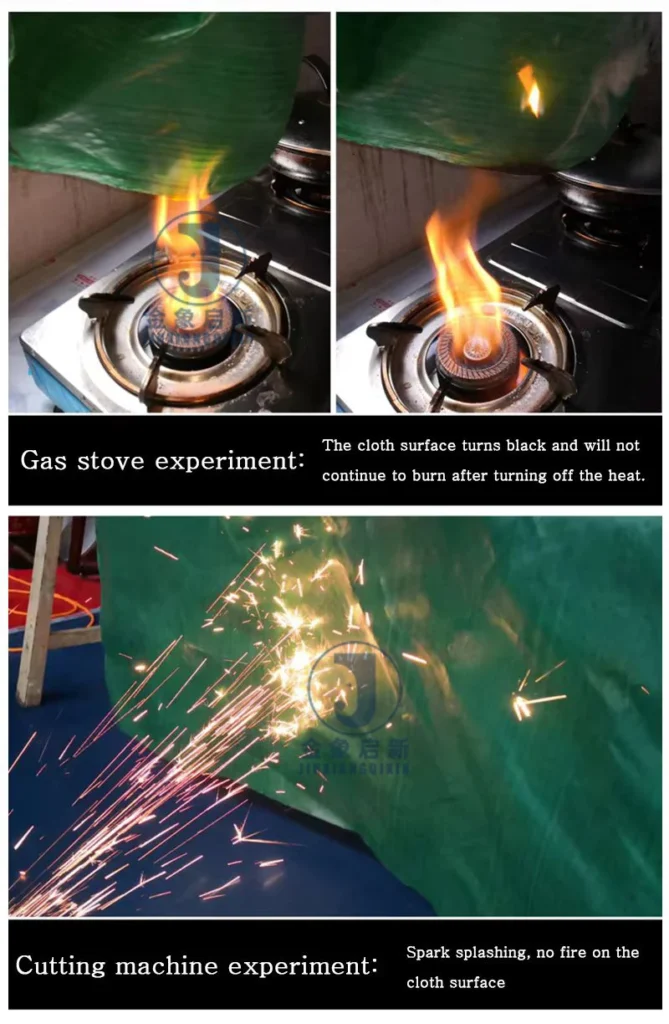
| Key Features | Cold crack resistance, anti-mildew, UV treatment (sunproof — confirm test basis for your market), flame retardant grades available (confirm grade required), anti-static treatment available (confirm certification for your application), high tensile and tear strength, outstanding welding strength, color fastness |
| Standards | ISO, CE |
Application Suitability
| Application | Exposure & Requirement |
|---|---|
| Mining and tunnelling ventilation ducts | Continuous airflow, particulate abrasion, fire-retardant and anti-static compliance required underground |
| Aviation ground support ducting | Fuel-rich environment, temporary deployment, flame-retardant certification for airside operations |
| Inflatable and membrane structures | Biaxial tension, UV exposure, welded seam integrity under dynamic load |
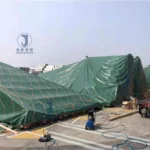
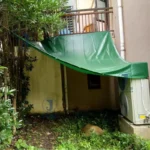
| Temporary industrial enclosures | Weather exposure, wind load, rapid deployment and tear-down cycles |
| Pond and reservoir liners | Permanent water contact, soil chemistry, puncture risk from substrate |
What Happens When Your Ventilation Duct Fabric Lacks the Certification the Site Demands
Every roll ships with test documentation matched to the specification you ordered — not a generic data sheet.
Mining and tunnelling projects specify fire-retardant and anti-static PVC coated tarpaulin roll fabric for ventilation ducting because underground safety regulations require verified compliance. When the roll arrives without a batch-matched test report, the site engineer rejects the shipment and the duct fabrication schedule stalls. I have reviewed project delays where the fabric passed visual inspection but the documentation gap forced a complete re-order, adding multi-week lead times to an already tight construction programme. [NEED_CITE: fire-retardant and anti-static compliance standards for underground ventilation ductwork]
Coating Adhesion and Weld Seam Integrity for Duct Fabrication
Ventilation ducts and membrane structures depend on welded seams that carry structural and pressure loads. The hot-melt coating and laminated technology used on this PVC coated tarpaulin roll stock produces a coating-to-substrate bond that resists delamination during high-frequency welding. When the coating separates from the polyester mesh at the weld line, the duct fails at the joint before the fabric body shows any fatigue. Fabricators working with membrane structures and inflatable forms need this adhesion consistency across every metre of the roll, because a single weak weld in a pressurised duct section compromises the entire run.
Weight Grades Matched to Structural and Duct Requirements
The available weight range from 350 gsm through 750 gsm corresponds to thickness options from 0.32 mm to 0.65 mm, giving duct fabricators and membrane structure engineers a material selection that aligns with specific pressure and load requirements. Lighter grades suit temporary ventilation runs and short-span inflatable forms, while the heavier grades handle mainline mining ducts that endure continuous negative pressure, rock dust abrasion, and mechanical impact from equipment movement underground. [NEED_CITE: relationship between coated fabric GSM and structural performance in ventilation applications]
Reading the Specification Sheet Beyond the GSM Number
GSM alone does not predict how a PVC coated tarpaulin roll will perform in a welded duct or tensioned membrane. The base fabric denier and weave density determine how tear forces propagate once the coating is penetrated — a tightly woven high-denier polyester mesh restricts tear spread far more effectively than a loosely woven base of the same weight. Coating method matters equally: hot-melt coating penetrates the mesh interstices and locks around individual yarns, producing higher peel strength at welded joints compared to surface-only lamination. The thickness figure combines base fabric and coating layers, so two rolls at the same total thickness can behave differently under biaxial tension depending on how that thickness is distributed between substrate and coating. Surface finish selection — glossy or matte — affects cleaning frequency in duct applications where dust accumulation reduces airflow efficiency, and influences ink adhesion when branding or safety markings are printed on membrane structure panels.
The Hidden Cost of Specifying the Wrong Grade for Your Application
Selecting a PVC coated tarpaulin roll grade without matching it to the actual installation environment creates failures that appear weeks or months after deployment. A duct grade specified without confirmed anti-static certification may pass initial inspection but trigger a safety audit failure once underground, forcing removal and replacement of the entire ventilation run. Fabricators who weld membrane structures using a grade with insufficient tear strength at the seam allowance discover failures at the connection points under wind load, where stress concentrates at the welded edges. Batch colour inconsistency across rolls in a single membrane order becomes visible once panels are installed side by side, requiring selective replacement and delaying project handover. [NEED_CITE: coated fabric specification errors and their consequences in industrial ventilation projects]
Why Fabricators Source This Material Through JinXiang Tech
Nearly 30 years of focused coated fabric production delivers process control over coating weight and adhesion that translates directly to weld seam reliability on your duct fabrication line. Three full production lines and 36 sets of professional equipment maintain output capacity for bulk roll orders without sacrificing batch-to-batch consistency. The 10-person R&D team develops material samples matched to your specific duct or membrane requirements within days, not weeks. Dedicated QA and QC at every production stage with 100% pre-shipment inspection confirms weight, colour, and coating integrity before any roll leaves the facility. ISO and CE certified operations support the compliance documentation chain your project requires.
Documentation & Verification
- Material specification sheet stating exact GSM, base fabric denier, coating method, and weight per roll
- Test reports for flame retardant and anti-static grades matched to the batch shipped
- ISO and CE certificates on file with certificate of origin and customs documentation per shipment
- Pre-shipment inspection record confirming weight, colour, and coating integrity before dispatch
- Roll packing list with individual roll identification for traceability
Fabrication, Handling & Storage
- High-frequency welding parameters should be adjusted to the specific coating technology — hot-melt coated grades typically require different dwell times than laminated grades
- Store rolls upright on pallets to prevent flat-spot deformation that affects tracking through automated welding machines
- Unroll and allow the fabric to relax for several hours before cutting in cold conditions to prevent shrinkage distortion at cut edges
- Matte surface grades may require adjusted ink formulations for printed safety markings compared to glossy finishes
- Protect roll ends from moisture ingress during transport to prevent edge mildew on the outer wrap layers
What We Need From Your Enquiry
Provide the application type — ventilation duct, membrane structure, inflatable form — along with the fire-retardant and anti-static certification standards required by your local regulatory authority. Specify the target GSM or thickness grade, roll width preference, and estimated annual volume so we can align production scheduling with your procurement cycle. If colour matching or custom branding is required, share reference samples or Pantone codes for lab confirmation before bulk production.
Frequently Asked Questions
Q: How do you verify GSM on arrival against the quoted specification?
A: Each roll undergoes weight verification during pre-shipment inspection, and the inspection record accompanies your documentation package. You can cross-check the stated GSM by cutting a measured sample from the roll end and weighing it on a calibrated scale. Any discrepancy outside acceptable tolerance triggers an investigation before the roll is released for dispatch.
Q: What flame-retardant grades are available and which standards do they meet?
A: Flame-retardant treatment options are available across the PVC coated tarpaulin roll range. The specific grade and corresponding standard — such as M2, B1, NFPA 701, or DIN 4102 — must be confirmed at the enquiry stage to match your project’s regulatory requirements. Test reports are issued per batch once the grade is specified.
Q: How is anti-static performance measured and certified for mining and aviation applications?
A: Anti-static treatment is applied during coating and the performance level must be matched to the end-use environment. Mining ventilation and aviation ground support each have distinct surface resistivity thresholds. Confirm the standard your site requires at enquiry so we can supply the correct grade with supporting test documentation.
Q: What roll widths and lengths are available for duct and membrane fabrication projects?
A: Standard roll widths are 2 m at 75 m length and 2.1 m at 50 m length. Custom widths and lengths are available subject to production line capability and minimum order requirements. Provide your cutting layout or panel dimensions so we can recommend the roll size that minimises offcut waste.
Q: How do you control colour consistency across multiple rolls in a single order?
A: All rolls within a single order are produced from the same coating batch using matched pigment formulations. Pre-shipment inspection includes visual comparison of rolls side by side under controlled lighting. If your project spans multiple production runs, we retain reference samples from earlier batches to maintain colour continuity.