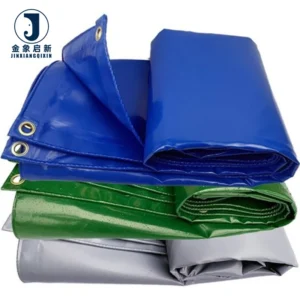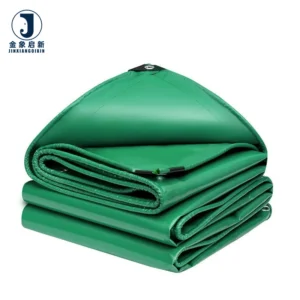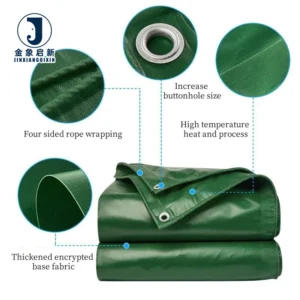
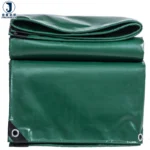
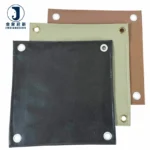
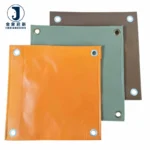

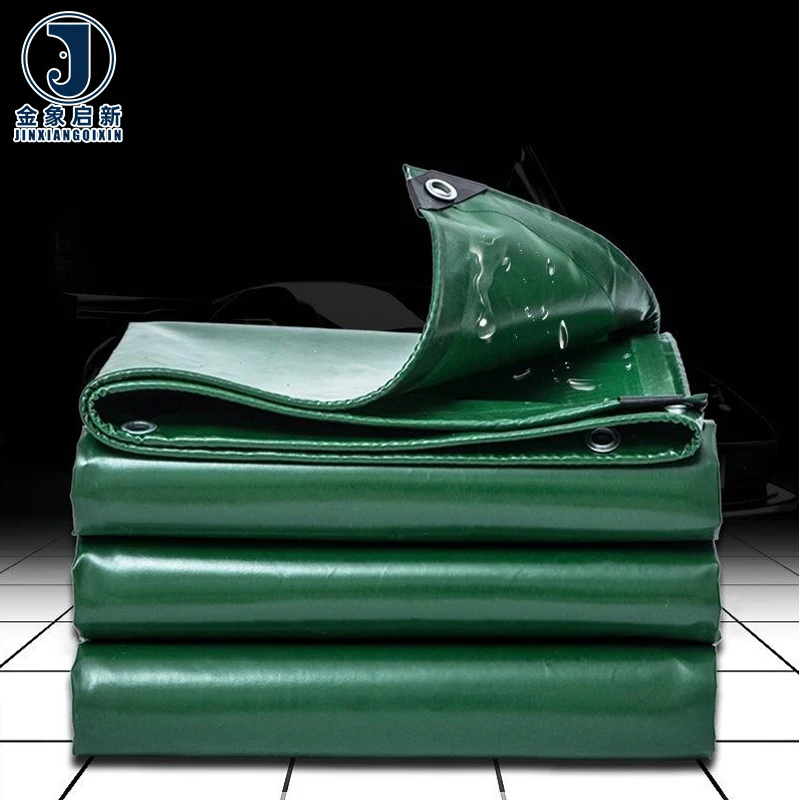
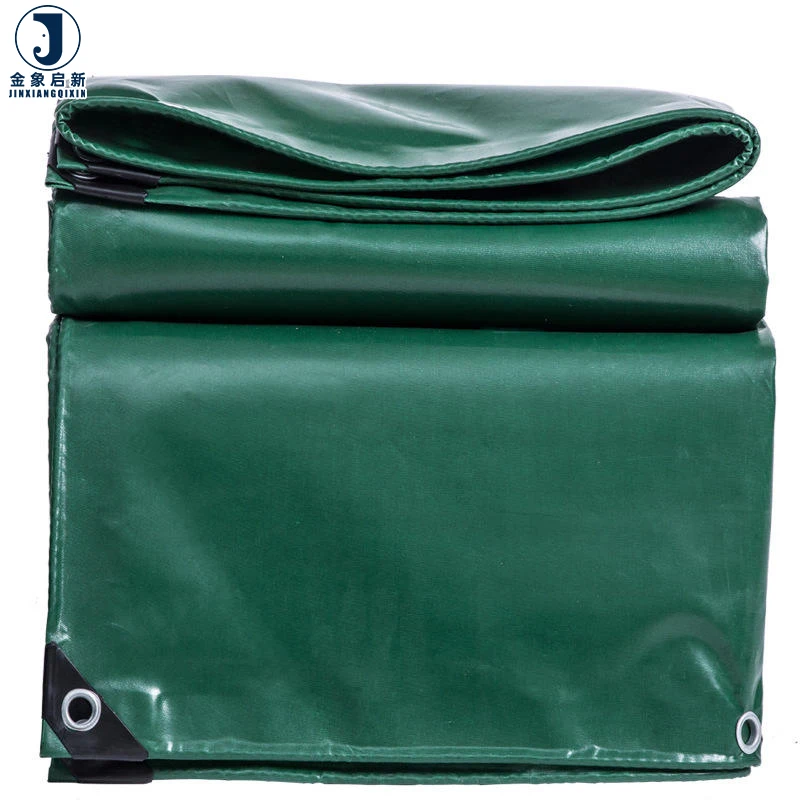
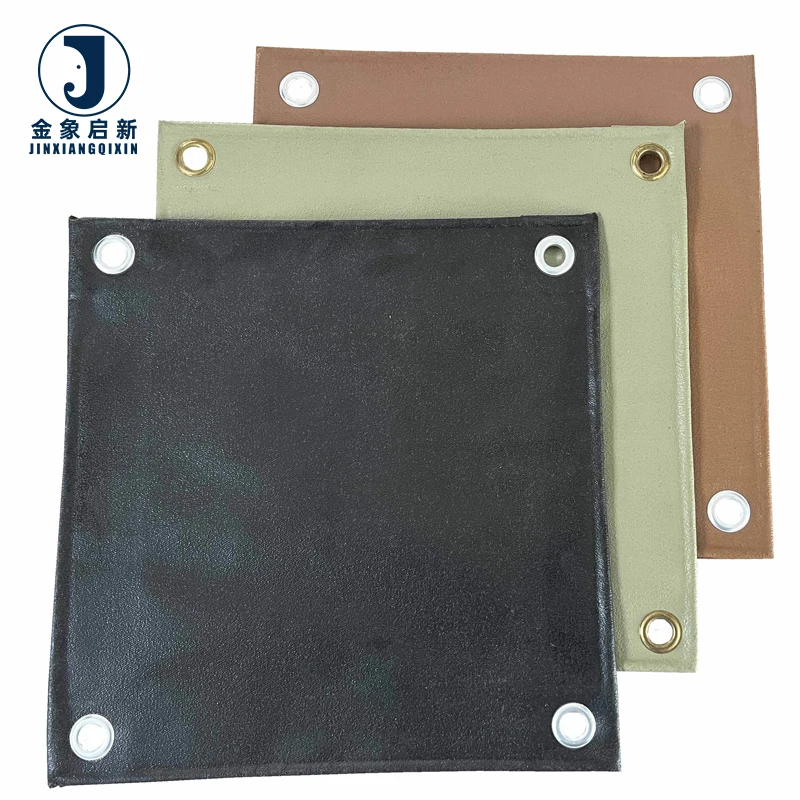
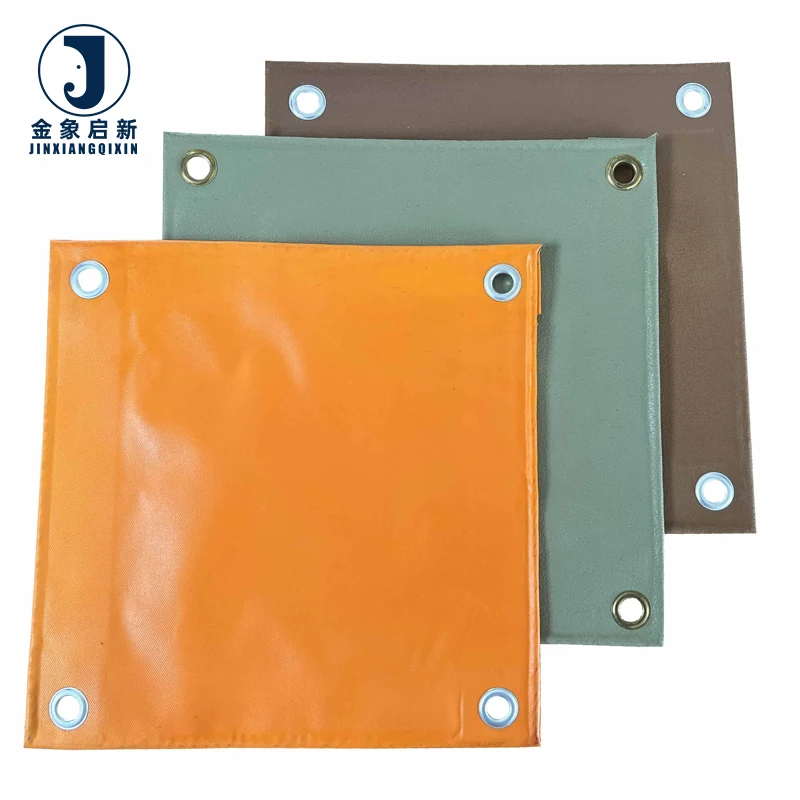
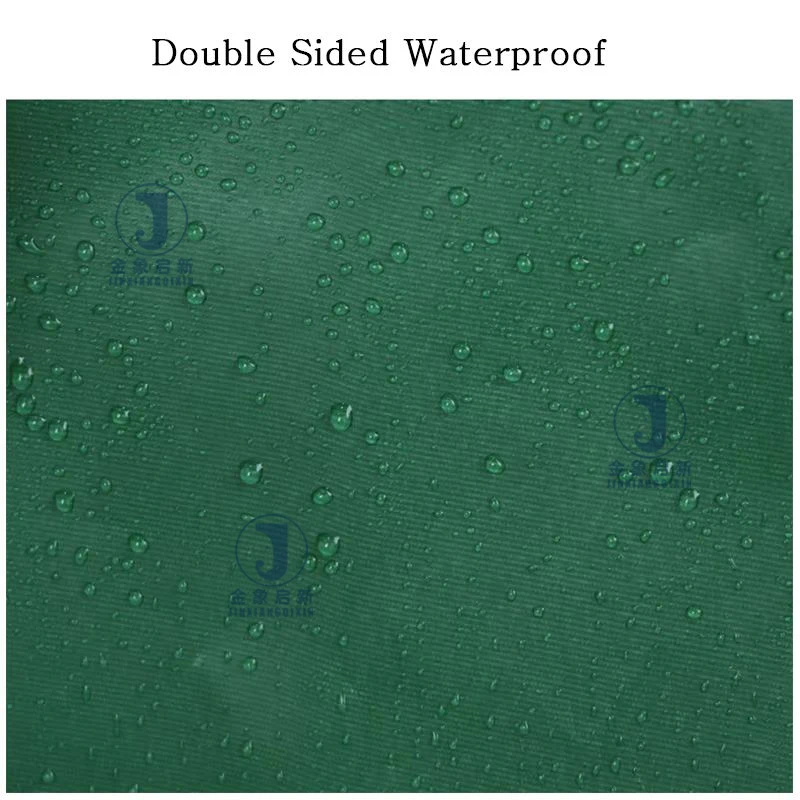
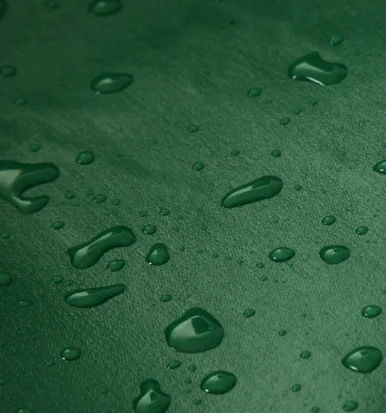
Process-Controlled Coating Weight — Every roll of Heavy Duty Bache PVC Tarpaulin Outdoor Use is produced on dedicated lines with in-process GSM monitoring, ensuring the coated fabric you receive matches the quoted specification before it leaves the factory.
Technical Specifications
| Parameter | Value |
|---|---|
| Product Type | PVC Coated Tarpaulin Roll |
| Material | PVC Coated Polyester Fabric |
| Application Environment | Outdoor Use |
| Waterproof Rating | Waterproof |
| Breathability | Breathable |
| Duty Grade | Heavy Duty |
| Flame Retardant | Available in flame retardant grades — confirm the grade required for your market |
| Anti-UV | Available with anti-UV treatment — test basis to be confirmed at inquiry |
| Standards | ISO, CE |
Application Suitability
| Application | Exposure & Requirement |
|---|---|
| Outdoor equipment covers | Prolonged sun and rain exposure, requires waterproof barrier with dimensional stability under wind load |
| Logistics and transport load protection | Road vibration, abrasion against cargo edges, frequent handling and folding |
| Construction site covers | Dust containment, material stockpile weather shielding, puncture risk from aggregate |
| Agricultural stock covers | Moisture ingress prevention for feed and grain, UV exposure across open yards |
| Pond and reservoir lining | Permanent water contact, soil chemistry resistance, puncture from substrate irregularities |
Why Coated Fabric Fails Before the Coating Does
A PVC coated tarpaulin roll that separates at the weld line has already cost you more than a replacement roll.
Buyers often specify GSM as the single measure of quality, only to find that welded seams open under load while the fabric itself remains intact. The adhesion between the PVC coating and the polyester base fabric determines whether heat-welded joints hold through repeated flexing, wind uplift and tie-down tension. [NEED_CITE: peel strength test methods for coated fabrics per ISO 2411] When adhesion is uneven across a roll, the weakest point becomes the first failure point on site. This is why process control during coating matters more than thickness alone when evaluating a PVC Coated Tarpaulin Roll for structural covers and tensioned installations.
Coating Adhesion Under Real Load Conditions
The polyester base fabric in this PVC Coated Tarpaulin Roll receives its PVC coating through a controlled process that governs how deeply the compound penetrates the weave. Adequate penetration locks the coating to the yarn intersections, which directly affects how the material behaves when heat-welded into seams or when subjected to point loads from tie-downs and cargo edges. Fabricators who weld ducts, covers or tensioned membranes need consistent peel strength across every metre of the roll, because one weak zone can compromise an entire fabricated panel.
Breathability Without Sacrificing Waterproof Integrity
Breathable PVC coated fabrics allow trapped moisture vapour to escape while blocking liquid water ingress — a balance that matters when covers sit over cargo or equipment that generates condensation. Without breathability, moisture builds up under the tarpaulin, accelerating corrosion on metal surfaces and promoting mould on organic loads. This PVC coated tarpaulin roll is engineered to manage that vapour transfer, making it suited to outdoor storage and transport applications where temperature swings between day and night drive condensation cycles. [NEED_CITE: vapour transmission requirements for breathable coated textiles in outdoor applications]
Reading GSM, Denier and Coating Weight Together
GSM tells you the total weight per square metre, but it does not tell you how that weight is distributed between the base fabric and the coating. A heavy coating on a light base fabric may show a high GSM on paper yet tear easily along the warp. Conversely, a dense polyester base with a moderate coating weight delivers better tear propagation resistance and stronger welded seams. When evaluating this PVC Coated Tarpaulin Roll, request the material specification sheet that breaks out base fabric denier, mesh count and coating weight separately — these three figures together predict how the material will perform under tension, puncture and heat-welding far better than GSM alone. Surface finish — whether glossy or matte — also plays a role: glossy surfaces shed water and dirt more readily, while matte finishes reduce glare and improve ink adhesion for printed branding.
The Hidden Cost of Specifying on GSM Alone
When a buyer selects a roll based only on quoted GSM without verifying coating adhesion or base fabric construction, the consequences appear weeks or months into service. Covers that flex in wind develop micro-cracks along the coating where adhesion was weakest. Welded seams on tensioned structures peel open because the coating delaminated from the yarn at the heat-affected zone. Entire batches may show colour drift between rolls, forcing contractors to reject installed panels that sit side by side on a façade or roof. [NEED_CITE: common failure modes in coated fabric installations related to batch inconsistency] These problems trace back to process control gaps that a single GSM figure cannot reveal.
Why Source This PVC Coated Tarpaulin Roll Here
Three full production lines and 36 sets of professional equipment give this facility the capacity to deliver container-volume orders on schedule while maintaining roll-to-roll consistency. A 10-person R&D team develops custom widths, colours and sample cuts within days, so fabricators can validate weld parameters and colour match before committing to a production run. Dedicated QA and QC checkpoints at every production stage — from base fabric inspection through coating, curing and winding — catch adhesion and thickness deviations before they ship. ISO and CE certification underpins the documentation package, and 100% pre-shipment inspection means every roll is weighed and measured against the purchase specification before packing. [NEED_CITE: ISO quality management requirements for coated textile manufacturing]
Documentation & Verification
- Material specification sheet stating GSM, base fabric denier and coating weight for this PVC coated tarpaulin roll
- UV and flame retardant test reports provided where applicable treatments are specified
- Pre-shipment inspection record with roll-by-roll weight and dimension verification
- ISO and CE certificates included with every dispatch
- Certificate of origin and customs documentation prepared per destination country
Fabrication, Handling & Storage
- Heat-weld using temperature and dwell settings matched to the PVC coating thickness to prevent delamination at seams
- Store rolls upright on cores to avoid flat spots that create permanent creases in the heavy-duty coated fabric
- Unroll in temperatures above freezing to prevent cracking of the PVC coating at low temperatures
- Clean with mild detergent only — solvent-based cleaners may soften or dissolve the PVC surface coating
- Plan cut patterns across the roll width to minimise offcut waste and reduce the number of welded joins in large covers
What to Include in Your Inquiry
Provide the application environment and the specific exposure conditions your covers or fabricated products will face, including wind load, UV intensity and any fire compliance requirements in your target market. State the roll width and length you need, along with estimated annual volume, so the production team can confirm availability and lead time. If colour matching or printed branding is required, share your Pantone or RAL reference and request a sample cut for approval before the production run begins.
Frequently Asked Questions
Q: How is the actual GSM of each roll verified before shipment?
A: Every roll is weighed and measured during the pre-shipment inspection. The recorded weight per square metre is checked against the quoted GSM on your material specification sheet. Any roll that falls outside the agreed tolerance is flagged and replaced before packing, so the PVC Coated Tarpaulin Roll you receive matches what was specified.
Q: Can I get a test report for flame retardant or anti-UV treatment?
A: Yes. When you specify flame retardant or anti-UV treatment in your inquiry, the corresponding test report citing the relevant standard is included with your shipment documentation. Confirm the grade required by your local building code or mining regulation so the correct treatment is applied and tested.
Q: What is the minimum order for a custom width or colour?
A: Custom widths and colours carry a minimum that depends on the specific dye batch and coating run setup. Share your required dimensions and colour reference during the inquiry stage, and the production team will confirm the minimum roll count and lead time for your specification.
Q: How is colour consistency maintained across multiple rolls in one order?
A: Coating compound is mixed in a single batch for each order run, and colour is measured at intervals along the production line. The pre-shipment inspection compares rolls side by side under controlled lighting to catch any drift before dispatch, ensuring uniform appearance when panels are installed adjacent to one another.
Q: What documentation ships with each container?
A: Each shipment includes a material specification sheet, pre-shipment inspection record, roll packing list, certificate of origin, and ISO and CE certificates. Where flame retardant or anti-UV treatments are specified, the corresponding test reports are added to the documentation package.