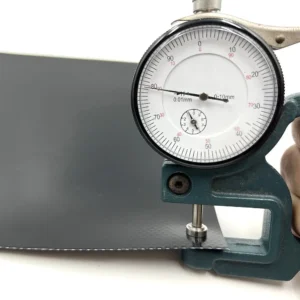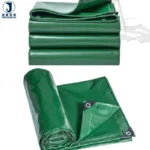

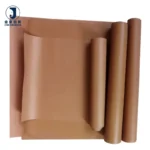
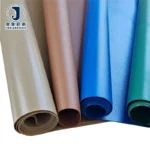
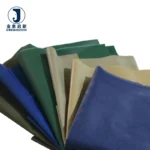
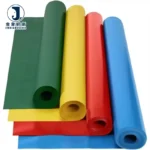
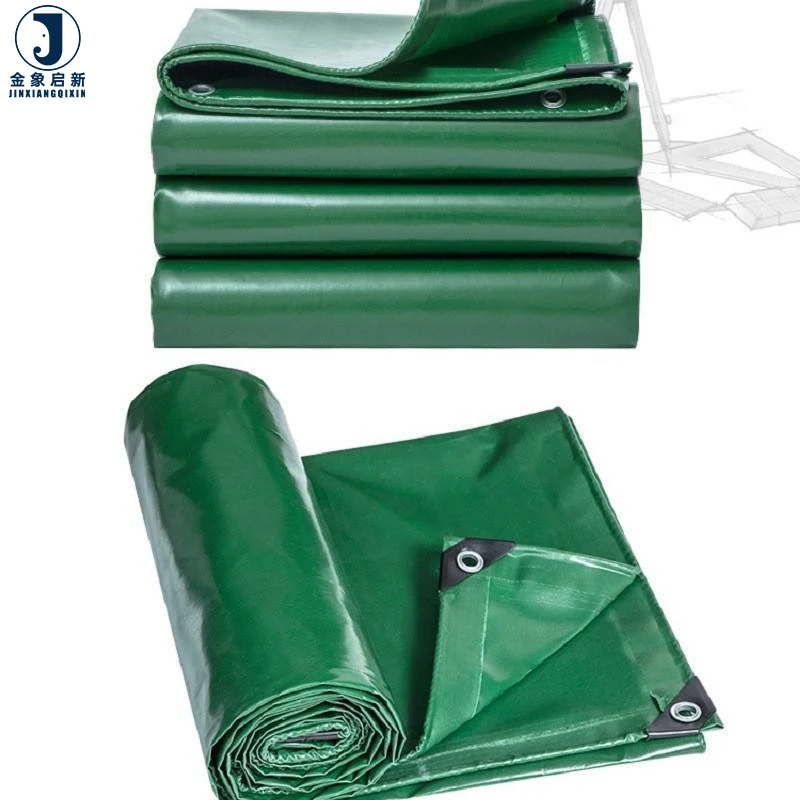
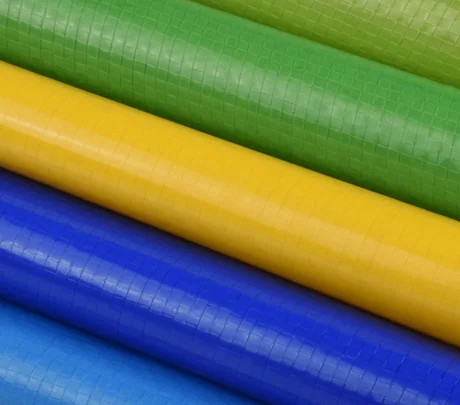
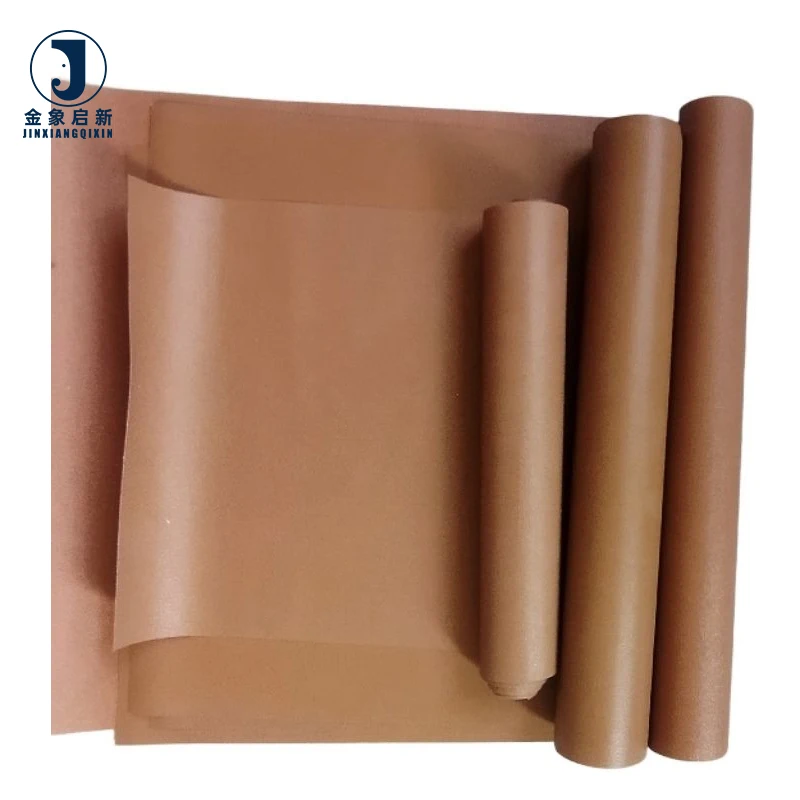
Verified Coating Weight — Every roll of PVC Coated Tarpaulin Roll is produced under dedicated QA/QC with 100% pre-shipment inspection, ensuring the stated GSM matches the material on arrival.
Technical Specifications
| Parameter | Value |
|---|---|
| Product Type | PVC Coated Tarpaulin Roll |
| Material | PVC + High-strength polyester mesh fabric |
| Coating Method | Laminated technology & Hot-melt Coating technology |
| Weight (GSM) | 350gsm, 420g, 500gsm, 550gsm, 600gsm, 750gsm |
| Total Thickness | 0.32mm, 0.35mm, 0.4mm, 0.45mm, 0.5mm, 0.65mm |
| Width | 2m / 2.1m |
| Roll Length | 75m / 50m |
| Surface Finish | Glossy or Matt |
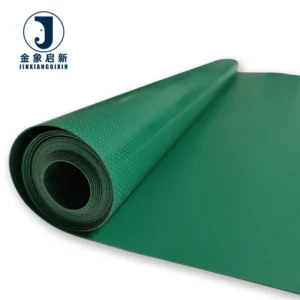
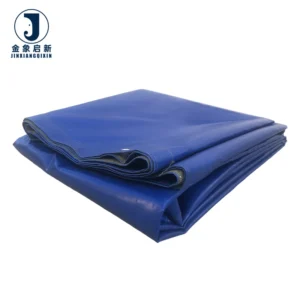
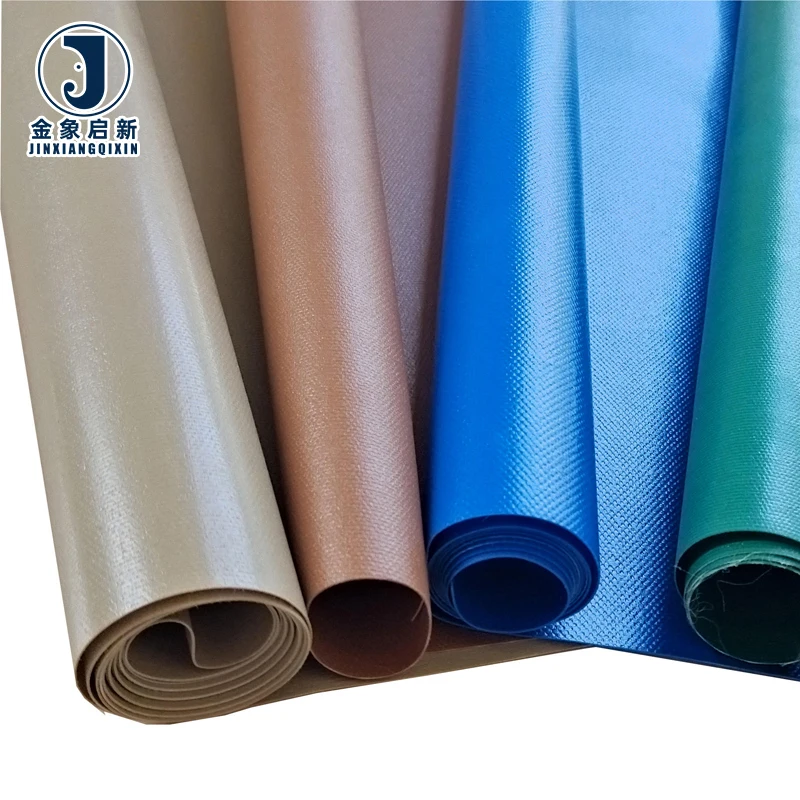
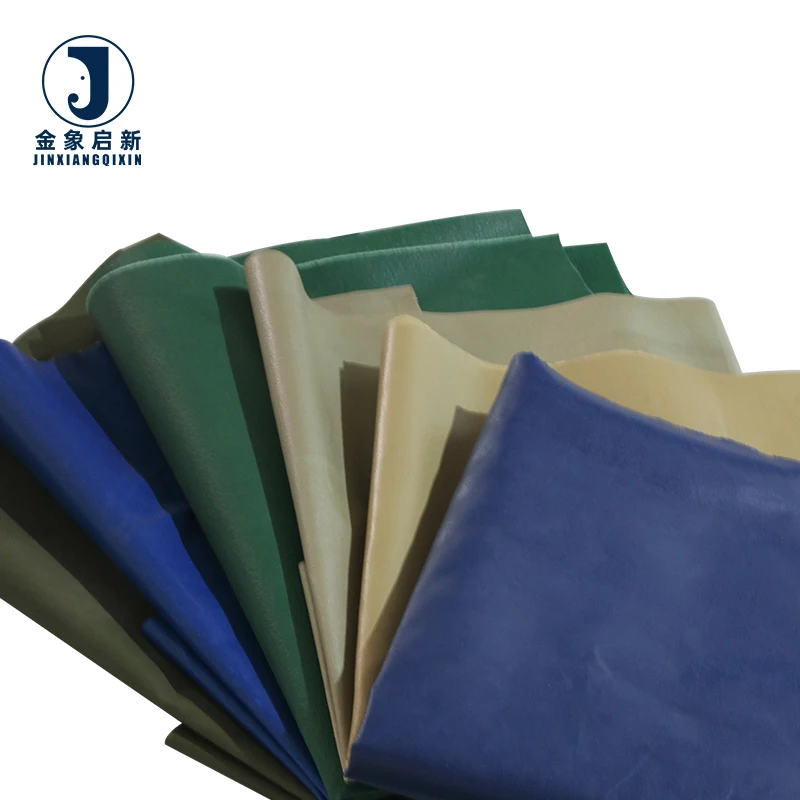
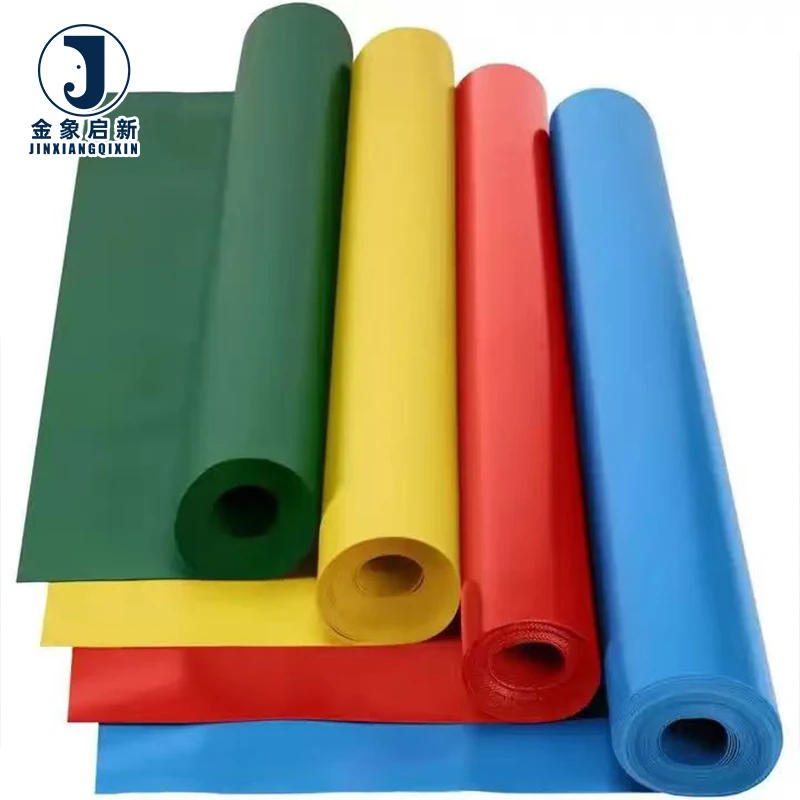
| Color Options | Blue, Red, Yellow, Light Blue, Grey (custom available) |
| Cold Crack Resistance | Yes |
| Waterproof | Fully coated waterproof construction |
| UV Treatment | Sunproof (test basis not stated in source — confirm requirement) |
| Flame Retardant | Available in flame retardant grades (grade not stated — confirm market requirement) |
| Anti-Static | Anti-Static treatment (grade not stated — confirm requirement) |
| Service Life | 3–7 years under normal circumstances (source value — verify against application conditions) |
Application Suitability
| Application | Exposure & Requirement |
|---|---|
| Tent and awning fabrication | Repeated assembly, wind load, prolonged UV exposure, heat-welded seams |
| Inflatable and membrane structures | Constant air pressure, flexible stress, weld seam integrity under tension |
| Pond and reservoir liners | Permanent water contact, soil chemistry, puncture risk during installation |
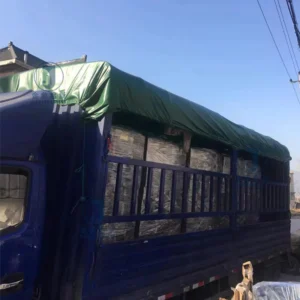
| Truck and trailer covers | Road abrasion, constant flexing, weather exposure, tie-down stress at hems |
Why Coating Adhesion Matters More Than Stated GSM
The bond between PVC layers and base fabric determines whether the roll survives fabrication or delaminates at the weld line.
Many buyers specify a GSM and assume the coated fabric will perform accordingly. In practice, a roll that measures correctly on the scale can still fail early if the coating adhesion is weak — particularly at heat-welded seams where the material flexes most. [NEED_CITE: ISO 1421 tensile and peel test methods for coated fabrics] Laminated and hot-melt coating technologies address this by fusing the PVC directly into the high-strength polyester mesh, producing adhesion values that hold through repeated stress cycles.
Coating Technology and Layer Bonding
The hot-melt coating process forces PVC into the interstices of the high-strength polyester mesh fabric, creating a mechanical bond that resists delamination. Laminated technology applies additional PVC films to both faces, ensuring uniform thickness and a consistent surface for welding. This dual approach gives fabricators a predictable material when setting heat-welder temperature and dwell time across the 350gsm to 750gsm range.
Base Fabric Denier and Tensile Behaviour
The high-tenacity polyester yarns within the mesh provide the structural backbone of every PVC Coated Tarpaulin Roll. Higher GSM grades use heavier denier yarns and tighter weave density, translating to greater resistance against tear propagation — critical when fabricators cut panels and weld seams at stress points. [NEED_CITE: relationship between base fabric denier and tear strength per DIN 53354] A lighter roll may pass a tensile test yet tear easily from a nick because the yarn density is lower.
Surface Finish and Weld Consistency
Glossy and matt surfaces behave differently under hot-air welding. Glossy finishes tend to flow faster at the weld interface, requiring tighter temperature control, while matt surfaces offer slightly more tolerance. Both finishes are available across the full weight range, and colour consistency is maintained across rolls in the same batch — a practical concern when fabricators join panels side by side on large tent or membrane structures.
GSM, Thickness and the Strength Misconception
GSM measures total weight per square metre, combining base fabric, coating and any surface treatment. A 750gsm roll at 0.65mm thickness carries substantially more PVC mass than a 350gsm roll at 0.32mm, but the tensile contribution comes primarily from the polyester mesh, not the coating. This means two rolls at the same GSM can differ in tear performance if one uses a lighter base fabric compensated by thicker coating. Specifying both GSM and confirming base fabric denier gives a more complete picture than weight alone. [NEED_CITE: GSM and base fabric contribution to tensile and tear performance in coated textiles]
The Hidden Cost of Batch Inconsistency
When colour shifts between rolls in the same order, fabricators face visible seam lines on finished structures — a problem that only appears after installation. Similarly, rolls that vary in actual GSM from the quoted value create unpredictable weld parameters, leading to seam failures under load. Dedicated QA/QC at every production stage catches these deviations before dispatch, supported by a pre-shipment inspection record that documents actual weight and colour per batch. [NEED_CITE: pre-shipment inspection protocols for coated fabric roll stock]
Why Fabricators Source This PVC Coated Tarpaulin Roll Here
Deep process control over coating weight and adhesion means every roll in the 350gsm–750gsm range meets the stated specification, verified at each production stage rather than sampled only at the end.
Three full production lines with 36 sets of professional equipment support bulk roll orders with reliable scheduling, reducing the risk of part-shipments that delay fabrication projects.
A 10-person R&D team handles material selection and sample development, allowing fabricators to test weld parameters and colour matches before committing to a full production run.
Samples are developed within days for custom colour or print requirements, giving buyers physical confirmation before the main order enters coating.
Full documentation accompanies every dispatch, ensuring that the material arriving at the fabrication shop matches what was specified in the purchase order.
Documentation & Verification
- Material specification sheet stating exact GSM, base fabric and coating for each roll
- Test report for UV and flame-retardant grades supplied where applicable
- Pre-shipment inspection record covering weight, colour and dimensional checks
- Roll packing list with batch traceability for multi-roll orders
- Certificate of origin and customs documentation for international shipment
Fabrication, Handling & Storage
- Set hot-air welder temperature based on the specific GSM — 350gsm requires less heat input than 750gsm to avoid burning through the coating
- Store rolls upright on pallets to prevent flat-spot deformation on the outer layers, especially on 2.1m wide stock
- Allow cold-stored rolls to reach ambient temperature before unrolling to avoid cracking the PVC surface in cold crack resistant grades
- Clean glossy surface finishes with mild detergent only — solvent-based cleaners can degrade the top coating layer over time
- Plan panel cutting layout to minimise offcuts, particularly on 2m width rolls where 75m length yields large continuous panels
What to Include in Your Enquiry
Provide the intended application, required GSM or thickness range, and the exposure conditions the finished product will face. Specify whether you need roll stock only or finished cut sizes, along with any custom colour or brand printing requirements. Confirm the flame-retardant or anti-static grade your target market demands so the correct treatment is applied and documented.
Frequently Asked Questions
Q: How is GSM verified on each roll before shipment?
A: Every roll undergoes weight verification during the 100% pre-shipment inspection. The actual GSM is recorded against the material specification sheet, and a pre-shipment inspection report is provided with the dispatch documentation so you can cross-check on arrival.
Q: What test basis supports the UV resistance claims?
A: UV treatment is applied during coating, and test reports are available for grades where a specific standard has been tested. Confirm the UV standard required for your market — such as hours of xenon arc exposure — so the correct treatment level is specified and documented.
Q: Which flame-retardant grades are available, and are reports provided per batch?
A: Flame retardant treatment is available in grades aligned with market requirements such as M2, B1 or NFPA 701. State the grade needed for your project, and the corresponding test report will be supplied with the batch documentation for your records.
Q: How is colour consistency maintained across multiple rolls in one order?
A: Colour is controlled at the compounding stage and checked during each production run. Rolls within the same order are produced in a single batch where possible, and the pre-shipment inspection includes a visual colour comparison to flag any deviation before dispatch.