

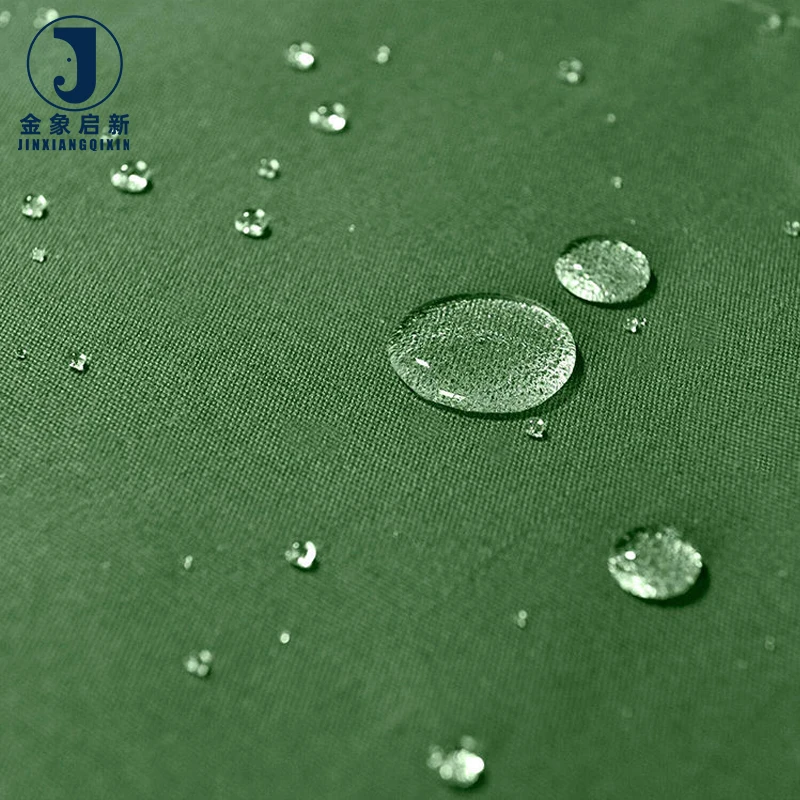
Process Control on Coating Weight — Every roll of Heavy Duty Polyester Canvas Tarpaulin is checked at the coating stage to maintain the stated 600gsm, preventing the under-weight delivery issues that leave loads exposed on the first trip.
Technical Specifications
| Parameter | Value |
|---|---|
| Product Type | Canvas Tarps |
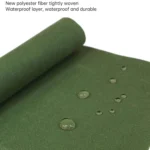
| Material | Polyester cotton industrial textile and 8-12 strands of fine cotton yarn |
| Coating Material | PVC Laminated |
| Weight | 600gsm |
| Total Thickness | 0.5mm / 0.6mm / 0.7mm |
| Roll Width | 2m |
| Roll Length | 100m |
| Color | Army Green Camouflage / Custom |
| UV Treatment | UV resistant (test basis not stated) |
| Flame Retardant Grade | Available in flame retardant grades — confirm the grade required for your market |
| Waterproof Rating | Waterproof construction (no hydrostatic head value stated) |
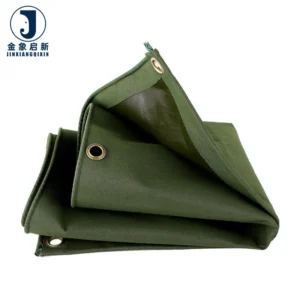
| Eyelet & Hem | Rust-proof aluminum eyelets every 1 meter at corners and hem |
| Seam Construction | Folding and seams welded and sewn with poly ropes |
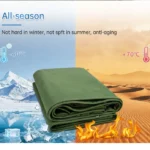
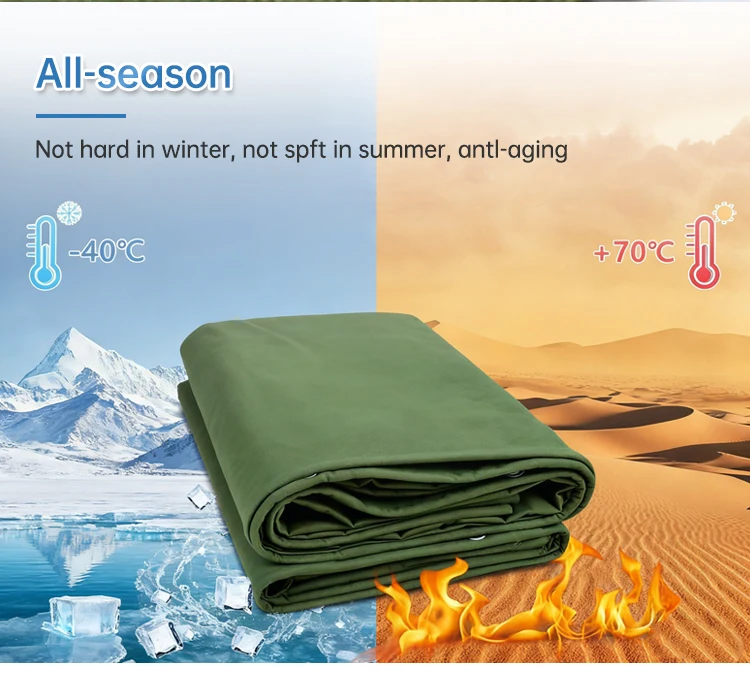
| Temperature Range | High- and low-temperature resistant (no values stated) |
| Service Life | Extended outdoor service life (5-8 years source value — verify against manufacturer catalog) |
| Certification | CE and ISO certified |
Application Suitability
| Application | Exposure & Requirement |
|---|---|
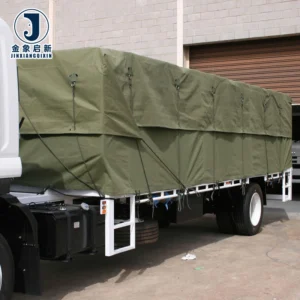
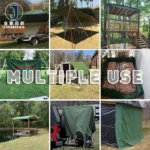
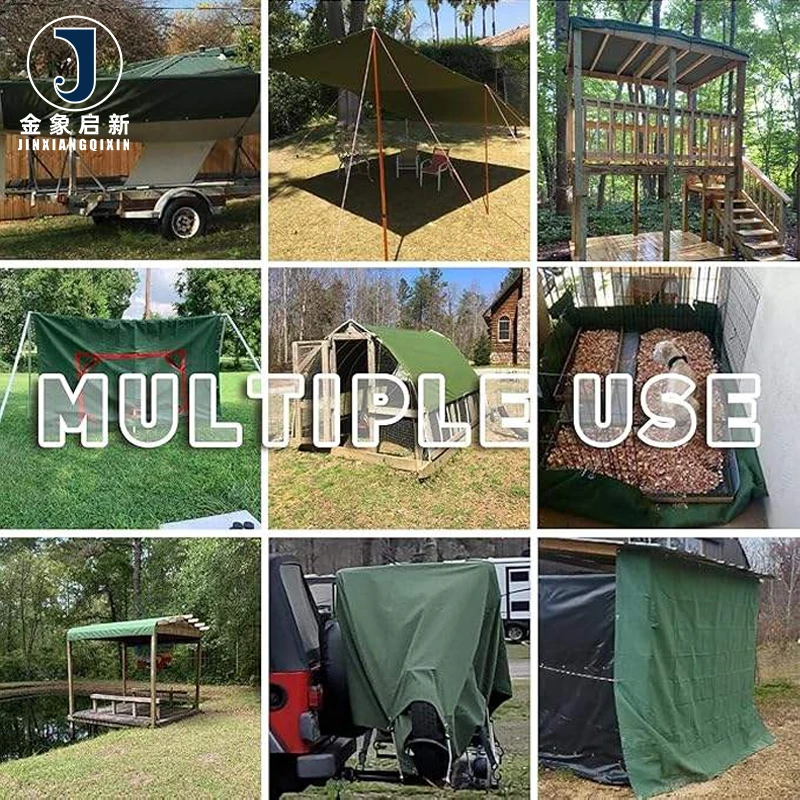
| Truck and trailer load cover | Road vibration, wind lift at speed, abrasion from load flex, secure tie-down via hem eyelets |
| Construction site equipment cover | Standing water, dust and debris, UV exposure, repeated deployment and folding |
| Asphalt cover during transport | Retained heat from hot mix, surface abrasion, waterproofing to prevent moisture ingress |
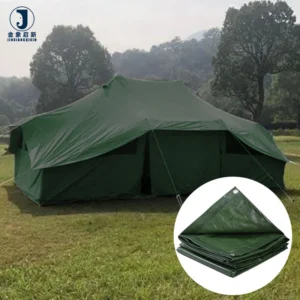
| Outdoor awning and shading sail | Sustained wind load, prolonged UV exposure, tension at corner reinforcement points |
| Engine hood and car cover | Contact with fluids, temperature fluctuation, fit over irregular contours |
| Temporary roof and floor protection | Foot traffic abrasion, pooling water, puncture from dropped tools or materials |
Why Generic-Sized Truck Covers Fail Where Custom-Cut Laminated Canvas Tarpaulin Does Not
A tarp that does not match the trailer profile flaps in crosswind, and the hem tears before the fabric does.
Logistics fleets routinely buy off-the-shelf covers sized to a generic length and width. The excess material billows under highway speeds, concentrating stress on corner eyelets and hem stitching. I have seen transport operators replace Laminated Canvas Tarpaulin for industrial and transport cover multiple times per year because the failure point is always the same: the tie-down edge, not the field of the fabric. Custom cut-to-fit production eliminates the loose panel area that generates lift [NEED_CITE: tension distribution across fitted versus loose-fitting truck tarpaulins].
The alternative is specifying the exact trailer dimensions — deck length, side drop, and front bulkhead clearance — so the laminated canvas tarpaulin is fabricated to wrap the load without surplus. This is where the 600gsm weight and welded-then-sewn seams earn their place, because the fabric takes the load evenly instead of transferring all force to two or three over-stressed grommets.
Ventilation and Fabric Movement on Moving Loads
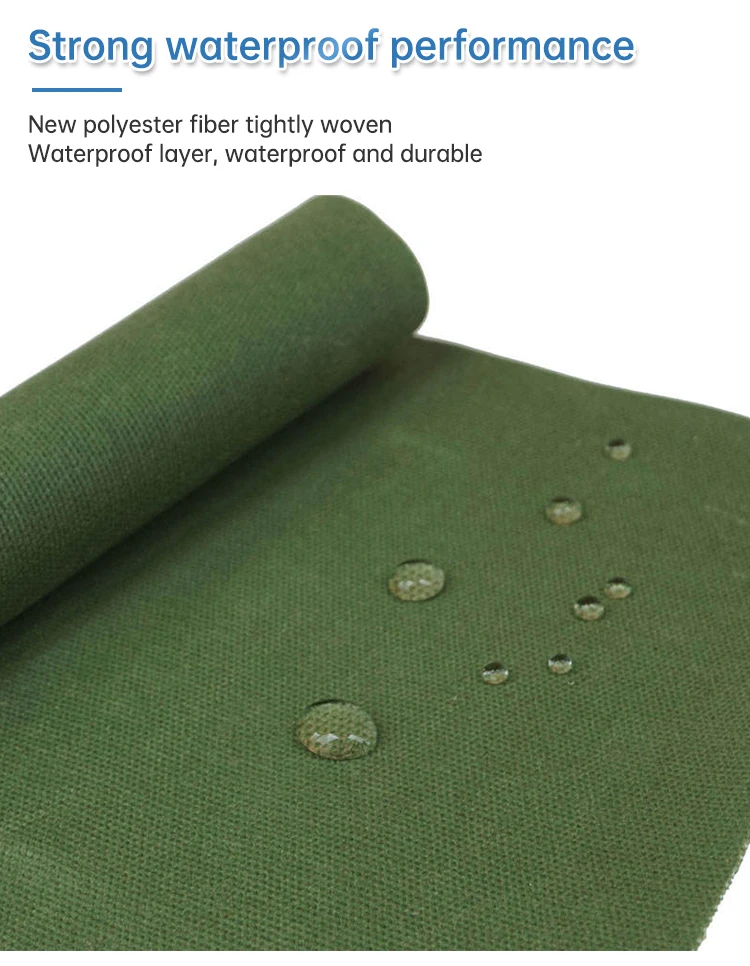
Laminated Canvas Tarpaulin for industrial and transport cover must manage two opposing demands: it needs to shed rain completely while still allowing enough air exchange to prevent condensation buildup under the cover. The PVC laminated surface provides the waterproof barrier, while the polyester cotton base fabric retains a degree of breathability that fully sealed membranes lack. For operators covering sensitive cargo — timber, paper reels, or bagged agricultural product — this balance reduces the moisture damage claims that arise from trapped humidity during multi-day transit.
Welded and Sewn Seams at the Flex Points
Every time a loaded trailer flexes over uneven road surface, the seams at the hem and corners undergo repeated stress cycles. The dual construction method used here — welding followed by sewing with poly rope reinforcement — distributes that load across three failure-resistant layers. A heat weld alone can peel under cyclic flexing, and a sewn seam alone can wick water through needle holes. Combining both methods with a poly rope insert gives the hem the structural redundancy that highway-speed wind loads demand [NEED_CITE: seam failure modes in PVC coated and laminated tarpaulins under dynamic load].
Reading the Specification Sheet Beyond the Weight Figure
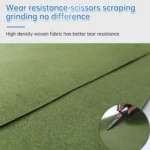
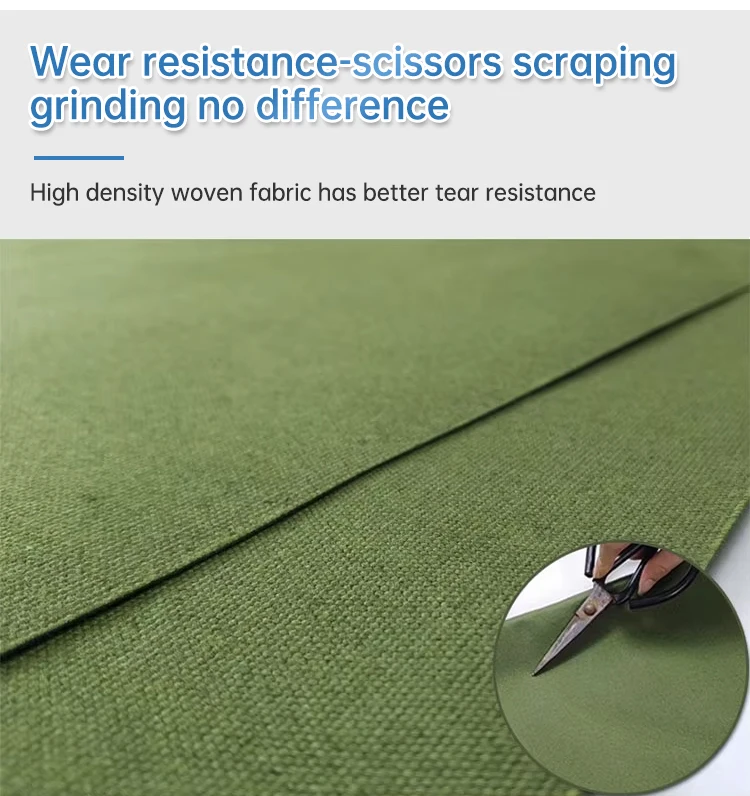
The 600gsm figure tells you the combined mass of base fabric and PVC laminate per square metre, but it does not describe how that weight is distributed. A heavier coating on a lighter base cloth gives high puncture resistance but lower tear propagation resistance, while a denser base weave with a thinner laminate prioritises tensile strength. The 8-12 strand fine cotton yarn construction in this polyester cotton textile sits in the middle of that trade-off, providing balanced performance for general industrial and transport use. Roll width at 2 metres and 100-metre roll length affect fabrication yield: narrower widths reduce waste when cutting covers for standard trailer decks, while the continuous roll length minimises cross-panel joins on larger structures. The PVC laminated coating method — as opposed to knife-over-edge coating — bonds the film to the substrate under heat and pressure, which supports reliable heat welding during fabrication.
What Happens When the Roll You Receive Is Lighter Than Quoted
The most common dispute in coated fabric procurement is GSM discrepancy. A roll specified at a given weight but delivered under that figure will be thinner, less resistant to puncture, and more likely to fail at welded seams under tension. This is not a matter of minor variance — even a small reduction in coating weight changes the thermal mass available for heat welding, which means seams that should hold will peel apart at lower force [NEED_CITE: pre-shipment weight verification protocols for coated and laminated industrial fabrics]. Batch-to-batch inconsistency compounds the problem when multiple rolls from the same order show different weights, forcing the fabricator to adjust welding parameters mid-production or risk rework.
Sourcing Confidence Backed by Production Discipline
Dedicated QA and QC stations at every production stage ensure the PVC laminate bond and the 600gsm target are maintained from first metre to last. A 10-person R&D team handles custom sizing, colour matching, and sample development within days rather than weeks. Three full production lines and 36 sets of professional equipment provide the capacity to fulfil container-volume orders while holding delivery schedules. The 100 percent pre-shipment inspection catches coating weight deviations, seam defects, and colour variance before the rolls leave the facility. Nearly 30 years of focus on coated and laminated fabrics means the process parameters for this canvas construction are established, not experimental.
Documentation & Verification
- Material specification sheet stating 600gsm, polyester cotton base fabric, and PVC laminate type per roll
- Pre-shipment inspection record confirming weight and thickness against quoted values
- Roll packing list showing individual roll dimensions, net weight, and eyelet count
- CE and ISO certificates confirming manufacturing quality management compliance
- Certificate of origin and customs documentation prepared for destination country clearance
- UV and flame retardant test reports supplied where the applicable grade has been specified and tested
Fabrication, Handling & Storage
- Heat-weld at moderate temperature settings suited to the 0.5-0.7mm PVC laminate thickness to avoid scorching the polyester cotton base
- Reinforce all aluminum eyelet positions with additional fabric patches to spread tie-down load across the 600gsm material
- Store rolls horizontally on a flat pallet surface to prevent permanent creasing of the PVC laminated coating
- Allow cold-stored rolls to acclimatise before unrolling to prevent cracking of the laminate at low temperatures
- Use mild detergent and soft brush for cleaning; avoid solvent-based products that may degrade the PVC surface
- Plan cutting layout across the 2m roll width to minimise off-cuts when producing custom truck or equipment covers
Requesting a Specification Match for Your Application
To move from inquiry to sample, provide the application environment — transport, construction, or static cover — along with the exposure conditions your site demands, including wind load, UV intensity, and any fire classification your local authority requires. Specify whether you need roll stock at the standard 2-metre width or finished cut-to-size covers with eyelet placement confirmed by a pre-production sample. Colour requirements and annual volume help determine whether stock Army Green Camouflage suits your need or a custom run is warranted.
Frequently Asked Questions
Q: How is GSM verified on delivery versus the quotation weight?
A: Each roll undergoes weight verification during the pre-shipment inspection stage. The inspection record documents the actual GSM measured against the quoted 600gsm specification. This record accompanies the shipment so you can cross-check on receipt. Rolls that fall outside the accepted tolerance are held before dispatch rather than shipped and disputed after arrival.
Q: Can the tarpaulin be cut to a specific truck or trailer model size?
A: Yes. Provide the trailer deck length, side drop height, and any bulkhead or tailgate clearance dimensions. A sample is produced for fitment approval before bulk fabrication begins. The welded and sewn hem with poly rope reinforcement is then positioned to match your tie-down point spacing, ensuring the aluminum eyelets align with your fleet’s existing strap hardware.
Q: What eyelet spacing and hem reinforcement options are available for tie-down under load?
A: The standard configuration uses rust-proof aluminum eyelets spaced every 1 metre along corners and hem. For higher wind-load applications, spacing can be reduced, and additional reinforcement patches can be applied behind each eyelet position. The poly rope sewn into the folded hem distributes tie-down force across the full edge rather than concentrating it at individual grommet points.
Q: How is colour consistency controlled across rolls in the same order?
A: Colour matching is managed at the coating stage where pigment is metered into the PVC laminate compound. Rolls within a single production run are compared side by side during the in-process QA check. Any roll showing visible deviation is separated before the pre-shipment inspection, preventing the situation where installed panels show mismatched tones on the same site.