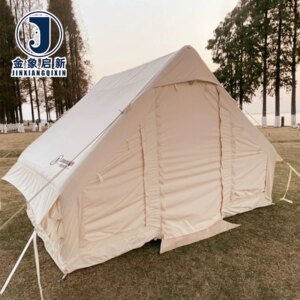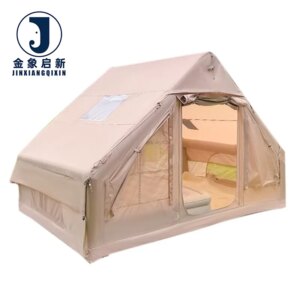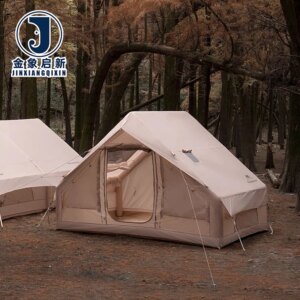

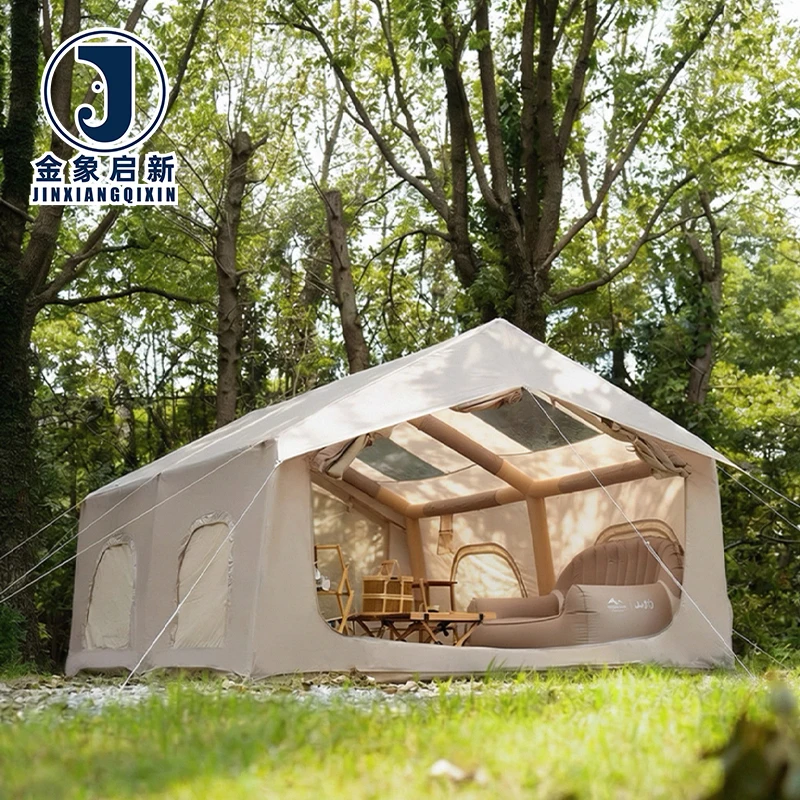
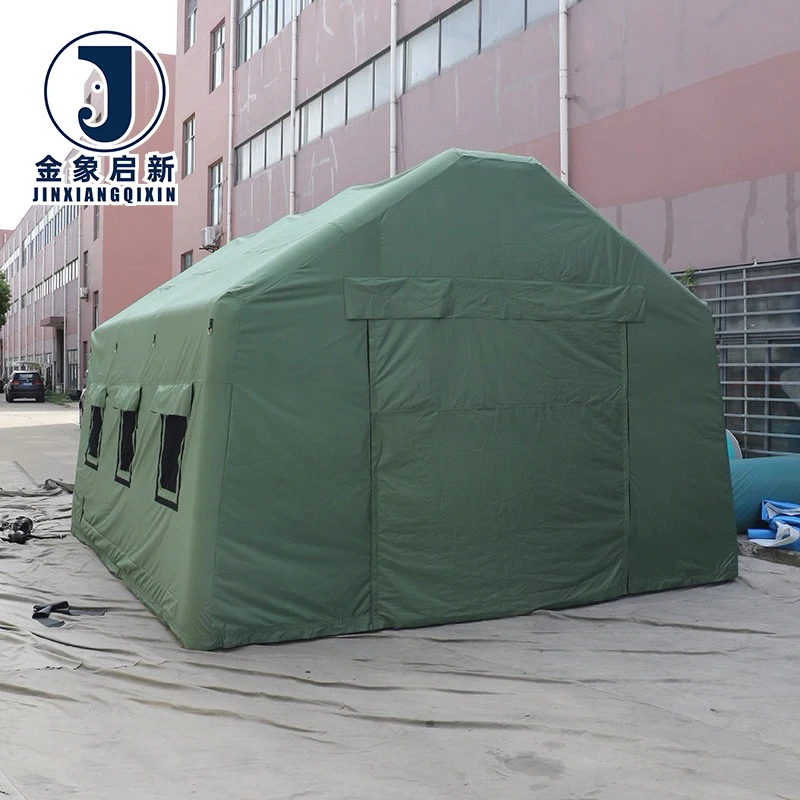
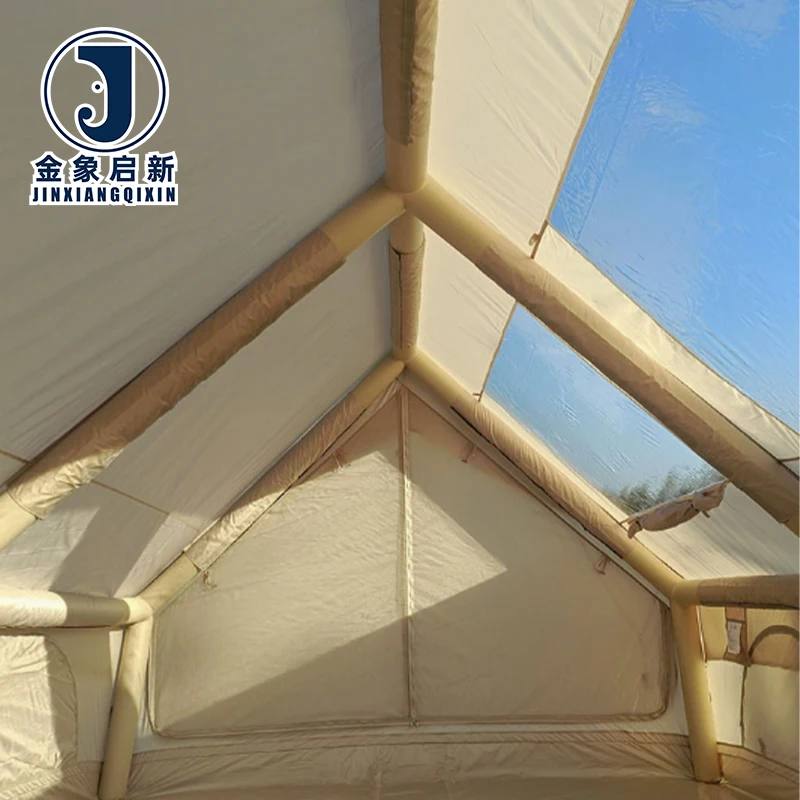
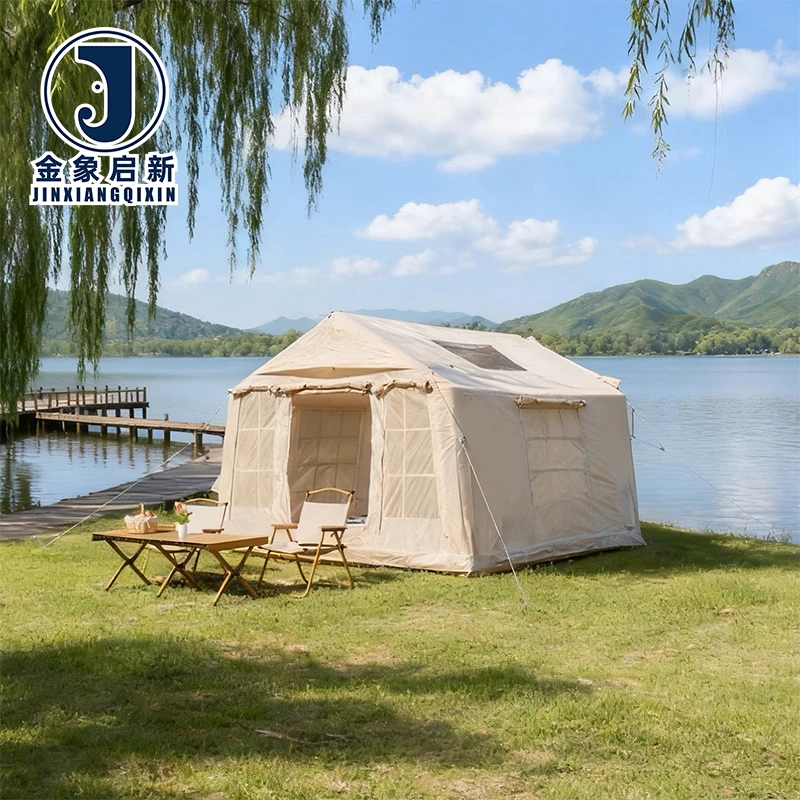
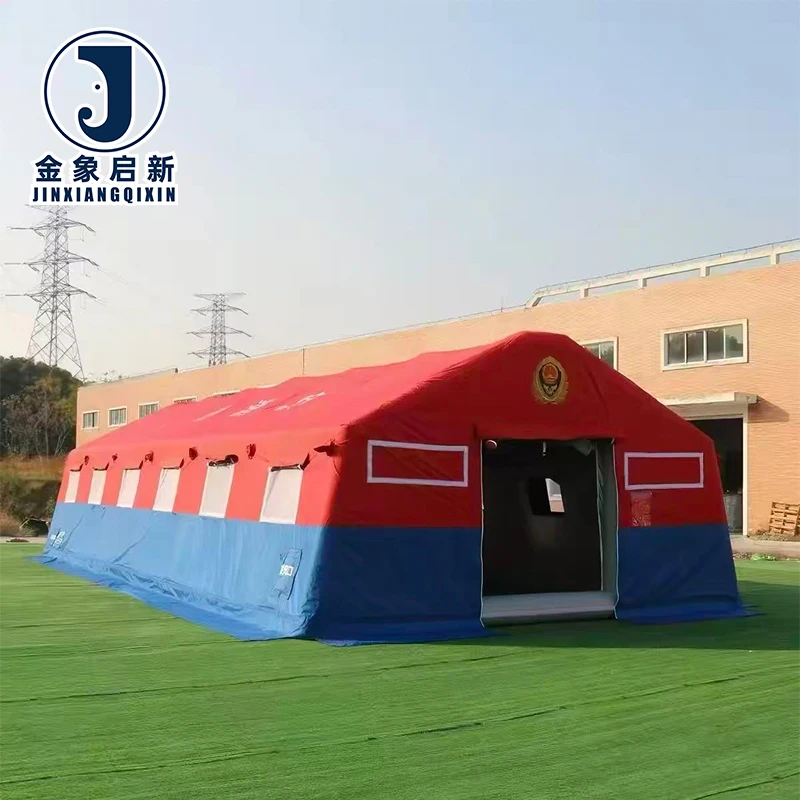
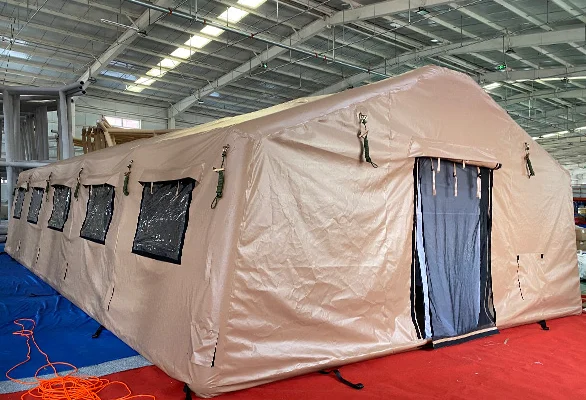
Proven Process Control — Nearly three decades of coating fabric production applied to certified inflatable tent structures, ensuring batch-to-batch material consistency for emergency deployment operations.
Technical Specifications
| Parameter | Value |
|---|---|
| Product Type | Inflatable Tent |
| Core Material | PVC tarpaulin |
| Construction | Single layer |
| Capacity | 2-8 Person |
| Season Rating | 4-Season |
| Deployment | Quick Automatic Opening (inflatable) |
| Configuration | Extended Type |
| Key Performance | Waterproof, UV-resistant, tear-resistant |
| Fire Retardancy | Available in flame retardant grades — confirm the grade required for your market |
| Customization | OEM & ODM, sample customization, pattern printing |
| Production Facility | 9,180 m² with 3 full production lines |
| Processing Equipment | 36 sets of professional equipment |
| R&D Team | 10 technicians |
| Quality Control | Full-process inspection with dedicated QA & QC staff |
| Certifications | ISO 9001, ISO 14001, ISO 45001, CE |
Application Suitability
| Application | Exposure & Requirement |
|---|---|
| Disaster relief command posts | Rapid deployment, repeated inflation cycles, document compliance for cross-border logistics |
| Mining and tunnelling site shelters | Continuous outdoor exposure, abrasive dust, certified fire retardant fabric required underground |
| Aviation emergency accommodation | Quick-setup temporary housing, wind and rain resistance, regulatory documentation |
| Infrastructure recovery logistics hubs | Extended field use, equipment storage, high foot traffic on flooring areas |
| Construction site first-aid stations | Immediate access requirement, weather protection, medical supply storage conditions |
What "Certified" Means When Your Site Inspector Asks for Paperwork
An inflatable tent without traceable certification documents is a compliance liability waiting to happen.
Mining contractors and construction site managers regularly face shutdown orders when temporary shelters arrive without the fire retardant or anti-static documentation the safety officer requires. The inflatable tent sits inflated on the pad, but the paperwork trail stops at a generic product brochure. Procurement teams discover after delivery that the flame retardant claim was a marketing line rather than a tested grade with a certificate number [NEED_CITE: fire classification standards for temporary structures in mining operations]. Site inspectors reject the shelter, the contractor sources a replacement at short notice, and the project timeline absorbs the delay. Compliance is not a feature added at the factory — it is built into the material specification from the coating stage onward.
Compliance Documentation That Matches the Physical Product
Every inflatable tent shipped from our facility carries documentation tied directly to the material batch used in production. The certification package includes ISO and CE certificates alongside a material specification sheet stating the base fabric construction and coating details. When your site safety officer requests proof that the PVC tarpaulin meets a specific fire retardant grade, the test report references the actual production run. This traceability from raw material to finished inflatable tent eliminates the gap between what was quoted and what arrives on site.
Ventilation and Air Retention in Inflatable Structures
The inflatable tube system relies on consistent coating adhesion and welded seam integrity to maintain internal pressure across varying temperature ranges. Our production process controls coating weight application and heat welding parameters at each joint point [NEED_CITE: seam strength testing methods for inflatable PVC structures per relevant ISO standards]. Single-layer PVC tarpaulin construction balances transport weight against structural rigidity, allowing the quick automatic opening mechanism to achieve full inflation within the deployment window that disaster relief scenarios demand. Extended type configuration provides additional interior volume for equipment storage or medical staging without requiring supplementary frame supports.
How Base Fabric and Coating Weight Determine Field Performance
The relationship between base fabric denier and PVC coating weight governs how the inflatable tent handles puncture risk and abrasion at ground contact points. Higher denier yarns in the base weave resist tear propagation when the fabric encounters sharp aggregate or metal debris common at construction and mining sites. The coating weight applied to each face determines waterproofing reliability and UV-resistant performance over extended outdoor exposure. Single-layer construction means every performance requirement — waterproofing, tear resistance, structural inflation pressure — must be delivered by one integrated material system rather than distributed across multiple layers.
The Cost of Specifying the Wrong Grade for Your Market
Fire retardant requirements vary significantly between jurisdictions, and a grade accepted in one market may not satisfy the safety officer in another. Procurement teams that order inflatable tent units without confirming the exact fire classification required at the deployment site risk shipment rejection at the border or on-site inspection failure [NEED_CITE: regional fire safety standards for temporary industrial shelters]. UV-resistant treatment claimed without a supporting test report leaves buyers unable to demonstrate due diligence when insurers question material suitability. Batch colour variation across units intended for the same relief camp creates visible inconsistency when structures are positioned in a row for press documentation or official inspections.
Why Technical Buyers Source Inflatable Structures Here
Our 10-person R&D team handles material selection and pattern printing customization specific to each inflatable tent project, producing samples within days rather than weeks. Three full production lines with 36 sets of professional equipment support bulk order volumes while maintaining the welding precision that inflatable tube integrity demands. Dedicated QA and QC staff conduct 100% inspection before shipment, checking inflation pressure retention and seam strength on every unit. OEM and ODM customization extends to dimensional adjustments, branding requirements, and configuration modifications that match specific deployment scenarios.
Documentation & Verification
- Material specification sheet listing PVC tarpaulin base fabric denier and coating weight per production batch
- Fire retardant test report with grade classification where applicable to destination market requirements
- ISO 9001, ISO 14001, ISO 45001, and CE certificates referenced by material batch number
- Pre-shipment inspection record covering inflation test, seam integrity, and dimensional verification
- Certificate of origin and customs documentation supporting cross-border disaster relief logistics
Fabrication, Handling & Storage
- Heat welding parameters must match PVC tarpaulin coating weight to prevent seam failure at inflation pressure points
- Store deflated and rolled on pallets, avoiding compression that creates permanent crease marks in the single-layer construction
- Deploy on cleared ground surfaces to reduce puncture risk to the waterproof coated base fabric
- Clean with mild detergent only; aggressive solvents degrade UV-resistant treatment on the PVC surface
- Repair minor field punctures with compatible PVC adhesive patches matched to the coating formulation
Requesting a Specification Match for Your Project
Tell us the deployment environment, expected duration of field use, and the fire safety classification your site authority requires. Specify whether you need standard capacity configurations or custom dimensions with pattern printing for organizational identification. Confirm the quantity range and delivery timeline so we can align production scheduling across our available lines.
Frequently Asked Questions
Q: What fire retardant grades are available for this inflatable tent?
A: We supply PVC tarpaulin in flame retardant grades suited to different market requirements. Confirm the specific fire classification your deployment site mandates — such as the standard required for mining or aviation temporary structures — and we match the material grade and provide the corresponding test report with your shipment documentation.
Q: How is UV resistance validated for extended outdoor deployment?
A: UV-resistant treatment is applied during the PVC coating process based on the intended exposure duration. Where a test report is required for compliance documentation, we supply results referencing the applicable testing standard. Share your destination climate and expected field deployment period so we recommend the appropriate treatment level.
Q: Can we order custom dimensions and branding for our relief operations?
A: Yes. Our OEM and ODM service covers dimensional modifications, extended type configurations, and pattern printing for organizational identification. Our R&D team develops samples for approval before full production runs, ensuring the inflatable tent meets your layout requirements and visual identity standards.
Q: What compliance documents ship with each order?
A: Each inflatable tent order includes a material specification sheet, ISO and CE certificates, pre-shipment inspection records, and certificate of origin. Fire retardant test reports accompany orders where the applicable grade has been specified. All documentation references the production batch for full traceability.
Q: How do you control colour consistency across a multi-unit order?
A: Colour matching occurs at the coating preparation stage, with dedicated QA staff verifying shade consistency across all rolls allocated to a single order. We conduct side-by-side comparison before cutting, ensuring that multiple inflatable tent units deployed together present uniform appearance for site documentation and visual standards.