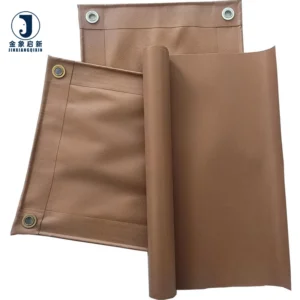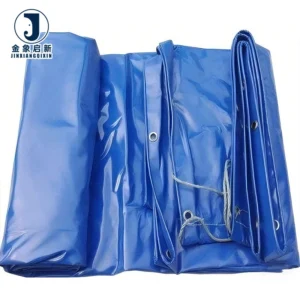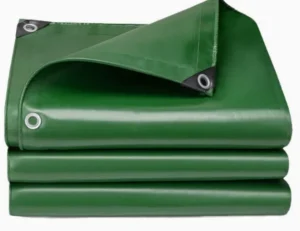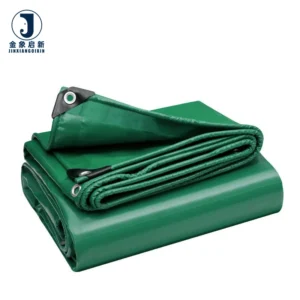


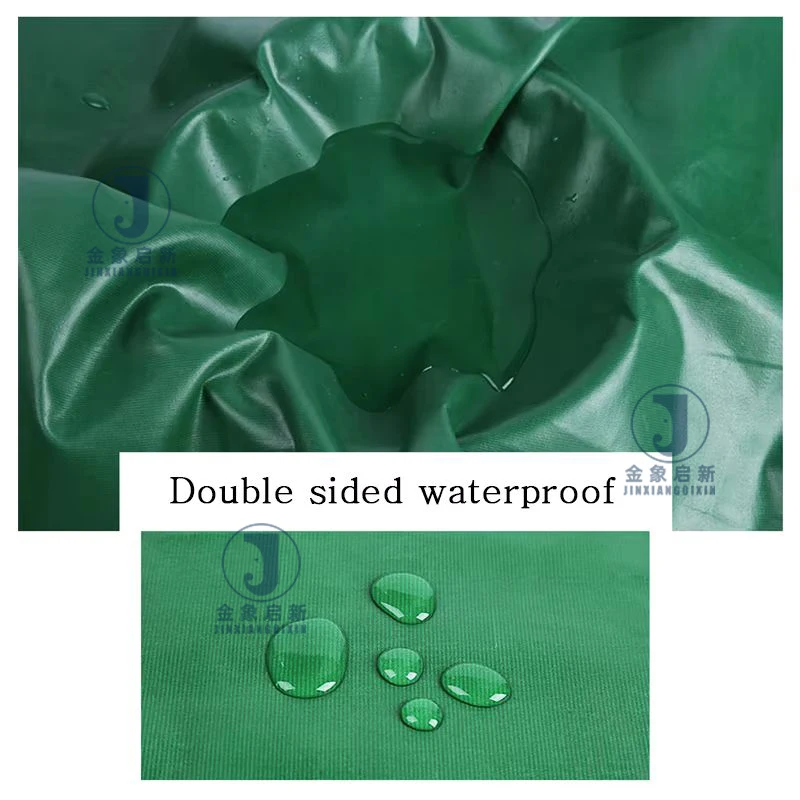
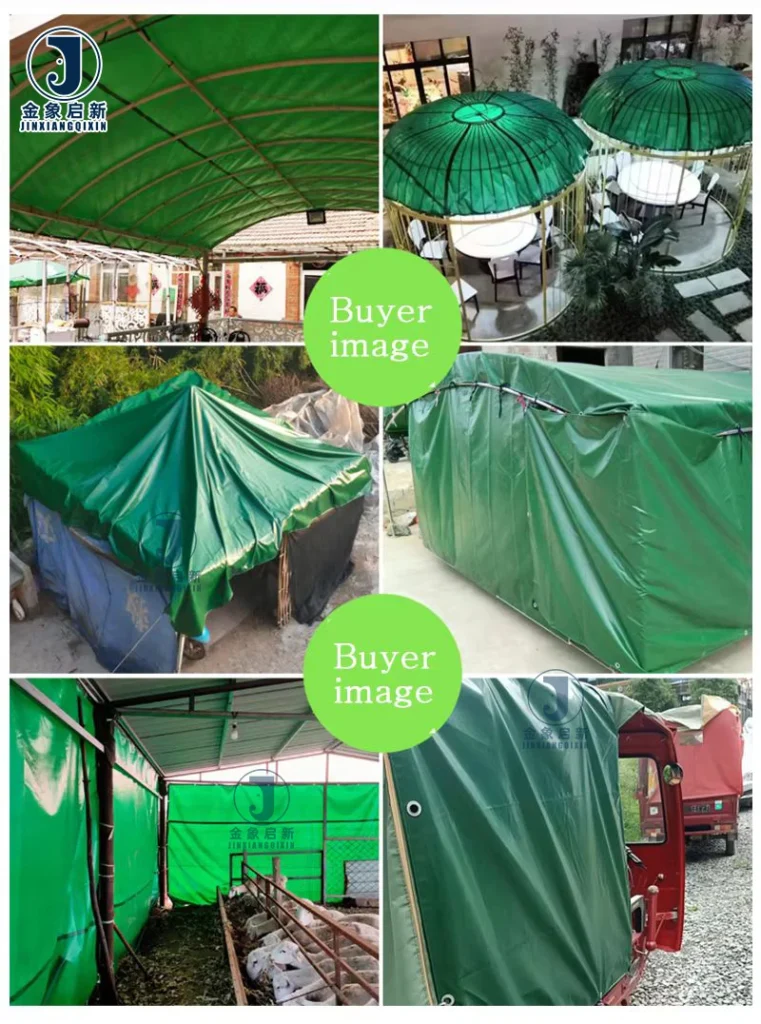
Deep Process Control Over Coating Weight and Adhesion — Every roll of our PVC coated technical fabric undergoes in-process coating weight verification, ensuring the GSM stated on the specification sheet matches what arrives at your fabrication floor, eliminating the costly mismatch between quoted and delivered material.
Technical Specifications
| Parameter | Value |
|---|---|
| Product Type | PVC Coated Fabric |
| Material | PVC Vinyl |
| Base Fabric | Woven |
| Weight | ≥450 g/m² (source value — verify against manufacturer catalog) |
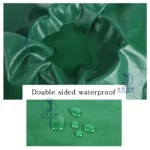
| Waterproof Rating | Waterproof |
| Surface Treatment | Coated |
| Available Treatments | Anti-UV, Waterproof, Oilproof |
| Customization | Custom size available |
| Coating Method | Knife Coated |
| Finish Options | Banner coated / Black back coated options mentioned (source value — verify against manufacturer catalog) |
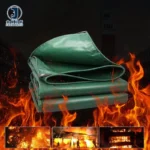
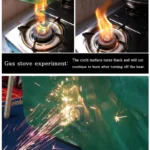
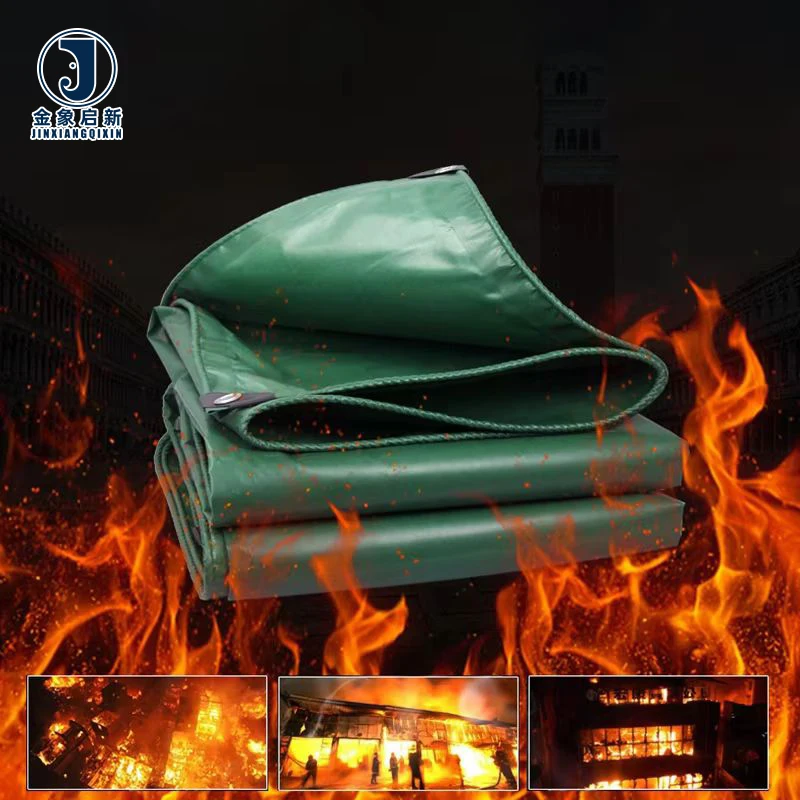
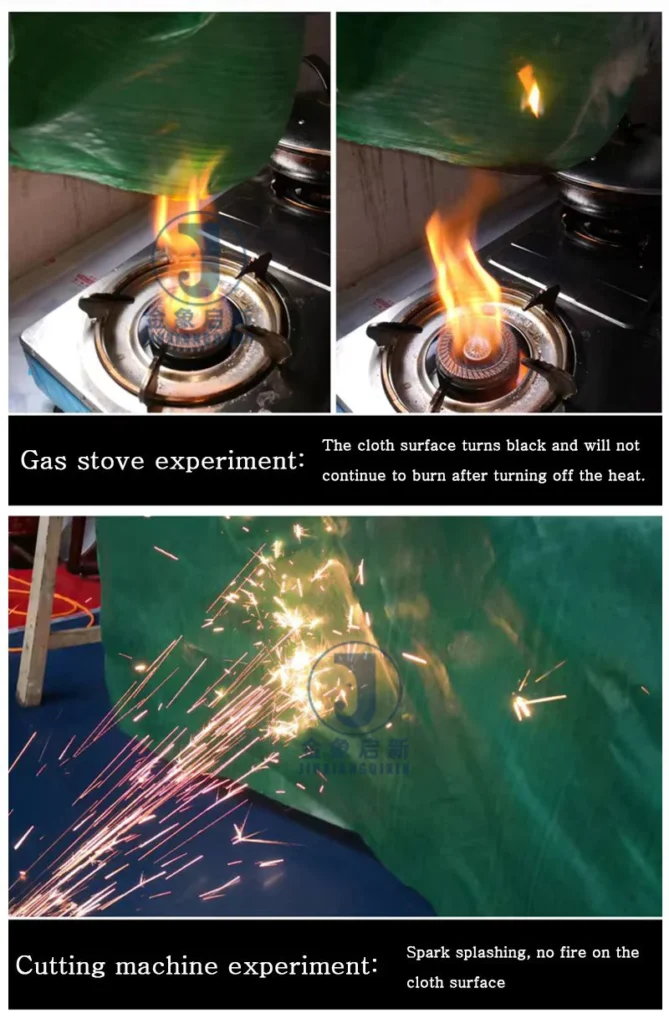
| Fire-Retardant | Available in fire-retardant grades — confirm the grade required for your project specification |
| Anti-Static | Available with anti-static treatment — confirm surface resistance requirement for your site compliance |
Application Suitability
| Application | Exposure & Requirement |
|---|---|
| Mining and tunnelling ventilation duct | Continuous airflow load, flexing at duct bends, mandatory fire-retardant compliance for underground operations |
| Aviation ground support ducting | Fuel-rich environment exposure, anti-static specification to prevent discharge, tight dimensional tolerances |
| Inflatable and membrane structure fabric | Sustained internal pressure, UV and weather exposure, panel welding at curved seams |
| Industrial ventilation for construction sites | Abrasive dust exposure, repeated installation and removal cycles, site safety compliance audits |
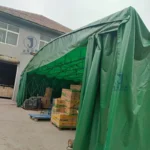
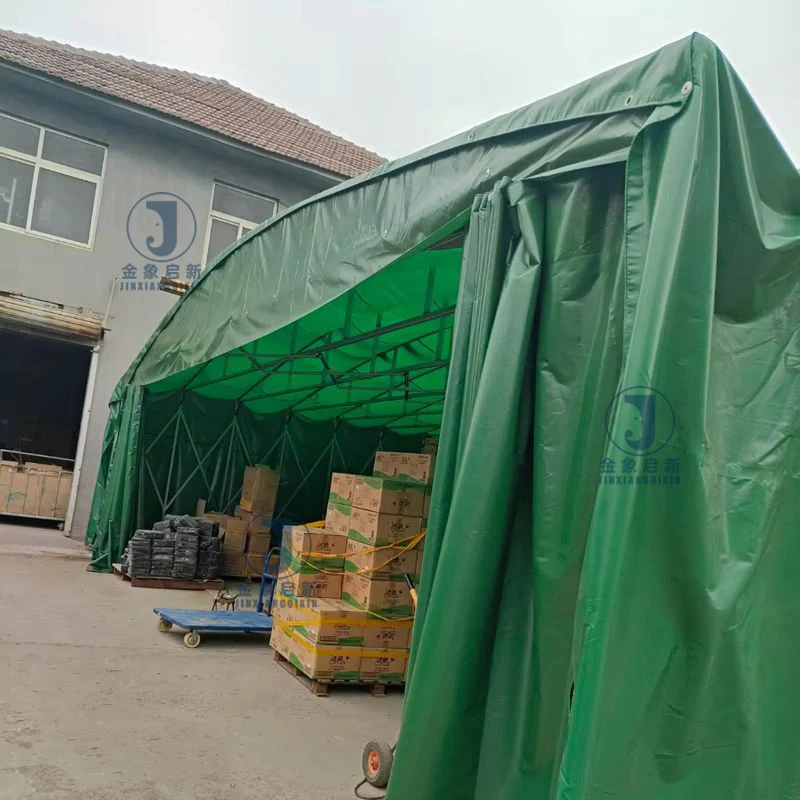
| Temporary enclosure and partition fabric | Rapid deployment and teardown, flex at mounting points, weather resistance for semi-outdoor use |
Why "Fire-Retardant" Means Nothing Without the Grade Behind It
Fire-retardant fabric without a documented test standard is a compliance risk waiting to surface at your next site audit.
Procurement specifications for mining ventilation, aviation ducting and membrane structures increasingly demand grade-specific fire-retardant documentation. Yet fabric arrives on site with nothing more than a quotation stating "flame retardant" — no standard cited, no test method referenced, no pass certificate traceable to the batch delivered. [NEED_CITE: fire classification standards for coated fabrics used in ventilation and membrane structures]. When the site safety officer asks for the test report, the supply chain stalls. Our PVC coated technical fabric is available in fire-retardant grades matched to recognised test standards, with the corresponding documentation supplied as part of the shipment package so your compliance file closes on day one.
How Knife Coating Secures the Airflow Envelope
Knife coating deposits a measured PVC layer onto the woven base fabric under controlled blade pressure, producing a consistent coating weight across the full roll width. For ventilation ducts, this consistency matters at every weld overlap — uneven coating thickness creates weak spots where heat-sealed seams fail before the fabric body does. The woven base provides dimensional stability under positive and negative airflow pressure, preventing the panel distortion that reduces duct efficiency in long-run mining installations. Each batch of our PVC coated fabric carries a coating weight record tied to the production run, giving fabricators a verifiable starting point for dialling in heat-seal temperature and dwell time.
Fire-Retardant and Anti-Static Grades for Regulated Sites
Underground mining operations, aviation ground support areas and public-assembly membrane structures each carry distinct fire-safety and electrostatic requirements. [NEED_CITE: anti-static surface resistance requirements for fabric in fuel-handling environments]. Our PVC coated fabric is offered with fire-retardant treatment available in grades aligned with recognised classification systems, and anti-static treatment available where site specifications demand controlled surface resistance. The critical step is matching the grade to your project’s governing standard before production begins — we request your specification document at inquiry stage so the correct treatment chemistry and test protocol are locked in before coating starts. This prevents the scenario where fabric passes one standard but fails the one your site auditor enforces.
Reading GSM and Denier Together for Duct and Structure Fabric
The ≥450 g/m² weight figure tells you the total mass of base fabric plus PVC coating per square metre, but it does not isolate the contribution of the woven base to tear propagation resistance. Base fabric denier and weave density determine how a puncture or cut spreads under load — a tightly woven base resists tear extension better than a loosely woven one at the same GSM. Knife coating method further influences the outcome: it drives PVC into the interstices of the weave, improving adhesion and peel strength compared to laminated alternatives, which matters when duct panels flex under pulsating airflow. Surface finish — whether banner coated or black back coated — affects not just appearance but also cleanability and how weld seams behave during fabrication. [NEED_CITE: relationship between coating method and peel strength in knife-coated PVC fabrics]. Selecting the right combination of weight, base denier, coating method and finish ensures the fabric performs as a system rather than failing at its weakest interface.
The Hidden Cost of Undocumented Treatment Claims
When fire-retardant or anti-static treatment is claimed without a supporting test report, the risk does not surface in the warehouse — it surfaces on site during a compliance audit or after an incident investigation. Ventilation ducts installed in a tunnel without the correct fire classification documentation can halt an entire excavation cycle. Membrane structures erected for a public event may face shutdown if the fabric certification does not match the local fire authority’s referenced standard. [NEED_CITE: site shutdown incidents linked to missing fire certification for temporary structures]. Anti-static shortfalls in aviation ground support environments create discharge risks that standard quality inspections do not catch without a surface resistance measurement. These failures trace back to a single procurement gap: the treatment was specified on paper but never verified against the delivered roll.
Why Fabricators Source This PVC Coated Fabric Through Jinxiang
Our three full production lines and 36 sets of professional equipment support the volume consistency that duct fabricators and structure builders depend on — roll-to-roll coating weight stays within tolerance across a container-load order. The 10-person R&D team works directly from your duct diameter, panel dimension and treatment specification to develop samples within days, shortening the gap between inquiry and production approval. Dedicated QA/QC runs at every production stage, with 100 percent inspection before shipment so non-conforming rolls never reach your loading bay. Nearly 30 years of focused coated fabric production means our process parameters for knife coating, fire-retardant additive loading and anti-static treatment are drawn from production history, not from trial-and-error on your order. Every shipment includes the documentation set your compliance file requires — from material specification sheets to test reports and certificates of origin.
Documentation & Verification
- Material specification sheet stating base fabric type, coating method and verified GSM per roll
- Fire-retardant test report with grade and standard cited, matched to the batch delivered
- Anti-static test report with measured surface resistance value where treatment is applied
- ISO and CE certificates covering the production facility and management system
- Pre-shipment inspection record confirming visual, dimensional and weight checks before dispatch
- Certificate of origin and customs documentation for cross-border shipment clearance
Fabrication, Handling & Storage
- Calibrate heat-seal temperature to the knife-coated PVC surface before running production seams
- Allow welded seams to cool fully under pressure to achieve full peel strength on ≥450 g/m² fabric
- Store rolls horizontally on pallets to prevent creasing that weakens the coated surface
- Avoid dragging rolls on uncoated concrete floors to protect the banner or black back finish
- Use PVC-compatible cleaners only — solvent-based products degrade the coated surface
- Repair minor field damage with PVC-compatible patch adhesive matched to the coating chemistry
What to Include in Your Inquiry
To move from inquiry to sample approval efficiently, provide the ventilation duct diameter, panel length or structure dimensions you are fabricating against. Specify the fire-retardant grade or anti-static standard your site or market requires, along with the governing authority or test method reference. Confirm whether you need full rolls at stock width or custom-cut panels, and indicate your target colour and any batch consistency requirements for multi-roll orders. If a pre-production sample is needed for weld parameter testing, flag this at inquiry stage so the sample is developed on the same coating line as production stock.
Frequently Asked Questions
Q: What fire-retardant grades are available and which test standards do they meet?
A: Our PVC coated fabric is available in fire-retardant grades aligned with recognised classification systems used in mining, aviation and membrane structure applications. The specific grade offered depends on your project’s governing standard — provide your specification document at inquiry stage so the correct treatment chemistry and test protocol are confirmed before production begins.
Q: How is anti-static performance verified and what surface resistance is achieved?
A: Anti-static treatment is applied during the coating process and verified through surface resistance measurement on the finished roll. The target resistance value is set to match your site specification. We supply the test report with the shipment so your compliance documentation includes the measured result tied to the delivered batch.
Q: Can the fabric be supplied in custom widths and lengths for duct or structure panels?
A: Custom sizing is available to match your duct diameter, panel length or structure geometry. Provide your cut dimensions and quantity at inquiry stage. Our R&D team develops a sample within days for your approval, and production follows on the same coating line to ensure the sample and bulk stock share identical material properties.
Q: What documentation is provided for site compliance audits?
A: Each shipment includes a material specification sheet, fire-retardant and anti-static test reports where applicable, ISO and CE certificates, a pre-shipment inspection record and a certificate of origin. These documents are compiled per order and reference the specific production batch, giving your site auditor a complete and traceable compliance file.
Q: How does knife coating affect weld and seam behaviour during duct fabrication?
A: Knife coating drives PVC into the woven base fabric under controlled blade pressure, producing consistent coating thickness across the roll width. This consistency allows fabricators to set heat-seal parameters once and maintain them across production runs, reducing seam failures that occur when coating weight varies from roll to roll.