

Technical Specifications
| Parameter | Value |
|---|---|
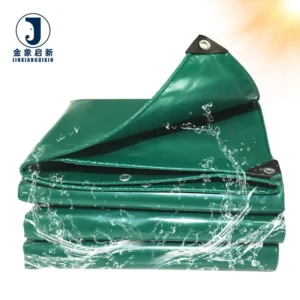
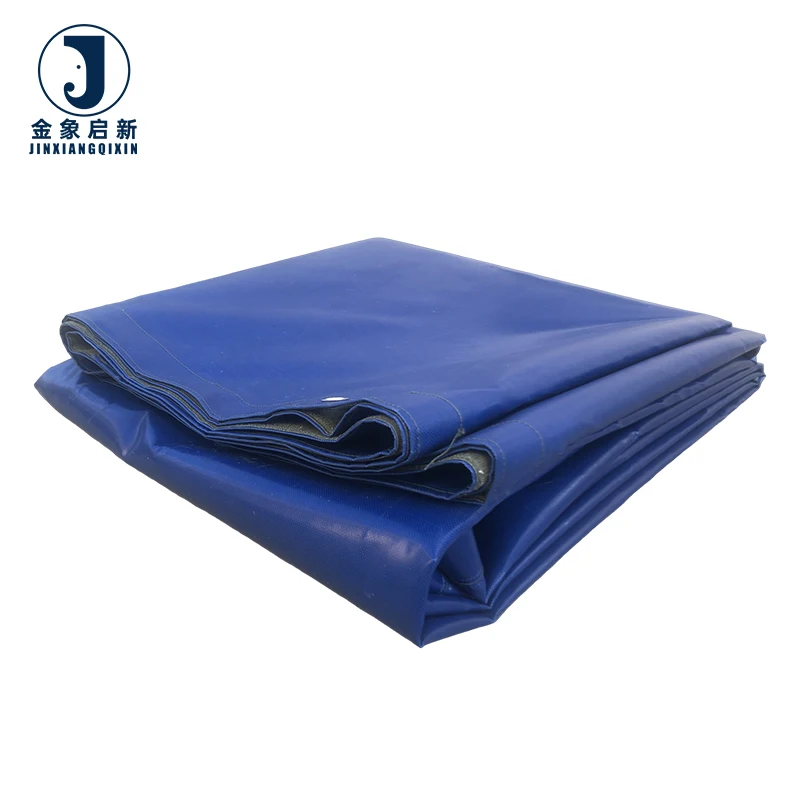
| Product Type | PVC Coated Tarpaulin |
| Material | 100% high toughness polyester yarn with PVC coating |
| Coating Technology | Lamination and hot melt coating |
| Base Fabric Denier | 500D – 2000D options |
| Weight Range | 400 – 1500 g/m² (select grade per application) |
| Thickness | 0.35 – 1.5 mm |
| Tensile Strength | Warp 1500 – 3000 N/5cm, Weft 1200 – 2800 N/5cm |
| Surface Treatment | Cold resistant, mold proof, anti-static treatment, waterproof |
| Flame Retardant | Available in flame retardant grades — confirm the standard (M2 / B1 / NFPA 701 / DIN 4102) required for your project |
| Anti-Static | Anti-static treatment available — request surface resistance test report for mining or tunnelling compliance |
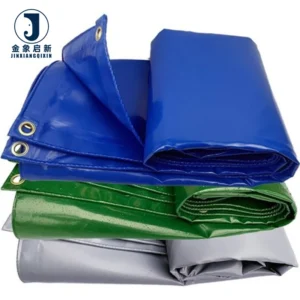
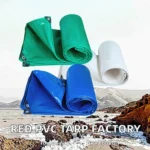
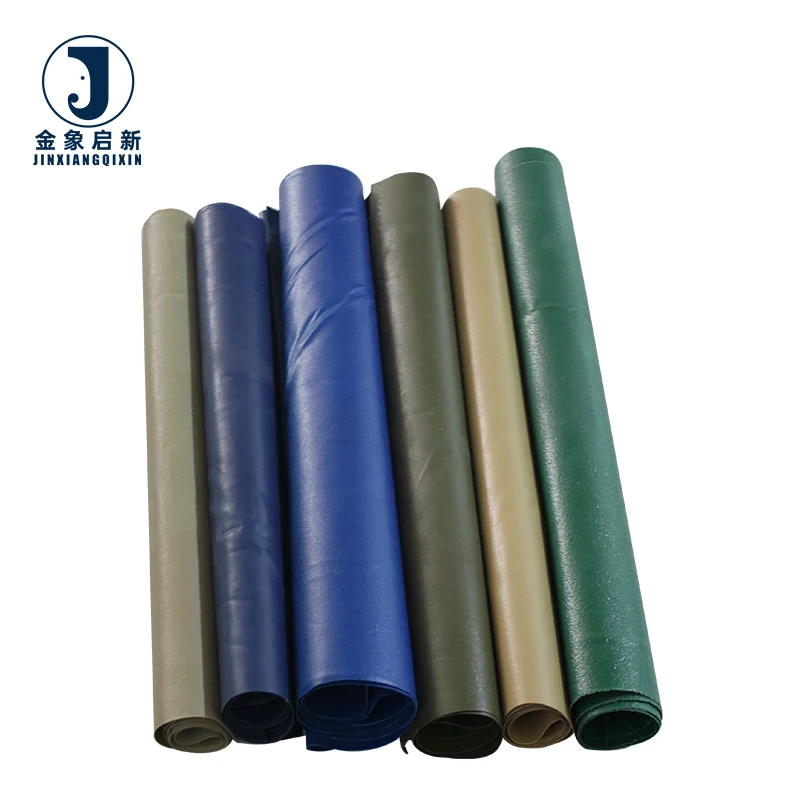
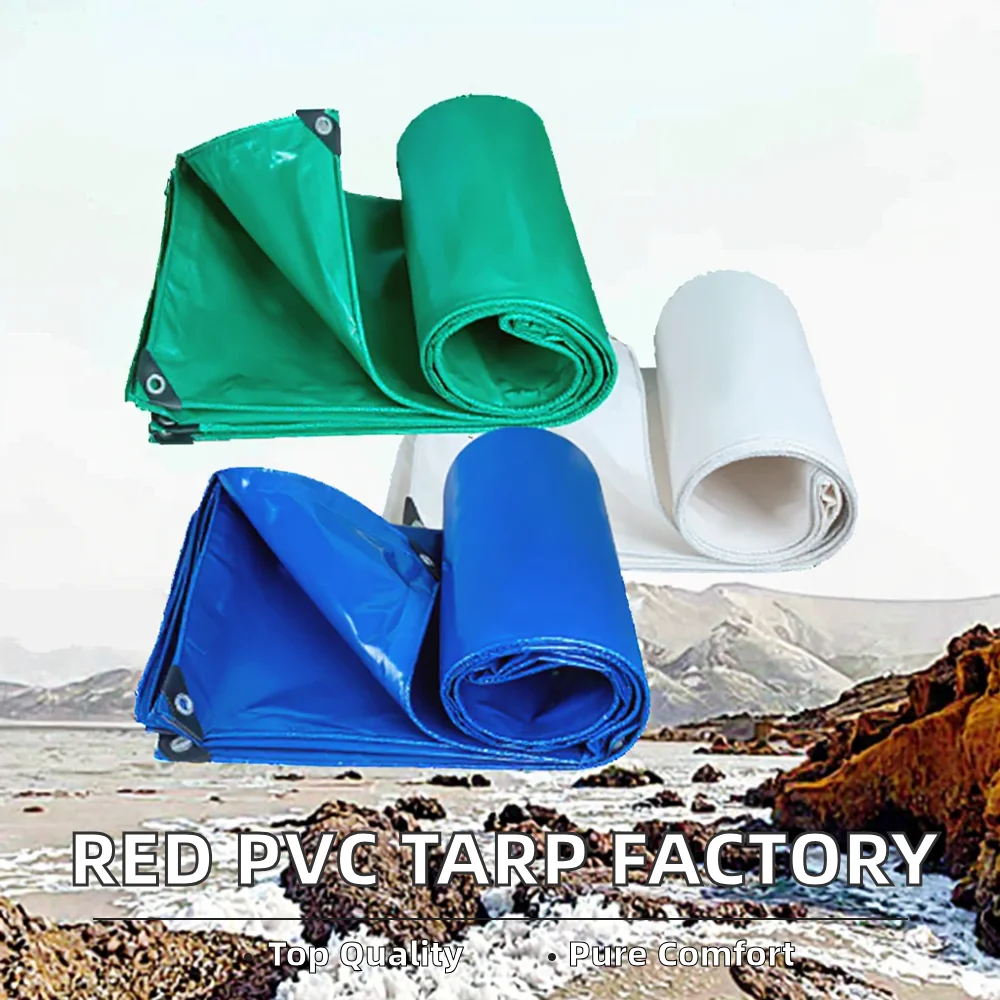
| Colour Options | Blue, Blue/Orange, Green, Grey, Black, Clear, Grey/Green, Orange, or custom colour |
| Certification | ISO and CE |
Application Suitability
| Application | Exposure & Requirement |
|---|---|
| Mining & tunnelling ventilation duct | Confined airflow, dust loading, mandatory fire retardant and anti-static compliance |
| Membrane and inflatable structure fabric | Permanent tensile load, UV exposure, weld seam integrity under flexing |
| Industrial pipe canopy cover | Outdoor weathering, chemical splash risk, thermal cycling, abrasion from wind-driven debris |
| Tensioned architectural membrane | Long-term tensile stress, snow and wind load, colour fastness under direct sunlight |
| Aviation ventilation duct | Fire safety regulation compliance, anti-static to prevent ignition, lightweight for suspended runs |
Why a Test Report Matters More Than the Word "Certified" on PVC Coated Tarpaulin
Every roll of PVC coated tarpaulin destined for a ventilation duct or membrane structure must ship with a verifiable test report — not just a claim on the quotation.
I have reviewed too many material submittals where "flame retardant" appeared in the supplier’s brochure but no test certificate accompanied the delivery. On a mining ventilation project, that gap means the duct fails the site safety audit and work stops until compliant material arrives. The cost is never just the fabric — it is the idle crew, the delayed shaft advance, and the reputational damage with the principal contractor [NEED_CITE: mine ventilation duct fire safety compliance standards]. Anti-static requirements follow the same pattern: without a measured surface resistance value, the duct cannot be approved for use in gassy or dusty atmospheres.
Coating Adhesion and Weld Integrity for Duct Fabrication
Ventilation ducts are fabricated by cutting panels and welding longitudinal and circumferential seams. Hot melt coating and lamination technology, as used on this PVC coated tarpaulin, produces a uniform coating bond that withstands the heat and pressure of high-frequency or hot-air welding. When adhesion is inconsistent, the coating delaminates at the weld line before the base fabric reaches its tensile limit — the seam opens under positive duct pressure and the entire run must be replaced. Our three-line production process controls coating weight at every stage, so the weld zone receives the same thermal energy absorption as the field of the fabric.
Tensile and Tear Performance Under Continuous Duct Pressure
A suspended ventilation duct carries its own weight plus internal positive or negative pressure across spans that can extend dozens of metres. The 500D to 2000D polyester base fabric options provide the tensile reserve to handle these sustained loads. Higher denier yarns resist tear propagation when the duct flexes under airflow surges or when installation crews drag sections through rough tunnel floors [NEED_CITE: ISO 1421 tensile and tear test methods for coated fabrics]. Selecting the correct base fabric denier and weight grade together — rather than specifying GSM alone — ensures the duct holds shape without over-engineering material cost.
Reading the Specification Sheet Beyond GSM
GSM tells you how much material is in each square metre, but it does not tell you how that material is distributed. A 900 g/m² fabric with a 1000D base and balanced coating will outperform a 900 g/m² fabric built on a lighter 500D base with excess coating filler. The coating method matters equally: hot melt coating penetrates the yarn interstices for mechanical lock, while lamination bonds a pre-formed film to the scrim. Each approach affects peel strength, hand feel, and high-frequency weldability differently. For duct fabrication, weld peel strength is often the governing design criterion, not the tensile figure on the data sheet [NEED_CITE: DIN 53354 peel strength test for coated fabric welds]. Thickness, base denier, coating technology and GSM must all be evaluated together to predict field behaviour.
The Cost of Specifying on Price Per Kilogram Instead of Compliance
When procurement decisions reduce to cost per kilogram, the first shortcut is coating weight: the fabric arrives at the quoted GSM but the base fabric is lighter and the coating is heavier — cheaper filler replacing expensive yarn. The second shortcut is omitting the fire retardant or anti-static additive to cut compound cost. Both shortcuts pass a casual visual inspection but fail when the duct is pressure-tested or when the site safety officer requests the test certificate. The replacement cycle, re-fabrication labour and project delay multiply the original material saving several times over [NEED_CITE: ventilation duct compliance failure costs in underground construction].
Why Specialist Fabrication Contractors Source This PVC Coated Tarpaulin Here
Deep process control over coating weight and adhesion across all three weight grades means the GSM on your specification sheet is the GSM on the roll that arrives — verified by dedicated QA/QC at every production stage.
A 10-person R&D team develops samples within days, matching fire retardant grade, anti-static level and colour to your project specification before you commit to bulk production.
Three full production lines and 36 sets of professional equipment support bulk roll output with consistent batch-to-batch colour and coating uniformity, so membrane panels welded on site match visually and structurally.
100% pre-shipment inspection records accompany every dispatch, giving you documented evidence to present at the site compliance audit rather than relying on verbal assurances.
ISO and CE certified production underpins the documentation chain from raw material to finished roll, supporting customs clearance and principal contractor submittal requirements.
Documentation & Verification
- Material specification sheet confirming GSM, base denier, coating method and colour per roll
- Fire retardant test report referencing the specific standard (DIN 4102 / NFPA 701 / M2 / B1) for your market
- Anti-static surface resistance test report for mining and tunnelling duct compliance
- Pre-shipment inspection record with weight verification against quoted GSM
- Certificate of origin and customs documentation for cross-border shipment
Fabrication, Handling & Storage
- Set hot-air weld temperature to match the selected coating grade — heavier grades absorb more heat before bonding
- Allow rolls to acclimatise to workshop temperature before unrolling to prevent creasing in cold-resistant coating
- Store rolls upright on pallets, never stacked flat, to avoid permanent compression marks on the coating surface
- Use a clean, blunt-edge cutter on the 500D–2000D base fabric to prevent yarn pull at the cut edge
- Plan panel nesting on wider rolls to minimise offcut waste and reduce the number of transverse weld seams
- Clean membrane surfaces with neutral pH detergent only — alkaline cleaners degrade the PVC coating plasticiser over time
Specifying Your Requirement
Tell us the ventilation duct diameter, run length and the fire retardant or anti-static standard your site safety plan mandates. If you are fabricating membrane structures, share the panel cutting dimensions and tensile load calculations so we recommend the correct base denier and weight grade. Confirm your target roll width and annual volume so we align production scheduling with your fabrication timeline.
Frequently Asked Questions
Q: What fire retardant standard can you supply for mining ventilation duct?
A: We supply PVC coated tarpaulin with fire retardant treatment matched to your project requirement — common standards include DIN 4102 B1, NFPA 701, M2 and equivalent classifications. Request the specific test report before order confirmation so you can submit it to your site safety officer for pre-approval.
Q: How do you verify anti-static compliance for underground duct applications?
A: Anti-static treatment is applied during compounding and verified by surface resistance measurement. We provide the test report stating the measured value against the standard your mining or tunnelling specification requires. Confirm the target resistance range with your project engineer before sampling.
Q: How can I check the GSM matches the quotation when rolls arrive?
A: Each roll ships with a pre-shipment inspection record stating measured weight. On receipt, cut a measured sample from the roll end, weigh it on a calibrated scale and compare to the specification sheet. Any discrepancy outside tolerance triggers our replacement protocol.
Q: What welding parameters suit this coated fabric for duct fabrication?
A: Weld temperature, speed and pressure depend on the selected weight grade and coating thickness. We supply a fabrication guideline with recommended hot-air or high-frequency settings based on the grade you order. Run a test weld on sample material before committing to production panels.
Q: Can I order custom roll widths for membrane structure panels?
A: Custom widths are available subject to production line capability and minimum order quantity. Share your panel cutting layout so we recommend the roll width that minimises offcut waste and transverse seams. Lead times vary by width and colour — confirm at inquiry stage.