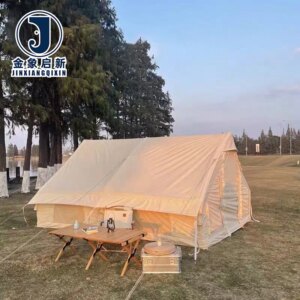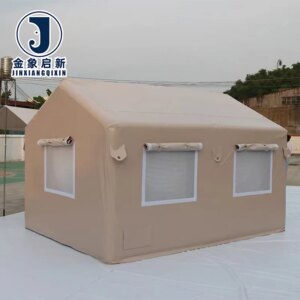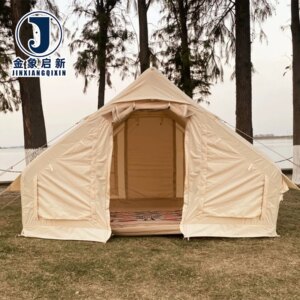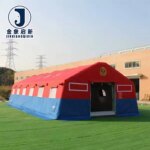



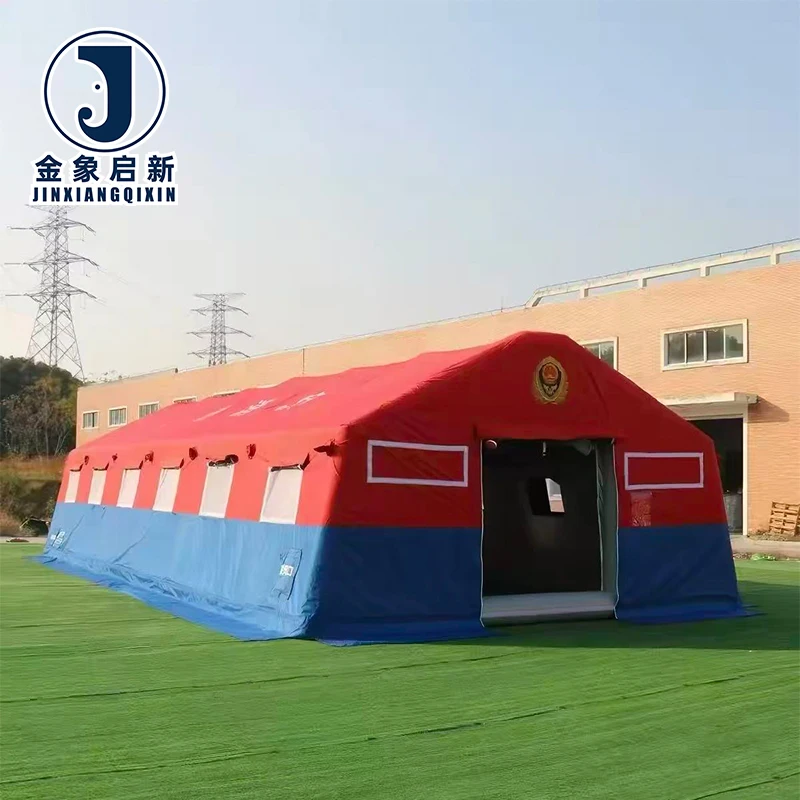
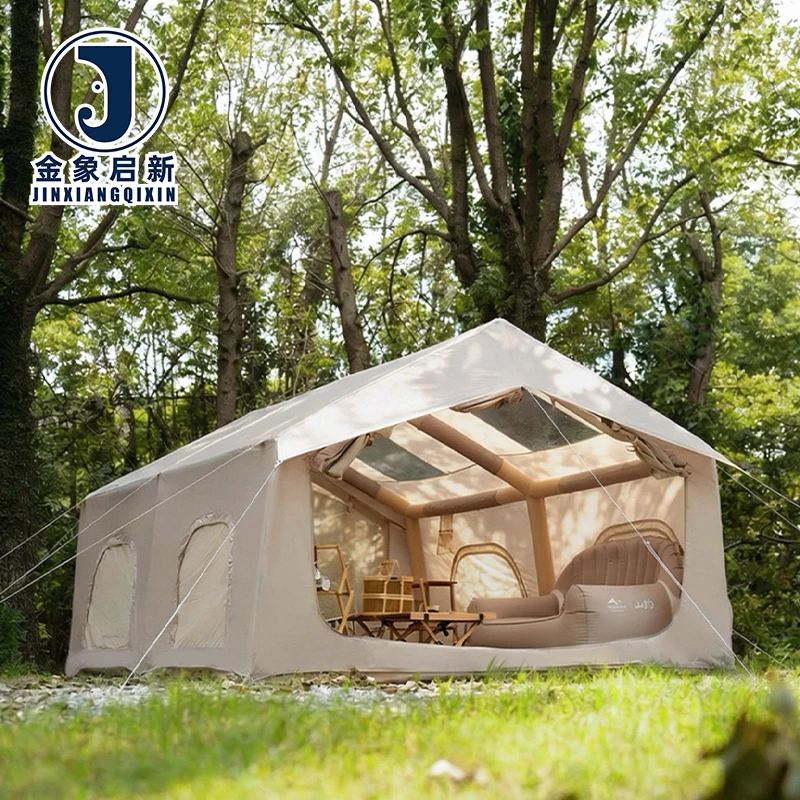


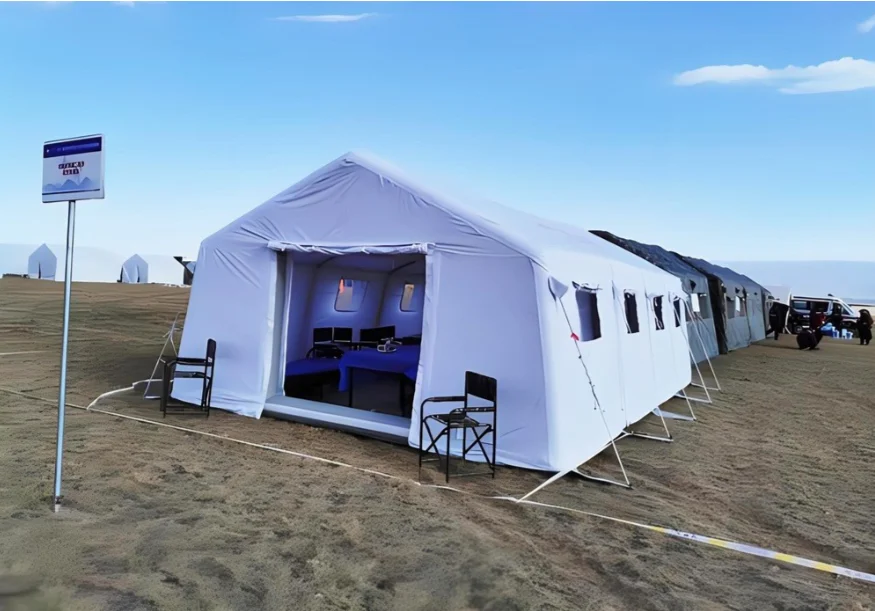

Proven Process Control — Nearly 30 years of coated fabric production ensures consistent coating weight, adhesion, and dimensional accuracy across every inflatable tent roll and finished unit we ship.
Technical Specifications
| Parameter | Value |
|---|---|
| Product Type | Inflatable Tent |
| Core Material | PVC tarpaulin |
| Product Form | Single-layer inflatable structure |
| Waterproof Performance | Stated (rating not stated in source) |
| UV Resistance | Stated (test basis not stated in source) |
| Tear Resistance | Stated (test standard not stated in source) |
| Flame Retardancy | Stated (grade not stated in source) — confirm the grade required for your site |
| Anti-Static Property | Stated (surface resistance or standard not stated in source) — verify compliance against your specification |
| Deployment Mechanism | Quick automatic opening |
| Seasonality | Four-season use |
| Customization | OEM & ODM — sample customization, pattern printing, size adjustment, material specification modifications |
| Production Capacity | 3 full production lines, 36 sets of professional processing equipment |
| R&D Support | 10 technicians handling material selection, structural design, and sample development |
| Quality Control | Full-process inspection with dedicated QA & QC staff |
| Pre-Shipment Testing | Airtightness, structural load capacity, material performance |
| Certifications | ISO 9001, ISO 14001, ISO 45001, CE |
Application Suitability
| Application | Exposure & Requirement |
|---|---|
| Mining & tunnelling site shelters | Continuous dust, mechanical abrasion, mandatory fire-retardant compliance for underground-adjacent structures |
| Aviation & construction command centers | Sensitive electronic equipment requiring anti-static environment, rapid deployment under tight project timelines |
| Disaster relief rapid deployment | Unpredictable weather, four-season temperature swings, minimal setup crew and equipment |
| Equipment storage & logistics bases | Prolonged UV exposure, moisture ingress risk, high-volume gear movement causing floor and wall abrasion |
| Emergency response field hospitals | Hygienic interior surface, wind load stability, thermal insulation across seasonal variation |
What "Fire Retardant" Means When No Grade Is Named on the Certificate
A flame-retardant claim without a cited test standard is a compliance gap that stops site inspections and triggers re-procurement.
Mining and tunnelling contractors specify temporary shelters with fire-retardant fabric as a non-negotiable safety requirement. Yet procurement teams routinely receive inflatable tent fire retardant / anti-static / certified documentation that names the property but omits the grade — leaving site safety officers unable to verify compliance against local regulations. When the inspector asks which standard the fabric meets and the answer is blank, the structure cannot be commissioned. This is not a paperwork inconvenience; it halts operations and forces emergency sourcing at premium cost [NEED_CITE: fire classification standards for temporary industrial structures].
Ventilation and Shelter Compliance Starts at the Fabric Level
Inflatable tent fire retardant / anti-static / certified performance depends on the coating chemistry and the base fabric construction working together. The PVC tarpaulin used in this inflatable tent series is manufactured with fire-retardant and anti-static treatment options integrated during the coating stage, not applied as a surface afterthought. This matters because surface-applied treatments degrade under abrasion and repeated cleaning, while integrated treatments maintain performance through the fabric cross-section. For mining and aviation contractors operating under strict site safety codes, confirming the applicable grade before production begins prevents costly rejection at delivery.
Structural Integrity Under Wind and Thermal Load
Single-layer inflatable structures rely on continuous internal air pressure to maintain their shape against wind and snow loads. The PVC tarpaulin base fabric must deliver consistent tensile and tear strength across every panel, because a weak section will deform first and concentrate stress on adjacent weld lines. Our production process controls coating weight and adhesion at each stage, ensuring that the inflatable tent fire retardant / anti-static / certified fabric maintains structural performance across four-season temperature variation — from sub-zero winter stiffness to summer heat softening [NEED_CITE: tensile and tear test methods for coated fabrics per ISO 1421].
Why Coating Weight and Base Fabric Density Both Matter
GSM alone tells you how much material is present per square metre, but it does not distinguish between a heavy base fabric with thin coating and a light base fabric with thick coating — two constructions that behave very differently under load. A higher-denier base fabric with tight warp and weft density resists tear propagation, while adequate coating weight ensures waterproof integrity and protects the yarns from UV degradation. For inflatable shelters that face sustained internal pressure and external wind load, the balance between base fabric strength and coating thickness determines whether a puncture stays local or propagates into a structural failure. The coating method — whether knife-over-roll, lamination, or calendering — directly affects peel strength at weld seams, which is where most inflatable structures fail first. Surface finish also plays a role: glossy surfaces shed dirt and allow easier cleaning in field hospital or command center use, while matte surfaces reduce glare in operational environments.
The Hidden Cost of Specifying on Price per Unit Alone
Procurement decisions based on unit cost without verifying material composition frequently result in field failures that surface only after deployment. Inflatable shelters with under-specified base fabric tear at the flex points where the structure meets the ground anchoring system, typically within the first season of use. Flame-retardant claims unsupported by batch-specific test reports lead to failed site inspections, forcing contractors to source replacement structures under emergency timelines. Anti-static performance that is not documented to a stated surface resistance value creates risk in environments housing sensitive electronic equipment. Weld seams that separate before the fabric itself fails indicate inconsistent heat-sealing parameters during production — a defect that is invisible at delivery but catastrophic under wind load [NEED_CITE: common failure modes in inflatable industrial structures].
Why Procurement Teams Source This Inflatable Tent Here
Deep process control over PVC coating weight and adhesion, built across nearly 30 years of focused coated fabric production, ensures that every inflatable tent panel meets the specification stated at order confirmation. Three full production lines and 36 sets of professional processing equipment support bulk capacity with reliable on-time delivery, even when project timelines compress during emergency response scenarios. A 10-technician R&D team handles material selection, structural sizing, pattern printing, and sample development — enabling full OEM and ODM customization from a single factory source. Dedicated QA and QC staff conduct full-process inspection including airtightness testing, structural load capacity verification, and material performance checks before any unit ships. ISO 9001, ISO 14001, ISO 45001, and CE certifications document the management systems behind consistent production output.
Documentation & Verification
- Material specification sheet stating PVC base fabric, coating weight, and treatment options for each inflatable tent order
- Batch-specific fire-retardant and anti-static test reports aligned to the standards your site requires
- Pre-shipment inspection records covering airtightness, structural load capacity, and material performance
- Certificate of origin and customs documentation supporting international project logistics
- Roll and unit packing list with dimensional verification against confirmed specifications
Fabrication, Handling & Storage
- Heat-seal weld parameters must match PVC coating thickness to prevent seam failure before fabric reaches end of service life
- Store inflated or deflated units dry and avoid prolonged compression that creates permanent crease marks in the PVC tarpaulin
- Clean surfaces with neutral pH detergent to preserve anti-static treatment integrity and coating adhesion
- Field repair kits should include PVC-compatible adhesive and patch material matching the coating weight of the original fabric
- Deploy in temperatures above the PVC cold-crack threshold to prevent panel damage during unfolding and inflation
- Anchor points distribute load across reinforced sections — avoid attaching tie-downs to unreinforced single-layer membrane areas
How to Structure Your Enquiry
Provide the deployment scenario, expected environmental exposure including temperature range and wind conditions, and the fire-retardant or anti-static standards your site mandates. Specify the required dimensions, quantity, and whether you need finished units or fabric for your own fabrication. Confirm colour, pattern printing, and any custom features such as partition walls or ventilation openings. Indicate whether sample approval is required before production commitment, and share your project timeline so we can align lead time and dispatch scheduling accordingly.
Frequently Asked Questions
Q: What fire-retardant grade does the inflatable tent fabric carry, and will it pass mining or aviation site inspections?
A: The PVC tarpaulin is manufactured with fire-retardant treatment integrated during coating. The specific grade depends on your market requirement — confirm the test standard your site mandates (such as DIN 4102, NFPA 701, or local equivalent) so we can supply the matching grade and batch-specific test report with your shipment.
Q: How is anti-static performance verified for environments with sensitive electronic equipment?
A: Anti-static treatment is applied during the PVC coating process. The applicable surface resistance value or test standard must be confirmed against your site compliance requirements before production. We supply test documentation with each batch to support your safety inspection and regulatory audit.
Q: Can tent dimensions, printing, and material specifications be customized for specific deployment scenarios?
A: Full OEM and ODM customization is available, including size adjustment, pattern printing, material specification modifications, and structural features like partition walls or ventilation openings. Our 10-technician R&D team develops samples for your approval before production begins, ensuring the final unit matches your exact field requirements.
Q: What documentation accompanies each shipment to support safety inspections and compliance verification?
A: Every shipment includes material specification sheets, batch-specific test reports for fire-retardant and anti-static properties where applicable, pre-shipment inspection records covering airtightness and structural load testing, certificates of origin, and packing lists. This documentation package supports site safety audits and regulatory compliance reviews.
Q: How does the factory ensure material performance consistency across large-volume inflatable tent orders?
A: Dedicated QA and QC staff conduct full-process inspection at every production stage, with 100% pre-shipment testing covering airtightness, structural load capacity, and material performance. Three full production lines operating under ISO 9001 management systems maintain batch-to-batch consistency in coating weight, adhesion, and dimensional accuracy.