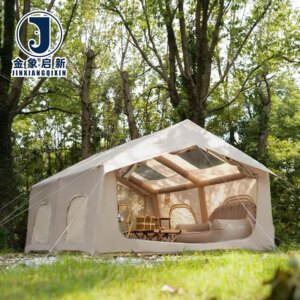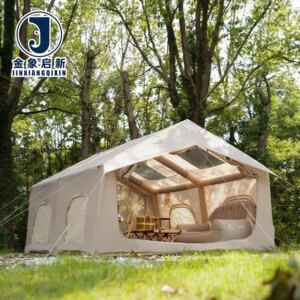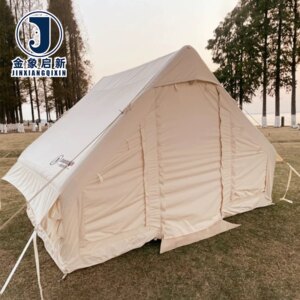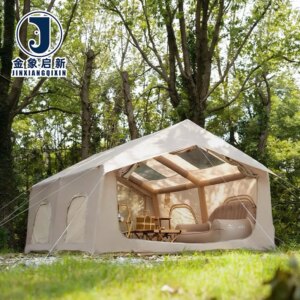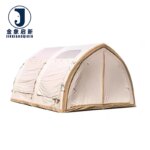
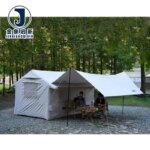
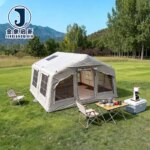
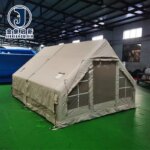

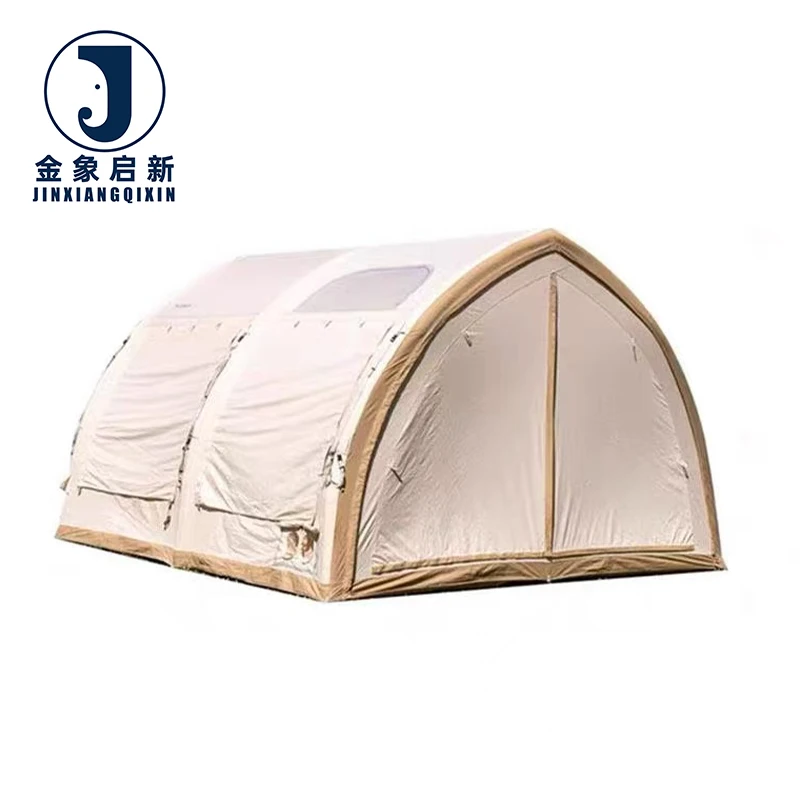
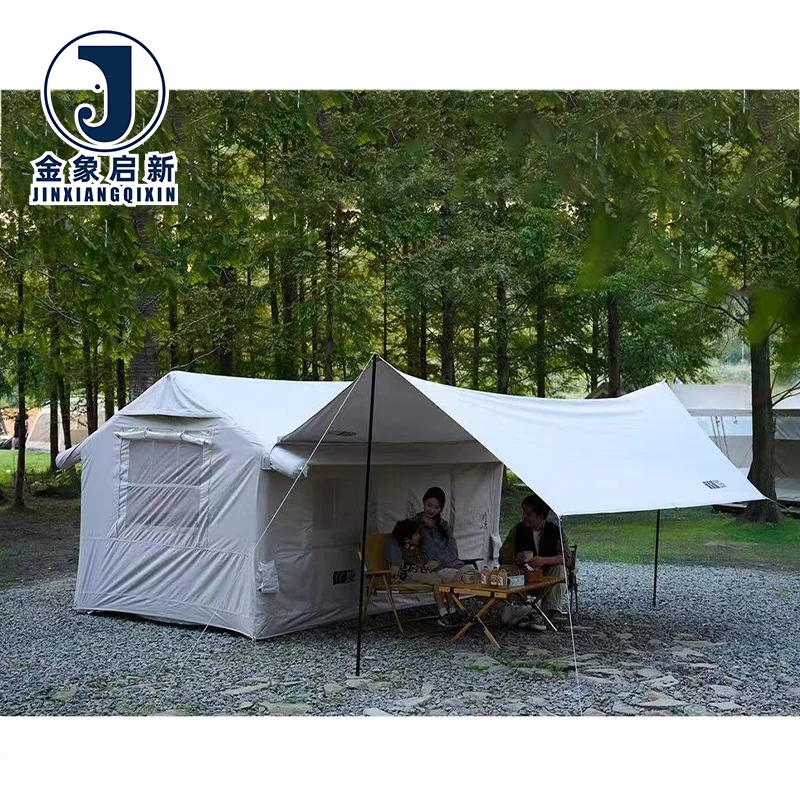
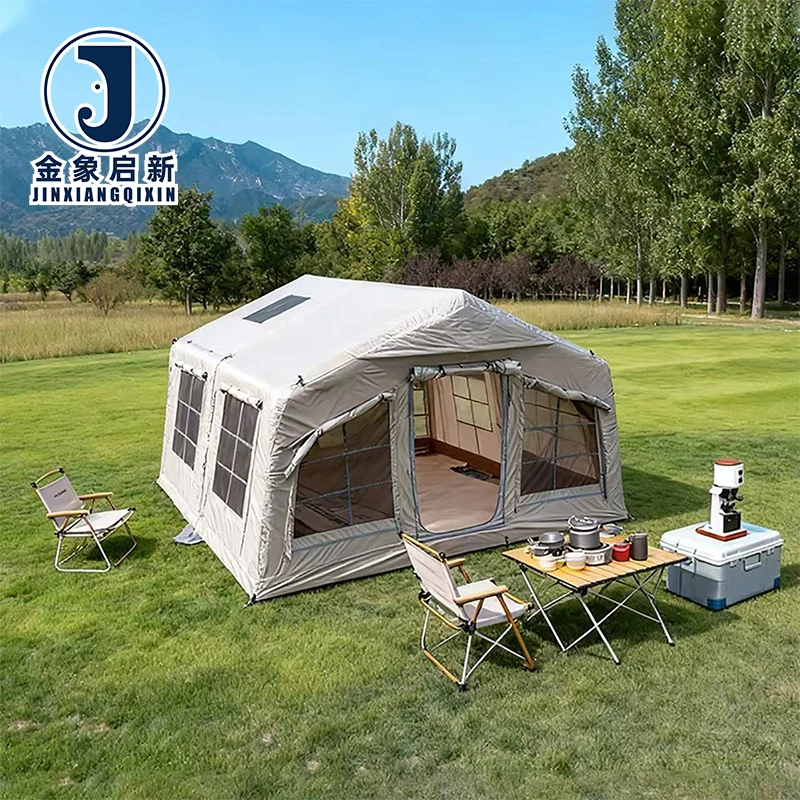
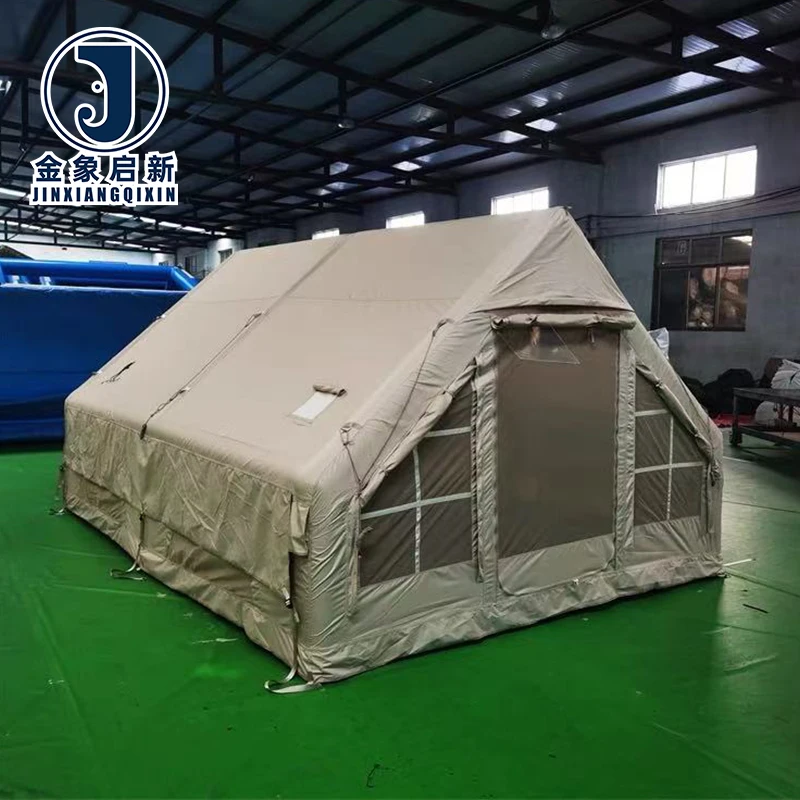
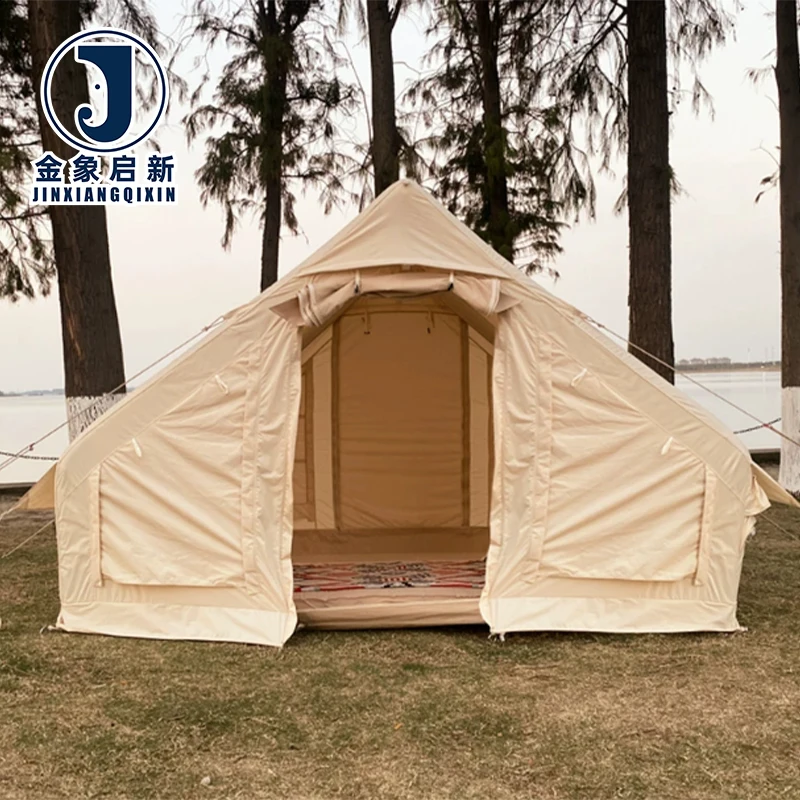
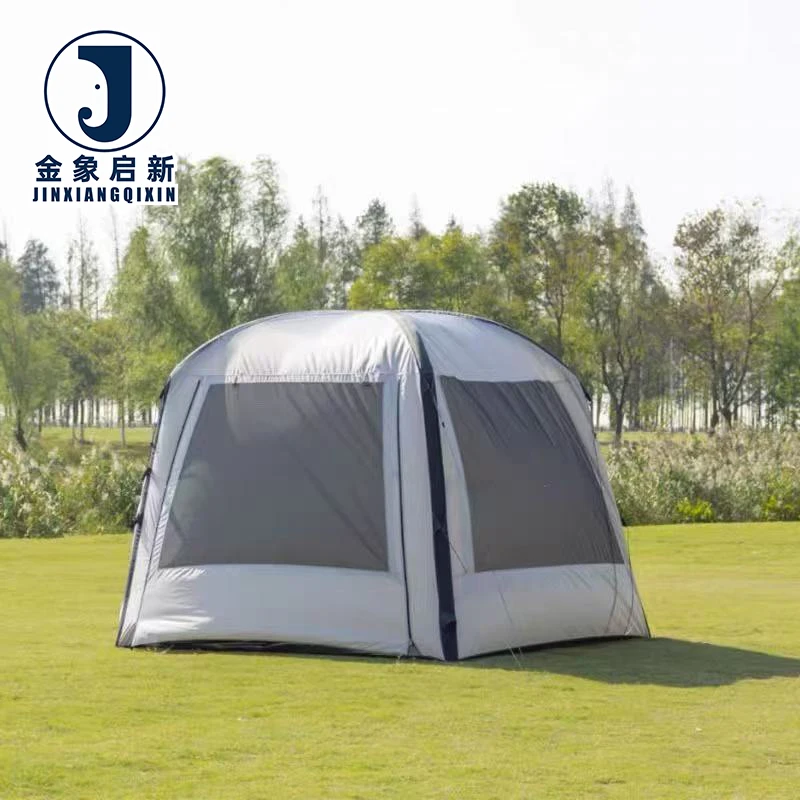
Coated Fabric Process Control — Nearly 30 years of PVC coating expertise ensures consistent adhesion and weight verification across every inflatable tent fabric roll we produce.
Technical Specifications
| Parameter | Value |
|---|---|
| Product Type | Inflatable Tent |
| Core Material | PVC Tarpaulin |
| Product Forms | Single Layer Construction, Extended Type |
| Key Features | Waterproof, Tear-resistant |
| Fire-retardant | Available in fire-retardant grades — confirm the grade required for your market |
| Anti-static | Available with anti-static treatment — surface resistance range to be confirmed per application |
| UV Resistance | UV-resistant treatment available — test basis to be confirmed against specific standard |
| Customization | OEM & ODM, sample customization, pattern printing |
| Certifications | ISO9001, ISO14001, ISO45001, CE |
Application Suitability
| Application | Exposure & Requirement |
|---|---|
| Mining & Tunnelling Shelters | Confined-space fire safety mandates, dust accumulation, potential electrostatic discharge in dry ventilation zones |
| Aviation Ground-Support Enclosures | Tarmac UV exposure, jet-fuel proximity requiring fire-retardant compliance, static control near avionics |
| Disaster-Relief Deployable Shelters | Rapid inflation demand, four-season weather swings, repeated pack-and-deploy abrasion cycles |
| Construction Site Temporary Storage | Direct sun and rain exposure, wind uplift on extended-type volumes, site debris puncture risk |
Why "Fire-Retardant" Means Little Without the Grade Behind Your Inflatable Tent Fabric
Compliance on-site depends on the test standard, not the label.
When an inflatable shelter arrives at a mining concession or aviation hangar without the specific fire-retardant certificate the safety officer demands, the entire structure sits idle. I have visited sites where crews unpacked inflatable tent fabric only to discover the documentation did not match the local regulation — leaving project managers scrambling for alternative cover while downtime costs accumulate. The gap between a generic "fire-retardant" claim and a verifiable grade such as B1 per DIN 4102 or NFPA 701 is where most procurement failures surface. [NEED_CITE: DIN 4102 fire classification for building materials]
Ventilation and Inflatable Structure Compliance in High-Risk Environments
Mining and tunnelling contractors operate under strict ventilation and fire-safety audits. Inflatable tent fabric deployed in these zones must demonstrate both fire-retardant behaviour and controlled surface resistivity to prevent electrostatic build-up in dry, dust-laden air. Our production line handles these requirements by integrating treatment at the coating stage rather than relying on post-finish sprays that can wear unevenly. Specifying the exact Inflatable Tent Fabric fire retardant / anti-static / certified grade upfront avoids costly re-testing once the shelter is inflated underground.
Rapid-Deployment Design for Emergency and Aviation Scenarios
Disaster-relief responders and aviation ground crews need shelters that inflate quickly and stand up to wind without excessive anchoring. The single-layer construction of this inflatable tent balances membrane weight against structural rigidity, allowing a small compressor to achieve full internal pressure within minutes. Extended-type configurations provide standing-height interior volume for triage stations or avionics staging, while the PVC tarpaulin membrane resists puncture from gravel and equipment handling during repeated pack-and-deploy cycles. [NEED_CITE: tensile and tear test methods for coated fabrics per ISO 1421]
Reading the Specification Sheet Beyond the Headline Numbers
GSM alone does not predict how an inflatable membrane will behave under wind load. The base fabric denier and weave density determine tear propagation resistance, while the coating weight governs air-holding capability and weld integrity. A lighter base fabric with a thick coating may inflate well but tear easily at stress concentrators; a heavier base with thin coating may resist tearing yet leak at the seams. For inflatable tent fabric, the balance between base and coating is more critical than the total GSM figure. Coating adhesion — achieved through controlled knife-over-roll application — dictates whether the PVC layer delaminates after repeated inflation and deflation cycles. Fire-retardant and anti-static additives must be compounded into the PVC matrix itself; surface-applied treatments tend to diminish after field cleaning and UV exposure.
The Hidden Cost of Specifying Inflatable Membrane Fabric on Price Alone
When procurement focuses on lowest cost per square metre, the first compromise is usually coating adhesion. Poorly bonded PVC layers separate at the heat-welded seams during inflation, causing the shelter to sag or collapse under its own weight. I have inspected returned inflatable tent fabric where the weld line peeled cleanly because the coating formulation was not matched to the welding temperature window specified by the fabricator. Batch-to-batch colour drift is another frequent issue — two rolls inflated side by side at a disaster-relief camp may show visible shade differences if pigment dosing was not controlled per production run. [NEED_CITE: PVC coating adhesion failure modes in inflatable structures]
What Differentiates This Production Line
Deep process control over coating weight and adhesion means every roll of inflatable tent fabric leaves the line with verified GSM and consistent peel strength. Three full production lines and 36 sets of professional equipment allow us to schedule dedicated runs for fire-retardant or anti-static formulations without cross-contamination from standard grades. A 10-technician R&D team develops sample panels within days, letting you test inflation behaviour and weld parameters before committing to a full order. Dedicated QA and QC staff inspect every roll at coating, slitting and packing stages, with 100% pre-shipment inspection recorded against your purchase order.
Documentation & Verification
- Material specification sheet listing base fabric, coating type, and confirmed GSM per roll
- Fire-retardant test report matching the grade specified for your market
- Anti-static surface resistance measurement recorded per production batch
- ISO9001, ISO14001, ISO45001 and CE certificates included in shipment documentation
- Pre-shipment inspection record with roll-by-roll weight and visual check
Fabrication, Handling & Storage
- Heat-weld at temperatures matched to the PVC formulation — request our weld parameter guide for this inflatable tent fabric grade
- Store rolls upright on pallets to prevent flat-spot creasing that weakens the coating at fold lines
- Avoid dragging single-layer membrane sections over abrasive ground during inflation setup
- Clean with mild detergent only; solvent-based cleaners can degrade anti-static surface treatment
- Repair minor punctures with PVC-compatible adhesive patches cut from the same material batch
Moving Forward With Your Specification
To help us recommend the correct inflatable tent fabric formulation, share your deployment environment, the fire-retardant or anti-static standard your site mandates, and the approximate membrane area per shelter. If you require pattern printing or custom colour matching, provide your Pantone or RAL reference along with expected annual roll consumption so we can plan dedicated production runs. Sample panels are available for weld testing and inflation trials before you finalise your order.
Frequently Asked Questions
Q: Which fire-retardant standards can this inflatable tent fabric meet?
A: We formulate PVC compounds to match specific standards including M2, B1 per DIN 4102, and NFPA 701. State the regulation your site requires at inquiry stage, and we will supply a test report from an accredited laboratory confirming the grade achieved for your production batch.
Q: How is anti-static performance verified before shipment?
A: Surface resistivity is measured per batch using a standard electrode method. The target resistance range depends on your application — mining and aviation environments typically demand different thresholds. Confirm your required range so we can adjust the additive loading and document the result on your inspection record.
Q: What OEM and ODM options exist for inflatable structures?
A: We support custom panel cutting, pattern printing, single-layer or extended-type construction, and sample development. Provide your shelter dimensions, inflation pressure target, and any branding requirements. Our R&D team returns sample panels for your welding and inflation validation before mass production begins.
Q: How do you maintain colour consistency across large inflatable tent orders?
A: Pigment dosing is controlled per compounding batch, and each roll is checked against the approved colour standard under controlled lighting. For multi-roll orders, we reserve a single compounding batch to eliminate shade variation between rolls deployed side by side on the same site.
Q: What documentation ships with each order for compliance audits?
A: Every dispatch includes the material specification sheet, batch-specific quality inspection record, fire-retardant and anti-static test reports where applicable, ISO and CE certificates, packing list, and certificate of origin. Additional customs or site-entry documents can be prepared upon request.