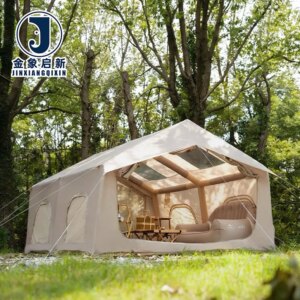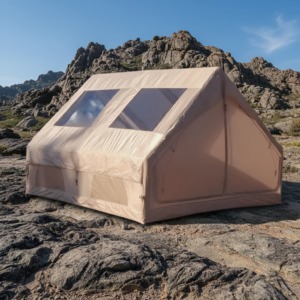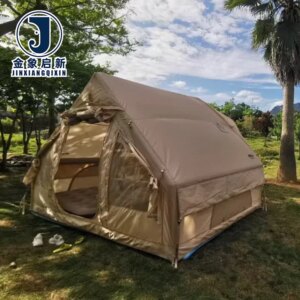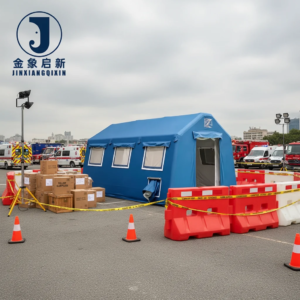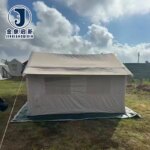
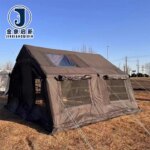
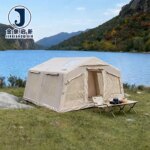
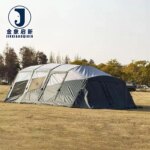
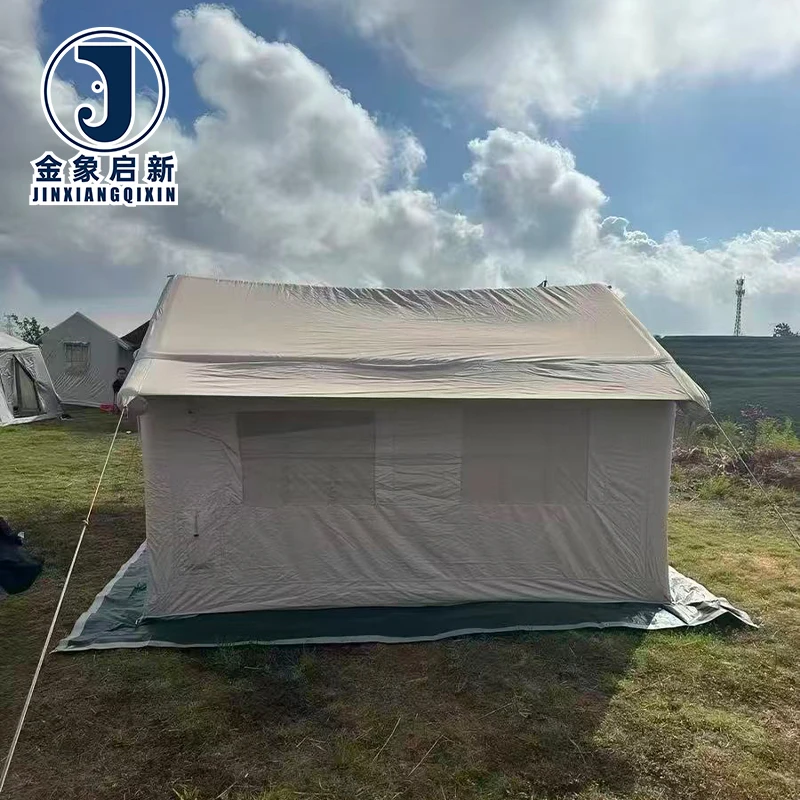
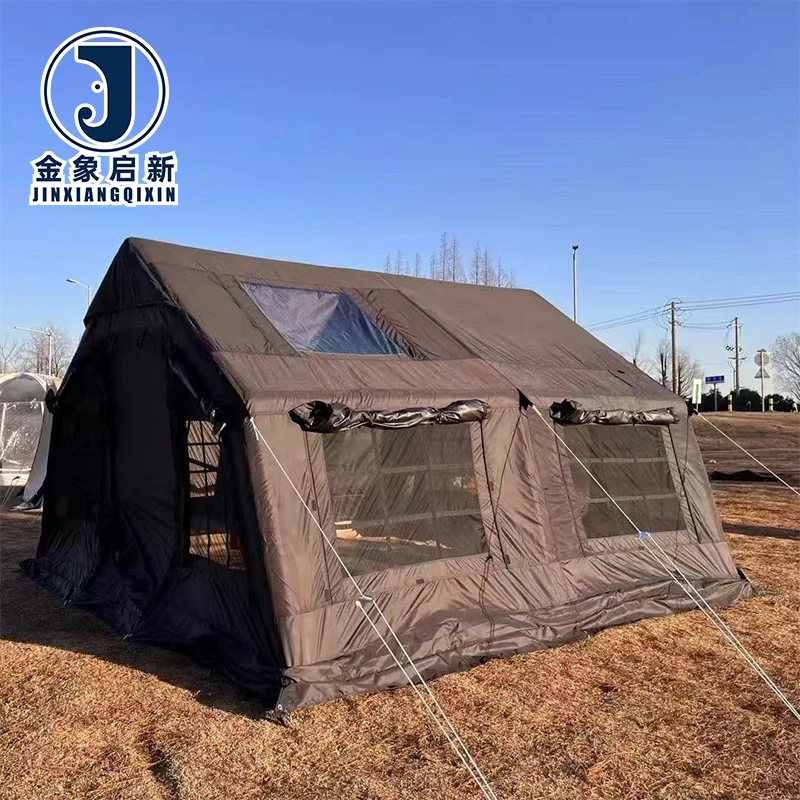
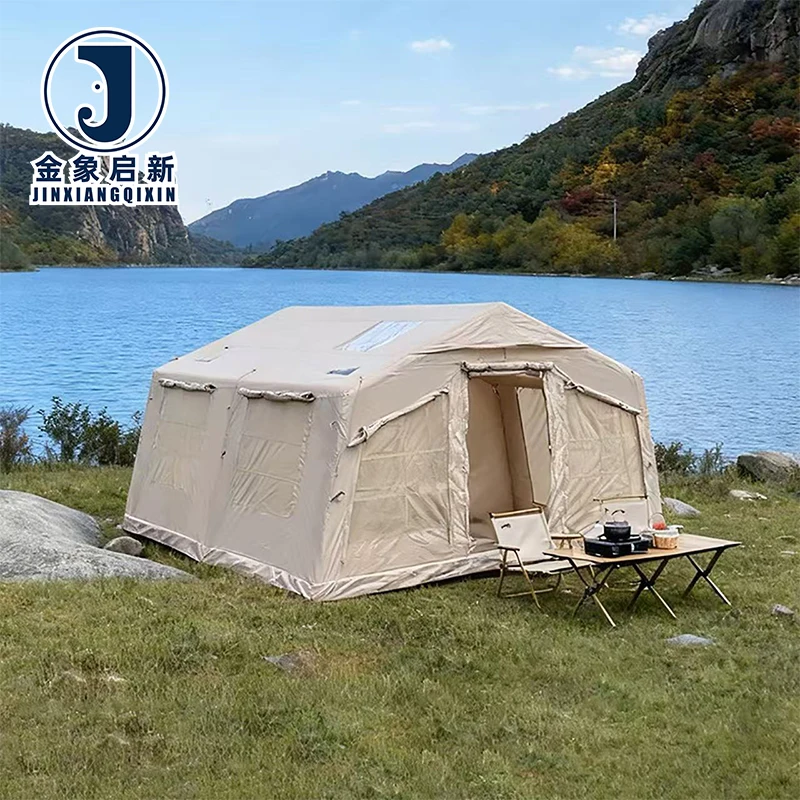
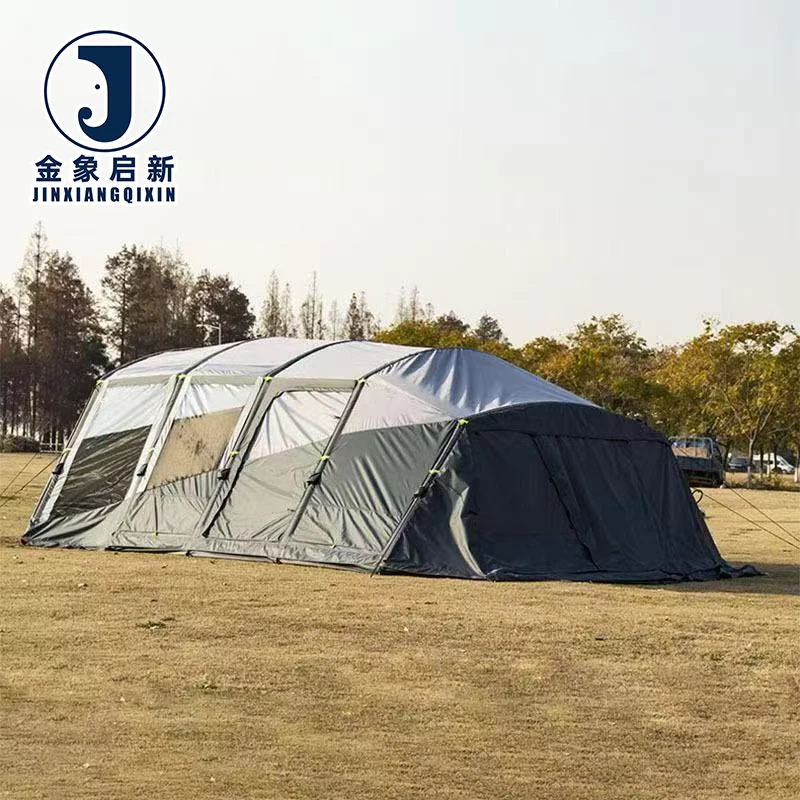
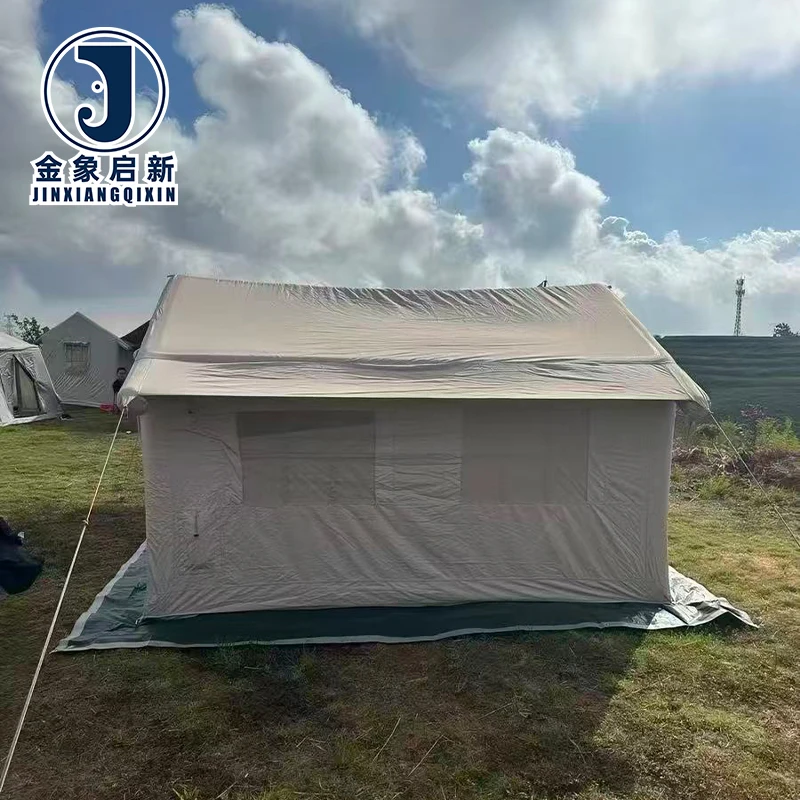
Deep Process Control Over Coating Weight and Adhesion — every batch of Oxford waterproof fabric used in our inflatable structures undergoes in-process QA to ensure the coating integrity meets the demands of rapid-deployment industrial shelters.
Technical Specifications
| Parameter | Value |
|---|---|
| Product Type | Inflatable Tent |
| Core Material | Oxford Waterproof Fabric |
| Waterproof Rating | ≥10,000mm H₂O |
| Operating Temperature Range | -30°C to 70°C |
| UV Resistance | UPF 50+ (test basis not stated in source — confirm requirement for your market) |
| Tensile Strength | ≥300N/5cm (standard not stated in source) |
| Tear Resistance | ≥150N (standard not stated in source) |
| Key Features | Automatic Opening, Four-Season Design, Single Layer Construction, Extended Type |
| Dimension Tolerance | ±2cm |
| Material Thickness Tolerance | ±0.1mm |
| Flame Retardant | Available in flame retardant grades — confirm the grade required for your market |
| Anti-Static | Available in anti-static grades — confirm compliance requirements for your site |
Application Suitability
| Application | Exposure & Requirement |
|---|---|
| Mining and tunnelling rapid-deployment shelters | Underground particulate exposure, strict fire-retardant and anti-static compliance, low-light deployment speed |
| Aviation ground operations temporary structures | Wind load, jet blast proximity, tarmac abrasion, rapid inflation and deflation cycles |
| Emergency preparedness and disaster relief staging | Unpredictable weather, repeated deployment and storage, multi-climate temperature swings |
| Construction site temporary workspace | UV exposure, dust and debris impact, daily setup and teardown by non-specialist crews |
| Logistics mobile storage at loading zones | Forklift proximity, ground moisture, frequent relocation across uneven surfaces |
What Happens When an Inflatable Tent Lacks the Certification Your Site Demands
An inflatable structure is only as compliant as the documentation that ships with it.
I have visited mining sites where an inflatable tent fire retardant claim was made on the quotation, but no test report arrived with the goods. The site safety officer rejected the structure on the spot, and the contractor lost days sourcing a replacement while the project clock kept running. The same pattern repeats at aviation facilities and large-scale emergency staging areas where procurement teams assume certification is a given until the audit trail is requested.
[NEED_CITE: fire-retardant classification standards for temporary industrial structures in mining and aviation environments]
When a supplier cannot produce batch-specific test documentation for flame retardancy and anti-static performance, the buyer absorbs the compliance risk entirely. This is not a gap that can be closed after delivery.
How Oxford Waterproof Fabric Performs Under Four-Season Industrial Conditions
The Oxford waterproof fabric used in this inflatable tent carries a waterproof rating of ≥10,000mm H₂O, meaning it resists sustained hydrostatic pressure well beyond typical rainfall scenarios encountered on construction sites or disaster relief staging areas. The single layer construction keeps transport weight manageable while the four-season design addresses the temperature extremes from -30°C to 70°C that industrial operations face across different geographies.
Why Automatic Opening Changes the Deployment Equation
For time-critical operations such as emergency response or mine-site shift changes, the automatic opening mechanism eliminates the manual assembly steps that traditionally slow inflatable structure deployment. Crews can have the shelter pressurised and operational in a fraction of the time required for pole-and-sleeve alternatives, which matters when personnel or equipment need immediate weather protection. [NEED_CITE: comparative deployment times for automatic versus manual inflatable shelter systems in industrial settings]
Reading the Specification Sheet Beyond the Headline Numbers
The tensile strength of ≥300N/5cm and tear resistance of ≥150N indicate how the Oxford fabric handles point loads and seam stress during inflation and wind exposure. Tensile strength alone does not predict field performance — the base fabric weave density and coating adhesion together determine whether a tear propagates or arrests. The ±0.1mm material thickness tolerance reflects consistent coating application across the roll, which directly affects how evenly the inflatable bladder holds pressure. A fabric that varies in thickness will develop soft spots under sustained inflation, accelerating fatigue at those zones.
The Cost of Overlooking Batch-to-Batch Consistency
When multiple inflatable tents are deployed side by side at an industrial site, colour variation between batches is immediately visible and signals inconsistent coating formulation to any auditor. More critically, a batch where the coating weight drifts from the stated specification will show different inflation behaviour — some units may sag while others hold pressure, forcing crews to rotate stock unpredictably. [NEED_CITE: coated fabric batch consistency impact on inflatable structure performance in field conditions] This is why pre-shipment inspection records with batch-specific results are non-negotiable for project-based procurement.
Why Industrial Buyers Source This Inflatable Tent Here
Nearly 30 years of focused coated fabric production means the Oxford waterproof material used in these inflatable structures benefits from deep process control over coating weight and adhesion — not outsourced base fabric with a third-party coating pass.
Three full production lines and 36 sets of processing equipment provide the capacity to fulfil project-volume orders without splitting batches across different machines, which is where consistency problems typically originate.
A 10-person R&D team handles material selection, sample development and custom sizing, so project-specific inflatable dimensions can be prototyped and validated before bulk production commits.
Dedicated QA/QC at every production stage with 100% inspection before shipment ensures that every inflatable tent that leaves the facility has been checked against its specification sheet, not just spot-sampled.
Samples are developed within days for custom requirements, allowing procurement teams to validate inflation behaviour, seam integrity and colour match before confirming the full order.
Documentation & Verification
- Material specification sheet stating Oxford base fabric, coating composition, and waterproof rating per batch
- Test report for fire-retardant and anti-static grades where applicable, matched to batch number
- ISO 9001, ISO 14001, ISO 45001 and CE certificates provided with every shipment
- Pre-shipment inspection record with dimensional tolerance check and inflation pressure test results
- Roll packing list with batch traceability for multi-unit project orders
Fabrication, Handling & Storage
- Heat-weld seam parameters must account for the Oxford fabric coating thickness tolerance of ±0.1mm to avoid burn-through on thinner zones
- Automatic opening mechanism components should be inspected after storage to confirm inflation bladder integrity before site deployment
- Store rolled inflatable tents upright on pallets to prevent permanent creasing across the Oxford waterproof fabric surface
- Clean with mild detergent only — solvent-based cleaners may degrade the UPF 50+ UV treatment on the coating surface
- Field repairs require compatible Oxford fabric patches with matching coating chemistry for reliable adhesion
- Allow full fabric acclimatisation when deploying at temperatures approaching the -30°C lower limit before inflation
What We Need to Quote Your Project Accurately
To specify the correct inflatable tent fire retardant grade and anti-static treatment for your site, share your target market’s fire safety classification and any mining or aviation compliance standards that apply. Provide the required shelter dimensions, expected deployment frequency, and the climatic conditions the structure will face. Let us know whether you need finished units with the automatic opening mechanism pre-installed, or fabric rolls for your own fabrication line.
Frequently Asked Questions
Q: Which fire-retardant grades are available for this inflatable tent, and how do I confirm the right one for my site?
A: We supply inflatable tent fabric in multiple flame retardant grades. The correct grade depends on your local fire safety regulations and the specific compliance framework your site operates under, such as mining or aviation standards. Share your site’s required classification with our team, and we will confirm the matching grade and provide the corresponding batch-specific test report with your shipment.
Q: Is anti-static treatment available for mining and tunnelling compliance?
A: Yes, anti-static treatment is available for inflatable tent fabric destined for underground mining and tunnelling environments where static discharge poses a hazard. The treatment is applied during the coating stage and verified through testing. Provide your site’s anti-static compliance requirements so we can match the specification and include the test documentation with your delivery.
Q: How do you ensure batch-to-batch consistency when I order multiple inflatable units?
A: Every production run passes through in-process QA checks on coating weight, colour, and dimensional tolerance before proceeding to the next stage. A 100% pre-shipment inspection is completed with batch-specific results recorded. This means every inflatable tent in your order has been individually verified, and the inspection record travels with your documentation package.
Q: Can I get a sample before committing to a bulk order for a project?
A: Our 10-person R&D team develops samples within days, including custom dimensions and treatment combinations. The sample lets you evaluate the Oxford waterproof fabric’s inflation behaviour, seam strength, and automatic opening mechanism performance on your site before confirming production quantities and final specifications.
Q: What documentation ships with each inflatable tent order?
A: Each shipment includes a material specification sheet, test reports for any fire-retardant or anti-static grades specified, ISO and CE certificates, a pre-shipment inspection record with batch-specific results, and a roll packing list for traceability. Certificate of origin and customs support documents are available on request for international project deliveries.