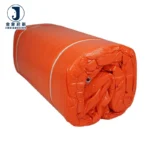
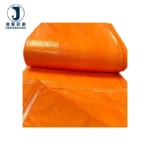
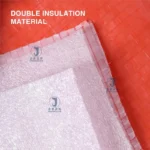
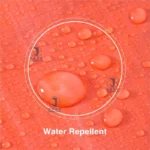
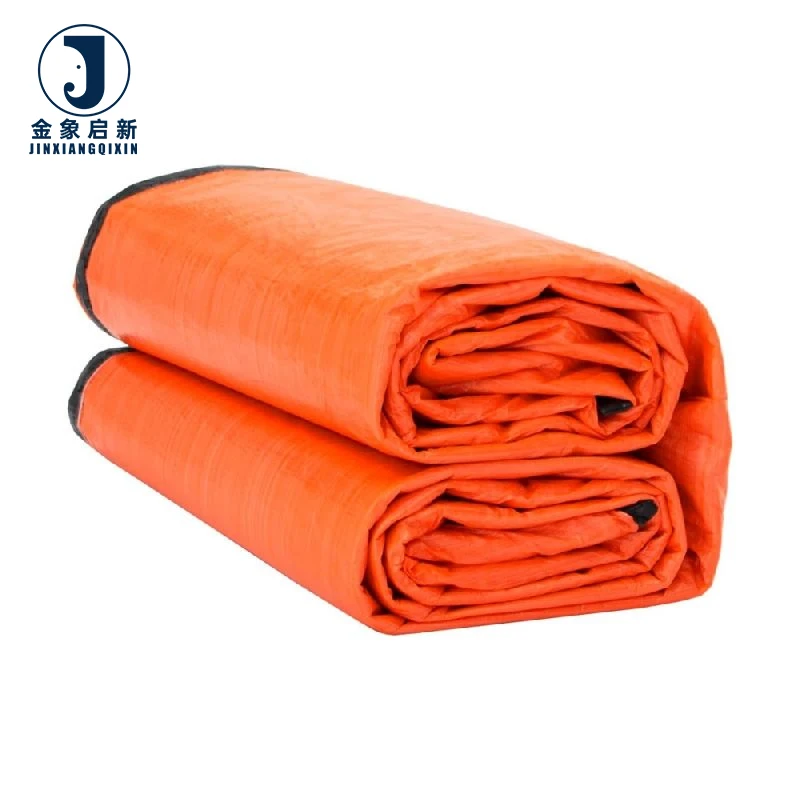
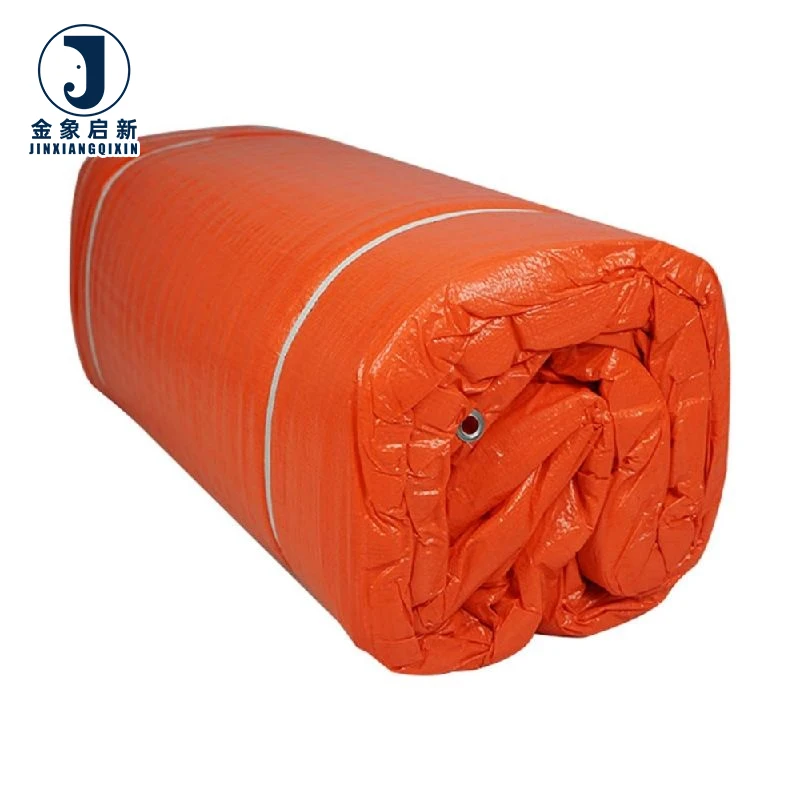
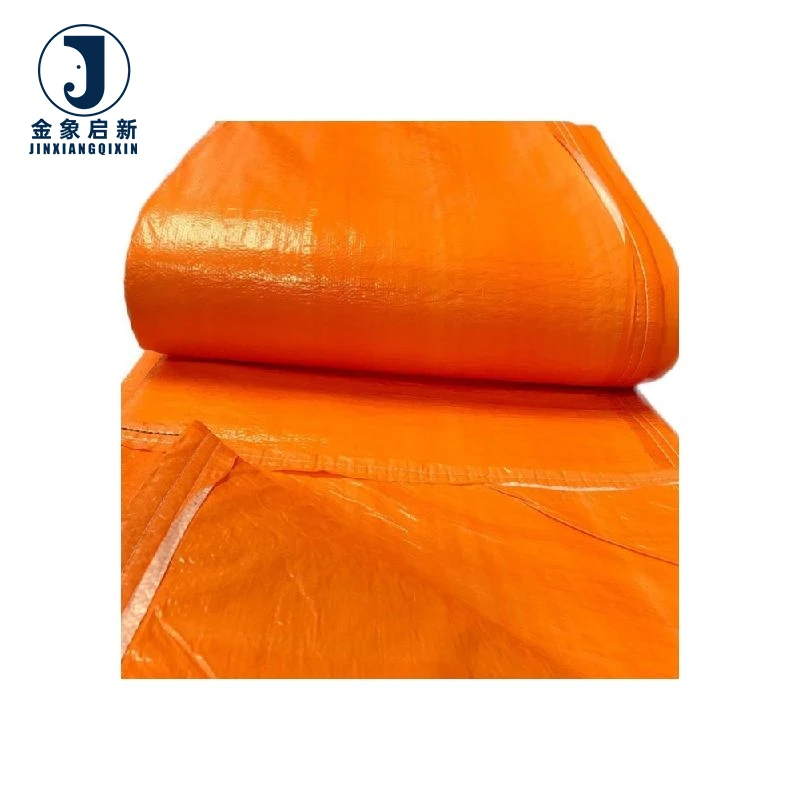
Proven Coating Process Control — Nearly three decades of PE and PVC coating experience ensures consistent thickness and adhesion across every insulated tarpaulin roll leaving the factory.
Technical Specifications
| Parameter | Value |
|---|---|
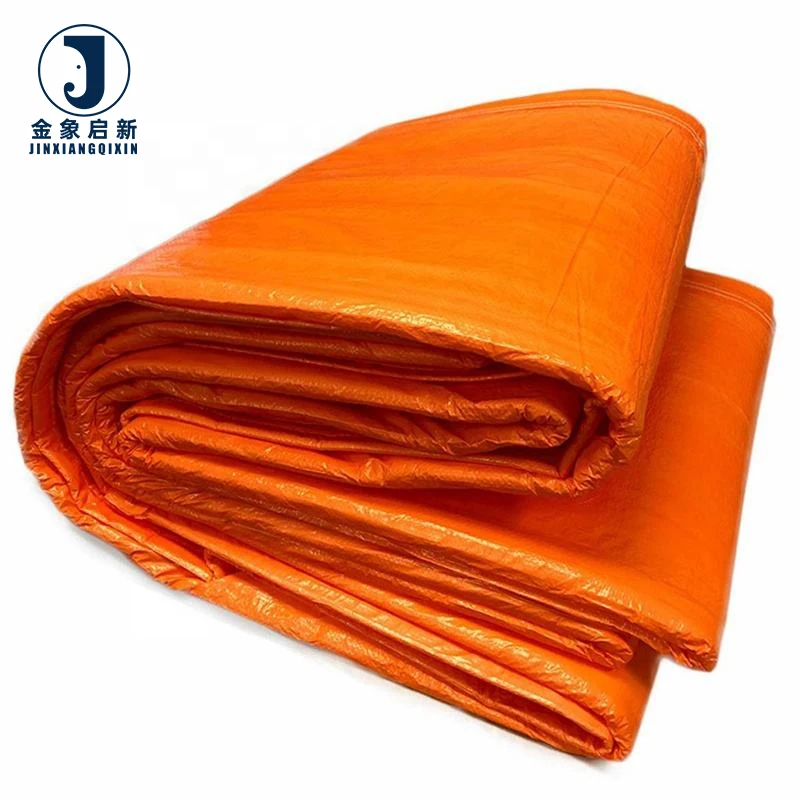
| Product Type | Insulated Tarpaulin / Concrete Curing Blanket |
| Dimensions | 6ft x 24ft / 8ft x 25ft / 12ft x 20ft / 12ft x 24ft |
| Total Thickness Options | 2x2mm / 3×1.5mm / 1x4mm / 5mm / 6mm / 8mm / 12mm |
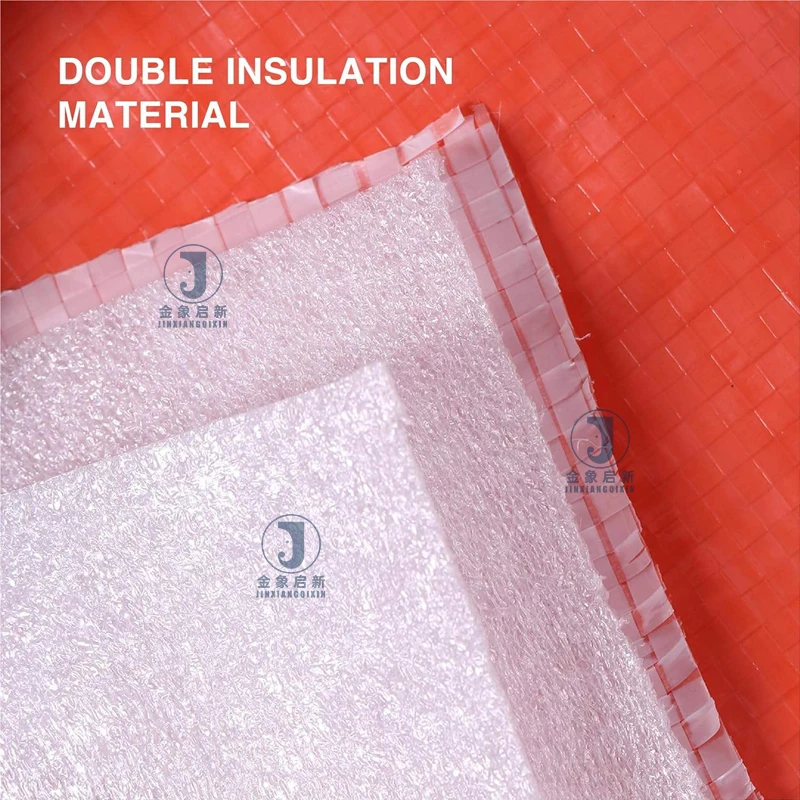
| Structure | PE cloth + closed cell PE foam core + PE cloth |
| Coating Material | PE |
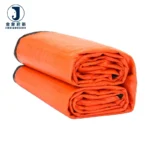
| Color Options | Orange / Black / White / Silver / Customized |
| Grommet Configuration | Aluminum grommets at 61 cm and 91.5 cm spacing |
| Edge Finish | Reinforcement stitch with rust-proof brass grommets on finished edges |
| Surface Treatment | UV treatment built into base fabric (test basis not stated) |
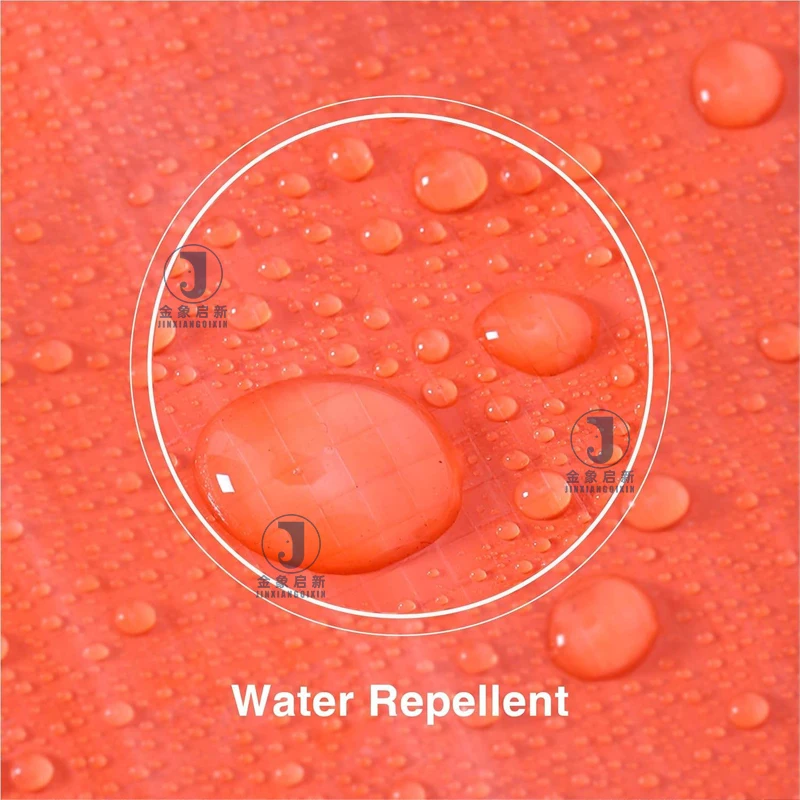
| Waterproof | Yes, surface fabric is waterproof |
| Mildew Resistant | Yes |
Application Suitability
| Application | Exposure & Requirement |
|---|---|
| Concrete curing in cold weather | Retain heat at the slab surface, resist wind scour, prevent moisture loss during hydration |
| Heated construction enclosures | Contain warm air from temporary heaters, block drafts through gaps, withstand repeated handling |
| Vertical wind blocks on scaffolding | Sustain lateral wind load on grommets, resist tearing at tie-down points, remain flexible in freezing temperatures |
| Mining and tunnelling temporary structures | Perform in low-temperature, high-humidity subsurface environments, handle abrasion against rock and steel frames |
| Building perimeter weather screens | Shed rain and snow, maintain insulation value under wet conditions, tolerate UV during extended outdoor staging |
Why Insulation Thickness Matters More Than Fabric Weight Alone
Thermal retention in an insulated PE tarpaulin for construction and ventilation enclosure depends on the foam core, not the outer fabric weight.
Buyers often specify tarpaulins by surface weight, assuming heavier always means warmer. With insulated curing blankets, the closed-cell PE foam core is where thermal resistance lives. A blanket with a thin core but heavy outer fabric will lose heat faster than one with a thicker foam layer and lighter skin. On a winter pour where the slab must stay above a minimum temperature through the hydration cycle, choosing the wrong core thickness means heaters run longer, fuel costs climb, and the concrete may still fall below curing thresholds. I have seen projects re-order blankets mid-winter because the first batch lacked the insulation value needed for the actual site conditions, not just the spec sheet numbers [NEED_CITE: thermal resistance testing methods for insulated construction blankets].
How the Three-Layer Construction Holds Heat
The outer PE cloth layers serve as waterproof barriers that protect the closed-cell foam core from mechanical damage and moisture ingress. The foam itself traps still air in discrete cells, which is the mechanism that slows conductive heat transfer from the warm side to the cold side. When a heated enclosure is set up around a fresh concrete pour, the insulated PE tarpaulin for construction and ventilation enclosure panels must hold the internal temperature steady despite sub-zero air and wind chill outside. If either outer layer is punctured or a seam opens, moisture can enter the foam and degrade its insulating value over repeated freeze-thaw cycles.
Grommet Spacing and Wind Load on Site Enclosures
Vertical enclosure panels face sustained lateral pressure from wind, and every grommet is a potential failure point. The aluminum grommets at 61 cm and 91.5 cm intervals distribute load across the reinforced stitched edge rather than concentrating it at a single tie-down. For a 12 ft x 24 ft panel used as a wind block on scaffolding, the closer 61 cm spacing reduces unsupported fabric span between fixings, limiting flutter that fatigues the edge stitching. Rust-proof brass grommets on the finished edges prevent corrosion staining when panels remain deployed through weeks of rain and snow. Field crews who install and remove panels daily also benefit from consistent grommet placement, because tie-down ropes and bungees attach predictably every time [NEED_CITE: wind load calculation standards for temporary construction enclosures].
Reading the Thickness Options for Your Climate Zone
The available thickness grades — from 2×2 mm through 3×1.5 mm, 1×4 mm, 5 mm, 6 mm, 8 mm, and 12 mm — address a range of insulation requirements. A 5 mm blanket may suffice for cool-weather curing where temperatures hover just above freezing and the enclosure is heated. For deep-winter pours where ambient drops well below zero and the concrete must maintain a minimum internal temperature for days, the 8 mm or 12 mm grades reduce heat loss enough to keep heater run times manageable. The multi-layer notation, such as 2×2 mm or 3×1.5 mm, indicates multiple foam layers bonded together, which adds insulating air gaps compared to a single layer of equivalent total thickness. Selecting the right grade requires matching the lowest expected ambient temperature, the wind exposure of the site, and the duration the blanket must remain in place.
The Hidden Cost of Underspecifying Insulation on a Curing Blanket
When a concrete curing blanket is too thin for the actual site conditions, the consequences are rarely obvious until the concrete has already been compromised. Insufficient thermal retention allows the slab surface temperature to drop below the threshold required for proper hydration, leading to surface dusting, reduced compressive strength, and potential cracking that only appears weeks later. On the enclosure side, a blanket that cannot hold heat forces temporary heaters to cycle constantly, consuming fuel and creating hot spots near the heater and cold zones at the perimeter. Contractors then face rework costs or schedule delays while the slab is assessed, and the blanket itself may be blamed when the real issue was a thickness mismatch with the environment [NEED_CITE: cold weather concreting practices and thermal protection requirements].
Why Procurement Teams Source This Insulated Tarpaulin Here
Our 10-person R&D team develops custom-sized samples within days, so you can verify thickness, color, and grommet layout against your project drawings before committing to a full production run. Three full production lines and 36 sets of professional equipment support bulk order volumes without extended lead times, keeping your winter construction schedule on track. Every roll undergoes dedicated QA/QC at each production stage with 100% inspection before shipment, catching thickness variation and grommet defects before they reach your site. Deep process control over coating weight and adhesion, built over nearly 30 years of coated fabric production, means the PE layers bond reliably to the foam core without delamination under thermal cycling. Full documentation packages accompany each dispatch, giving your compliance team the material records they need for project closeout.
Documentation & Verification
- Material specification sheet listing structure, each layer thickness, and PE coating type per roll
- Pre-shipment inspection record confirming grommet count and spacing against purchase order
- Thickness measurement log sampled across roll width and length before dispatch
- UV and waterproof performance reference linked to base fabric treatment specification
- ISO and CE certificates provided on request for project compliance files
- Roll packing list with dimensions and quantity cross-referenced to shipping documents
Fabrication, Handling & Storage
- Heat-seal at moderate temperature to avoid melting the closed-cell PE foam core layers
- Store rolls flat or on pallets to prevent permanent creases in the 5 mm to 12 mm foam core
- Avoid dragging panels over sharp aggregate to protect the waterproof PE outer cloth
- Clean with mild detergent only; harsh solvents may degrade the PE surface coating
- Inspect brass grommets and reinforcement stitching before each redeployment on site
- Cut with a sharp blade and seal edges to prevent foam core moisture absorption
Preparing Your Insulated PE Tarpaulin Inquiry
To move from general specification to a confirmed order, share the lowest ambient temperature your site will face, the expected duration blankets will remain deployed, and whether panels will be used horizontally as curing covers or vertically as enclosure walls. Let us know if your project requires a specific color for site identification, custom dimensions beyond the standard sizes listed, or a particular grommet spacing to match your tie-down system. If you need samples to verify insulation value and edge construction before bulk ordering, specify the thickness grade and panel size you want to evaluate.
Frequently Asked Questions
Q: How do I verify insulation performance across different thickness grades before ordering?
A: Request a material specification sheet that details the PE cloth and closed-cell foam core structure for each thickness option. We provide pre-shipment inspection records showing measured thickness values sampled across the roll. For projects with strict thermal requirements, order sample panels in your target thickness grade and conduct on-site temperature monitoring before committing to a full production run.
Q: Can grommet spacing be customized for high-wind enclosure applications?
A: Yes, we develop custom grommet configurations during the sample stage. Our standard aluminum grommets are set at 61 cm and 91.5 cm intervals with rust-proof brass grommets on reinforced stitched edges. For sites with sustained high wind, provide your tie-down layout and panel orientation so our R&D team can adjust spacing and reinforcement to match the expected lateral load on each fixing point.
Q: What information do I need to provide for custom-sized insulated curing blankets?
A: Share your required panel dimensions, preferred thickness grade from the available options, color selection, and grommet spacing preference. Our R&D team typically produces a sample within days for your approval before bulk production. Include your project timeline so we can align production scheduling with your cold-weather construction window and avoid site delays.
Q: Does repeated folding in cold conditions affect the foam core insulation?
A: The closed-cell PE foam core resists compression set under normal handling, but repeated tight folding in sub-zero temperatures can stress the bond between the foam and outer PE cloth layers over time. We recommend rolling rather than folding for storage and transport, especially for the thicker 8 mm and 12 mm grades, and avoiding sharp creases that could create thermal bridges in the panel.