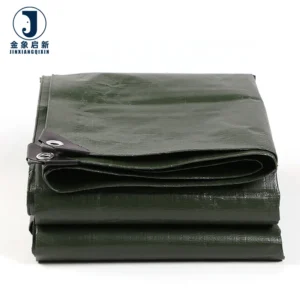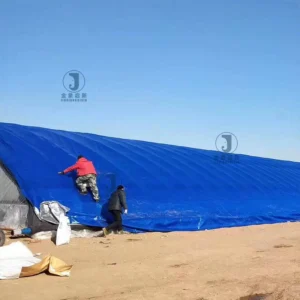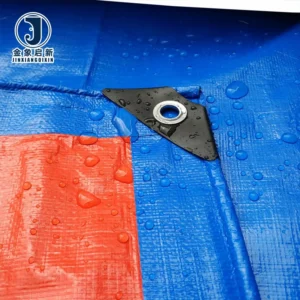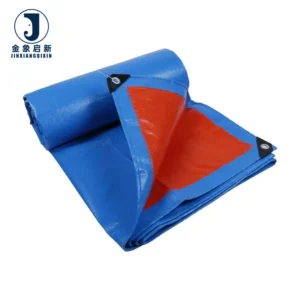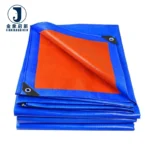

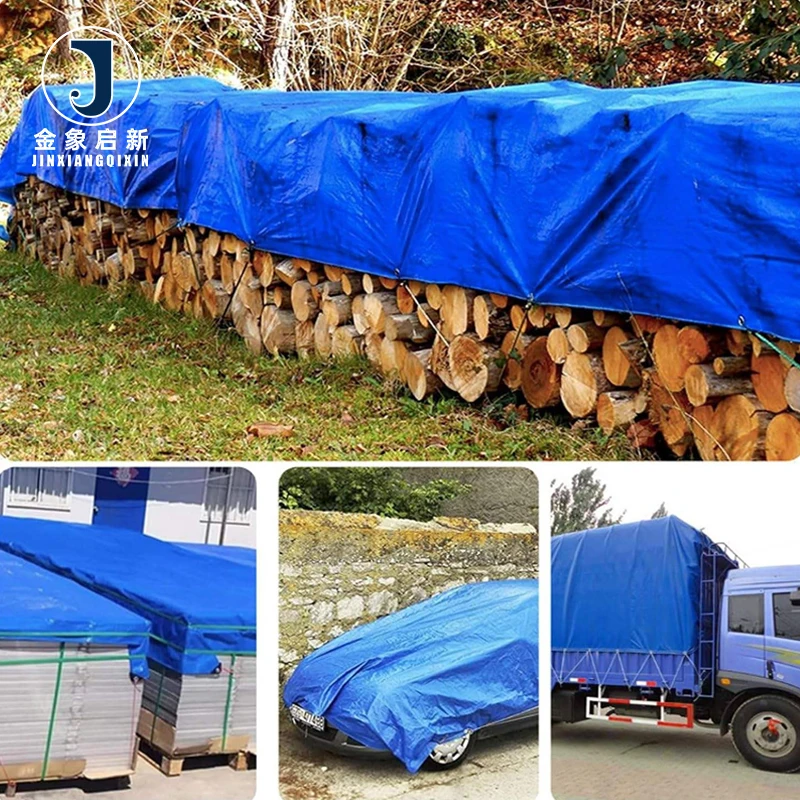
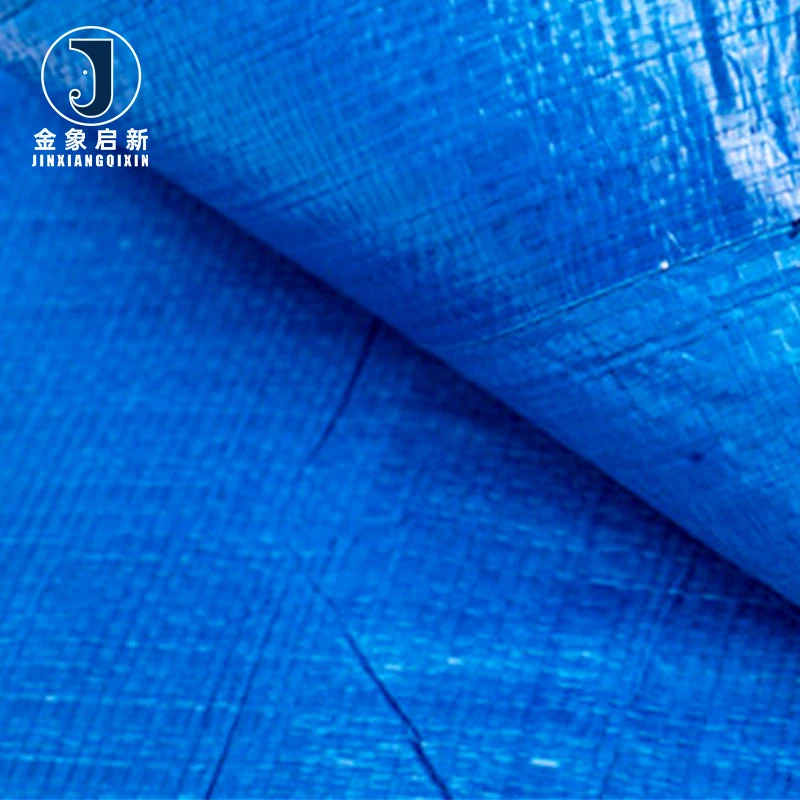
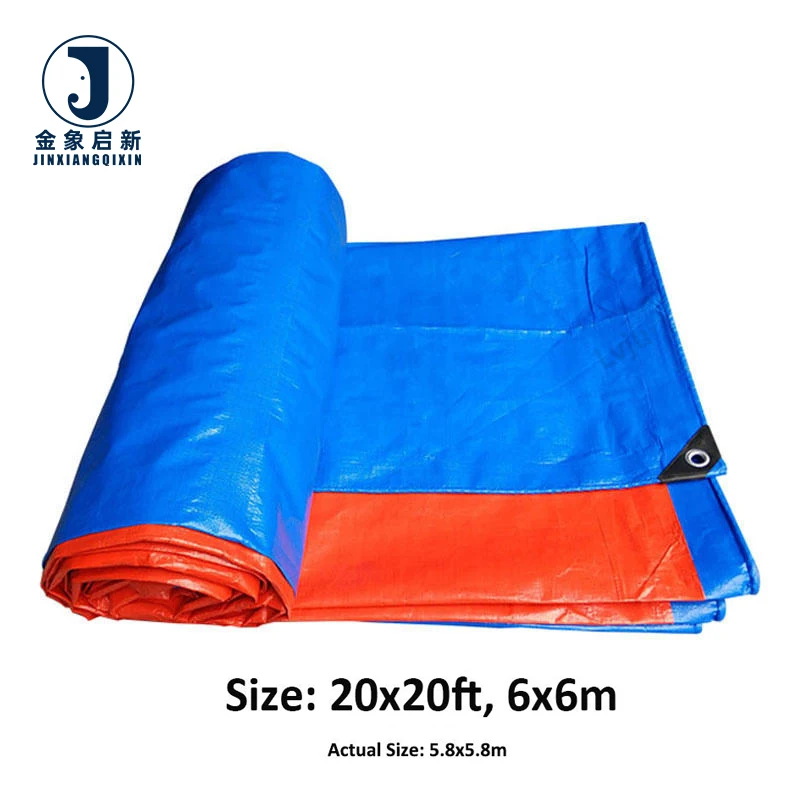
Process Control Over Coating — three full production lines ensure each roll of 160gms PE tarpaulin meets the specified GSM before dispatch.
Technical Specifications
| Parameter | Value |
|---|---|
| Product Type | PE Tarpaulin |
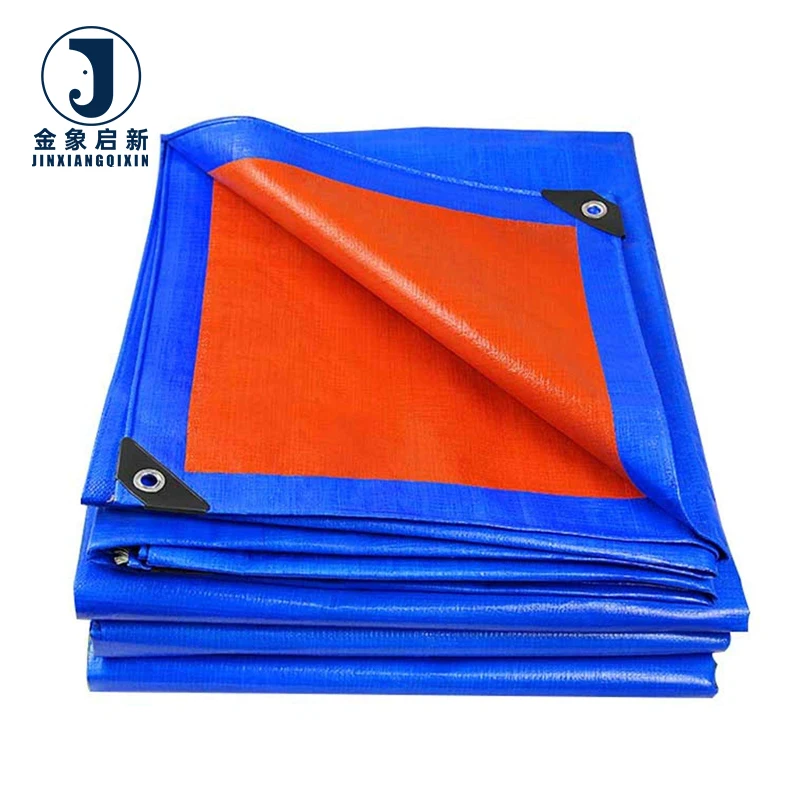
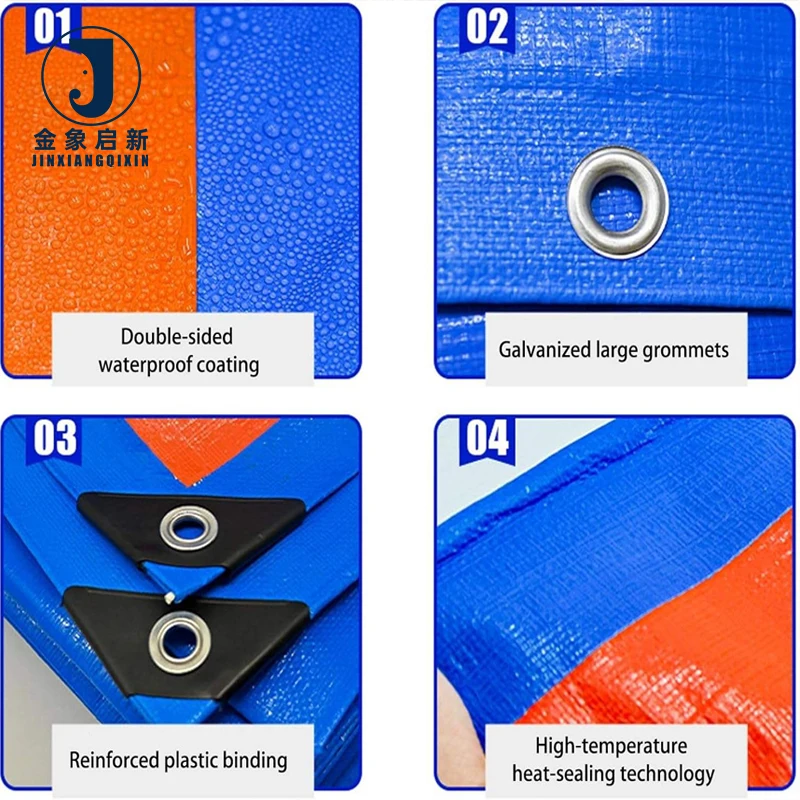
| Material Construction | HDPE woven fabric with LDPE coat on both sides |
| Weight | 160gms |
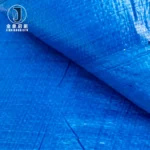
| Mesh Density | 6X6 to 16X16 |
| Roll Length | 100m per roll or custom |
| Sheet Size Options | 2×3, 3×4, 3×5, 4×5, 5×6, 6×8, 10×10, 10×12, 12×14, or custom |
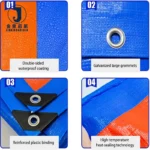
| Edge Finish | PP ropes in hem |
| Corner Reinforcement | Black plastic triangle |
| Eyelets | Rustproof aluminum, every 1m or 1.5m or custom |
| Color Availability | Blue, Orange, White, Black, Grey, Yellow, Green, Red, any color available |
| Printing | Logos or company information can be added |
| Special Treatment | Fire resistant (grade not stated in source) / UV protection (test basis not stated in source) |
Application Suitability
| Application | Exposure & Requirement |
|---|---|
| Mining ventilation duct | Continuous airflow, dust abrasion, underground fire compliance |
| Tunnelling temporary ventilation | High humidity, confined space, flame safety standards |
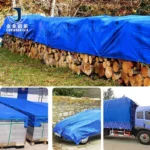
| Membrane structure enclosure | Wind load, UV exposure, structural tensioning |
| Aviation ground support cover | Fuel splash, outdoor weather, rapid deployment |
| Industrial temporary enclosure | Chemical dust, site safety, wind resistance |
Why PE Tarpaulin Fire Retardant Claims Fail at the Site Gate
A flame treatment claim without a named standard leaves your compliance paperwork incomplete.
Procurement teams specify fire resistant PE tarpaulin for underground ventilation or temporary industrial enclosures, only to find the shipment arrives with no test report tied to a recognized classification. Site inspectors reject the material because the safety file cannot reference a specific grade. The duct or enclosure gets pulled from service until documentation catches up, delaying the project. [NEED_CITE: fire classification standards for temporary industrial fabrics]
Material Architecture for Ventilation and Technical Use
This 160gms PE tarpaulin starts with an HDPE woven base that provides dimensional stability under tension. The double-sided LDPE coating seals the weave, creating a continuous barrier against moisture and particulate ingress. For ventilation duct fabrication, this construction supports longitudinal seaming and maintains shape when the duct is suspended and pressurized.
Density Selection and Airflow Control
The mesh density range from 6X6 to 16X16 allows specification based on whether the fabric serves as an airtight duct wall or a semi-permeable enclosure skin. Lower density weaves reduce weight and cost for applications where absolute air sealing is managed by seam construction rather than fabric impermeability. Higher density weaves add tensile mass, which matters when the fabric is cut into complex duct geometries with multiple junction points. [NEED_CITE: relationship between woven mesh density and tensile performance in coated PE fabrics]
Reading the Specification Beyond Weight
The 160gms figure represents the combined mass of the HDPE base fabric and both LDPE coating layers. A higher GSM does not automatically mean higher tear resistance — tear propagation depends on the base fabric denier and weave density, not coating thickness alone. An LDPE coat adds waterproofing and surface protection but contributes less to structural strength than the woven substrate. When comparing materials for duct or membrane applications, request the base fabric weight and the coating weight separately to understand where the mass is distributed.
The Cost of Undocumented Treatment
When fire resistant or UV treated PE tarpaulin is ordered without a confirmed grade, the risk falls on the buyer at the inspection stage. A mining site may require a specific flame classification that the supplied report does not address, forcing replacement under tight deadlines. UV protection without a stated test basis means accelerated degradation cannot be predicted, and membrane structures may show premature embrittlement on the sun-facing side. [NEED_CITE: common compliance gaps in flame retardant documentation for industrial fabrics]
Sourcing with Technical Accountability
Three production lines and 36 sets of equipment provide the capacity to deliver consistent roll-to-roll quality across bulk orders. A dedicated R&D team handles material selection and custom sizing, developing samples within days for duct or membrane specifications. Quality checks occur at every production stage with full pre-shipment inspection against the stated 160gms GSM. Documentation accompanies each dispatch, including test reports where treatment grades have been confirmed at the order stage.
Documentation & Verification
- Material specification sheet confirming 160gms GSM, base fabric type, and coating construction
- Fire resistant test report naming the specific classification standard applicable to your site
- UV protection test basis documented where treatment is specified at order
- Pre-shipment inspection record verifying roll weight and mesh density
- ISO and CE certificates included with dispatch paperwork
- Roll packing list with individual roll identification for traceability
Fabrication, Handling & Storage
- Heat-seal LDPE coating layers at moderate temperature to avoid base fabric distortion through the 160gms construction
- Position rustproof aluminum eyelets at reinforced hem zones to distribute tie-down load across the PP rope edge
- Store rolls horizontally on pallets to prevent permanent creasing through the HDPE woven core
- Allow cold-stored rolls to reach ambient temperature before unrolling to prevent coating crack at low flex
- Cut sheets using the specified mesh density alignment to maintain edge integrity along the weave direction
- Clean LDPE coated surfaces with mild detergent to preserve the fire resistant or UV treatment layer
Preparing Your Enquiry for Technical Fabric Supply
Provide the ventilation duct diameter and run length, or the membrane structure panel dimensions, so roll width and length can be matched to minimize waste. Confirm the fire classification standard required by your site safety authority, and state whether UV treatment is needed for exposed installations. Indicate your annual volume to align production scheduling.
Frequently Asked Questions
Q: What fire retardant grade can be supplied, and which test standard does it meet?
A: Fire resistant treatment is available for this PE tarpaulin. The specific grade depends on the standard required by your market, such as M2, B1, or NFPA 701. Confirm the applicable standard before ordering so the correct treatment is applied and a matching test report is included with your shipment documentation.
Q: How is anti-static performance measured, and can a surface resistance test report be provided?
A: Anti-static performance is measured by surface resistivity testing. If your application requires anti-static PE tarpaulin for duct or membrane use in explosive atmospheres, specify the target resistivity range at enquiry. A test report can be provided when the treatment has been confirmed and applied during production.
Q: How is the 160gms GSM verified on arrival, and what inspection documentation accompanies shipment?
A: Each roll undergoes weight verification against the 160gms specification during pre-shipment inspection. A dedicated QA/QC process checks GSM at multiple points across the production run. The dispatch package includes an inspection record confirming the measured weight, along with the packing list and material specification sheet.
Q: What mesh density options are recommended for ventilation duct versus membrane structure use?
A: For ventilation ducts requiring airtight performance, a higher mesh density such as 14X14 or 16X16 provides a tighter substrate for the LDPE coating to bridge. For membrane structures where tensile load dominates and seams carry the seal, a lower density in the 6X6 to 10X10 range reduces weight while the coating maintains weather protection.
Q: What roll length and packaging options are available for bulk industrial orders?
A: Standard roll length is 100m per roll, with custom lengths available to match your fabrication layout and reduce offcut waste. Rolls are packed for container loading with options for bale or carton packing depending on the total order volume and your receiving equipment capability.