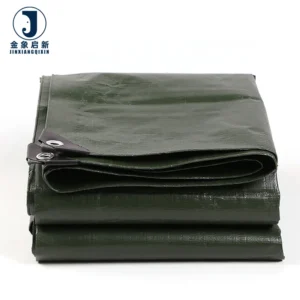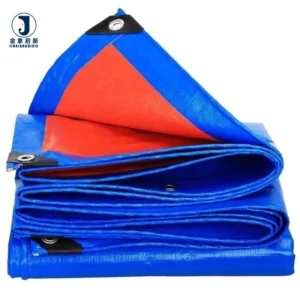
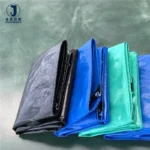
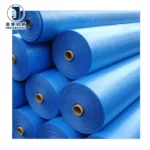

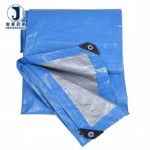
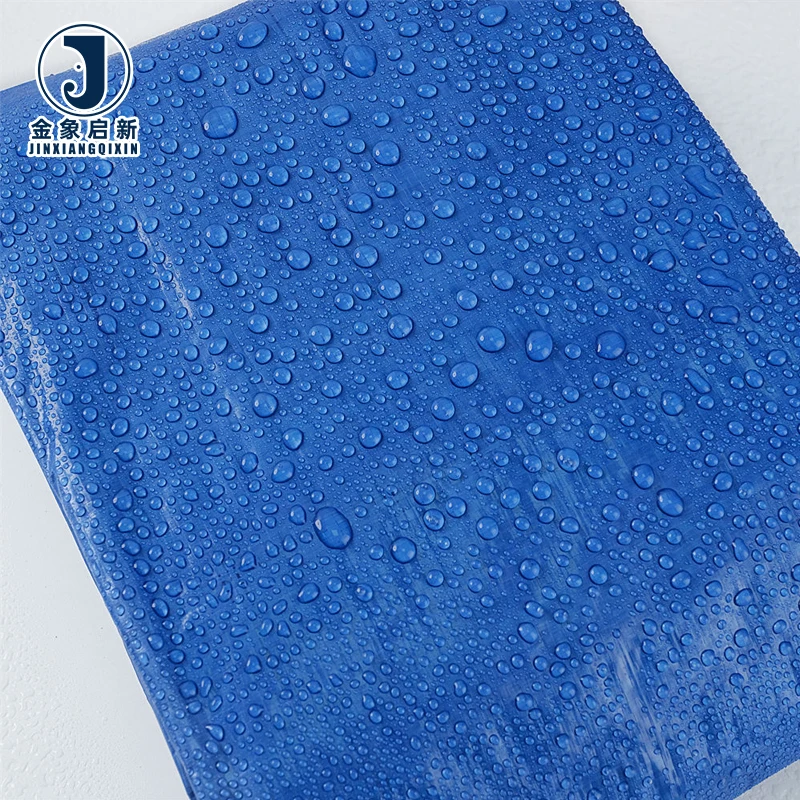
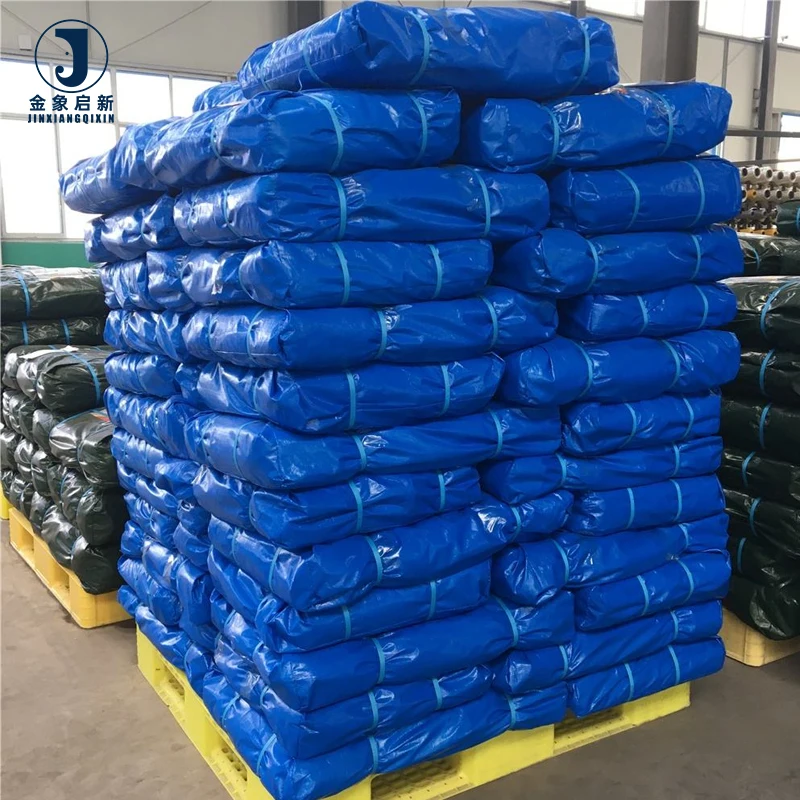

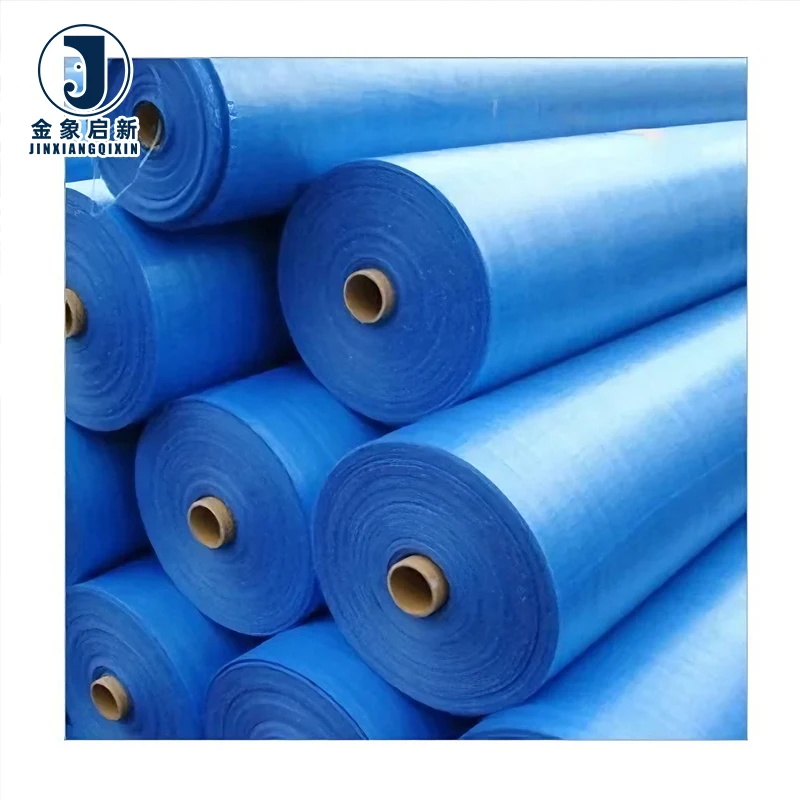
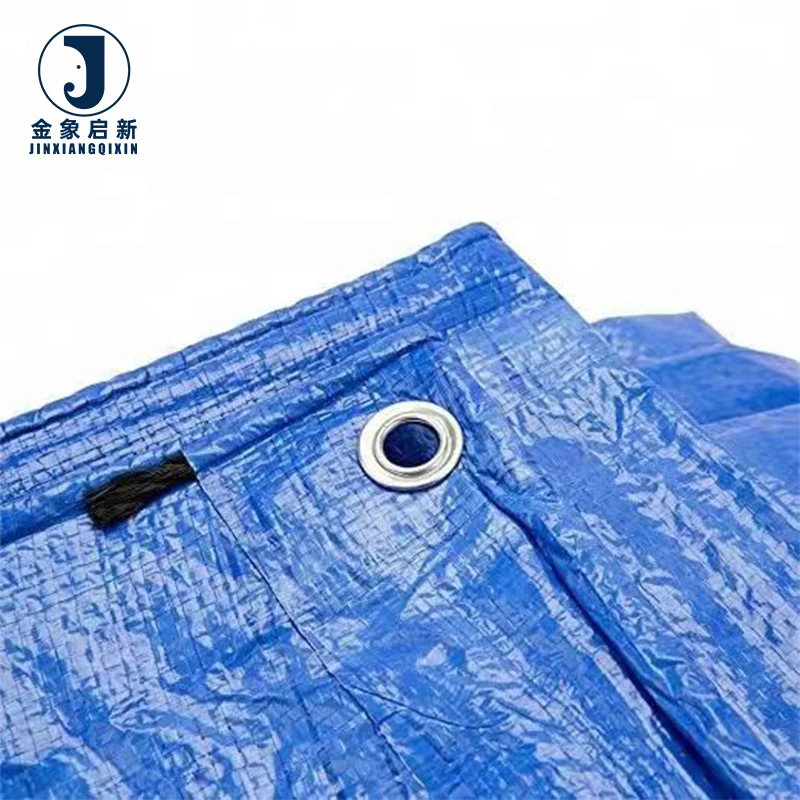
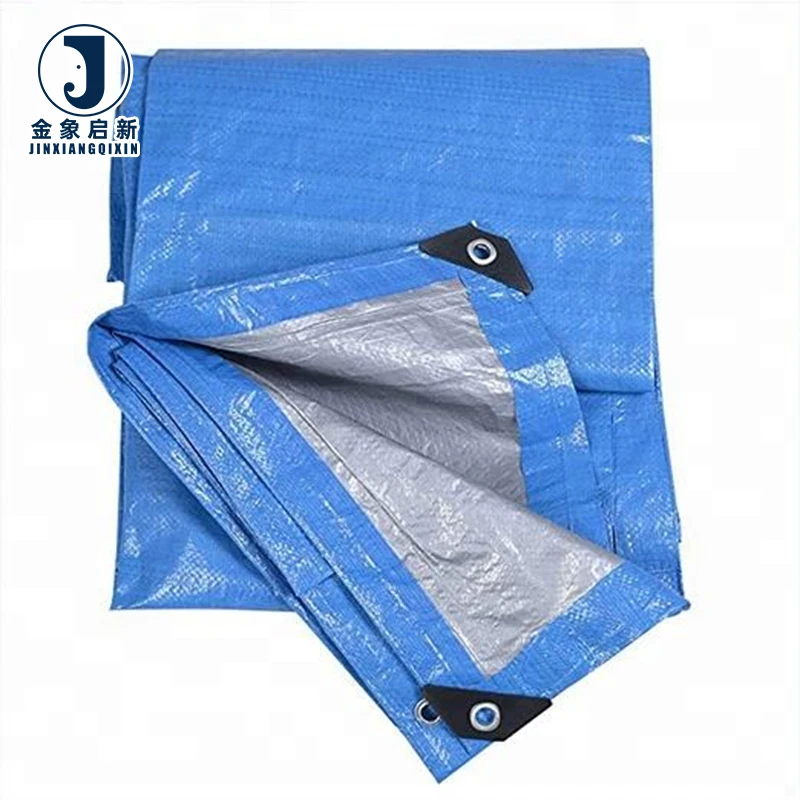
Verified Weight and Compliance — Every roll of PE Tarpaulin is checked against the stated GSM with fire-retardant and anti-static documentation supplied for technical site acceptance.
Technical Specifications
| Parameter | Value |
|---|---|
| Product Type | PE Tarpaulin |
| Material | Polyethylene (PE) |
| Weight (GSM) | 80–110 (lightweight), 120–150 (medium), 160–240 (heavy-duty) |
| Total Thickness | 0.18–0.22 mm (lightweight), 0.22–0.28 mm (medium), 0.30–0.35 mm (heavy-duty) |
| Mesh Count | 8×8 (lightweight), 10×10 (medium), 12×12 (heavy-duty) |
| Tensile Strength (N/5cm) | Meridian 300–500 / Latitude 250–450 (lightweight); Meridian 500–800 / Latitude 400–700 (medium); Meridian 900–1200 / Latitude 700–1000 (heavy-duty) (test basis not stated) |
| Coating Material | PE |
| UV Treatment | Available (test basis not stated) |
| Waterproof Rating | Double waterproof surfaces |
| Anti-Mildew | Mildew proof (test basis not stated) |
| Size | Custom size |
| Color | Custom color |
| Eyelet & Hem Options | Reinforced corner; center to center spacing 39.4 inches |
| Fire-Retardant | Available in flame retardant grades — confirm the grade required for your market |
| Anti-Static | Available — confirm surface resistance standard required for your site |
Application Suitability
| Application | Exposure & Requirement |
|---|---|
| Mining and tunnelling temporary ventilation covers | Subsurface humidity, particulate abrasion, fire-retardant compliance for enclosed airflow |
| Aviation ground support equipment covers | Outdoor UV, fuel and hydraulic fluid splash, fire-retardant documentation for airside audit |
| Construction site temporary enclosure | Wind load on large spans, UV degradation, scaffold tie-down stress at reinforced corners |
| Specialist membrane and inflatable structures | Repeated inflation cycles, weld integrity at seam lines, dimensional stability under tension |
| Industrial protective wrapping for transport | Road debris impact, weather exposure during transit, tie-down point abrasion |
Why a Missing Test Report Fails the Entire Site Inspection
PE Tarpaulin without a verifiable fire-retardant grade is a compliance liability, not a cost saving.
On mining and aviation sites, the safety officer does not inspect the fabric — they inspect the paperwork. A PE Tarpaulin fire retardant claim without a matching test certificate means the duct or cover is rejected at the gate, and the entire installation schedule stalls. I have seen contractor teams forced to strip out newly hung ventilation sleeves because the supplier shipped material with no documentation linking it to M2, B1 or NFPA 701. The rework cost always exceeds what a compliant roll would have added to the original order. [NEED_CITE: fire classification standards for temporary ventilation fabric in mining]
Matching Mesh Count to Airflow and Structural Demand
PE Tarpaulin mesh count directly controls how air moves through or around the fabric. An 8×8 weave at lightweight GSM allows partial breathability suitable for temporary covers where condensation must escape, while a 12×12 mesh at heavy-duty grades creates a tighter barrier that supports positive pressure in ventilation duct sleeves. Selecting the wrong mesh for the airflow requirement leads to either excessive pressure drop or insufficient containment of dust and fumes on subsurface sites.
Fire-Retardant and Anti-Static Compliance for Enclosed Spaces
Ventilation ducts in mining and tunnelling operate in atmospheres where particulate ignition is a constant risk. PE Tarpaulin fire retardant options must be matched to the specific standard enforced by the site authority — M2 for French-market construction, B1 per DIN 4102 for German-specification tunnels, NFPA 701 for North American temporary structures. Anti-static treatment is equally critical where combustible dust is present, and the surface resistance result must be documented per roll. [NEED_CITE: anti-static surface resistance testing for ventilation duct fabric]
Reading GSM, Mesh and Tensile Together
A 160–240 GSM heavy-duty grade with 12×12 mesh delivers Meridian tensile values up to 1200 N/5cm, but that number alone does not predict field performance. The knitting density determines how load distributes across the weave: a tighter mesh spreads point loads from tie-downs and scaffold clips across more yarn intersections, reducing the chance of a single broken filament propagating into a full tear. Coating weight and adhesion to the base fabric then govern whether the PE layer delaminates before the yarn itself fails — a failure mode that appears first at heat-welded seams where the coating is re-melted under pressure.
The Real Cost of Unverified Material on Technical Sites
A ventilation duct sleeve that arrives without the fire-retardant certificate the site safety plan demands does not just delay installation — it triggers a full audit of every material on the project. PE Tarpaulin supplied without batch-traceable documentation can force contractors to re-inspect and re-certify adjacent materials that were already signed off, multiplying the original supply failure across the entire procurement chain. [NEED_CITE: contractor liability for undocumented fire-retardant materials in tunnel ventilation]
Why Procurement Teams Route Technical Orders Here
Three full production lines and 36 sets of professional equipment handle bulk ventilation duct and specialist cover orders with on-time scheduling that matches project milestones. A 10-person R&D team develops samples within days when custom dimensions or treatment grades are required for site-specific compliance. Dedicated QA at every coating and weaving stage catches GSM drift before rolls reach the packing area. Each roll is weighed and measured against the stated specification during 100% pre-shipment inspection, with the result recorded per batch. ISO and CE certification underpins the documentation package that accompanies every dispatch.
Documentation & Verification
- Material specification sheet listing exact GSM, mesh count and coating weight for every roll shipped
- Fire-retardant test report with grade and standard where treatment is applied — M2, B1 or NFPA 701 as specified
- Anti-static surface resistance test result included for duct destined for combustible-dust environments
- Pre-shipment inspection record showing actual weight and dimension per roll against purchase order
- Certificate of origin and customs documentation prepared for cross-border dispatch
Fabrication, Handling & Storage
- Heat-weld seams at temperature and pressure matched to the PE coating thickness — heavy-duty 0.30–0.35 mm grades need longer dwell to avoid cold welds
- Reinforce eyelet zones with additional PE patches at 39.4-inch centers to distribute tie-down load across the 12×12 mesh
- Store rolls upright on end caps in dry conditions to prevent flat-spot creasing on the outer coating layer
- Allow cold-stored rolls to reach ambient temperature before unrolling to avoid coating crack at the fold line
- Use only neutral-pH cleaners on the double waterproof surface to preserve the UV treatment layer
What We Need to Quote Your Project
Share the ventilation duct diameter, run length and operating pressure so we can match the GSM and mesh count to the airflow demand. Confirm which fire-retardant standard your site authority enforces and whether anti-static certification is required. Specify whether you need finished sleeves with welded flanges or roll stock for on-site fabrication.
Frequently Asked Questions
Q: What fire-retardant grade is available and which standard does it meet for my site?
A: We supply PE Tarpaulin in flame retardant grades matched to M2, B1 per DIN 4102 or NFPA 701 depending on the market requirement. The test report states the grade achieved and the standard applied. Confirm the standard your site authority specifies so we align the treatment and documentation before production begins.
Q: How do I verify the GSM on arrival matches what was quoted?
A: Every roll undergoes weight verification during 100% pre-shipment inspection, and the result is recorded on the packing list. On arrival you can cut a measured sample and weigh it on a calibrated scale. The documented inspection record gives you a baseline to compare against your own measurement.
Q: What anti-static certification is supplied with the duct or cover?
A: Where anti-static treatment is specified, we provide a surface resistance test result for the batch. The report documents the measured value against the standard you require. Confirm the target resistance range with your site safety engineer so we select the correct treatment level during coating.
Q: Can the tarpaulin be cut and fabricated to custom dimensions for specialist structures?
A: Custom sizing is supported across all weight grades. Our R&D team prepares samples within days for non-standard duct diameters, membrane panels or enclosure shapes. Provide the finished dimensions, seam construction preference and any reinforcement requirements at connection points so we confirm the fabrication method before production.
Q: How is batch colour and weight consistency maintained across multiple rolls?
A: In-process coating weight checks at every production stage control GSM drift within the run. Colour is matched against the approved reference before each roll is packed. The pre-shipment inspection record lists actual weight per roll, allowing you to verify consistency across the full order on arrival.