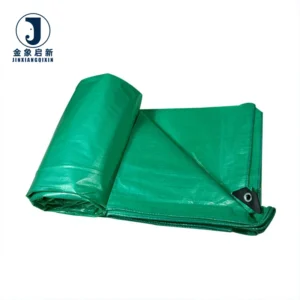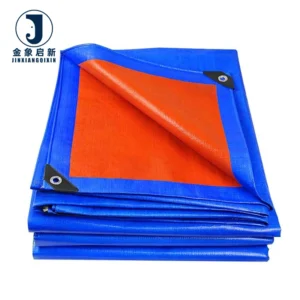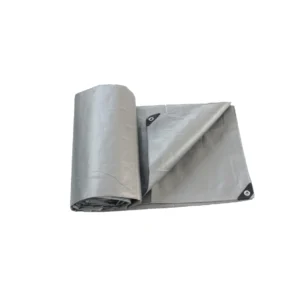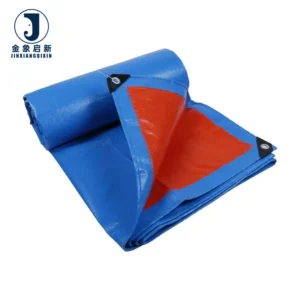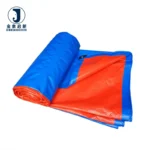
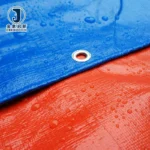
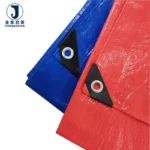
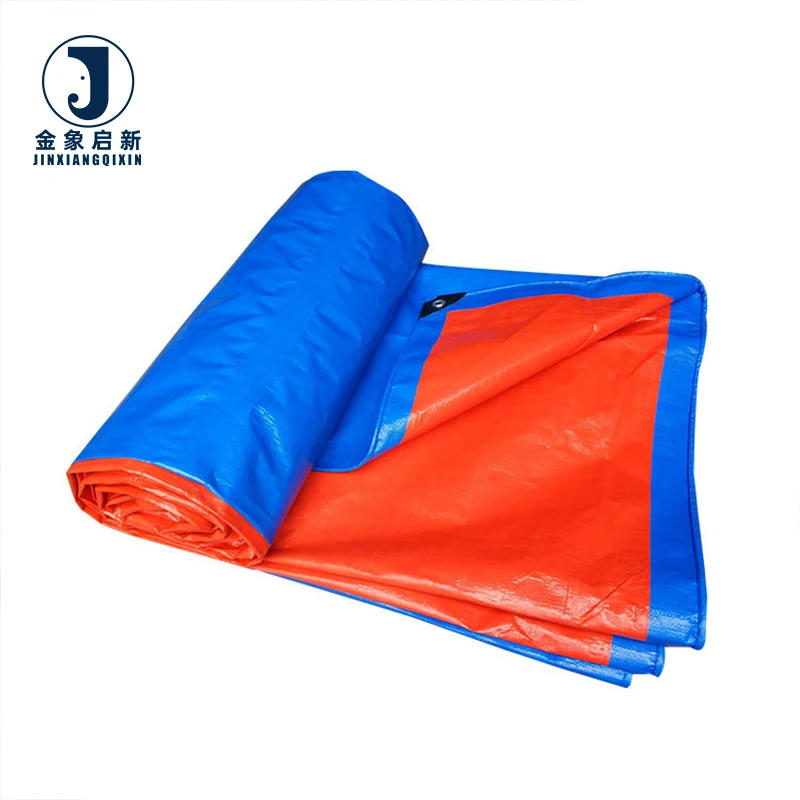
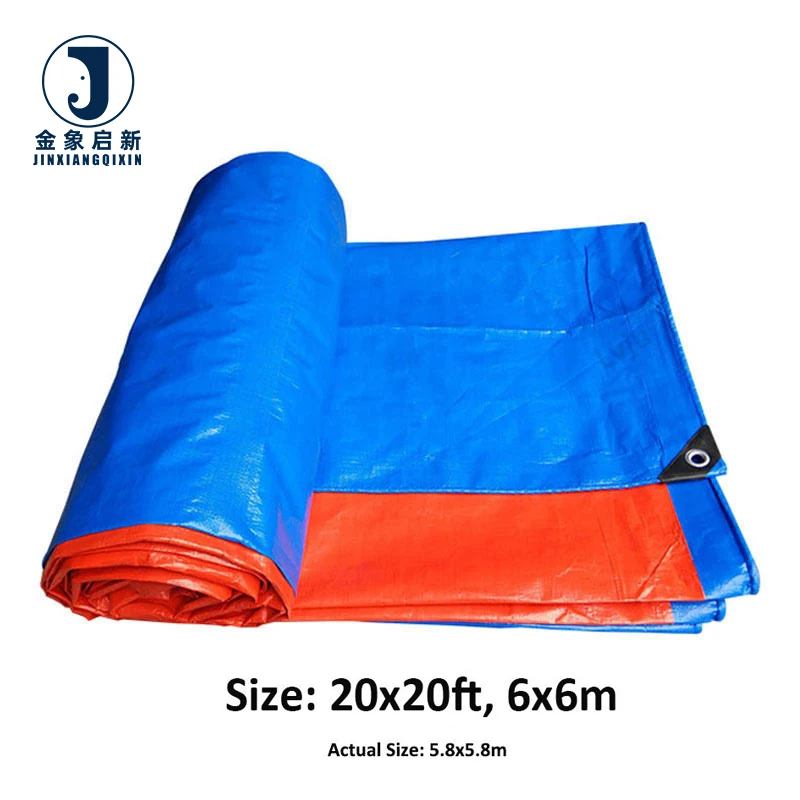
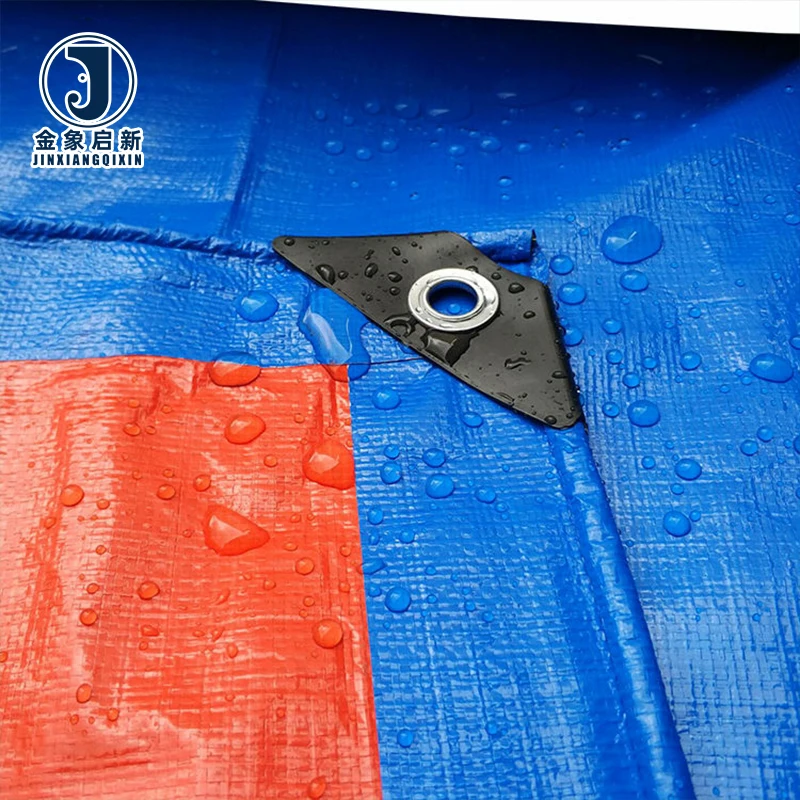
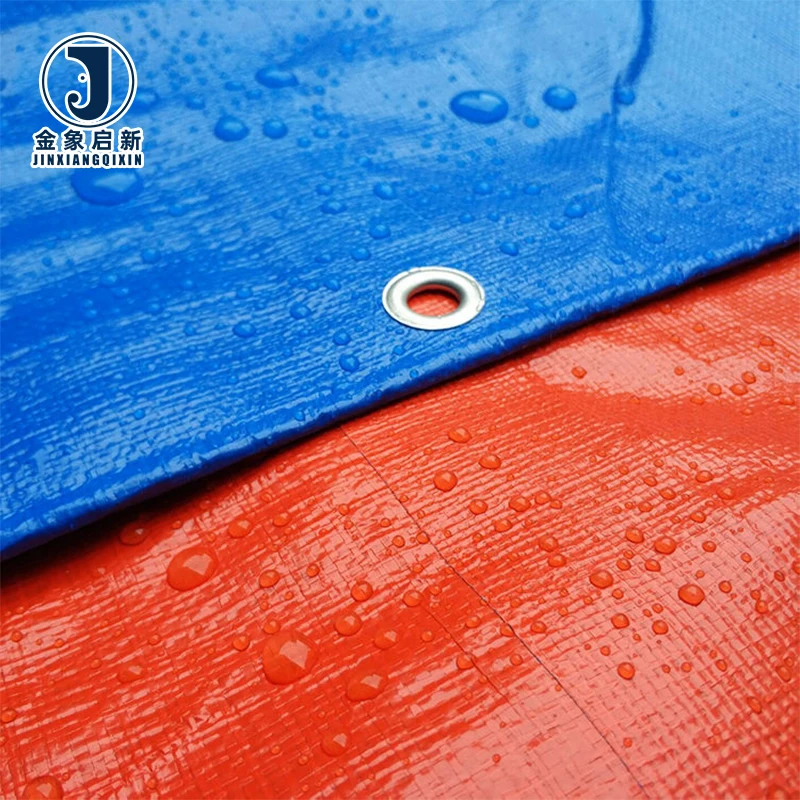
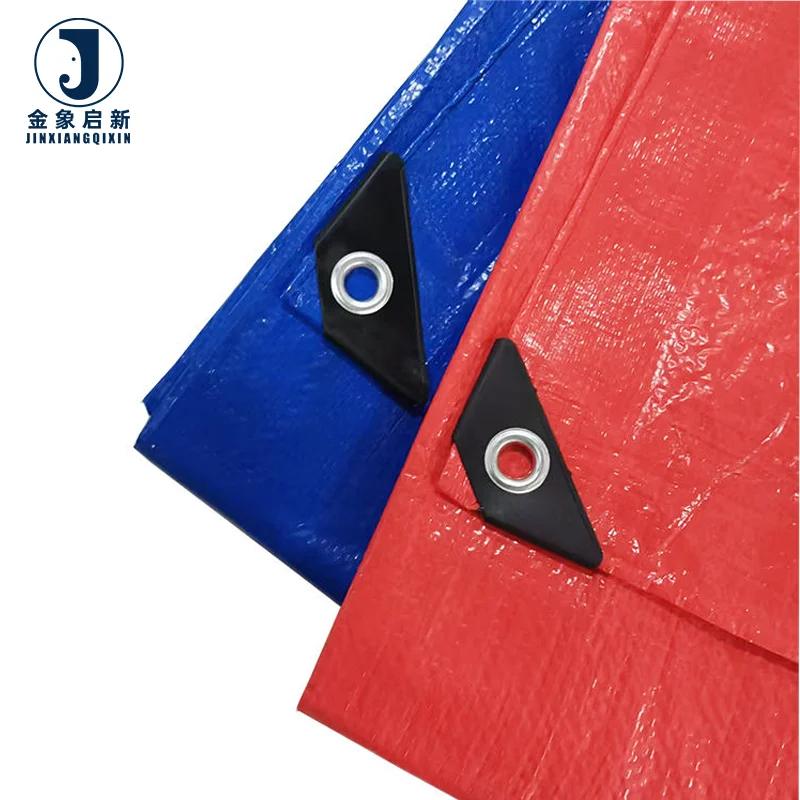
Three full production lines and 36 sets of professional equipment — bulk PE tarpaulin capacity with roll-to-roll GSM consistency verified at every stage before dispatch.
Technical Specifications
| Parameter | Value |
|---|---|
| Product Type | PE Tarpaulin |
| Material | HDPE weaving with LDPE lamination on both sides |
| Weight Range | 50 gr/m² to 220 gr/m² (confirm grade for specific application) |
| Total Thickness | 0.2–0.4 mm / 8 mil–16 mil |
| Mesh Count Options | 6×6, 6×7, 7×7, 7×8, 8×8, 9×9, 8×10, 10×10, 12×12, 14×14, 14×16 |
| Roll Width Options | 6ft, 8ft, 10ft, 12ft, 2m, 4m, 6m |
| Roll Length Options | 100 yards, 100 meters, or custom |
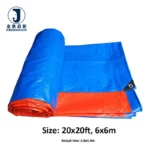
| Finished Size Options | 2x2m through 8x10m and custom cut-to-fit |
| Colour Options | Blue, Blue/Orange, Green, Grey, Black, Clear, Grey/Green, Orange, or custom |
| Waterproof | Yes |
| UV Treatment | Available (test basis available on request) |
| Mildew Resistance | Yes |
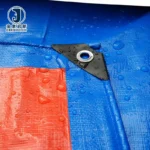
| Edge Reinforcement | All four edges hemmed with PP rope |
| Eyelets | Galvanized, spaced every 3ft or 1 meter |
| Corners | Reinforced plastic corners |
| Standards | ISO, CE |
Application Suitability
| Application | Exposure & Requirement |
|---|---|
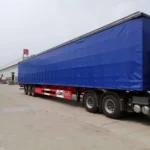
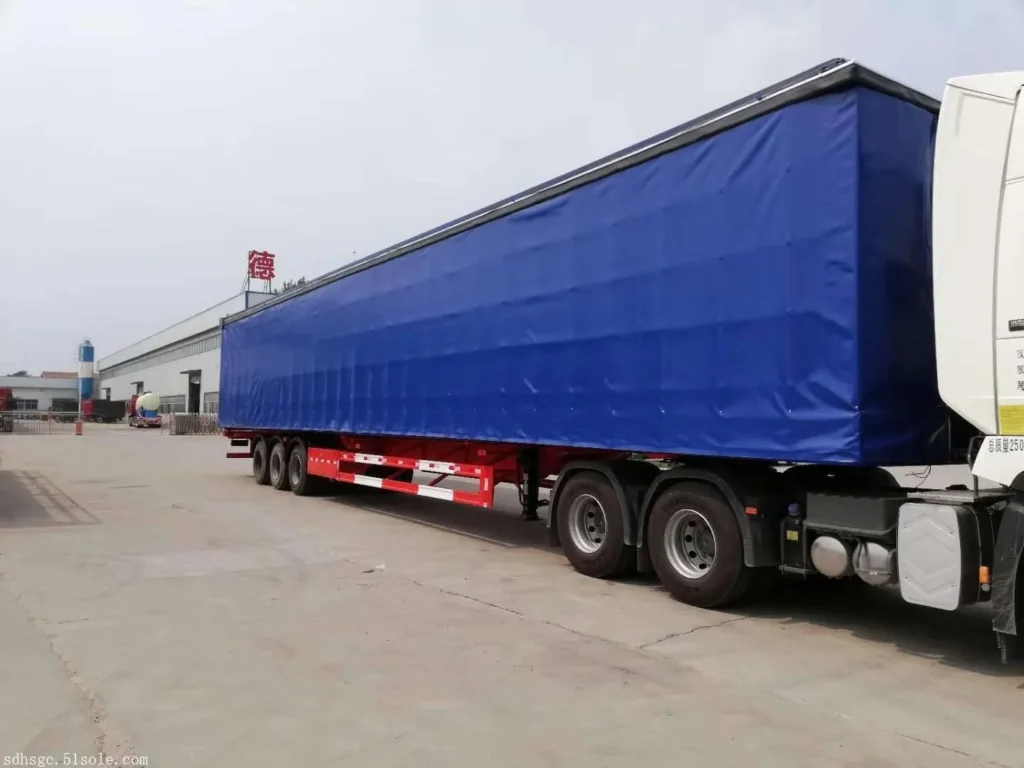
| Truck and trailer covers | Continuous road vibration, flex at load points, weather and UV exposure, tie-down abrasion at eyelets |
| Construction scaffolding and site enclosures | Wind loading on large panels, puncture from debris, prolonged outdoor weathering |
| Boat and container covers | Salt spray, standing water, UV degradation, repeated removal and reinstallation |
| Agricultural crop and hay covers | Moisture ingress prevention, mildew in humid storage, handling abrasion during seasonal deployment |
| Mining and tunnelling surface enclosures | Dust infiltration, mechanical contact with heavy plant, compliance-driven material documentation |
| Inflatable and membrane structures | Air-holding integrity, seam welding behaviour, specific GSM and weave for engineered load |
Why the Stated GSM Does Not Guarantee the Performance You Need
A PE tarpaulin for specialist application must be specified by weave density and coating weight together, not by a single GSM number.
When procurement teams source PE Tarpaulin for Specialist Application based only on a quoted GSM figure, the material that arrives on site often feels lighter and performs weaker than expected. The reason is straightforward: GSM alone does not reveal how that weight is distributed between the HDPE base fabric and the LDPE lamination. Two rolls can share the same total GSM yet behave completely differently under tension — one tears easily because the base weave is sparse and the lamination carries all the load, while the other holds firm because the HDPE weave bears the structural stress [NEED_CITE: relationship between base fabric denier, mesh count and tensile performance in woven PE fabrics]. Specifying PE tarpaulin without documenting the mesh count and the individual coating weight on each side leaves the buyer unable to verify whether the delivered roll matches the engineering intent of the quotation.
Weave Density Matrix — Matching Mesh Count to Mechanical Demand
Selecting PE Tarpaulin for Specialist Application requires reading the mesh count as the structural backbone of the fabric. A 6×6 or 7×7 weave yields a lighter, more flexible sheet suited to short-term covers where handling convenience matters more than sustained load-bearing. Moving to 10×10 or 12×12 increases the number of HDPE tapes per square inch, distributing tensile forces across a denser grid and reducing the chance that a single puncture propagates into a full tear. For engineered structures or ventilation enclosures where the fabric must hold shape under internal pressure or wind load, the 14×14 and 14×16 options provide the densest weave available in this range, converting more of the applied force into fibre tension rather than coating deformation.
Dual-Side LDPE Lamination and the Waterproof Barrier
The LDPE lamination applied to both faces of the HDPE woven base serves two functions that are often conflated but mechanically distinct. The outer layer provides the waterproof barrier and carries any UV treatment specified for the application [NEED_CITE: UV stabiliser integration in LDPE lamination for outdoor PE tarpaulin]. The inner layer bonds to the opposite face of the weave, locking the tapes in place and preventing moisture from migrating through the interstices of the base fabric. When lamination weight is uneven between the two sides, the sheet can curl under temperature differentials — a behaviour that becomes critical when the tarpaulin is heat-welded into duct sections or structural panels. Consistent coating weight on both faces ensures the material lies flat during fabrication and maintains dimensional stability once installed.
Interpreting the Specification Sheet for Procurement Decisions
Understanding how GSM, mesh count and thickness interact prevents costly mis-specification on PE Tarpaulin for Specialist Application orders.
The GSM figure represents total weight per square metre — base fabric plus both lamination layers combined. A higher GSM does not automatically mean a stronger fabric if the extra weight comes from thicker lamination rather than a denser weave. Tensile strength follows the HDPE tape count and orientation, so a 12×12 mesh at 130 gr/m² will typically outperform an 8×8 mesh at the same GSM in tear resistance. Thickness, measured at 0.2–0.4 mm across this range, correlates with puncture resistance but also with stiffness; a thicker sheet may resist sharp contact yet prove harder to fold and handle on site. Mesh count directly determines the minimum pore size between tapes, influencing both waterproofing reliability and the substrate available for heat-welded seams. Selecting the correct combination requires knowing the primary mechanical stress the cover will face — whether that is wind uplift on a large enclosure, abrasion against a truck load, or sustained hydrostatic pressure on a pond liner — and matching weave density and lamination weight accordingly rather than defaulting to the heaviest GSM available.
The Cost of Undocumented Material Substitution
When PE tarpaulin arrives on site with a GSM lower than quoted, the failure sequence is predictable and expensive. The material flexes more under wind load, accelerating fatigue at eyelet points until the reinforced corners pull through the laminated edge. Welded seams, calculated for a specific fabric thickness, fail to achieve full bond penetration and peel apart at the first load cycle [NEED_CITE: heat-weld peel strength relative to PE tarpaulin lamination thickness and surface consistency]. In regulated environments such as mining or aviation ventilation, a batch delivered without the fire-retardant or anti-static documentation required by the site safety plan forces the contractor to halt installation, source replacement material, and absorb both the schedule delay and the re-procurement cost. Colour variation between rolls in the same shipment becomes visible once panels are installed side by side on a façade or enclosure, triggering rejection even when the material is mechanically sound.
Why Specialist Buyers Source PE Tarpaulin Here
- Nearly 30 years focused on coated fabric production provides the process knowledge to hold GSM tolerance and lamination adhesion consistent across every roll in a bulk shipment.
- Three full production lines and 36 sets of professional equipment support the volume capacity needed for container-load orders without extending lead times unpredictably.
- A 10-person R&D team handles material selection, custom width slitting, colour matching and sample development before production begins, reducing the risk of specification mismatch.
- Dedicated QA/QC stations at every production stage — weaving, lamination, slitting, finishing — with 100% inspection before any roll leaves the facility.
- Sample turnaround within days allows buyers to verify hand feel, weld behaviour and colour accuracy before committing to full production runs.
Documentation & Verification
- Material specification sheet stating exact GSM, mesh count and lamination type for each roll
- UV treatment test report provided where UV-stabilised grades are specified
- Pre-shipment inspection record confirming GSM and dimensional checks per roll
- ISO and CE certificates included in the shipping document set
- Roll packing list cross-referencing batch numbers to production records
- Certificate of origin and customs documentation prepared for export clearance
Fabrication, Handling & Storage
- Heat-weld temperature must match the LDPE lamination melting range; verify on the 0.2–0.4 mm thickness grades before setting production parameters.
- Galvanized eyelets at 3ft or 1m intervals distribute tie-down load across the PP-rope reinforced hem, reducing pull-through risk on high-tension installations.
- Store rolls upright on hard paper tubes to prevent flat-spot creases that become visible after lamination.
- Unfold sheets in moderate temperatures; cold-conditioned PE tarpaulin becomes stiff and risks cracking at fold lines during deployment.
- Clean with mild detergent only — solvent-based cleaners can degrade the LDPE lamination surface and compromise UV treatment.
- Plan cutting layout around the available roll widths (up to 6m) to minimise off-cuts and transverse weld seams on large panels.
What to Include with Your Enquiry
To receive an accurate specification and quotation for PE Tarpaulin for Specialist Application, share the primary use case and the environmental exposure the cover will face — including any site-specific fire-retardant or anti-static compliance obligations. State the required roll width or finished dimensions, the target mesh count or GSM range, and the annual or project volume so that production scheduling and colour batch consistency can be planned. If the material will be heat-welded into ducts or structural panels, note the welding method so the lamination grade can be matched accordingly.
Frequently Asked Questions
Q: How is the GSM verified before the PE tarpaulin ships?
A: Every roll undergoes 100% inspection at the facility before dispatch. A cut sample is weighed and measured to confirm the GSM matches the specification sheet. The pre-shipment inspection record documenting the actual GSM, mesh count and dimensions accompanies the shipment, giving the buyer a verifiable benchmark to check against upon arrival.
Q: What UV test basis supports the anti-UV claim for outdoor specialist use?
A: UV treatment is available for grades intended for prolonged outdoor exposure, and the test basis is documented upon request. When specifying PE tarpaulin for applications such as construction enclosures or mining site covers, state the expected exposure duration and the relevant standard for your market so the correct stabiliser grade can be selected and reported.
Q: Can fire-retardant or anti-static treatment be supplied with certification?
A: Fire-retardant and anti-static grades are available for applications in aviation, mining and construction ventilation where site compliance demands certified material. Provide the specific standard or classification your project requires so the correct treatment can be applied and the corresponding test report included with the shipment documentation.
Q: How is colour consistency controlled across multiple rolls in one order?
A: Production planning groups all rolls for a single order into the same lamination run, using a single colour batch to eliminate shade variation between panels. The pre-shipment inspection compares colour across rolls visually before packing. If the installation will place panels side by side in visible locations, note this in the enquiry so additional colour matching checks can be scheduled.
Q: Which weave density and GSM grade should I specify for my application?
A: The correct combination depends on the mechanical stress the fabric will face. Higher mesh counts such as 12×12 or 14×14 paired with corresponding GSM grades provide greater tensile and tear resistance for structural and ventilation applications, while lighter weaves suit temporary covers. Share your use case and load requirements so a matched specification can be recommended and sampled before production.