

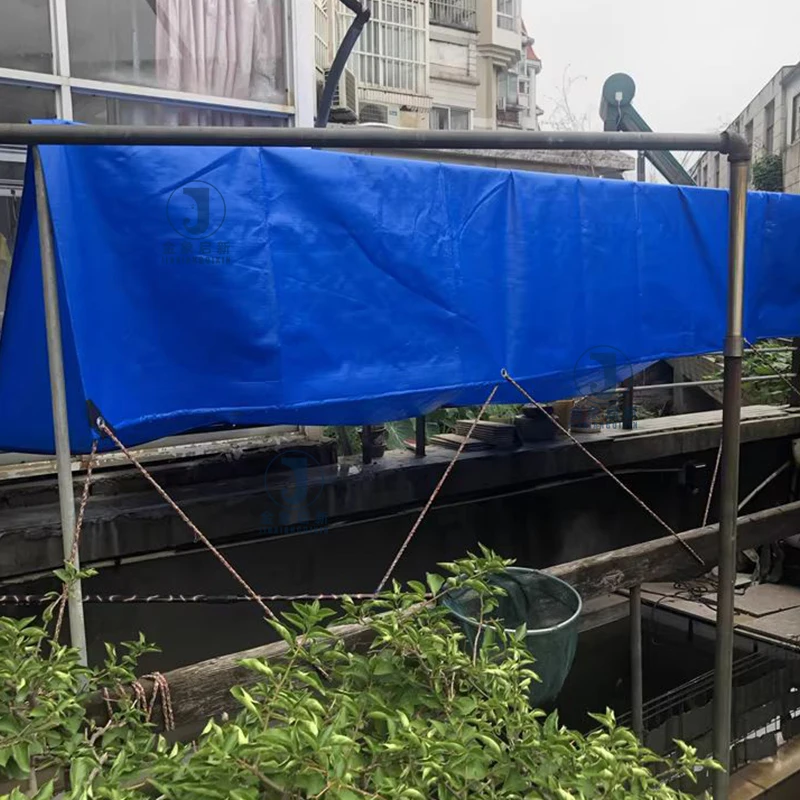
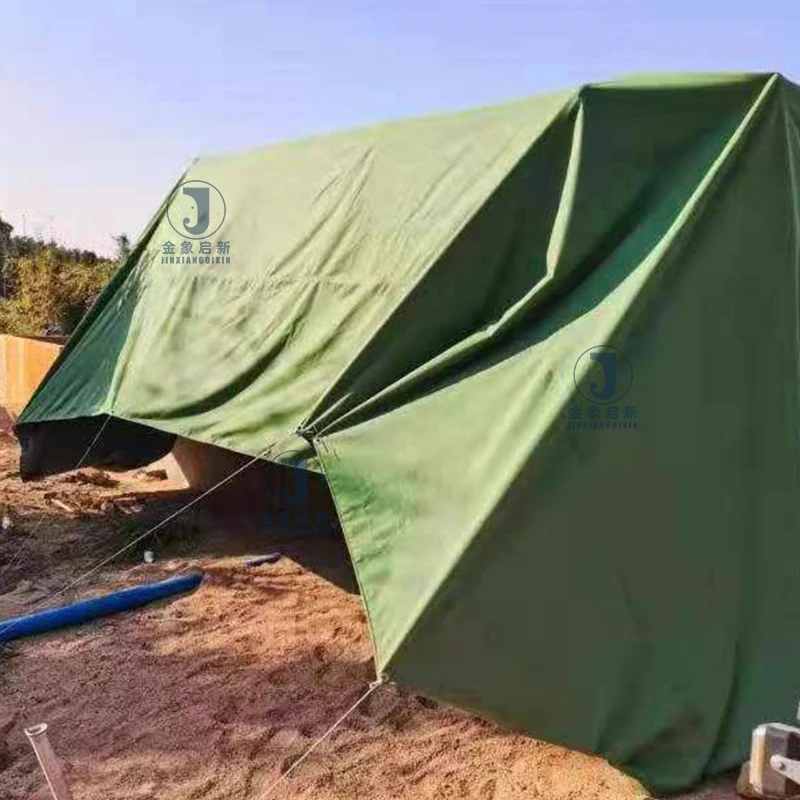
Precision Coating Control — Three full production lines with 36 sets of professional equipment deliver roll-to-roll GSM consistency across every batch of PE tarpaulin shipped.
Technical Specifications
| Parameter | Value |
|---|---|
| Product Type | PE Tarpaulin |
| Coating Material | HDPE weaving with LDPE lamination on both sides |
| Weight (GSM) | 50 g/m² ~ 220 g/m² |
| Total Thickness | 0.2–0.4 mm / 8 mil–16 mil |
| Knitting Density (Lightweight) | 8×8 |
| Knitting Density (Medium) | 10×10 |
| Knitting Density (Heavy-duty) | 12×12 |
| Tensile Strength (Lightweight) | Meridian 300–500 / Latitude 250–450 N/5cm |
| Tensile Strength (Medium) | Meridian 500–800 / Latitude 400–700 N/5cm |
| Tensile Strength (Heavy-duty) | Meridian 900–1200 / Latitude 700–1000 N/5cm |
| Roll Width Options | 6ft, 8ft, 10ft, 12ft / 2m, 4m, 6m |
| Roll Length Options | 100 yards, 100 meters, or custom |
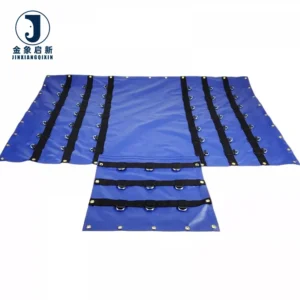
| Finished Edge Detail | PP rope reinforced hem, galvanized eyelets every 3ft or 1m, reinforced plastic corners |
| Color Options | Blue, Blue/Orange, Green, Grey, Black, Clear, Grey/Green, Orange, or custom |
| Key Features | Waterproof, tear resistant, UV treatment available (test basis not stated), mildew proof, anti-aging |
| Standards | ISO, CE |
Application Suitability
| Application | Exposure & Requirement |
|---|---|
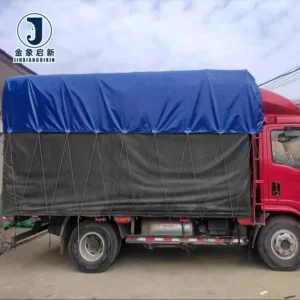
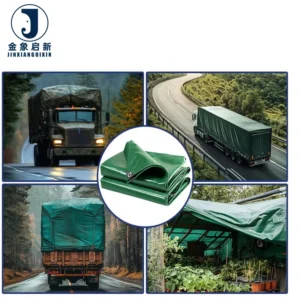
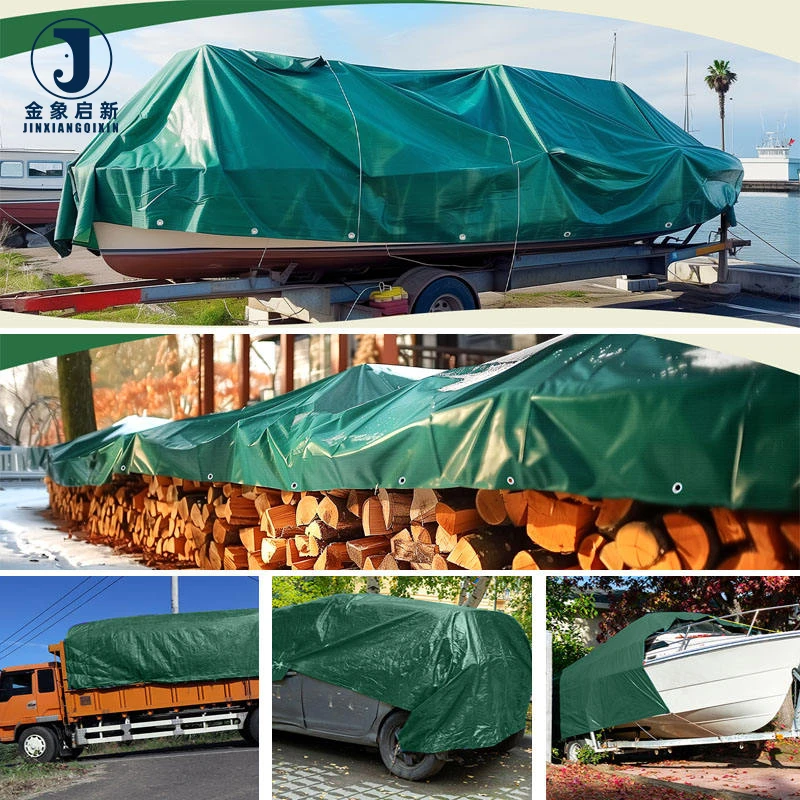
| Truck and trailer top cover | Direct UV, rain pooling, wind flap fatigue, tie-down abrasion at eyelets |
| Flatbed side curtain | Constant flexing at fold lines, road debris impact, daily roll and unroll cycles |
| Construction equipment cover | UV exposure, dust ingress, mechanical snag from protruding parts |
| Warehouse and stockpile cover | Long-term UV, standing water on flat sections, wind uplift at hems |
| Agricultural stock and feed cover | Moisture barrier, mildew risk from organic vapour, seasonal handling wear |
Why Quoted GSM Seldom Matches What Arrives on the Dock
Weight variance between rolls in the same container is a procurement problem, not a production accident.
When a fleet operator orders PE tarpaulin for truck cover applications, the quotation states a specific GSM. On arrival, cutting into the first roll and weighing a measured sample often reveals a lighter fabric than agreed. The gap compounds across a full container load — less material per square metre means lower tensile reserve at the very points where the cover flexes over a load. Across the coated fabric trade, weight shortfall remains one of the most frequent buyer complaints and a leading reason for supplier change. [NEED_CITE: common buyer complaints in industrial tarpaulin procurement]
How Dual-Side LDPE Lamination Supports Waterproof Integrity in Transport Use
HDPE woven base fabric provides the tensile skeleton, but waterproof performance depends entirely on the lamination quality. This PE Tarpaulin aftermarket supplier applies LDPE lamination to both faces of the woven substrate, sealing the interstices of the weave so that water cannot track through capillary action along the yarn paths. For truck covers that sit under rain pooling on flat trailer roofs, dual-side coverage prevents the slow wicking that single-side coated fabrics experience over repeated wet-dry cycles.
Reinforcement at the Points Where Truck Covers Actually Fail
Most truck tarpaulin failures do not occur in the field of the fabric. They begin at the hem, around the eyelets, and at the reinforced corners where tie-down straps concentrate load. The PP rope threaded through the hem distributes tension along the full edge length rather than allowing it to localise at a single eyelet. Galvanized eyelets set at 3ft or 1m intervals provide multiple attachment points so that strap tension is shared. Reinforced plastic corners add extra layers at the highest-stress positions, where diagonal wind gusts and strap angles create peel forces that would otherwise tear the laminate from the base cloth. [NEED_CITE: tarpaulin failure analysis at stress concentration points]
Reading Weight, Density and Tensile Together
A GSM figure alone tells you how much material is present per square metre, but it does not tell you how that material is distributed between base yarn and coating. A 150 g/m² fabric woven at 10×10 density with balanced LDPE lamination will behave differently under load than a 150 g/m² fabric woven at 8×8 with heavier coating to reach the same weight. The knitting density determines how many yarns share a given tensile load, while the coating contributes waterproofing and abrasion resistance but adds relatively little to tear propagation resistance. That is why this specification lists lightweight, medium and heavy-duty grades with separate knitting densities and tensile ranges rather than a single GSM number.
What Happens When Roll-to-Roll Consistency Breaks Down
A fleet buying ten rolls of PE tarpaulin for truck cover expects every roll to cut, weld and fit identically. If one roll is 140 g/m² and the next is 160 g/m², the thermal settings that produced a clean weld on the first roll may under-fuse the second, leaving a seam that delaminates under the first heavy rain. Colour shift between rolls becomes visible the moment two panels are installed side by side on the same trailer. These inconsistencies force the fabricator to test every roll before production, adding labour and delay that erode the cost advantage of bulk buying. [NEED_CITE: batch consistency challenges in coated fabric converting]
Why Sourcing from a Dedicated PE Line Matters for Fleet Buyers
Nearly three decades of focused coated fabric production means the coating weight and adhesion parameters for PE tarpaulin have been refined through thousands of production cycles rather than borrowed from a general-purpose recipe. Three full production lines allow simultaneous running of different widths and GSM grades, so a mixed order of 6ft lightweight rolls and 12ft heavy-duty rolls ships in the same container without one grade waiting for the other. A dedicated QA/QC checkpoint at every production stage — weaving, lamination, slitting and final winding — catches weight drift and colour deviation before the roll is packed, supported by 100% pre-shipment inspection.
Documentation & Verification
- Material specification sheet stating exact GSM, base fabric knitting density and LDPE coating method per roll
- UV treatment test report provided where the grade is specified on the purchase order
- Pre-shipment inspection record with individual roll weight and dimension measurements
- ISO and CE certificates included in the dispatch documentation package
- Certificate of origin and customs support documents for destination-country clearance
Fabrication, Handling & Storage
- Heat-weld LDPE surfaces using hot air or wedge welder at temperature settings matched to the chosen GSM grade
- Position galvanized eyelets at intervals no wider than specified to prevent hem peel under strap load
- Store rolls upright on pallets to prevent flat-spot creasing in the HDPE woven core
- Avoid dragging finished panels across abrasive ground; the LDPE surface is tear resistant but not puncture-proof
- Clean with mild detergent and soft brush; solvent-based cleaners may soften the LDPE lamination over time
How to Specify Your Requirement
To receive an accurate quotation, share the truck or trailer model, the panel dimensions required, the target GSM or weight grade, and the colour or print specification. If your fleet operates in a market with specific fire-safety or UV performance mandates, state the regulation or standard so the correct treatment grade can be selected. Confirm whether you need finished cut-to-size panels with eyelets and hems, or roll stock for your own fabrication line, and provide the estimated annual volume so container loading can be optimised.
Frequently Asked Questions
Q: How do I verify the actual GSM of PE tarpaulin rolls on arrival?
A: Cut a measured sample of known area from the roll, weigh it on a calibrated scale, and compare the result to the GSM stated on the material specification sheet. Request the pre-shipment inspection record with individual roll weights so you have a baseline for comparison before the container is opened.
Q: Is UV treatment supported by a test report?
A: UV treatment is available in grades matched to different exposure durations. Request the test report for the specific grade quoted so you can confirm the treatment level meets the outdoor exposure conditions your truck fleet will face in the destination market.
Q: Can the tarpaulin be cut to my specific trailer model dimensions?
A: Finished panels are produced to buyer-specified dimensions with PP rope hems, galvanized eyelets at chosen intervals and reinforced plastic corners. Provide the exact panel layout and eyelet spacing required for your trailer’s tie-down rail configuration.
Q: How is colour consistency maintained across multiple rolls in one order?
A: Every production run uses controlled pigment dosing and in-line colour checking. A 100% pre-shipment inspection compares each roll against the order colour standard, and the inspection record documents the result before dispatch.