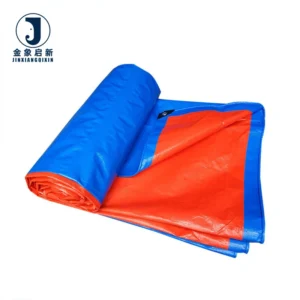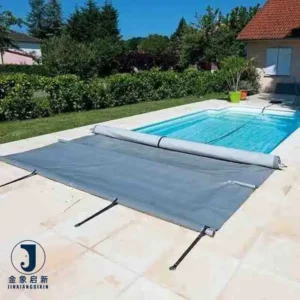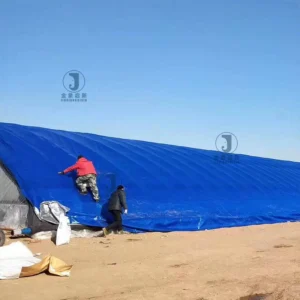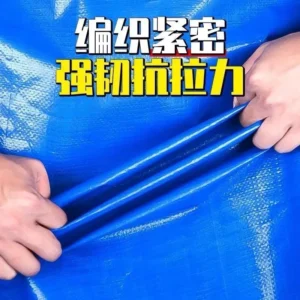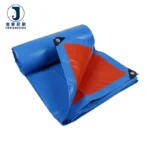
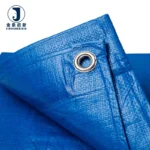


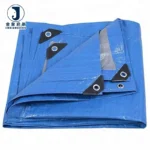
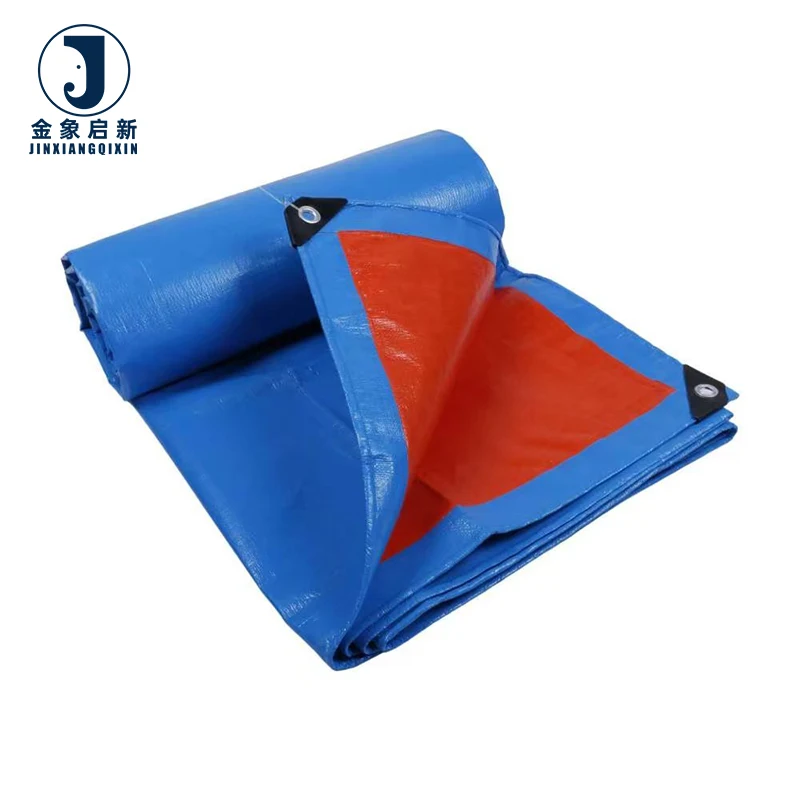
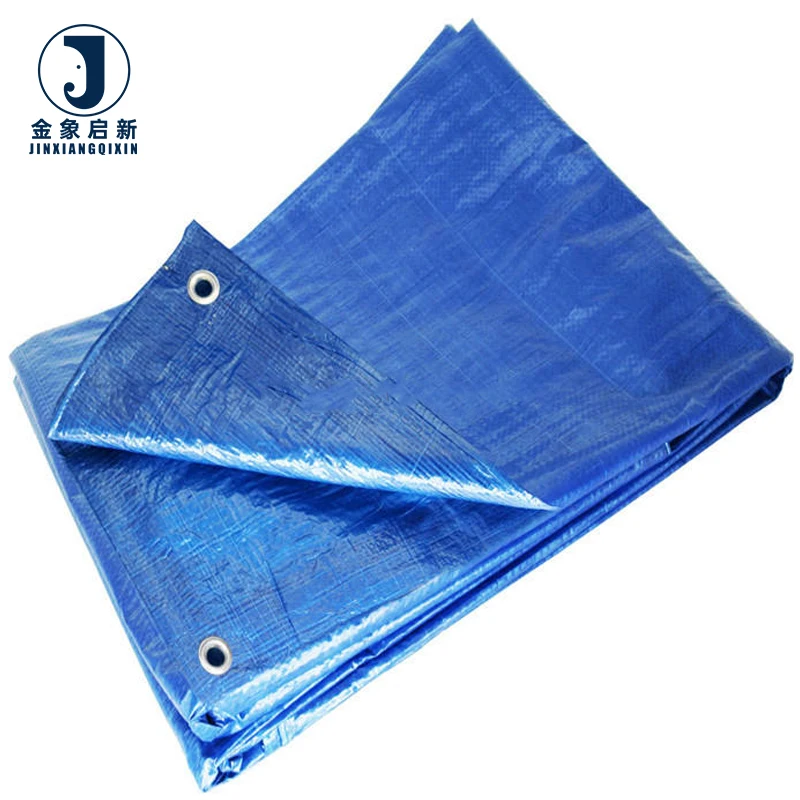
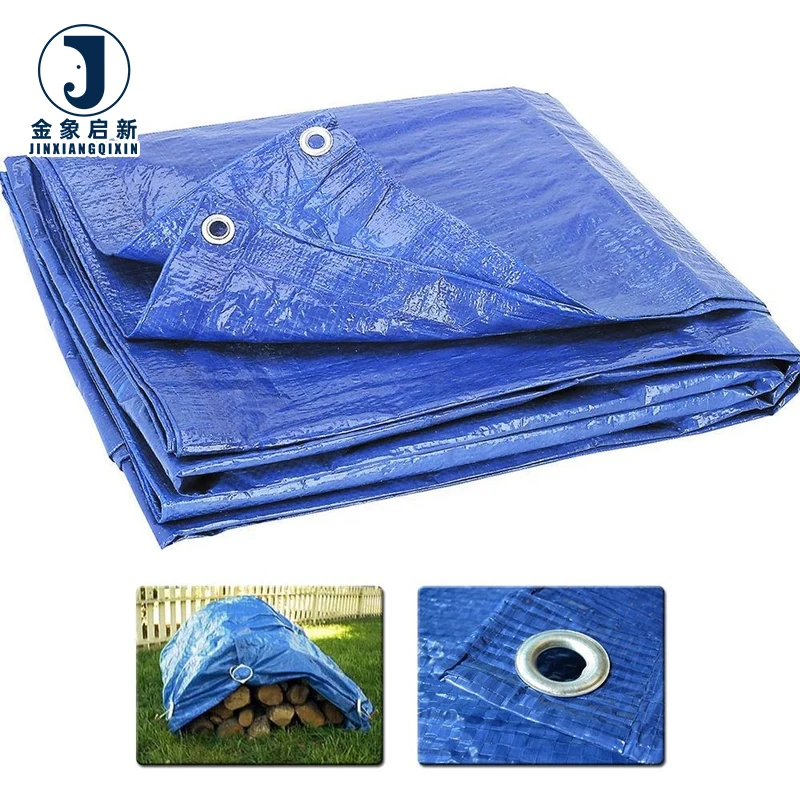
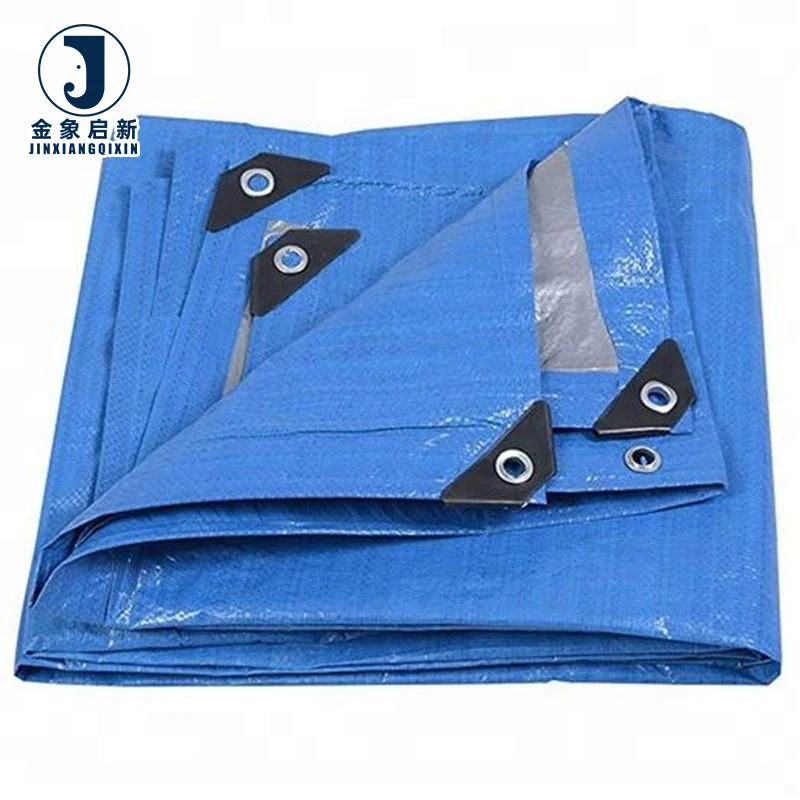
Batch Consistency Assurance — Dedicated QA/QC protocols ensure every PE tarpaulin roll shipped meets the exact GSM and coating weight stated on the specification sheet, eliminating surprises on the production floor.
Technical Specifications
| Parameter | Value |
|---|---|
| Product Type | PE Tarpaulin |
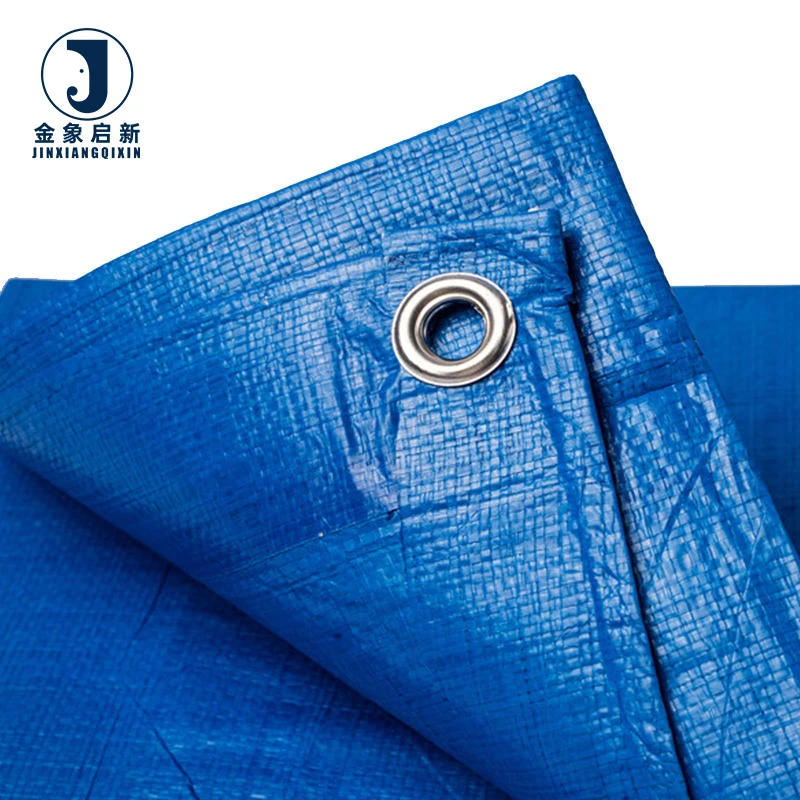
| Material Construction | HDPE woven base fabric with LDPE coating |
| Coating Method | Woven coated |
| Waterproof Rating | Waterproof (fully coated construction) |
| UV Treatment | Anti-UV resistant (test basis to be confirmed per grade) |
| Anti-Mildew | Mildew-proof formulation |
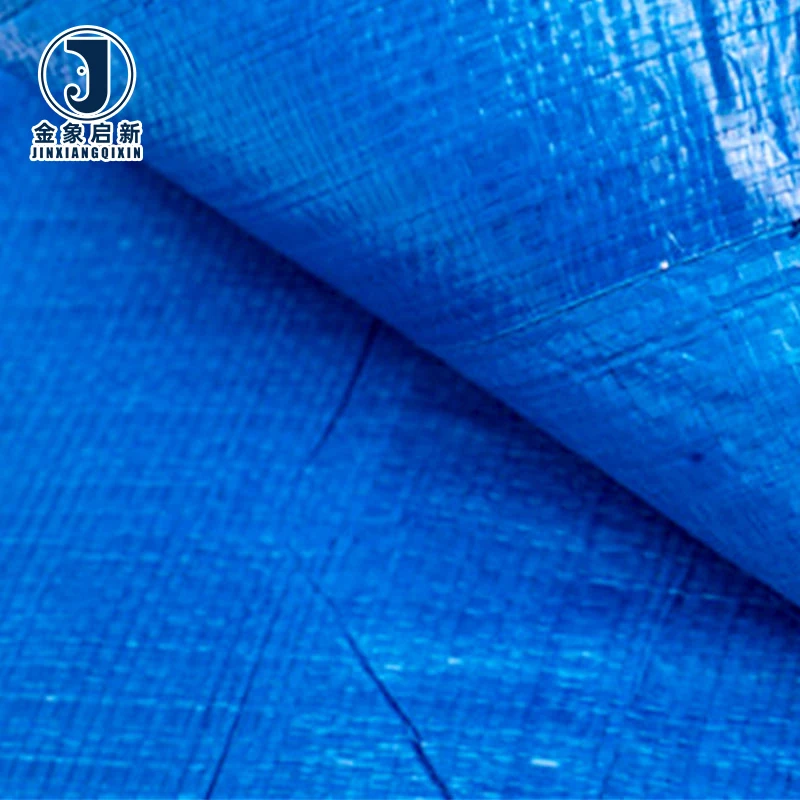
| Finish Style | Plain woven |
| Color Options | Customizable (various colors available) |
| Size Options | Customizable (various widths and lengths available) |
| Eyelet & Hem Options | Eyelets available |
| Printing Option | Tarpaulin printing available (details on request) |
Application Suitability
| Application | Exposure & Requirement |
|---|---|
| Temporary site enclosures | Wind load, UV degradation, frequent handling and repositioning |
| Industrial equipment covers | Outdoor weathering, dust ingress, moisture penetration |
| Tent and awning structures | Continuous UV exposure, tension stress at anchor points, rain |
| Truck and trailer side curtains | Road abrasion, flex fatigue, aerodynamic drag and tie-down tension |
| Agricultural stockpile covers | Prolonged sun exposure, moisture protection, wind uplift |
What Separates Verified PE Fabric from Generic Quotations
Colour consistency and GSM accuracy require in-process QA, not just a final visual check.
Buyers sourcing PE tarpaulin roll stock for bulk container loads often encounter shade drift between rolls from the same shipment, or find the roll weight falls short of the quoted specification once it hits the scale. These discrepancies force fabrication shops to re-cut panels, delay project handovers, and absorb the cost of rejected material. Technical buyers specifying fabric for industrial covers or specialist structures need documentation that traces every roll back to its production batch. [NEED_CITE: standard test methods for coated fabric weight and colour measurement]
Coating Adhesion and Substrate Performance
The woven HDPE base fabric provides a mechanically stable substrate that resists deformation under tension, unlike extruded PE film which lacks directional strength. The LDPE coating locks the weave in place and seals the surface against moisture penetration. This construction matters for fabricators who hot-air weld seams, as consistent coating thickness directly influences weld temperature settings and bond integrity across the full roll length.
Roll-to-Roll Consistency for High-Volume Cutting
When tent and awning manufacturers cut dozens of panels per shift from PE tarpaulin roll stock, shade variation between rolls means adjacent panels on a finished structure can show visible colour mismatch in direct sunlight. Our in-house R&D team develops samples against your specified colour reference, and production follows a controlled batching protocol so that a full container order ships within a single dye lot. [NEED_CITE: colour fastness and batch variation standards for coated textiles]
How GSM and Base Fabric Density Interact
A heavier GSM figure alone does not guarantee higher tear resistance. The denier of the HDPE yarns and the warp-and-weft density of the base fabric determine how far a tear propagates once initiated. A tightly woven lighter fabric can outperform a loosely woven heavier one in puncture scenarios. When you review a PE tarpaulin roll for industrial ventilation and specialist application use, request the base fabric specification alongside the coating weight to understand the complete performance profile rather than relying on a single number.
The Hidden Cost of Unverified Flame-Retardant Claims
A site inspector rejecting an installed cover because the supplied documentation lacks the fire classification required by local building codes turns a material cost into a full re-installation liability. Anti-UV claims without a test report leave fabricators unable to warranty their finished products to end users. These failures are preventable when the buyer insists on grade-specific test documentation before placing the production order. [NEED_CITE: fire classification requirements for temporary building enclosures]
Why Technical Buyers Source PE Rolls Through This Facility
Three full production lines and 36 sets of professional equipment support bulk output without sacrificing coating weight control on individual rolls. The 10-person R&D team handles colour matching, custom width development, and sample fabrication so your approval stage is based on actual production material rather than a generic swatch. Every roll undergoes 100% pre-shipment inspection with weight verification against the stated GSM, and the inspection record ships with your documentation package. ISO and CE certified processes govern the coating application and quality checks throughout production.
Documentation & Verification
- Material specification sheet confirming GSM, base fabric denier, and coating weight per roll
- Test report for anti-UV treated grades supplied where applicable, subject to grade confirmation
- Pre-shipment inspection record with individual roll weight verification before container loading
- Roll packing list detailing roll count, net weight, and dimensions for customs clearance
- Certificate of origin and export documentation supporting shipments to international markets
Fabrication, Handling & Storage
- Hot-air weld temperature must be adjusted to the LDPE coating thickness to avoid seam delamination
- Eyelet placement at high-tension corners requires reinforced hem folding to distribute tie-down loads
- Store rolls vertically on pallets to prevent flat-spotting and permanent crease marks on the coated surface
- Unroll and allow fabric to relax before cutting to release winding tension and ensure dimensional accuracy
- Clean mildew-proof coated surfaces with neutral-pH detergent only to preserve the treatment layer
Inquiry Guidance for Bulk PE Fabric Procurement
When requesting a quotation, specify your end-use application, required roll width and length, and target colour reference so our R&D team can prepare a production sample. If your market mandates a particular fire classification or UV test standard, include that requirement so we confirm grade availability before quoting. State whether you need raw roll stock or finished panels with eyelets and hemming to receive an accurate scope assessment.
Frequently Asked Questions
Q: How is GSM verified on PE tarpaulin rolls before dispatch?
A: Every roll is weighed individually during our pre-shipment inspection, and the measured GSM is recorded against the specification stated on the material sheet. The inspection report accompanies the shipment so buyers can cross-reference the documentation with their own incoming quality check before releasing the material to the fabrication floor.
Q: What test basis supports the anti-UV claim on PE woven coated fabric?
A: Anti-UV treatment is formulated into the coating compound, and the test basis depends on the grade selected. Request a test report for your specific grade so you can verify the exposure rating matches the service life expectation for your end-use market and climate zone.
Q: How do you control colour consistency across multiple rolls in one order?
A: Production is batched so that a full order ships from a single dye lot, with colour checks performed at the coating stage. Our R&D team prepares an approved sample before production begins, and in-process QA compares each roll against that reference to flag any deviation before it reaches packing.
Q: What custom widths and lengths are available on PE tarpaulin roll stock?
A: Custom widths and lengths are produced to your specification, supported by our three production lines and in-house sample development. Provide your required dimensions and annual volume estimate so we can confirm the most efficient roll configuration for your container loading plan.
Q: How are welded seams and eyelet reinforcements specified for PE covers?
A: Weld parameters depend on the LDPE coating weight and base fabric density. When you share your fabrication method and end-use load requirements, we recommend the appropriate hem reinforcement and eyelet spacing to ensure the seams and fixings perform to the same standard as the fabric body.