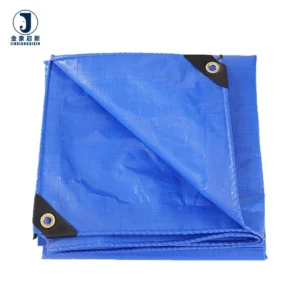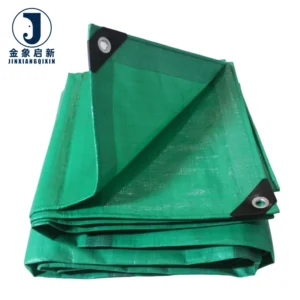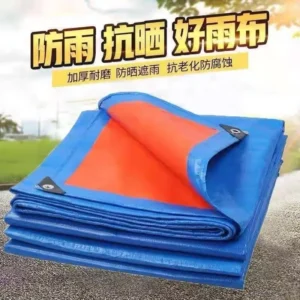
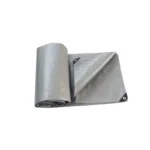
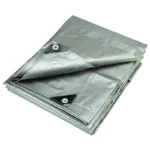
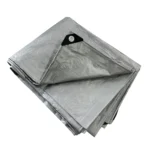
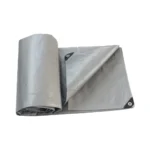
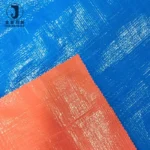
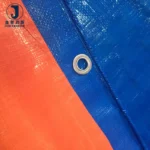
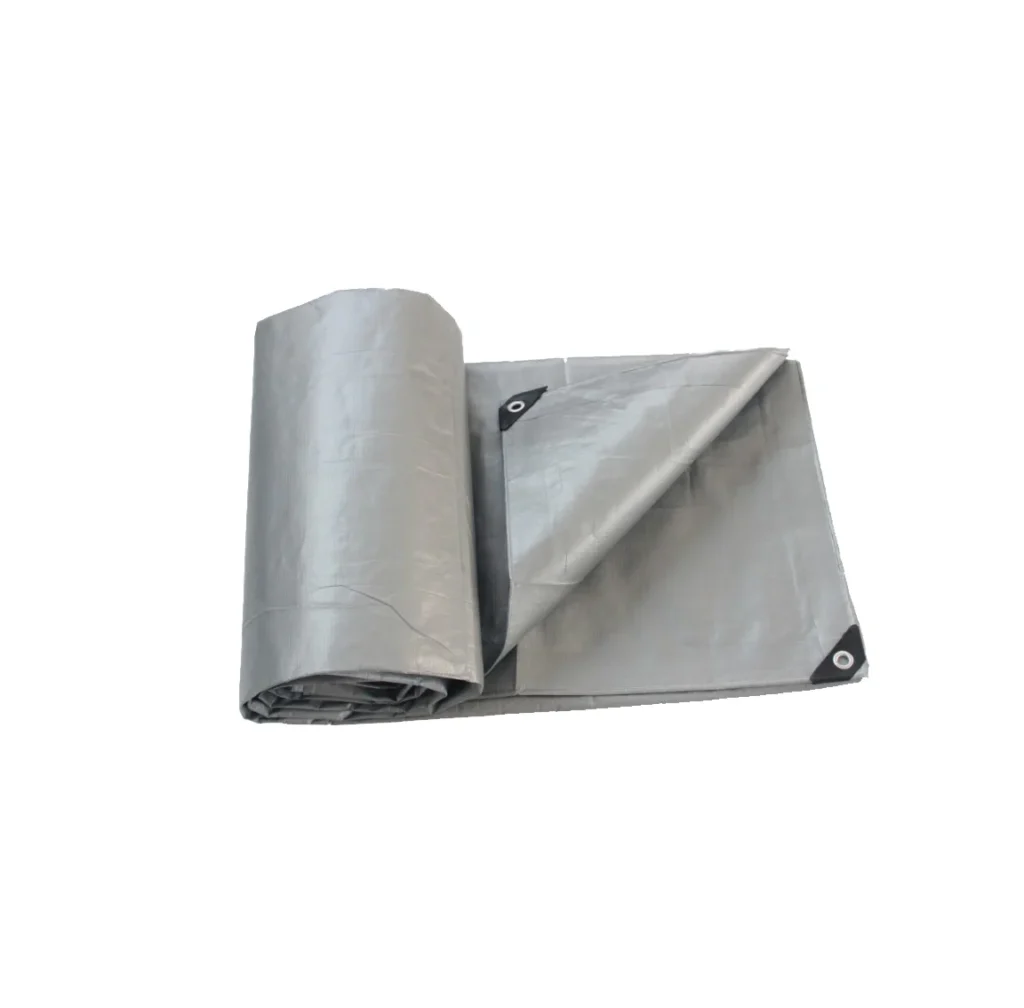
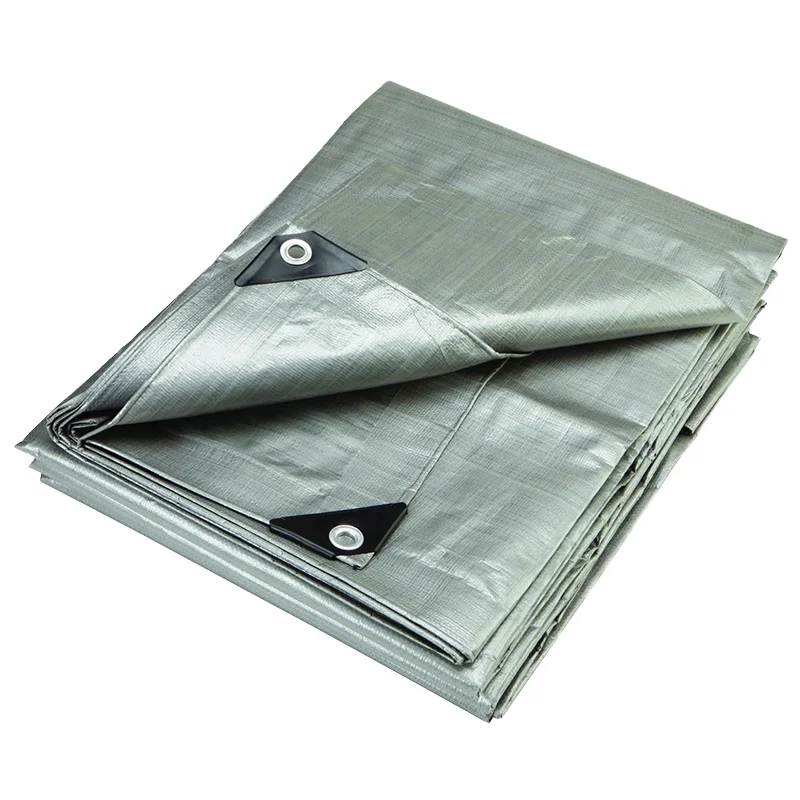
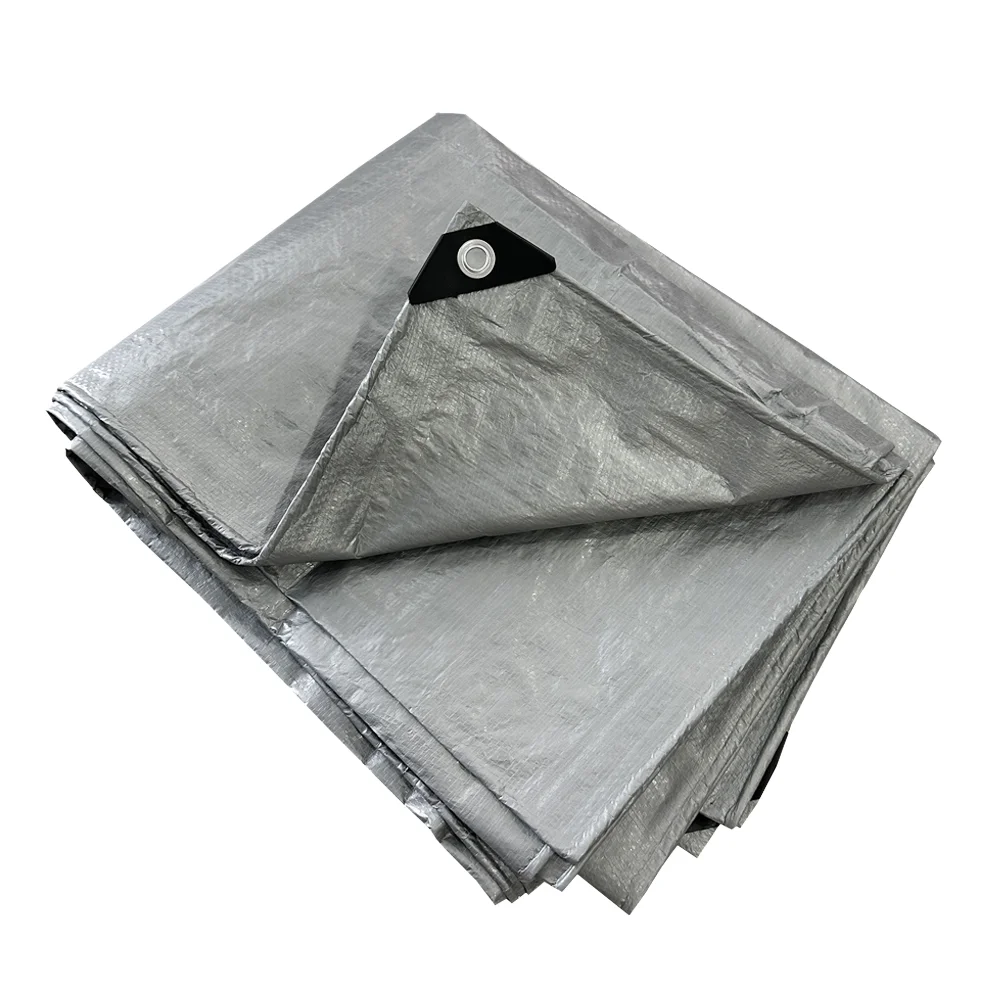
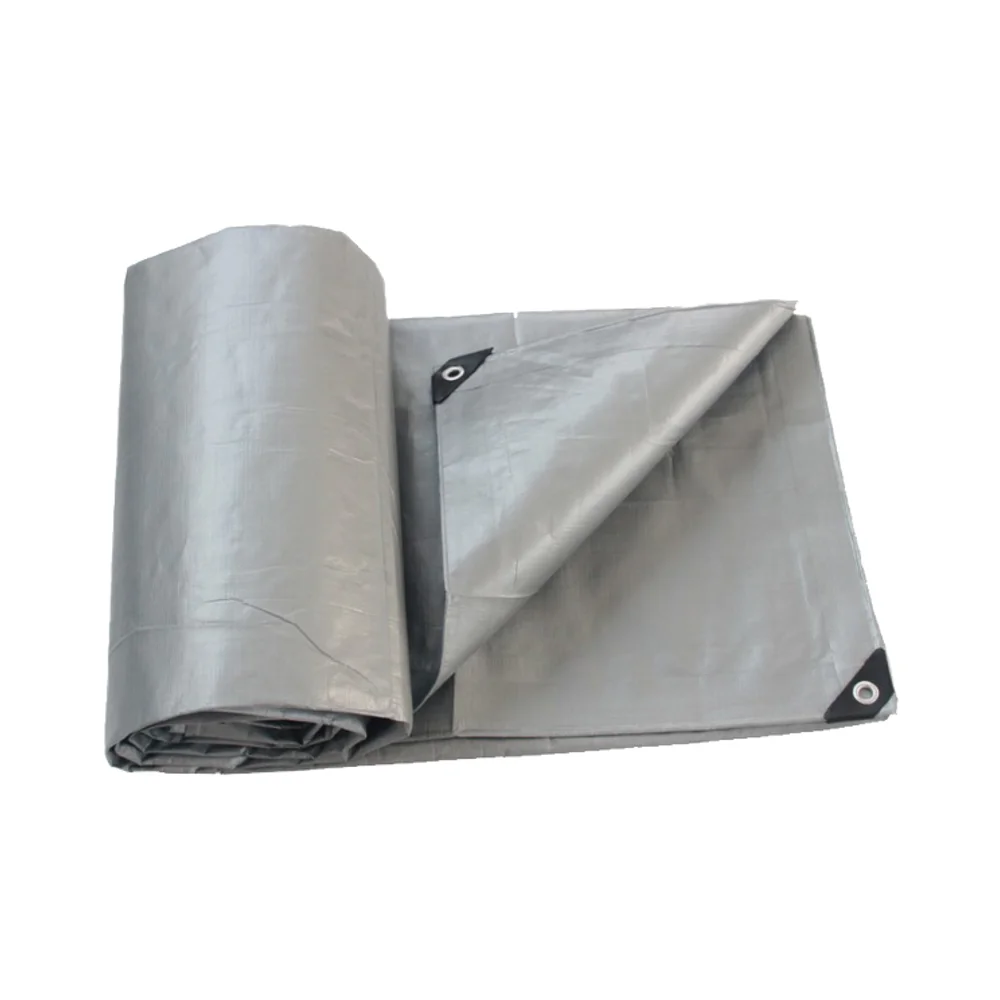
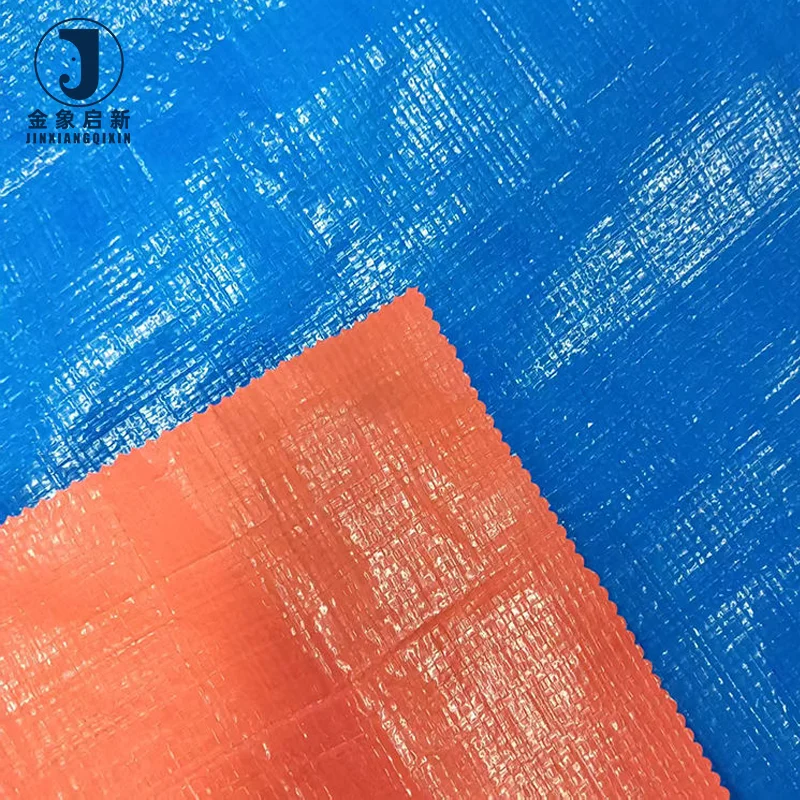
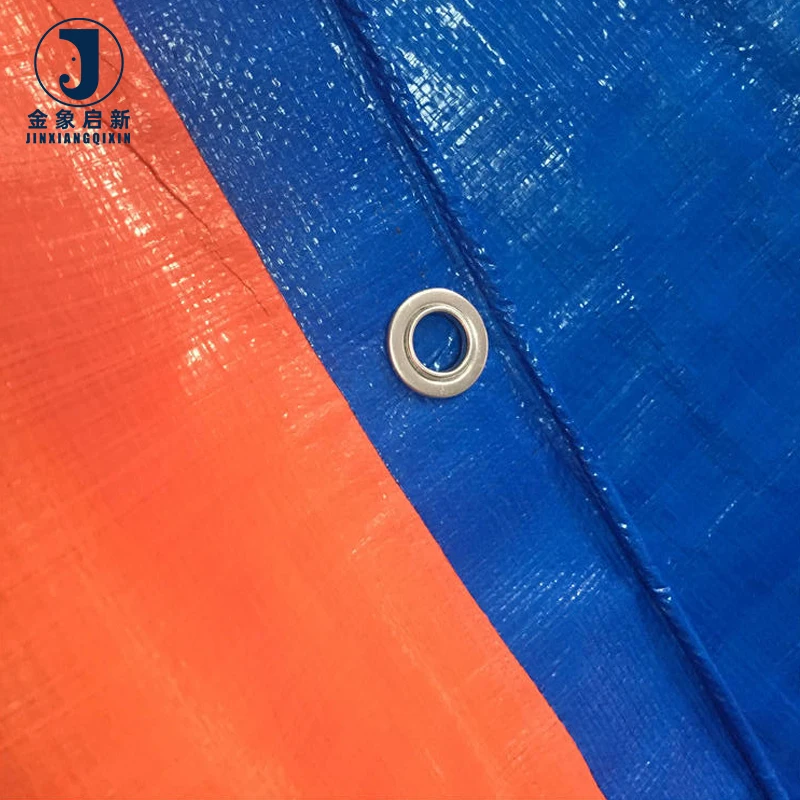
Process Control Over Weave Density and Coating Adhesion — verified through dedicated QA at every production stage with 100% inspection before dispatch, applied to each roll of waterproof PE tarpaulin sheet leaving the facility.
Technical Specifications
| Parameter | Value |
|---|---|
| Product Type | PE Tarpaulin |
| Material | HDPE weaving with LDPE lamination on both sides |
| Weight Range | 50 gsm ~ 300 gsm |
| Thickness | 0.2 mm – 0.4 mm (8 mil – 16 mil) |
| Weave Density Options | 6×6, 6×7, 7×7, 7×8, 8×8, 9×9, 8×10, 10×10, 12×12, 14×14, 14×16 |
| Color Options | Blue, Blue/Orange, Green, Grey, Black, Clear, Grey/Green, Orange, Custom |
| Roll Width Options | 6 ft, 8 ft, 10 ft, 12 ft, 2 m, 4 m, 6 m |
| Roll Length Options | 100 yards, 100 meters, Custom |
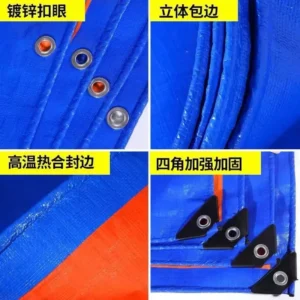
| Finished Sheet Reinforcement | PP rope in hem on all four edges |
| Eyelet Interval | Every 3 ft or 1 meter |
| Corner Reinforcement | Reinforced plastic corners |
| UV Treatment | Available (test basis not stated) |
| Key Features | Waterproof, Tear Resistant, Mildew Proof, Anti-aging |
| Standards | ISO, CE |
Application Suitability
| Application | Exposure & Requirement |
|---|---|
| Truck and trailer load covers | Constant road vibration, wind uplift at highway speed, rain and debris impact, UV exposure on long hauls |
| Construction scaffolding wrap | Direct sunlight, wind loading on vertical panels, abrasion from scaffold tubes, dust and mortar splash |
| Agricultural crop and timber covers | Prolonged ground contact moisture, mildew risk in humid storage, UV from open-field stacking |
| Road repair site enclosures | Heavy equipment proximity, puncture risk from aggregate, overnight temperature swings |
| Pond liner and reservoir sheets | Permanent water immersion, soil chemistry contact, puncture from subgrade irregularities |
Why Weave Density Matters More Than Stated GSM for Waterproof PE Tarpaulin Sheet
GSM without weave density context leaves buyers guessing about actual field strength.
I have seen PE tarpaulin aftermarket supplier orders arrive with the correct roll weight but a looser weave than specified — the coating fills the gap, so the scale reads right, but tear resistance drops the moment a tie-down strap pulls against an eyelet. Weave density and coating weight together determine how the fabric handles real load. [NEED_CITE: tensile and tear test methods for coated fabrics per ISO 1421] When a truck cover flexes over a sharp load edge, it is the HDPE yarn count per inch that resists the initial puncture, not the LDPE lamination sitting on top.
Weave Architecture and Load Distribution Across the Sheet
A PE tarpaulin aftermarket supplier offering eleven weave density options — from 6×6 up to 14×16 — gives technical buyers a transparent selection path. Lower mesh counts suit temporary agricultural covers where weight and cost matter more than sustained tension. Higher densities such as 12×12 or 14×16 serve truck side curtains and construction scaffolding wrap, where wind loading and repeated flexing demand yarn-level resistance before the coating even engages.
Lamination Integrity and Edge Reinforcement Under Field Stress
The LDPE lamination on both sides of the HDPE base fabric locks out moisture, but lamination adhesion is what keeps the sheet intact when folded, dragged, or stacked. Finished sheets carry PP rope in the hem on all four edges, distributing tie-down load across the rope rather than concentrating it at the eyelet hole. Galvanised eyelets placed every 3 ft or 1 meter, combined with reinforced plastic corners, address the two points where most field failures originate. [NEED_CITE: edge reinforcement failure points in heavy-duty tarpaulin installations]
Reading the Specification Sheet Before You Commit to a Grade
Weight range spans 50 gsm to 300 gsm, but a single GSM figure means little without the corresponding weave density and thickness reading. A 180 gsm sheet at 8×8 weave behaves very differently from a 180 gsm sheet at 14×14 — the latter carries more yarn and less coating filler, translating to higher tear propagation resistance. Thickness options from 0.2 mm to 0.4 mm further refine the selection, letting buyers match the sheet to expected abrasion levels and handling frequency. UV treatment is available across the range, though the specific test basis should be confirmed with the technical team to match your regional compliance requirement.
What Happens When the Wrong Grade Reaches the Job Site
Selecting a lighter weave for a high-wind scaffolding application often shows no problem during installation — the sheet looks right, the eyelets hold, the colour matches. The failure appears weeks later when sustained gust loading works a small tear from an eyelet corner across the panel. Similarly, ordering roll stock without confirming batch colour consistency can result in visible shade variation once panels are hung side by side on a construction hoarding. [NEED_CITE: batch colour variation complaints in bulk tarpaulin procurement] These are not material defects; they are specification mismatches that a detailed inquiry and pre-shipment inspection record would have prevented.
How Production Discipline Supports Consistent Output
Three full production lines and 36 sets of equipment maintain output volume without sacrificing per-roll verification. Each roll of waterproof PE tarpaulin sheet undergoes in-process QA checking coating weight, weave alignment, and lamination adhesion before it moves to cutting or packing. A 10-person R&D team handles material selection for custom widths and treatment requirements, developing samples within days so buyers can validate hand-feel, opacity, and weldability before the main production run.
Documentation & Verification
- Material specification sheet stating exact GSM, weave density, and thickness per roll ordered
- UV treatment test report provided where applicable to match specified grade
- Pre-shipment inspection record confirming weight and lamination adhesion per roll
- ISO and CE certificates included with each specialist or bulk shipment
- Roll packing list detailing width, length, colour, and mesh count for every unit
Fabrication, Handling & Storage
- Heat-seal LDPE lamination at moderate temperature to avoid burning through the HDPE base yarn
- Stitch finished sheets with UV-stable thread matching the tarpaulin’s outdoor exposure profile
- Store rolls upright on hard paper tubes to prevent flat-spot creasing across the 0.2–0.4 mm sheet
- Unfold sheets in moderate temperatures; cold-stiffened LDPE can crack if forced open below freezing
- Clean with mild detergent only — aggressive solvents attack the LDPE lamination surface layer
- Plan cutting layout from roll width options to minimise offcut waste on large-format covers
What to Include in Your Inquiry
Share the specific application, expected wind or load conditions, and whether you need roll stock or finished cut-to-size sheets with eyelets. Confirm the target market so any UV or fire compliance requirement can be matched to the correct test standard. Specify preferred colour, roll width, and estimated annual volume to receive an accurate lead time and packing plan.
Frequently Asked Questions
Q: How do I choose the right GSM and weave density for my covering application?
A: Start with the load and exposure profile. High-wind scaffolding and truck covers need denser weaves such as 12×12 or above for tear propagation resistance, while temporary crop covers can use lighter 6×6 or 8×8 grades. We provide a specification sheet mapping each GSM to its weave density so you can verify the balance of yarn strength versus coating weight before ordering.
Q: Can I order custom width, length and colour with reinforced hems and eyelets?
A: Yes. Roll widths are available in standard options up to 6 m, with custom lengths beyond 100 meters on request. Finished sheets are cut to your dimensions with PP rope hem reinforcement on all four edges, galvanised eyelets at 3 ft or 1 meter intervals, and reinforced plastic corners. Colour matching across rolls in the same order is controlled through batch-level QA.
Q: What documentation is provided to verify GSM, UV treatment and certifications?
A: Each shipment includes a material specification sheet with stated GSM and weave density, a pre-shipment inspection record, and ISO and CE certificates. Where UV treatment is specified, a test report confirming the grade is provided. All documents reference the roll or bale numbers on the packing list for full traceability.
Q: How is batch-to-batch colour consistency controlled across a single order?
A: Colour is matched against approved references at the coating compounding stage, and every roll is checked during in-process QA before packing. This prevents the visible shade variation that causes problems when panels are installed side by side on site. Pre-shipment inspection records confirm colour approval per roll.