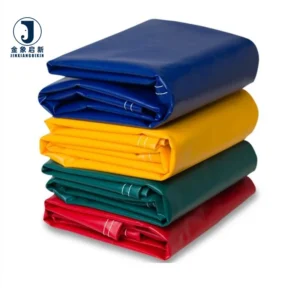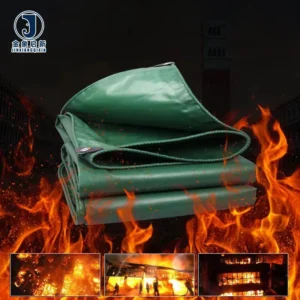
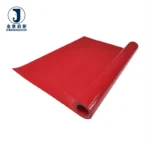
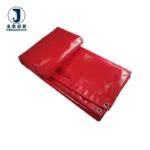
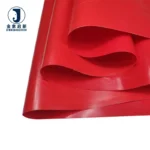
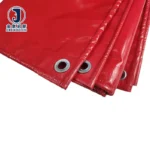
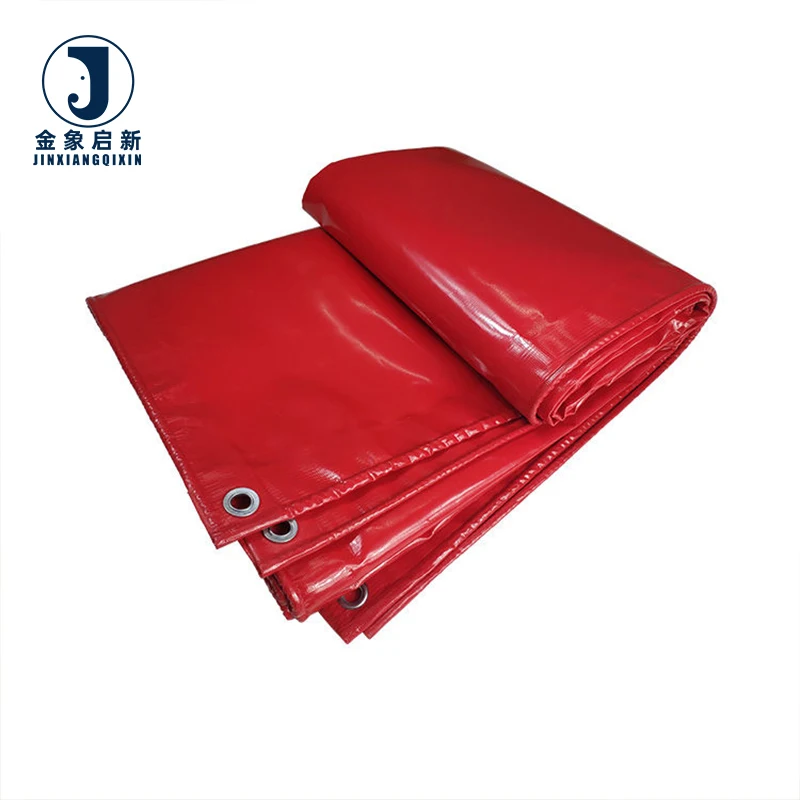
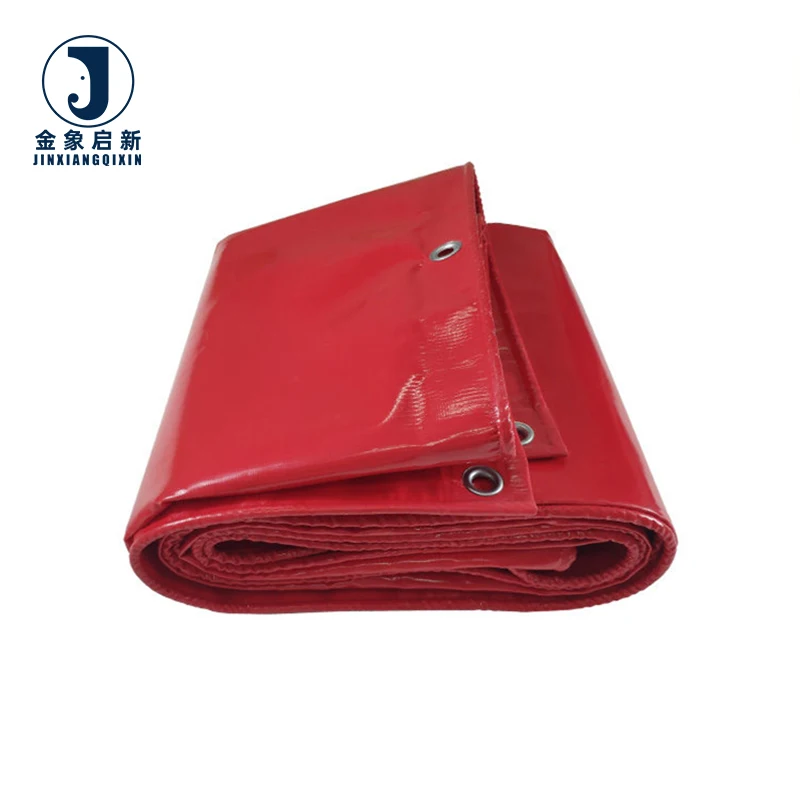
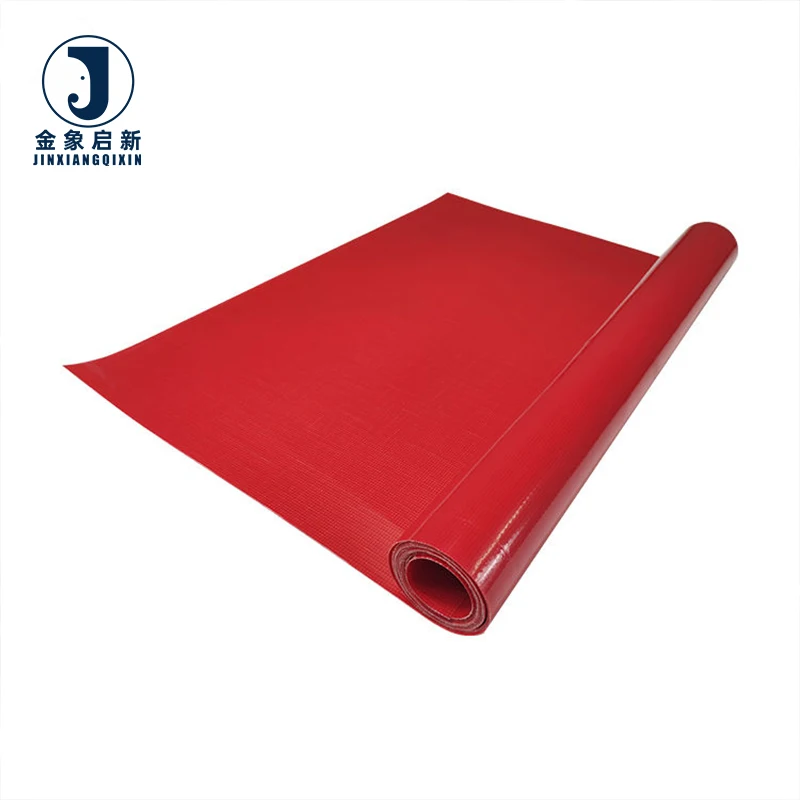
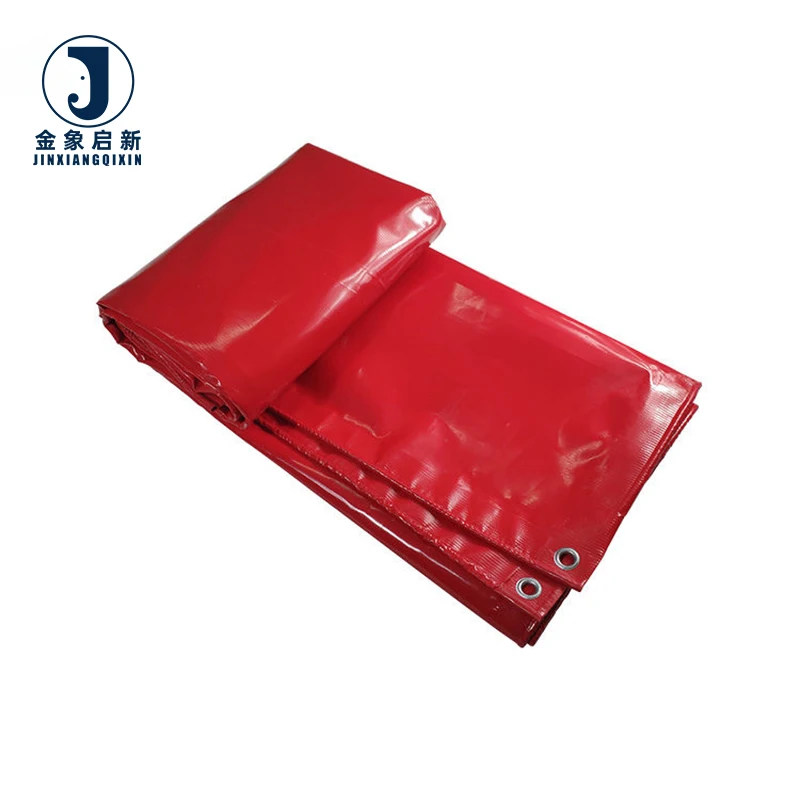
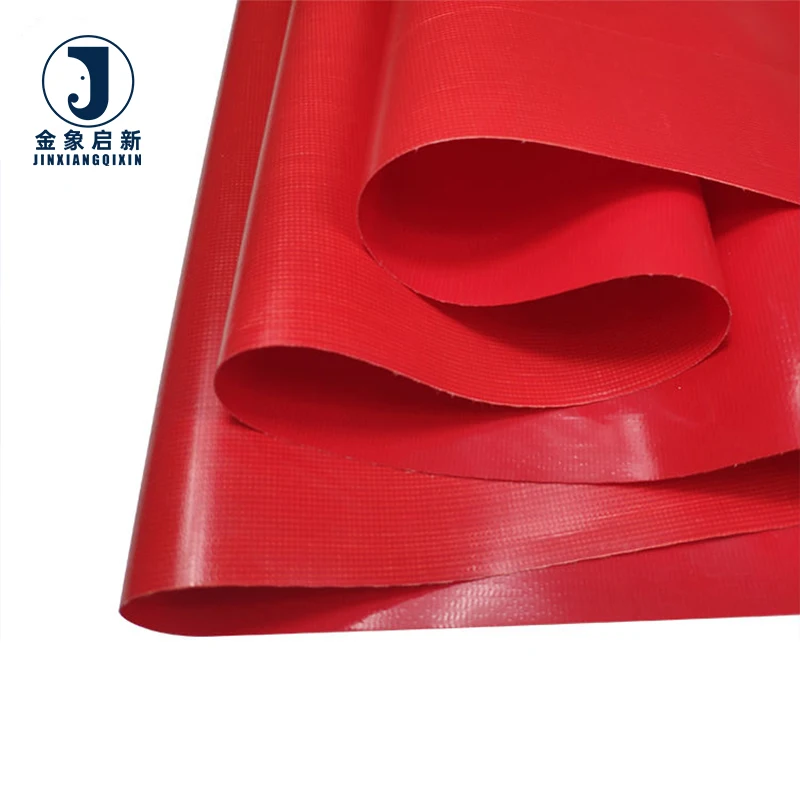
Consistent Coating Weight Control — every roll of PVC coated tarpaulin is verified against stated GSM and base fabric construction before dispatch, eliminating the gap between quotation and arrival.
Technical Specifications
| Parameter | Value |
|---|---|
| Product Type | PVC Coated Tarpaulin |
| Base Fabric | Polyester with double-sided PVC coating |
| Coating Material | PVC |
| Available Weight (GSM) | 350 / 400 / 420 / 500 / 600 / 650 / 750 / 900 |
| Base Fabric Denier Options | 500D×840D, 500D×1000D, 1000D×1000D, 1000D×1300D, 1300D×1300D, 1000D×2000D |
| Mesh Count Options | 30×19, 20×20, 30×15 |
| Tensile Strength (Warp/Weft N) | 1650/1600 (350 GSM), 1800/1700 (400 GSM), 1850/1750 (420 GSM), 2050/1900 (500 GSM), 2500/2200 (600 GSM), 2550/2250 (650 GSM), 2750/2850 (750 GSM), 3900/3500 (900 GSM) (test basis not stated) |
| Treatment Options | High frequency hot melt, hot air welding, sewing |
| Key Features | Waterproof, anti-UV (test basis not stated), anti-mildew, heavy metal free, flexible, self-clean, fire retardant (grade not stated) |
| Density Parameter | 1.15–2.00 g/cm³ |
| Tensile Strength (Material) | 50–80 MPa |
| Brittle Temperature | ≤ -50°C to -60°C |
| Softening Temperature | ≥ 80°C |
| Melting Point | 212°C |
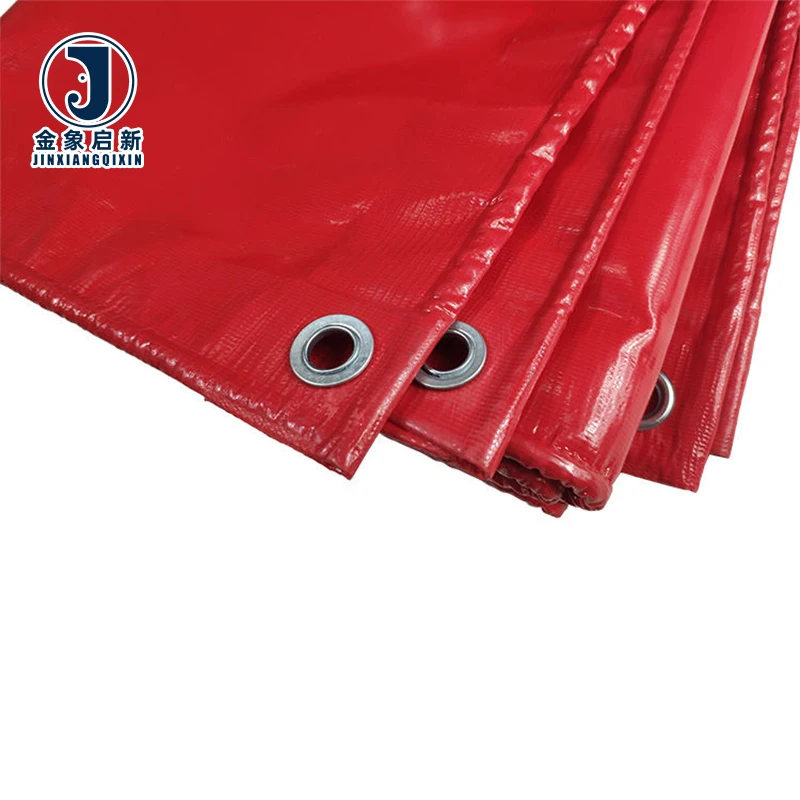
| Eyelet Option | 3 cm enlarged aluminum alloy buttonhole |
| Edge Wrapping | High temperature heat sealed seamless edge wrapping |
| Rope Reinforcement | 5 mm thick rope without splicing |
| Corner Reinforcement | Reinforced corners on all sides |
| Printing | Printable, customized |
| Packing | Polyester bag |
Application Suitability
| Application | Exposure & Requirement |
|---|---|
| Truck and trailer side curtains | Continuous flexing at load points, road debris abrasion, UV and weather exposure requiring high warp/weft tensile balance |
| Mining and tunnelling ventilation ducts | Fire-retardant compliance on-site, anti-static requirement in confined spaces, airflow friction resistance |
| Outdoor event tents and awnings | Prolonged sun exposure, wind load on tensioned fabric, frequent installation and dismantling cycles |
| Inflatable and membrane structures | Internal air pressure stress, welded seam integrity under inflation, dimensional stability across temperature swings |
| Construction site shelters and covers | Mechanical contact with scaffolding and materials, rain and dust ingress prevention, repeated repositioning |
| Farming and aquaculture covers | Direct water contact, biological growth exposure, soil chemistry interaction |
Why Material Data Sheets Matter More Than a Single GSM Figure
When the quoted weight matches but the installed cover fails early, the gap is usually in base fabric denier and mesh density, not the coating alone.
GSM tells you the weight per square metre but not how the load is distributed between warp and weft yarns.
Technical buyers specifying ventilation duct or membrane structure fabric often receive a single GSM value on the quotation with no supporting data on yarn count or tensile performance. The coating weight can be adjusted independently of the base fabric construction, meaning two rolls at the same GSM can carry meaningfully different tear propagation resistance depending on whether the base is 500D×840D or 1000D×2000D. [NEED_CITE: tensile and tear test methods for coated fabrics per ISO 1421]. Without the mesh count and denier on the specification sheet, the PVC coated tarpaulin material properties GSM tensile strength relationship remains unverified until the roll is cut and tested on arrival.
How Base Fabric Denier Determines Tear Propagation Path
The denier of the warp and weft yarns sets the physical barrier that a tear must cross once initiated. A base fabric woven from 1000D×2000D yarns presents a substantially thicker yarn intersection at each crossover point compared to 500D×840D, forcing a propagating tear to expend more energy breaking through each successive yarn bundle. This is why the 900 GSM grade records 3900 N warp tensile while the 350 GSM grade records 1650 N — the difference is driven as much by the yarn thickness as by the additional coating mass.
Coating Adhesion and Its Role in Weld Integrity
Double-sided PVC coating over a polyester base requires controlled penetration of the PVC paste into the fabric interstices during the coating process. Insufficient penetration leaves the coating sitting on the surface with weak mechanical interlock, which becomes the failure point when high frequency hot melt welding is applied. The heat sealed seamless edge wrapping specified for this range relies on this same interlock — if the coating separates from the base fabric at the wrap line, the reinforcement provides no structural benefit and the edge unravels under tension.
Reading GSM, Mesh Count and Tensile Together
Weight per square metre is the sum of base fabric mass plus coating mass, and the ratio between them determines how the PVC coated tarpaulin behaves under load. A 650 GSM fabric at 1000D×1300D with a 20×20 mesh count carries heavier individual yarns with fewer yarns per centimetre, distributing force through fewer but stronger paths. A 600 GSM fabric at 1000D×1000D with the same mesh count uses matched warp and weft denier for balanced biaxial loading. The right selection depends on whether the installed fabric will see predominantly unidirectional tension, as in a side curtain, or multi-axial stress, as in an inflated structure. [NEED_CITE: relationship between mesh density and tear resistance in PVC coated polyester].
The Cost of Overlooking Mesh Density in Specification
A specification that calls for 600 GSM without stating the mesh count or denier leaves the manufacturer free to meet the weight target by adding coating thickness over a lighter base. The roll will pass a weight check on arrival, but when the fabricator sets the hot air welding temperature for the expected base fabric thickness, the excess coating can melt through before the base yarns bond, leaving a weak seam that fails at the first flex cycle. This type of mismatch is not visible on a pre-shipment weight inspection and typically surfaces only after the finished product is installed and loaded. [NEED_CITE: hot air welding parameters relative to PVC coating thickness and base fabric denier].
What Process Control Brings to Coated Fabric Supply
Three full production lines and 36 sets of professional equipment provide the capacity to hold GSM tolerance across large roll batches without sacrificing throughput. A 10-person R&D team manages material selection and sample development so that custom width, colour or print requirements can be validated before the production run begins. Dedicated QA and QC at every stage, including 100 percent inspection before shipment, catches coating adhesion defects and colour drift before the roll leaves the facility. ISO and CE certification provides the documentation framework that mining and tunnelling contractors need for site compliance. Nearly 30 years focused on coated fabric has built the process knowledge to match coating formulation to the end-use environment, whether that is a ventilation duct in an underground mine or a tensioned membrane over a construction site.
Documentation & Verification
- Material specification sheet stating exact GSM, base fabric denier, mesh count and colour reference for each roll produced
- Fire-retardant test report supplied where applicable — confirm the grade required for your market before ordering
- Anti-UV test documentation available upon request, with test basis stated on the report
- Pre-shipment inspection record covering weight verification, coating adhesion and visual consistency across the batch
- Roll packing list with individual roll dimensions and net weight for customs clearance
- ISO and CE certificates included with shipment documentation
Fabrication, Handling & Storage
- Set high frequency welding parameters to match the specific GSM and coating thickness of the grade ordered, starting with the manufacturer’s recommended dwell time
- Allow rolls stored below softening temperature to acclimatise before unrolling to avoid crease marks in the PVC coating surface
- Position the 3 cm aluminum alloy eyelets within the reinforced hem zone where the 5 mm rope distributes tension evenly across the fabric edge
- Store rolls horizontally on a flat rack to prevent compression deformation of the base fabric weave at the roll core
- Clean the self-clean coated surface with mild detergent only; avoid solvent-based cleaners that can soften the PVC and reduce coating adhesion
- When cutting, plan the panel layout to maximise yield from the available roll width and minimise the number of welded seams in high-stress zones
What We Need to Quote Your Requirement Accurately
Provide the end-use application and the environmental conditions the installed fabric will face, including whether fire-retardant or anti-static certification is required on site. Specify the roll width and approximate annual volume so we can confirm production line allocation and lead time. If you require custom colour or printed branding, a Pantone reference or print file will allow us to develop a sample for approval before the production run is scheduled.
Frequently Asked Questions
Q: How is GSM verified and how can I confirm coating weight on arrival?
A: Every roll is weighed and inspected against the stated GSM during pre-shipment inspection, and the material specification sheet included with the shipment records the exact value. On arrival, you can verify by cutting a measured sample and weighing it. If you need a breakdown between base fabric weight and coating weight, request this at the inquiry stage so it can be included in the documentation.
Q: What test basis supports the fire-retardant and anti-UV claims?
A: Fire-retardant and anti-UV grades are available, but the specific grade and test standard depend on the end market and application. State your local compliance requirement — such as the fire classification needed for your building code or mining regulation — at the inquiry stage, and we will confirm the matching grade and supply the corresponding test report with the shipment.
Q: How do I select the right base fabric denier and mesh count?
A: Match the denier and mesh count to the dominant load type in your application. Unidirectional tension such as side curtains benefits from a heavier warp yarn, while multi-axial stress in inflated structures requires balanced warp and weft. Share your application and tension load with us, and we will recommend the grade from the available range that meets both tensile and fabrication requirements.
Q: What welding methods suit each GSM grade in this range?
A: High frequency hot melt welding works across all grades and provides the strongest seam for structural applications. Hot air welding is suitable for lighter grades and field repairs. Sewing with sealed seams is used where mechanical fastening is required. Specify your joining method at the inquiry stage so the coating formulation and thickness can be adjusted to support it.
Q: How is colour consistency controlled across multiple rolls?
A: Batch-to-batch colour is controlled through standardised PVC paste formulation and inline monitoring during coating. For orders spanning multiple production runs, request a colour reference sample at the inquiry stage. The pre-shipment inspection includes a visual comparison across all rolls in the order against this reference before dispatch.