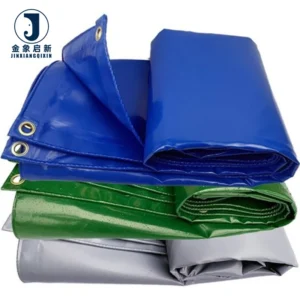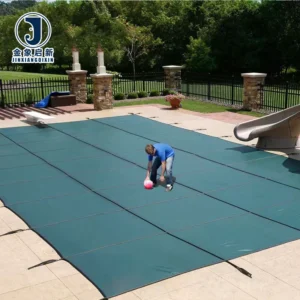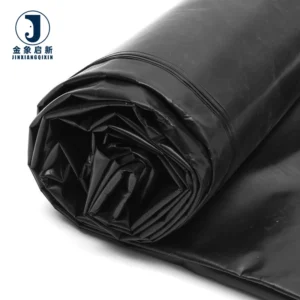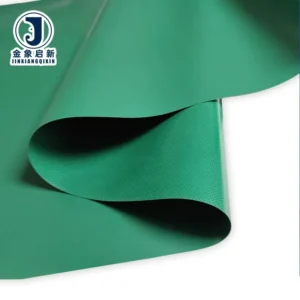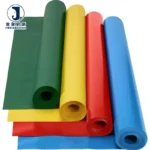
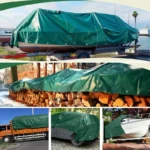
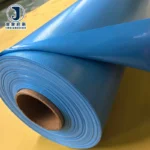
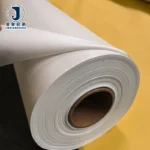
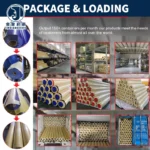
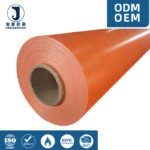
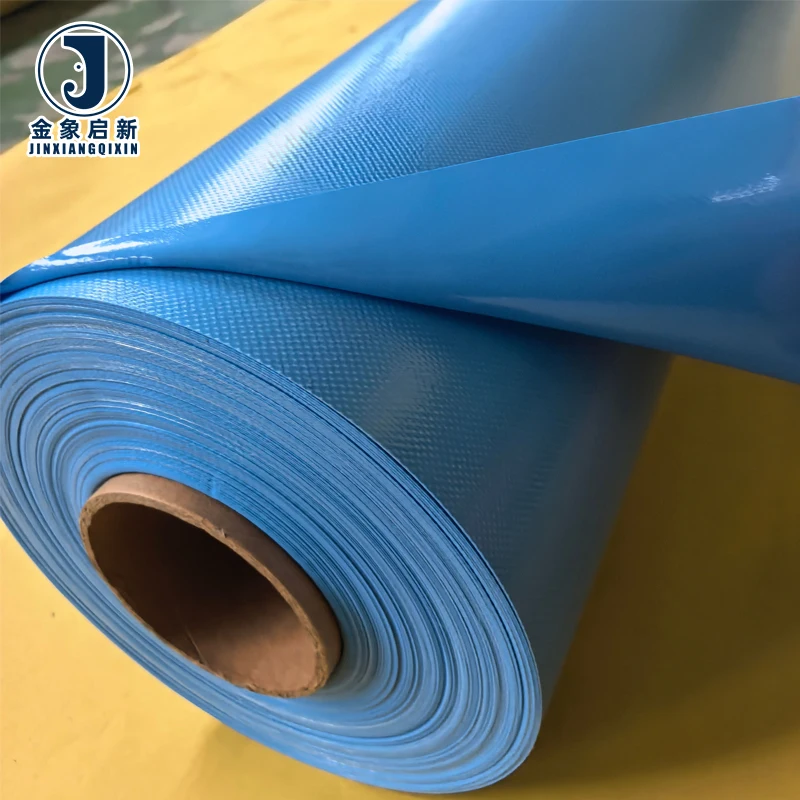
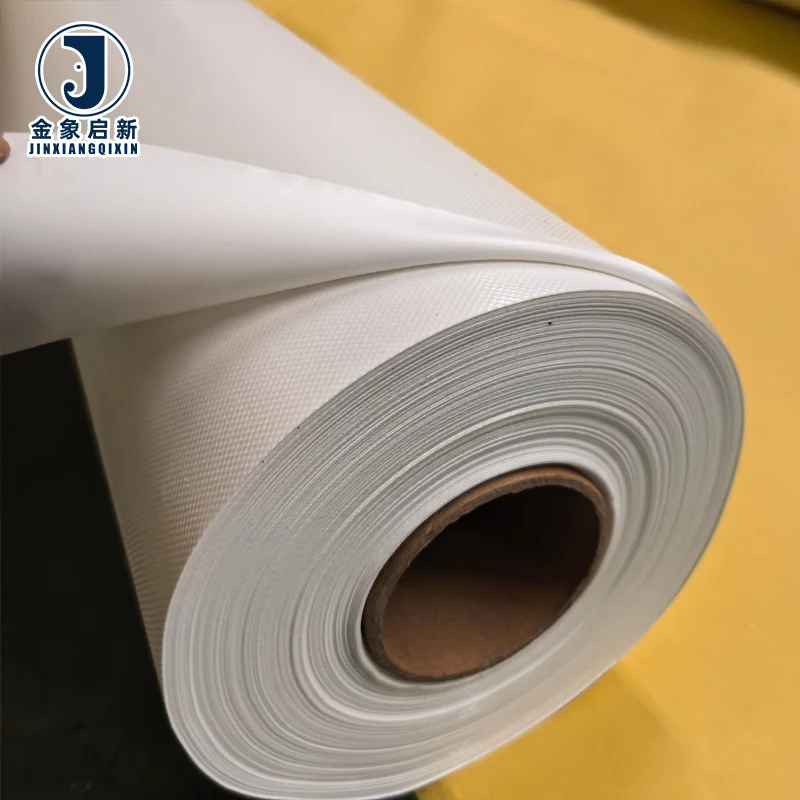
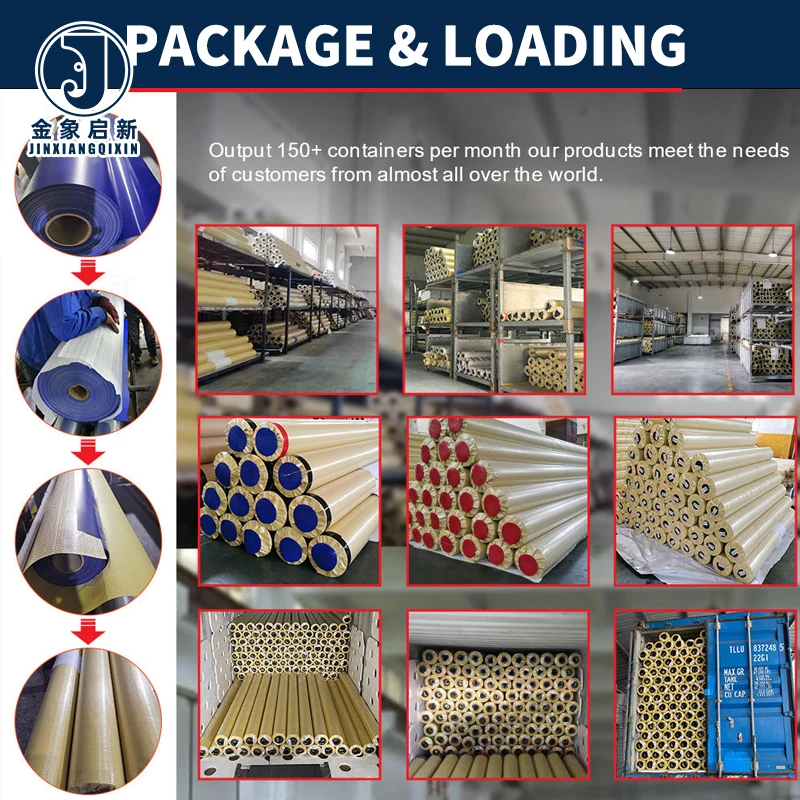
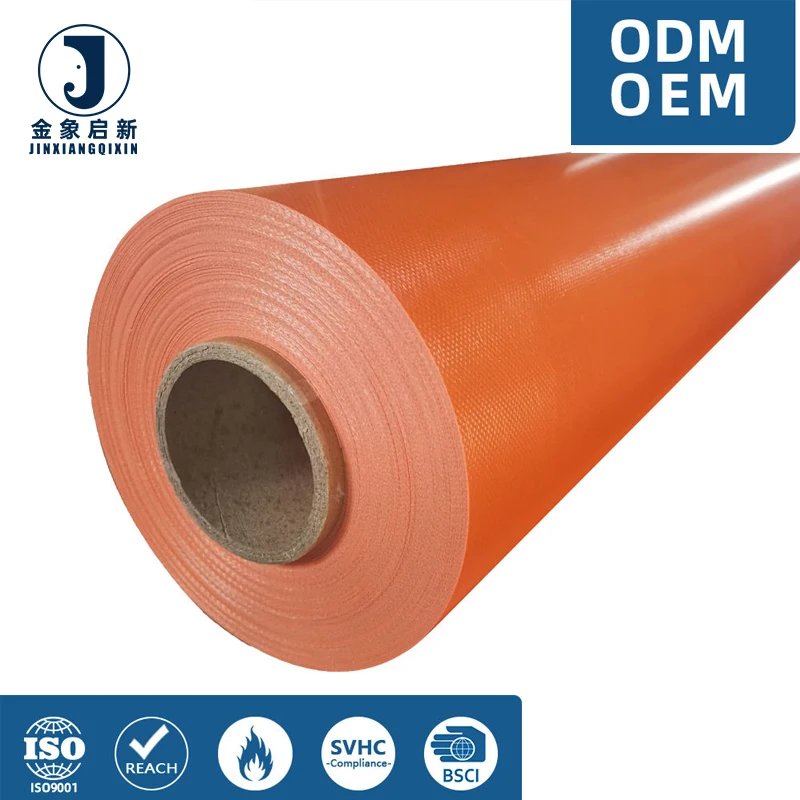
Deep process control — 3 full production lines and 36 sets of equipment maintain consistent coating adhesion across every roll of PVC Coated Tarpaulin Roll.
Technical Specifications
| Parameter | Value |
|---|---|
| Product Type | PVC Coated Tarpaulin Roll |
| Base Fabric | 1000D×1000D Polyester |
| Mesh Count | 23×23 |
| Weight | 650 GSM |
| Roll Width | 1.50 m |
| Roll Length | 50 m |
| Surface Finish | Glossy (matte available) |
| Coating Material | PVC |
| Temperature Range | -15°C to 70°C |
| Waterproof | Yes |
| Anti-Mildew | Yes |
| Flame Retardant | Available — confirm grade required for your application standard |
| UV Treatment | Available — confirm test basis required for your market |
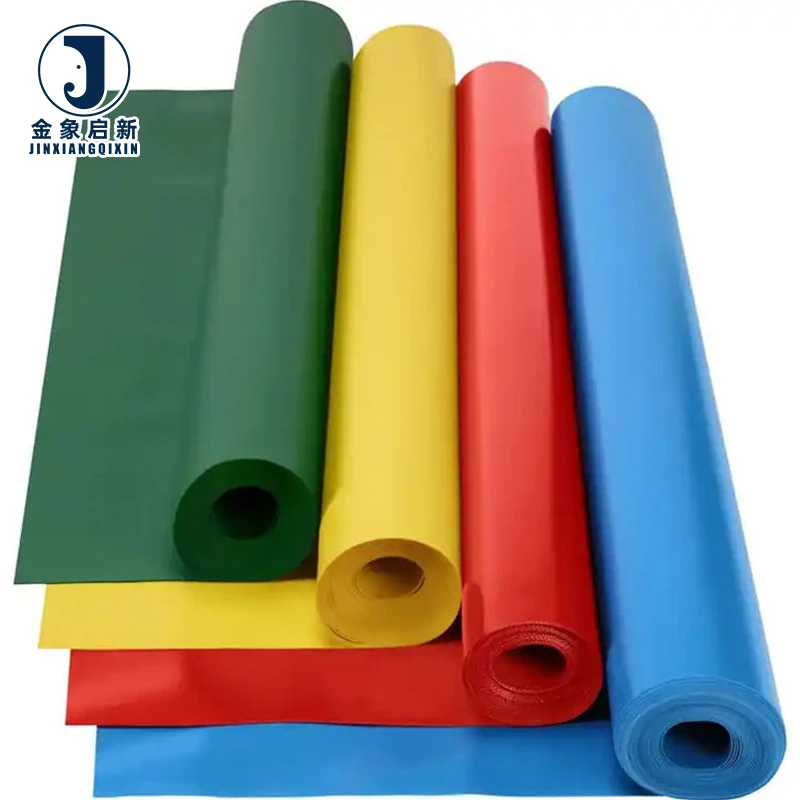
| Color Options | Blue, yellow, black, green, white, or custom |
Application Suitability
| Application | Exposure & Requirement |
|---|---|
| Membrane structures | Sustained wind load, solar UV, structural tension at anchor points |
| Inflatable enclosures | Continuous internal pressure, repeated inflation cycles, seam stress |
| Industrial ventilation ducting | Airborne particulate abrasion, temperature fluctuation, fire-code compliance |
| Mining and tunnelling covers | Subsurface moisture, chemical contact, anti-static regulatory requirement |
| Temporary aviation shelters | Rapid deployment, wind uplift, flame-retardant specification for airside use |
Why Base Fabric Density Matters More Than GSM in Technical Fabric
A 650 GSM reading tells you weight — the 1000D×1000D base fabric at 23×23 tells you how that weight performs under tension.
In membrane and inflatable applications, the coated fabric must hold structural loads across long unsupported spans. When buyers focus on GSM alone, they miss the mechanical backbone: the denier and thread count that determine tensile and tear behaviour. A heavy coating on a light base fabric adds mass without proportional strength, and the result is often a weld line that fails before the body of the material does [NEED_CITE: tensile and tear test methods for coated fabrics per ISO 1421]. For ventilation and specialist structure work, the base fabric architecture is what allows heat-welded seams to approach the strength of the parent fabric.
Engineering the Base Weave for Structural and Inflatable Fabrication
The 1000D×1000D polyester base with a 23×23 mesh count provides a high-density woven grid. This density distributes point loads across multiple yarn intersections, which is critical when the PVC Coated Tarpaulin Roll is fabricated into pressurised inflatable forms or tensioned membrane panels. The weave geometry also governs how the PVC coating penetrates the substrate during the coating process — a tighter mesh promotes stronger mechanical interlock between coating and yarn.
Coating Adhesion and Seam Integrity in Duct and Membrane Work
When fabricators hot-air weld panels cut from this roll, the bond strength at the joint depends directly on coating-to-substrate adhesion. Controlled coating weight at 650 GSM ensures the PVC layer is thick enough to fuse reliably under standard welding parameters, without excess plasticiser migration that can weaken the seam over time [NEED_CITE: hot-air welding parameters for PVC-coated polyester in membrane fabrication]. For mining and tunnelling ventilation ducts, where joints are subjected to continuous positive or negative pressure, this balance between coating mass and adhesion strength directly affects service life.
Reading the Specification Sheet Beyond the Weight Figure
Three parameters on the material spec sheet interact to define real-world performance. The 1000D denier determines individual yarn strength; the 23×23 count sets the number of load-bearing crossovers per square inch; and the 650 GSM coating weight governs flexibility, abrasion resistance and weld-ability. A fabric with lower denier but higher GSM achieves its weight through thicker coating rather than stronger yarn, which shifts the failure mode from yarn rupture to coating delamination. Understanding this relationship allows technical buyers to specify the right balance for their fabrication method and end-use environment. The temperature range of -15°C to 70°C defines the operating envelope where the PVC maintains flexibility without plasticiser loss or cold-cracking risk.
What Happens When Material Specification and Application Mismatch
Selecting a lighter base fabric for a membrane structure that requires sustained tension results in progressive creep at anchor points, followed by coating separation at the seam allowance. In ventilation duct applications, insufficient tear resistance allows a small puncture to propagate under cyclic pressure, splitting a duct section open during operation. When flame-retardant treatment is specified without confirming the applicable test standard, the installed material may not satisfy the site inspector’s compliance checklist, leading to rejection and rework [NEED_CITE: DIN 4102 fire classification for building materials]. These failures rarely appear during initial installation — they surface weeks or months later, under load and weather exposure.
What Jinan Jinxiang Brings to Specialist Fabric Orders
Three full production lines with 36 sets of professional equipment handle bulk roll orders with consistent output quality, reducing the batch-to-batch variation that causes problems in large-scale membrane or duct fabrication projects. The 10-person R&D team develops material samples matched to your welding parameters and environmental requirements before full production begins. Dedicated QA and QC checks at every production stage verify coating weight, base fabric integrity and surface finish before any roll leaves the facility. Each order ships with a complete documentation package — material specification sheet, relevant test reports and pre-shipment inspection records — so technical buyers have full traceability. The ISO and CE certified production process supports compliance documentation for aviation, mining and construction ventilation projects.
Documentation & Verification
- Material specification sheet confirming 650 GSM, 1000D×1000D base fabric and coating method for the ordered roll grade
- Flame-retardant and UV test reports issued against the standard applicable to your project jurisdiction
- ISO and CE certificates covering the production facility and coated fabric product category
- Pre-shipment inspection record with per-roll weight verification against the quoted 650 GSM specification
- Certificate of origin and customs documentation supporting international shipment
Fabrication, Handling & Storage
- Set hot-air welder temperature and speed to match the 650 GSM coating thickness; verify peel strength on a test coupon before production welding
- Allow rolls to acclimatise above 10°C for several hours before unrolling in cold conditions to prevent surface cracking of the PVC coating
- Store rolls horizontally on racking to avoid flat-spotting the 1.50 m wide wound material, which can cause crease marks visible after fabrication
- Clean glossy-surface panels with mild detergent only; solvent-based cleaners can degrade the PVC topcoat and reduce seam adhesion on future repairs
- Plan panel cutting layout to minimise off-cuts from the 50 m roll length and reduce waste on large membrane or duct sections
Starting Your Technical Enquiry
Provide the intended application — membrane structure, inflatable enclosure, or ventilation duct — along with the environmental conditions and any fire-safety or anti-static standards your project must satisfy. Specify the roll width, colour and surface finish required, and indicate whether you need full rolls or factory-cut panels. If your fabrication process uses specific welding equipment, share the welder model and parameters so the sample can be matched accordingly. Requesting a material sample early allows you to validate seam strength and handling characteristics before committing to a production order.
Frequently Asked Questions
Q: What flame retardant grade can this PVC Coated Tarpaulin Roll achieve, and which test standard applies?
A: Flame-retardant treatment is available across the product family, but the specific grade depends on your compliance requirement. Common standards include DIN 4102 B1, NFPA 701 and M2. Confirm the standard mandated by your project specification, and the corresponding test report will be supplied with the shipment documentation.
Q: Is this fabric suitable for hot-air welding in membrane and inflatable structure fabrication?
A: Yes. The 650 GSM PVC coating on the 1000D×1000D base fabric is formulated for hot-air welding. Weld temperature and speed should be calibrated to the coating thickness. A welded sample is available for peel-strength testing before you commit to full production runs.
Q: How is GSM verified on arrival to confirm the roll matches the quoted specification?
A: A pre-shipment inspection record accompanies each order, documenting per-roll weight verification against the stated 650 GSM. On receipt, you can cross-check by cutting a measured sample and weighing it on a calibrated scale to confirm the material matches the specification sheet.
Q: What anti-static treatment options are available for mining or tunnelling environment compliance?
A: Anti-static treatment can be applied to meet the requirements of subsurface ventilation regulations. The specific surface resistivity target depends on your jurisdiction’s mining safety code. Confirm the required threshold, and the test report will document the measured value for your compliance submission.
Q: Can roll width and length be customised for specialist duct or structure panel dimensions?
A: Custom widths and lengths are available beyond the standard 1.50 m × 50 m roll format. Provide your panel dimensions and fabrication layout so the production team can recommend the most efficient roll size, minimising off-cuts and weld seams in the finished structure.