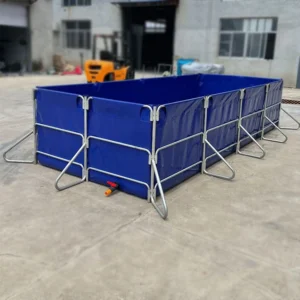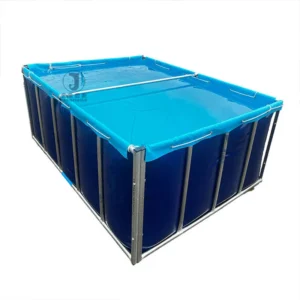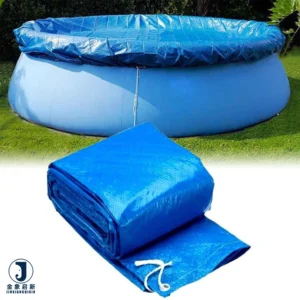
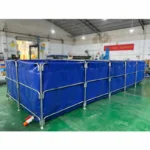
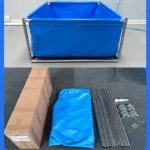
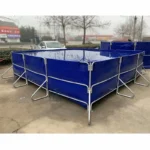
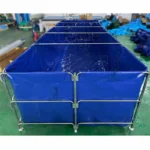
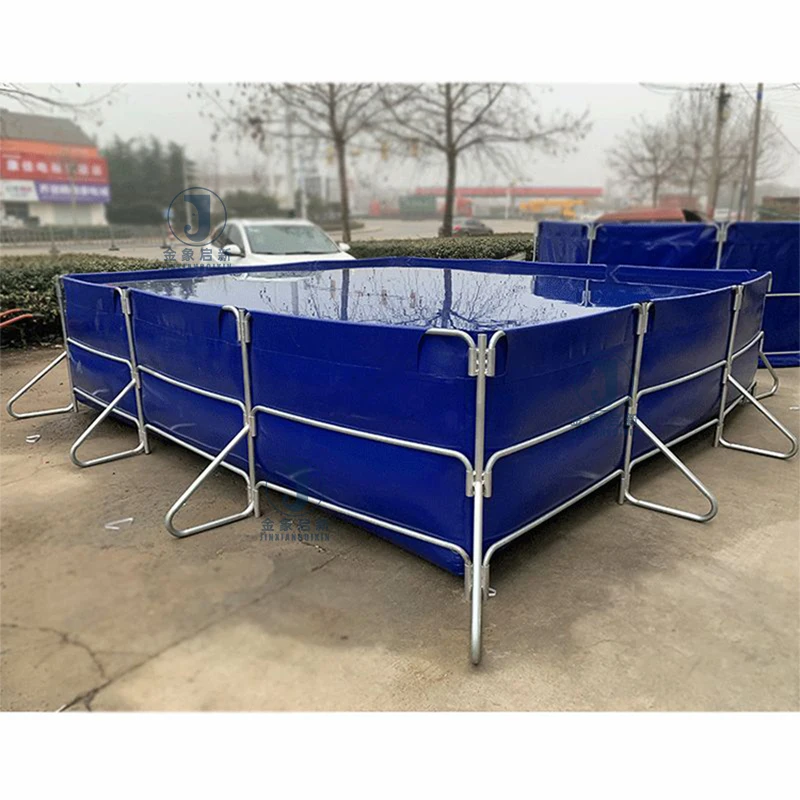
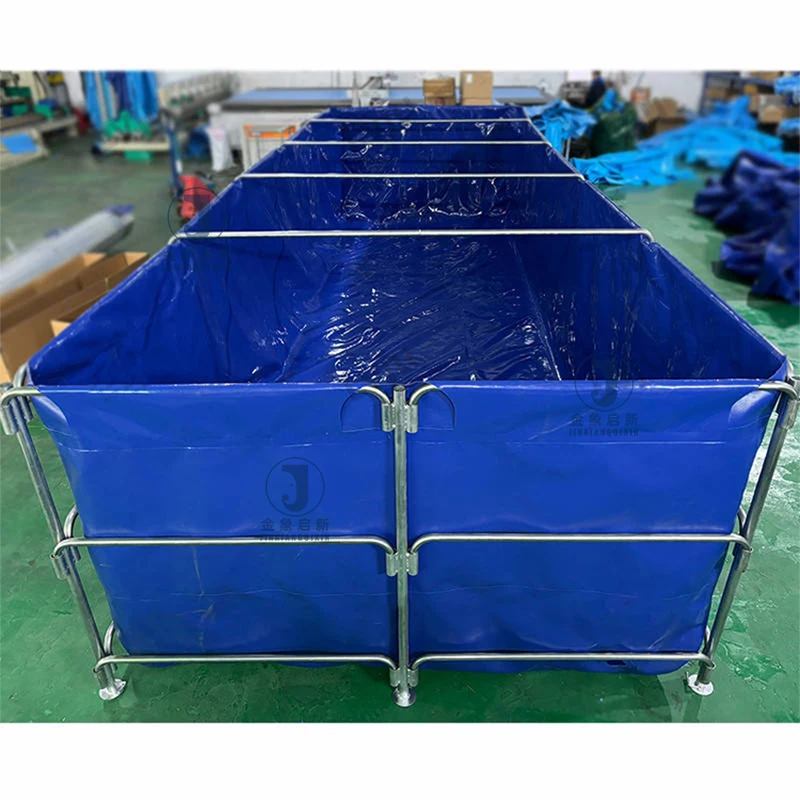
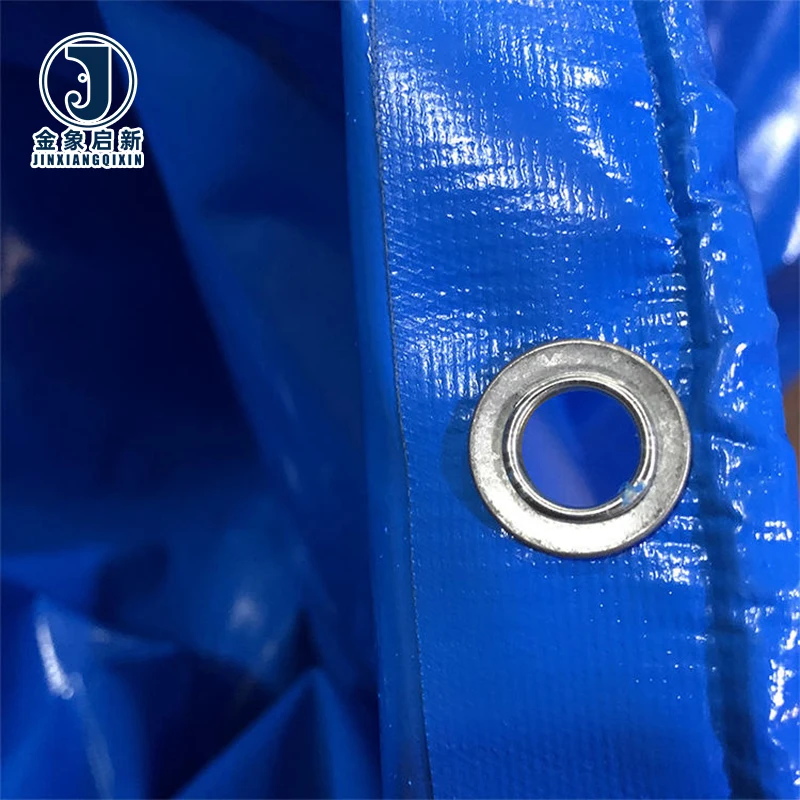
Deep Process Control Over Coating — Every roll of PVC tarpaulin for fish pond lining is produced on dedicated coating lines with stage-by-stage QA, ensuring GSM and adhesion match the material specification sheet before dispatch.
Technical Specifications
| Parameter | Value |
|---|---|
| Product Type | PVC Coated Tarpaulin Roll / Pond Liner |
| Base Fabric Material | High-tenacity polyester |
| Yarn Count Options | 500D×840D, 500D×1000D, 1000D×1000D, 1000D×1300D, 1300D×1300D, 1000D×2000D |
| Weight Range (GSM) | 350, 400, 420, 500, 600, 650, 750, 900 |
| Total Thickness Range | 0.29 mm – 0.65 mm |
| Fabric Density Options | 30×19, 20×20, 30×15 |
| Warp Tensile Strength Range | 1650 N – 3900 N (test standard not stated in source) |
| Weft Tensile Strength Range | 1600 N – 3500 N (test standard not stated in source) |
| Coating Material | PVC, double-sided |
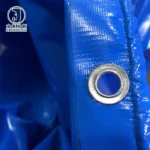
| Surface Finish | Smooth, leather-like texture |
| Key Features | Water resistant, waterproof, available in anti-UV grades — confirm the grade required for your market, available in flame retardant grades — confirm the grade required for your market |
| Repairability | Hot-air weldable for on-site seam joining and repair |
| Color | Customizable |
| Printing Option | Custom brand printing available |
| Certification | ISO, CE |
Application Suitability
| Application | Exposure & Requirement |
|---|---|
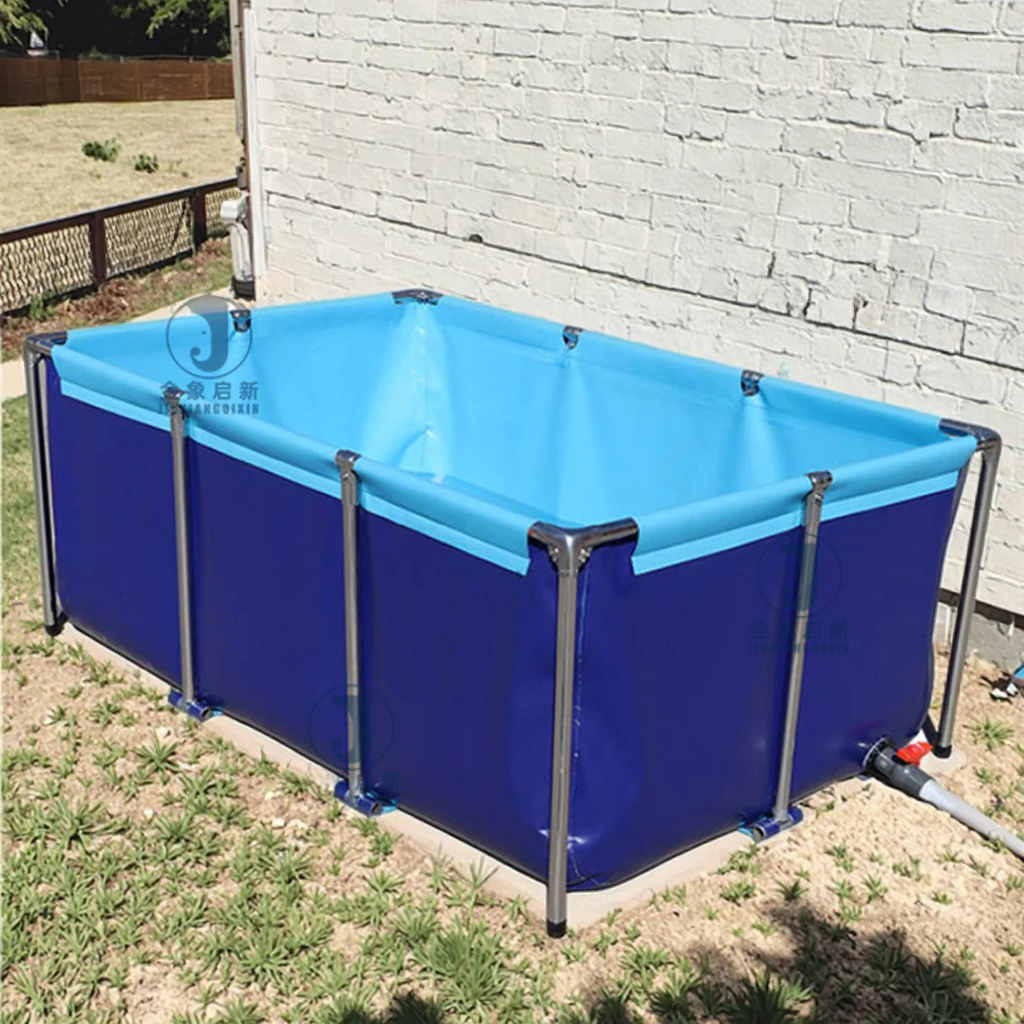
| Fish and shrimp pond lining | Permanent water immersion, soil-side abrasion, puncture risk from substrate rocks and roots, UV exposure on exposed edges |
| Aquaculture hatchery and nursery tanks | Continuous water containment, frequent draining and cleaning, biofilm management on smooth surfaces |
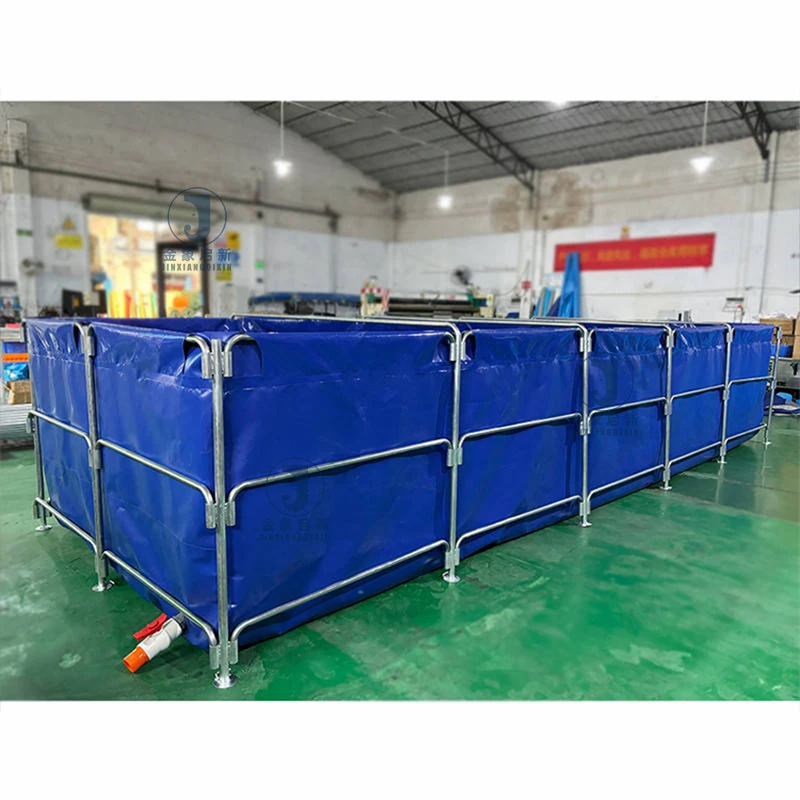
| Agricultural water storage reservoirs | Large-span membrane installation, wind uplift stress on exposed areas, seasonal temperature fluctuation |
| Irrigation pond construction | Silt and sediment load, mechanical contact during maintenance, long-term water holding without leaching |
Why a PVC Pond Liner for Aquaculture Demands More Than a GSM Number
Coating weight and base fabric denier must be evaluated together — GSM alone does not predict puncture resistance on a rocky pond bed.
Aquaculture operators often specify pond liner by grams per square metre, assuming a heavier roll will survive installation and years of water load. In practice, a 650 GSM liner on a low-denier base fabric can puncture more easily than a 500 GSM liner woven from 1000D×1000D yarn, because tensile and tear behaviour depend on yarn thickness and weave density as much as coating mass [NEED_CITE: tensile and tear test methods for coated fabrics per ISO 1421]. When the pond bed contains sharp aggregate or compacted clay, the base fabric is the structural skeleton that resists mechanical damage, while the PVC coating provides the waterproof barrier. Specifying one without the other leaves a gap that only shows up after the liner is filled and under stress.
Selecting Yarn Count and Density for Pond Depth and Stock Load
The yarn count range from 500D×840D up to 1000D×2000D exists because pond conditions vary widely across aquaculture operations. Shallow nursery tanks with smooth concrete floors place minimal mechanical demand on the liner, allowing lighter constructions to perform well. Deep grow-out ponds with earthen bottoms, however, subject the membrane to sustained hydrostatic pressure and direct contact with uneven substrate. Matching the PVC pond liner for aquaculture to these conditions means selecting a denier and weave density that distributes point loads across multiple yarns rather than concentrating stress on a single thread.
Welded Seam Integrity Under Continuous Hydrostatic Pressure
Pond liners rarely fail in the middle of a panel — failure concentrates at the seams where two rolls join. Hot-air welding creates a bond where the PVC coating on both panels fuses into a continuous membrane, and the strength of that weld depends on coating formulation, welding temperature and pressure applied during joining. When the coating is formulated for consistent melt behaviour, the welded seam can approach the tensile strength of the parent fabric rather than becoming the weak point [NEED_CITE: hot-air welding parameters for PVC coated polyester fabrics]. On-site repair of accidental punctures follows the same principle: a patch of matching material is welded over the damaged area, restoring waterproof continuity without mechanical fasteners that could create new leak paths.
How Base Fabric Construction Determines Real-World Puncture Behaviour
Tensile strength values in the range of 1650 N to 3900 N warp reflect the different yarn counts and weave densities available across this product family. A higher denier yarn combined with a tighter weave density such as 30×19 produces a fabric where load is shared across more intersection points, limiting the propagation of a tear once initiated. The PVC coating encapsulates each yarn, adding abrasion resistance at the surface, but it is the underlying polyester grid that arrests a puncture before it becomes a split. For large-span reservoir installations where the liner bridges unsupported gaps between anchor trenches, this composite behaviour — coating for waterproofing, base fabric for structural continuity — determines whether the membrane survives wind uplift and thermal expansion without tearing at the fixation points.
The Hidden Cost of Specifying Liner by Weight Alone
When a PVC pond liner for aquaculture is selected purely on GSM without confirming the base fabric denier, the consequence often appears during installation rather than in service. A lighter-denier base fabric coated to a target weight may pass the scale check but lack the tear resistance needed when the membrane is pulled into position over an uneven pond bed. Welded seams on such material can fail before the fabric itself, because the coating has insufficient yarn structure to grip during the welding process [NEED_CITE: relationship between base fabric density and weld peel strength in coated textiles]. Batch-to-batch colour inconsistency across rolls in the same order adds a visible defect once panels are installed side by side in a lined pond, forcing replacement of otherwise functional material. These failures share a common root: the specification did not distinguish between coating weight and structural fabric performance.
Why Source This PVC Pond Liner Here
Three full production lines with 36 sets of professional equipment allow bulk roll output for large aquaculture projects without sacrificing coating consistency across the order. A 10-person R&D team handles material selection and sample development, so custom width, colour and GSM grade can be confirmed with physical samples before production begins. Dedicated QA/QC operates at every stage — coating weight, adhesion and surface finish are checked in-process, not only at final inspection. Nearly 30 years of focused experience in coated fabric means process parameters for PVC-on-polyester are established from historical production data rather than adjusted by trial and error on each order. Every roll ships with 100% pre-shipment inspection against the agreed specification, so what arrives on site matches what was quoted.
Documentation & Verification
- Material specification sheet stating confirmed GSM, base fabric denier, coating type and colour reference for every roll
- Pre-shipment inspection record verifying actual coating weight and surface quality before dispatch
- ISO and CE certificates available as part of the shipment documentation package
- Test reports for UV and flame retardant grades provided where applicable — confirm requirements at inquiry stage
- Roll packing list with individual roll dimensions and weights for site receiving verification
- Certificate of origin and customs documentation included for international shipments
Fabrication, Handling & Storage
- Hot-air weld at temperatures matched to the specific PVC formulation to achieve full seam fusion without scorching the coating
- Store rolls upright on pallets in shaded areas to prevent flat-spot deformation of the polyester base fabric
- Avoid dragging liner panels across compacted gravel during installation to protect the smooth PVC surface from abrasion
- Clean installed liner with neutral pH detergent to preserve the coating surface and avoid chemical softening
- Cut panels with thermal or blade tools suitable for the selected GSM grade to ensure clean edges for welding
- Repair field punctures using matching-grade PVC patches welded at manufacturer-recommended temperature and pressure
What to Include in Your Inquiry
Provide the pond dimensions, depth and substrate type so the correct denier and GSM grade can be recommended from the available range. Confirm whether you require liner supplied by the roll or cut to specific panel sizes with factory-welded seams. State your target market and any regulatory requirements for fire classification or environmental compliance that the PVC pond liner for aquaculture must satisfy.
Frequently Asked Questions
Q: How is GSM verified on arrival and what documentation accompanies each roll?
A: Every roll ships with a material specification sheet stating the confirmed GSM, base fabric denier and colour reference. A pre-shipment inspection record documents actual weight verification performed before dispatch. On arrival, you can cross-check by sampling roll weight against the stated specification. Any discrepancy is addressed through the after-sales support process with documentation in hand.
Q: What denier and GSM grade is recommended for different pond depths?
A: Shallow nursery tanks with smooth floors typically perform well on lighter yarn counts from the available range. Deep grow-out ponds with earthen or rocky substrate require higher denier constructions and heavier GSM grades to resist puncture under hydrostatic pressure. The R&D team can recommend specific grades when you provide pond depth, substrate type and water volume details.
Q: Can the liner be hot-air welded on-site to join multiple rolls?
A: Yes, the double-sided PVC coating on polyester base fabric is formulated for hot-air welding. Panels can be joined on-site to cover large pond areas, and the same technique is used for field repair of accidental punctures. Welding temperature and pressure should match the specific coating formulation — request the recommended parameters with your shipment documentation.
Q: Can custom width and cut-to-size panels be produced, and what are the minimums?
A: Custom widths, colours and cut-to-size panels are available. Samples are developed within days for approval before full production runs. Minimum order quantities depend on the specific GSM grade, colour and width requested. Provide your project dimensions and quantity at inquiry stage for a confirmed lead time and minimum.
Q: What is the recommended cleaning and repair procedure for PVC pond liners in service?
A: Clean the installed liner with a neutral pH detergent and soft brush to remove biofilm and sediment without damaging the smooth PVC surface. For puncture repair, cut a patch from matching-grade material and hot-air weld it over the damaged area following manufacturer-recommended temperature settings. This restores waterproof continuity without introducing mechanical fasteners.