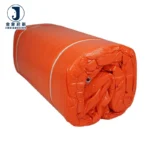
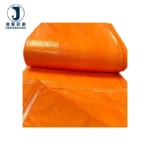
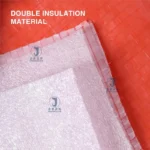
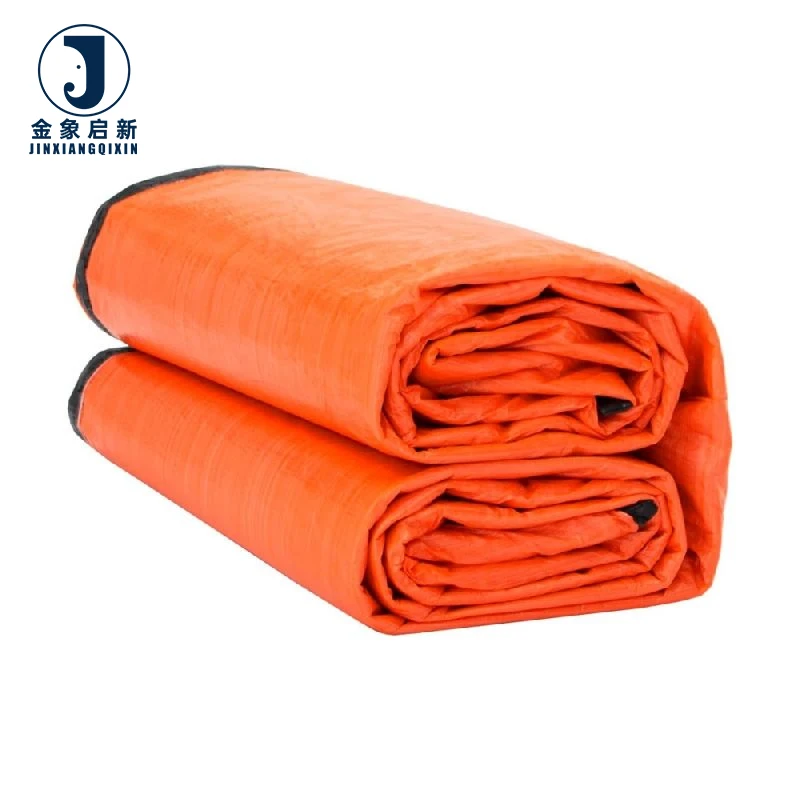
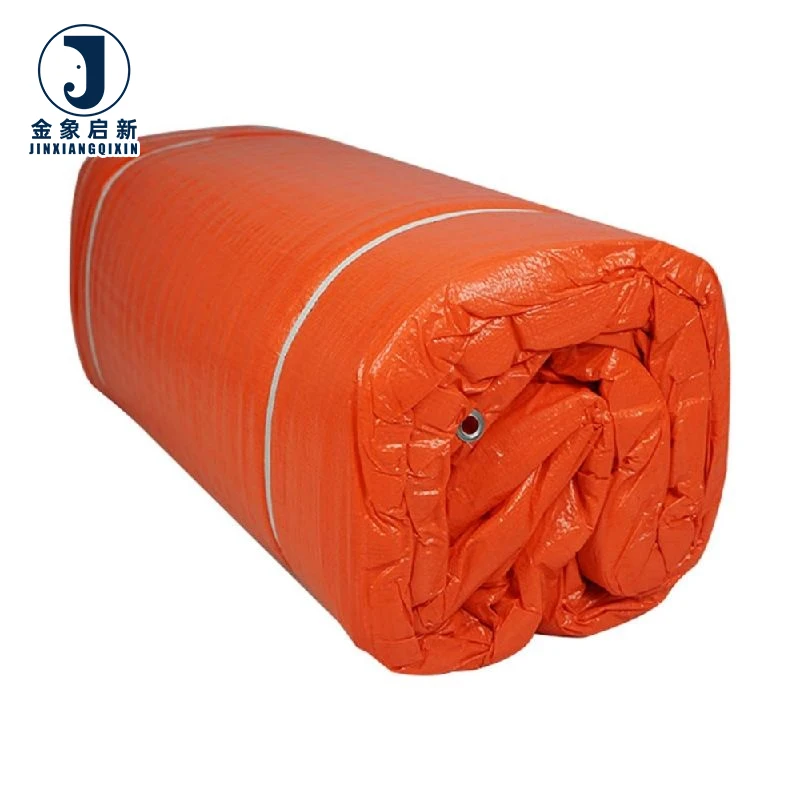
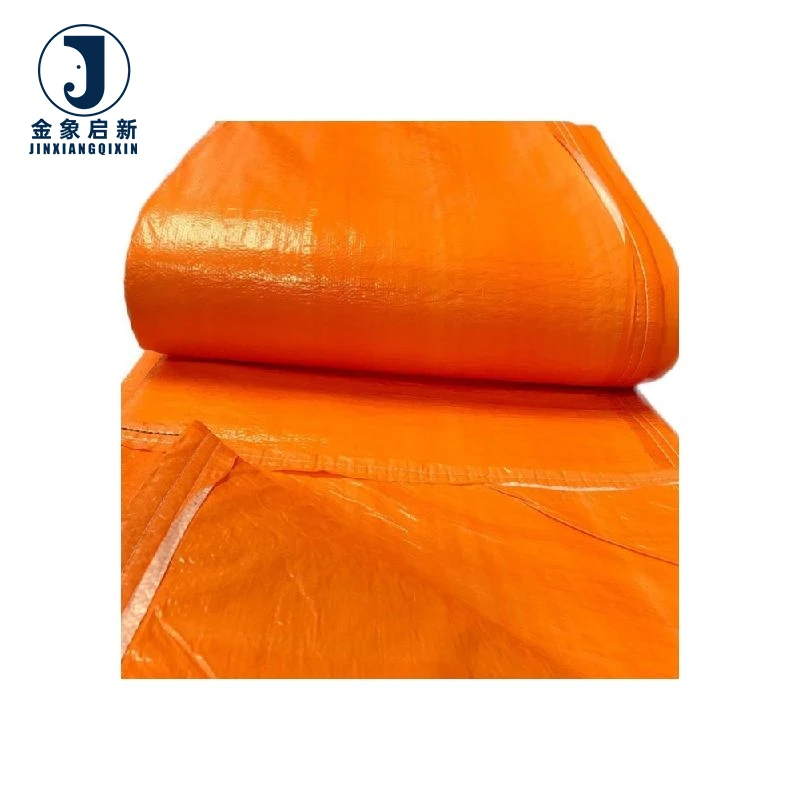
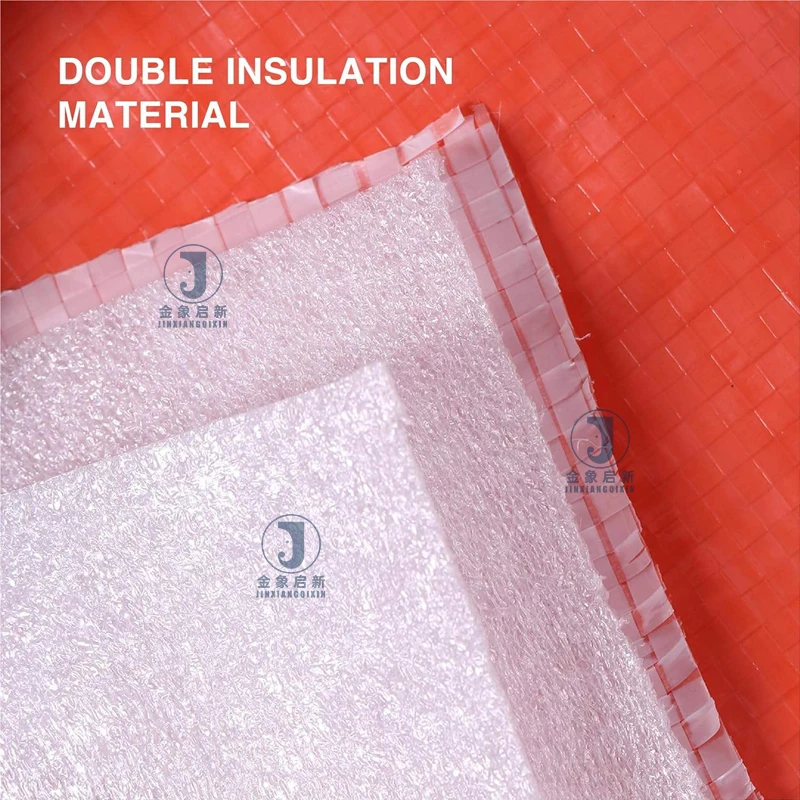
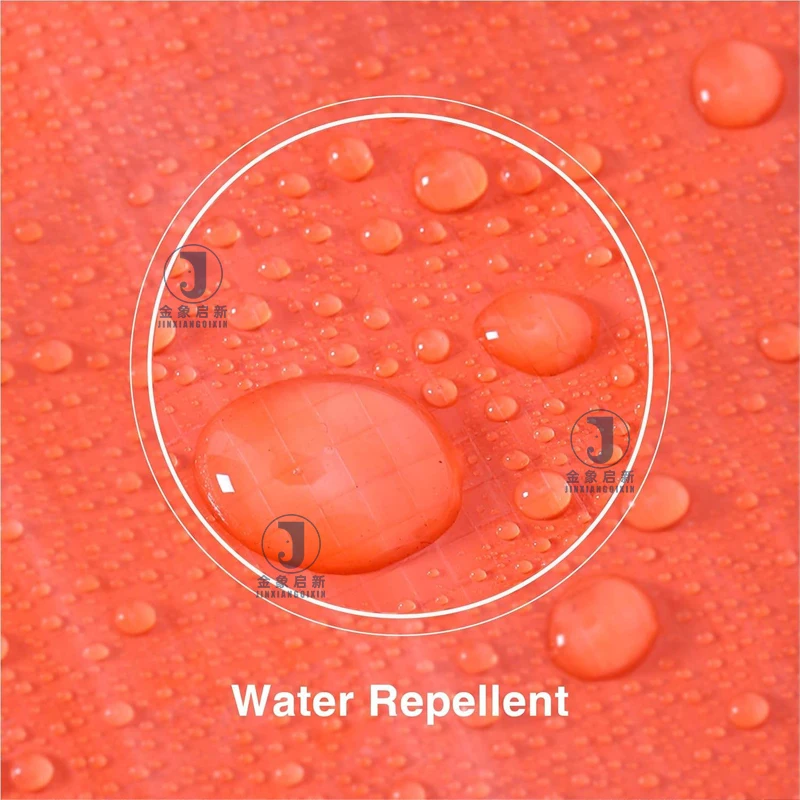
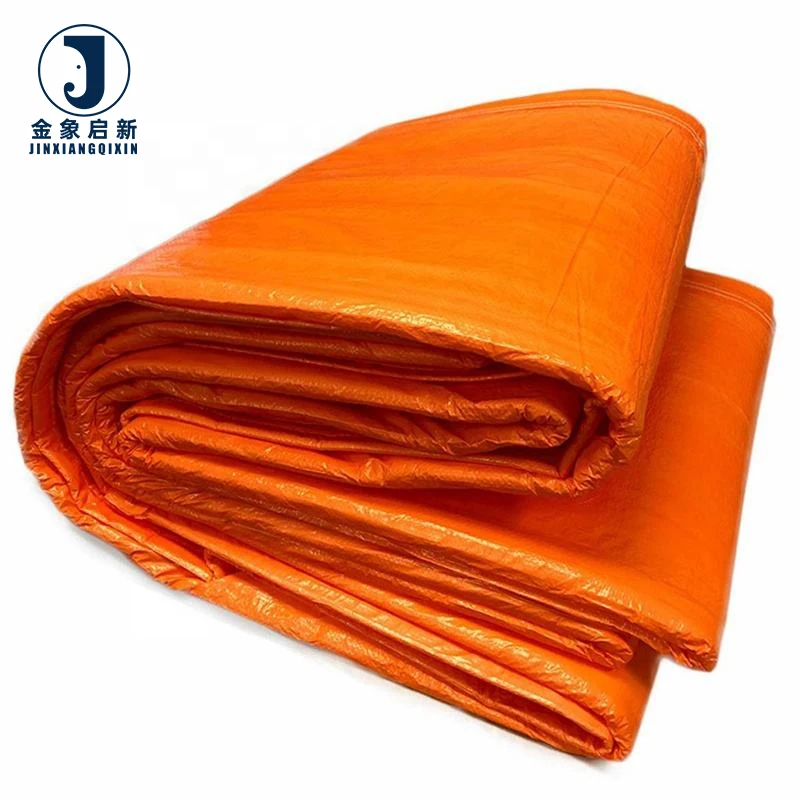
Multi-layer thermal engineering — Closed-cell PE foam core laminated between waterproof PE cloth layers, verified thickness per grade before dispatch.
Technical Specifications
| Parameter | Value |
|---|---|
| Product Type | Insulated PE Tarpaulin |
| Dimensions | 6ftx24ft, 8ftx25ft, 12ftx20ft, 12ftx24ft |
| Thickness Options | 2x2mm, 3×1.5mm, 1x4mm, 5mm, 6mm, 8mm, 12mm |
| Structure | PE cloth + closed cell PE foam core + PE cloth |
| Coating Material | PE |
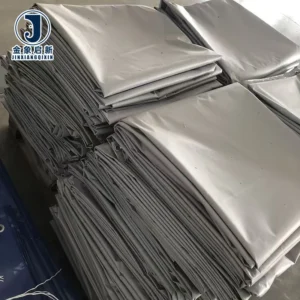
| Color | Orange, Black, White, Silver, Customized color |
| Grommet Configuration | Aluminum holes, hole distance 61cm and 91.5cm |
| Edge Finish | Reinforcement stitch with rust-proof brass grommets |
| UV Treatment | UV treatment built into base fabric (test basis not stated — confirm for your exposure requirement) |
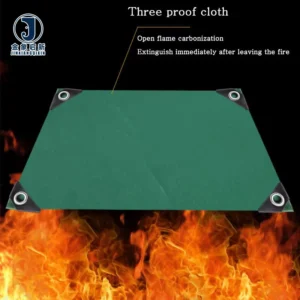
| Flame Retardant | Grade not stated — available in flame retardant grades, confirm the grade required for your market |
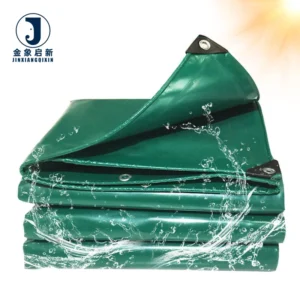
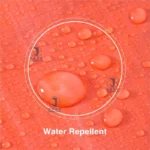
| Water Resistance | Waterproof surface fabric |
| Mildew Resistance | Resistant to mildew |
| Wind Resistance | Withstands medium to high winds |
| Temperature Performance | Designed for low temperature environments |
| Standards | ISO, CE |
Application Suitability
| Application | Exposure & Requirement |
|---|---|
| Construction heated enclosures | Prolonged low temperature, internal heat containment, wind loading on vertical panels |
| Concrete curing blankets | Direct ground contact, moisture exposure, consistent thermal retention over curing period |
| Building enclosure wind blocks | High wind pressure, abrasion against scaffolding, UV and rain cycling |
| Tunnelling ventilation containment | Enclosed environment, airflow management, potential fire-retardant compliance requirements |
| Industrial equipment covers | Outdoor storage, temperature fluctuation, precipitation and condensation |
Why Fire-Retardant Claims on Insulated PE Tarpaulin Require a Certified Grade
A fire-retardant label without a test standard is a liability, not a specification.
When insulated enclosure fabric arrives on a construction or tunnelling site, the safety officer asks for the certificate — not the marketing sheet. I have reviewed project specifications where the contractor assumed "fire retardant" meant compliance with local building codes, only to discover at inspection that the supplied insulated PE tarpaulin fire retardant documentation referenced no recognised standard. The enclosure had to be stripped and replaced, delaying the pour schedule and triggering a contract penalty [NEED_CITE: fire classification standards for temporary construction enclosures].
This is not a material failure. It is a specification gap. The distinction between a fabric that self-extinguishes in a lab test and one certified to a specific national or international grade determines whether your enclosure passes site audit. For mining and tunnelling ventilation applications, the compliance threshold is even stricter — anti-static and flame-retardant certifications must align with the governing authority’s accepted test method.
Thermal Containment Where Standard Tarps Fall Short
Standard single-layer PE sheeting offers negligible thermal resistance. The insulated PE tarpaulin aftermarket supplier market exists because contractors discovered that maintaining enclosure temperature with single-layer fabric required excessive heater output and still produced cold spots at the perimeter. The closed-cell PE foam core in this multi-layer construction creates a thermal break between the inner and outer PE cloth surfaces, reducing convective heat loss through the panel itself.
Thickness selection from 2x2mm through 12mm allows you to match insulation value to the temperature differential you are managing. A concrete curing blanket in marginal cold weather may perform adequately at lower thickness grades, while a heated enclosure in sub-zero conditions demands the heavier core options.
Grommet Spacing and Wind Load Distribution on Vertical Panels
Enclosure fabric on scaffolding or temporary frames experiences concentrated stress at every attachment point. The aluminum grommet configuration at 61cm and 91.5cm intervals distributes wind load across the panel face rather than allowing it to concentrate at corners and edges. Rust-proof brass grommets at the reinforcement-stitched perimeter handle the primary tie-down loads [NEED_CITE: wind load distribution on temporary enclosure fabrics].
When a winter storm presses against a vertical building enclosure, the panel must transfer that load through the grommets into the frame without tearing at the hem. The reinforcement stitch combined with metal grommet spacing at regular intervals addresses the failure mode most common in high-wind enclosure installations — perimeter tearing at the attachment point.
Reading the Thickness Options Against Your Insulation Requirement
The thickness range from 2x2mm to 12mm reflects different core-to-skin ratios. A 2x2mm construction places equal emphasis on outer fabric durability and core insulation, suited to applications where abrasion and handling frequency are high. A 1x4mm or 5mm grade shifts the balance toward thermal resistance with a single outer layer backed by a thicker foam core.
The closed-cell structure of the PE foam prevents moisture absorption into the core — an open-cell alternative would wick water from cut edges and lose insulation value once saturated. For concrete curing blankets placed directly on fresh pours, this moisture barrier property is essential: the blanket must retain its thermal performance despite continuous contact with a wet, alkaline surface.
Color selection across orange, black, white, and silver — plus custom colors — serves both visibility requirements on active sites and solar absorption characteristics. Dark surfaces absorb more solar radiation, which can assist passive warming in curing applications but increases thermal load on enclosed spaces in direct sunlight.
What Happens When Enclosure Fabric Is Specified by Price Alone
The lowest-cost insulated panel typically achieves that position through reduced core density or thinner outer fabric layers. On a heated enclosure in sustained cold, this translates to higher fuel consumption for temporary heaters as heat escapes through the panel. The fuel cost over a multi-week enclosure period can exceed the fabric savings [NEED_CITE: thermal performance versus enclosure operating cost].
For concrete curing, underspecified insulation means the blanket cannot maintain the minimum curing temperature during overnight drops. The result is either a failed strength test requiring core sampling and engineering assessment, or an accelerated heating regime that produces surface cracking. Both outcomes carry higher cost than selecting the correct thickness grade from the start.
Grommet pull-through is the third hidden cost. When spacing is too wide or the reinforcement stitch inadequate for the wind conditions at the site, individual grommets fail sequentially. Once one pulls through, the load redistributes to adjacent grommets, accelerating a cascade failure that leaves the enclosure open in the worst weather.
Sourcing Insulation Fabric With Process Control Behind It
Nearly 30 years of coated fabric production means the coating weight and lamination adhesion on every insulated PE tarpaulin roll are controlled through established process parameters, not adjusted empirically per batch.
Three full production lines and 36 sets of professional equipment support the volume requirements of multi-site construction programmes without forcing you to accept extended lead times on standard thickness grades.
The 10-person R&D team handles custom size development and thickness recommendations matched to your specific enclosure dimensions and temperature targets — samples developed within days rather than weeks.
Dedicated QA/QC at every production stage with 100% pre-shipment inspection ensures grommet spacing, edge reinforcement, and core thickness consistency are verified before the roll leaves the facility.
ISO and CE certification underpins the documentation package you receive, supporting site compliance submissions and audit requirements across regulated construction environments.
Documentation & Verification
- Material specification sheet listing structure, thickness grade, and coating type for each item supplied
- Thickness measurement record per roll or sheet confirming core and total dimensions before dispatch
- UV treatment test report where applicable, documenting the basis of the UV stability claim
- Fire-retardant or anti-static certification aligned to the standard required by your site authority
- Pre-shipment inspection record covering grommet spacing, hem reinforcement stitch, and surface integrity
- Certificate of origin and customs documentation for international project supply chains
Fabrication, Handling & Storage
- Heat-weld PE seams using temperature and dwell settings matched to the total thickness grade — thicker cores require adjusted parameters to achieve full bond through the foam layer
- Store rolls flat or on supported racks to prevent permanent compression marks in the closed-cell PE foam core
- Allow panels to acclimatise before tensioning in cold conditions — PE cloth stiffens at low temperature and may crack if forced over sharp frame edges
- Clean surfaces with mild detergent only; solvent-based cleaners can degrade the PE outer layer and compromise waterproof integrity
- Repair minor punctures with PE-compatible adhesive patches applied to dry, clean surfaces on both sides of the panel
Specifying for Your Enclosure or Curing Application
To match the correct thickness and panel size to your project, provide the enclosure dimensions, the minimum and maximum external temperatures expected during the installation period, and the internal temperature you need to maintain. If your site authority mandates a specific fire-retardant or anti-static grade, include the standard reference in your enquiry so the supplied documentation aligns at delivery. Confirm whether you require finished panels with grommets and reinforced hems, or roll stock for on-site fabrication.
Frequently Asked Questions
Q: What fire-retardant or anti-static certifications are available for insulated enclosure fabric?
A: Certification availability depends on the grade selected and the standard your site authority requires. When specifying insulated PE tarpaulin fire retardant performance, provide the exact standard reference — such as the local building code classification or mining ventilation regulation — so the test report supplied matches the compliance framework your safety officer will audit against.
Q: How is the closed-cell foam core thickness verified per roll or sheet?
A: Each production batch undergoes thickness measurement at multiple points across the panel or roll width. The pre-shipment inspection record documents these readings against the specified grade. For projects requiring certified thickness verification, this data is included in the documentation package supplied with your insulated PE tarpaulin aftermarket supplier order.
Q: What is the UV treatment test basis and expected outdoor exposure performance?
A: UV treatment is integrated into the base PE fabric during production. The specific test basis and exposure rating depend on the grade and should be confirmed for your climate zone and installation duration. Request the UV test report with your enquiry so you can assess suitability against your project’s expected outdoor service period.
Q: How are grommet spacing and hem reinforcement configured for high-wind rigging?
A: Aluminum grommets are positioned at 61cm and 91.5cm intervals with rust-proof brass grommets at the reinforced perimeter. This spacing distributes wind load across the panel face. For exposed sites with sustained high wind, confirm whether the standard configuration meets your engineer’s load calculation or whether closer spacing is required.
Q: Can custom sizes and thicknesses be produced for specific enclosure dimensions?
A: Custom panel sizes and non-standard thickness combinations are produced against confirmed specifications. Provide your enclosure dimensions and insulation target so the R&D team can recommend the appropriate core-to-skin ratio. Samples are developed within days for approval before full production runs begin.