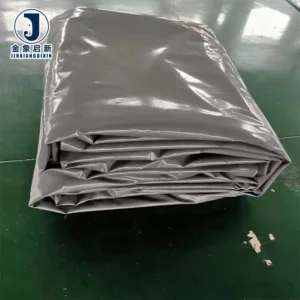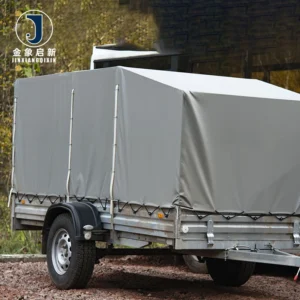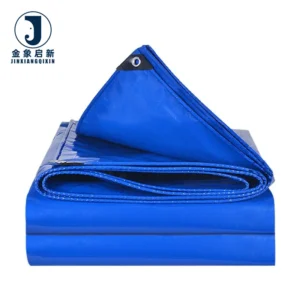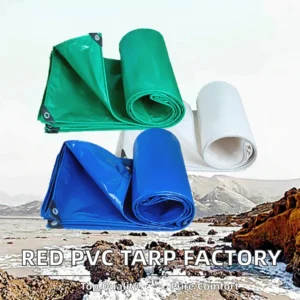
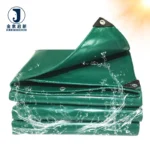
Coating Weight Transparency — every roll is verified against the stated GSM before dispatch, with base fabric denier and mesh count documented per batch for full traceability.
Technical Specifications
| Parameter | Value |
|---|---|
| Product Type | PVC Coated Tarpaulin |
| Base Fabric Denier | 500D×840D (350/400/420), 500D×1000D (500), 1000D×1000D (600), 1000D×1300D (650), 1300D×1300D (750), 1000D×2000D (900) |
| Mesh Count (Density) | 30×19 (350/400/420/500), 20×20 (600/650/750), 30×15 (900) |
| Weight (GSM) | 350, 400, 420, 500, 600, 650, 750, 900 |
| Total Thickness | 0.29 mm (400), 0.32 mm (420), 0.38 mm (500), 0.44 mm (600), 0.46 mm (650), 0.55 mm (750), 0.65 mm (900) |
| Tensile Strength (Warp/Weft) | 1650/1600 N (350), 1800/1700 N (400), 1850/1750 N (420), 2050/1900 N (500), 2500/2200 N (600), 2550/2250 N (650), 2750/2850 N (750), 3900/3500 N (900) |
| Coating Material | Double-sided PVC on polyester base fabric |
| Joining Methods | High frequency hot melt, hot air welding, sewing |
| Fire Retardancy | Flame-retardant type customizable (grade to be confirmed per order requirement) |
| Anti-Static | Available on request (certification standard to be confirmed) |
| Functional Treatments | Anti UV (test basis not stated), anti mildew, heavy metal free |
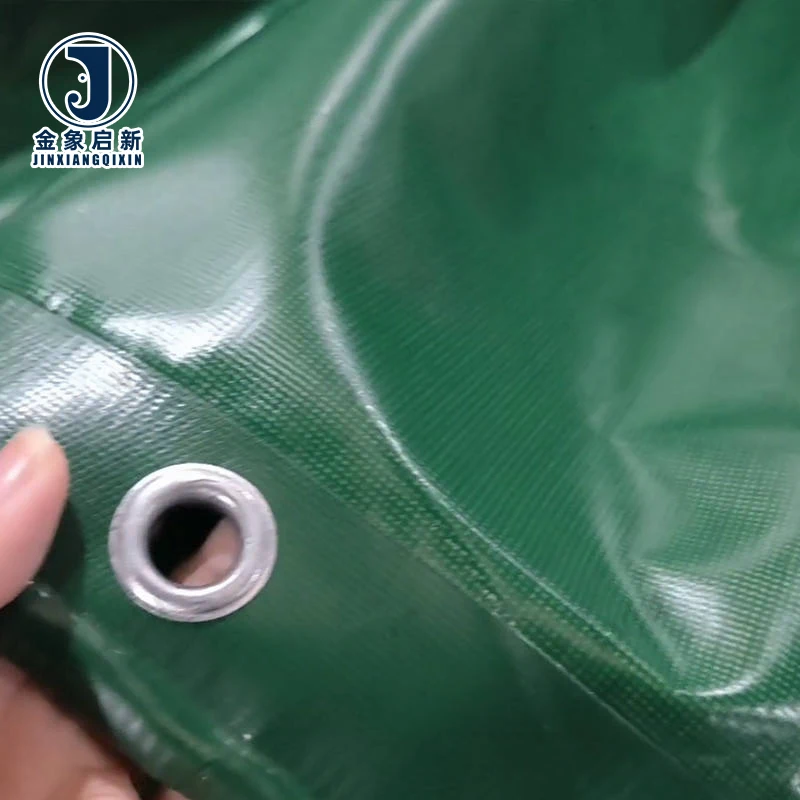
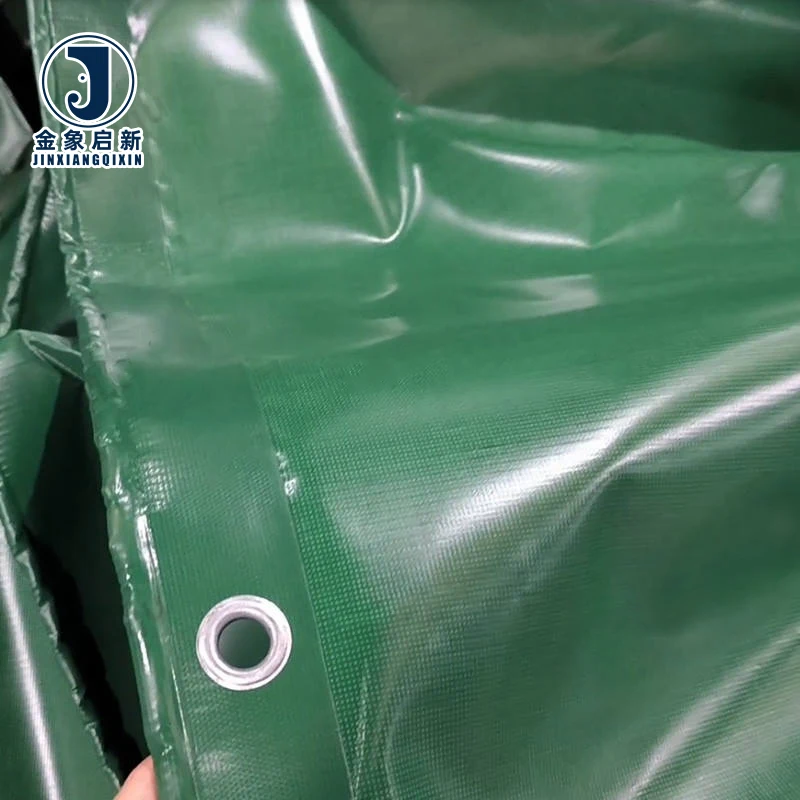
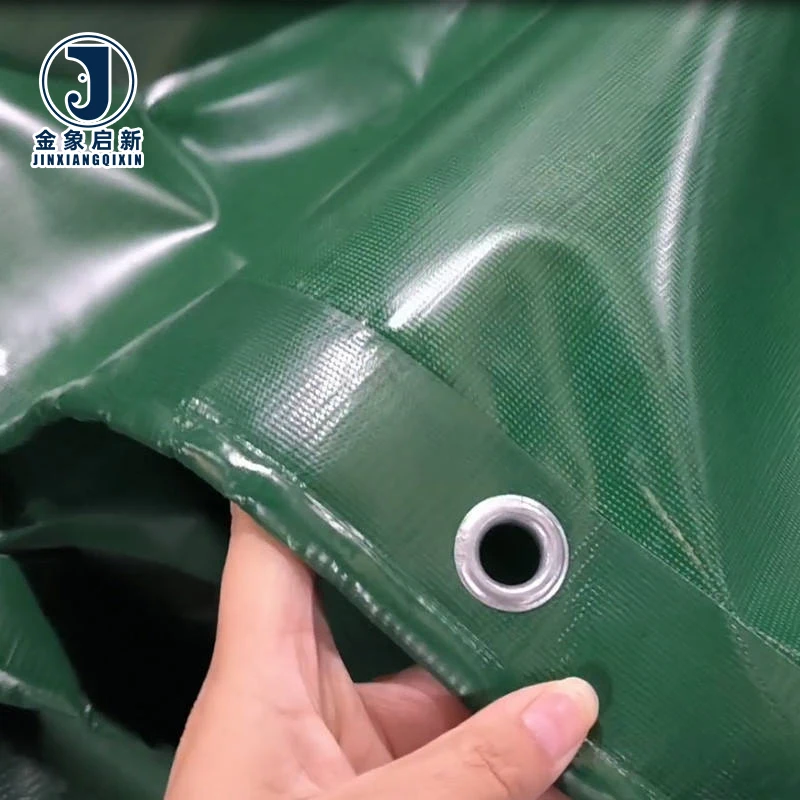
| Surface Finish | Smooth, leather-like texture; self-clean surface |
| Thermal Range | Brittle temperature ≤ -50 to -60 °C; softening temperature ≥ 80 °C; melting point 212 °C |
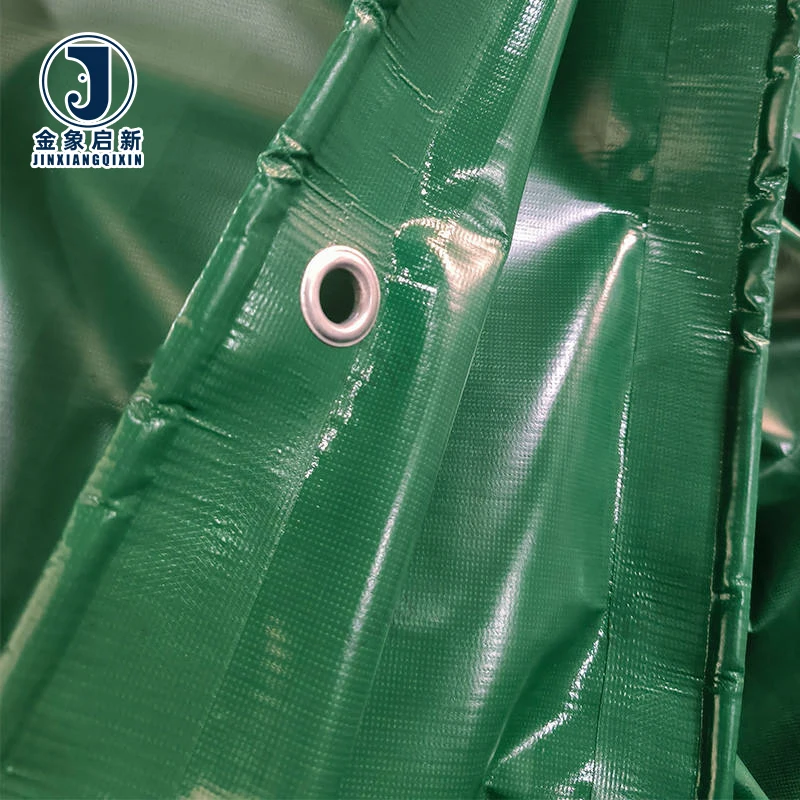
| Edge Construction | High temperature heat sealed seamless edge wrapping |
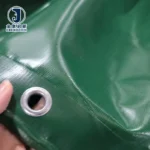
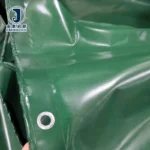
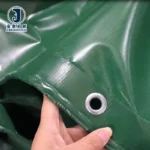
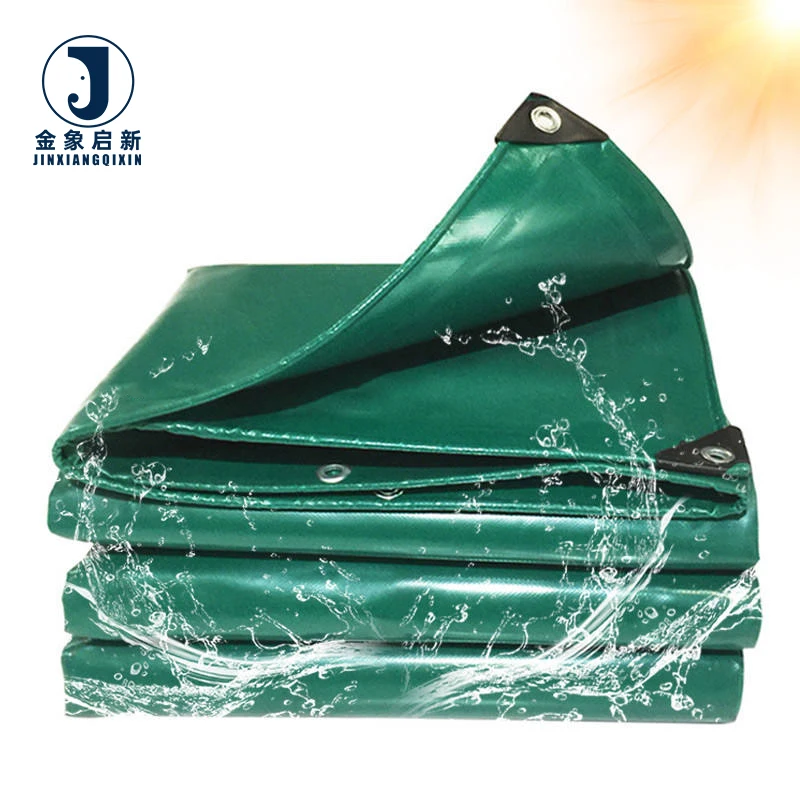
| Reinforcement | 5 mm thick rope without splicing; 3 cm enlarged aluminum alloy buttonhole; reinforced corners |
| Certifications | ISO, CE |
Application Suitability
| Application | Exposure & Requirement |
|---|---|
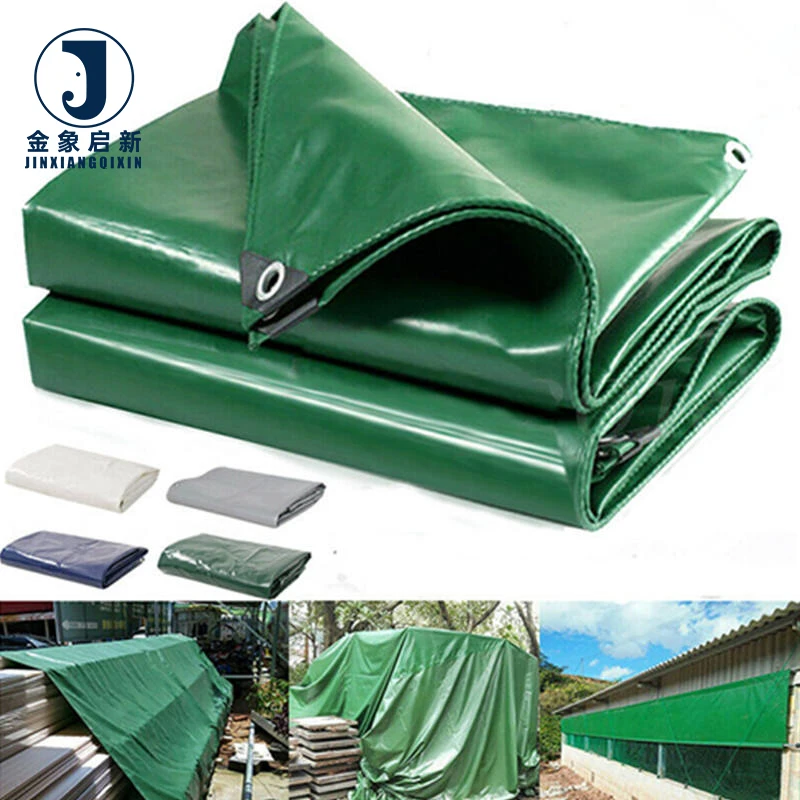
| Mining and tunnelling ventilation duct | Continuous airflow pressure, sub-surface humidity, mandatory fire-retardant and anti-static compliance |
| Aviation and industrial flexible air duct | Certified material properties, repeated inflation/deflation cycles, temperature fluctuation |
| Membrane and inflatable structure fabric | Sustained tensile load, UV exposure, wind-driven rain, architectural fire codes |
| Construction enclosure and temporary shelter | Abrasion from scaffolding contact, weather exposure, rapid deployment and teardown |
| Specialist equipment and machinery cover | Dust ingress prevention, moisture barrier, chemical splash resistance in industrial environments |
Why "Fire Retardant" Without a Test Report Is a Liability on Site
A flame-retardant claim only matters if the arriving roll carries documentation matching the standard your site inspector requires.
Procurement teams regularly specify fire-retardant PVC coated tarpaulin for ventilation duct and membrane structures, only to discover at delivery that no test report accompanies the shipment. The fabric may perform adequately in a bench test, but without a certificate citing the specific standard — whether M2, B1 per DIN 4102, or NFPA 701 — the material fails compliance review and work stops. [NEED_CITE: fire classification standards for coated fabrics in construction and mining ventilation]. The cost is not the fabric; it is the delayed project timeline and the re-procurement cycle.
Base Fabric Denier as the Real Strength Indicator
Tensile strength in coated fabric is governed by the polyester base, not the PVC layer. This PVC coated tarpaulin range scales from 500D×840D at lighter grades up to 1000D×2000D at 900 GSM, with mesh density adjusted accordingly. A 1000D×1300D base at 650 GSM delivers different tear propagation behaviour than a 1000D×1000D base at 600 GSM, even though the weights are close. Specifying on denier and mesh count together — rather than GSM alone — gives fabricators a reliable predictor of how the material will behave at welded seams and stress points during duct or inflatable assembly.
Coating Adhesion and Weld Integrity at Flex Points
Double-sided PVC coating on a polyester substrate provides the adhesion surface necessary for hot air and high frequency welding. When a ventilation duct flexes under positive and negative pressure cycles, the welded seam experiences repeated peel stress. If coating weight is uneven or adhesion to the base fabric is weak, the weld line de-laminates before the fabric body shows any sign of failure. [NEED_CITE: peel strength test methods for PVC coated polyester fabrics per ISO 1421]. Heat sealed edge wrapping on this material is processed at high temperature to eliminate glue cracking and loose edges — a detail that matters when the finished duct is handled during installation underground or on a rooftop.
Reading the Specification Matrix Correctly
The relationship between GSM, base fabric denier, and tensile strength is not linear across this product family. Moving from 500 GSM (500D×1000D, 30×19 mesh) to 600 GSM (1000D×1000D, 20×20 mesh) involves a jump in yarn thickness, not just added coating weight. The thicker yarn increases warp tensile strength from 2050 N to 2500 N, but the lower mesh count means fewer yarns per centimetre sharing the load. For inflatable structures where biaxial stress is constant, the 1000D×1000D construction offers balanced strength in both directions. For duct applications where warp-direction tension dominates, the higher mesh count at lighter grades may be sufficient. Understanding these trade-offs prevents over-specifying on weight when denier selection is the more relevant variable.
What Happens When the Specification Does Not Match the Site Requirement
Ventilation ducts installed in mining environments require documented anti-static and fire-retardant properties. When a roll arrives without the test report referencing the standard mandated by the site safety officer, the entire batch is rejected regardless of actual material performance. Similarly, membrane structures for temporary event enclosures must meet local fire codes — a generic "flame retardant" label without a grade reference creates ambiguity during inspection. [NEED_CITE: anti-static surface resistance requirements for underground ventilation ducting]. Colour variation between rolls in the same order becomes visible once panels are welded side by side on an inflatable or architectural membrane, forcing selective panel replacement or complete re-fabrication.
Why Procurement Teams Source This Range Here
Three full production lines and 36 sets of professional equipment support batch-to-batch consistency across the eight GSM grades, with in-process QA at coating, laminating, and winding stages. The 10-person R&D team handles material selection and sample development for specific ventilation duct or membrane structure requirements, typically turning around custom samples within days. Every roll undergoes 100% inspection before shipment, with pre-shipment inspection records documenting actual GSM, colour reference, and coating integrity. ISO and CE certifications underpin the quality management system, and full customs documentation — including certificate of origin — ships with every dispatch.
Documentation & Verification
- Material specification sheet stating GSM, base fabric denier, mesh count, and coating type per roll
- Fire-retardant test report citing the specific grade and standard required for your market
- Anti-static surface resistance test report included with shipment where applicable
- Pre-shipment inspection record verifying coating weight against the quoted GSM
- Roll packing list with batch reference for traceability
- ISO and CE certificates, certificate of origin, and customs support documentation
Fabrication, Handling & Storage
- Hot air welding parameters should be matched to the specific GSM grade — 900 GSM at 0.65 mm thickness requires higher dwell time than 350 GSM
- High frequency hot melt joining is suitable for all denier constructions in this range; confirm electrode pressure settings for heavier base fabrics
- Store rolls horizontally on pallets to prevent edge compression marks that transfer through the PVC coating surface
- Reinforced corners and 3 cm aluminum alloy buttonholes distribute tie-down loads on finished covers and duct end fittings
- Avoid dragging rolls across abrasive surfaces during warehouse handling to protect the self-clean outer coating layer
- Field repairs on punctures and seam failures can be performed with hot air welding using compatible PVC patch material
Requesting the Right Specification for Your Project
To move from inquiry to sample, provide the ventilation duct diameter and operating pressure range, or the membrane structure span and expected wind load. Confirm the fire-retardant grade and anti-static standard mandated by your project specification or local regulatory authority. Indicate the required roll width, colour reference, and annual volume so that production scheduling and batch consistency can be planned accordingly.
Frequently Asked Questions
Q: Which fire-retardant grades are available, and how do I confirm which standard applies to my project?
A: This PVC coated tarpaulin range is available in flame-retardant grades customised to your market requirement. Common standards include M2, B1 per DIN 4102, and NFPA 701. Confirm the specific grade required by your site specification or local building code at inquiry stage, and the corresponding test report will be prepared and included with your shipment documentation.
Q: How is anti-static performance verified, and will the test report ship with the order?
A: Anti-static treatment is applied based on your specification, and the surface resistance is tested to the standard you require. The test report documenting the measured values and the reference standard is included in the dispatch documentation package. Confirm the required surface resistance range or standard at the inquiry stage to ensure compliance with your site safety regulations.
Q: How do you ensure the GSM on arrival matches what was quoted?
A: Every roll is weighed and inspected during the pre-shipment QA process. The actual coating weight is recorded against the quoted GSM, and the inspection record travels with the shipment. If a discrepancy is detected at any production stage, the roll is held for re-evaluation before packing. This process prevents the common issue of material arriving lighter than agreed.
Q: What seam strength can I expect from hot air welding on this fabric?
A: Hot air welding on double-sided PVC coated polyester produces a seam where the coating layers fuse across the join. When welding parameters are matched to the GSM grade and base fabric denier, the weld strength approaches the fabric body strength. The high temperature heat sealed edge wrapping applied during production eliminates loose edges that would otherwise compromise weld integrity at flex points.
Q: What are the minimums and lead times for custom width, colour, or roll length?
A: Custom specifications including non-standard widths, colour references, and roll lengths are produced on dedicated lines. Minimum order quantities and lead times depend on the specific GSM grade and the extent of customisation required. Provide your target width, colour, and annual volume at inquiry stage to receive a quotation with confirmed production scheduling and batch planning.