
Consistent roll-to-roll adhesion — every batch of this 0.3mm 400g PVC coated polyester fabric is produced on dedicated lines with in-process coating weight checks, giving specialist fabricators the repeatability they need across large membrane and ductwork orders.
Technical Specifications
| Parameter | Value |
|---|---|
| Specification | 0.3mm 400g PVC Waterproof Canvas Coated Fabric |
| Product Type | PVC Coated Tarpaulin Roll |
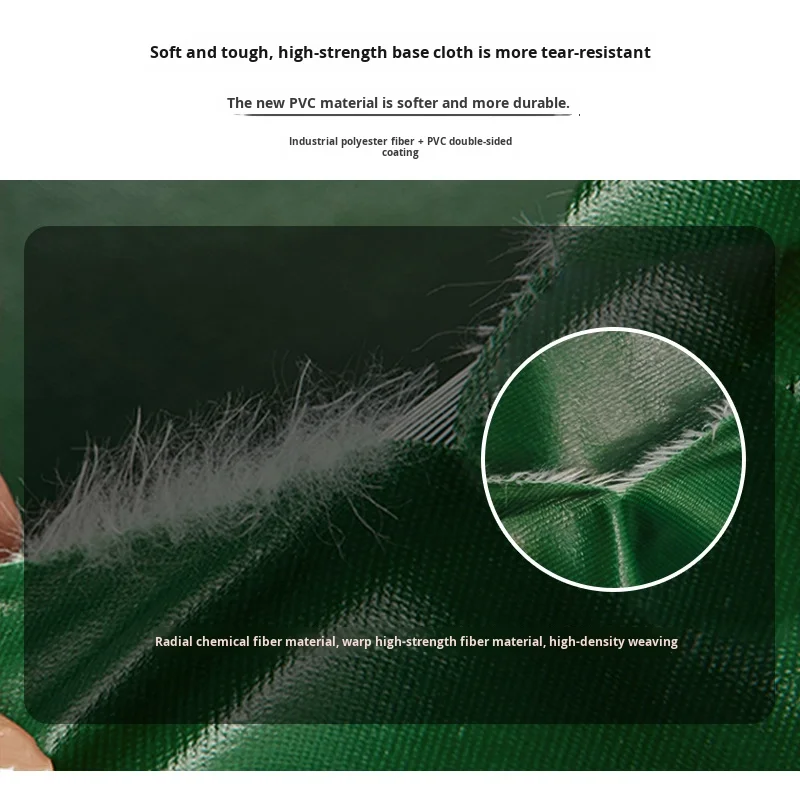
| Base Fabric | 500D×500D Polyester |
| Coating Material | PVC (Double-Sided) |
| Total Thickness | 0.3mm |
| Weight | 400 g/m² |
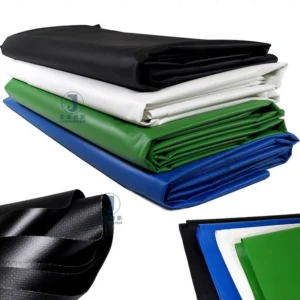
| Color | Black (Blackout) |
| Flame Retardant | Available in flame retardant grades — confirm the grade required for your market (grade not stated in source) |
| UV Treatment | Anti-UV treatment available — test basis to be confirmed per grade (test basis not stated in source) |
| Key Features | Water Resistant, Waterproof, Flame Retardant options, Anti-UV options |
| Surface Finish | Smooth, leather-like texture |
| Repairability | Hot air weldable |
| Package | Roll packing, bale packing, carton |
Application Suitability
| Application | Exposure & Requirement |
|---|---|
| Ventilation ductwork for mining and tunnelling | Continuous airflow pressure, suspended installation tension, underground fire safety compliance, abrasion from particulate-laden air |
| Inflatable and membrane structures | Biaxial tension under inflation load, UV exposure on outer membrane, weld integrity at seam intersections |
| Tent and awning interiors | Light-blocking requirement for blackout environments, repeated fold-unfold cycles, weather exposure during events |
| Industrial enclosure curtains | Contact with machinery and equipment, flexing during access cycles, dust and moisture in workshop environments |
Why Coating Weight Verification Matters More Than the GSM Label
Technical buyers specifying PVC Coated Tarpaulin 400g GSM material coating technology often face a gap between the quotation and the material that arrives on the cutting table.
A material specification sheet that breaks down base fabric weight separately from coating weight gives you the data to verify what you actually received.
The problem is rarely intentional — it stems from production runs where coating thickness drifts within tolerance, and a roll that quotes at a given GSM may arrive lighter on the coating side while the base fabric denier stays the same. For fabricators producing ventilation ducts or inflated structures where seam adhesion depends on a predictable coating layer, this variance changes welding temperature settings mid-job. When a membrane structure contractor cuts panels from multiple rolls and finds weld strength inconsistent across the batch, the root cause often traces back to coating weight that shifted without documentation [NEED_CITE: coating weight variance tolerance for PVC coated fabrics per ISO testing protocols].
Polyester Base Denier and Dimensional Behaviour Under Load
The 500D×500D polyester base fabric in this PVC coated polyester fabric determines how the material behaves when suspended or tensioned in a duct or membrane application. Higher denier yarns resist elongation under sustained load, which is the primary requirement for ventilation ducts hung over long runs in mining and tunnelling environments. The balanced weave — equal denier in warp and weft — means the fabric does not bias-stretch in one direction, keeping cylindrical duct profiles round rather than oval under internal air pressure.
Coating Adhesion and Hot-Air Weld Predictability
Double-sided PVC coating applied over the 500D base creates a continuous polymer layer on each face, which is the surface that hot-air welding actually fuses. When fabricators join panels for inflatable structures or ductwork, the weld strength depends on coating-to-coating adhesion rather than base fabric bonding. The smooth surface finish of this PVC Coated Tarpaulin 400g GSM material coating technology grade supports consistent heat transfer across the weld head, reducing the risk of cold joints that separate under flexing loads [NEED_CITE: hot air weld peel strength testing for coated fabrics per ISO 2411].
Reading the Specification Beyond the GSM Number
The 400 g/m² weight of this material results from the combination of 500D×500D polyester yarn and the PVC coating applied to both sides — neither value alone tells you the full story. A lighter base fabric with a heavier coating may reach the same GSM but will behave differently at the weld: the coating carries the seal while the base fabric carries the structural load. The 0.3mm total thickness places this grade in the lighter-to-medium range for coated fabrics, which suits applications where the material must remain flexible for folding or inflation cycles rather than resist extreme puncture forces. Blackout pigmentation within the coating layer adds light-blocking capability without requiring a separate laminate, simplifying the construction for tent and awning interiors where light control is specified.
What Happens When the Roll Specification Does Not Match the Job
When a fabricator receives rolls where the coating weight sits at the lower end of tolerance, hot-air welds on ductwork seams can peel under internal pressure because there is less polymer to fuse. Colour variation between rolls in a single order becomes visible the moment panels are hung side by side on a membrane structure or event tent — and repacking the entire batch is not an option once steelwork is already rigged. Flame retardant claims made at quotation stage without a matching test report create compliance risk on sites where the safety officer demands documentation before installation proceeds [NEED_CITE: fire safety documentation requirements for textile materials in underground mining operations].
Why Fabricators Source This Grade Through Jinxiang
Three full production lines with 36 sets of professional equipment give this PVC Coated Tarpaulin 400g GSM material coating technology grade consistent output across large volume orders. A 10-person R&D team develops custom samples within days when a membrane or ductwork contractor needs to validate coating behaviour against a specific welding setup. Dedicated QA/QC runs at every production stage, with 100% inspection before shipment, catches coating weight drift before it reaches the cutting table. Nearly 30 years of coated fabric process control translates into repeatable adhesion between the 500D polyester base and the PVC coating layer across batches.
Documentation & Verification
- Material specification sheet listing GSM, 500D×500D base fabric denier, and PVC coating composition for incoming roll verification
- Test reports for flame retardant and anti-UV grades supplied where applicable, matched to the specific batch
- Pre-shipment inspection record documenting coating weight and colour consistency across the order
- Roll packing list with batch traceability for multi-roll ductwork or membrane orders
- ISO and CE certificates included with export documentation
Fabrication, Handling & Storage
- Set hot-air weld temperature based on the double-sided PVC coating thickness — test on a 400 g/m² offcut before running production seams
- Store rolls upright on pallets to prevent flat-spotting the 0.3mm coating layer, which causes visible creases in finished membrane panels
- Allow rolls to acclimatise before unrolling in cold conditions — PVC coating becomes stiff and may crack if flexed below its rated temperature
- Use sharp rotary blades when cutting the 500D×500D base fabric to avoid pulling yarns at the edge, which weakens subsequent welds
- Clean the smooth surface with mild detergent only — aggressive solvents degrade the PVC coating and reduce weld adhesion
Before You Request a Quote
Provide the duct diameter, run length, and internal pressure specification so we can confirm whether this 400 g/m² grade meets the structural requirement, or whether a heavier coating weight is appropriate. If your site mandates a specific flame retardant standard for underground or public-access installations, state the grade in your enquiry so we match the test report to your compliance documentation. For membrane and inflatable applications, share the panel dimensions and weld pattern so our R&D team can prepare sample coupons cut from the actual production batch.
Frequently Asked Questions
Q: How is 400g GSM measured and verified on arrival?
A: GSM is measured by cutting a standard-area sample from the roll, weighing it on a calibrated scale, and calculating weight per square metre. We supply a material specification sheet stating the base fabric weight and coating weight separately, so you can verify both on receipt. Discrepancies are flagged during our pre-shipment inspection before the rolls leave the facility.
Q: What is the relationship between 500D×500D base fabric and tensile strength?
A: The 500D×500D denier defines the yarn thickness in both warp and weft directions. Higher denier yarns carry greater load before breaking, and a balanced weave ensures strength is equal in both directions. Combined with PVC coating, the base fabric provides structural integrity while the coating adds waterproof sealing and weldability.
Q: Which flame retardant test standards are available for this PVC coated fabric?
A: Flame retardant grades are available upon specification — confirm the standard required for your market and application. Test reports are supplied with applicable grades referencing recognised testing protocols. Contact our technical team with your site compliance requirement so we can match the correct grade and documentation to your order.
Q: How does double-sided PVC coating affect weld seam strength?
A: Double-sided coating means both fabric faces have a continuous PVC layer that fuses during hot-air welding. The weld joins coating to coating rather than coating to bare yarn, producing a sealed seam that resists peeling under flex load. Consistent coating weight across the roll is critical — uneven coating creates weak spots where the weld separates first.
Q: What anti-UV treatment options apply to this grade?
A: Anti-UV treatment is available as a customisable option for this PVC coated polyester fabric. The specific test duration or rating depends on the grade selected. Specify your expected outdoor exposure period and geographic market, and our R&D team will recommend the appropriate UV-stabilised formulation with supporting test documentation.