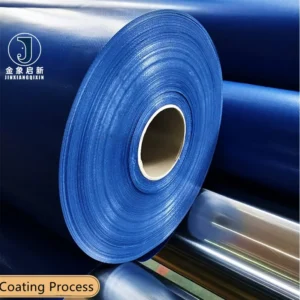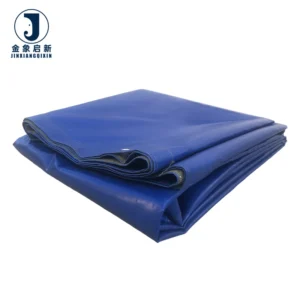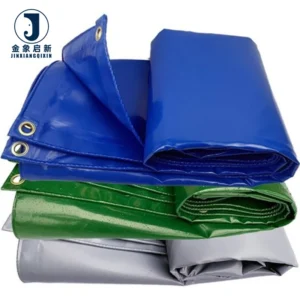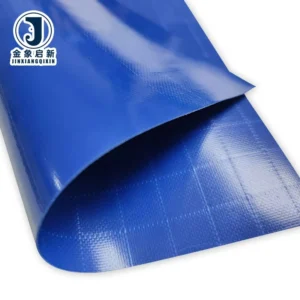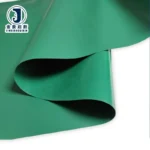
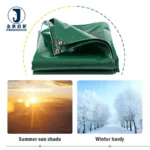
Process-Controlled Coating — Jinxiang maintains direct oversight of coating weight and adhesion across three full production lines, ensuring every roll of ventilation-grade PVC tarpaulin meets the specified GSM and treatment requirement before it leaves the factory.
Technical Specifications
| Parameter | Value |
|---|---|
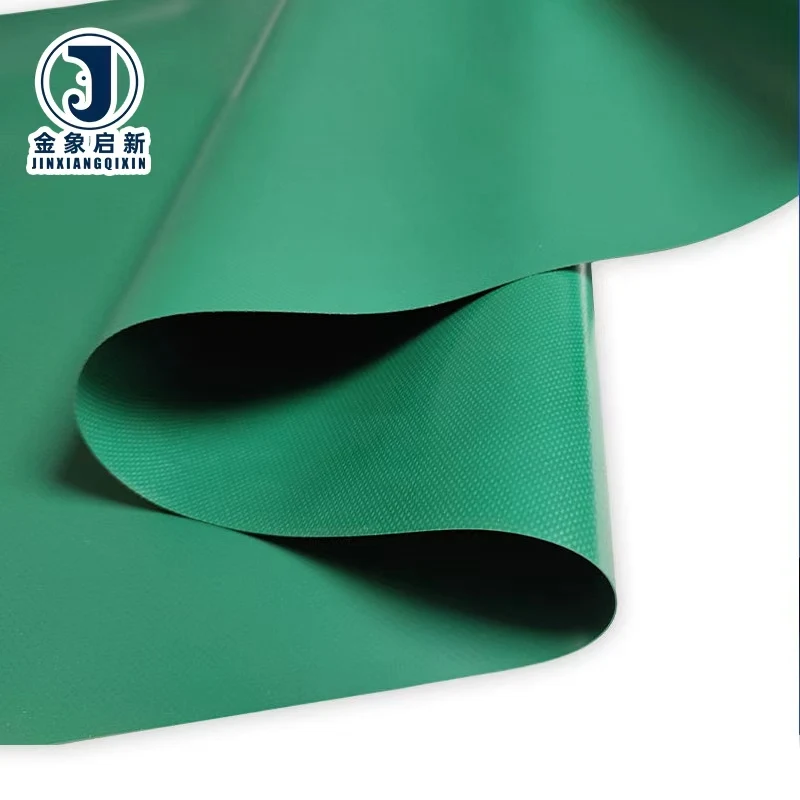
| Product Type | PVC Coated Tarpaulin Roll |
| Material | PVC + High-strength polyester mesh fabric |
| Weight (GSM) | 350gsm / 420g / 500gsm / 550gsm / 600gsm / 750gsm |
| Total Thickness | 0.32mm / 0.35mm / 0.4mm / 0.45mm / 0.5mm / 0.65mm |
| Coating Technology | Laminated technology & Hot-melt Coating technology |
| Roll Width | 2m / 2.1m |
| Roll Length | 75m (for 2m width) / 50m (for 2.1m width) |
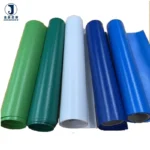
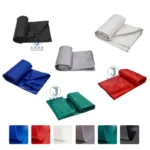
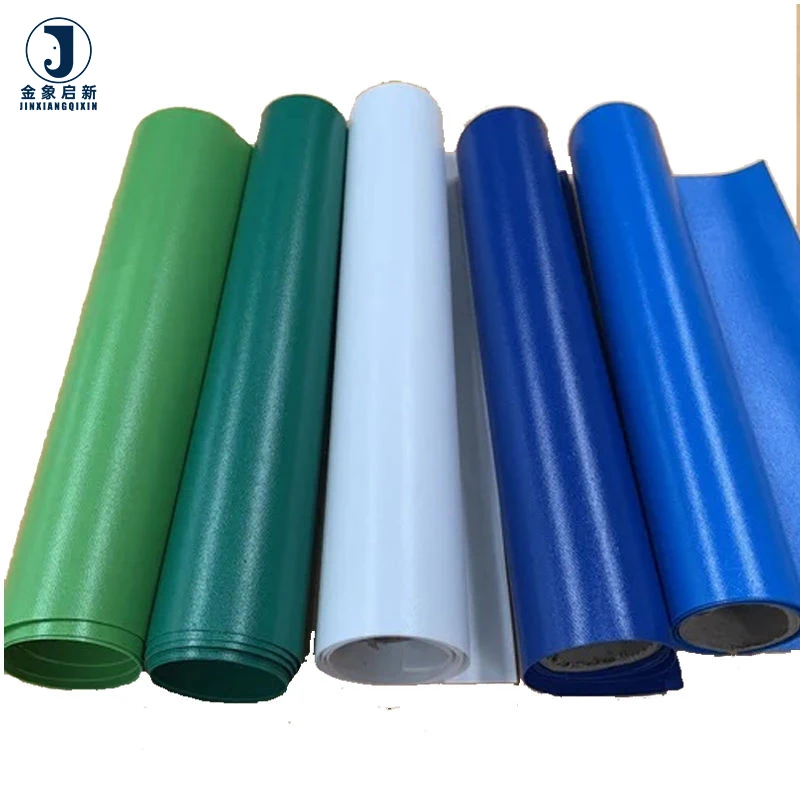
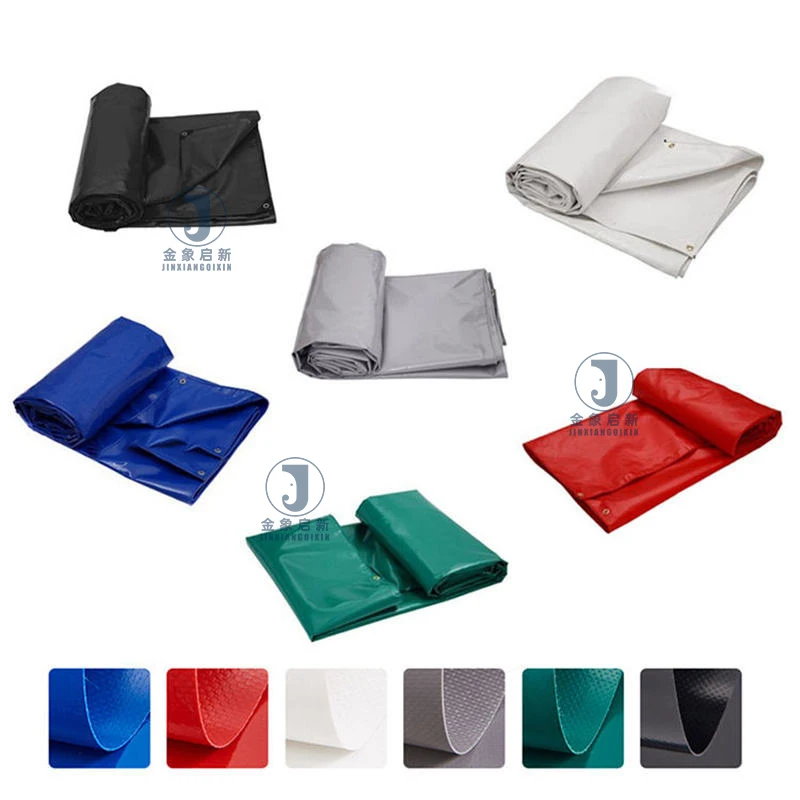
| Color Options | Blue / Red / Yellow / Light blue / Grey (Customized) |
| Flame Retardant | Available in flame retardant grades — confirm the grade required for your market (grade not stated in source) |
| Anti-Static | Anti-static treatment available — confirm the surface resistivity standard for your application (grade not stated in source) |
| Additional Treatments | Anti-cold, Anti-mildew, 3P treatment options |
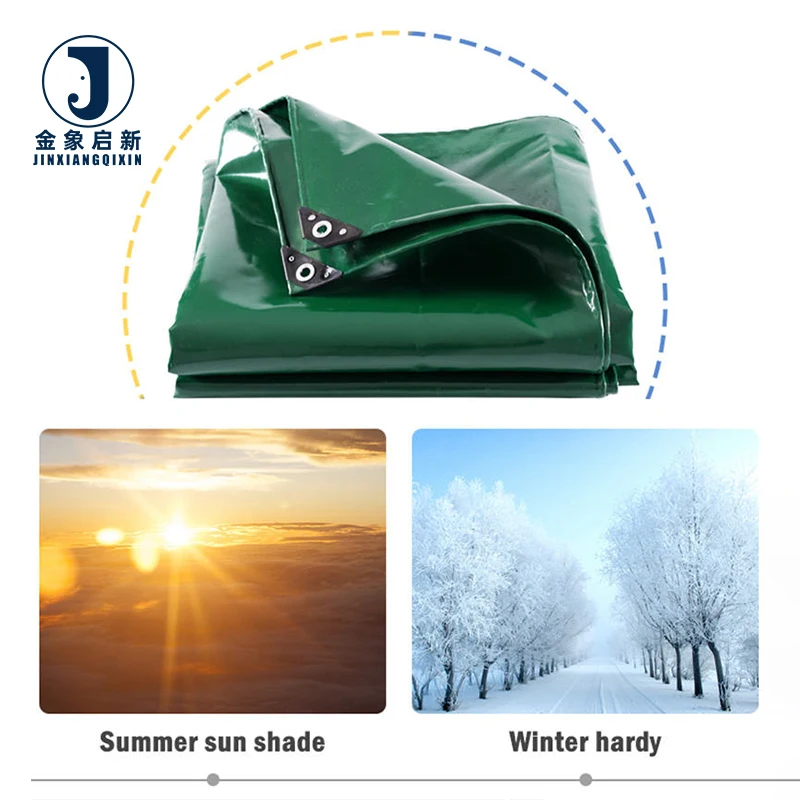
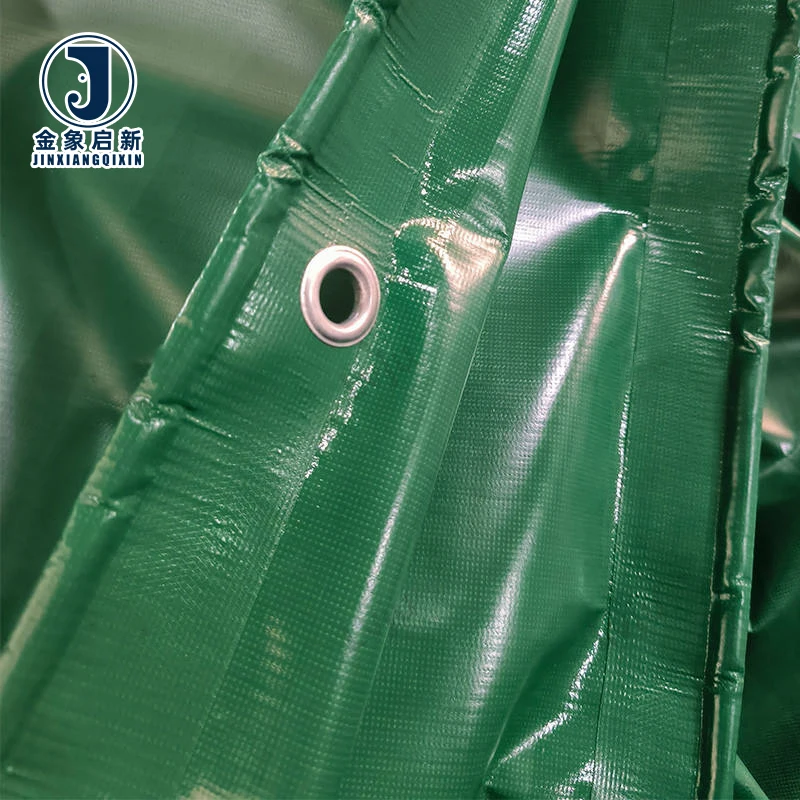
| Key Features | High tenacity polyester yarns, good flexibility and adhesion strength, outstanding tearing strength for welding, cold crack resistance, waterproof, sunproof, color fastness |
Application Suitability
| Application | Exposure & Requirement |
|---|---|
| Mine & tunnel ventilation ducts | Continuous airflow pressure, abrasive dust, mandatory fire-retardant and anti-static compliance, flex fatigue at joints |
| Aviation hangar partitioning | Fuel vapour environments, electrostatic discharge sensitivity, large-span temporary enclosures |
| Inflatable & membrane structures | Bi-axial tension, UV and weather cycling, welded seam integrity under load |
| Industrial plant ventilation | Chemical-laden air streams, thermal cycling, mechanical abrasion from particulate |
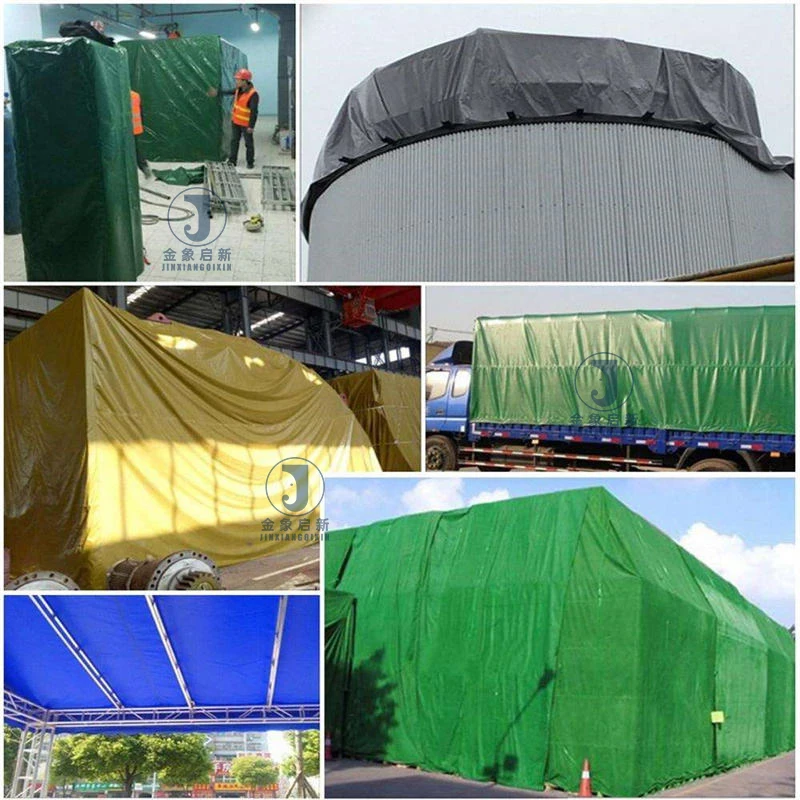
| Specialist temporary shelters | Rapid deployment, repeated fold-unfold cycles, wind load on fabric panels |
Why Certified Grade Matters for PVC Coated Tarpaulin Roll Fire Retardant and Anti-Static Compliance
A flame retardant claim without a named test standard is a procurement risk, not a specification.
On mining and tunnelling sites, ventilation ducts face strict fire safety audits. When the PVC tarpaulin roll arrives without a test report tied to a recognised standard — such as DIN 4102, NFPA 701, or M2 — the entire duct run can be rejected at commissioning. The same applies to anti-static performance: a general statement of "anti-static treatment" does not tell the site engineer whether the surface resistivity falls within the range their safety protocol demands. Sourcing technical fabric for specialist ventilation means verifying every treatment claim against the documentation that will be reviewed on site [NEED_CITE: fire classification standards for flexible ventilation materials in underground mining].
Coating Adhesion and Weld Integrity Under Duct Pressure
Ventilation ducts operate under constant positive or negative pressure, meaning the fabric and every welded seam cycle between tension states many times per shift. The hot-melt coating and laminated technology used on this PVC coated tarpaulin roll family is selected to achieve high adhesion between the PVC layer and the polyester base fabric. Strong adhesion directly influences how well a heat-welded seam holds: when the coating bonds firmly to the yarns, the weld line transfers load into the base fabric rather than peeling at the interface. This is critical for duct sections near fans and bends where pulsation is most severe. Specifying the correct GSM grade ensures the base fabric has sufficient denier and weave density to carry the duct pressure without relying on the coating alone for structural strength.
Matching GSM and Thickness to Ventilation System Duty
The available range from 350gsm at 0.32mm through to 750gsm at 0.65mm covers light-duty temporary ducting to heavy-duty main ventilation lines [NEED_CITE: relationship between coated fabric GSM and tensile performance per ISO 1421 test methods]. Lower-weight grades serve short-run auxiliary ventilation where duct diameters are smaller and wind pressure is moderate. Higher-weight grades are specified for primary ventilation systems in deep mining or long tunnel drives, where larger duct diameters generate higher hoop stress and the fabric must resist tearing at suspension rings and coupling joints. Selecting the grade requires matching both the operating pressure and the physical handling the duct will endure during installation and relocation.
Specification Logic: How Base Fabric and Coating Method Determine Real Performance
GSM alone does not define strength; it is the combination of base fabric denier, weave density, and coating weight that determines tensile and tear behaviour. A 550gsm fabric woven from high-tenacity polyester yarns with a tight weave can outperform a 600gsm fabric built on a looser, heavier yarn. The laminated and hot-melt coating methods used here produce a mechanical and chemical bond between PVC and mesh, which governs peel strength — a value that directly affects weld seam durability and resistance to delamination under thermal cycling. For anti-static applications, the treatment is typically applied as a topical or incorporated additive within the coating layer; confirming the surface resistivity value ensures compatibility with site earthing protocols. Thickness, ranging from 0.32mm to 0.65mm across the grade options, influences both puncture resistance during installation over rough surfaces and the stiffness of the fabric when formed into duct shapes — a factor that affects how cleanly the duct holds a circular profile under negative pressure.
What Happens When the Wrong Grade Reaches the Job Site
Specifying a lighter GSM than the duct design demands leads to early fabric fatigue at coupling points and suspension hardware, often visible as micro-tears propagating from the weld line outward. Ordering flame retardant treatment without a documented test grade means the site safety officer has no basis for approval, and the duct may be removed before commissioning is complete. Colour variation between rolls in the same shipment becomes visible once duct sections are installed end-to-end, signalling inconsistent production runs to a procurement team that specified a single colour code [NEED_CITE: batch consistency standards for coated fabrics in industrial applications].
Why Source This Technical Fabric From Jinxiang
Three dedicated production lines and 36 sets of professional equipment support bulk roll output with consistent coating weight across every run. A 10-person R&D team develops custom-width and custom-treatment samples within days, allowing buyers to verify flame retardant or anti-static performance on their own test rigs before committing to volume. Dedicated QA/QC inspection at every production stage means each roll is checked for GSM, coating adhesion, and visual defects — not just sampled. Full material specification sheets accompany every shipment, listing base fabric, coating weight, and colour reference for traceability. Near 30 years of focused coated-fabric production provides the process knowledge to hold tight GSM tolerances that generic tarpaulin suppliers cannot match.
Documentation & Verification
- GSM verification record per roll against the quoted weight before dispatch
- Flame retardant test report referencing the applicable standard grade when specified
- Anti-static surface resistivity test data matched to the purchase order requirement
- Material specification sheet detailing base fabric denier, coating type, and colour code
- ISO and CE certificate copies relevant to the product category
- Certificate of origin and customs documentation for cross-border shipment
Fabrication, Handling & Storage
- Heat-weld parameters must be adjusted for each GSM grade; thicker 750gsm rolls require longer dwell times at the weld bar
- Store rolls upright on their cores to prevent flat-spotting and permanent creasing in the PVC coating
- Unroll cold-stored fabric and allow it to reach workshop temperature before cutting to avoid brittle cracking
- Clean welded seams with PVC-compatible solvent only; harsh alkaline agents degrade the coating surface
- Cut panels with a minimum seam allowance to account for fabric stretch under welding pressure, especially on 2.1m-wide rolls
Requesting a Quotation for Technical Ventilation Fabric
To receive a specification-accurate quotation, provide the target duct diameter, operating pressure range, and the fire-retardant or anti-static standard your project requires. Confirm the roll width you need — 2m or 2.1m — and whether custom colour or finished cut-to-size panels are required instead of full rolls. If the installation environment involves chemical exposure or extreme temperature ranges, note these conditions so the correct treatment package can be recommended. Sample rolls can be developed for your own lab testing prior to volume commitment.
Frequently Asked Questions
Q: Which flame retardant grades can be supplied and how are they verified?
A: The PVC coated tarpaulin roll range is available in flame retardant grades matched to regional standards. Specify the test method your project requires — such as DIN 4102 B1, M2, or NFPA 701 — and request the corresponding test report with your sample. The report references the exact material formulation shipped, ensuring traceability through to site inspection and compliance approval.
Q: How is anti-static performance measured for mine ventilation duct applications?
A: Anti-static treatment modifies the surface resistivity of the PVC coating to dissipate charge build-up from high-velocity airflow and particulate contact. Specify the surface resistivity range required by your site safety protocol. Test data is generated on the treated production batch, not on a generic reference sample, so the values on the report correspond to the rolls you receive.
Q: What GSM and thickness should be selected for primary tunnel ventilation ducts?
A: Primary ventilation in long tunnel drives typically calls for the heavier end of the available range, where higher base fabric denier and greater coating thickness resist hoop stress and handling abrasion. Confirm the duct diameter, fan pressure, and suspension method with your engineering team. Jinxiang’s R&D team can recommend the appropriate grade and supply samples for independent tensile and tear testing.
Q: Can custom roll widths be ordered for large-diameter duct fabrication?
A: Standard widths of 2m and 2.1m cover most duct diameters with minimal longitudinal welds. Custom widths are available subject to minimum order quantities that vary by treatment type and colour. Providing your annual roll consumption and target delivery schedule allows Jinxiang to plan production runs that maintain batch consistency and reduce per-metre cost over the project duration.
Q: How should welded seams be tested to confirm they match the fabric strength?
A: After heat welding, peel-test a sample seam to verify that failure occurs within the base fabric rather than at the coating-to-yarn interface. Laminated and hot-melt coating technology is designed to produce high adhesion strength, but weld temperature and dwell time must be matched to the specific GSM grade. Request welding parameter guidelines from Jinxiang’s technical team when ordering samples.