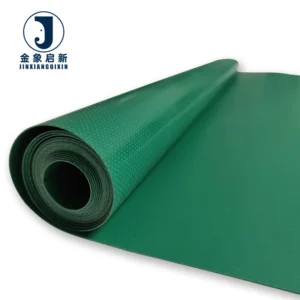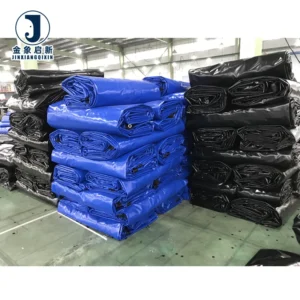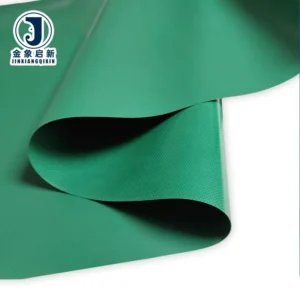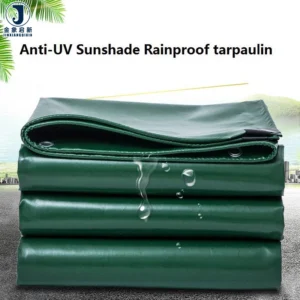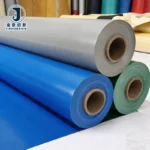
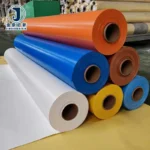
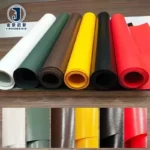
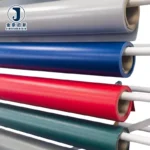
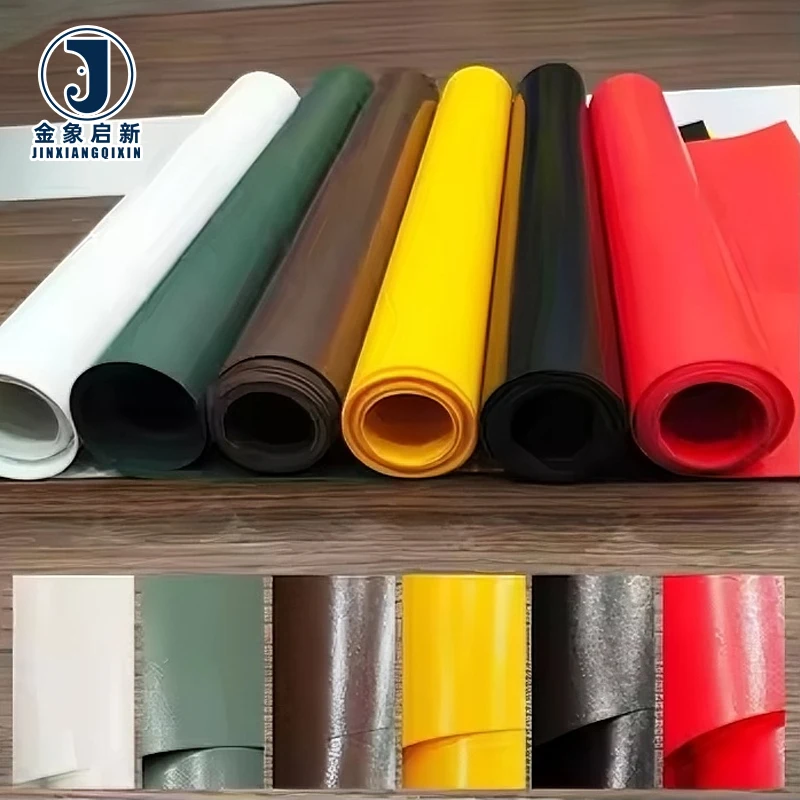
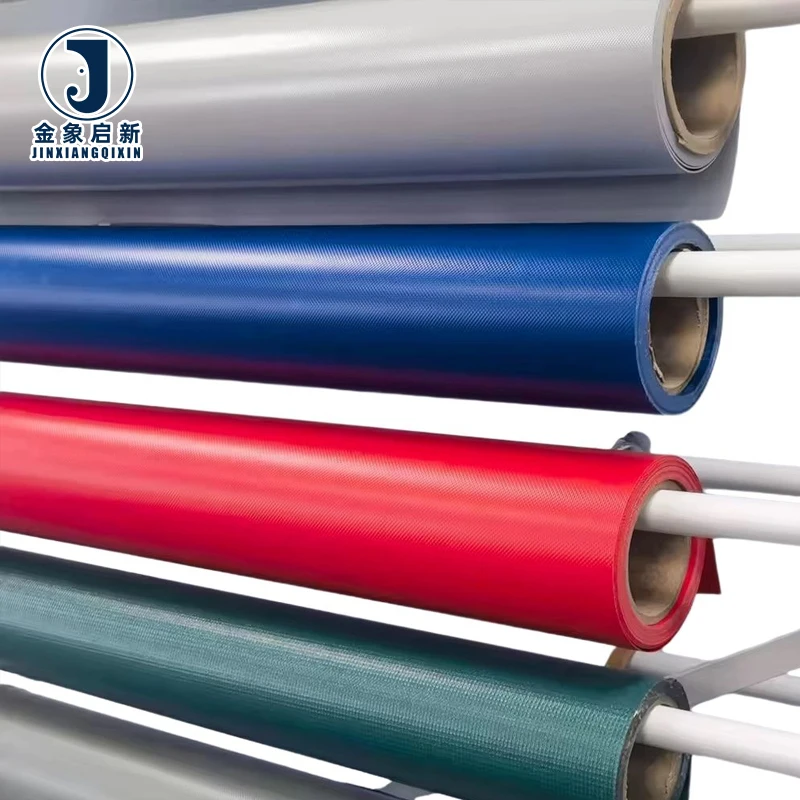
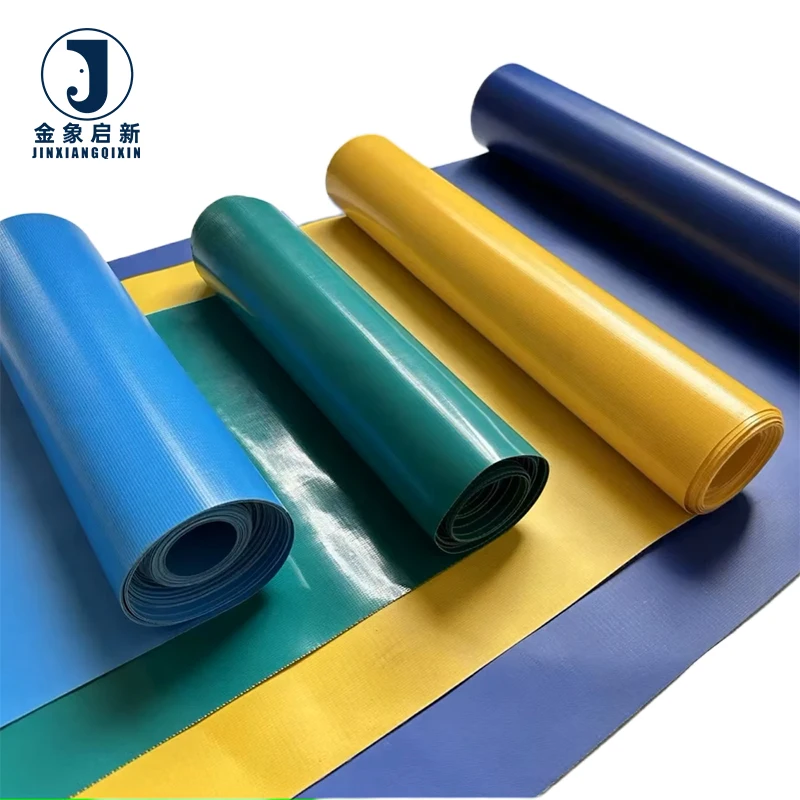
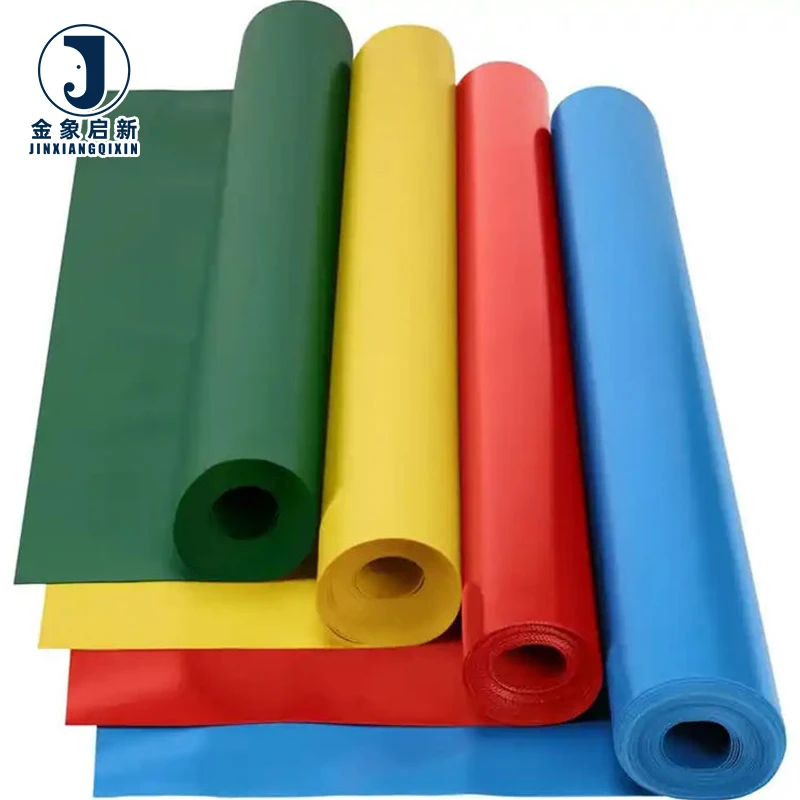
Precision-Coated Ventilation Fabric — Hot-melt and laminated coating lines produce PVC coated tarpaulin rolls with the adhesion strength needed for welded duct seams in underground and specialist environments.
Technical Specifications
| Parameter | Value |
|---|---|
| Product Type | PVC Coated Tarpaulin Roll |
| Material | PVC coating on high-strength polyester mesh fabric |
| Coating Technology | Laminated technology & Hot-melt Coating technology |
| Weight Options | 350gsm, 420gsm, 500gsm, 550gsm, 600gsm, 750gsm (confirm grade required for your application) |
| Total Thickness | 0.32mm, 0.35mm, 0.4mm, 0.45mm, 0.5mm, 0.65mm |
| Surface Finish | Available in glossy or matte finish |
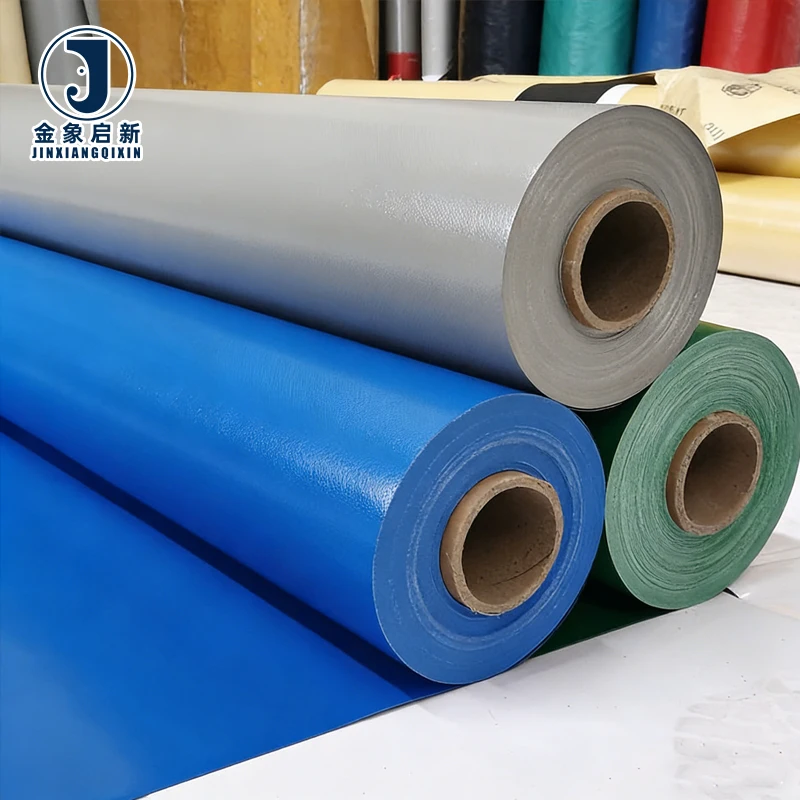
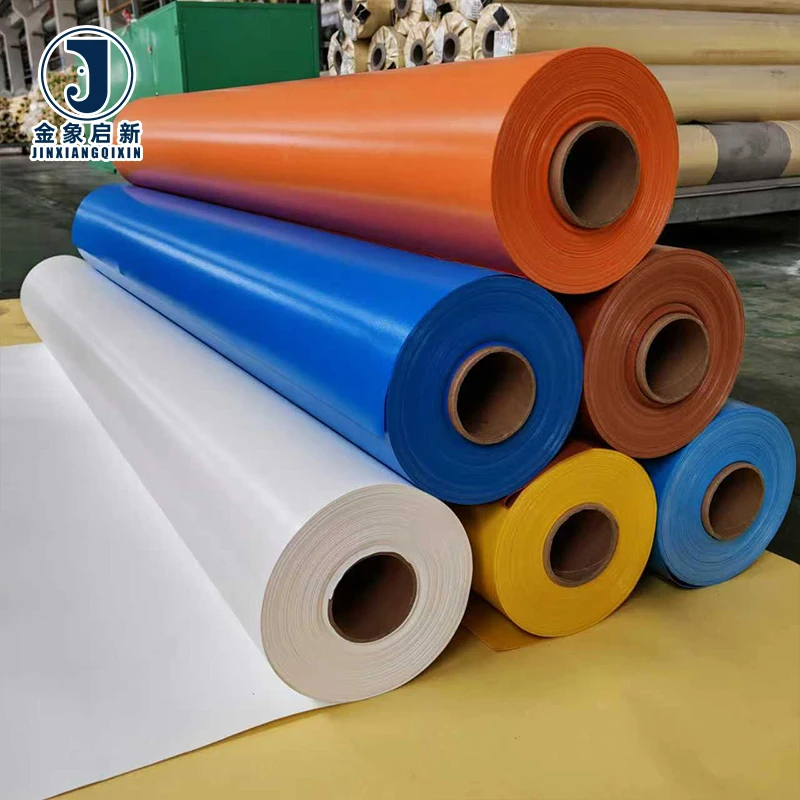
| Colour Range | Blue, Red, Yellow, Light Blue, Grey — custom colours on request |
| Standard Roll Size | 2m width × 75m length / 2.1m width × 50m length |
| Waterproof | Double-sided fully waterproof coated construction |
| Flame Retardant | Available in flame-retardant grades — confirm the grade required for your market (test basis not stated in source) |
| Anti-Static | Anti-static treatment available — confirm surface resistance value required for your site (test basis not stated in source) |
| Cold Crack Resistance | Yes |
| Anti-Mildew | Yes |
| Service Life | Suited to extended service under normal operating conditions |
| Standards | ISO, CE |
Application Suitability
| Application | Exposure & Requirement |
|---|---|
| Mining & tunnelling ventilation duct | Continuous airflow pressure, underground humidity, fire and static compliance, duct flex at joints |
| Aviation ground-support flexible duct | Jet blast proximity, fuel vapour exposure, rapid deployment and collapse cycles |
| Membrane & inflatable structure fabric | Wind load, UV exposure, welded seam integrity at panel joints, inflation pressure retention |
| Temporary shelter & specialist enclosure | Weather exposure, rapid install and dismantle, panel-to-panel weld strength |
| Industrial exhaust containment | Chemical-laden air, temperature fluctuation, abrasion at duct support rings |
What Happens When Ventilation Duct Fails Its Fire or Static Audit On Site
A missing fire-retardant certificate or an anti-static reading outside the permitted range shuts the entire heading until replacement fabric arrives.
Ventilation duct in mining and tunnelling operates under strict regulatory oversight. When the PVC coated tarpaulin roll arrives without a test report mapped to the standard the inspector requires, the site has no basis to install it. The fabric may perform adequately in every physical sense, yet the compliance gap forces a full material rejection. Procurement teams then face emergency reorders under compressed timelines [NEED_CITE: fire classification and anti-static requirements for underground ventilation per regional mining regulations].
The same pattern repeats when anti-static treatment is claimed on the quotation but the surface resistance certificate does not match the threshold written into the site safety plan. Duct fabric that accumulates static charge in a methane-rich environment carries a documented ignition risk, and inspectors verify the reading on arrival — not the supplier’s statement on a datasheet.
Duct Seam Integrity Depends On Coating Adhesion, Not Fabric Weight Alone
Ventilation duct panels are joined by high-frequency or hot-air welding, and the weld must hold as long as the parent fabric. Laminated and hot-melt coating technologies both produce strong PVC-to-polyester bonds, but they behave differently under the thermal cycling that underground duct experiences. Hot-melt coating typically delivers deeper penetration into the mesh structure, which supports higher peel strength at the weld line. PVC coated tarpaulin roll stock specified for duct fabrication must therefore be evaluated on weld-peel performance, not on GSM alone [NEED_CITE: tensile and tear test methods for coated fabrics per ISO 1421].
Matching Flame-Retardant and Anti-Static Grades To The Regulatory Framework
Different jurisdictions reference different test standards for underground ventilation fabric. Some require classification to DIN 4102 B1, others to NFPA 701 or a locally mandated equivalent. Anti-static compliance is similarly fragmented — surface resistivity thresholds vary between mining codes in different regions. When you source PVC coated tarpaulin roll fire retardant or anti-static grades, the test report must cite the exact standard your inspector will use. A generic "flame retardant" statement without a grade and standard reference holds no regulatory weight at the audit point.
How GSM, Coating Method And Base Fabric Interact In Duct Performance
The weight of a coated fabric is the sum of base polyester mesh plus coating on both faces. A heavier GSM does not automatically mean higher tear strength if the extra weight sits in coating rather than in yarn denier. For duct fabrication, the base fabric construction — yarn count and weave density — determines how well the panel resists tearing at flex points where the duct bends around support rings. Coating method then governs how cleanly the fabric welds: hot-melt coated rolls generally yield stronger peel values at the seam, while laminated rolls can offer a smoother surface for panel alignment during fabrication. Thickness across the 0.32mm to 0.65mm range correlates with stiffness, which affects how tightly the duct can be folded for transport and how it deploys underground. Matte finish surfaces tend to reduce glare in lit tunnel environments, while glossy surfaces are easier to wipe clean of dust accumulation. Cold crack resistance matters where duct is deployed in high-altitude or sub-zero underground conditions, preventing brittle fracture at fold lines during handling.
The Cost Of Specifying Duct Fabric Without Compliance Documentation
When a ventilation contractor installs duct that later fails a routine fire or static audit, the remediation cost extends far beyond the price of replacement material. The heading must be shut down, production lost, and the entire duct run removed and reinstalled. In some cases the contractor faces regulatory penalties for operating with non-compliant fabric. Even when the physical properties of the PVC coated tarpaulin roll are adequate for the duty, the absence of the correct certificate renders the installation non-conforming [NEED_CITE: regulatory consequences of non-compliant ventilation duct in underground mining]. Batch-to-batch coating inconsistency compounds the risk: if one roll in a multi-roll order welds differently from the next, fabricated duct sections may pass inspection at the workshop but fail when joined underground.
Why Fabricators Source Duct-Grade Rolls Through This Supply Chain
The ten-person R&D team handles material selection and sample development specifically for ventilation and membrane applications, not generic tarpaulin supply. Three full production lines with 36 sets of professional equipment support volume orders while keeping lead times predictable for project-scheduled duct fabrication. Every roll undergoes dedicated QA/QC at each production stage, with 100% pre-shipment inspection covering GSM verification, coating adhesion and colour consistency across the batch. Custom roll widths and lengths are available to match duct panel dimensions, reducing off-cut waste during fabrication. Samples for fire-retardant and anti-static grades are developed within days so that fabricators can run weld trials and submit test coupons to their certifier before committing to a production order.
Documentation & Verification
- Material specification sheet stating base fabric denier, coating weight and GSM for each roll batch
- Fire-retardant test report citing the specific standard (e.g., DIN 4102, NFPA 701) applicable to your site
- Anti-static surface resistance certificate matching the threshold in your site safety plan
- Pre-shipment inspection record with GSM verification and coating adhesion check per roll
- Roll packing list with batch traceability for multi-roll duct fabrication orders
Fabrication, Handling & Storage
- Hot-air or high-frequency welding recommended — adjust temperature to suit the selected coating method and GSM grade
- Allow rolls to acclimatise before unrolling in cold environments to protect cold crack resistance at fold lines
- Store rolls upright on pallets in dry conditions to prevent compression marks on the coated surface
- Matte finish panels reduce glare under tunnel lighting — specify at inquiry stage for consistent batch supply
- Plan panel cuts from the roll width to minimise weld seams at duct flex points
What To Include In Your Duct Fabric Inquiry
Provide the ventilation duty description including airflow pressure, operating temperature range and any chemical exposure the duct will face. State the fire-retardant standard and anti-static surface resistance value your regulator requires, so the correct grade is matched from the outset. Confirm whether you need rolls cut to a specific width and length for your panel layout, or standard roll dimensions for general fabrication stock.
Frequently Asked Questions
Q: Which fire-retardant grades are available and how do they map to mining and tunnelling standards?
A: PVC coated tarpaulin rolls can be produced in flame-retardant grades aligned to standards including DIN 4102, NFPA 701 and region-specific mining codes. Provide the exact standard your inspector references so the test report is prepared against that classification before dispatch. Grade availability depends on the selected GSM and coating method.
Q: How is anti-static performance measured and what surface resistance values can be achieved?
A: Anti-static treatment is applied during coating and measured as surface resistivity. The achievable value depends on the treatment formulation selected for your roll batch. Share the surface resistance threshold written into your site safety plan so the correct treatment level is confirmed and certified before production begins.
Q: What welding method is recommended for duct fabrication from these PVC rolls?
A: Both hot-air and high-frequency welding are suitable, with parameters adjusted to the coating technology and GSM grade. Hot-melt coated rolls generally deliver higher peel strength at the weld line, which is critical at duct flex points. Weld trials on sample material are recommended before committing to production panel fabrication.
Q: Can roll dimensions be customised to reduce waste in duct panel cutting?
A: Custom widths and lengths are available beyond the standard 2m × 75m and 2.1m × 50m roll formats. Supplying your panel layout allows the roll dimensions to be set so that cross-cuts fall at efficient intervals, reducing off-cut waste and the number of weld seams needed in the finished duct run.
Q: How is coating consistency verified across multiple rolls in a single order?
A: Every roll is checked during production and again at the pre-shipment inspection stage for GSM, coating adhesion and colour consistency. This ensures that weld behaviour remains uniform across the batch, so fabricated duct sections from different rolls perform identically when joined and deployed underground.